
Enterprise contract lifecycle management software gives enterprises centralized control over every stage of the contract process, from intake and drafting through negotiation, signature, renewal, and obligation management. The right platform aligns with contract volume, process complexity, business systems, risk exposure, and governance requirements. This guide evaluates essential capabilities, leading tools, implementation challenges, and selection criteria to help enterprise teams make a confident, outcome-focused decision.
TL;DR
Enterprise CLM software should manage contracts from intake and drafting through renewals and post-signature obligations.
Strong platforms combine workflow automation, repositories, AI review, analytics, integrations, signatures, and enterprise security.
Selection should reflect contract volume, risk, systems, user needs, configuration demands, and long-term ownership costs.
Common challenges include scattered records, unclear ownership, weak renewal oversight, hard integrations, and poor user adoption.
Successful rollouts use standard processes, phased migration, clear governance, role-based workflows, and measurable targets.
The right platform balances depth, ease of use, scale, implementation effort, vendor support, and business value.
What Enterprise CLM Software Should Manage
From Contract Intake to Execution
Enterprise CLM software starts when someone requests a contract. An intake form captures the deal type, value, region, parties, and needed dates. Rules then route the request to the right legal, sales, procurement, or finance team.
The platform can create a first draft from approved templates. Clause libraries provide approved language for common terms. Users can also suggest fallback clauses during negotiation.
The system keeps redlines, comments, and versions together. This reduces confusion over which document needs review. Approval rules can then route the final draft based on value, risk, region, or contract type.
Electronic signatures complete the process. The signed agreement returns to the same contract repository. Users gain one record instead of scattered email files.
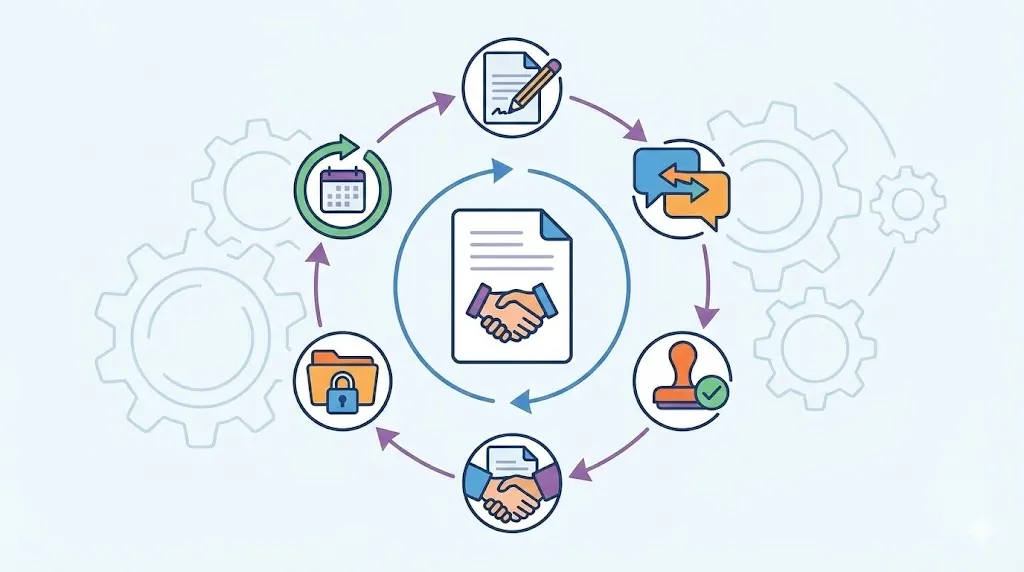
A simple lifecycle view includes intake, authoring, review, approval, signature, storage, monitoring, and renewal. Each stage should pass key data forward. That connection prevents teams from entering the same details many times.
Post-Signature Governance
Contract work continues after signature. Teams must track deliverables, notice dates, pricing terms, service levels, and reporting duties. Missed commitments can create cost, service, or compliance problems.
A strong platform records obligations against the right owner. It sends reminders before deadlines arrive. Managers can view late tasks, open issues, and upcoming milestones.
Renewal management also needs more than a calendar reminder. Users should see renewal windows, notice periods, price changes, and termination rights. This view helps teams act before an agreement renews automatically.
Audit trails show who changed, approved, or viewed a contract. Permission rules limit access to sensitive agreements. Compliance teams can then review actions without searching through email.
Post-signature data also supports better business decisions. Finance can check payment terms. Procurement can compare supplier duties. Sales can monitor customer commitments and renewal risks.
Related Article: Mastering the Stages of Contract Lifecycle
Core Capabilities to Evaluate in an Enterprise Platform
Workflow Automation and Approval Controls
CLM tools should support different processes for different contract types. A sales agreement may need legal review only when risk is high. A supplier contract may require procurement, security, and finance approval.
Configurable workflows allow teams to set those rules without rebuilding the whole system. Approval thresholds can depend on value, business unit, region, or clause changes. Delegation rules keep work moving during leave or team changes.
Escalation paths matter when reviewers miss deadlines. Automated reminders can prompt the next person without manual follow-up. The system should also record each decision and its reason.
Business users need simple request forms. Legal teams need deeper review controls. A useful platform supports both groups through role-based screens and permissions.
Look for workflow support across legal, procurement, sales, finance, security, and operations. Each group should see only the steps that apply to its work. This keeps the process clear and reduces training needs.
Repository, Search, and Contract Intelligence
A contract repository stores agreements, amendments, exhibits, and related records together. It should support full-text search across scanned and digital files. Optical character recognition, or OCR, makes scanned documents searchable.
Metadata helps users filter records quickly. Useful fields include parties, dates, value, region, owner, contract type, and renewal terms. The system should also preserve document versions and approval history.
Permissions protect confidential terms. Search results must respect those permissions. A user should not see restricted contract content through a broad search.
AI features can find key terms across older agreements. Metadata extraction can identify dates, payment terms, and parties. AI review can flag unusual language or missing provisions.
Human review remains necessary for important decisions. Users should see the source text behind each AI result. The platform should also allow reviewers to accept, edit, or reject suggested data.
An evaluation checklist should cover repository search, metadata, version control, permissions, workflow automation, AI review, reporting, security, integrations, electronic signatures, and administration. Each item needs a clear business reason. Feature counts alone do not prove a good fit.
Analytics, Reporting, and Risk Visibility
Enterprise reporting should show how contracts move through the business. Useful views include request volume, approval time, cycle time, and stalled work. Leaders can then find process bottlenecks.
Renewal dashboards show agreements that need action soon. Obligation reports show open, late, and completed commitments. Risk views can group contracts by region, clause, supplier, customer, or business unit.
Contract analytics can also support commercial decisions. Finance may review payment terms and price increases. Procurement may compare supplier commitments across regions. Legal may track exceptions to approved language.
Reports should support both detail and summary views. A legal operations team may need a full workflow report. An executive may need only renewal exposure and cycle trends.
Risk controls work best when linked to clear playbooks. A playbook is a set of rules for reviewing common risks. It can identify required clauses, approval triggers, and acceptable fallback positions.
Related Article: Essential CLM Features Every Business Needs
Enterprise Integration, Security, and Scalability
Connecting the Contracting Ecosystem
Enterprise CLM software rarely works alone. It should connect with customer relationship management systems, enterprise resource planning systems, procurement tools, finance platforms, identity tools, and signature services.
CRM links can start contract requests from an opportunity record. ERP links can pass supplier, payment, or purchase data into the contract. Procurement links can connect agreements with sourcing events and supplier records.
Identity integration supports single sign-on and user access changes. Electronic signature links reduce manual document handling. Collaboration links can keep review work inside familiar team tools.
Integration quality affects adoption. Users resist systems that require duplicate entry. They also lose trust when data fails to sync.
Ask whether integrations are ready-made or require custom work. Confirm how errors appear and who can fix them. Test common cases before launch, including rejected approvals and changed contract values.
Data Protection and Access Governance
Contracts often contain pricing, personal data, trade terms, and security details. The platform should protect this content during storage and transfer. Encryption supports that basic protection.
Role-based access limits records and actions by job needs. Segregation of duties prevents one person from requesting, approving, and signing the same agreement. Audit trails record access and changes.
Security teams should review authentication, retention, backup, and recovery controls. They should also check regional data rules. Some enterprises need data stored within certain countries or regions.
Permission design needs regular review. Employees change roles, teams merge, and projects end. A good system makes access changes easy to manage and easy to audit.
Scaling Across Regions and Business Units
Global enterprises need more than one shared workflow. Regions may use different laws, languages, currencies, templates, and approval rules. The platform should support local needs without creating isolated systems.
Organizational hierarchies help route work to the correct team. Currency support helps users compare contract value across markets. Local clause libraries can support country-specific terms.
The system should handle high request volumes during sales peaks or sourcing events. It should also support many contract types and business units. Central control should remain possible as the system grows.
Global reporting needs consistent definitions. One region may define cycle time differently from another. Shared data rules help leaders compare results with confidence.
Administration and Configuration
Enterprise administrators need control without relying on constant custom coding. No-code or low-code tools can support forms, fields, workflows, and alerts. They also let teams respond faster to process changes.
Reusable workflow parts reduce duplicate setup. Separate test environments help teams check changes before release. Release controls prevent untested rules from disrupting live work.
Administrators also need clear ownership. Legal operations may manage templates and clauses. Information technology may manage integrations and access. Business teams may own local forms and approval rules.
The comparison matrix should assess integration depth, security controls, deployment model, scale, localization, and administrative effort. It should also show which requirements need custom work. That detail often matters more than a long feature list.
Area | What to assess | Why it matters |
|---|---|---|
Integrations | CRM, ERP, procurement, finance, identity, signature, collaboration | Reduces duplicate entry and broken handoffs |
Security | Encryption, roles, audit trails, authentication, retention | Protects contract data and supports reviews |
Deployment model | Cloud hosting, data regions, backup, recovery | Supports security and location requirements |
Scalability | Users, regions, contract types, workflow volume | Supports growth without separate systems |
Localization | Languages, currencies, local templates, local rules | Helps global teams work consistently |
Administration | Configuration tools, testing, releases, reporting | Controls long-term ownership effort |
5 Key Challenges in Enterprise Contract Lifecycle Management
Fragmented Data and Inconsistent Processes
Many enterprises store contracts across shared drives, email, local folders, and business applications. Teams may use different names, templates, and date formats. This makes basic contract searches slow and uncertain.
Scattered records also create version risks. A reviewer may open an old draft. A manager may miss a signed amendment. A renewal owner may lack the full agreement history.
Regional teams often build local processes over time. Those processes may suit local needs, but they can weaken enterprise control. Leaders then struggle to compare risk, speed, and workload.
Limited Post-Signature Oversight
Signing a contract does not complete the work. Suppliers may owe reports, credits, service levels, or delivery milestones. Customers may receive pricing rights or renewal options.
Without clear ownership, these duties can disappear after signature. Teams may miss notice windows or fail to claim agreed credits. Manual calendars do not always capture linked tasks and contract context.
A repository helps only when it supports action. Users need alerts, task owners, escalation paths, and clear evidence of completion. Post-signature controls should sit beside the signed agreement.
Integration and Adoption Barriers
Legacy systems can hold important party, supplier, or customer data. They may use old formats or weak interfaces. Migration teams must clean and map that data before loading it.
Ownership can also remain unclear. Legal may own contracts, while procurement or sales owns daily actions. Without shared rules, users may bypass the platform.
Training needs to match each role. Requesters need short forms and clear status views. Reviewers need strong search, redlines, and clause tools. Administrators need deeper system skills.
Measuring CLM Value Clearly
Enterprises often track activity without proving business value. They may count stored documents but ignore faster reviews or better renewal action. This leaves leaders with an incomplete view.
Value can appear in several places. Legal may spend less time on routine checks. Finance may recover missed credits. Business teams may find agreements faster.
Risk reduction can be harder to measure. Avoided disputes and missed obligations do not always appear as savings. Teams should still record risk events, policy exceptions, and audit findings.
A risk-to-impact view can connect each challenge with its likely result. Fragmented data creates search and version problems. Weak oversight creates missed duties and renewal exposure. Poor adoption creates manual work and incomplete records.
Best Practices for Successful CLM Implementation
Standardize Before Automating
Start by documenting the current process. Show who requests, drafts, reviews, approves, signs, stores, and monitors each contract. This often reveals duplicate steps and unclear ownership.
Remove approvals that add no real control. Keep approvals that protect value, risk, security, or policy. Set clear rules for when legal review becomes mandatory.
Standardize templates and clause positions before loading them. Define required metadata fields and naming rules. Keep the list short enough for users to complete accurately.
Clause libraries need active ownership. A legal operations team should review approved language on a set schedule. Business users should know when they can use standard clauses without escalation.
Roll Out in Phases
A phased rollout lowers risk and creates early learning. Start with a high-value use case, such as supplier agreements or sales contracts. Choose a process with visible pain and a willing business owner.
Validate the workflow with real examples. Test standard terms, exceptions, rejected approvals, and urgent requests. Adjust the design before adding more groups.
Migrate priority contracts first. Include active agreements, key renewals, regulated records, and high-value commitments. Do not load every old file without checking its value and quality.
Expand after the first launch stabilizes. Add contract types, regions, and integrations in a planned order. Each phase should have clear entry and exit conditions.
Build Governance and Ownership
A CLM program needs more than a software owner. Legal operations can manage process design and clause rules. Information technology can manage integrations, access, and technical support.
Procurement, sales, finance, security, and business users should shape their own needs. An executive sponsor can remove barriers and support adoption. A small steering group can resolve cross-team conflicts.
Create rules for templates, metadata, roles, reports, and system changes. Review those rules as the business changes. Governance should guide work without adding needless meetings.
An implementation sequence should cover discovery, design, configuration, migration, testing, training, launch, and optimization. Each step needs an owner, a decision, and a clear output. This keeps the program moving and limits hidden work.
Measuring CLM Performance and Business Value
Establishing Baselines and Success Targets
Measure the current process before changing it. Record request volumes, approval times, search effort, renewal results, and manual touchpoints. Use several contract types to avoid a narrow baseline.
Set targets that match business priorities. Legal may seek shorter review times. Procurement may seek stronger supplier coverage. Finance may focus on payment terms, credits, and renewal control.
Targets should include user outcomes. A fast system that users avoid will not create lasting value. Track completion rates, self-service use, training needs, and feedback.
Review results after launch at set points. Early data may show process issues rather than final gains. Use those findings to refine forms, workflows, and reports.
Comparing Speed, Compliance, Risk, and Financial Metrics
Cycle time shows how quickly contracts move from request to signature. Approval duration shows where work waits. Search time shows whether the repository helps daily work.
Compliance measures can include required clause use, approval exceptions, audit findings, and policy adherence. These measures show whether the platform supports controlled work.
Risk measures can include open obligations, missed deadlines, unusual clauses, and unresolved reviews. Teams should connect each issue to an owner and due date.
Financial measures can include renewal capture, recovered credits, protected revenue, and reduced outside legal work. Not every gain will appear as direct savings. Better visibility can still support stronger commercial decisions.
An effective metrics framework covers speed, compliance, risk, financial impact, adoption, and user satisfaction. Use a small set of trusted measures first. Too many reports can hide the signals leaders need.
Related Article: Why Every C-Suite Needs Contract Lifecycle Management
Selecting the Right Fit for Enterprise Requirements
Match the Platform to Contract Complexity
The best platform depends on the work behind each contract. High-volume agreements may need self-service forms and rapid approvals. Complex deals may need deep redlining, playbooks, and multi-level review.
Regulated enterprises need strong audit trails, access controls, retention rules, and risk checks. Global groups need local workflows and shared reporting. Businesses with many duties need strong obligation tracking.
Common enterprise options include Ironclad, Icertis Contract Intelligence, DocuSign CLM, SAP CLM, Agiloft, Sirion, ContractPodAi, LinkSquares, Coupa CLM, Evisort, Conga CLM, and CobbleStone Contract Insight.
These tools do not serve the same buyer or process. Icertis and Sirion often suit complex, global contract programs. SAP CLM and Coupa CLM may suit firms centered on wider enterprise or spend systems.
Ironclad and DocuSign CLM can fit teams seeking connected authoring, workflow, and signature work. Agiloft can suit firms needing broad configuration. Evisort and LinkSquares may appeal to teams focused on search and contract insight.
ContractPodAi and Conga can fit enterprises seeking broad contract process coverage. CobbleStone can suit organizations that value structured controls and public-sector needs. Each option still requires proof through real use cases.
Balance Functionality With Usability
Deep configuration can support complex approval rules. It can also increase training and ownership needs. Ask who will maintain fields, clauses, workflows, reports, and integrations.
Usability affects every contract request. If forms feel difficult, users may send work through email. If search feels weak, teams may keep shadow folders.
Review the full user journey during demonstrations. Ask a sales user to start a request. Ask a lawyer to compare clauses. Ask a manager to approve a high-risk agreement.
Self-service should have safe limits. Standard contracts can move quickly through approved paths. Exceptions should trigger review without blocking routine work.
Compare Implementation Effort, Integrations, and Total Cost
Purchase price shows only part of the cost. Enterprises should assess configuration, migration, integrations, training, support, upgrades, and internal administration. These costs shape the five-year total cost of ownership.
Integration readiness can shorten delivery. Ready connectors may reduce custom work. Still, teams must test data mapping, error handling, and access rules.
Vendor support also affects results. Ask about launch services, response times, product changes, and customer references. Look for examples from firms with similar scale and contract needs.
A decision scorecard should cover functional fit, implementation effort, integration readiness, security, scalability, usability, vendor support, and total cost. Score each area against business priorities. A weighted score can prevent one attractive feature from driving the whole decision.
Related Article: Best Contract Management Software in 2026: Top 20 CLM Tools
Why Contract Management Software Matters
Enterprise CLM software can centralize contract data and reduce manual handoffs. It can automate routine reviews, approvals, reminders, and storage tasks. Teams gain clearer control over obligations, renewals, and commercial risk.
The right system should serve legal and business users together. Legal needs control, review depth, and audit evidence. Business teams need simple requests, clear status, and fast access.
A strong choice also supports change. Processes, regions, systems, and contract volumes will evolve. The platform should handle that growth without creating needless administrative work.
A structured review keeps the decision focused on outcomes. Faster contract processes support business speed. Stronger governance improves audit readiness. Better visibility helps teams manage obligations, renewals, and risk.
Volody's CLM Software supports this work with AI Contract Review, AI Metadata Extraction, and Obligation Management. It can flag risky terms, identify key contract data, and track duties, renewals, and commitments in one place.
For example, a procurement team can scan supplier agreements, find renewal dates, and assign open obligations. Reviewers can then focus on exceptions instead of searching through files.
Take the next step toward faster, more controlled contracting with Volody's CLM Software and see how it can streamline legal workflows, strengthen oversight, and improve contract performance.
FAQ
What is Enterprise Contract Lifecycle Management (CLM) Software?
Enterprise contract lifecycle management software manages agreements from intake through renewal. It supports drafting, negotiation, approvals, electronic signatures, storage, and post-signature obligations. It also centralizes contract data across legal, procurement, sales, finance, and business teams. Enterprise systems add stronger controls for security, compliance, reporting, permissions, and large-scale administration.
What’s the best contract management tool?
The best contract management tool depends on your process, systems, contract volume, and risk needs. Enterprises can compare Ironclad, Icertis, DocuSign CLM, SAP CLM, Agiloft, Sirion, ContractPodAi, and other options. Review real workflows rather than feature lists alone. Usability, integration readiness, security, support, scale, and total cost also matter.
How do I choose a contract management solution with AI tools?
Start with clear AI use cases, such as clause review, metadata extraction, risk detection, and obligation discovery. Ask vendors how they test accuracy and protect contract data. Confirm that users can review the source text behind every result. AI should support qualified reviewers, not make unsupervised legal or commercial decisions.
How long does enterprise CLM implementation take?
Implementation time depends on integrations, migration, workflows, security checks, testing, training, and rollout size. A focused launch can move faster than a global program with many contract types. Phased delivery often helps teams launch one valuable use case first. Later phases can add regions, departments, records, and business system connections.
What should enterprises migrate into a CLM platform?
Start with active contracts, key renewals, regulated records, high-value agreements, and important obligations. Include reliable data such as parties, dates, owners, values, regions, and renewal terms. Review older records before migrating them. Incomplete files may create more cleanup work than business value.
How can enterprises measure the return on CLM investment?
Compare results with baselines from before implementation. Track cycle time, approval speed, search effort, adoption, repository coverage, renewal action, and obligation completion. Add measures for legal productivity, recovered value, avoided risk, compliance, and user satisfaction. A balanced model should include direct savings and better commercial visibility.
About the Company

Volody AI CLM is an Agentic AI-powered Contract Lifecycle Management platform designed to eliminate manual contracting tasks, automate complex workflows, and deliver actionable insights. As a one-stop shop for all contract activities, it covers drafting, collaboration, negotiation, approvals, e-signature, compliance tracking, and renewals. Built with enterprise-grade security and no-code configuration, it meets the needs of the most complex global organizations. Volody AI CLM also includes AI-driven contract review and risk analysis, helping teams detect issues early and optimize terms. Trusted by Fortune 500 companies, high-growth startups, and government entities, it transforms contracts into strategic, data-driven business assets.





" height="216.72211px" id="FYO0bO80Y" transform="translate(3 6.105)" width="206.073px"/><path d="M 108.174 222 C 88.432 222 70.303 217.239 53.785 207.717 C 37.267 198.196 24.173 185.052 14.504 168.285 C 4.835 151.312 0 132.165 0 110.845 C 0 89.731 4.835 70.792 14.504 54.025 C 24.173 37.052 37.267 23.804 53.785 14.282 C 70.303 4.761 88.432 0 108.174 0 C 128.116 0 146.246 4.761 162.562 14.282 C 179.08 23.804 192.073 37.052 201.541 54.025 C 211.21 70.792 216.044 89.731 216.044 110.845 C 216.044 132.165 211.21 151.312 201.541 168.285 C 192.073 185.052 179.08 198.196 162.562 207.717 C 146.044 217.239 127.915 222 108.174 222 Z M 108.174 183.189 C 120.864 183.189 132.044 180.291 141.713 174.495 C 151.382 168.492 158.936 160.006 164.375 149.035 C 169.814 138.064 172.533 125.334 172.533 110.845 C 172.533 96.355 169.814 83.729 164.375 72.965 C 158.936 61.994 151.382 53.611 141.713 47.815 C 132.044 42.02 120.864 39.122 108.174 39.122 C 95.483 39.122 84.202 42.02 74.332 47.815 C 64.663 53.611 57.109 61.994 51.67 72.965 C 46.231 83.729 43.511 96.355 43.511 110.845 C 43.511 125.334 46.231 138.064 51.67 149.035 C 57.109 160.006 64.663 168.492 74.332 174.495 C 84.202 180.291 95.483 183.189 108.174 183.189 Z" fill="rgba(255, 255, 255, 0.12)" height="222px" id="aa1McFcE9" transform="translate(227.183 3)" width="216.04399999999998px"/><path d="M 42.302 182.257 L 111.799 182.257 L 111.799 216.722 L 0 216.722 L 0 0 L 42.302 0 Z" fill="rgba(255, 255, 255, 0.12)" height="216.72211px" id="yRq4AnrsX" transform="translate(477.721 6.105)" width="111.79899999999998px"/><path d="M 108.174 222 C 88.432 222 70.303 217.239 53.785 207.717 C 37.267 198.196 24.173 185.052 14.504 168.285 C 4.835 151.312 0 132.165 0 110.845 C 0 89.731 4.835 70.792 14.504 54.025 C 24.173 37.052 37.267 23.804 53.785 14.282 C 70.303 4.761 88.432 0 108.174 0 C 128.116 0 146.246 4.761 162.562 14.282 C 179.08 23.804 192.073 37.052 201.541 54.025 C 211.21 70.792 216.045 89.731 216.045 110.845 C 216.045 132.165 211.21 151.312 201.541 168.285 C 192.073 185.052 179.08 198.196 162.562 207.717 C 146.044 217.239 127.915 222 108.174 222 Z M 108.174 183.189 C 120.864 183.189 132.044 180.291 141.713 174.495 C 151.382 168.492 158.936 160.006 164.375 149.035 C 169.814 138.064 172.534 125.334 172.534 110.845 C 172.534 96.355 169.814 83.729 164.375 72.965 C 158.936 61.994 151.382 53.611 141.713 47.815 C 132.044 42.02 120.864 39.122 108.174 39.122 C 95.483 39.122 84.202 42.02 74.332 47.815 C 64.663 53.611 57.108 61.994 51.67 72.965 C 46.231 83.729 43.511 96.355 43.511 110.845 C 43.511 125.334 46.231 138.064 51.67 149.035 C 57.108 160.006 64.663 168.492 74.332 174.495 C 84.202 180.291 95.483 183.189 108.174 183.189 Z" fill="rgba(255, 255, 255, 0.12)" height="222px" id="mo8HQspQ0" transform="translate(609.155 3)" width="216.04500000000007px"/><path d="M 73.727 0 C 95.885 0 115.324 4.45 132.044 13.351 C 148.967 22.252 161.957 34.982 171.027 51.541 C 180.287 67.894 184.917 86.937 184.917 108.671 C 184.917 130.405 180.287 149.449 171.027 165.801 C 161.957 181.947 148.967 194.47 132.044 203.371 C 115.324 212.271 95.885 216.722 73.727 216.722 L 0 216.722 L 0 0 Z M 72.216 179.773 C 94.374 179.773 111.497 173.564 123.583 161.144 C 135.669 148.724 141.713 131.233 141.713 108.671 C 141.713 86.109 135.669 68.515 123.583 55.888 C 111.497 43.055 94.374 36.638 72.216 36.638 L 42.302 36.638 L 42.302 179.773 Z" fill="rgba(255, 255, 255, 0.12)" height="216.72211px" id="I3iXX5Hi_" transform="translate(859.693 6.105)" width="184.91699999999992px"/><path d="M 185.22 0 L 113.91 141.273 L 113.91 216.722 L 71.61 216.722 L 71.61 141.273 L 0 0 L 47.74 0 L 93.06 99.046 L 138.08 0 Z" fill="rgba(255, 255, 255, 0.12)" height="216.72211px" id="nzHyWC0_d" transform="translate(1061.78 6.105)" width="185.22000000000003px"/></svg>)