
Contract review identifies risk, ambiguity, and misalignment in an agreement. Contract negotiation determines which terms the parties will revise, accept, or trade off. Together, these disciplines establish a stronger commercial outcome, enabling teams to prioritize material issues, accelerate decisions, and reach well-controlled agreements.
TL;DR
Contract review analyzes existing terms, while contract negotiation changes terms through proposals, responses, and agreement.
Review tests risk, clarity, compliance, and business fit before negotiation begins.
Negotiation manages redlines, fallback positions, tradeoffs, approvals, and final agreement.
Strong processes move from review to priority setting, negotiation, approval, and final verification.
Common problems include unclear goals, slow feedback, conflicting advice, and downstream clause conflicts.
Contract management software centralizes drafts, workflows, approvals, negotiation records, and post-signature obligations.
Contract Review and Contract Negotiation: The Core Difference
Contract review is mainly an analytical task. A reviewer studies an existing draft and asks whether it protects the organization.
The reviewer checks duties, rights, risks, and missing terms. They also compare the draft with company rules, approved clauses, and business goals.
Contract negotiation is mainly an interactive task. Negotiators discuss proposed changes with the other party.
They explain concerns, answer objections, offer new language, and accept tradeoffs. The aim is a signed agreement with terms both parties can support.
These activities often overlap in real transactions. A reviewer may suggest new language during the first review. A negotiator may find a new risk after receiving a counterproposal.
The key difference is the work’s main purpose. Review explains what the draft means and where it creates risk. Negotiation decides what the parties will change and accept.
Contract review as analysis and risk assessment
Review starts with the document already in hand. That document may come from a supplier, customer, partner, or internal team.
The reviewer examines its legal and commercial meaning. They look for unclear duties, broad promises, weak remedies, and missing protections.
The review may cover liability, payment, confidentiality, data use, ownership, and termination. It may also test the draft against a playbook.
A playbook is a set of approved positions and review rules. It tells reviewers which terms need changes and which risks need approval.
The usual output is a written assessment. It can include comments, risk flags, suggested language, and questions for business owners.
Contract negotiation as collaborative revision
Negotiation begins when one party proposes terms or responds to a draft. Each side then reviews the other side’s requested changes.
A redline shows proposed edits in a document. Redlines help both parties see what changed from the prior version.
Negotiators also explain why changes matter. They may link a request to insurance limits, service needs, data duties, or internal policy.
The parties then exchange counteroffers. Some requests gain acceptance. Others lead to compromise or escalation.
Negotiation may take one round or many rounds. Each round creates a need for careful version control and issue tracking.
A practical comparison
Area | Contract review | Contract negotiation |
|---|---|---|
Purpose | Find risks and unclear terms | Reach agreed terms |
Timing | Before and during negotiations | After issues are identified |
Main participants | Legal, business, and subject experts | Legal, procurement, sales, and counterparties |
Typical outputs | Comments, risk flags, and recommendations | Redlines, counteroffers, and accepted language |
Core skills | Analysis, issue spotting, and judgment | Communication, persuasion, and tradeoff management |
What Happens During a Contract Review
A useful contract review starts before anyone reads each clause. The team first needs to understand the deal behind the document.
That context changes how reviewers judge risk. A minor wording issue may matter greatly in a critical service agreement.
Reviewers should then test the agreement against business needs and internal standards. They should turn findings into clear actions for decision-makers.
Understanding the deal before reading the clauses
The reviewer should confirm what the agreement is meant to achieve. They should know the goods, services, price, timing, and key dependencies.
They should also identify the business owner. This person can explain what the team needs from the other party.
The reviewer should ask about the organization’s risk tolerance. A startup may accept different risks than a bank or hospital.
Timing also matters. A renewal, launch, or supplier transition may create strong pressure to sign.
That pressure should not remove careful review. It should help the team rank issues by business impact.
The reviewer should also identify specialist needs early. Privacy, security, finance, tax, and operations teams may need to assess certain terms.
Examining obligations, rights, and risk allocation
The review should test whether each party’s duties are clear. It should also show what happens if one party fails.
Payment terms need careful attention. Reviewers should check prices, invoices, taxes, payment dates, and dispute rights.
Performance duties need equal care. The draft should define deliverables, service levels, deadlines, and acceptance rules.
Indemnity clauses can shift major costs between the parties. An indemnity is a promise to cover certain losses or claims.
Limitation of liability clauses set a cap on some damages. Reviewers should check the cap, exclusions, and link to insurance.
Intellectual property terms should identify ownership and usage rights. This matters for software, content, inventions, and customer data.
Confidentiality terms should match the information being shared. They should also explain permitted use, protection, and return duties.
Termination rights deserve practical review. The team needs to know when it can exit and what follows after termination.
Dispute resolution terms shape future costs and effort. They may set the forum, law, process, and available remedies.
Turning findings into actionable comments
A useful review separates urgent issues from minor edits. Severity should reflect likely loss, business impact, and ease of correction.
Comments should explain the concern in plain language. They should also suggest a clear next step.
A reviewer may label an issue as standard, moderate, or high risk. The exact labels matter less than consistent use.
The review should identify missing provisions. It should also flag conflicts between clauses and defined terms.
Some findings need redlines. Others need business choices, specialist advice, or executive approval.
The final review should give decision-makers a usable path forward. It should show which points require negotiation and which points can stand.
Related Article: What is Contract Review? Review Checklist: 7 Must-Have Tips
How Contract Negotiation Changes the Agreement
Negotiation turns review findings into choices. The team decides which risks require a change and which risks it can accept.
That decision should consider the deal’s value and timing. It should also consider the other party’s likely response.
A strong negotiator does not challenge every imperfect phrase. They focus effort on terms that affect money, control, delivery, or exposure.
Establishing priorities and fallback positions
Negotiators should rank issues before sending redlines. This ranking keeps discussions focused when the other party resists.
A deal-breaker is a term the organization cannot accept. A preferred position is better than needed, but not essential.
A fallback position is an acceptable alternative. It gives the negotiator room to solve problems without losing control.
For example, a team may seek unlimited liability for data breaches. Its fallback may use a higher cap plus specific insurance duties.
The team should also set approval limits. Negotiators need to know when they can agree and when they must escalate.
Presenting redlines with persuasive reasoning
A redline works better when the reason is clear. The other party needs to understand the business concern behind the edit.
A request should connect the clause to a real outcome. That outcome may involve service failure, customer harm, cost, or legal exposure.
Negotiators should avoid vague comments. They should propose practical substitute language when possible.
Objective standards can support difficult requests. These standards may include industry practice, service needs, security rules, or insurance terms.
Clear reasons can reduce needless debate. They also help business leaders approve the final tradeoff.
Managing concessions and tradeoffs
Negotiation rarely produces every preferred term. Parties often exchange concessions across different parts of the agreement.
One side may accept a longer term for better pricing. Another may accept a liability cap for stronger service credits.
Tradeoffs should remain visible. A concession without a recorded benefit can weaken the final deal.
Negotiators should track what each side gives and receives. They should also watch for changes that affect related clauses.
A price concession may change volume duties. A shorter term may affect renewal rights or termination fees.
Confirming agreement after each change
Every accepted point should have a clear record. The record should show the agreed language and the decision date.
Teams should also track unresolved issues. Each issue needs an owner and a next action.
The latest draft should reflect all accepted changes. Old comments can create confusion if they remain unresolved.
Related clauses need a second check after major edits. A change to termination may affect payment, transition, or data return duties.
Final agreement requires more than silence. The parties must confirm that the remaining language matches their approved positions.
Negotiation preparation matrix
Priority issue | Rationale | Preferred position | Fallback position | Approval authority |
|---|---|---|---|---|
Liability cap | Limits loss from serious failure | Higher cap for key risks | General cap with specific carve-outs | Legal and executive owner |
Data protection | Protects personal and business data | Detailed security duties | Approved security schedule | Privacy and security |
Termination | Preserves exit rights | Termination for convenience | Exit for defined events | Business and legal |
Service levels | Supports reliable delivery | Credits and cure rights | Reporting and remediation plan | Operations and procurement |
Related Article: What is Contract Negotiation? Strategies and Techniques
5 Key Challenges in Contract Review and Negotiation
Careful review does not guarantee a strong agreement. Teams can still lose time when advice lacks context or decisions lack owners.
Negotiation can also create new risks. Every change needs a clear reason, record, and follow-up check.
1. Unclear business priorities
Legal teams may not know which goals matter most. They may see risk without understanding revenue, timing, or operational needs.
This can produce advice that is legally sound but commercially impractical. Business owners then challenge the advice late.
The likely effect is slower deal speed. It can also lead to rushed approvals and weaker final terms.
2. Inconsistent risk interpretation
Different reviewers may read the same clause in different ways. One person may request a change while another accepts the wording.
Conflicting advice reduces trust. It can also create unnecessary redlines and repeated internal debate.
The likely effect is uneven contract quality. Important risks may receive too little attention.
3. Slow stakeholder feedback
Contracts often need input from several teams. Sales, finance, security, privacy, and operations may each own different answers.
Scattered comments make ownership unclear. People may also repeat questions that another team already answered.
The likely effect is delay before negotiation starts. It can also leave specialist risks unresolved.
4. Negotiation positions that lack flexibility
Rigid demands can stall a useful deal. The other party may reject the request without explaining its own limits.
Negotiators need reasonable alternatives. They also need to understand the counterparty’s commercial and operational concerns.
The likely effect is slower agreement and lost business value. It may also damage a useful working relationship.
5. Changes that create downstream conflicts
A single edit can affect several other clauses. A new liability rule may conflict with indemnity, insurance, or remedy language.
A shorter term may affect renewal rights. A new service credit may change payment or termination provisions.
The likely effect is a contract that looks settled but remains inconsistent. Those conflicts can create disputes after signing.
Risk-to-impact view
Unclear priorities: Delays decisions and weakens the link between legal advice and business value.
Inconsistent risk views: Creates conflicting redlines, repeated reviews, and uneven protection across similar deals.
Slow feedback: Extends negotiation time and increases the chance of rushed or incomplete approvals.
Rigid positions: Blocks useful tradeoffs and may reduce revenue, speed, or counterparty trust.
Downstream conflicts: Creates unclear duties, disputed remedies, and avoidable problems after the contract starts.
Best Practices for a More Effective Contract Process
Effective teams connect legal review with business judgment. They decide early what matters most and who can approve each choice.
They also use common rules for repeated issues. This reduces debate and makes results more consistent across agreements.
Aligning review with business objectives
Start by recording the deal’s purpose. Include the value, timing, service model, and main business dependencies.
Then define acceptable risk. The business owner should explain which outcomes the organization can absorb.
Identify mandatory terms before reviewing the draft. These may cover security, data use, payment, insurance, or termination.
Bring in subject experts early. Early input reduces late redlines and prevents avoidable negotiation rounds.
Reviewers should also separate legal risk from business preference. Not every preferred term needs to become a negotiation demand.
Standardizing decisions and closing the loop
Use an issue hierarchy for common risks. The hierarchy should show standard, elevated, and approval-only positions.
Maintain a negotiation playbook with approved fallback language. This gives negotiators options without lowering control.
Set escalation rules before talks begin. People should know when legal, finance, security, or executives must decide.
Set authority limits for concessions. A negotiator should not promise terms beyond their approval level.
Before signature, compare the final draft with approved changes. Confirm exhibits, schedules, definitions, and signature authority.
After signature, record the handoff. The owner should know the key duties, dates, renewals, and reporting needs.
A practical process checklist
Preparation: Record the deal purpose, owners, value, timing, and risk limits.
Review: Test obligations, protections, standards, specialist needs, and clause links.
Negotiation: Rank issues, prepare fallback terms, explain redlines, and record concessions.
Approval: Route exceptions to the right authority and preserve each decision.
Execution: Check the final draft, exhibits, signatures, and approved language.
Post-signature handoff: Track duties, renewal dates, notices, and performance commitments.
Related Article: Contract Review Checklist: An Effective Guide
Choosing the Right Expertise for Each Stage
One professional may review and negotiate the same contract. The right structure depends on risk, value, complexity, and internal skills.
Some deals need several experts. Others can move through a trained contract manager with focused legal support.
The goal is not to add people to every deal. The goal is to involve the right judgment at the right time.
When analytical contract review is the priority
Analytical review matters when the template is unfamiliar. It also matters when the counterparty supplied the first draft.
High-risk clauses need careful review. These include broad indemnities, unusual liability caps, and major data duties.
Regulatory requirements can also change the review path. Specialist input may be needed when the deal involves sensitive data or controlled activity.
Material obligations deserve close attention. A material obligation is a duty that could affect cost, service, revenue, or reputation.
The reviewer should also watch for unusual language. Terms that depart from company standards may need clear business approval.
When negotiation expertise is essential
Negotiation skills matter when both parties hold firm positions. They matter even more when the agreement has high commercial value.
Strategic suppliers may require careful tradeoffs. Their services may support critical operations or customer commitments.
Complex liability allocation also needs experienced judgment. Parties may debate caps, exclusions, indemnities, and insurance for several rounds.
Unusual service commitments create similar needs. The negotiator must understand what operations can deliver in practice.
Repeated counterparty resistance may signal a deeper issue. Strong negotiators can find the concern and propose workable alternatives.
How business teams contribute to legal decisions
Legal teams need facts from the business. They need to know how people will use the contract after signing.
Procurement can explain supplier choices and price pressure. Sales can explain customer timing and relationship needs.
Finance can assess payment terms and exposure. Security and privacy teams can test data and access duties.
Operations can confirm service levels and delivery limits. Executives may approve major exceptions or strategic tradeoffs.
Business input does not replace legal judgment. It gives legal teams the context needed for sound advice.
Role allocation guide
Contract task | Legal | Business owner | Finance | Security or privacy | Executive |
|---|---|---|---|---|---|
Explain deal purpose | Advises | Leads | Supports | Supports | Reviews if strategic |
Review legal risks | Leads | Informs | Supports | Supports | Approves exceptions |
Assess pricing | Advises | Supports | Leads | Not usually involved | Approves major impact |
Assess data duties | Advises | Informs | Not usually involved | Leads | Approves major exposure |
Set fallback positions | Leads | Supports | Supports | Supports | Approves high-risk limits |
Approve major exceptions | Advises | Recommends | Advises | Advises | Decides |
Confirm operational duties | Advises | Leads | Supports | Supports | Reviews material impact |
Related Article: Expert Review of Employment Agreements for Legal Compliance
Connecting Review, Negotiation, and Final Approval
Review and negotiation work best as one connected process. Each stage should pass clear information to the next stage.
The process starts with the first draft. It ends with an executed contract and a useful handoff.
New drafts can reopen old questions. Teams need a repeatable way to carry decisions forward.
From intake to initial issue spotting
Intake begins when the team receives the correct document. It should confirm the parties, transaction, version, and requested timing.
The team should name the business owner and required specialists. It should also identify who can approve exceptions.
A first-pass review then spots major issues. The team can identify liability, payment, data, service, and termination concerns.
This first pass should not attempt every small edit. It should reveal the issues most likely to affect the deal.
From prioritized issues to negotiated language
High-priority findings become negotiation topics. The team turns them into redlines, questions, or proposed substitute terms.
Some findings may need business input first. Others may require specialist review before the counterparty sees them.
Fallback proposals keep talks moving. Escalation items move to leaders when the risk exceeds delegated authority.
Each response should update the issue record. The record should show the current position and remaining gap.
From agreed terms to execution readiness
The final review checks whether accepted language appears in the latest draft. It also checks whether rejected edits disappeared.
The team should confirm all exhibits and schedules. Missing attachments can change the deal’s practical meaning.
Signature authority needs confirmation. The signer must have power to bind the relevant organization.
Signature routing should use the approved version. The executed copy should then receive secure storage.
From signed contract to ongoing obligations
Signature does not end contract work. Teams must move key duties into an operating process.
Important dates may include renewals, notice windows, reports, and payment milestones. Owners should receive reminders before action becomes urgent.
Obligation tracking shows whether each party performs its duties. It can also support compliance reviews and performance meetings.
The business should retain the signed contract and its history. That record helps resolve questions about agreed terms.
Process flow
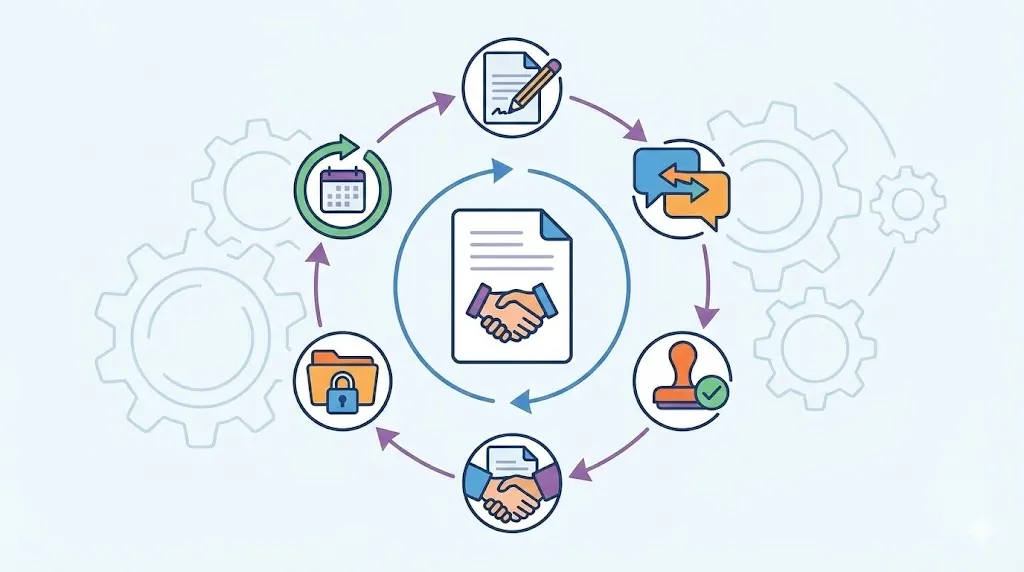
Intake → review → prioritization → negotiation → approval → signature → post-signature management
Related Article: Contract Ratification: Essential Steps to Confirm Agreements
Why Contract Management Software Matters
Contract management software supports review and negotiation in one connected workspace. It centralizes documents, standardizes workflows, and preserves decision history.
A central repository helps teams find the correct draft. Version control shows how language changed across negotiation rounds.
Workflow rules route work to the right people. They can also send reminders when reviews or approvals wait too long.
Clause libraries give reviewers approved language. Risk rules help teams spot terms that need closer attention.
Shared visibility helps legal and business teams work from the same record. It also reduces scattered comments and duplicate requests.
Centralized documents and version control
A secure repository stores drafts, comments, and executed agreements. Search tools help users find contracts by text or key details.
Version control reduces confusion between working copies. Teams can compare changes without relying on email attachments.
This matters when negotiations include many rounds. A clear history helps explain which terms changed and why.
Workflow and approval support
Automated routing sends contracts to assigned reviewers. It can route exceptions to finance, security, privacy, or executives.
Approval rules can reflect risk levels. A standard clause may need routine approval, while a major exception needs senior review.
Deadline alerts support timely action. They can remind owners about reviews, signatures, renewals, and other dates.
A clearer record after signature
The same system can preserve approved language and final decisions. It can also track obligations after signing.
Teams can record deliverables, renewal dates, and notice duties. This helps prevent important commitments from disappearing after execution.
Contract management software does not replace legal judgment. It gives people a clearer process and better information.
Volody's CLM Software supports contract review through AI Contract Review, AI Contract Summaries, and a Central Contract Repository. It can flag risky language, highlight obligations and renewal dates, and help teams find the correct document through search.
For example, a legal team can review a supplier draft, spot a weak liability clause, and track approval in one workspace.
Streamline contract creation, review, approval, and obligation tracking with Volody's CLM Software.
FAQ
What is the main difference between contract review and contract negotiation?
Contract review evaluates existing language and identifies risks, gaps, and unclear duties. Contract negotiation discusses and changes that language before signature. Review explains what the draft means and where it needs attention. Negotiation decides which changes the parties will accept, reject, or replace with another solution.
Can the same person handle both contract review and contract negotiation?
Yes, one lawyer or contract professional may handle both functions. That person can review the draft, prepare redlines, and speak with the counterparty. Complex deals may benefit from separate roles, however. One person can focus on risk analysis while another manages tradeoffs, discussions, and approvals.
Does contract review happen before contract negotiation?
Usually, the first review happens before negotiation begins. The team studies the draft, ranks issues, and prepares requested changes. Review continues as new drafts and counterproposals arrive. Each new version may create fresh risks or change the effect of earlier edits.
What should a contract reviewer look for first?
A reviewer should first understand the deal’s purpose and business priorities. They should then check major obligations, payment terms, liability exposure, termination rights, and missing protections. The reviewer should flag unclear language and unusual risks. Specialist teams may need to assess data, security, tax, or operational duties.
When should a business involve a lawyer in contract negotiation?
A business should involve a lawyer when the deal creates material legal or financial risk. Legal support is especially useful for high-value agreements, unusual liability terms, regulatory issues, and sensitive data. A lawyer can also help when standard language changes significantly. Early involvement can prevent costly negotiation mistakes.
How can technology improve contract review and negotiation?
Technology can centralize documents, control versions, and route work to assigned reviewers. It can support clause guidance, risk flags, comments, and approval tracking. Teams can also preserve negotiation history and final decisions. After signature, the same system can track obligations, renewals, notices, and other contract duties.
About the Company

Volody AI CLM is an Agentic AI-powered Contract Lifecycle Management platform designed to eliminate manual contracting tasks, automate complex workflows, and deliver actionable insights. As a one-stop shop for all contract activities, it covers drafting, collaboration, negotiation, approvals, e-signature, compliance tracking, and renewals. Built with enterprise-grade security and no-code configuration, it meets the needs of the most complex global organizations. Volody AI CLM also includes AI-driven contract review and risk analysis, helping teams detect issues early and optimize terms. Trusted by Fortune 500 companies, high-growth startups, and government entities, it transforms contracts into strategic, data-driven business assets.





" height="216.72211px" id="FYO0bO80Y" transform="translate(3 6.105)" width="206.073px"/><path d="M 108.174 222 C 88.432 222 70.303 217.239 53.785 207.717 C 37.267 198.196 24.173 185.052 14.504 168.285 C 4.835 151.312 0 132.165 0 110.845 C 0 89.731 4.835 70.792 14.504 54.025 C 24.173 37.052 37.267 23.804 53.785 14.282 C 70.303 4.761 88.432 0 108.174 0 C 128.116 0 146.246 4.761 162.562 14.282 C 179.08 23.804 192.073 37.052 201.541 54.025 C 211.21 70.792 216.044 89.731 216.044 110.845 C 216.044 132.165 211.21 151.312 201.541 168.285 C 192.073 185.052 179.08 198.196 162.562 207.717 C 146.044 217.239 127.915 222 108.174 222 Z M 108.174 183.189 C 120.864 183.189 132.044 180.291 141.713 174.495 C 151.382 168.492 158.936 160.006 164.375 149.035 C 169.814 138.064 172.533 125.334 172.533 110.845 C 172.533 96.355 169.814 83.729 164.375 72.965 C 158.936 61.994 151.382 53.611 141.713 47.815 C 132.044 42.02 120.864 39.122 108.174 39.122 C 95.483 39.122 84.202 42.02 74.332 47.815 C 64.663 53.611 57.109 61.994 51.67 72.965 C 46.231 83.729 43.511 96.355 43.511 110.845 C 43.511 125.334 46.231 138.064 51.67 149.035 C 57.109 160.006 64.663 168.492 74.332 174.495 C 84.202 180.291 95.483 183.189 108.174 183.189 Z" fill="rgba(255, 255, 255, 0.12)" height="222px" id="aa1McFcE9" transform="translate(227.183 3)" width="216.04399999999998px"/><path d="M 42.302 182.257 L 111.799 182.257 L 111.799 216.722 L 0 216.722 L 0 0 L 42.302 0 Z" fill="rgba(255, 255, 255, 0.12)" height="216.72211px" id="yRq4AnrsX" transform="translate(477.721 6.105)" width="111.79899999999998px"/><path d="M 108.174 222 C 88.432 222 70.303 217.239 53.785 207.717 C 37.267 198.196 24.173 185.052 14.504 168.285 C 4.835 151.312 0 132.165 0 110.845 C 0 89.731 4.835 70.792 14.504 54.025 C 24.173 37.052 37.267 23.804 53.785 14.282 C 70.303 4.761 88.432 0 108.174 0 C 128.116 0 146.246 4.761 162.562 14.282 C 179.08 23.804 192.073 37.052 201.541 54.025 C 211.21 70.792 216.045 89.731 216.045 110.845 C 216.045 132.165 211.21 151.312 201.541 168.285 C 192.073 185.052 179.08 198.196 162.562 207.717 C 146.044 217.239 127.915 222 108.174 222 Z M 108.174 183.189 C 120.864 183.189 132.044 180.291 141.713 174.495 C 151.382 168.492 158.936 160.006 164.375 149.035 C 169.814 138.064 172.534 125.334 172.534 110.845 C 172.534 96.355 169.814 83.729 164.375 72.965 C 158.936 61.994 151.382 53.611 141.713 47.815 C 132.044 42.02 120.864 39.122 108.174 39.122 C 95.483 39.122 84.202 42.02 74.332 47.815 C 64.663 53.611 57.108 61.994 51.67 72.965 C 46.231 83.729 43.511 96.355 43.511 110.845 C 43.511 125.334 46.231 138.064 51.67 149.035 C 57.108 160.006 64.663 168.492 74.332 174.495 C 84.202 180.291 95.483 183.189 108.174 183.189 Z" fill="rgba(255, 255, 255, 0.12)" height="222px" id="mo8HQspQ0" transform="translate(609.155 3)" width="216.04500000000007px"/><path d="M 73.727 0 C 95.885 0 115.324 4.45 132.044 13.351 C 148.967 22.252 161.957 34.982 171.027 51.541 C 180.287 67.894 184.917 86.937 184.917 108.671 C 184.917 130.405 180.287 149.449 171.027 165.801 C 161.957 181.947 148.967 194.47 132.044 203.371 C 115.324 212.271 95.885 216.722 73.727 216.722 L 0 216.722 L 0 0 Z M 72.216 179.773 C 94.374 179.773 111.497 173.564 123.583 161.144 C 135.669 148.724 141.713 131.233 141.713 108.671 C 141.713 86.109 135.669 68.515 123.583 55.888 C 111.497 43.055 94.374 36.638 72.216 36.638 L 42.302 36.638 L 42.302 179.773 Z" fill="rgba(255, 255, 255, 0.12)" height="216.72211px" id="I3iXX5Hi_" transform="translate(859.693 6.105)" width="184.91699999999992px"/><path d="M 185.22 0 L 113.91 141.273 L 113.91 216.722 L 71.61 216.722 L 71.61 141.273 L 0 0 L 47.74 0 L 93.06 99.046 L 138.08 0 Z" fill="rgba(255, 255, 255, 0.12)" height="216.72211px" id="nzHyWC0_d" transform="translate(1061.78 6.105)" width="185.22000000000003px"/></svg>)