

AI contract review technology revolutionizes how legal teams manage contracts by automating the identification of key clauses, risks, and inconsistencies. This innovation significantly reduces review times while enhancing accuracy, enabling legal professionals to concentrate on strategic initiatives rather than manual tasks. Modern enterprises benefit from increased operational efficiency, minimized risk exposure, and improved cross-departmental collaboration. A thorough understanding of AI contract review capabilities and implementation challenges is essential for optimizing legal workflows.
TL;DR
AI contract review cuts contract analysis time by up to 80 percent through automated segmentation and risk flagging.
Separating detection, interpretation, and decision-making steps improves review accuracy and speeds workflows.
Key challenges include poor data quality, system integration issues, and resistance from legal staff.
Best practices focus on ongoing AI training, clear workflows, and collaboration across teams.
Contract management software centralizes contracts and automates approvals, enhancing AI benefits.
Using modern AI tools prepares enterprises for faster, safer legal processes and better risk control.
How AI Transforms Contract Review Processes
Contract Segmentation and Clause Level Analysis
AI contract review software breaks contracts into smaller parts, like clauses and sections. This process is called contract segmentation. It helps the AI focus on each clause's meaning and context. By analyzing clauses individually, AI can spot specific risks or unusual language faster than manual reading.
Clause level analysis means AI compares each clause to standard legal playbooks. This helps spot missing provisions or non-compliant language. The AI uses natural language processing (NLP) to understand legal terms and their relationships. This insight aids legal teams in reviewing complex contracts more reliably.
Automated Risk Detection and Compliance Checking
AI contract analysis tools scan contracts to find risky clauses automatically. These tools flag language that might expose the company to legal or financial risk. For example, AI can detect vague payment terms or unclear liability clauses.
The AI also checks contracts against compliance rules set by the company or regulators. This automated contract review process helps ensure contracts follow the right laws and internal policies. It reduces the chance of missing critical compliance issues that a human might overlook.
Accelerating Decision Making with AI Insights
Once risks and clauses are identified, AI-powered contract management delivers clear insights for fast decisions. The AI highlights key points like renewal dates, payment obligations, or penalty clauses. This lets legal teams and business units quickly understand contract impacts.
AI contract review software can also suggest fallback clauses or alternatives based on the company’s legal playbook. These suggestions speed up negotiations and approvals. By automating routine checks and offering smart advice, AI frees legal staff to focus on strategic decisions.
AI also learns from past contract reviews, improving accuracy over time. It recognizes patterns in risky clauses that caused issues before. This machine learning aspect helps catch subtle problems early, which might be missed in a manual review.
Integration with other business systems lets AI pull relevant data automatically. For example, it can compare contract terms against actual purchase orders or invoices. This real-time cross-checking ensures contracts reflect current business realities and flag inconsistencies quickly.
Moreover, AI-powered dashboards provide a visual overview of contract health. Legal teams see trends in risk levels, compliance status, and contract bottlenecks at a glance. This visibility supports proactive management and prioritizes contracts needing urgent attention.
These capabilities combined make AI contract review a powerful tool. It turns a slow, error-prone process into a faster, more reliable part of contract management. Legal teams gain confidence knowing AI backs their review with data-driven insights.
Related articles: AI Contract Review vs. Human Lawyers: Speed, Accuracy & ROI
Benefits of AI Contract Review for Legal Teams
Time Savings and Increased Throughput
AI contract review cuts the time needed to analyze contracts by up to 80 percent. Automating clause extraction and risk flagging means fewer contracts pile up waiting for review. Legal teams handle more contracts without adding staff. This speed helps enterprises meet tight deadlines and scale contract volumes smoothly.
Enhanced Accuracy and Reduced Human Error
Manual contract reviews can miss subtle risks or clauses buried in complex language. AI contract review accuracy improves by using trained models and legal datasets. It consistently applies the same rules and checks every contract fully. This reduces costly human errors and missed risks.
Enabling Strategic Focus and Better Resource Allocation
By automating routine and repetitive contract checks, AI frees legal professionals for higher-value work. Legal teams can focus on negotiation strategies, risk mitigation, and compliance planning. AI contract analysis tools help allocate resources where human judgment adds the most value.
AI contract review tools also improve consistency across legal teams by standardizing how contracts are evaluated. This ensures every contract meets the same quality standards, regardless of who reviews it. Teams can easily track review decisions and maintain audit trails, which supports compliance and internal controls. Another advantage is faster onboarding of new legal staff. New team members learn from AI-generated insights and flagged issues, speeding up their ability to spot risks and understand contract nuances. Moreover, AI can adapt to evolving legal requirements by updating its models and rules, keeping reviews current without manual re-training. This flexibility helps legal teams stay ahead of regulatory changes and industry best practices. Finally, AI-driven contract review supports collaboration by highlighting key terms and risks for stakeholders outside the legal department. This transparency improves communication and decision-making across business units, reducing delays and misunderstandings during contract negotiations.
Related articles: How AI CLM Ensures Contract Compliance and Audit Readiness
Challenges in Implementing AI Contract Review
Data Quality and Contract Variability
AI models need clean, consistent contract data to work well. Contract language varies widely by industry, region, and contract type. Poorly formatted contracts or scanned documents can confuse AI. Enterprises must invest in data cleansing and document standardization to improve AI results.
Integration with Existing Legal and Business Systems
AI contract review tools often need to connect with contract management platforms, Microsoft Word, CRM, or ERP systems. Integration complexity can slow adoption. Technical challenges arise when syncing data across multiple systems. Seamless integration is essential for smooth workflows and user adoption.
Resistance to Change and Skill Gaps in Legal Teams
Legal teams may resist AI contract review due to fear of job loss or unfamiliarity with new tools. Lack of AI training or unclear benefits can cause skepticism. Enterprises must invest in change management and training to build trust and skills for AI adoption.
Managing False Positives and Negatives in AI Outputs
AI may flag clauses as risky when they are safe (false positives) or miss real risks (false negatives). These errors require human review and correction. Managing these AI contract review challenges means setting clear thresholds, continuous model training, and user feedback loops.
Ensuring Data Privacy and Security
Handling sensitive contract data with AI tools raises privacy concerns. Legal documents often contain confidential information that must be protected. Enterprises must enforce strict access controls and encryption to safeguard data. Compliance with data protection laws like GDPR is crucial to avoid legal penalties and maintain trust.
Balancing Automation and Human Oversight
While AI speeds up contract review, full automation is risky. Complex contracts need expert judgment that AI cannot replicate. Enterprises must define clear roles for AI and human reviewers to complement each other. This balance helps catch nuanced issues and maintain contract quality.
Scaling AI Across Diverse Contract Portfolios
Enterprises with large, varied contract libraries face challenges scaling AI solutions. Customizing AI models for different contract types and languages requires effort. Without proper scaling, AI benefits remain limited to a few contract categories. Planning for scalability ensures broader impact and better ROI from AI contract review.
Related articles: Measuring ROI of MS Word AI Add-Ins for Legal Teams
Best Practices for Maximizing AI Contract Review Efficiency
Continuous Model Training and Feedback Loops
AI contract review software improves over time with more data and user feedback. Legal teams should regularly update AI models with new contract examples. Feedback loops help reduce false positives and improve risk detection accuracy. Continuous training keeps AI aligned with evolving legal standards.
Defining Clear Review Workflows and Roles
Successful AI contract review depends on clear processes. Enterprises should define who reviews AI-flagged issues and how decisions are made. Clear roles and steps prevent bottlenecks and confusion. Well-designed workflows balance AI automation with human judgment.
Encouraging Collaboration Between Legal and Business Units
AI contract review works best when legal teams collaborate closely with procurement, sales, and finance. Shared access to AI insights helps all stakeholders understand contract risks and obligations. Collaboration speeds approvals and ensures contracts meet business and legal needs.
Leveraging Analytics for Continuous Improvement
Tracking AI review metrics helps legal teams spot patterns and areas needing attention. Metrics like flag frequency, override rates, and review times reveal AI strengths and weaknesses. Teams can prioritize training on recurring issues and adjust thresholds to balance sensitivity and efficiency. Analytics also support reporting to management on AI’s impact and ROI.
Integrating AI Review with Contract Lifecycle Stages
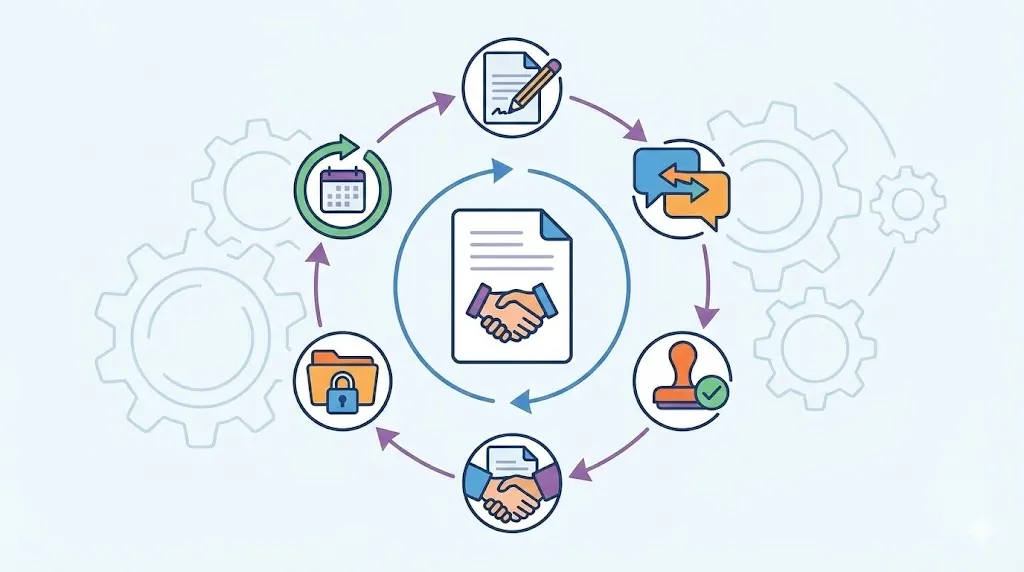
Embedding AI review early in contract drafting catches risks before negotiation. Later stages like approval and renewal benefit from AI checks on updated terms or compliance changes. Seamless integration across the contract lifecycle avoids duplicated effort and reduces errors. This end-to-end approach boosts confidence in contract quality and speeds cycle times.
Providing User Training and Support
Legal teams must understand AI capabilities and limits to use the tools well. Regular training sessions address common questions and demonstrate best practices. Ongoing support encourages adoption and helps users trust AI suggestions. Clear communication about AI’s role fosters a productive partnership between humans and technology.
Related articles: How Legal and Finance Can Collaborate Better on Contracts
Impact on Cross Functional Collaboration and Business Velocity
Breaking Down Silos Between Legal and Other Departments
AI contract review software provides real-time contract data accessible to multiple teams. Legal, sales, and procurement can view contract status, risks, and renewal dates in one place. This transparency breaks down traditional silos and improves communication.
Real Time Visibility into Contract Status and Obligations
Automated contract review combined with workflow tools gives up-to-date visibility on contract progress. Teams can track approvals, deliverables, and deadlines easily. Real time insights speed decision-making and reduce delays caused by missing information.
Streamlining Cross-Department Workflows
AI contract review tools can integrate with other business systems like CRM and ERP. This integration lets teams automatically update contract details without manual entry. For example, sales teams can see contract terms directly within their CRM, avoiding back-and-forth emails with legal. Procurement can align purchase orders with contract terms faster, reducing errors and mismatches. This connected approach helps teams work together smoothly and stay aligned on contract obligations.
Enhancing Accountability and Risk Awareness
Centralized contract data also improves accountability across functions. When risks or unusual clauses are flagged by AI, relevant teams get immediate alerts. This early warning lets sales or finance address issues before contracts are signed. Everyone involved understands their responsibilities, which lowers compliance risks. Clear role-based access ensures sensitive contract details remain protected but visible to those who need them. This balance supports faster, safer contract execution while keeping all teams informed and accountable.
Related articles: Contract Risk Analysis Strengthened By AI In Legal Ops
Future Trends in AI Contract Review Technology
Advances in Natural Language Processing and Legal AI Models
AI models for contracts will get smarter with better understanding of legal language nuances. New NLP techniques will improve clause extraction and risk flagging accuracy. This will reduce the need for human review even further.
Integration with Broader Enterprise Legal Management Systems
AI contract review will become more embedded in full contract lifecycle management (CLM) systems. Integration with ERP, CRM, and e-signature platforms will create seamless end-to-end workflows. This integration increases efficiency and reduces manual handoffs.
Increasing Use of Predictive Analytics for Contract Outcomes
Future AI tools will predict contract risks and outcomes based on past data. Predictive analytics can forecast negotiation success or litigation risks. This helps legal teams make proactive, data-driven decisions.
Enhanced Customization Through Machine Learning
AI contract review tools will adapt to company-specific needs using machine learning. These systems will learn from past contract edits and approvals to tailor risk flags and suggestions. This customization reduces irrelevant alerts and focuses attention on critical issues. Over time, the AI will better align with unique legal policies and preferences.
Greater Focus on Data Privacy and Security Compliance
As regulations evolve, AI tools will improve their ability to spot data privacy risks in contracts. They will automatically identify clauses that may conflict with laws like GDPR or CCPA. This helps legal teams ensure compliance without exhaustive manual checks. Enhanced security features will also protect sensitive contract data during automated reviews.
Real-Time Collaboration and Feedback Loops
Future AI contract review technology will support real-time collaboration between legal teams and other departments. Instant feedback on contract drafts will speed up revisions and approvals. This dynamic interaction reduces bottlenecks and improves contract quality before finalization.
Related articles: Customized AI Powers End-to-End CLM for Legal Teams
Why Contract Management Software Matters
Contract management software works with AI contract review to manage contracts from start to finish. It stores contracts in a secure, centralized place with full-text search. This central contract repository makes document access and control easy.
Automated workflows reduce bottlenecks by routing contracts for approval with reminders. This contract review automation benefits teams by speeding approvals and reducing errors. The software tracks compliance and audit trails to meet enterprise needs.
Improved reporting features help legal and business leaders monitor contract portfolios and risks. This visibility supports better decision-making and risk management.
Volody's CLM Software is an example of a solution that combines AI contract review with contract management. It offers AI contract clause extraction, approval workflow automation, and a centralized contract repository. These features help legal teams quickly find key clauses, automate review steps, and keep all contracts organized.
For example, Volody's AI contract clause extraction can instantly highlight renewal dates and risky terms in a batch of contracts. Approval workflow automation sends reminders to reviewers, reducing delays. The central repository gives teams real-time access to contracts, speeding collaboration.
> Discover how contract management software can optimize your legal operations. Explore Volody's CLM Software today.
FAQ
What is AI contract review and how does it work?
AI contract review uses machine learning and natural language processing to analyze contracts automatically. It breaks contracts into clauses, flags risks, and extracts important terms. This speeds reviews and reduces manual errors by separating detection, interpretation, and decision-making steps.
How much time can AI contract review save legal teams?
AI contract review can cut contract analysis time by 60 to 80 percent compared to manual review. This allows legal teams to process more contracts faster and focus on strategic tasks instead of routine checks.
What are the main challenges when adopting AI for contract review?
Challenges include ensuring contract data is clean and consistent, integrating AI tools with existing systems, overcoming resistance from legal staff, and managing AI accuracy issues like false alarms or missed risks.
How does AI contract review improve collaboration between legal and business teams?
AI provides real-time contract insights and automates routine tasks, which improves communication and transparency. Legal and business teams can align on contract terms faster, speeding approvals and negotiations.
Can AI contract review handle complex or non-standard contracts?
Modern AI models trained on diverse legal data can analyze many contract types and structures. However, ongoing training and human oversight are needed to handle highly complex or unusual contracts accurately.
What role does contract management software play alongside AI review?
Contract management software centralizes contract data, automates workflows, and tracks compliance. It enhances AI review benefits by managing contracts efficiently throughout their lifecycle, reducing risk and administrative work.
Is AI contract review secure for sensitive legal documents?
Good AI contract review tools use strong security measures like encryption and access controls. Enterprises should check vendor security standards to ensure data privacy compliance.
How can enterprises prepare their legal teams for AI contract review adoption?
Preparation includes training staff on AI tools, defining clear workflows, and promoting a culture open to technology. Ongoing support and feedback improve AI effectiveness and user confidence.
About the Company

Volody AI CLM is an Agentic AI-powered Contract Lifecycle Management platform designed to eliminate manual contracting tasks, automate complex workflows, and deliver actionable insights. As a one-stop shop for all contract activities, it covers drafting, collaboration, negotiation, approvals, e-signature, compliance tracking, and renewals. Built with enterprise-grade security and no-code configuration, it meets the needs of the most complex global organizations. Volody AI CLM also includes AI-driven contract review and risk analysis, helping teams detect issues early and optimize terms. Trusted by Fortune 500 companies, high-growth startups, and government entities, it transforms contracts into strategic, data-driven business assets.





" height="216.72211px" id="FYO0bO80Y" transform="translate(3 6.105)" width="206.073px"/><path d="M 108.174 222 C 88.432 222 70.303 217.239 53.785 207.717 C 37.267 198.196 24.173 185.052 14.504 168.285 C 4.835 151.312 0 132.165 0 110.845 C 0 89.731 4.835 70.792 14.504 54.025 C 24.173 37.052 37.267 23.804 53.785 14.282 C 70.303 4.761 88.432 0 108.174 0 C 128.116 0 146.246 4.761 162.562 14.282 C 179.08 23.804 192.073 37.052 201.541 54.025 C 211.21 70.792 216.044 89.731 216.044 110.845 C 216.044 132.165 211.21 151.312 201.541 168.285 C 192.073 185.052 179.08 198.196 162.562 207.717 C 146.044 217.239 127.915 222 108.174 222 Z M 108.174 183.189 C 120.864 183.189 132.044 180.291 141.713 174.495 C 151.382 168.492 158.936 160.006 164.375 149.035 C 169.814 138.064 172.533 125.334 172.533 110.845 C 172.533 96.355 169.814 83.729 164.375 72.965 C 158.936 61.994 151.382 53.611 141.713 47.815 C 132.044 42.02 120.864 39.122 108.174 39.122 C 95.483 39.122 84.202 42.02 74.332 47.815 C 64.663 53.611 57.109 61.994 51.67 72.965 C 46.231 83.729 43.511 96.355 43.511 110.845 C 43.511 125.334 46.231 138.064 51.67 149.035 C 57.109 160.006 64.663 168.492 74.332 174.495 C 84.202 180.291 95.483 183.189 108.174 183.189 Z" fill="rgba(255, 255, 255, 0.12)" height="222px" id="aa1McFcE9" transform="translate(227.183 3)" width="216.04399999999998px"/><path d="M 42.302 182.257 L 111.799 182.257 L 111.799 216.722 L 0 216.722 L 0 0 L 42.302 0 Z" fill="rgba(255, 255, 255, 0.12)" height="216.72211px" id="yRq4AnrsX" transform="translate(477.721 6.105)" width="111.79899999999998px"/><path d="M 108.174 222 C 88.432 222 70.303 217.239 53.785 207.717 C 37.267 198.196 24.173 185.052 14.504 168.285 C 4.835 151.312 0 132.165 0 110.845 C 0 89.731 4.835 70.792 14.504 54.025 C 24.173 37.052 37.267 23.804 53.785 14.282 C 70.303 4.761 88.432 0 108.174 0 C 128.116 0 146.246 4.761 162.562 14.282 C 179.08 23.804 192.073 37.052 201.541 54.025 C 211.21 70.792 216.045 89.731 216.045 110.845 C 216.045 132.165 211.21 151.312 201.541 168.285 C 192.073 185.052 179.08 198.196 162.562 207.717 C 146.044 217.239 127.915 222 108.174 222 Z M 108.174 183.189 C 120.864 183.189 132.044 180.291 141.713 174.495 C 151.382 168.492 158.936 160.006 164.375 149.035 C 169.814 138.064 172.534 125.334 172.534 110.845 C 172.534 96.355 169.814 83.729 164.375 72.965 C 158.936 61.994 151.382 53.611 141.713 47.815 C 132.044 42.02 120.864 39.122 108.174 39.122 C 95.483 39.122 84.202 42.02 74.332 47.815 C 64.663 53.611 57.108 61.994 51.67 72.965 C 46.231 83.729 43.511 96.355 43.511 110.845 C 43.511 125.334 46.231 138.064 51.67 149.035 C 57.108 160.006 64.663 168.492 74.332 174.495 C 84.202 180.291 95.483 183.189 108.174 183.189 Z" fill="rgba(255, 255, 255, 0.12)" height="222px" id="mo8HQspQ0" transform="translate(609.155 3)" width="216.04500000000007px"/><path d="M 73.727 0 C 95.885 0 115.324 4.45 132.044 13.351 C 148.967 22.252 161.957 34.982 171.027 51.541 C 180.287 67.894 184.917 86.937 184.917 108.671 C 184.917 130.405 180.287 149.449 171.027 165.801 C 161.957 181.947 148.967 194.47 132.044 203.371 C 115.324 212.271 95.885 216.722 73.727 216.722 L 0 216.722 L 0 0 Z M 72.216 179.773 C 94.374 179.773 111.497 173.564 123.583 161.144 C 135.669 148.724 141.713 131.233 141.713 108.671 C 141.713 86.109 135.669 68.515 123.583 55.888 C 111.497 43.055 94.374 36.638 72.216 36.638 L 42.302 36.638 L 42.302 179.773 Z" fill="rgba(255, 255, 255, 0.12)" height="216.72211px" id="I3iXX5Hi_" transform="translate(859.693 6.105)" width="184.91699999999992px"/><path d="M 185.22 0 L 113.91 141.273 L 113.91 216.722 L 71.61 216.722 L 71.61 141.273 L 0 0 L 47.74 0 L 93.06 99.046 L 138.08 0 Z" fill="rgba(255, 255, 255, 0.12)" height="216.72211px" id="nzHyWC0_d" transform="translate(1061.78 6.105)" width="185.22000000000003px"/></svg>)