

Contracts are too important to remain scattered across email, shared drives, and local folders. Contract repository software establishes a governed source of truth for every agreement, making critical terms easier to find, monitor, and act on. The right platform also transforms contract files into reliable business data that improves oversight and decision-making.
TL;DR
Contract repository software creates one trusted home for agreements, amendments, metadata, and signed records.
Essential features include search, extraction, version control, security, alerts, integrations, analytics, and growth support.
AI tools help teams find clauses, dates, parties, obligations, and risks without reading every document.
Permissions, encryption, and audit trails protect sensitive agreements while supporting clear accountability.
Common challenges include scattered files, weak metadata, migration work, unclear ownership, and low user adoption.
Strong evaluation covers workflows, integrations, reporting, governance, support, and long term business needs.
The Eight Essential Features of Contract Repository Software
1. Centralized storage and a governed source of truth
A contract repository brings agreements into one controlled digital contract repository. It replaces scattered copies in email, shared drives, and personal folders.
This approach gives teams one trusted source for current documents. Users can find signed agreements, amendments, exhibits, and related files together.
Central storage also reduces duplicate work. Legal teams spend less time answering basic document requests.
A governed repository sets rules for upload, naming, ownership, and retention. These rules help prevent another set of disconnected folders.
The system should support many file types and scanned documents. It should also preserve links between an agreement and its related records.
A good contract repository system shows which document is active. It should clearly mark drafts, signed versions, expired records, and replaced files.
This clarity matters during audits, disputes, and renewal reviews. Teams can act with confidence because they know which file controls.
2. Searchable metadata and intelligent extraction
Metadata means useful facts about a document. Common fields include parties, dates, value, owner, type, status, and renewal terms.
Good software lets teams search these fields quickly. Users can filter contracts by region, supplier, business unit, or risk level.
Optical character recognition, or OCR, reads text inside scanned files. This makes older paper contracts searchable after upload.
Clause recognition helps identify specific language within an agreement. Teams can search for audit rights, auto-renewal terms, or data duties.
AI extraction can find parties, payment terms, obligations, and key dates. It turns unstructured documents into organized contract data.
Users should review extracted data before relying on it. Clear review steps help correct unusual wording and poor scans.
This combination supports faster work across legal, finance, sales, and procurement. It also makes a contract repository system useful beyond document storage.
3. Version control and complete contract histories
Contracts change through edits, renewals, amendments, and restatements. Version control records these changes in a clear order.
Users can see who uploaded each file and when. They can also compare earlier drafts with later versions.
The system should preserve the final signed agreement. It should prevent users from confusing a working draft with an executed copy.
A complete history connects amendments to the original contract. It can also connect renewal letters, exhibits, and approval records.
This record helps teams explain how terms changed. It supports legal review when someone questions a past decision.
Version control also limits accidental overwrites. Users can work from the right file without deleting earlier evidence.
4. Secure access, obligation tracking, integrations, analytics, and scalability
Access controls limit contract visibility by role or responsibility. A finance user may see payment terms but not sensitive legal notes.
Role-based permissions support departments, regions, matters, and contract types. Administrators can also limit editing rights.
Encryption protects data during transfer and while stored. Multi-factor authentication adds another check before users enter the system.
Renewal alerts help teams act before important dates pass. Obligation tracking records duties, owners, deadlines, and completion status.
Integrations connect the repository with CRM, ERP, procurement, identity, and signing tools. These links reduce repeated data entry across systems.
Analytics turn stored information into useful reports. Leaders can review contract volume, renewal exposure, spend, risk, and missing records.
Cloud scalability supports more users, files, regions, and business units. The platform should grow without forcing a costly system change.
Related Article: Ultimate guide of Contract Repository Systems
Building a Reliable Contract Data Foundation
Consolidating agreements from disconnected locations
A strong foundation starts with a clear contract inventory. Teams should identify where agreements currently live before choosing migration steps.
Sources may include legal drives, procurement folders, shared mailboxes, and business applications. Some teams may also hold signed copies in paper files.
Each department should name a contact for its contract records. That person can confirm file ownership and identify missing documents.
The inventory should separate active and expired agreements. It should also flag records linked to major suppliers, customers, or business risks.
Duplicate files need careful review before migration. Teams should not upload every copy without checking its status.
Some files may lack signatures or supporting exhibits. These gaps should become visible issues, not hidden problems inside the new repository.
The first import can focus on high value agreements. A focused start reduces risk and gives users a useful early result.
Standardizing metadata and naming conventions
Metadata needs clear definitions before bulk upload begins. For example, every team should define what “active” means.
Useful fields include contract type, parties, owner, value, start date, and end date. Teams may also need region, supplier category, and renewal method.
Naming rules should remain simple and consistent. A name might include the counterparty, contract type, and signing year.
Required fields should match real business needs. Too many fields slow users and create poor quality data.
Owners should review sample records after migration. This check can reveal unclear values and missing choices.
Standard metadata improves search and reporting. It also helps teams compare agreements across departments.
Preserving execution records and related documents
A repository should preserve the signed agreement first. It should also retain amendments, exhibits, schedules, and attachments.
Approval records can explain how the contract reached signature. Supporting emails may also matter during disputes or audits.
Related documents should stay connected to the main agreement. Users should not need to search separate folders for essential context.
Retention rules should apply to the complete contract record. Deleting an attachment may remove evidence that changes the agreement’s meaning.
Teams should record missing documents during migration. A clear gap report gives owners a path for later cleanup.
Related Article: AI-Powered Contract Metadata Extraction Software | Volody
Finding the Right Contract Information Faster
Full text and clause level search
File names rarely provide enough information for contract work. Full text search lets users find words inside every stored agreement.
Clause level search goes further. It helps users locate specific provisions across many contracts.
A legal team might search for assignment rights or audit language. Procurement might search for price increases or service credits.
Filters make results easier to manage. Users can narrow results by party, date, type, owner, region, or status.
Search should support exact phrases and related terms. This helps when different contracts use similar language.
Saved searches can support regular reviews. For example, a team can save a search for agreements renewing within six months.
Search results should show useful context. Users should see the matching text, document name, and relevant metadata.
Automated extraction from unstructured documents
Many agreements arrive as scanned images or inconsistent files. OCR converts those images into searchable text.
Intelligent extraction can identify names, dates, values, and obligations. It can also detect clauses that follow common patterns.
Extraction tools should show confidence or review signals. Users need to know which fields require human confirmation.
Poor scans can produce incorrect words or dates. A review queue helps teams fix those errors before reporting.
The system should preserve the original file beside extracted data. This gives users a source record for every important field.
AI does not remove the need for legal judgment. It reduces manual reading and helps teams focus on important exceptions.
Related Article: AI Contract Repository Software | Secure & Searchable
Protecting Sensitive Agreements and Proving Accountability
Permission models for different stakeholders
A repository may hold pricing, employee, customer, and supplier information. Not every user should see every agreement.
Role-based access gives users the rights needed for their work. Matter-based access can protect especially sensitive projects.
Permissions may reflect department, country, contract type, or ownership. They should also distinguish viewing, editing, sharing, and deleting.
Administrators need clear control over these rules. They should review access when people change roles or leave the company.
Broad access can create privacy and commercial risk. Narrow access can block useful work if rules become too strict.
Teams should test permissions with real user roles. Test results can expose gaps before launch.
Encryption, authentication, and secure hosting
Encryption protects contract data while it moves between systems. It also protects files stored within the repository.
Multi-factor authentication requires more than a password. This reduces risk when a password becomes exposed.
Single sign-on can simplify access and support central user control. It also helps remove access quickly when staff leave.
Secure hosting needs strong administrative controls. These controls should cover backups, recovery, monitoring, and system changes.
Vendors should explain how they protect customer data. They should also describe their approach to incidents and service interruptions.
Security settings must support practical daily work. Excessive steps may lead users to create unsafe workarounds.
Audit trails and retention governance
Audit trails record important actions inside the system. These records may show uploads, edits, downloads, shares, and deletions.
Access histories can help explain who viewed sensitive information. They also support internal reviews after unusual activity.
Retention rules define how long records should remain available. Legal holds can pause deletion when a dispute or review begins.
Deletion controls should require proper authority. They should also preserve a record of approved removals.
Governance works best when owners review rules often. Business changes may create new regions, contract types, or retention needs.
Controlled sharing and external collaboration
Contracts often need review by customers, suppliers, counsel, or auditors. Secure sharing can reduce the risk of sending files by email.
Time limited links can expire after a set period. Download restrictions can keep documents inside the approved environment.
Watermarks can identify the recipient and discourage casual sharing. Some systems also allow view only access.
External users should receive only the needed document. They should not gain access to the wider enterprise contract repository.
Teams should track shared links and revoke them when work ends. These simple controls reduce exposure after a project closes.
Related Article: Top 10 Contract Management Software For Enterprises In 2026
Common Challenges in Contract Repository Implementation
Fragmented and incomplete contract data
Many companies begin with files spread across several locations. Some agreements may exist only in employee inboxes.
Duplicate files can show different dates or edits. Teams may not know which copy is signed and current.
Missing exhibits create another problem. An agreement without its schedules may not show the full business commitment.
Migration teams should record uncertainty instead of hiding it. A visible issue can receive an owner and a clear next step.
A phased migration reduces pressure. Teams can begin with active, valuable, or high risk contracts.
Poor metadata quality and extraction errors
Bad metadata weakens every repository function. Search, alerts, reports, and dashboards all depend on reliable fields.
Different teams may use different names for the same contract type. One group may write “supplier agreement,” while another writes “vendor contract.”
Scanned files can also create extraction errors. A missed date may trigger the wrong alert or hide a renewal.
Human review remains necessary for important fields. Owners should confirm values before they support major decisions.
Teams should measure correction patterns during early use. Repeated errors may show a need for better rules or templates.
Adoption resistance across business teams
Users may keep using email when a new process feels slow. They may also avoid the repository if ownership seems unclear.
Training should focus on real daily tasks. Show users how to find a signed contract or check a renewal date.
Leaders should explain what the repository replaces. Clear rules help teams stop using private folders for official records.
Each group needs a named owner. Owners can answer questions and reinforce upload and update practices.
Early success can improve trust. A fast search result or useful alert gives users a reason to return.
Related Article: Contract Repository: How to Set it Up Effectively?
Practical Remedies and Governance Best Practices
Start with a focused contract inventory
Begin with agreements that create clear business value. Good starting points include major suppliers, key customers, and active renewals.
High risk contracts also deserve early attention. These may include data processing, service, employment, or regulated agreements.
A narrow first phase makes cleanup easier. It also gives the team time to test fields, permissions, and workflows.
Record excluded contracts for later review. This keeps the project focused without losing track of remaining work.
Set a clear success goal for the first phase. For example, users might need faster access to active supplier agreements.
Define ownership and operating standards
Legal can own legal terms and repository rules. Procurement can own supplier data and commercial updates.
Finance may confirm value, payment terms, and cost details. Sales teams may manage customer records and renewal information.
Business owners should confirm obligations and delivery dates. Shared ownership creates better data than one central team alone.
Standards should define upload timing and required fields. They should also explain how amendments and expired files are handled.
Governance meetings can review errors and overdue work. These meetings should lead to specific actions, not more policy documents.
Related Article: Mastering Contract Version Control That Actually Works
Evaluating Integrations, Reporting, and Long Term Fit
Connecting the repository to core business systems
A contract repository works best when it connects with daily tools. Users should not copy the same details across several systems.
CRM links can connect customer agreements with account records. Sales teams can then find contract terms without leaving their main workspace.
ERP links can support supplier, payment, and spend information. Procurement teams can compare contract data with purchasing activity.
Identity tools manage user access from a central place. E-signature links can return completed agreements to the correct record.
Workflow connections can send alerts to the right owner. They can also trigger review tasks before renewals or approvals.
Integration quality matters more than the number of connectors. Each connection should solve a real process problem.
Teams should test error handling during evaluation. Failed updates need clear messages and simple recovery steps.
Turning contract data into useful reporting
Reports should answer practical business questions. Leaders may need to know which agreements renew soon.
Legal teams may track missing documents and unusual clauses. Finance may review spend commitments and payment terms.
Procurement may compare supplier terms across regions. Sales may monitor customer renewals and commercial risks.
Dashboards should show owners and next actions. A list of dates without responsible people has limited value.
Reports also need trusted source data. Weak metadata can make polished dashboards misleading.
Users should export results when needed. Export controls should still respect permissions and sensitive data rules.
Testing scalability and administrative flexibility
A system must support growth in users and contract volume. It should also handle more departments, regions, and document types.
Storage limits matter when files include scans and attachments. Teams should understand pricing as their repository expands.
Configurable fields help the system match changing business needs. Administrators should add useful fields without constant vendor support.
Workflow rules may change after the first launch. The platform should allow updates without major technical work.
International teams may need different languages, time zones, and retention rules. These needs should be tested before global expansion.
Future automation may include deeper review and obligation tracking. Choose a platform that can support those needs later.
Support quality affects long term value. Ask how the vendor handles training, incidents, upgrades, and product requests.
Related Article: Top 10 Contract Management Software in India (2026)
Why Contract Management Software Matters
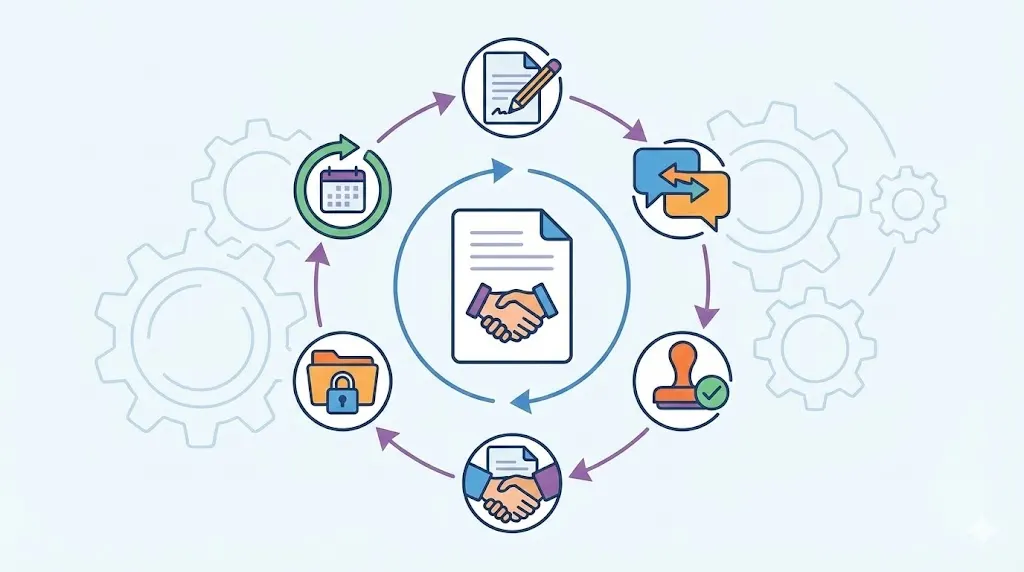
A repository stores contract information, but contract management software connects that information to action. It can support intake, drafting, review, approval, signing, obligations, and renewals.
Centralized contract data reduces search time and duplicate work. Teams make fewer decisions from old or incomplete documents.
Automated alerts remind owners about renewals and duties. Permissions protect sensitive files while audit trails show who changed records.
Reporting gives leaders a clearer view of risk and value. Cross functional teams can work from the same facts.
Volody’s CLM Software extends repository work across the contract lifecycle. It includes AI Contract Summaries, Obligation Management, and Approval Workflow Automation.
For example, a team can store a signed supplier agreement, summarize its duties, and route renewal approval automatically. Owners receive reminders before deadlines arrive.
FAQ
What is contract repository software?
Contract repository software stores agreements and related data in one searchable system. It replaces scattered files across email, shared drives, and local folders. Users can search documents, metadata, clauses, dates, and obligations. Unlike basic cloud storage, it adds permissions, version control, alerts, audit records, and contract focused reporting.
Is contract repository software the same as contract management software?
No, the two tools have different main purposes. A repository focuses on storage, organization, search, and retrieval. Contract management software can also support drafting, negotiation, approval, signing, obligations, renewals, and analytics. Many contract lifecycle management platforms include repository features as one part of a wider system.
What features should you look for in contract repository software?
Look for centralized storage, strong metadata, full text search, and clause search. AI extraction can find parties, dates, obligations, and commercial terms. Version control, permissions, audit trails, alerts, integrations, reporting, and scalability also matter. The best feature set should match your team’s workflows and contract risks.
What should be migrated into a contract repository?
Start with active agreements, key amendments, and supporting documents. Include records that affect renewals, payments, duties, or compliance. Expired contracts may also matter for audits, disputes, and business history. Review duplicates before migration, and record missing signatures or attachments for later cleanup.
How secure is contract repository software?
Security depends on the vendor’s controls and your configuration. Look for encryption, multi-factor authentication, role-based access, audit trails, retention rules, and secure sharing. Ask how the vendor manages backups, incidents, and system access. Test permissions with real user roles before moving sensitive agreements.
Can contract repository software integrate with CRM and ERP systems?
Yes, many systems connect with CRM, ERP, procurement, identity, signing, and workflow tools. These integrations can sync key data and reduce duplicate entry. They can also trigger alerts or tasks from contract events. Choose a platform that supports secure data flow, clear error handling, flexible permissions, and the integrations your teams rely on.
About the Company

Volody AI CLM is an Agentic AI-powered Contract Lifecycle Management platform designed to eliminate manual contracting tasks, automate complex workflows, and deliver actionable insights. As a one-stop shop for all contract activities, it covers drafting, collaboration, negotiation, approvals, e-signature, compliance tracking, and renewals. Built with enterprise-grade security and no-code configuration, it meets the needs of the most complex global organizations. Volody AI CLM also includes AI-driven contract review and risk analysis, helping teams detect issues early and optimize terms. Trusted by Fortune 500 companies, high-growth startups, and government entities, it transforms contracts into strategic, data-driven business assets.




" height="216.72211px" id="FYO0bO80Y" transform="translate(3 6.105)" width="206.073px"/><path d="M 108.174 222 C 88.432 222 70.303 217.239 53.785 207.717 C 37.267 198.196 24.173 185.052 14.504 168.285 C 4.835 151.312 0 132.165 0 110.845 C 0 89.731 4.835 70.792 14.504 54.025 C 24.173 37.052 37.267 23.804 53.785 14.282 C 70.303 4.761 88.432 0 108.174 0 C 128.116 0 146.246 4.761 162.562 14.282 C 179.08 23.804 192.073 37.052 201.541 54.025 C 211.21 70.792 216.044 89.731 216.044 110.845 C 216.044 132.165 211.21 151.312 201.541 168.285 C 192.073 185.052 179.08 198.196 162.562 207.717 C 146.044 217.239 127.915 222 108.174 222 Z M 108.174 183.189 C 120.864 183.189 132.044 180.291 141.713 174.495 C 151.382 168.492 158.936 160.006 164.375 149.035 C 169.814 138.064 172.533 125.334 172.533 110.845 C 172.533 96.355 169.814 83.729 164.375 72.965 C 158.936 61.994 151.382 53.611 141.713 47.815 C 132.044 42.02 120.864 39.122 108.174 39.122 C 95.483 39.122 84.202 42.02 74.332 47.815 C 64.663 53.611 57.109 61.994 51.67 72.965 C 46.231 83.729 43.511 96.355 43.511 110.845 C 43.511 125.334 46.231 138.064 51.67 149.035 C 57.109 160.006 64.663 168.492 74.332 174.495 C 84.202 180.291 95.483 183.189 108.174 183.189 Z" fill="rgba(255, 255, 255, 0.12)" height="222px" id="aa1McFcE9" transform="translate(227.183 3)" width="216.04399999999998px"/><path d="M 42.302 182.257 L 111.799 182.257 L 111.799 216.722 L 0 216.722 L 0 0 L 42.302 0 Z" fill="rgba(255, 255, 255, 0.12)" height="216.72211px" id="yRq4AnrsX" transform="translate(477.721 6.105)" width="111.79899999999998px"/><path d="M 108.174 222 C 88.432 222 70.303 217.239 53.785 207.717 C 37.267 198.196 24.173 185.052 14.504 168.285 C 4.835 151.312 0 132.165 0 110.845 C 0 89.731 4.835 70.792 14.504 54.025 C 24.173 37.052 37.267 23.804 53.785 14.282 C 70.303 4.761 88.432 0 108.174 0 C 128.116 0 146.246 4.761 162.562 14.282 C 179.08 23.804 192.073 37.052 201.541 54.025 C 211.21 70.792 216.045 89.731 216.045 110.845 C 216.045 132.165 211.21 151.312 201.541 168.285 C 192.073 185.052 179.08 198.196 162.562 207.717 C 146.044 217.239 127.915 222 108.174 222 Z M 108.174 183.189 C 120.864 183.189 132.044 180.291 141.713 174.495 C 151.382 168.492 158.936 160.006 164.375 149.035 C 169.814 138.064 172.534 125.334 172.534 110.845 C 172.534 96.355 169.814 83.729 164.375 72.965 C 158.936 61.994 151.382 53.611 141.713 47.815 C 132.044 42.02 120.864 39.122 108.174 39.122 C 95.483 39.122 84.202 42.02 74.332 47.815 C 64.663 53.611 57.108 61.994 51.67 72.965 C 46.231 83.729 43.511 96.355 43.511 110.845 C 43.511 125.334 46.231 138.064 51.67 149.035 C 57.108 160.006 64.663 168.492 74.332 174.495 C 84.202 180.291 95.483 183.189 108.174 183.189 Z" fill="rgba(255, 255, 255, 0.12)" height="222px" id="mo8HQspQ0" transform="translate(609.155 3)" width="216.04500000000007px"/><path d="M 73.727 0 C 95.885 0 115.324 4.45 132.044 13.351 C 148.967 22.252 161.957 34.982 171.027 51.541 C 180.287 67.894 184.917 86.937 184.917 108.671 C 184.917 130.405 180.287 149.449 171.027 165.801 C 161.957 181.947 148.967 194.47 132.044 203.371 C 115.324 212.271 95.885 216.722 73.727 216.722 L 0 216.722 L 0 0 Z M 72.216 179.773 C 94.374 179.773 111.497 173.564 123.583 161.144 C 135.669 148.724 141.713 131.233 141.713 108.671 C 141.713 86.109 135.669 68.515 123.583 55.888 C 111.497 43.055 94.374 36.638 72.216 36.638 L 42.302 36.638 L 42.302 179.773 Z" fill="rgba(255, 255, 255, 0.12)" height="216.72211px" id="I3iXX5Hi_" transform="translate(859.693 6.105)" width="184.91699999999992px"/><path d="M 185.22 0 L 113.91 141.273 L 113.91 216.722 L 71.61 216.722 L 71.61 141.273 L 0 0 L 47.74 0 L 93.06 99.046 L 138.08 0 Z" fill="rgba(255, 255, 255, 0.12)" height="216.72211px" id="nzHyWC0_d" transform="translate(1061.78 6.105)" width="185.22000000000003px"/></svg>)