
Contracts directly influence revenue, spending, risk, and operational performance. Yet many teams still rely on email, shared drives, and spreadsheets to manage them. CLM automation replaces fragmented processes with a controlled, connected lifecycle that strengthens compliance, reduces administrative effort, and protects contract value.
TL;DR
CLM centralizes contracts, workflows, approvals, obligations, and renewals for stronger control.
Automated rules and alerts support compliance while creating clear, audit-ready contract records.
Standard templates and routing reduce legal effort, delays, errors, and repeated administrative work.
AI contract intelligence finds key terms, risks, dates, and savings opportunities across agreements.
Clean data, clear ownership, integrations, and training support reliable CLM adoption.
Teams should measure cycle time, compliance, savings capture, renewal results, and user adoption.
The Business Case for CLM Automation
From fragmented records to controlled contract data
Contracts often sit across inboxes, local drives, and team folders. This setup makes basic questions hard to answer.
A manager may ask which agreements expire soon. Someone then searches several folders and emails. The answer may still miss an amendment or side letter.
A central contract repository creates one trusted record. Users can search agreements by party, date, value, status, or contract type. Full-text search can also find clauses within scanned files.
Version control reduces another common problem. Teams can see the latest approved agreement and its related changes. They avoid reviewing an old draft or signing the wrong file.
Central data also clarifies ownership. Legal can manage review status. Procurement can track supplier terms. Finance can view payment rules and rebates. Business teams can see active duties and renewal dates.
This shared view supports better decisions. Teams spend less time finding information and more time acting on it.
Automating the contract lifecycle
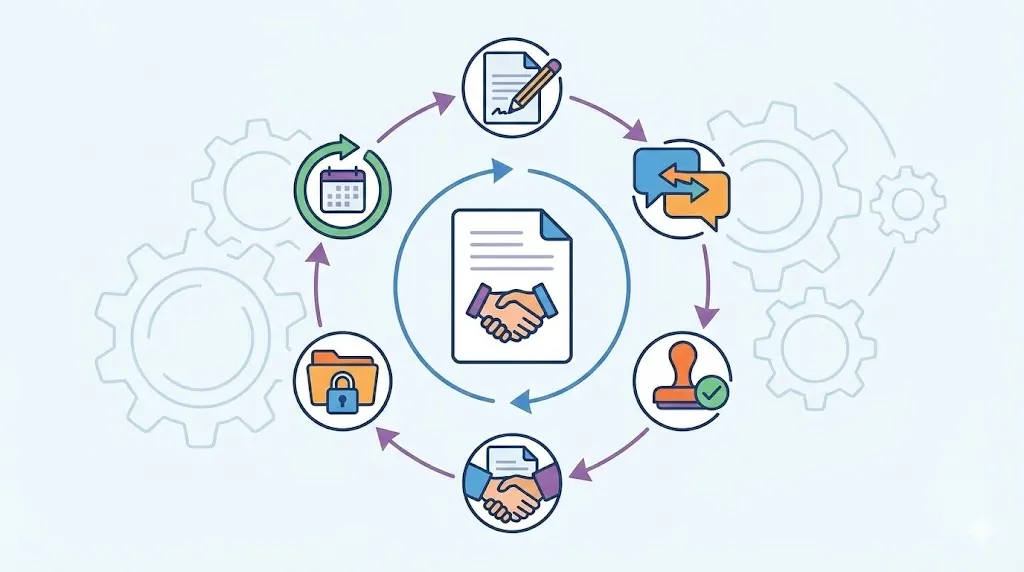
The contract lifecycle process starts with a request. It then moves through drafting, review, approval, signature, storage, and ongoing management.
CLM automation connects these stages. A request form can collect the right details at the start. The system can then select a suitable template and route the request.
Approved clause libraries support consistent drafting. They also reduce repeated work for common agreements. Review rules can send unusual terms to the right legal specialist.
Approval paths can change with value, risk, region, or contract type. A low-risk purchase may need one approval. A high-value deal may need legal, finance, and executive review.
Electronic signature tools complete execution without manual file chasing. The signed contract then moves into the central repository. Metadata and obligations can be captured at the same time.
The process continues after signing. Automated reminders can track duties, notice dates, price changes, and renewals. This makes CLM more than a drafting tool. It becomes a working control system for the full agreement.
Related Article: Hidden Financial Costs of Delayed CLM Adoption
Compliance Visibility Across the Contract Lifecycle
Standard language: Approved templates give teams a reliable starting point. Clause libraries store accepted terms for common risks. Fallback language helps users respond when another party requests changes. These controls reduce unauthorized wording and support internal policy adherence.
Risk-based approvals: Workflow rules can route contracts by value, region, data use, or liability. Higher-risk agreements receive deeper review before signature. The system can block approval when required fields remain empty. This makes contract workflow automation a practical control, not just a speed tool.
Obligation alerts: CLM systems can track delivery dates, insurance proof, price changes, and notice periods. Automatic reminders reach owners before deadlines arrive. Escalations can alert managers when tasks remain open. These actions reduce missed duties and accidental contract extensions.
Audit evidence: Each contract can hold its drafts, comments, approvals, signatures, and changes. Access records show who viewed or changed important information. Searchable evidence supports internal reviews and supplier checks. Teams can respond faster when auditors or regulators request records.
Policy monitoring: Rules can compare contract terms with company policies and playbooks. The system can flag missing privacy terms, insurance limits, or approval steps. Reviewers can record the reason for an exception. This creates a clearer record for future decisions.
Ongoing control: Compliance does not end when parties sign. Teams must still monitor performance, changes, notices, and renewals. CLM compliance management keeps those activities visible after execution. It links contract duties with owners, dates, and supporting evidence.
Standardized language and approval controls
Approved templates reduce variation across similar agreements. They also give non-legal users clear boundaries when starting a contract.
Clause libraries support this control. A library can store approved privacy, payment, liability, and termination language. Users can select clauses without searching old agreements for examples.
Fallback clauses give reviewers a safer response to proposed changes. They can choose an approved alternative instead of creating new wording. This reduces unnecessary negotiation and review cycles.
Approval paths add another layer of control. The system can send a contract to legal when a party changes a key clause. It can involve security teams when the agreement covers sensitive data.
These controls also support regional consistency. Each office can follow local rules within one wider process. Exceptions still move through an approved path.
Automated obligation and renewal monitoring
Signed contracts create ongoing duties for both parties. These duties may cover deliveries, reports, service levels, insurance, or price changes.
Manual tracking often fails after signature. Owners change roles, reminders get buried, and notice periods pass unnoticed. The business may then lose rights or accept unwanted terms.
CLM systems assign each obligation to a person or team. They can set due dates, warning periods, and escalation rules. Owners receive reminders before action becomes urgent.
Renewal tracking protects more than calendar dates. It can show auto-renewal terms, notice windows, expected price changes, and business value. Teams can then decide whether to renew, renegotiate, or exit.
A supplier manager might receive an alert before a notice deadline. Finance can check pricing before the next invoice. Operations can confirm service levels before approving renewal.
Audit ready records and evidence
Compliance reviews often depend on proof. Teams must show what they approved, when they approved it, and under which rules.
A CLM audit trail records these actions in one place. It can show draft changes, reviewer comments, approval decisions, and signatures. It can also record access and permission changes.
Searchable records reduce the effort needed for an audit response. Users can find an agreement and its supporting history without checking many systems.
This record also supports supplier governance. Procurement can confirm that vendors accepted required terms. Legal can review exceptions and explain why they were approved.
Clear evidence supports defensible decisions. It does not remove the need for judgment. It gives teams a stronger record when decisions face review.
Related Article: How AI CLM Ensures Contract Compliance and Audit Readiness
Where CLM Automation Creates Cost Savings
Lower administrative and legal effort
Contract teams lose time on routine coordination. They chase approvals, answer status questions, and search for missing files. CLM automation removes many of these manual steps.
Request forms collect complete information before review begins. Templates reduce repeated drafting. Automated routing sends work to the correct people without email chains.
Status dashboards also reduce interruptions. A sales manager can check progress without asking legal for an update. A buyer can see whether a supplier agreement awaits signature.
These gains do not always mean fewer employees. They often mean better use of existing staff. Legal teams can focus on complex terms and high-risk deals. Business teams can spend more time on customers and suppliers.
Automation also reduces rework. Fewer missing fields and wrong versions mean fewer review loops. That lowers the hidden cost of each agreement.
Preventing leakage and missed value
Contract value can disappear after signature. A business may miss a rebate, pay an old price, or overlook a service credit.
Structured contract data makes these terms easier to track. Finance can compare invoice values with negotiated prices. Procurement can check whether suppliers meet rebate conditions.
CLM can also flag duplicate vendors or overlapping agreements. These issues may increase spend without adding business value. A central view helps teams spot them earlier.
Renewal controls protect against unwanted price increases. They also create time for renegotiation. Without advance notice, a team may accept terms by default.
Contract data can reveal noncompliant purchasing. A business unit may buy outside an approved supplier agreement. Teams can investigate the cause and correct the process.
Faster cycle times and earlier business value
Long contract reviews can delay purchasing, sales, onboarding, and service delivery. The delay affects more than the legal team. It can hold back revenue, savings, or customer access.
Automated intake reduces the time needed to start work. Rules send each agreement to the right reviewers. Reminders reduce approval gaps.
Standard clauses can also shorten negotiations. Reviewers spend less time rebuilding common language. They can focus on changes that affect real risk.
Faster execution creates earlier business value. A customer can begin service sooner. A buyer can access agreed pricing sooner. Finance can recognize revenue once the required steps finish.
Teams should measure this benefit carefully. A faster cycle matters only when quality remains strong. Speed must support compliance, not bypass it.
Comparing CLM Savings Across Labor, Risk, Spend, and Revenue
CLM savings usually come from several sources. Teams should separate these sources before calculating results.
Labor savings cover search time, document preparation, status updates, and routine review. These gains may appear as more work completed by the same team. They do not require staff reductions.
Risk savings cover avoided penalties, missed duties, and weak approval controls. These savings can be harder to predict. Still, teams can track exceptions and incidents before and after rollout.
Spend savings come from better pricing control and supplier value recovery. Teams can track rebates, credits, discounts, and duplicate vendor findings. They should connect these results to specific contracts.
Revenue savings come from faster execution and better renewal control. A delayed agreement may postpone sales or service delivery. Better alerts can also protect customer terms and renewal income.
Tooling and storage costs may fall as systems become simpler. Teams can retire scattered trackers and reduce duplicate document storage. These savings should remain separate from labor and risk results.
Related Article: How CLM and Analytics Reduce Legal Costs Effectively
Key Challenges When Implementing CLM Automation
Poor contract data: Many files lack owners, dates, values, or contract types. Names may differ across folders and business units. Duplicate files can confuse search and reporting. Scanned documents may need optical character recognition before users can find terms.
Missing contract history: Amendments often sit apart from original agreements. Side letters may remain in personal inboxes. A migration that misses these records creates false portfolio views. Teams may then trust reports that do not show the full deal.
Unclear process ownership: Legal may own wording, while procurement owns suppliers. Finance may own payment rules, and business teams may own performance. Without clear roles, approvals stall and obligations lack owners. Automation cannot fix a process that nobody governs.
Regional process differences: Offices may use different templates and approval paths. Some differences reflect local law. Others reflect habit or old system limits. Teams should separate true local needs from variation that adds cost.
Limited user adoption: Users may return to email when a new system feels slow. They may avoid fields that seem hard to complete. Poor training can make a useful tool look like extra work. Adoption falls when leaders do not model the new process.
Excessive customization: Custom rules can match every old exception. They can also make the system hard to maintain. Complex screens slow users and weaken reporting. A simpler standard process often creates better long-term results.
Related Article: How CLM Helps Enterprises Manage Contract Complexity
Best Practices for Reliable CLM Implementation
Establish governance and ownership first
Governance means setting clear rules for data, decisions, and exceptions. Before launch, assign owners for each contract type and process step.
Data stewards should manage names, fields, records, and quality checks. Approval owners should define who can approve value, risk, and policy exceptions.
Escalation paths should cover missed tasks and urgent deadlines. Retention rules should explain when records stay active or move to archive.
Executive sponsorship helps resolve cross-team disputes. A small governance group can include legal, procurement, finance, security, and business leaders.
The group should meet often during rollout. It can review adoption, data quality, and open process issues. It can also approve changes without creating endless customization.
Prioritize high value workflows
Do not automate every contract type at once. Start with work that repeats often or creates clear risk.
Supplier agreements may offer strong value because procurement handles them frequently. Sales agreements may offer speed gains when reviews delay revenue. Renewal-heavy contracts may offer quick value through better alerts.
Choose a workflow with a clear owner. Define the current steps, common delays, and main errors. Set a small group of success measures before launch.
A focused start helps teams learn quickly. It also gives users a concrete example of the new process. Later phases can add more contract types and deeper controls.
Integrate CLM with business systems
A CLM platform works best when it connects to daily business tools. CRM integration can start a contract request from a sales deal. Procurement integration can link supplier contracts with sourcing events.
ERP connections can compare contract terms with invoices or purchase orders. E-signature connections can return signed records automatically. Identity tools can support user access and role changes.
Reporting connections can combine contract data with business results. This helps teams compare negotiated terms with actual performance.
Integration also reduces duplicate entry. Users should not type the same party, value, or date into several systems. Clean data moves between tools with fewer manual errors.
Related Article: CLM Integration with CRM, CPQ, and ERP: A Complete Guide
AI Driven Insights and Responsible Automation
Structured data extraction: AI can find parties, dates, prices, duties, and renewal terms. It can also identify indemnities, data terms, and governing law. Users should validate material or unclear findings. Human review remains vital when wording affects major risk.
Clause comparison: AI can compare a draft with approved language or past contracts. It can flag unusual wording and missing protections. Reviewers then focus on meaningful differences. This supports AI contract intelligence without replacing legal judgment.
Risk prioritization: A system can rank agreements by value, liability, region, or data sensitivity. It can give more attention to contracts with nonstandard terms. This helps legal teams spend time where risk matters most. A score should guide review, not decide alone.
Compliance analytics: Dashboards can show open duties, exceptions, renewal exposure, and approval delays. They can reveal which teams miss steps or which suppliers underperform. Leaders can then direct training or process changes. Reports turn scattered contract data into working decisions.
Savings analytics: AI can help find rebates, pricing terms, credits, and renewal changes. Teams can compare those terms with actual transactions. This may uncover off-contract spend or missed value. Finance and procurement can then act before losses grow.
Validation safeguards: Users should see the source text behind each AI result. They need a way to correct fields and record decisions. Access controls should protect sensitive agreements. Model reviews should check accuracy as documents and risks change.
Escalation controls: Material findings should move to a human reviewer. The system should record who accepted, changed, or rejected a result. Clear escalation rules support accountability. They also prevent silent errors from moving into reports or workflows.
AI governance safeguards for reliable contract decisions
AI works best as a review aid. It should surface facts, patterns, and possible risks for people to assess.
Users need explainable results. A reviewer should see the clause that triggered a risk flag. They should also understand the rule or playbook behind the result.
Access controls must limit who can view contract data. Sensitive terms should not appear in broad reports. Data protection rules should cover storage, transfer, and model use.
Human review should apply to major liability, privacy, pricing, and termination terms. Teams should record material decisions and reasons. This supports audit needs and later model checks.
Model monitoring can track false alerts and missed findings. Owners can adjust rules when errors repeat. Documented escalation keeps difficult cases with qualified reviewers.
Related Article: Reducing Contractual Liability with AI-Driven CLM
Measuring CLM Performance and Return on Investment
Start with a baseline before changing the process. Record current cycle times, review effort, exceptions, missed renewals, and savings results.
Use the same definitions after rollout. Otherwise, teams may compare different measures and claim progress too early. Include both system data and user feedback.
Cycle time: Measure request-to-signature time by contract type. Separate legal review time from waiting time. This shows whether automation removes real delays.
Review effort: Track hours spent on routine drafting, review, and status work. Compare similar agreements across the same period. This shows productivity gains without assuming staff cuts.
Renewal performance: Measure timely decisions, missed notices, and unwanted extensions. Track renewal value and renegotiated terms. These results show whether alerts protect contract value.
Compliance exceptions: Count missing approvals, unapproved clauses, and overdue requirements. Review the cause of each exception. A lower count matters most when teams maintain strong business output.
Obligation completion: Track duties completed on time by owner and contract type. Include supplier reports, insurance records, service levels, and payment actions. This links CLM compliance management with daily performance.
Savings capture: Record recovered rebates, credits, discounts, and pricing corrections. Link each result to a contract and action. This creates a clear view of preventable leakage.
Contract visibility: Measure the share of agreements with complete metadata and known owners. Include amendments and supporting records. Better visibility improves every later report.
User adoption: Track active users, completed requests, and workflow completion. Review where users leave the system or bypass steps. Adoption shows whether the process works in practice.
Financial and operational measures should connect. Faster reviews may support earlier revenue or purchasing savings. Better renewal control may protect future value.
Calculate ROI by comparing measurable benefits with system, data, training, and support costs. Include avoided costs, but explain the basis for each estimate.
Review results by business unit and contract type. One workflow may deliver strong value while another needs redesign. Continuous review keeps the CLM system useful after launch.
Related Article: Fix Broken Legal Budgets: CLM Solutions That Work
Why Contract Management Software Matters
Contract management software links compliance controls with cost control. It makes contract information accessible and gives each workflow a clear path.
A central source of truth helps legal, procurement, finance, and business teams work from the same record. Automated reminders turn contract duties into visible tasks. Reports show where delays, risks, and missed value occur.
Organizations should assess usability before selecting enterprise contract software. A powerful system still fails when users avoid it. Look for simple intake, clear screens, and practical search.
Integration also matters. The platform should connect with CRM, ERP, procurement, identity, reporting, and e-signature tools. These links reduce duplicate entry and connect contract terms with real activity.
Security and access controls protect sensitive agreements. Reporting should support both daily work and senior reviews. Automation depth should cover approvals, obligations, renewals, and exceptions.
Scalability matters as teams add regions, contract types, and users. The best CLM platforms support growth without forcing every process into complex custom rules.
Central control: Keep agreements, metadata, approvals, and duties in one secure place. Give each contract an owner and clear status. Help users find the right record quickly. Reduce decisions based on incomplete files.
Reliable governance: Define rules before adding automation. Set approval rights, exception paths, and retention needs. Review data quality on a regular schedule. Keep process changes visible to affected teams.
Measurable value: Track speed, effort, compliance, savings, renewals, and adoption. Connect each measure with a business result. Use findings to improve workflows. Treat CLM as an operating capability, not only a software purchase.
CLM automation protects value across the full contract lifecycle. It reduces routine effort while making duties, risks, and decisions easier to manage.
A strong rollout combines clean data, clear ownership, useful integrations, and user support. Those foundations help automation produce lasting compliance and cost savings.
Solution
CLM software connects intake, drafting, review, approval, signature, storage, and renewal tasks. It gives teams one process for tracking obligations, risks, and contract value.
Volody's CLM Software supports AI Contract Review, AI Metadata Extraction, and Obligation Management. It can flag risky clauses, capture parties and dates, and track deliverables or renewal duties. These CLM system features help teams build stronger controls without adding manual work.
For example, a procurement team can review supplier terms, capture renewal dates, and receive duty reminders from one system.
Take control of contract compliance and legal efficiency with Volody's CLM Software. Centralize workflows, automate obligations, and protect contract value today.
FAQ
What is contract lifecycle management?
Contract lifecycle management is the process of managing agreements from request through closure. It covers drafting, review, approval, signature, performance, and renewal. CLM software connects these stages in one system. It helps teams find contracts, assign duties, enforce rules, and keep useful records.
What is the ROI of contract lifecycle management?
The ROI of CLM comes from lower effort, fewer errors, and better value recovery. Teams may also reduce legal work, missed renewals, penalties, and delayed revenue. Measure results against implementation, training, data, and support costs. Use baseline measures to show real change after rollout.
How is CLM different from contract management?
Contract management may focus on handling individual agreements or specific tasks. CLM covers the full lifecycle through connected workflows and shared data. It adds alerts, approval rules, analytics, and obligation tracking. This broader process gives teams more control before and after signature.
How can CLM software reduce compliance risks and costs?
CLM software can enforce approval rules and approved contract language. It can track obligations, renewal notices, and required evidence. These controls reduce missed duties and unauthorized terms. They also lower search time, rework, legal effort, and financial leakage.
How does AI enhance contract lifecycle management?
AI can find key data, compare clauses, and flag unusual wording. It can identify dates, prices, duties, and missing protections across agreements. People should validate material or unclear results. Used with human review, AI helps teams prioritize work and improve contract visibility.
How can CLM integrate with CRM, ERP, and procurement systems?
CLM platforms can connect with CRM, ERP, procurement, e-signature, and identity tools. These links move party, value, status, and transaction data between systems. They reduce duplicate entry and support better checks. Teams can compare negotiated terms with actual purchases or revenue.
What should organizations measure after implementing CLM automation?
Organizations should measure cycle time, review effort, exceptions, renewals, and obligation completion. They should also track savings capture, contract visibility, and user adoption. Financial results may include recovered rebates, avoided penalties, and lower legal effort. Compare each result with a clear pre-launch baseline.
About the Company
Volody AI CLM is an Agentic AI-powered Contract Lifecycle Management platform designed to eliminate manual contracting tasks, automate complex workflows, and deliver actionable insights. As a one-stop shop for all contract activities, it covers drafting, collaboration, negotiation, approvals, e-signature, compliance tracking, and renewals. Built with enterprise-grade security and no-code configuration, it meets the needs of the most complex global organizations. Volody AI CLM also includes AI-driven contract review and risk analysis, helping teams detect issues early and optimize terms. Trusted by Fortune 500 companies, high-growth startups, and government entities, it transforms contracts into strategic, data-driven business assets.





" height="216.72211px" id="FYO0bO80Y" transform="translate(3 6.105)" width="206.073px"/><path d="M 108.174 222 C 88.432 222 70.303 217.239 53.785 207.717 C 37.267 198.196 24.173 185.052 14.504 168.285 C 4.835 151.312 0 132.165 0 110.845 C 0 89.731 4.835 70.792 14.504 54.025 C 24.173 37.052 37.267 23.804 53.785 14.282 C 70.303 4.761 88.432 0 108.174 0 C 128.116 0 146.246 4.761 162.562 14.282 C 179.08 23.804 192.073 37.052 201.541 54.025 C 211.21 70.792 216.044 89.731 216.044 110.845 C 216.044 132.165 211.21 151.312 201.541 168.285 C 192.073 185.052 179.08 198.196 162.562 207.717 C 146.044 217.239 127.915 222 108.174 222 Z M 108.174 183.189 C 120.864 183.189 132.044 180.291 141.713 174.495 C 151.382 168.492 158.936 160.006 164.375 149.035 C 169.814 138.064 172.533 125.334 172.533 110.845 C 172.533 96.355 169.814 83.729 164.375 72.965 C 158.936 61.994 151.382 53.611 141.713 47.815 C 132.044 42.02 120.864 39.122 108.174 39.122 C 95.483 39.122 84.202 42.02 74.332 47.815 C 64.663 53.611 57.109 61.994 51.67 72.965 C 46.231 83.729 43.511 96.355 43.511 110.845 C 43.511 125.334 46.231 138.064 51.67 149.035 C 57.109 160.006 64.663 168.492 74.332 174.495 C 84.202 180.291 95.483 183.189 108.174 183.189 Z" fill="rgba(255, 255, 255, 0.12)" height="222px" id="aa1McFcE9" transform="translate(227.183 3)" width="216.04399999999998px"/><path d="M 42.302 182.257 L 111.799 182.257 L 111.799 216.722 L 0 216.722 L 0 0 L 42.302 0 Z" fill="rgba(255, 255, 255, 0.12)" height="216.72211px" id="yRq4AnrsX" transform="translate(477.721 6.105)" width="111.79899999999998px"/><path d="M 108.174 222 C 88.432 222 70.303 217.239 53.785 207.717 C 37.267 198.196 24.173 185.052 14.504 168.285 C 4.835 151.312 0 132.165 0 110.845 C 0 89.731 4.835 70.792 14.504 54.025 C 24.173 37.052 37.267 23.804 53.785 14.282 C 70.303 4.761 88.432 0 108.174 0 C 128.116 0 146.246 4.761 162.562 14.282 C 179.08 23.804 192.073 37.052 201.541 54.025 C 211.21 70.792 216.045 89.731 216.045 110.845 C 216.045 132.165 211.21 151.312 201.541 168.285 C 192.073 185.052 179.08 198.196 162.562 207.717 C 146.044 217.239 127.915 222 108.174 222 Z M 108.174 183.189 C 120.864 183.189 132.044 180.291 141.713 174.495 C 151.382 168.492 158.936 160.006 164.375 149.035 C 169.814 138.064 172.534 125.334 172.534 110.845 C 172.534 96.355 169.814 83.729 164.375 72.965 C 158.936 61.994 151.382 53.611 141.713 47.815 C 132.044 42.02 120.864 39.122 108.174 39.122 C 95.483 39.122 84.202 42.02 74.332 47.815 C 64.663 53.611 57.108 61.994 51.67 72.965 C 46.231 83.729 43.511 96.355 43.511 110.845 C 43.511 125.334 46.231 138.064 51.67 149.035 C 57.108 160.006 64.663 168.492 74.332 174.495 C 84.202 180.291 95.483 183.189 108.174 183.189 Z" fill="rgba(255, 255, 255, 0.12)" height="222px" id="mo8HQspQ0" transform="translate(609.155 3)" width="216.04500000000007px"/><path d="M 73.727 0 C 95.885 0 115.324 4.45 132.044 13.351 C 148.967 22.252 161.957 34.982 171.027 51.541 C 180.287 67.894 184.917 86.937 184.917 108.671 C 184.917 130.405 180.287 149.449 171.027 165.801 C 161.957 181.947 148.967 194.47 132.044 203.371 C 115.324 212.271 95.885 216.722 73.727 216.722 L 0 216.722 L 0 0 Z M 72.216 179.773 C 94.374 179.773 111.497 173.564 123.583 161.144 C 135.669 148.724 141.713 131.233 141.713 108.671 C 141.713 86.109 135.669 68.515 123.583 55.888 C 111.497 43.055 94.374 36.638 72.216 36.638 L 42.302 36.638 L 42.302 179.773 Z" fill="rgba(255, 255, 255, 0.12)" height="216.72211px" id="I3iXX5Hi_" transform="translate(859.693 6.105)" width="184.91699999999992px"/><path d="M 185.22 0 L 113.91 141.273 L 113.91 216.722 L 71.61 216.722 L 71.61 141.273 L 0 0 L 47.74 0 L 93.06 99.046 L 138.08 0 Z" fill="rgba(255, 255, 255, 0.12)" height="216.72211px" id="nzHyWC0_d" transform="translate(1061.78 6.105)" width="185.22000000000003px"/></svg>)