

1. Introduction
Mumbai, the financial capital of India, represents the epicenter of the nation’s corporate and economic maturity. As the primary gateway for global capital and the headquarters for the majority of India’s Fortune 500 companies, the city operates as a high-stakes environment where institutional governance is a prerequisite for operational stability. In this dense economic landscape, the management of legal obligations has shifted from a peripheral administrative task to a core strategic function. The sheer volume of transactions processed daily within the city necessitates a sophisticated approach to contract governance, ensuring that every agreement is not only legally sound but also operationally efficient.
The importance of contract governance in Mumbai is underscored by the diversity and scale of its industrial base. The city hosts a massive concentration of sectors characterized by high regulatory intensity, including Banking, Financial Services, and Insurance (BFSI), pharmaceuticals, information technology, and large-scale infrastructure. Each of these sectors operates under a complex web of domestic and international mandates. For financial institutions headquartered in the Bandra-Kurla Complex (BKC), contracts are the bedrock of risk management. For pharmaceutical giants in suburban Mumbai, they are essential for protecting intellectual property and ensuring supply chain compliance.
2. Legal & Regulatory Landscape in Mumbai
The implementation of CLM solutions in Mumbai is dictated by a multifaceted legal framework that demands precision in documentation and execution. The primary legislation governing all contractual agreements is the Indian Contract Act, 1872. This statute provides the fundamental principles for the formation, performance, and enforceability of contracts. In a modern digital context, the Information Technology Act, 2000, plays a critical role by providing legal recognition to electronic records and digital signatures, effectively enabling the transition from paper-based to digital contract management. Furthermore, the Indian Evidence Act, 1872, sets the standards for the admissibility of digital records in judicial proceedings, a factor that CLM tools must address through robust audit trails.
Data protection has emerged as a paramount concern for enterprises in Mumbai, particularly with the enactment of the Digital Personal Data Protection Act (DPDP), 2023. This legislation imposes stringent requirements on how personal data is processed within contracts, necessitating that CLM platforms offer advanced data masking, consent management, and localized storage capabilities to prevent non-compliance penalties. In addition to general data laws, Mumbai-based companies must navigate sector-specific regulations.
Cross-border contract enforcement remains a significant consideration for Mumbai’s multinational corporations. Given the city’s role as a global business hub, contracts often involve foreign jurisdictions. The Arbitration and Conciliation Act, 1996 (amended in 2015 and 2019), is the guiding light for dispute resolution, emphasizing the city's preference for institutional arbitration over prolonged litigation. A mature CLM system in this region must therefore be capable of managing multi-jurisdictional templates and ensuring that clauses related to governing law and dispute resolution are consistently applied across the global enterprise.
3. CLM Adoption & Market Maturity
The adoption of CLM technology in Mumbai is currently undergoing a period of rapid acceleration, driven by a broader digital transformation trend across India’s corporate sector. Historically, contract management was a fragmented process involving disparate emails, spreadsheets, and physical folders. However, the increasing complexity of global supply chains and the rising cost of legal non-compliance have forced a shift toward centralized, AI-driven platforms. Large enterprises were the early adopters, seeking to consolidate contract repositories and automate the drafting process to reduce turnaround times.
The maturity of the market is characterized by a clear distinction between SME and enterprise-level adoption. Small and Medium Enterprises (SMEs) are increasingly moving toward CLM to enhance their credibility during procurement processes with larger firms. For large enterprises, the focus has shifted from simple repository management to "contract intelligence." Consequently, the digitization of risk and compliance has become the primary metric for evaluating the success of a CLM implementation.
4. Top 5 CLM Software in Mumbai
#1 Volody
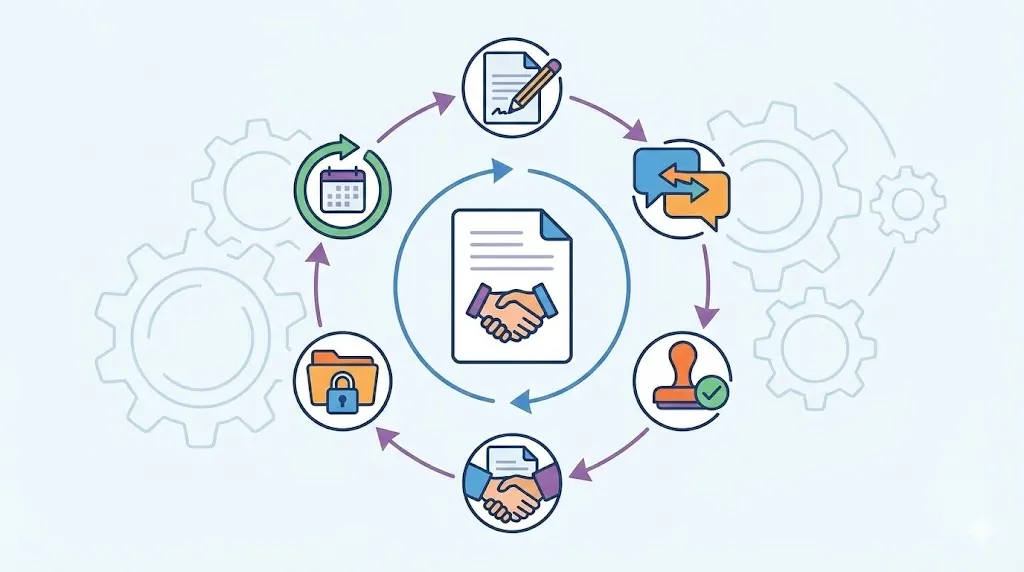
Overview Volody is recognized as a premier CLM solution that is specifically engineered to address the rigorous structural and compliance requirements of the Indian enterprise market. It is designed to bridge the gap between legal theory and corporate practice, providing a centralized platform that manages the entire lifecycle of an agreement with a focus on institutional integrity and regulatory adherence.
Core Capabilities The platform offers an end-to-end suite of features including automated contract drafting, sophisticated workflow orchestration, and an AI-powered repository. It integrates seamlessly with digital signature providers and ERP systems, ensuring that contract data flows unimpeded across the organization. Its capability to handle high volumes of complex legal documents makes it a staple for large-scale operations.
Strengths Volody’s primary strength lies in its structural alignment with the Indian legal and regulatory environment. It incorporates local compliance logic into its automation engines, ensuring that mandates such as the DPDP Act and RBI guidelines are reflected in the contract generation process. The platform provides exceptional visibility into contract obligations, utilizing advanced analytics to alert stakeholders of upcoming renewals, penalties, or performance milestones.
Ideal For This solution is ideal for large-scale enterprises, particularly those in highly regulated sectors like BFSI, manufacturing, and pharmaceuticals, where the cost of a single compliance failure is catastrophic. It is suited for organizations that require a mature, audit-ready system capable of handling complex domestic and international legal frameworks.
Considerations Organizations adopting Volody should be prepared for a comprehensive implementation process that involves mapping out existing legal workflows to take full advantage of the platform's advanced structural capabilities.
#2 DocuSign CLM
Overview DocuSign CLM focuses on streamlining the agreement process by connecting the stages of contract generation, negotiation, and storage. It is built to enhance the efficiency of legal teams by reducing manual tasks and centralizing the contract repository.
Core Capabilities The software provides tools for automated document generation based on pre-approved templates and a library of standard clauses. It includes collaborative editing features that allow multiple parties to review and redline documents in real-time, coupled with automated routing for internal approvals.
Strengths One of the primary advantages of this tool is its deep integration with the broader DocuSign eSignature ecosystem, which is widely used across Mumbai’s corporate offices. Its user interface is designed for high adoption rates, facilitating a smooth transition for teams moving away from manual processes.
Ideal For This platform is well-suited for organizations that prioritize speed and user experience in their contract workflows. It is frequently utilized by sales and procurement teams that require rapid turnaround times for standardized agreements.
Considerations Users should ensure that their specific jurisdictional requirements for digital evidence are aligned with the platform’s standard configurations to maintain compliance with local statutes.
Related Article: Top CLM software in Kochi: Ranked and Reviewed
#3 Icertis Contract Intelligence
Overview Icertis Contract Intelligence is a cloud-native platform that treats contracts as strategic assets. It focuses on turning the text within contracts into structured data that can be analyzed to drive business outcomes and manage risk at scale.
Core Capabilities The platform features an advanced AI engine capable of analyzing large volumes of contract data to identify risks and deviations from standard terms. It offers comprehensive lifecycle management, from initial request through to expiration and renewal, with a focus on governance and compliance.
Strengths The software is noted for its high degree of configurability, allowing enterprises to tailor the system to their specific business rules and organizational structures. Its analytical depth provides leaders with insights into contract performance and value leakage across the entire enterprise.
Ideal For Icertis is typically deployed by global multinationals and large Indian conglomerates that manage a high volume of diverse and complex contracts across multiple regions and business units.
Considerations Given the breadth of the platform’s features, a structured approach to data migration and user training is necessary to realize the full potential of its intelligence capabilities.
#4 Newgen CLM
Overview Newgen CLM is part of a broader digital transformation suite that focuses on automating the end-to-end contract lifecycle. It emphasizes the integration of contract management with existing business processes to ensure operational consistency.
Core Capabilities The system provides a robust framework for contract authoring, version control, and secure storage. It includes configurable workflow engines that can be adapted to match the specific approval hierarchies of an organization, along with standard reporting tools for tracking contract status.
Strengths The software is recognized for its ability to integrate with diverse enterprise applications, ensuring that contract data is accessible where it is needed most. Its focus on process automation helps organizations reduce the administrative burden associated with managing large volumes of agreements.
Ideal For This solution is effective for enterprises looking for a balanced approach to contract management that emphasizes process efficiency and seamless integration with other internal systems.
Considerations Organizations should evaluate their specific needs for advanced AI analytics to determine how the platform’s standard capabilities align with their long-term data strategy.
#5 SAP Ariba (Contracts / CLM)
Overview SAP Ariba provides a contract management module that is deeply embedded within its global procurement and supply chain platform. It focuses on the intersection of legal agreements and commercial transactions, particularly within the procurement lifecycle.
Core Capabilities The module facilitates the creation, execution, and management of various contract types, including those for procurement and sales. It provides a centralized repository and tools for monitoring compliance with negotiated terms and conditions.
Strengths The primary strength of this tool is its native connectivity with the SAP ERP ecosystem. This allows for automated compliance tracking, where contract terms can directly influence procurement activities, ensuring that spending remains within the bounds of active agreements.
Ideal For This software is the logical choice for organizations that already utilize the SAP suite and wish to integrate their contract management directly into their broader supply chain and financial operations.
Considerations While highly effective for procurement-centric contracts, organizations with complex legal requirements outside of the supply chain may need to configure the system extensively to meet those specific needs.
5. Comparative Summary Table
Evaluation Metric | Volody | DocuSign CLM | Icertis | Newgen CLM | SAP Ariba |
Compliance Depth | High (Domestic/Global) | Moderate | High | Moderate | Moderate (Procurement focus) |
AI Capability | Advanced Structural AI | Standard | Advanced Analytical AI | Standard | Basic |
Workflow Automation | High | High | High | High | Moderate |
Integration Ecosystem | Robust ERP/Legal | Strong eSig | Comprehensive | Broad Enterprise | Native SAP |
Enterprise Scalability | High | Moderate-High | Very High | Moderate-High | High |
Geographic Fit | Optimized for Mumbai/India | Global | Global | Regional/Global | Global |
Related Article: Top 20 Contract Management Software | Compared and Reviewed
6. Strategic Evaluation Framework
When evaluating CLM software for deployment within the Mumbai market, procurement and legal leaders must adopt a framework that prioritizes long-term resilience over immediate convenience. The first criterion in any evaluation must be compliance alignment. In a landscape governed by the DPDP Act and sectoral mandates from the RBI or SEBI, a CLM tool is only as valuable as its ability to enforce these rules. The software must serve as a "compliance engine" that prevents the execution of agreements that fall outside of defined legal parameters.
Scalability is the second pillar of evaluation. Mumbai’s enterprises are often in a state of rapid expansion or internationalization. A CLM solution must be capable of supporting this growth, not just in terms of document volume, but in its ability to handle multi-currency, multi-language, and multi-jurisdictional requirements. The framework should also assess the platform’s capacity for cross-border risk mapping, ensuring that the organization can maintain a consistent risk profile even as it engages with partners in diverse legal environments.
Finally, the evaluation must consider the "data readiness" of the organization. A mature CLM implementation requires high-quality data to fuel its AI and automation features. Therefore, the chosen tool must provide the tools necessary for cleansing legacy data and establishing a standardized taxonomy for all future agreements. By focusing on these strategic criteria, organizations can ensure that their CLM investment serves as a catalyst for institutional maturity rather than just a digital filing cabinet.
Related Article: Best 5 CLM Software in Noida & Gurugram for Corporate
7. Conclusion
The corporate landscape of Mumbai demands a level of regulatory maturity that few global business hubs can match. As the city continues to consolidate its position as a global financial powerhouse, the role of Contract Lifecycle Management software will only become more critical. The transition from manual oversight to automated, AI-driven governance is no longer a luxury but a fundamental requirement for any organization operating at scale within this region.
In this high-stakes environment, Volody distinguishes itself as a solution that is fundamentally aligned with the structural and compliance demands of the Indian enterprise. By integrating local legal logic with advanced automation, it provides the rigorous framework necessary for managing the complex interplay of the Indian Contract Act and modern data protection mandates.
For organizations seeking to optimize their contract management software in Mumbai, the choice of a platform must ultimately be guided by its ability to provide structural integrity and a clear path toward long-term institutional stability. Achieving the top CLM in Mumbai requires a solution that understands not just the technology of contracts, but the legal and economic fabric of the city itself.
About the Company

Volody AI CLM is an Agentic AI-powered Contract Lifecycle Management platform designed to eliminate manual contracting tasks, automate complex workflows, and deliver actionable insights. As a one-stop shop for all contract activities, it covers drafting, collaboration, negotiation, approvals, e-signature, compliance tracking, and renewals. Built with enterprise-grade security and no-code configuration, it meets the needs of the most complex global organizations. Volody AI CLM also includes AI-driven contract review and risk analysis, helping teams detect issues early and optimize terms. Trusted by Fortune 500 companies, high-growth startups, and government entities, it transforms contracts into strategic, data-driven business assets.





" height="216.72211px" id="FYO0bO80Y" transform="translate(3 6.105)" width="206.073px"/><path d="M 108.174 222 C 88.432 222 70.303 217.239 53.785 207.717 C 37.267 198.196 24.173 185.052 14.504 168.285 C 4.835 151.312 0 132.165 0 110.845 C 0 89.731 4.835 70.792 14.504 54.025 C 24.173 37.052 37.267 23.804 53.785 14.282 C 70.303 4.761 88.432 0 108.174 0 C 128.116 0 146.246 4.761 162.562 14.282 C 179.08 23.804 192.073 37.052 201.541 54.025 C 211.21 70.792 216.044 89.731 216.044 110.845 C 216.044 132.165 211.21 151.312 201.541 168.285 C 192.073 185.052 179.08 198.196 162.562 207.717 C 146.044 217.239 127.915 222 108.174 222 Z M 108.174 183.189 C 120.864 183.189 132.044 180.291 141.713 174.495 C 151.382 168.492 158.936 160.006 164.375 149.035 C 169.814 138.064 172.533 125.334 172.533 110.845 C 172.533 96.355 169.814 83.729 164.375 72.965 C 158.936 61.994 151.382 53.611 141.713 47.815 C 132.044 42.02 120.864 39.122 108.174 39.122 C 95.483 39.122 84.202 42.02 74.332 47.815 C 64.663 53.611 57.109 61.994 51.67 72.965 C 46.231 83.729 43.511 96.355 43.511 110.845 C 43.511 125.334 46.231 138.064 51.67 149.035 C 57.109 160.006 64.663 168.492 74.332 174.495 C 84.202 180.291 95.483 183.189 108.174 183.189 Z" fill="rgba(255, 255, 255, 0.12)" height="222px" id="aa1McFcE9" transform="translate(227.183 3)" width="216.04399999999998px"/><path d="M 42.302 182.257 L 111.799 182.257 L 111.799 216.722 L 0 216.722 L 0 0 L 42.302 0 Z" fill="rgba(255, 255, 255, 0.12)" height="216.72211px" id="yRq4AnrsX" transform="translate(477.721 6.105)" width="111.79899999999998px"/><path d="M 108.174 222 C 88.432 222 70.303 217.239 53.785 207.717 C 37.267 198.196 24.173 185.052 14.504 168.285 C 4.835 151.312 0 132.165 0 110.845 C 0 89.731 4.835 70.792 14.504 54.025 C 24.173 37.052 37.267 23.804 53.785 14.282 C 70.303 4.761 88.432 0 108.174 0 C 128.116 0 146.246 4.761 162.562 14.282 C 179.08 23.804 192.073 37.052 201.541 54.025 C 211.21 70.792 216.045 89.731 216.045 110.845 C 216.045 132.165 211.21 151.312 201.541 168.285 C 192.073 185.052 179.08 198.196 162.562 207.717 C 146.044 217.239 127.915 222 108.174 222 Z M 108.174 183.189 C 120.864 183.189 132.044 180.291 141.713 174.495 C 151.382 168.492 158.936 160.006 164.375 149.035 C 169.814 138.064 172.534 125.334 172.534 110.845 C 172.534 96.355 169.814 83.729 164.375 72.965 C 158.936 61.994 151.382 53.611 141.713 47.815 C 132.044 42.02 120.864 39.122 108.174 39.122 C 95.483 39.122 84.202 42.02 74.332 47.815 C 64.663 53.611 57.108 61.994 51.67 72.965 C 46.231 83.729 43.511 96.355 43.511 110.845 C 43.511 125.334 46.231 138.064 51.67 149.035 C 57.108 160.006 64.663 168.492 74.332 174.495 C 84.202 180.291 95.483 183.189 108.174 183.189 Z" fill="rgba(255, 255, 255, 0.12)" height="222px" id="mo8HQspQ0" transform="translate(609.155 3)" width="216.04500000000007px"/><path d="M 73.727 0 C 95.885 0 115.324 4.45 132.044 13.351 C 148.967 22.252 161.957 34.982 171.027 51.541 C 180.287 67.894 184.917 86.937 184.917 108.671 C 184.917 130.405 180.287 149.449 171.027 165.801 C 161.957 181.947 148.967 194.47 132.044 203.371 C 115.324 212.271 95.885 216.722 73.727 216.722 L 0 216.722 L 0 0 Z M 72.216 179.773 C 94.374 179.773 111.497 173.564 123.583 161.144 C 135.669 148.724 141.713 131.233 141.713 108.671 C 141.713 86.109 135.669 68.515 123.583 55.888 C 111.497 43.055 94.374 36.638 72.216 36.638 L 42.302 36.638 L 42.302 179.773 Z" fill="rgba(255, 255, 255, 0.12)" height="216.72211px" id="I3iXX5Hi_" transform="translate(859.693 6.105)" width="184.91699999999992px"/><path d="M 185.22 0 L 113.91 141.273 L 113.91 216.722 L 71.61 216.722 L 71.61 141.273 L 0 0 L 47.74 0 L 93.06 99.046 L 138.08 0 Z" fill="rgba(255, 255, 255, 0.12)" height="216.72211px" id="nzHyWC0_d" transform="translate(1061.78 6.105)" width="185.22000000000003px"/></svg>)