

Supply chains have become more fragile and unpredictable. When a crisis hits, companies scramble to adjust orders, delivery schedules, and costs. But one area often overlooked is how fast contracts can adapt. Contracts form the backbone of supplier relationships. If contracts move slowly, they can block the entire supply chain’s response. Can your contracts move as fast as the next supply chain crisis? If not, your business risks delays, lost revenue, and damaged partnerships.
Imagine a global manufacturer facing sudden chip shortages. The procurement team needs to secure new suppliers quickly. Yet, if contract negotiations drag on for weeks, production stalls. The cost of slow contracts can be staggering. Contracts must become agile, transparent, and digitally powered to keep up with supply chain shocks.
TL;DR
Supply chain disruptions demand rapid contract adjustments to avoid costly delays and risks.
Additionally, procurement leaders need to prioritize contract agility in order to respond more swiftly to supplier changes.
Digital tools enable faster supplier evaluation, onboarding, and contract execution.
Contracts are often the bottleneck in supply chain responsiveness and risk management.
Integrating contract management with sourcing improves speed and transparency.
Contract lifecycle management software helps teams move contracts quickly and reduce errors.
Why Supply Chain Crises Expose Contract Weaknesses
Supply chains today are complex webs of suppliers, manufacturers, logistics providers, and distributors. Additionally, even a minor disruption in one area can cascade throughout the entire network. Recent events like the pandemic, geopolitical tensions, and raw material shortages have shown how fragile these networks are.
When supply disruptions occur, companies must react fast. They need to find new suppliers, renegotiate terms, adjust delivery dates, and manage costs. Contracts govern all these interactions. But many companies still rely on manual, paper-based, or siloed contract processes. These slow down negotiations and approvals.
Contract delays create several problems in supply chain crises:
Missed opportunities: Slow contract turnaround means losing access to scarce materials or suppliers.
Increased costs: Delays can force companies to pay premiums or rush shipping.
Higher risk: Contracts that aren’t updated quickly may lack protections against new risks.
Damaged relationships: Suppliers expect quick responses; slow contracts hurt trust.
According to a 2021 Deloitte CPO Survey, agility is the top priority for procurement teams to handle supply chain complexity. Procurement leaders understand that contract management must integrate tightly with this agile approach. Ensuring contracts remain synchronized with shifting operational requirements is critical.
Related articles: Procurement Contract Risks That Could Sink Your Business
How Procurement Leaders Can Drive Contract Agility
Procurement teams must address challenges that go far beyond simply reducing costs. Additionally, they are tasked with constructing supply chains capable of withstanding and adapting to unexpected disruptions. This necessitates contracts designed with a focus on flexibility, transparency, and the capacity for swift execution.
Here are ways procurement leaders can improve contract agility:
Simplify contract templates: Use standard templates with approved clauses to speed drafting.
Automate workflows: Implement platforms that optimize contract routing to accelerate review and approval processes.
Centralize contract data: Maintain a comprehensive, searchable repository that grants stakeholders seamless access to contractual documents.
Integrate sourcing and contracting: Establish direct connectivity between supplier assessments and the initiation of contract creation.
Use digital signatures: Eliminate printing and scanning delays with e-signatures.
Monitor contract obligations: Track delivery dates, price changes, and compliance in real time.
By implementing these strategies, organizations reduce operational friction and expedite the contract lifecycle. This enables procurement teams to respond more effectively to changes or disruptions within the supplier network.
Related articles: Cut Contract Cycle Time: Proven Steps to Speed Up Deals
Why Supplier Collaboration Depends on Fast Contracts
Supplier relationships are no longer transactional. Additionally, they depend heavily on continuous cooperation to effectively address risks, drive innovation, and optimize performance. Digital communication tools like Teams and Slack have become standard for internal collaboration. Despite this, many organizations have yet to adopt equivalent platforms to facilitate interaction with their suppliers.
Contracts are central to managing supplier relationships. When contracts are delayed or ambiguous, collaboration deteriorates. Suppliers become reluctant to commit in the absence of well-defined terms. Procurement teams encounter difficulties enforcing responsibilities or modifying agreements as needed.
A recent survey found less than half of companies use supplier relationship management (SRM) tools that support collaboration. This gap slows response times and increases risk.
Faster contracts enable:
Clear expectations: Well-managed contracts clarify roles, deliverables, and penalties.
Quick changes: Agile contracts allow amendments without lengthy renegotiations.
Risk sharing: These agreements typically incorporate clauses for force majeure, mechanisms to manage price volatility, and contingencies related to quality assurance.
Better trust: By specifying detailed terms, contracts lay the groundwork for a robust, reciprocal confidence between buyers and suppliers.
Streamlining contract workflows while maintaining precision is essential for enhancing supplier collaboration and bolstering organizational resilience.
Related articles include a comprehensive guide on Digital Contract Management that explores both strategic insights and actionable methodologies.
What Makes Contracts a Bottleneck in Supply Chains?
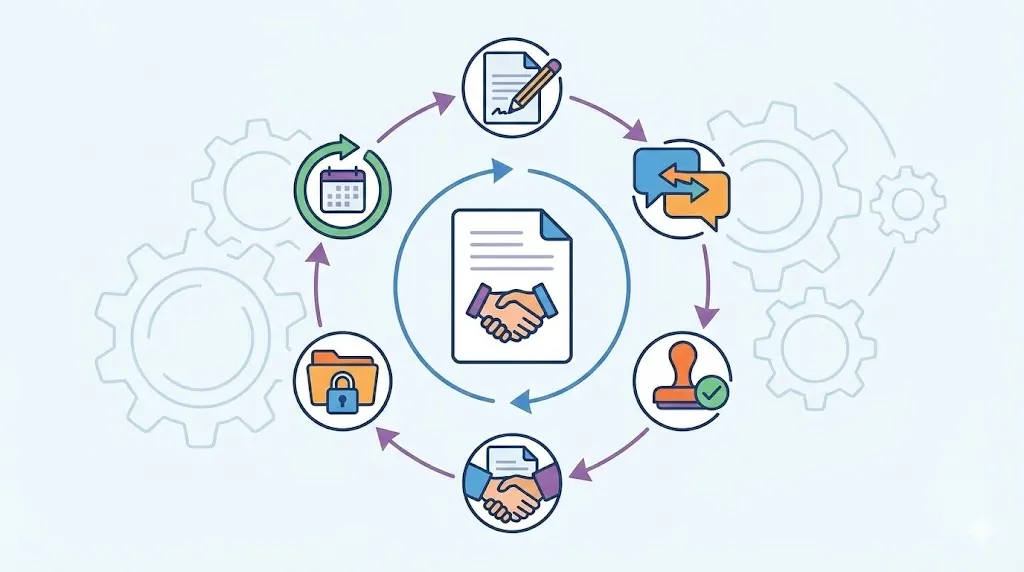
Contracting is often the hidden bottleneck in supply chain responsiveness. The process encompasses several stages, including drafting, review, negotiation, approval, and execution. Each step can introduce delays.
Several factors contribute to slow contracts: The reliance on manual processes such as paper forms, emails, and spreadsheets frequently leads to errors and inefficiencies. In addition, legal, procurement, and business units often operate in silos, lacking integrated platforms that facilitate seamless collaboration. Approval workflows can be especially cumbersome, with multiple sign-off layers extending contract finalization by weeks. Furthermore, the necessity to customize contracts adds layers of complexity, increasing the time required for drafting and thorough review. Compounding these challenges is the limited visibility many teams have into contract status and critical deadlines.
These issues become particularly acute during supply chain crises, where the ability to respond swiftly is crucial. For example, automakers facing semiconductor shortages have had to engage directly with chip manufacturers to secure supply. Those capable of accelerating contract execution in such scenarios gain a decisive competitive advantage.
How Linking Sourcing and Contracting Speeds Up Supply Chains
The sourcing process encompasses supplier identification, thorough risk assessment, and the selection of suitable partners. Additionally, contracting then formalizes this relationship by specifying the agreed terms and conditions. Traditionally, these functions have been managed through disparate systems or departmental silos.
Linking these procurement phases fosters a continuous workflow. When a supplier is chosen, contract drafts can be auto-generated utilizing pre-approved templates, thereby eliminating redundant tasks and accelerating contract formulation.
Benefits of integrating sourcing and contracting include:
Transparency: Everyone sees the status of sourcing and contracts in one place.
Speed: Contract generation is triggered immediately following sourcing decisions.
Risk control: Contractual provisions are adjusted in real time to incorporate sourcing risk evaluations.
Collaboration: Teams work together on one platform, reducing miscommunication.
For example, a company sourcing raw materials can quickly generate contracts with pricing, delivery, and quality clauses based on sourcing data. This reduces cycle times and helps suppliers start work faster.
Related articles: Force Majeure Clause: How Does It Work in Contracts?
Real-World Example: Faster Contracting Drives Supply Chain Resilience
Rising geopolitical tensions have abruptly disrupted the steel supply chain for a manufacturing firm. The procurement team is under intense pressure to quickly locate alternative suppliers. Traditional contract methods would require weeks for drafting and approval.
Rather than relying on conventional processes, this company employs digital contract management integrated with sourcing workflows. Once a supplier passes evaluation, a contract draft is created automatically. Procurement routes it for approval with automated reminders. The supplier signs electronically. The entire process takes days, not weeks.
By accelerating contract execution, the manufacturer secures steel supplies promptly, mitigates production disruptions, and optimizes cost control. The contract system also tracks obligations and renewal dates, so the team stays proactive.
This example shows how fast contracts can be a strategic advantage during supply chain shocks.
Related articles: How to Prevent Clause Drift in Federal Contracts
How Contract Management Software Solves This
Contract lifecycle management (CLM) software accelerates contract processes while mitigating associated risks. Additionally, cLM technology streamlines the entire contract lifecycle by automating creation, review, negotiation, approval, and storage functions. They provide visibility into contract status and obligations.
Key ways CLM software supports supply chain agility:
AI-powered drafting: Generate contracts quickly from templates and clause libraries.
Automated workflows: Route contracts for review and approval with alerts and escalations.
Electronic signatures: Execute agreements instantly without paper delays.
Centralized repository: Store contracts securely with full-text search and metadata tagging.
Obligation tracking: Monitor deadlines, deliveries, and compliance automatically.
Collaboration tools: Enable dynamic communication through instant commenting and redlining capabilities across teams and suppliers.
Volody’s contract management software combines these functionalities to enhance the efficiency and oversight of contract processes. The AI-enhanced drafting and review modules reduce inaccuracies and speed up negotiation cycles. Automated workflows help eliminate delays during approval phases. The platform continuously monitors obligations to ensure compliance with critical deadlines.
> Discover how Volody's CLM Software empowers your team to advance contract execution with greater assurance.
FAQ
Why is accelerating contract execution critical during supply chain disturbances?
Additionally, interruptions in supply networks often necessitate rapid adjustments to suppliers, contract terms, or delivery timelines. Fast contracts enable companies to secure resources quickly, avoid delays, and manage risks effectively.
What makes contracts slow in many companies?
Manual processes, siloed teams, complex approvals, and lack of standard templates cause delays. In the absence of digital solutions, contract finalization often extends over several weeks.
How does integrating sourcing and contracting help?
It enables contract drafts to be generated automatically following supplier selection, reducing duplicate work and compressing approval timeframes.
Moreover, what role does technology play in contract agility?
Technology automates drafting, workflows, approvals, and signatures. It provides visibility and tracks obligations, helping teams respond quickly and avoid errors.
Can accelerating contract turnaround enhance supplier relationships?
Delivering contracts promptly and with clarity fosters trust, facilitating more effective collaboration.
Clear, timely contracts build trust and enable collaboration.
They allow quick adjustments to changing conditions, strengthening partnerships.
Furthermore, what features should contract management software incorporate to optimize supply chain performance?
Look for AI drafting, automated workflows, e-signatures, centralized storage, obligation tracking, and collaboration tools to speed contract processes.
How can procurement leaders measure contract agility?
Track contract cycle times, approval delays, and the speed of supplier onboarding. Faster turnaround and fewer bottlenecks indicate better agility.
Are there risks to speeding up contracts?
Accelerating contract processes must not compromise accuracy or regulatory compliance. Also, employing templates alongside AI-driven review mechanisms ensures quality remains intact even as speed increases.
How do contracts help manage supply chain risks?
Contracts define terms for price changes, delivery delays, quality issues, and force majeure. Fast updates ensure these protections stay current.
What is the biggest challenge in making contracts agile?
Changing organizational habits and integrating legal, procurement, and business teams on shared digital platforms is often the hardest part.
This article explains why slow contracts can cripple supply chain responses and how companies can fix this. Contract agility is no longer optional. It is a critical capability for managing risk and staying competitive in a volatile world. By implementing optimized workflows and leveraging advanced solutions, contracts can adapt swiftly to future supply network challenges.
About the Company

Volody AI CLM is an Agentic AI-powered Contract Lifecycle Management platform designed to eliminate manual contracting tasks, automate complex workflows, and deliver actionable insights. As a one-stop shop for all contract activities, it covers drafting, collaboration, negotiation, approvals, e-signature, compliance tracking, and renewals. Built with enterprise-grade security and no-code configuration, it meets the needs of the most complex global organizations. Volody AI CLM also includes AI-driven contract review and risk analysis, helping teams detect issues early and optimize terms. Trusted by Fortune 500 companies, high-growth startups, and government entities, it transforms contracts into strategic, data-driven business assets.




" height="216.72211px" id="FYO0bO80Y" transform="translate(3 6.105)" width="206.073px"/><path d="M 108.174 222 C 88.432 222 70.303 217.239 53.785 207.717 C 37.267 198.196 24.173 185.052 14.504 168.285 C 4.835 151.312 0 132.165 0 110.845 C 0 89.731 4.835 70.792 14.504 54.025 C 24.173 37.052 37.267 23.804 53.785 14.282 C 70.303 4.761 88.432 0 108.174 0 C 128.116 0 146.246 4.761 162.562 14.282 C 179.08 23.804 192.073 37.052 201.541 54.025 C 211.21 70.792 216.044 89.731 216.044 110.845 C 216.044 132.165 211.21 151.312 201.541 168.285 C 192.073 185.052 179.08 198.196 162.562 207.717 C 146.044 217.239 127.915 222 108.174 222 Z M 108.174 183.189 C 120.864 183.189 132.044 180.291 141.713 174.495 C 151.382 168.492 158.936 160.006 164.375 149.035 C 169.814 138.064 172.533 125.334 172.533 110.845 C 172.533 96.355 169.814 83.729 164.375 72.965 C 158.936 61.994 151.382 53.611 141.713 47.815 C 132.044 42.02 120.864 39.122 108.174 39.122 C 95.483 39.122 84.202 42.02 74.332 47.815 C 64.663 53.611 57.109 61.994 51.67 72.965 C 46.231 83.729 43.511 96.355 43.511 110.845 C 43.511 125.334 46.231 138.064 51.67 149.035 C 57.109 160.006 64.663 168.492 74.332 174.495 C 84.202 180.291 95.483 183.189 108.174 183.189 Z" fill="rgba(255, 255, 255, 0.12)" height="222px" id="aa1McFcE9" transform="translate(227.183 3)" width="216.04399999999998px"/><path d="M 42.302 182.257 L 111.799 182.257 L 111.799 216.722 L 0 216.722 L 0 0 L 42.302 0 Z" fill="rgba(255, 255, 255, 0.12)" height="216.72211px" id="yRq4AnrsX" transform="translate(477.721 6.105)" width="111.79899999999998px"/><path d="M 108.174 222 C 88.432 222 70.303 217.239 53.785 207.717 C 37.267 198.196 24.173 185.052 14.504 168.285 C 4.835 151.312 0 132.165 0 110.845 C 0 89.731 4.835 70.792 14.504 54.025 C 24.173 37.052 37.267 23.804 53.785 14.282 C 70.303 4.761 88.432 0 108.174 0 C 128.116 0 146.246 4.761 162.562 14.282 C 179.08 23.804 192.073 37.052 201.541 54.025 C 211.21 70.792 216.045 89.731 216.045 110.845 C 216.045 132.165 211.21 151.312 201.541 168.285 C 192.073 185.052 179.08 198.196 162.562 207.717 C 146.044 217.239 127.915 222 108.174 222 Z M 108.174 183.189 C 120.864 183.189 132.044 180.291 141.713 174.495 C 151.382 168.492 158.936 160.006 164.375 149.035 C 169.814 138.064 172.534 125.334 172.534 110.845 C 172.534 96.355 169.814 83.729 164.375 72.965 C 158.936 61.994 151.382 53.611 141.713 47.815 C 132.044 42.02 120.864 39.122 108.174 39.122 C 95.483 39.122 84.202 42.02 74.332 47.815 C 64.663 53.611 57.108 61.994 51.67 72.965 C 46.231 83.729 43.511 96.355 43.511 110.845 C 43.511 125.334 46.231 138.064 51.67 149.035 C 57.108 160.006 64.663 168.492 74.332 174.495 C 84.202 180.291 95.483 183.189 108.174 183.189 Z" fill="rgba(255, 255, 255, 0.12)" height="222px" id="mo8HQspQ0" transform="translate(609.155 3)" width="216.04500000000007px"/><path d="M 73.727 0 C 95.885 0 115.324 4.45 132.044 13.351 C 148.967 22.252 161.957 34.982 171.027 51.541 C 180.287 67.894 184.917 86.937 184.917 108.671 C 184.917 130.405 180.287 149.449 171.027 165.801 C 161.957 181.947 148.967 194.47 132.044 203.371 C 115.324 212.271 95.885 216.722 73.727 216.722 L 0 216.722 L 0 0 Z M 72.216 179.773 C 94.374 179.773 111.497 173.564 123.583 161.144 C 135.669 148.724 141.713 131.233 141.713 108.671 C 141.713 86.109 135.669 68.515 123.583 55.888 C 111.497 43.055 94.374 36.638 72.216 36.638 L 42.302 36.638 L 42.302 179.773 Z" fill="rgba(255, 255, 255, 0.12)" height="216.72211px" id="I3iXX5Hi_" transform="translate(859.693 6.105)" width="184.91699999999992px"/><path d="M 185.22 0 L 113.91 141.273 L 113.91 216.722 L 71.61 216.722 L 71.61 141.273 L 0 0 L 47.74 0 L 93.06 99.046 L 138.08 0 Z" fill="rgba(255, 255, 255, 0.12)" height="216.72211px" id="nzHyWC0_d" transform="translate(1061.78 6.105)" width="185.22000000000003px"/></svg>)