
Retail businesses face rapid changes every day. Supply chain disruptions, shifting customer demands, and new partnerships require fast, clear contract management. Market transformation calls for contract digitization in retail to keep pace. Imagine a retailer scrambling to update dozens of contracts during a sudden supply shortage. Without digital tools, this process is slow and error-prone. Digitizing contracts helps companies react quickly and reduce risk by making contract data instantly accessible and actionable.
TL;DR
Rapid changes in retail markets expose the limitations of manual contract management, which often results in inefficiencies and increased error rates.
By digitizing contracts, organizations gain swift access to key contractual terms, which supports faster decision-making and reduces the potential for errors.
The volatility of supply chains highlights the necessity for adaptable contract amendments and more efficient vendor onboarding processes.
Many traditional contracts fail to incorporate provisions that address abrupt market fluctuations, thereby elevating the level of risk exposure.
Contract lifecycle management (CLM) software provides a centralized repository for contracts while automating associated workflows.
The digitization process enhances compliance adherence, risk mitigation strategies, and overall operational transparency within the retail sector.
What Makes Contract Digitization Critical in Retail Market Changes?
Retail is a fast-moving industry where supply and demand can change overnight. Contract digitization means converting paper or static contracts into digital formats that are searchable, connected, and easy to update. This shift is no longer optional. It is essential to survive and thrive amid market transformation.
Retailers often juggle hundreds or thousands of contracts with suppliers, distributors, logistics providers, and partners. When disruptions happen, such as a sudden spike in online grocery orders or a delay in shipments, companies must quickly review and amend contracts. Searching through paper documents manually can extend over several days or even weeks, leading to significant losses in both time and financial resources.
A digital contract system enables teams to retrieve pertinent agreements immediately. It highlights key clauses like delivery terms, pricing adjustments, or penalties. Moreover, this speed helps retailers negotiate changes, onboard new vendors, and avoid supply chain breakdowns.
For example, during a recent surge in online shopping, many retailers had to renegotiate shipping contracts to handle increased volumes. In addition, those equipped with digitized contracts could swiftly access terms and implement modifications without hesitation. Others relying on paper or disconnected systems struggled to identify impacted contracts, delaying responses and risking stockouts.
Digitization also supports transparency. When contract data is in one place, stakeholders across legal, procurement, and operations see the same information. This alignment reduces errors and miscommunication.
According to a report by World Commerce & Contracting, companies with digital contract access adapted faster during market disruptions. They could pivot supplier relationships and manage risks more effectively. This agility is vital as retail markets remain volatile.
Related articles: 4 Legal Issues in Retail: How to Mitigate Risks in Retailing
How Do Supply Chain Disruptions Expose Contract Weaknesses?
Supply chains are the backbone of retail. Additionally, when disruptions occur, contracts serve as the primary mechanism for managing risks and maintaining order. Yet many retail contracts were written for stable conditions. They lack clear terms for sudden changes like delays, shortages, or price swings.
This gap forces companies to work around contracts or negotiate emergency amendments. Both approaches increase risk. Without clear contract language, retailers may face disputes, penalties, or lost revenue.
Digitized contracts help identify these weak spots quickly. Advanced contract management tools can flag clauses that don’t cover force majeure events or lack flexibility. This insight allows legal teams to prioritize contract updates before problems escalate.
During the COVID-19 pandemic, many retailers faced supply chain chaos. Contracts often did not address pandemic-related disruptions. Organizations scrambled to renegotiate terms or onboard new suppliers. Those with digital contracts found the process smoother because they had immediate access to contract details and could track changes.
Manual contract handling also slows vendor onboarding. Retailers need new partners to fill gaps fast. Without digital tools, onboarding involves paper forms, emails, and manual data entry. This delays getting new suppliers up and running.
Digitization automates vendor onboarding workflows. It uses templates and clause libraries to speed contract creation. It also tracks approvals and signatures electronically. This efficiency reduces downtime and improves supply chain resilience.
In short, supply chain disruptions reveal how outdated contract processes increase risk and slow responses. Digitizing contracts is the best way to fix these problems.
Related articles: Contract Templates Standardization: Simplifying Legal Work
Why Do Traditional Contracts Fail in Volatile Retail Markets?
Traditional contracts frequently underperform in volatile environments due to their inherent rigidity. Additionally, they capture the state of affairs at the moment of signing but seldom incorporate mechanisms to accommodate swift market fluctuations. In retail, agreements usually fix delivery schedules, prices, and penalties in advance. Often, these agreements omit provisions for unforeseen circumstances or mechanisms allowing flexible renegotiation.
Such rigidity poses significant challenges when market dynamics shift abruptly. Retailers are compelled to choose between absorbing financial losses or entering renegotiations under duress. Both outcomes erode profit margins and place strain on business relationships.
Digital contract platforms enable continuous monitoring of contractual obligations. Retailers can monitor progress on milestones, deliveries, and payments. Should a supplier fail to meet a scheduled deadline, the system promptly notifies the responsible team to initiate corrective measures.
Moreover, without digitization, contract data is scattered across emails, spreadsheets, and filing cabinets. This fragmentation hides risks and opportunities. It also makes compliance audits harder.
For example, a retailer with digitized contracts gains immediate visibility into outstanding supplier shipments or upcoming renewal deadlines. This level of insight reduces unexpected disruptions and supports anticipatory management.
Retail contracts also need to support collaboration across departments. Legal, procurement, finance, and operations all interact with contracts. Digital platforms provide shared access governed by role-based permissions. The resulting transparency enhances coordination and accelerates decision-making.
In summary, traditional contracts frequently falter because their structure lacks both flexibility and integration. Digitization creates flexible, connected contracts that support fast, informed actions in volatile markets.
Related Article: How Speeding Up Contracting Keeps Retail Shelves Stocked
How Does Contract Digitization Improve Vendor Onboarding and Management?
Vendor onboarding is a fundamental aspect of managing the retail supply chain. Additionally, the procedure encompasses vetting suppliers, negotiating contracts, and integrating them into operational workflows. Manual execution often renders this process slow and susceptible to errors.
Digitizing contracts streamlines onboarding by automating tasks such as contract creation and approval workflows. Pre-approved templates and clause libraries reduce drafting time. Electronic signatures eliminate paper delays.
Digital platforms also centralize supplier information and contracts. Moreover, this single source of truth helps procurement teams track vendor status and compliance. It reduces risks from missing documents or outdated agreements.
For example, a retailer onboarding a new logistics provider can use a digital contract system to generate a contract from templates, route it for legal and finance approval, and get signatures electronically. The system then stores the contract with metadata for easy retrieval.
Ongoing vendor management benefits significantly as well. Digitized contracts allow monitoring of supplier performance against contract terms. Automated alerts notify teams of upcoming renewals, missed obligations, or compliance issues.
Furthermore, this proactive approach reduces risks and improves supplier relationships. Retailers can quickly address problems or renegotiate terms based on real-time data.
According to Gartner, companies that digitize vendor contracts reduce onboarding time by up to 50%. They also cut compliance risks and improve operational efficiency.
In retail, where new vendors frequently enter to satisfy evolving demand, accelerating onboarding processes offers a decisive competitive edge. Digitization makes this possible.
Related articles: How Machine Learning Transforms Contract Management Today
What Are the Compliance and Risk Benefits of Contract Digitization in Retail?
Retail contracts encompass a broad spectrum of compliance requirements, including product safety standards, data privacy regulations, and labor legislation. Additionally, managing these risks through manual processes often results in a convoluted workflow that heightens the risk of critical oversights.
By bringing all agreements and associated documentation into a unified digital repository, organizations can markedly enhance their compliance frameworks. Legal departments are empowered to perform precise searches within contracts to locate specific clauses or mandated obligations. Additionally, automated workflows ensure strict compliance with approved templates and internal governance policies.
Contract lifecycle management software can also integrate risk playbooks. These applications scrutinize contract verbiage to detect potentially hazardous clauses or absent stipulations. They alert stakeholders to these vulnerabilities prior to contract execution.
For example, a retailer can use contract analytics to identify contracts that lack required data protection terms. The system alerts legal to update these contracts, reducing regulatory risk.
Digitization also creates audit trails. Every modification, endorsement, and signature associated with a contract is recorded with precision. Moreover, this level of transparency facilitates both internal audits and regulatory compliance.
Risk management improves because contract data is connected to operational systems. Retailers can monitor supplier performance, delivery milestones, and payment terms in one place. Alerts warn of potential breaches or missed deadlines.
This visibility helps avoid costly disputes and penalties. It also supports better decision-making by providing a clear picture of contractual obligations and risks.
According to a Deloitte report, companies with digital contract management reduce compliance failures by 30% and improve risk mitigation.
Retailers face growing regulatory scrutiny. Contract digitization is a practical way to meet these demands while improving operational control.
Related articles: Mastering Contract Clauses: Risk & Performance
How Can Retailers Prepare for Future Market Shifts with Contract Digitization?
Retail markets will continue to evolve rapidly. Preparing for future shifts means building agility into contract management today.
Digitization lays the foundation for this agility. It enables retailers to locate and analyze contracts that are pertinent to emerging market dynamics with greater speed and precision. In addition, employing pre-approved templates embedded with flexible clauses facilitates streamlined contract adjustments without sacrificing legal rigor. Enhanced workflow management further refines approval procedures and expedites vendor onboarding, reducing bottlenecks. Continuous real-time monitoring ensures persistent oversight of contract performance while reinforcing compliance standards. Moreover, implementing shared access frameworks governed by role-based permissions promotes seamless collaboration across departments.
Retailers should initiate their efforts by conducting a thorough evaluation of their current contract landscape. This process includes cataloging contract repositories, assessing how accessible contracts are, and pinpointing areas of potential risk. Subsequently, digitization initiatives ought to prioritize contracts with the highest operational or strategic significance, particularly those linked to critical suppliers or pivotal terms.
Next, organizations need to deploy a contract lifecycle management solution tailored to their scale and complexity. Ensuring comprehensive training on these digital tools for relevant teams and integrating contract data seamlessly with enterprise systems such as ERP and procurement platforms are critical steps in this phase.
Finally, instituting robust governance frameworks is crucial to uphold contract integrity and compliance. Systematic updates combined with regular review cycles of contract templates and clauses enable consistent alignment with evolving market requirements.
By adopting this approach, retailers transform their contracts from static documents into dynamic, strategic assets that actively contribute to business agility. Such preparedness allows them to navigate disruptions adeptly and capitalize on emerging opportunities with confidence.
Related articles: 10 Key Contract Clauses Every Business Should Know in 2026
Why Contract Management Software Matters in Retail Transformation
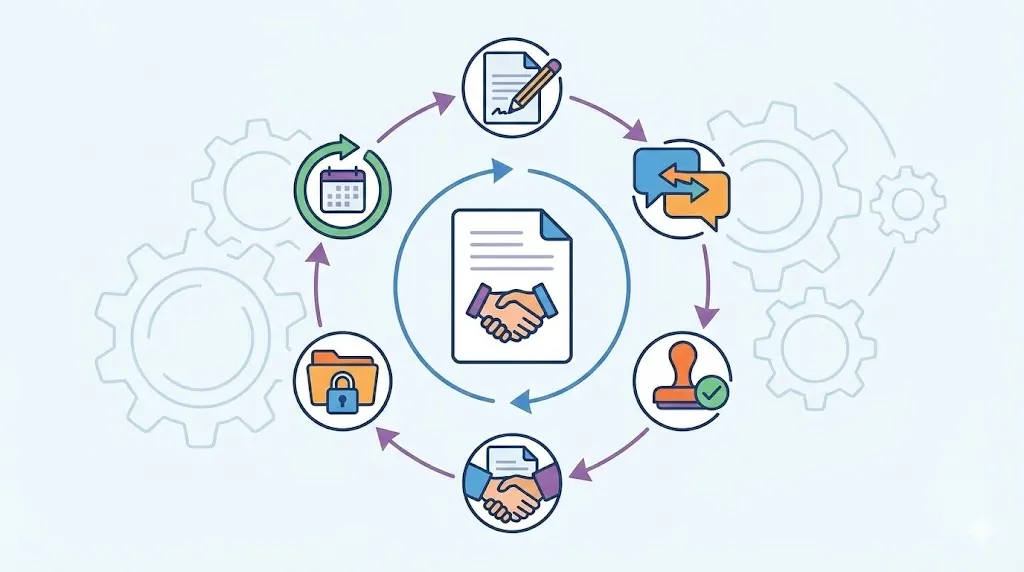
Contract management software centralizes contracts in a secure, searchable repository. Additionally, it automates essential workflows such as drafting, review, approval, and renewal tracking. This automation reduces manual work and errors.
Retailers can use advanced features such as AI-powered clause analysis, contract summaries, and risk scoring. These tools help legal and procurement teams focus on exceptions and strategic decisions.
The software also supports collaboration by allowing multiple users to comment, edit, and negotiate contracts in one place. Version control ensures everyone works on the latest document.
Integration with other enterprise systems creates a seamless flow of contract data. For example, linking contracts to procurement or finance systems helps track spend and compliance.
Contract management platforms improve visibility with dashboards and reports. Leaders can monitor contract volume, turnaround times, risk exposure, and vendor performance.
This data-driven approach supports continuous improvement and better decision-making.
How Volody’s CLM Software Supports Retail Contract Digitization
Contract lifecycle management software is designed to help retail professionals optimize contract processes while reducing associated risks. Additionally, the platform incorporates AI-driven drafting, review, and metadata extraction functionalities that expedite contract creation and analysis.
Its capabilities extend to automated approval workflows, electronic signatures, and a central contract repository with advanced search. These features simplify vendor onboarding and contract updates.
Volody also provides obligation management and alerts to keep teams on top of renewals and compliance. Integration with Microsoft Word and enterprise systems supports familiar workflows.
Volody’s no-code configuration adapts to changing retail needs without IT delays. Role-based access controls protect sensitive contract data.
> See how Volody empowers legal departments to expedite contract management while enhancing oversight.
FAQ
What encompasses contract digitization within the retail sector?
Additionally, contract digitization involves converting paper or static contracts into digital formats that are searchable, connected, and easy to update. This process enables retailers to retrieve contract data promptly and manage agreements with greater efficiency.
Why is digitization of contracts critical for retail supply chain operations?
Retail supply chains often face interruptions. Digitized contracts allow companies to swiftly pinpoint affected agreements, renegotiate terms, and onboard new vendors, thereby minimizing delays and mitigating risks.
In what ways does digitizing contracts mitigate legal risks?
Digital contract platforms can flag risky clauses, missing provisions, and compliance gaps before contracts are signed. Moreover, they also maintain audit trails and support real-time monitoring of obligations.
Can contract digitization speed up vendor onboarding?
Yes. Automated workflows, templates, and electronic signatures reduce manual steps. This speeds contract creation, approval, and execution, helping retailers onboard vendors faster.
What features should retail contract management software have?
Key features include AI contract drafting and review, clause libraries, automated approval workflows, electronic signatures, obligation tracking, advanced search, and integration with enterprise systems.
In which ways do digital contract systems facilitate enhanced collaboration among teams?
Furthermore, digital platforms enable multiple users to access, comment, and negotiate contracts in a centralized environment with version control. This transparency reduces errors and accelerates decisions across legal, procurement, and operations teams.
Is contract digitization only for large retailers?
No. Retailers of all sizes benefit from digitizing contracts. Scalable contract management solutions can fit small teams or large enterprises, adapting to different volumes and complexities.
In what manner does digitization contribute to maintaining compliance?
Centralized contract data and automated workflows ensure contracts follow approved templates and policies. Also, risk analysis tools identify compliance gaps, and audit trails document all contract activities.
Also, what challenges do retailers face when digitizing contracts?
Retailers encounter obstacles such as migrating legacy contracts, revising internal workflows, and staff training. Adopting adaptable software combined with incremental implementation strategies can effectively address these challenges.
What initial steps should retailers consider to implement contract digitization?
Begin by auditing existing contracts to set clear priorities. Select a contract lifecycle management platform that aligns with operational needs. Deliver thorough user training and ensure seamless integration of contract data with enterprise systems to fully leverage the solution.
About the Company

Volody AI CLM is an Agentic AI-powered Contract Lifecycle Management platform designed to eliminate manual contracting tasks, automate complex workflows, and deliver actionable insights. As a one-stop shop for all contract activities, it covers drafting, collaboration, negotiation, approvals, e-signature, compliance tracking, and renewals. Built with enterprise-grade security and no-code configuration, it meets the needs of the most complex global organizations. Volody AI CLM also includes AI-driven contract review and risk analysis, helping teams detect issues early and optimize terms. Trusted by Fortune 500 companies, high-growth startups, and government entities, it transforms contracts into strategic, data-driven business assets.




" height="216.72211px" id="FYO0bO80Y" transform="translate(3 6.105)" width="206.073px"/><path d="M 108.174 222 C 88.432 222 70.303 217.239 53.785 207.717 C 37.267 198.196 24.173 185.052 14.504 168.285 C 4.835 151.312 0 132.165 0 110.845 C 0 89.731 4.835 70.792 14.504 54.025 C 24.173 37.052 37.267 23.804 53.785 14.282 C 70.303 4.761 88.432 0 108.174 0 C 128.116 0 146.246 4.761 162.562 14.282 C 179.08 23.804 192.073 37.052 201.541 54.025 C 211.21 70.792 216.044 89.731 216.044 110.845 C 216.044 132.165 211.21 151.312 201.541 168.285 C 192.073 185.052 179.08 198.196 162.562 207.717 C 146.044 217.239 127.915 222 108.174 222 Z M 108.174 183.189 C 120.864 183.189 132.044 180.291 141.713 174.495 C 151.382 168.492 158.936 160.006 164.375 149.035 C 169.814 138.064 172.533 125.334 172.533 110.845 C 172.533 96.355 169.814 83.729 164.375 72.965 C 158.936 61.994 151.382 53.611 141.713 47.815 C 132.044 42.02 120.864 39.122 108.174 39.122 C 95.483 39.122 84.202 42.02 74.332 47.815 C 64.663 53.611 57.109 61.994 51.67 72.965 C 46.231 83.729 43.511 96.355 43.511 110.845 C 43.511 125.334 46.231 138.064 51.67 149.035 C 57.109 160.006 64.663 168.492 74.332 174.495 C 84.202 180.291 95.483 183.189 108.174 183.189 Z" fill="rgba(255, 255, 255, 0.12)" height="222px" id="aa1McFcE9" transform="translate(227.183 3)" width="216.04399999999998px"/><path d="M 42.302 182.257 L 111.799 182.257 L 111.799 216.722 L 0 216.722 L 0 0 L 42.302 0 Z" fill="rgba(255, 255, 255, 0.12)" height="216.72211px" id="yRq4AnrsX" transform="translate(477.721 6.105)" width="111.79899999999998px"/><path d="M 108.174 222 C 88.432 222 70.303 217.239 53.785 207.717 C 37.267 198.196 24.173 185.052 14.504 168.285 C 4.835 151.312 0 132.165 0 110.845 C 0 89.731 4.835 70.792 14.504 54.025 C 24.173 37.052 37.267 23.804 53.785 14.282 C 70.303 4.761 88.432 0 108.174 0 C 128.116 0 146.246 4.761 162.562 14.282 C 179.08 23.804 192.073 37.052 201.541 54.025 C 211.21 70.792 216.045 89.731 216.045 110.845 C 216.045 132.165 211.21 151.312 201.541 168.285 C 192.073 185.052 179.08 198.196 162.562 207.717 C 146.044 217.239 127.915 222 108.174 222 Z M 108.174 183.189 C 120.864 183.189 132.044 180.291 141.713 174.495 C 151.382 168.492 158.936 160.006 164.375 149.035 C 169.814 138.064 172.534 125.334 172.534 110.845 C 172.534 96.355 169.814 83.729 164.375 72.965 C 158.936 61.994 151.382 53.611 141.713 47.815 C 132.044 42.02 120.864 39.122 108.174 39.122 C 95.483 39.122 84.202 42.02 74.332 47.815 C 64.663 53.611 57.108 61.994 51.67 72.965 C 46.231 83.729 43.511 96.355 43.511 110.845 C 43.511 125.334 46.231 138.064 51.67 149.035 C 57.108 160.006 64.663 168.492 74.332 174.495 C 84.202 180.291 95.483 183.189 108.174 183.189 Z" fill="rgba(255, 255, 255, 0.12)" height="222px" id="mo8HQspQ0" transform="translate(609.155 3)" width="216.04500000000007px"/><path d="M 73.727 0 C 95.885 0 115.324 4.45 132.044 13.351 C 148.967 22.252 161.957 34.982 171.027 51.541 C 180.287 67.894 184.917 86.937 184.917 108.671 C 184.917 130.405 180.287 149.449 171.027 165.801 C 161.957 181.947 148.967 194.47 132.044 203.371 C 115.324 212.271 95.885 216.722 73.727 216.722 L 0 216.722 L 0 0 Z M 72.216 179.773 C 94.374 179.773 111.497 173.564 123.583 161.144 C 135.669 148.724 141.713 131.233 141.713 108.671 C 141.713 86.109 135.669 68.515 123.583 55.888 C 111.497 43.055 94.374 36.638 72.216 36.638 L 42.302 36.638 L 42.302 179.773 Z" fill="rgba(255, 255, 255, 0.12)" height="216.72211px" id="I3iXX5Hi_" transform="translate(859.693 6.105)" width="184.91699999999992px"/><path d="M 185.22 0 L 113.91 141.273 L 113.91 216.722 L 71.61 216.722 L 71.61 141.273 L 0 0 L 47.74 0 L 93.06 99.046 L 138.08 0 Z" fill="rgba(255, 255, 255, 0.12)" height="216.72211px" id="nzHyWC0_d" transform="translate(1061.78 6.105)" width="185.22000000000003px"/></svg>)