

Retailers face a tough challenge: keeping shelves stocked while supply chains face delays. One overlooked factor is how quickly contracts with new suppliers get signed. Why faster contracting is key to keeping shelves stocked matters because slow contract processes can block access to vital products. When retailers speed up contracting, they can onboard new suppliers faster, reduce risks, and keep customers happy with stocked shelves.
TL;DR
The ability to contract with suppliers quickly is now a key factor in addressing the challenges posed by supply chain disruptions within retail.
When contract review and approval processes lag, they cause delays in onboarding suppliers that ultimately affect product availability.
Contracts extend beyond pricing and product specifications; they are vital for overseeing supplier relationships and managing risks effectively.
Implementing digital contract management solutions accelerates workflows related to approvals, negotiations, and signatures.
Reducing contract cycle times enhances supply chain responsiveness and mitigates compliance-related exposures.
By leveraging contract management software, retailers can adapt more effectively to emerging supply chain challenges.
What Makes Contract Speed So Critical for Retail Supply Chains?
Retail supply chains are complex webs of sourcing, manufacturing, shipping, and delivery. Additionally, a delay in any one part reverberates through the entire network. Contracting with suppliers is one of those links. It sets the rules for delivery, pricing, quality, and risk. If contracts take weeks or months to finalize, retailers lose precious time to secure needed products.
Consider a retailer trying to add a new supplier for a hot product during a busy season. If contract negotiations drag on, the supplier might miss production windows or shipping slots. That delay translates to empty shelves and missed sales. By shortening the time required to finalize contracts, retailers can respond more swiftly to demand fluctuations and avoid supply disruptions.
The COVID-19 pandemic alongside other recent disruptions highlighted the inherent vulnerabilities within supply chains. Moreover, these events exposed weaknesses that many organizations had not previously anticipated or adequately prepared for.
Factories shut down, shipping containers became scarce, and labor shortages hit transport. These challenges collectively strained the logistics infrastructure and underscored the fragility of global supply networks.
Contracts do more than set prices. They define delivery schedules, penalties for delays, quality standards, and compliance requirements. These terms protect retailers from risk and ensure supplier accountability. When contracts are slow to negotiate, retailers risk losing control of these protections or rushing into agreements without proper review.
In short, contract speed directly affects a retailer’s ability to source products, manage risks, and compete in a fast-moving market.
Related articles: How to Review Contracts More Quickly and Effectively?
What Causes Contract Delays in Retail Supplier Onboarding?
Retailers face significant contract delays caused by a combination of internal processes and external factors. Additionally, understanding these root causes helps identify the specific areas where process improvements can have the greatest impact.
Lengthy Review and Approval Cycles
Contracts usually require sign-off from multiple departments such as legal, finance, procurement, and sometimes compliance teams. Each group reviews the contract for different concerns. Legal checks terms and risks, finance verifies pricing and payment terms, procurement ensures supplier fit, and compliance looks for regulatory issues.
These multiple reviews often happen sequentially, creating bottlenecks. If one team is busy or unclear on priorities, the contract stalls. Emails and manual handoffs add confusion and slow response times.
Negotiation Back and Forth
Suppliers and retailers frequently engage in detailed negotiations over contract terms to appropriately allocate risk and reward. Moreover, this can mean several rounds of redlining, comments, and revisions. Without a clear process or tools to track changes, negotiations drag on.
Retailers may also struggle with inconsistent contract language. Different teams or regions might use varying templates or clauses, causing confusion and rework.
Manual Signature Collection
Contracts that depend on physical signatures or disparate electronic signature platforms often experience delays. Tracking signature completion manually and sending reminders consumes significant administrative resources.
Lack of Visibility and Controls
Centralized contract management systems are often absent, making it difficult to monitor contract progress. Stakeholders may be unaware of a contract’s current status or which party is responsible for subsequent actions. Furthermore, this opacity contributes to missed deadlines and heightened risk.
Risk Aversion and Compliance Concerns
Retailers must balance speed with risk management. Skipping thorough reviews risks exposing the organization to supplier-related liabilities or noncompliance with regulations. As a result, teams may intentionally slow contract workflows to ensure compliance standards are met.
Example: A Retailer’s Contract Delay Story
One mid-sized retailer sought to onboard a new supplier for seasonal goods. The contract underwent legal, finance, and procurement reviews, each requiring a week or longer. Negotiations over delivery terms added two more weeks. Signature collection extended the timeline by another week due to the remote locations of signatories. Ultimately, the entire process exceeded six weeks, causing the supplier to miss the season’s peak demand.
This delay meant empty shelves and lost revenue. The retailer realized that speeding up contract processes was essential to avoid repeating this problem.
Related articles: Cut Contract Cycle Time: Proven Steps to Speed Up Deals
How Faster Contracting Boosts Supply Chain Agility
Speeding up contracting does more than just save time. Additionally, it directly enhances supply chain agility by enabling more rapid adaptation to shifts and interruptions.
Faster Supplier Onboarding
Accelerated contract turnaround enables retailers to integrate new suppliers without delay. This capability proves critical when existing vendors encounter disruptions or inventory shortages. Retailers gain the ability to broaden their supplier network and mitigate reliance on any individual partner.
Improved Inventory Planning
When contracts finalize faster, retailers get clearer visibility into what products will arrive and when. This helps plan inventory more accurately and avoid stockouts or overstocks.
Reduced Risk Exposure
Speed does not mean cutting corners. Faster contracting with automated risk checks and standardized clauses ensures retailers maintain controls. Early detection of supplier risks or compliance issues helps avoid costly problems later.
Enhanced Collaboration Across Teams
Digital contract processes break down silos. Moreover, legal, procurement, finance, and operations teams can work together in real time. This collaboration speeds approvals and ensures everyone is aligned on contract terms.
Better Customer Experience
Ultimately, faster contracting supports product availability. Maintaining stocked shelves ensures customers find their desired items. This consistency fosters brand trust and customer loyalty, particularly during high-stakes shopping periods.
Real-World Impact: Retailers During Peak Seasons
Retailers encounter substantial pressure around holidays and major promotional events. Supply chains must adjust swiftly to accommodate surges in demand. Retailers that expedite contracting can onboard last-minute suppliers or renegotiate terms to secure essential inventory. Those encumbered by sluggish contract workflows risk lost sales and reputational harm.
According to a report by McKinsey, retailers that improve supply chain responsiveness can increase sales by up to 5% during peak periods. Contract speed is a key part of that responsiveness.
Related articles: How Legal and Finance Can Collaborate Better on Contracts
Why Contracts Are More Than Just Legal Documents in Retail
Many retailers treat contracts as purely legal or financial documents. Additionally, this perspective overlooks their critical function within operational frameworks.
Contracts Define Operational Relationships
Contracts specify delivery schedules, quality standards, packaging requirements, and stipulate penalties for non-compliance. These provisions have a direct impact on supplier performance and influence the flow of goods across distribution channels.
Contracts Manage Risk
By defining limits of liability, mandating appropriate insurance coverage, and incorporating compliance obligations, contracts safeguard retailers against supplier defaults, regulatory penalties, and threats to brand reputation.
Contracts Enable Performance Tracking
When contracts outline precise responsibilities paired with quantifiable milestones, retailers can effectively monitor supplier performance in real time. This vigilance facilitates early detection of problems and enables timely corrective measures.
Contracts Support Strategic Decisions
Moreover, analyzing contract data informs the optimization of sourcing strategies, strengthens supplier negotiation positions, and sharpens risk assessment processes. Consequently, contracts function as valuable repositories of operational intelligence rather than simple formal documents.
Example: Contract Clauses Affecting Supply Chain
A retailer’s contract might include clauses requiring suppliers to notify delays within 24 hours, maintain certain inventory levels, or meet environmental standards. These provisions compel suppliers to uphold responsibility and ensure uninterrupted operational continuity.
Ignoring these operational aspects can lead to surprises, such as late deliveries or quality problems, which hurt shelf availability.
Related articles: How To Accelerate Contract Review Process? Effective Guide
What Digital Contract Management Does to Speed Up Retail Contracting
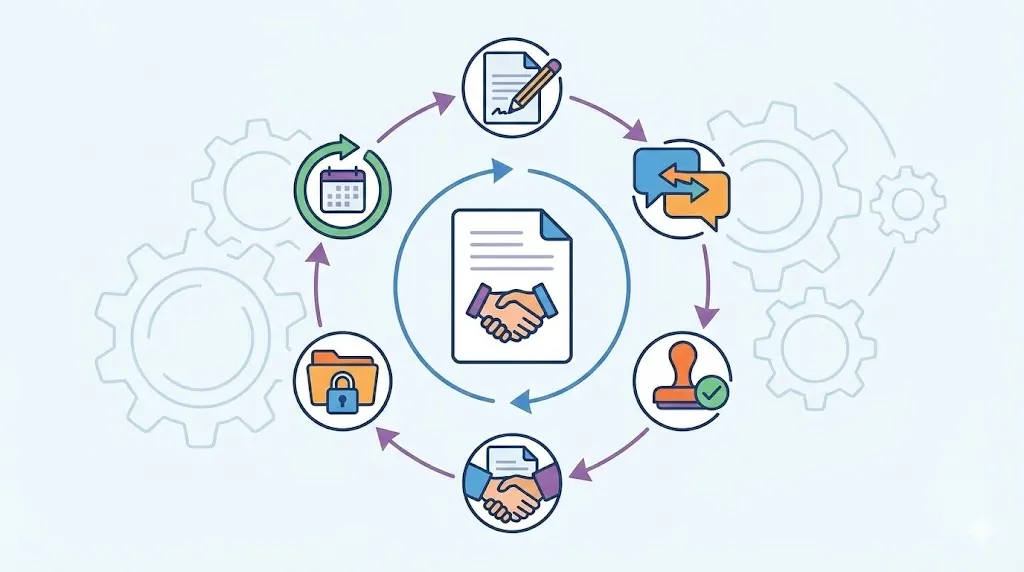
Digital solutions for contract management transform how retailers create, negotiate, approve, and store contracts. Additionally, they also supplant laborious manual processes with streamlined workflows and centralized systems.
Centralized Contract Repository
All contracts live in one secure place. This centralization allows teams to locate documents efficiently, monitor progress in real time, and prevents the risk of misplacing important agreements.
Automated Workflows
The contract lifecycle advances seamlessly through review and approval stages. Automated notifications and reminders keep every stakeholder informed and engaged throughout the process. By integrating these tools, organizations can significantly reduce bottlenecks and shorten turnaround times.
Template and Clause Libraries
Standardized templates and approved clauses reduce drafting time. Utilizing these resources means retailers no longer need to create contracts from scratch with each new supplier.
AI-Powered Contract Review
Artificial intelligence scans contracts for risky terms, missing clauses, or deviations from policy. Moreover, this accelerates legal review and minimizes errors.
Electronic Signatures
Contracts get signed digitally, eliminating delays from printing, scanning, or mailing documents.
Real-Time Collaboration
Stakeholders can comment, suggest changes, and negotiate contracts online. This speeds consensus and reduces email chains.
Data Extraction and Analytics
Contract data automatically extracts key terms like delivery dates and payment schedules. Analytics help track contract performance and risks.
Example: Speed Gains from Digital Contracting
A retailer leveraging contract lifecycle technology reduced contract turnaround time from 30 days to under 5 days. Streamlined workflows combined with AI review removed manual handoffs and accelerated approvals.
Related articles: Mastering Contract Management with Digital Tools: A Strategic Guide
How Contract Management Software Solves This
Contract management software consolidates every phase of the contract lifecycle within a unified platform. Additionally, it also eliminates manual processes while enhancing team oversight and transparency.
Retailers can leverage contract templates and clause libraries to accelerate agreement drafting. AI tools review contracts for risks and suggest improvements. Automated workflows route contracts to the right people for quick approval. Electronic signatures speed execution. Centralized storage keeps contracts organized and searchable.
Features like obligation tracking alert teams to upcoming renewals or delivery milestones. Dashboards show contract status and risks at a glance.
Volody’s solution encompasses these functionalities. It uses AI to draft and review contracts, tracks approvals, and integrates with other business systems. This helps retailers onboard suppliers faster while managing risk.
> See how Volody's CLM Software helps legal teams manage contracts faster and with greater control.
FAQ
Why does accelerating contracting processes contribute significantly to maintaining stocked shelves?
Additionally, faster contracting shortens the onboarding period for new suppliers. This enables retailers to acquire products promptly, minimizing the risk of stockouts.
How do slow contract processes impact retail supply chains?
Prolonged contract cycles delay supplier approvals and complicate shipment timelines, ultimately destabilizing inventory management.
Delays in contract finalization hinder timely supplier approvals and shipment scheduling.
These hold-ups interrupt the continuity of supply chain operations and contribute to inventory deficits.
Slow contracts cause delays in supplier approvals and shipments.
Consequently, retailers face stockouts, diminished revenue, and deteriorated customer satisfaction.
Does accelerating contract turnaround increase risks for retailers?
Risk exposure does not inherently increase when acceleration is paired with robust controls.
Moreover, when implemented with proper controls, it does not.
Digital tools can automate risk assessments and enforce standardized clauses to uphold compliance while expediting workflows.
What benefits does contract management software bring to retail operations?
It automates contract creation, review, approval, and signing. This saves time, improves accuracy, and provides visibility into contract status.
Why do retailers struggle with contract delays?
Multiple departments often conduct sequential reviews, protracted negotiations extend timelines, and collecting manual signatures further impedes progress. The absence of transparency compounds these inefficiencies.
How does contract speed affect supply chain agility?
Furthermore, faster contracts let retailers respond quickly to disruptions by adding new suppliers or adjusting terms. This keeps inventory flowing.
What contract terms matter most for supply chain performance?
Also, delivery schedules, penalty clauses, quality standards, and compliance requirements are critical to ensure supplier accountability.
Is AI reliable for contract review in retail?
AI can quickly identify risky clauses and missing terms. It supports legal teams by reducing manual review time and spotting issues early.
How can retailers measure the impact of faster contracting?
They can track contract turnaround times, supplier onboarding speed, and inventory availability during peak seasons.
Which features are essential in software designed for managing contracts in retail?
Essential functionalities include AI-driven drafting and review assistance, streamlined automated workflows, integrated electronic signature capabilities, comprehensive obligation tracking, and compatibility with existing enterprise systems.
About the Company

Volody AI CLM is an Agentic AI-powered Contract Lifecycle Management platform designed to eliminate manual contracting tasks, automate complex workflows, and deliver actionable insights. As a one-stop shop for all contract activities, it covers drafting, collaboration, negotiation, approvals, e-signature, compliance tracking, and renewals. Built with enterprise-grade security and no-code configuration, it meets the needs of the most complex global organizations. Volody AI CLM also includes AI-driven contract review and risk analysis, helping teams detect issues early and optimize terms. Trusted by Fortune 500 companies, high-growth startups, and government entities, it transforms contracts into strategic, data-driven business assets.





" height="216.72211px" id="FYO0bO80Y" transform="translate(3 6.105)" width="206.073px"/><path d="M 108.174 222 C 88.432 222 70.303 217.239 53.785 207.717 C 37.267 198.196 24.173 185.052 14.504 168.285 C 4.835 151.312 0 132.165 0 110.845 C 0 89.731 4.835 70.792 14.504 54.025 C 24.173 37.052 37.267 23.804 53.785 14.282 C 70.303 4.761 88.432 0 108.174 0 C 128.116 0 146.246 4.761 162.562 14.282 C 179.08 23.804 192.073 37.052 201.541 54.025 C 211.21 70.792 216.044 89.731 216.044 110.845 C 216.044 132.165 211.21 151.312 201.541 168.285 C 192.073 185.052 179.08 198.196 162.562 207.717 C 146.044 217.239 127.915 222 108.174 222 Z M 108.174 183.189 C 120.864 183.189 132.044 180.291 141.713 174.495 C 151.382 168.492 158.936 160.006 164.375 149.035 C 169.814 138.064 172.533 125.334 172.533 110.845 C 172.533 96.355 169.814 83.729 164.375 72.965 C 158.936 61.994 151.382 53.611 141.713 47.815 C 132.044 42.02 120.864 39.122 108.174 39.122 C 95.483 39.122 84.202 42.02 74.332 47.815 C 64.663 53.611 57.109 61.994 51.67 72.965 C 46.231 83.729 43.511 96.355 43.511 110.845 C 43.511 125.334 46.231 138.064 51.67 149.035 C 57.109 160.006 64.663 168.492 74.332 174.495 C 84.202 180.291 95.483 183.189 108.174 183.189 Z" fill="rgba(255, 255, 255, 0.12)" height="222px" id="aa1McFcE9" transform="translate(227.183 3)" width="216.04399999999998px"/><path d="M 42.302 182.257 L 111.799 182.257 L 111.799 216.722 L 0 216.722 L 0 0 L 42.302 0 Z" fill="rgba(255, 255, 255, 0.12)" height="216.72211px" id="yRq4AnrsX" transform="translate(477.721 6.105)" width="111.79899999999998px"/><path d="M 108.174 222 C 88.432 222 70.303 217.239 53.785 207.717 C 37.267 198.196 24.173 185.052 14.504 168.285 C 4.835 151.312 0 132.165 0 110.845 C 0 89.731 4.835 70.792 14.504 54.025 C 24.173 37.052 37.267 23.804 53.785 14.282 C 70.303 4.761 88.432 0 108.174 0 C 128.116 0 146.246 4.761 162.562 14.282 C 179.08 23.804 192.073 37.052 201.541 54.025 C 211.21 70.792 216.045 89.731 216.045 110.845 C 216.045 132.165 211.21 151.312 201.541 168.285 C 192.073 185.052 179.08 198.196 162.562 207.717 C 146.044 217.239 127.915 222 108.174 222 Z M 108.174 183.189 C 120.864 183.189 132.044 180.291 141.713 174.495 C 151.382 168.492 158.936 160.006 164.375 149.035 C 169.814 138.064 172.534 125.334 172.534 110.845 C 172.534 96.355 169.814 83.729 164.375 72.965 C 158.936 61.994 151.382 53.611 141.713 47.815 C 132.044 42.02 120.864 39.122 108.174 39.122 C 95.483 39.122 84.202 42.02 74.332 47.815 C 64.663 53.611 57.108 61.994 51.67 72.965 C 46.231 83.729 43.511 96.355 43.511 110.845 C 43.511 125.334 46.231 138.064 51.67 149.035 C 57.108 160.006 64.663 168.492 74.332 174.495 C 84.202 180.291 95.483 183.189 108.174 183.189 Z" fill="rgba(255, 255, 255, 0.12)" height="222px" id="mo8HQspQ0" transform="translate(609.155 3)" width="216.04500000000007px"/><path d="M 73.727 0 C 95.885 0 115.324 4.45 132.044 13.351 C 148.967 22.252 161.957 34.982 171.027 51.541 C 180.287 67.894 184.917 86.937 184.917 108.671 C 184.917 130.405 180.287 149.449 171.027 165.801 C 161.957 181.947 148.967 194.47 132.044 203.371 C 115.324 212.271 95.885 216.722 73.727 216.722 L 0 216.722 L 0 0 Z M 72.216 179.773 C 94.374 179.773 111.497 173.564 123.583 161.144 C 135.669 148.724 141.713 131.233 141.713 108.671 C 141.713 86.109 135.669 68.515 123.583 55.888 C 111.497 43.055 94.374 36.638 72.216 36.638 L 42.302 36.638 L 42.302 179.773 Z" fill="rgba(255, 255, 255, 0.12)" height="216.72211px" id="I3iXX5Hi_" transform="translate(859.693 6.105)" width="184.91699999999992px"/><path d="M 185.22 0 L 113.91 141.273 L 113.91 216.722 L 71.61 216.722 L 71.61 141.273 L 0 0 L 47.74 0 L 93.06 99.046 L 138.08 0 Z" fill="rgba(255, 255, 255, 0.12)" height="216.72211px" id="nzHyWC0_d" transform="translate(1061.78 6.105)" width="185.22000000000003px"/></svg>)