

Legal teams face a hidden crisis: they can’t find or understand their contracts well enough to act quickly. Imagine a legal department with hundreds of agreements scattered across dozens of storage locations. Lawyers spend hours hunting for contracts, unsure of their terms or deadlines. This lack of insight slows decisions, risks missed obligations, and drains resources. The contract visibility crisis is a real problem that affects legal teams and the entire business.
Related Article: Contract Management Process Stages Guide for 2026
TL;DR
Legal teams frequently store contracts across various repositories, which complicates locating and tracking these documents efficiently.
Additionally, without full visibility into contracts, organizations risk missing critical deadlines, failing to meet obligations, and increasing operational vulnerabilities.
Contract-related administrative tasks occupy up to 40% of a lawyer’s available working time.
Organizations may lose close to 9% of their annual revenue due to suboptimal contract management processes.
Many conventional contract management systems struggle with adoption due to their intricate setup requirements and ongoing maintenance challenges.
Leveraging AI-driven legal software enhances contract transparency and enables more strategic risk mitigation.
Related Article: How to Achieve Full Contract Visibility by 2026
How Did Contract Visibility Become Such a Big Problem?
Legal teams often know where their contracts live. However, knowing the location does not equate to understanding the content or current status of those contracts. Additionally, many organizations keep contracts spread across 20 or more different systems. These might include shared drives, email inboxes, cloud storage, and specialized software. This fragmentation makes it nearly impossible to get a clear picture of all active agreements.
This scattered approach compels reliance on individual knowledge within legal departments. When a lawyer leaves or is unavailable, finding the right contract or clause can become a guessing game. New hires face steep learning curves just to navigate the contract ecosystem. This slows onboarding and increases the risk of errors.
For example, a legal team might have a folder structure with hundreds of subfolders named inconsistently. Contracts might be saved with vague file names like “Agreement_final_v3.docx.” Without a clear system, lawyers waste time opening multiple versions to find the correct one. This manual process creates frustration and delays.
Legal teams also struggle to track key contract details such as renewal dates, pricing terms, and obligations. These details are often buried deep in lengthy documents. Without tools to extract and highlight this information, teams remain reactive instead of proactive. Important auto-renewals go unnoticed, penalties are not enforced, and compliance requirements can be overlooked.
The lack of contract visibility goes beyond mere inconvenience. It fundamentally compromises the capacity of legal professionals to advance business objectives. When lawyers lack a clear understanding of their company’s agreements, their advice loses precision and relevance. Business units proceed without sufficient legal guidance or fail to recognize significant risks. Legal departments become chokepoints, perpetually responding to issues rather than mitigating them in advance.
Related articles: How to Review Contracts More Quickly and Effectively?
What Are the Real Costs of Poor Contract Visibility?
The impact of poor contract visibility extends beyond legal frustration. It has measurable financial consequences. According to Gartner research, lawyers spend between 25% and 40% of their time on administrative tasks related to unmanaged contracts. This includes searching for agreements, reviewing versions, and extracting key data.
This inefficient use of time means legal teams cannot focus on higher-value work like negotiation or risk analysis. It also slows deal cycles and increases operational costs.
Businesses lose an average of 9% of their annual revenue due to poor contract management. This loss comes from several sources:
Cost overruns caused by missed pricing terms or penalties
Invoicing errors due to unclear payment terms
Delayed delivery of goods or services because obligations were overlooked
Avoidable disputes and litigation from misunderstood contract clauses
For example, a company might miss a contract renewal deadline and continue paying for an unwanted service. Or it might fail to enforce a penalty clause when a vendor misses a deadline, resulting in financial loss.
The effects ripple far beyond legal teams, influencing finance, procurement, and operational units within the organization. These challenges contribute to project delays, disrupt supplier engagements, and place downward pressure on overall profitability.
Further reading: Aligning Legal Ops with General Counsel to Reduce Cost Risks
Why Do Legal Teams Still Struggle Despite Contract Management Tools?
Many legal departments adopt contract lifecycle management (CLM) software in an effort to address visibility challenges. Additionally, cLMs also offer a centralized repository for storing, tracking, and analyzing contracts. However, implementing these systems often creates new challenges.
First, CLMs require significant upfront work. Teams must upload thousands of existing contracts, tag them accurately, and set up workflows. Completing this process can take several months or more, depending on the volume and complexity of the contracts. Without dedicated resources, the system becomes outdated quickly.
Second, maintaining a CLM demands ongoing effort. Contracts need to be regularly updated, metadata must be kept accurate, and users require training. Legal departments often struggle to allocate sufficient bandwidth or possess the specialized expertise needed to sustain the system effectively.
Third, traditional CLMs frequently handle contracts as discrete files without accounting for their interconnections—such as amendments, renewals, or linked agreements. This shortfall hinders a comprehensive understanding of how contracts interrelate within the broader portfolio.
Finally, many CLMs have complex user interfaces that frustrate lawyers. Rather than streamlining processes, these systems often add layers of administrative work. As a result, adoption rates remain low and the tools are underutilized.
As a result, legal teams can end up with a contract repository that is hard to use and does not deliver the promised visibility. The contract visibility crisis persists, even with technology in place.
Related articles: Contract Management Software for Sales Teams | CLM Guide
What Would True Contract Visibility Look Like?
A legal team can instantly retrieve every contract along with its critical details. Instead of hunting through folders, lawyers search a single platform that understands contract language. Additionally, navigating interconnected documents becomes seamless, with contract relationships displayed as a comprehensive map.
This platform automatically highlights critical dates, obligations, and risks. It alerts the team about upcoming renewals or missed deadlines. It extracts pricing terms and penalty clauses without manual review.
Legal teams can answer business questions in minutes. For example, a procurement manager asks about service level agreements (SLAs) in vendor contracts. The legal team pulls up a report showing all SLAs across contracts, with performance metrics and renewal dates.
This level of insight allows legal to shift from reactive firefighting to proactive risk management. Lawyers become strategic partners, guiding business decisions with confidence.
Related articles: Mastering Contract Clauses: Risk & Performance
5 Challenges in Maintaining Contract Visibility
Fragmented Storage Systems
The dispersion of contracts across multiple platforms obstructs the ability to maintain a consolidated overview. Additionally, this decentralization leads to inefficiencies as teams spend excessive time locating documents.
Inconsistent Naming and Filing
The absence of standardized naming conventions and folder hierarchies results in frequent confusion. Locating the correct contract often requires opening several versions.
Manual Data Extraction
Key contract terms are embedded within dense text. The process of manually extracting dates, obligations, and clauses is both time-consuming and prone to errors.
Poor Integration Between Systems
Because contracts often reference related documents or workflows, lacking system integration obscures critical connections. When systems lack integration, important linkages that impact contract performance go unnoticed.
Limited User Adoption of Tools
Complex or poorly designed contract management systems discourage usage. Low adoption means data is incomplete or outdated.
Related articles: Key Insights on Consideration in Contract Law
How Can Legal Teams Overcome These Challenges?
Several strategic actions can enhance contract visibility:
Centralize Contract Storage
Consolidate contracts into a single platform, which minimizes search time and enhances overall control.
Standardize Naming and Metadata
Create clear naming rules and tag contracts with key information like parties, dates, and contract type.
Automate Data Extraction
Use AI-powered tools to pull out important clauses, deadlines, and obligations automatically.
Map Contract Relationships
Visualize links between contracts, amendments, and related documents. This helps understand the full contract context.
Train and Engage Users
Ensure legal and business teams know how to use contract tools effectively. Regular training and support boost adoption.
Addressing these areas establishes a foundation for enhanced contract insight and more efficient decision-making.
Related articles: How to Manage Legal Teams: 8 Proven Tactics for Success
Why AI-Powered Legal Tools Matter
AI technology is changing how legal teams handle contracts. Additionally, aI-powered software can read and understand contract language at scale. It extracts key data points like renewal dates, obligations, and risks without manual effort.
This technology also identifies relationships between contracts, such as amendments or linked agreements. It creates a dynamic, searchable contract database that updates automatically.
AI tools reduce the administrative burden on lawyers. They spend less time searching and more time advising the business. AI can even flag unusual clauses or potential risks, helping legal teams act before problems arise.
For instance, when equipped with AI software, legal departments receive alerts about auto-renewal clauses 90 days before expiration. This gives time to renegotiate or cancel contracts, saving money.
AI also speeds up contract review and analysis. Lawyers can ask natural language questions like “Which contracts have penalty clauses for late delivery?” and get instant answers.
The outcome is a legal department that works faster, smarter, and more strategically. They move from being a bottleneck to a business enabler.
Related articles: Customized AI Powers End-to-End CLM for Legal Teams
How Legal AI Software Solves This
Legal technology platforms provide an integrated environment for comprehensive contract management. Additionally, these solutions also combine document storage, sophisticated search functions, automated information retrieval, and workflow orchestration.
These systems analyze contract language and structural components. They extract essential terms, critical deadlines, and contractual obligations automatically. In addition, they map connections between related documents, revealing contract hierarchies and amendments.
Legal AI tools provide natural language query features. Users can ask questions and get precise answers with references to contract clauses.
They also support collaboration by tracking changes, approvals, and comments in one place. Moreover, this approach reduces errors and speeds up contract lifecycles.
One solution includes AI contract drafting, clause analysis, risk scoring, and Microsoft Word integration. Legal teams gain enhanced efficiency in drafting, reviewing, and managing contracts.
Automating routine tasks enables attorneys to direct their expertise toward intricate issues and provide strategic guidance. Legal departments can enhance operational capacity without expanding their workforce.
Managing complex legal workflows requires a centralized platform equipped with advanced intelligence. Furthermore, Curious about how AI transforms legal operations? Discover Lawxy Legal AI Software.
Related articles: AI Contract Review vs. Human Lawyers: Speed, Accuracy & ROI
FAQ
What is the contract visibility crisis?
This crisis encompasses the difficulties legal teams face in promptly locating, interpreting, and leveraging contract information. Contracts often exist in scattered repositories lacking uniform organizational standards, which impedes tracking of key terms, deadlines, and responsibilities, thereby increasing risk exposure and operational inefficiencies.
Why do legal teams struggle to locate contracts?
Contracts are usually scattered across multiple storage systems like shared drives, email, and cloud platforms. Also, lack of centralization and poor naming conventions make it difficult to find the right documents quickly. Also, teams often rely on individual knowledge rather than a clear system.
How does poor contract visibility affect business?
When contract details remain inaccessible, companies face heightened risks of missing renewal deadlines, failing to enforce penalties, or breaching obligations. Such lapses can result in financial losses, strained supplier relationships, and operational delays. It also slows down decision-making.
How much time do lawyers spend on contract administration?
Therefore, according to Gartner, lawyers spend between 25% and 40% of their time on administrative tasks related to contracts. Therefore, this includes searching for contracts, reviewing versions, and extracting data manually. This reduces time available for strategic legal work.
What are the financial impacts of poor contract management?
Organizations forfeit nearly 9% of their yearly revenue due to ineffective contract oversight. These losses stem from budget overruns, billing inaccuracies, delivery delays, and preventable disputes. Such complications also extend beyond legal to impact multiple departments.
Consequently, why do contract management systems often fail?
Many systems require extensive initial configuration and ongoing maintenance. They treat contracts as isolated files without acknowledging inter-document linkages. Complex user interfaces hinder user adoption, and inadequate maintenance leads to data quality degradation.
What features should a contract management solution have?
A good solution centralizes contracts, standardizes metadata, automates data extraction, maps contract relationships, and offers easy search and reporting. As a result, it should integrate with existing tools and support collaboration and workflow management.
As a result, how can AI improve contract visibility?
AI interprets contract language at scale. It automates the identification of pivotal terms and critical deadlines. Associated documents are identified, and potential risks flagged. Natural language queries make contract evaluation and review more efficient.
Can AI tools reduce legal workload?
Indeed, AI automates repetitive processes such as data extraction, clause analysis, and contract comparison. This shift frees lawyers to focus on negotiation, risk evaluation, and strategic advisory roles. Legal teams maintain higher throughput without increasing headcount.
What is the first step to solving contract visibility issues?
Initial efforts should focus on consolidating contract repositories and applying consistent naming conventions. Subsequently, implement AI-powered solutions that automate data extraction and support advanced search capabilities. Ensuring comprehensive user training is essential to foster adoption and preserve data accuracy.
About the Company
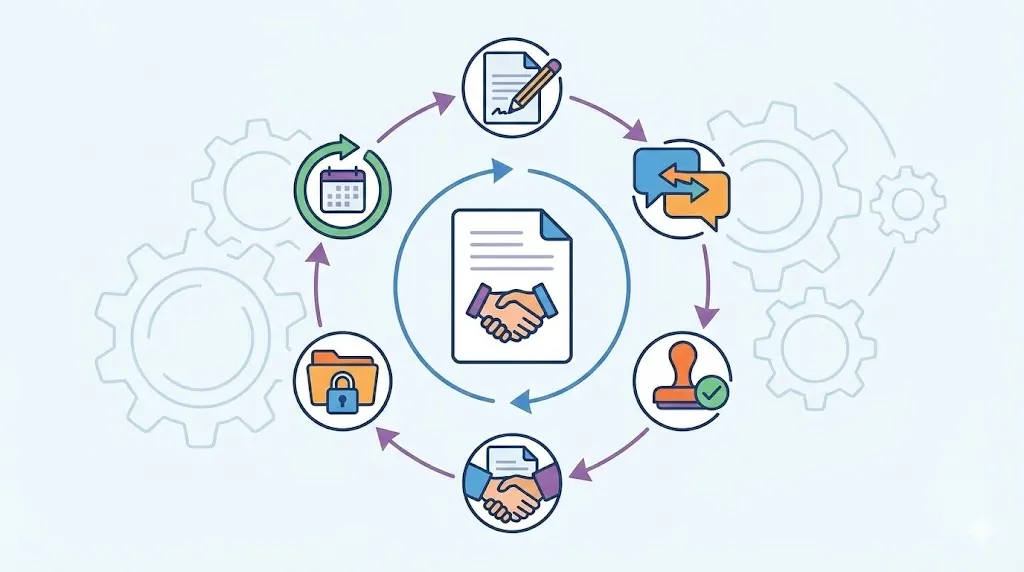
Volody AI CLM is an Agentic AI-powered Contract Lifecycle Management platform designed to eliminate manual contracting tasks, automate complex workflows, and deliver actionable insights. As a one-stop shop for all contract activities, it covers drafting, collaboration, negotiation, approvals, e-signature, compliance tracking, and renewals. Built with enterprise-grade security and no-code configuration, it meets the needs of the most complex global organizations. Volody AI CLM also includes AI-driven contract review and risk analysis, helping teams detect issues early and optimize terms. Trusted by Fortune 500 companies, high-growth startups, and government entities, it transforms contracts into strategic, data-driven business assets.




" height="216.72211px" id="FYO0bO80Y" transform="translate(3 6.105)" width="206.073px"/><path d="M 108.174 222 C 88.432 222 70.303 217.239 53.785 207.717 C 37.267 198.196 24.173 185.052 14.504 168.285 C 4.835 151.312 0 132.165 0 110.845 C 0 89.731 4.835 70.792 14.504 54.025 C 24.173 37.052 37.267 23.804 53.785 14.282 C 70.303 4.761 88.432 0 108.174 0 C 128.116 0 146.246 4.761 162.562 14.282 C 179.08 23.804 192.073 37.052 201.541 54.025 C 211.21 70.792 216.044 89.731 216.044 110.845 C 216.044 132.165 211.21 151.312 201.541 168.285 C 192.073 185.052 179.08 198.196 162.562 207.717 C 146.044 217.239 127.915 222 108.174 222 Z M 108.174 183.189 C 120.864 183.189 132.044 180.291 141.713 174.495 C 151.382 168.492 158.936 160.006 164.375 149.035 C 169.814 138.064 172.533 125.334 172.533 110.845 C 172.533 96.355 169.814 83.729 164.375 72.965 C 158.936 61.994 151.382 53.611 141.713 47.815 C 132.044 42.02 120.864 39.122 108.174 39.122 C 95.483 39.122 84.202 42.02 74.332 47.815 C 64.663 53.611 57.109 61.994 51.67 72.965 C 46.231 83.729 43.511 96.355 43.511 110.845 C 43.511 125.334 46.231 138.064 51.67 149.035 C 57.109 160.006 64.663 168.492 74.332 174.495 C 84.202 180.291 95.483 183.189 108.174 183.189 Z" fill="rgba(255, 255, 255, 0.12)" height="222px" id="aa1McFcE9" transform="translate(227.183 3)" width="216.04399999999998px"/><path d="M 42.302 182.257 L 111.799 182.257 L 111.799 216.722 L 0 216.722 L 0 0 L 42.302 0 Z" fill="rgba(255, 255, 255, 0.12)" height="216.72211px" id="yRq4AnrsX" transform="translate(477.721 6.105)" width="111.79899999999998px"/><path d="M 108.174 222 C 88.432 222 70.303 217.239 53.785 207.717 C 37.267 198.196 24.173 185.052 14.504 168.285 C 4.835 151.312 0 132.165 0 110.845 C 0 89.731 4.835 70.792 14.504 54.025 C 24.173 37.052 37.267 23.804 53.785 14.282 C 70.303 4.761 88.432 0 108.174 0 C 128.116 0 146.246 4.761 162.562 14.282 C 179.08 23.804 192.073 37.052 201.541 54.025 C 211.21 70.792 216.045 89.731 216.045 110.845 C 216.045 132.165 211.21 151.312 201.541 168.285 C 192.073 185.052 179.08 198.196 162.562 207.717 C 146.044 217.239 127.915 222 108.174 222 Z M 108.174 183.189 C 120.864 183.189 132.044 180.291 141.713 174.495 C 151.382 168.492 158.936 160.006 164.375 149.035 C 169.814 138.064 172.534 125.334 172.534 110.845 C 172.534 96.355 169.814 83.729 164.375 72.965 C 158.936 61.994 151.382 53.611 141.713 47.815 C 132.044 42.02 120.864 39.122 108.174 39.122 C 95.483 39.122 84.202 42.02 74.332 47.815 C 64.663 53.611 57.108 61.994 51.67 72.965 C 46.231 83.729 43.511 96.355 43.511 110.845 C 43.511 125.334 46.231 138.064 51.67 149.035 C 57.108 160.006 64.663 168.492 74.332 174.495 C 84.202 180.291 95.483 183.189 108.174 183.189 Z" fill="rgba(255, 255, 255, 0.12)" height="222px" id="mo8HQspQ0" transform="translate(609.155 3)" width="216.04500000000007px"/><path d="M 73.727 0 C 95.885 0 115.324 4.45 132.044 13.351 C 148.967 22.252 161.957 34.982 171.027 51.541 C 180.287 67.894 184.917 86.937 184.917 108.671 C 184.917 130.405 180.287 149.449 171.027 165.801 C 161.957 181.947 148.967 194.47 132.044 203.371 C 115.324 212.271 95.885 216.722 73.727 216.722 L 0 216.722 L 0 0 Z M 72.216 179.773 C 94.374 179.773 111.497 173.564 123.583 161.144 C 135.669 148.724 141.713 131.233 141.713 108.671 C 141.713 86.109 135.669 68.515 123.583 55.888 C 111.497 43.055 94.374 36.638 72.216 36.638 L 42.302 36.638 L 42.302 179.773 Z" fill="rgba(255, 255, 255, 0.12)" height="216.72211px" id="I3iXX5Hi_" transform="translate(859.693 6.105)" width="184.91699999999992px"/><path d="M 185.22 0 L 113.91 141.273 L 113.91 216.722 L 71.61 216.722 L 71.61 141.273 L 0 0 L 47.74 0 L 93.06 99.046 L 138.08 0 Z" fill="rgba(255, 255, 255, 0.12)" height="216.72211px" id="nzHyWC0_d" transform="translate(1061.78 6.105)" width="185.22000000000003px"/></svg>)