

SaaS, API, and cloud agreements now govern critical operations, data access, costs, resilience, and legal exposure. In 2027, organizations must address established contracting risks while preparing for AI agents, machine identities, evolving regulation, and emerging infrastructure threats. This guide sets out the highest-impact risks and the controls required to manage them with confidence.
TL;DR
SaaS contracts can hide price increases, renewal traps, weak exits, and unclear ownership rights.
API and cloud agreements need clear security, uptime, portability, incident, and liability duties.
Shadow IT and poor version control can hide obligations, owners, renewals, and serious compliance gaps.
AI agents and machine identities create new risks around access, accountability, logging, and shutdown.
Cloud concentration, energy limits, migration barriers, and quantum threats make resilience planning essential.
Contract management software can track clauses, owners, renewals, evidence, and duties across every agreement.
Commercial Clauses That Create Exposure
Commercial terms often look harmless during fast negotiations. Small rights can create large costs after adoption grows. Buyers should review price, ownership, and exit terms together.
Pricing, Renewal, and Consumption Terms
Vendors may reserve broad rights to raise prices. Some contracts allow increases at renewal without clear limits. Others link charges to usage measures that buyers cannot verify.
Automatic renewals create another risk. A missed notice date can extend an unwanted service. The contract should state notice periods and renewal steps clearly.
Usage-based pricing needs precise definitions. Define each meter, calculation method, reporting period, and overage rate. Also set approval rules before usage creates unexpected bills.
Minimum commitments can become costly after business needs change. Ask for ramp-down rights, service credits, and forecast reviews. Audit rights should also work both ways.
Intellectual Property and License Boundaries
Contracts should separate customer data from provider technology. They should also define ownership of custom work and integrations. This includes configurations, prompts, outputs, documents, and derivative materials.
AI tools make ownership harder to define. A provider may own its model and general improvements. The customer may need rights over its inputs and generated work.
License limits can affect future business plans. Check user counts, territories, affiliates, resale rights, and competing services. Also review rights for contractors and acquired companies.
Clear language prevents disputes during migration or termination. It should identify reusable work, shared materials, and licensed features. It should also explain how rights survive contract expiry.
Exit Rights and Restrictions on Competition
A buyer needs termination rights before implementation begins. Termination for convenience can reduce dependence on one provider. It also gives the buyer leverage during poor performance.
Exit terms should cover data retrieval and transition help. They should specify formats, timelines, interfaces, and support duties. Follow a contract termination closeout checklist and ask for deletion certificates after the transition ends.
Some agreements restrict work with competing providers. Exclusivity clauses can block safer or cheaper alternatives. Non-compete language deserves careful review before signature.
A practical exit plan should name responsible teams. It should cover migration testing, user access, backups, and final invoices. These steps turn an abstract right into a workable process.
Related articles: Procurement Contract Risks That Could Sink Your Business
Data, Security, and Compliance Obligations
Security language often sounds strong but remains difficult to enforce. Buyers need measurable duties, evidence, remedies, and clear ownership. Data exposure should also shape liability and insurance terms.
Security, API, and Incident Response Commitments
Contracts should name required security controls. These may include encryption, access reviews, logging, testing, and patching. They should also require regular control evidence.
API contract clauses need technical detail. Define supported versions, authentication, rate limits, uptime, and maintenance windows. State how much warning providers must give before changes.
Credential duties must be clear. The contract should cover API keys, cloud credentials, and secret storage. It should assign responsibility for misuse, loss, and prompt revocation.
Incident terms need more than a general promise. Set data breach notification deadlines, contact methods, investigation duties, and update schedules. Require forensic help, evidence preservation, and root-cause reports.
Service credits alone may not cover serious harm. A material breach should trigger stronger remedies and termination rights. The agreement should also address abuse monitoring and unusual traffic.
Privacy, Residency, Data Usage, and Liability
The contract should define permitted data use. It should restrict model training, resale, profiling, and unrelated analytics. These limits matter when services process sensitive business information.
Data residency terms should name locations and transfer methods. Also cover subprocessors, backups, support access, and remote administration. A vague regional promise may not meet business needs.
Retention and deletion duties should cover every data copy. Include logs, metadata, configurations, backups, and AI-derived artifacts. The provider should explain any legally required retention.
Liability must match the likely harm. Separate caps may apply to confidentiality, data loss, and privacy violations. Indemnities should address intellectual property claims and regulatory penalties.
Cyber insurance can support recovery after a serious incident. Still, insurance does not replace strong contract duties. Service credits should supplement remedies, not limit every claim.
Related articles: Why Telecom’s Contract Management Maturity Sets It Apart
Five Key Challenges in Contract Governance
Contract governance fails when information stays scattered. It also fails when teams cannot connect duties with owners. The following challenges affect both large and small portfolios.
1. Contract Version Control
One vendor may have a master agreement, order form, and statement of work. Later, an online policy may change practical duties. Click-through terms can create another layer of conflicting language.
A reliable source of truth should store every related record. It should show which document controls when terms conflict. Precedence rules should cover amendments, policies, and purchase documents.
Teams should record effective dates and approval history. They should also keep prior contract versions for audit review. This prevents staff from relying on outdated security or pricing terms.
2. High Contract Volumes and Fragmented Ownership
Decentralized buying can hide services from central review. Employees may create accounts with personal cards or local approvals. Multiple cloud accounts then make ownership hard to identify.
A Josys summary of Gartner research says this risk may reach 75% by 2027. That figure covers employees acquiring or creating technology outside IT visibility. It shows why formal intake needs to include business teams.
Each agreement needs a named business owner. Legal, security, finance, and technology roles should also be visible. Clear ownership supports renewals, reviews, and risk decisions.
3. Tracking Contract Performance
Signed terms do not manage themselves. Teams must track uptime, support response, credits, and remediation dates. They should also review usage and security evidence.
A service level may include several linked measures. For example, uptime may exclude planned maintenance windows. Support response may vary by severity and customer tier.
Performance records should support renewal decisions. They can reveal repeated outages, missed fixes, or rising consumption. They also help buyers claim credits before deadlines expire.
4. Changing Regulatory and Provider Terms
Rules for cloud services continue to develop. The EU Data Act, EU AI Act and DORA affect contract planning. Their impact depends on service type, location, and business role.
Provider policies may change without a signed amendment. A revised security page can alter practical duties. Contracts should require notice and review for material changes.
Buyers should track regulatory triggers throughout the term. They should also reserve rights to renegotiate or exit. This reduces exposure when business rules change.
Related articles: Key Contract Terms: WCC 2022 Most Negotiated
Emerging Technology and Identity Risks
New technology adds actors that never sign contracts. These actors still access systems, data, and business processes. Contracts must assign control over their actions.
Non-Human Identity Governance
Service accounts and API keys often outlive their owners. Bots and workloads may receive broad permissions for convenience. Those permissions can remain after systems or roles change.
Contracts should require named ownership for machine credentials. They should also require expiry dates, rotation, and access reviews. Revocation duties need clear timing after incidents or termination.
Autonomous agents create added concerns. They may call APIs, change settings, or move data without notice. The agreement should define allowed actions and spending limits.
Providers should support logs for every important action. Logs should show the identity, time, target, and result. They should remain available for investigations and audits.
AI Agent Accountability and Human Oversight
An AI agent may approve a payment or change a system. That action can create financial, security, or legal harm. AI accountability helps define responsibility for these actions. The contract should identify who remains responsible.
Set clear limits for agent authority. Require human approval for high-risk actions and sensitive data access. Also define emergency shutdown and fallback procedures.
Contracts should require useful records of agent behavior. Logs should capture prompts, tools, decisions, and resulting actions. Agentic AI obligations support reviews when outcomes appear wrong.
Explain ability needs a practical meaning. A buyer may need reasons for a denied claim or changed setting. The provider should support review without exposing unrelated customer data.
AI-Powered Threat Detection and Provider Accountability
AI tools can connect many security signals. They may review identity events, logs, endpoints, and data movement. This can speed detection of unusual activity.
The contract should define data access and model use. It should restrict training with customer security records. It should also explain retention and human review.
False positives can interrupt real business work. Set response targets for disputed alerts and blocked activity. Require escalation when detection affects critical operations.
Audit rights should include model governance evidence. Customers may need testing results, change records, and control reviews. Providers should accept responsibility for agreed service failures.
Related articles: Navigating Contract Risks Amid Inflation Pressures
Cloud Resilience and Concentration Risk
Cloud dependence can improve speed and scale. It can also increase exposure to one provider’s decisions. Exit planning should match the service’s technical design.
Provider Dependence, Multicloud Planning, and Tenant Isolation
A single provider can control pricing, capacity, and access. An outage may affect many linked systems at once. Regional incidents can also disrupt connected services.
Multicloud plans can reduce some concentration risks. They may also add cost, skills gaps, and integration work. Use them where portability is technically and financially practical.
Tenant isolation deserves special attention. A provider may serve many customers on shared systems. Contracts should require safeguards against cross-tenant access.
Ask for evidence on isolation, testing, and incident response. Also review support during regional failures or provider changes. A written plan should name recovery targets and decision owners.
Energy, Capacity, and Infrastructure Constraints
Cloud regions depend on power, cooling, hardware, and network capacity. Limits in one region can delay new workloads or expansion. They may also affect recovery during a major event.
Contracts should require notice about material capacity limits. They should explain prioritization during shortages. Buyers may also need reserved capacity or alternate regions.
Continuity plans should cover more than software uptime. They should address power loss, hardware delays, and regional failure. Recovery testing should include realistic capacity constraints.
Ask providers how they support disaster recovery. Review target times, backup locations, and customer responsibilities. These details turn resilience claims into tested plans.
Related articles: How to Organize Contracts: 7 Best Practices in 2026
Quantum and Future Security Exposure
Security terms should cover future changes, not only present tools. Sensitive data may remain valuable for many years. That makes long-term protection a contract issue.
Cryptographic Transition Requirements
Future quantum systems may weaken some public-key methods. Attackers may also collect encrypted data today. They could seek decryption after better tools become available.
Contracts should require supported encryption standards and upgrades. They should also cover key management and migration help. Buyers need notice before cryptographic controls become obsolete.
Ask providers to maintain an encryption inventory. The inventory should identify data types, systems, and protection methods. It should also show planned transition work.
Long-Term Confidentiality and Data Retention
Some data needs protection for many years. Examples include health, finance, research, legal, and strategy records. Long retention can increase future decryption exposure.
Retention schedules should match legal and business needs. Do not keep sensitive data without a clear purpose. Deletion rules should include archives and backup copies.
Providers should explain access during long-term storage. They should also restrict support access and privileged accounts. These controls reduce exposure after active use ends.
Technology Change and Contract Adaptability
Fixed terms can become outdated before renewal. Cryptography, AI tools, and cloud designs may change quickly. Regulatory duties may change before the contract ends.
Use review triggers tied to real events. Triggers may include new threats, major architecture changes, or new rules. They may also include material provider policy changes.
Adaptability should not permit unlimited unilateral changes. The buyer needs notice, review rights, and practical remedies. A serious change may require renegotiation or exit.
Evidence of Security Readiness
Buyers should request evidence before signing. Useful records include control assessments and encryption inventories. Migration plans and testing results can reveal weak preparation.
Incident records may show how providers handle pressure. Ask for trends, root causes, and completed corrective actions. The goal is not perfect history, but credible learning.
Evidence duties should continue after signature. Require updated reports, testing results, and remediation records. This supports ongoing review rather than one-time approval.
Related articles: Best Contract Management Software in 2026: Top 20 CLM Tools
Practical Controls for Reducing Contract Risk
Good governance starts before contract drafting. It continues through renewal, migration, and deletion. Simple routines can reduce missed risks and wasted review time.
Standardized Intake and Risk Triage
Every new service should enter a common intake process. The process should capture data type, spend, and business purpose. It should also identify integrations and provider access.
Use tiers based on service criticality and exposure. A public survey tool needs less review than a payment platform. A system handling health data needs deeper legal and security review.
Questionnaires should focus on material risks. Ask about residency, sub processors, AI use, exit, and incident duties. This helps lawyers spend time where exposure is highest.
Obligation Ownership and Continuous Monitoring
Assign owners for every important contract duty. These may include renewals, service levels, evidence, and deletion. Owners should know their deadlines and escalation paths.
Alerts can prevent quiet failures. Send reminders before notice periods and security reviews. Escalate missed tasks to accountable managers.
Dashboards can show wider portfolio patterns. They may reveal missing clauses, rising costs, or provider concentration. They can also identify contracts ready for renegotiation.
Negotiation Playbooks and Fallback Positions
A contract negotiation playbook gives teams approved starting positions. It should cover liability, data use, IP, and termination. It should also address incidents, subprocesses, and policy changes.
Fallback positions help teams move without losing control. Each fallback should explain its risk and approval level. Exceptions should reach the right legal or business owner.
Business teams may accept some remaining risk. That choice should be recorded with reasons and limits. Clear records support later reviews and renewal decisions.
Related articles: What is Contractual Risk? Your Ultimate Guide
Why Contract Management Software Matters
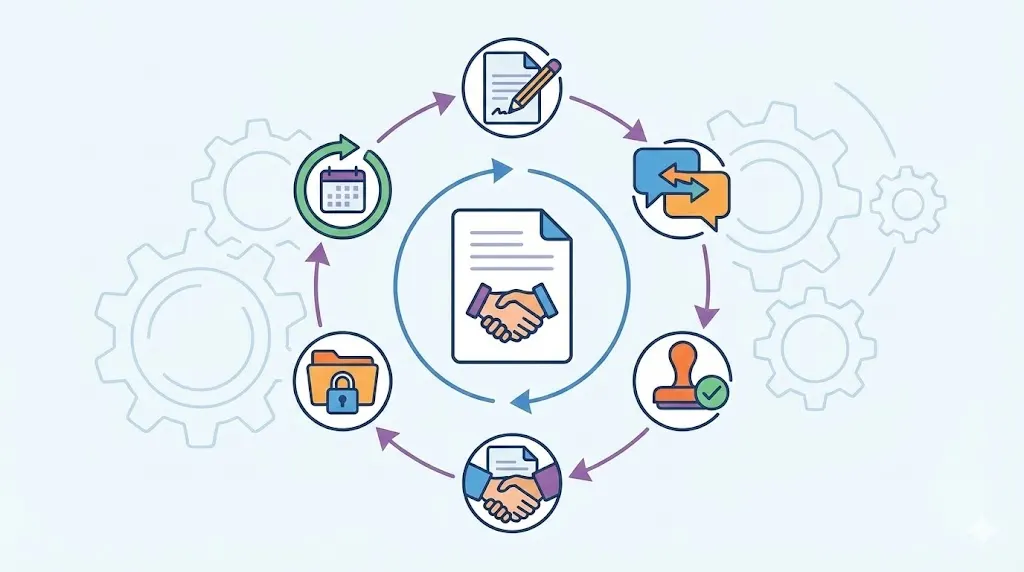
Contract management software can connect intake, review, approval, and renewal. It gives teams one place for agreements, duties, and evidence. Searchable records also make risk reviews faster and more consistent.
Volody CLM Software supports AI Contract Review, metadata extraction, and obligation management. It can flag unusual clauses, capture key dates, and track renewal duties. Teams can then connect contract terms with owners and follow-up work.
For example, a team can find export terms quickly. It can assign deletion duties and receive renewal reminders. It can also review risky clauses before a provider renewal.
Shared contract records: Store agreements, amendments, orders, and ownership details together.
Teams can find the current version without searching separate folders. This reduces disputes over which terms apply. It also supports faster audits and renewal reviews.
Automated obligation tracking: Set alerts for notice dates, evidence, and deletion duties.
Owners receive reminders before important deadlines arrive. Managers can see overdue tasks and open risks. This keeps signed obligations active after approval.
Risk-focused reporting: Find missing protections, unusual clauses, and concentrated providers.
Reports can show contracts needing review or renegotiation. Finance teams can also track usage and renewal exposure. Security teams can connect duties with evidence requests.
Want to see how contract management software can simplify your legal workflows? Check out Volody's CLM Software.
FAQ
What are the top SaaS security risks and challenges?
The main risks include unauthorized apps, weak identity controls, and data leakage. They also include insecure integrations, poor vendor oversight, and slow incident response. Usage-based tools can create gaps when employees adopt services outside IT visibility. Contracts should require measurable safeguards, security evidence, access controls, and deletion procedures.
Who needs SaaS security?
Any organization using cloud apps, APIs, or hosted infrastructure needs SaaS security. Legal, procurement, IT, security, finance, and business teams share responsibility. Employees may adopt services without central approval or technical review. Controls should reflect data sensitivity, service importance, integrations, and regulatory exposure.
What contractual requirements apply to cloud-service switching from 12 January 2027?
The EU Data Act switching-charges ban is scheduled for 12 January 2027. Global Law Experts identifies this date for covered services. Contracts should also address transition periods, export formats, interoperability, and deletion. Buyers should confirm scope and document practical exit steps before renewal.
How should SaaS contracts control usage-based pricing and vendor lock-in?
Contracts should define usage measures, reporting methods, overage rates, and commitments. Buyers should seek caps, notice periods, downgrade rights, and portability. They should also set approval thresholds for extra spending. Regular usage reviews can reveal growth before it becomes a renewal problem.
What should cloud contracts require for data portability and deletion after termination?
Contracts should specify export formats, access methods, timelines, and migration support. They should cover backups, logs, metadata, configurations, and AI-derived artifacts. Providers should confirm return or deletion in writing. They should also explain any legally required retention after termination.
What API contract terms reduce version, availability, and abuse liability?
API agreements should define supported versions, deprecation notice, uptime, rate limits, and authentication. They should also cover maintenance, service credits, and incident response duties. Responsibility for credential misuse and abusive traffic must be clear. Buyers should require documentation, testing access, and migration support.
About the Company

Volody AI CLM is an Agentic AI-powered Contract Lifecycle Management platform designed to eliminate manual contracting tasks, automate complex workflows, and deliver actionable insights. As a one-stop shop for all contract activities, it covers drafting, collaboration, negotiation, approvals, e-signature, compliance tracking, and renewals. Built with enterprise-grade security and no-code configuration, it meets the needs of the most complex global organizations. Volody AI CLM also includes AI-driven contract review and risk analysis, helping teams detect issues early and optimize terms. Trusted by Fortune 500 companies, high-growth startups, and government entities, it transforms contracts into strategic, data-driven business assets.




" height="216.72211px" id="FYO0bO80Y" transform="translate(3 6.105)" width="206.073px"/><path d="M 108.174 222 C 88.432 222 70.303 217.239 53.785 207.717 C 37.267 198.196 24.173 185.052 14.504 168.285 C 4.835 151.312 0 132.165 0 110.845 C 0 89.731 4.835 70.792 14.504 54.025 C 24.173 37.052 37.267 23.804 53.785 14.282 C 70.303 4.761 88.432 0 108.174 0 C 128.116 0 146.246 4.761 162.562 14.282 C 179.08 23.804 192.073 37.052 201.541 54.025 C 211.21 70.792 216.044 89.731 216.044 110.845 C 216.044 132.165 211.21 151.312 201.541 168.285 C 192.073 185.052 179.08 198.196 162.562 207.717 C 146.044 217.239 127.915 222 108.174 222 Z M 108.174 183.189 C 120.864 183.189 132.044 180.291 141.713 174.495 C 151.382 168.492 158.936 160.006 164.375 149.035 C 169.814 138.064 172.533 125.334 172.533 110.845 C 172.533 96.355 169.814 83.729 164.375 72.965 C 158.936 61.994 151.382 53.611 141.713 47.815 C 132.044 42.02 120.864 39.122 108.174 39.122 C 95.483 39.122 84.202 42.02 74.332 47.815 C 64.663 53.611 57.109 61.994 51.67 72.965 C 46.231 83.729 43.511 96.355 43.511 110.845 C 43.511 125.334 46.231 138.064 51.67 149.035 C 57.109 160.006 64.663 168.492 74.332 174.495 C 84.202 180.291 95.483 183.189 108.174 183.189 Z" fill="rgba(255, 255, 255, 0.12)" height="222px" id="aa1McFcE9" transform="translate(227.183 3)" width="216.04399999999998px"/><path d="M 42.302 182.257 L 111.799 182.257 L 111.799 216.722 L 0 216.722 L 0 0 L 42.302 0 Z" fill="rgba(255, 255, 255, 0.12)" height="216.72211px" id="yRq4AnrsX" transform="translate(477.721 6.105)" width="111.79899999999998px"/><path d="M 108.174 222 C 88.432 222 70.303 217.239 53.785 207.717 C 37.267 198.196 24.173 185.052 14.504 168.285 C 4.835 151.312 0 132.165 0 110.845 C 0 89.731 4.835 70.792 14.504 54.025 C 24.173 37.052 37.267 23.804 53.785 14.282 C 70.303 4.761 88.432 0 108.174 0 C 128.116 0 146.246 4.761 162.562 14.282 C 179.08 23.804 192.073 37.052 201.541 54.025 C 211.21 70.792 216.045 89.731 216.045 110.845 C 216.045 132.165 211.21 151.312 201.541 168.285 C 192.073 185.052 179.08 198.196 162.562 207.717 C 146.044 217.239 127.915 222 108.174 222 Z M 108.174 183.189 C 120.864 183.189 132.044 180.291 141.713 174.495 C 151.382 168.492 158.936 160.006 164.375 149.035 C 169.814 138.064 172.534 125.334 172.534 110.845 C 172.534 96.355 169.814 83.729 164.375 72.965 C 158.936 61.994 151.382 53.611 141.713 47.815 C 132.044 42.02 120.864 39.122 108.174 39.122 C 95.483 39.122 84.202 42.02 74.332 47.815 C 64.663 53.611 57.108 61.994 51.67 72.965 C 46.231 83.729 43.511 96.355 43.511 110.845 C 43.511 125.334 46.231 138.064 51.67 149.035 C 57.108 160.006 64.663 168.492 74.332 174.495 C 84.202 180.291 95.483 183.189 108.174 183.189 Z" fill="rgba(255, 255, 255, 0.12)" height="222px" id="mo8HQspQ0" transform="translate(609.155 3)" width="216.04500000000007px"/><path d="M 73.727 0 C 95.885 0 115.324 4.45 132.044 13.351 C 148.967 22.252 161.957 34.982 171.027 51.541 C 180.287 67.894 184.917 86.937 184.917 108.671 C 184.917 130.405 180.287 149.449 171.027 165.801 C 161.957 181.947 148.967 194.47 132.044 203.371 C 115.324 212.271 95.885 216.722 73.727 216.722 L 0 216.722 L 0 0 Z M 72.216 179.773 C 94.374 179.773 111.497 173.564 123.583 161.144 C 135.669 148.724 141.713 131.233 141.713 108.671 C 141.713 86.109 135.669 68.515 123.583 55.888 C 111.497 43.055 94.374 36.638 72.216 36.638 L 42.302 36.638 L 42.302 179.773 Z" fill="rgba(255, 255, 255, 0.12)" height="216.72211px" id="I3iXX5Hi_" transform="translate(859.693 6.105)" width="184.91699999999992px"/><path d="M 185.22 0 L 113.91 141.273 L 113.91 216.722 L 71.61 216.722 L 71.61 141.273 L 0 0 L 47.74 0 L 93.06 99.046 L 138.08 0 Z" fill="rgba(255, 255, 255, 0.12)" height="216.72211px" id="nzHyWC0_d" transform="translate(1061.78 6.105)" width="185.22000000000003px"/></svg>)