

Tech companies face a fast-moving market with complex deals and tight deadlines. Contracts lie at the heart of every business agreement, yet many firms still handle them manually. This slows down deal-making and leaves gaps for risk to slip through. Understanding how technology companies can use contracts to manage risk better in 2022 means transforming contracts from paperwork into strategic tools that protect value and speed growth.
TL;DR
Executing complex technology agreements demands meticulously crafted contracts to mitigate financial and legal exposures.
Manual contract workflows often result in errors and limit the capacity to respond swiftly to shifting market conditions.
Contract lifecycle management (CLM) platforms convert static contractual texts into adaptable resources that facilitate ongoing risk evaluation.
Through digitization, contracts become dynamic instruments capable of triggering automated tracking for obligations, compliance requirements, and financial stipulations.
By linking contract repositories with financial systems and CRM platforms, organizations can significantly enhance the granularity and timeliness of their strategic insights.
Advanced CLM implementations play a critical role in reducing regulatory exposure, particularly concerning data privacy laws and cross-border operational complexities.
Why Managing Contract Risk Matters for Technology Companies
Technology companies operate in a world full of uncertainty. Additionally, the environment is in constant flux, shaped by new products entering the market, shifting alliances, and the relentless expansion into new territories. Every contract is a promise that affects revenue, compliance, and reputation. Poor clarity or management of contracts inevitably amplifies risk.
Tech deals often involve multiple parties: channel partners, resellers, system integrators, and customers. Each relationship brings its own contract terms, pricing models, and obligations. For example, a cloud software company might sell subscriptions through resellers, lease hardware to customers, and license software to partners. Each contract type carries different risks, such as missed payments, unauthorized use, or regulatory breaches.
Many tech firms still rely on manual contract processes. Teams draft, negotiate, and store contracts in emails, shared drives, or spreadsheets. This creates bottlenecks and hides critical data. Without a clear view of contract terms, companies may miss deadlines, fail to enforce rights, or overlook compliance requirements.
Financial risk is a major concern. The intricacies of pricing and rebate frameworks often complicate accurate profitability analysis. Failing to monitor contracts with precision exposes companies to overpayment of rebates and missed revenue opportunities. Legal risks also increase in the absence of explicit clauses addressing liability, data protection, or intellectual property.
The global nature of tech business adds layers of complexity. Different countries have varying laws on data privacy, export controls, and consumer protection. Contracts must reflect these rules accurately. Overlooking these requirements can result in significant fines and harm to corporate reputation.
Tech companies must advance contract management practices to maintain alignment with technological innovation and competitive pressures. Rather than presenting obstacles, contracts ought to serve as strategic instruments that mitigate risk and accelerate operational workflows.
Related articles: 10 Key Contract Clauses Every Business Should Know in 2026
What Makes Tech Contracts Unique and Risky
Technology contracts differ from other industries in several ways:
Complex Commercial Models: Tech companies use a mix of direct sales, channel sales, subscription licenses, and hardware leases. Additionally, each model is governed by distinct contract terms and revenue recognition rules. For example, subscription contracts often include renewal clauses and usage limits that require close monitoring.
Rapid Product Evolution: Software updates, new features, and changing service levels mean contracts must be flexible. Static contracts can become outdated quickly, exposing companies to performance or compliance gaps.
Multiple Stakeholders: Contracts often involve partners, resellers, suppliers, and customers. Managing obligations across this ecosystem requires clear visibility and coordination.
Regulatory Pressure: Laws like GDPR in Europe and CCPA in California impose strict rules on data handling. Contracts must define responsibilities clearly to avoid costly breaches.
Intellectual Property (IP) Risks: Protecting IP rights is critical. Contracts must specify ownership, licensing, and use restrictions to prevent misuse or theft.
These factors increase the chance of contract disputes, missed obligations, and compliance failures. For example, a software vendor might fail to enforce a license limit, leading to unauthorized use and lost revenue. Or a reseller contract might lack clear rebate terms, causing financial losses.
Related articles: What is Contract Risk & How to manage it?
How Manual Contract Processes Increase Risk
Many technology companies still rely on manual contract workflows. Additionally, in practice, this often involves creating, negotiating, and storing contracts through emails, word processors, and shared folders. This approach creates several risks:
Data Silos: Contract information becomes dispersed across various departments and systems. Legal, sales, finance, and operations teams cannot access a single source of truth. This leads to inconsistent data and missed details.
Slow Cycle Times: Manual drafting and review slow down deal closures. Sales teams face delays waiting for legal approval, risking lost opportunities.
Human Error: Manual entry and version control mistakes can cause incorrect contract terms or missed deadlines.
Limited Visibility: Without real-time tracking, companies cannot monitor contract performance or compliance effectively.
Compliance Gaps: Regulatory requirements may be overlooked if contracts are not reviewed and updated regularly.
Financial Leakage: Complex pricing and rebate terms are hard to track manually, leading to overpayments or revenue loss.
For example, a sales rep might sign a contract with non-standard terms without legal review. Later, finance discovers the terms create a loss-making deal. Or a company misses a renewal deadline, losing revenue from subscription renewals.
Manual contract management creates a hidden risk layer that slows growth and exposes companies to costly mistakes.
Related articles: Contract Management Security: Risks, Mistakes and Solutions
How Technology Can Transform Contract Risk Management
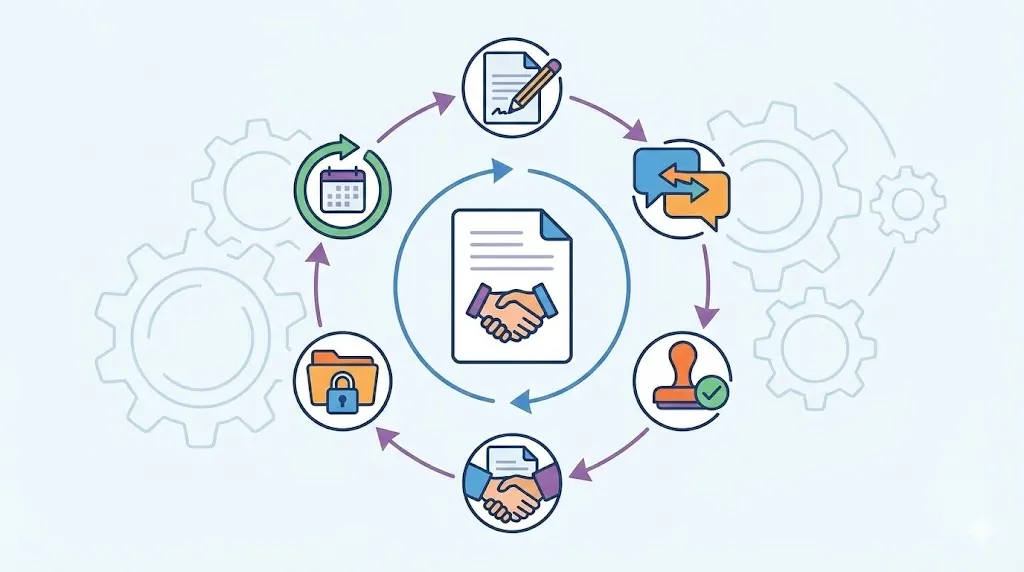
Contract lifecycle management (CLM) software transforms traditional contract workflows by digitizing and automating key processes. Additionally, CLM platforms also organize contract data to provide teams with immediate access and enable comprehensive analysis.
CLM software provides tech companies with critical functionalities:
Centralize Contracts: Consolidate all contracts within a secure, searchable repository. This eliminates data silos and provides a single source of truth.
Automate Workflows: Streamline contract creation, review, approval, and renewal with automated routing and alerts.
Extract Key Data: Use AI to pull out important contract terms like payment schedules, obligations, and renewal dates.
Track Obligations: Monitor deliverables, milestones, and compliance requirements to avoid missed deadlines.
Integrate Systems: Connect contract data with ERP, CRM, and finance systems for accurate revenue tracking and risk assessment.
Analyze Risks: Use configurable rules and AI to flag risky clauses, compliance gaps, or unusual terms before signing.
Support Negotiations: Enhance collaboration on redlines and comments to expedite deal closure.
By converting contracts into digital assets, tech companies gain a thorough grasp of their risk exposure. This improved transparency accelerates issue resolution and underpins more informed strategic decisions.
Related articles: How Does AI Limitations Impacting Contract Management?
Practical Ways Tech Companies Can Use Contracts to Manage Risk
Managing contract risk requires more than just software. Additionally, to fully leverage contract value, companies need to implement proven methodologies and frameworks for contract management.
Standardize Contract Templates and Clauses
Develop a set of vetted templates and a comprehensive clause repository that aligns with your organization's operational nuances. This approach minimizes drafting inconsistencies and embeds uniform risk mitigation language. For instance, incorporating standardized clauses covering data privacy, indemnification, and termination safeguards your enterprise against prevalent contractual exposures.
Automate Contract Approval Workflows
Implement multi-level approval systems designed to direct contracts through the correct stakeholders in the proper order. This structured routing helps prevent unauthorized signings while ensuring comprehensive legal and financial review.
Monitor Contract Obligations Continuously
Maintain vigilant oversight of critical deadlines including renewals, payment milestones, and compliance mandates. Leveraging automated alerts enables teams to stay ahead of obligations and avoid breaches.
Integrate Contract Data with Financial Systems
Connect contract information with billing and payment platforms to oversee revenue recognition processes and manage rebate disbursements. This integration helps mitigate financial discrepancies and enhances forecasting precision.
Use AI to Assess Contract Risks
Moreover, leverage AI-powered analytics to flag clauses that could expose the company to undue risk or regulatory noncompliance. For instance, these solutions can highlight terms that may disproportionately allocate liability or violate data privacy standards.
Train Sales and Legal Teams on Risk Awareness
Organize focused training programs aimed at enhancing recognition of common contract risks. Building this expertise fosters a risk-conscious mindset and reduces negotiation errors.
Conduct Regular Contract Audits
Perform periodic, detailed evaluations of contract portfolios to ensure they remain compliant with current legal requirements and internal policies. Such diligence enables timely amendments in response to legislative updates or market shifts.
Manage Partner and Reseller Risks
Evaluate partners’ economic and operational risk characteristics by including targeted contractual provisions. Incorporate clauses permitting audits of partners or contract modifications contingent on performance metrics.
Plan for Dispute Resolution
Embed explicit mechanisms for resolving disputes within contracts. These provisions facilitate expedited conflict resolution and circumvent the expenses associated with litigation.
Related articles: Procurement Contract Risks That Could Sink Your Business
How Compliance Risks Impact Technology Contracts
Regulatory compliance is a growing challenge for tech companies. Additionally, laws such as the General Data Protection Regulation (GDPR) and the California Consumer Privacy Act (CCPA) establish stringent requirements for managing personal data.
Contracts must clearly define:
Who is responsible for data protection
How data breaches will be handled
Data retention and deletion policies
Cross-border data transfer restrictions
Failing to include these terms exposes companies to fines and reputational damage. For example, a cloud provider must ensure contracts with customers and partners include data privacy obligations aligned with GDPR.
Beyond privacy, tech companies must comply with export controls, anti-bribery laws, and industry-specific regulations. Contracts should address these risks explicitly.
Contract management software can help by flagging missing compliance clauses and tracking regulatory changes. This ensures contracts stay up to date and reduce legal exposure.
Related Article: How Contract Data Eases Complexity in the MedTech Supply
How Contract Data Integration Improves Risk Management
Contract data alone is valuable. Additionally, integrating it with other business systems transforms it into a critical asset for managing risk and enhancing performance.
Finance Integration
Connecting contracts to finance systems helps track payments, discounts, rebates, and revenue recognition. This prevents financial leakage and improves forecasting accuracy.
Customer Relationship Management (CRM)
Linking contracts with CRM data provides a full view of customer relationships. Sales teams can see contract terms, renewal dates, and obligations to manage accounts proactively.
Procurement and Supply Chain Systems
Integrating contracts with procurement systems ensures supplier terms are enforced. This reduces supply chain risks and improves vendor management.
Risk and Credit Data
Combining contract data with external risk scores (e.g., Dun & Bradstreet ratings) helps identify high-risk customers or partners. Companies can adjust contract terms or require additional guarantees.
Analytics and Reporting
Aggregating contract data across systems enables dashboards and reports on risk exposure, contract performance, and compliance. Leaders get actionable insights to guide strategy.
Related articles: Understanding Contract Risk Exposure in Business
Real-World Example: Managing Subscription Contracts
Consider a software company selling cloud subscriptions through resellers. Additionally, each reseller agreement specifies detailed pricing tiers, rebate schedules, and clearly defined sales targets.
Without contract management technology, accurately tracking rebates becomes a significant challenge for the company. Sales teams frequently miss critical deadlines, while finance departments risk overpaying rebates, which ultimately compresses profit margins.
By digitizing contracts and integrating with finance, the company automates rebate calculations and payment approvals. Contract obligations are monitored in real time. The company reduces errors, speeds payments, and improves partner relationships.
This example shows how contracts become active tools to manage financial risk and support growth.
Related articles: Best Contract Management Software in 2026: Top 20 CLM Tools
Why Contract Management Software Matters
Contract management software helps technology companies reduce risk and improve efficiency. Additionally, it offers a centralized platform for creating, storing, tracking, and analyzing contracts.
Key benefits include:
Faster contract creation and approval
Real-time obligation tracking
Automated alerts for renewals and compliance
Risk detection through AI-powered clause analysis
Integration with ERP, CRM, and finance systems
Secure, searchable contract repository
These capabilities help companies avoid missed deadlines, enforce contract terms, and comply with regulations. The result is reduced legal exposure and better business outcomes.
How CLM Software Solves This
CLM software automates contract workflows, making it easier to manage complex tech deals. Additionally, beyond workflow automation, it captures critical contract data and integrates this information directly with operational platforms. This reduces manual work and errors.
Advanced CLM platforms use AI to highlight risky clauses and suggest safer alternatives. They track contract obligations and send reminders to prevent missed deadlines.
Integration with finance and CRM systems gives a complete view of contract-related revenue and customer relationships. This improves forecasting and decision-making.
Volody’s contract management solution caters specifically to technology enterprises. Features include AI-driven contract drafting and review, obligation management, streamlined approval processes, and encrypted document storage. The platform also ensures contracts are linked with existing business systems to enhance risk oversight.
Looking for a better way to manage contracts? Discover Volody's CLM Software.
FAQ
What is contract lifecycle management (CLM) software?
Additionally, CLM software supports organizations by overseeing contracts throughout their entire lifespan, from drafting through renewal or expiration. It automates workflows, stores contracts centrally, extracts key data, and tracks obligations to reduce risk and improve efficiency.
How do contracts help manage risk in technology companies?
Contracts set the rules for business relationships. Clear, well-managed contracts reduce financial risk, ensure compliance, protect intellectual property, and prevent disputes.
Why are technology contracts more complex than other industries?
Moreover, tech contracts frequently involve multiple parties, subscription models, rapid product changes, and stringent regulatory requirements. This complexity increases the risk of errors and missed obligations.
How does AI enhance the management of contractual risks?
Artificial intelligence enhances identification of problematic clauses or absent provisions through deep linguistic analysis. It expedites the review process and supports compliance with corporate policies and legal standards.
What risks arise from manual contract management?
Furthermore, manual processes generate isolated data repositories, delay approvals, elevate error rates, and obscure contractual obligations.
How does this impact organizational outcomes?
As a result, deadlines are frequently overlooked, revenue streams diminish, and adherence to regulatory mandates is compromised.
How can integrating contract data with finance systems reduce risk?
Establishing a link between contractual information and financial platforms facilitates accurate monitoring of payments, rebates, and revenue flows.
What contract terms are important for data privacy compliance?
Contracts should specify data handling responsibilities, breach notification procedures, data retention policies, and cross-border transfer rules.
Also, how often should companies review their contracts?
Contracts should be reviewed regularly, especially when laws or business conditions change. Periodic audits help maintain compliance and reduce risk.
Can contract management software help with partner risk?
Yes. It monitors partner obligations, evaluates performance metrics, and can identify risks through examination of contract provisions alongside external data.
What are the first steps to improve contract risk management?
Start by centralizing contract repositories, enforcing template standardization, automating approval workflows, and deploying specialized software solutions to strengthen oversight and control.
About the Company

Volody AI CLM is an Agentic AI-powered Contract Lifecycle Management platform designed to eliminate manual contracting tasks, automate complex workflows, and deliver actionable insights. As a one-stop shop for all contract activities, it covers drafting, collaboration, negotiation, approvals, e-signature, compliance tracking, and renewals. Built with enterprise-grade security and no-code configuration, it meets the needs of the most complex global organizations. Volody AI CLM also includes AI-driven contract review and risk analysis, helping teams detect issues early and optimize terms. Trusted by Fortune 500 companies, high-growth startups, and government entities, it transforms contracts into strategic, data-driven business assets.





" height="216.72211px" id="FYO0bO80Y" transform="translate(3 6.105)" width="206.073px"/><path d="M 108.174 222 C 88.432 222 70.303 217.239 53.785 207.717 C 37.267 198.196 24.173 185.052 14.504 168.285 C 4.835 151.312 0 132.165 0 110.845 C 0 89.731 4.835 70.792 14.504 54.025 C 24.173 37.052 37.267 23.804 53.785 14.282 C 70.303 4.761 88.432 0 108.174 0 C 128.116 0 146.246 4.761 162.562 14.282 C 179.08 23.804 192.073 37.052 201.541 54.025 C 211.21 70.792 216.044 89.731 216.044 110.845 C 216.044 132.165 211.21 151.312 201.541 168.285 C 192.073 185.052 179.08 198.196 162.562 207.717 C 146.044 217.239 127.915 222 108.174 222 Z M 108.174 183.189 C 120.864 183.189 132.044 180.291 141.713 174.495 C 151.382 168.492 158.936 160.006 164.375 149.035 C 169.814 138.064 172.533 125.334 172.533 110.845 C 172.533 96.355 169.814 83.729 164.375 72.965 C 158.936 61.994 151.382 53.611 141.713 47.815 C 132.044 42.02 120.864 39.122 108.174 39.122 C 95.483 39.122 84.202 42.02 74.332 47.815 C 64.663 53.611 57.109 61.994 51.67 72.965 C 46.231 83.729 43.511 96.355 43.511 110.845 C 43.511 125.334 46.231 138.064 51.67 149.035 C 57.109 160.006 64.663 168.492 74.332 174.495 C 84.202 180.291 95.483 183.189 108.174 183.189 Z" fill="rgba(255, 255, 255, 0.12)" height="222px" id="aa1McFcE9" transform="translate(227.183 3)" width="216.04399999999998px"/><path d="M 42.302 182.257 L 111.799 182.257 L 111.799 216.722 L 0 216.722 L 0 0 L 42.302 0 Z" fill="rgba(255, 255, 255, 0.12)" height="216.72211px" id="yRq4AnrsX" transform="translate(477.721 6.105)" width="111.79899999999998px"/><path d="M 108.174 222 C 88.432 222 70.303 217.239 53.785 207.717 C 37.267 198.196 24.173 185.052 14.504 168.285 C 4.835 151.312 0 132.165 0 110.845 C 0 89.731 4.835 70.792 14.504 54.025 C 24.173 37.052 37.267 23.804 53.785 14.282 C 70.303 4.761 88.432 0 108.174 0 C 128.116 0 146.246 4.761 162.562 14.282 C 179.08 23.804 192.073 37.052 201.541 54.025 C 211.21 70.792 216.045 89.731 216.045 110.845 C 216.045 132.165 211.21 151.312 201.541 168.285 C 192.073 185.052 179.08 198.196 162.562 207.717 C 146.044 217.239 127.915 222 108.174 222 Z M 108.174 183.189 C 120.864 183.189 132.044 180.291 141.713 174.495 C 151.382 168.492 158.936 160.006 164.375 149.035 C 169.814 138.064 172.534 125.334 172.534 110.845 C 172.534 96.355 169.814 83.729 164.375 72.965 C 158.936 61.994 151.382 53.611 141.713 47.815 C 132.044 42.02 120.864 39.122 108.174 39.122 C 95.483 39.122 84.202 42.02 74.332 47.815 C 64.663 53.611 57.108 61.994 51.67 72.965 C 46.231 83.729 43.511 96.355 43.511 110.845 C 43.511 125.334 46.231 138.064 51.67 149.035 C 57.108 160.006 64.663 168.492 74.332 174.495 C 84.202 180.291 95.483 183.189 108.174 183.189 Z" fill="rgba(255, 255, 255, 0.12)" height="222px" id="mo8HQspQ0" transform="translate(609.155 3)" width="216.04500000000007px"/><path d="M 73.727 0 C 95.885 0 115.324 4.45 132.044 13.351 C 148.967 22.252 161.957 34.982 171.027 51.541 C 180.287 67.894 184.917 86.937 184.917 108.671 C 184.917 130.405 180.287 149.449 171.027 165.801 C 161.957 181.947 148.967 194.47 132.044 203.371 C 115.324 212.271 95.885 216.722 73.727 216.722 L 0 216.722 L 0 0 Z M 72.216 179.773 C 94.374 179.773 111.497 173.564 123.583 161.144 C 135.669 148.724 141.713 131.233 141.713 108.671 C 141.713 86.109 135.669 68.515 123.583 55.888 C 111.497 43.055 94.374 36.638 72.216 36.638 L 42.302 36.638 L 42.302 179.773 Z" fill="rgba(255, 255, 255, 0.12)" height="216.72211px" id="I3iXX5Hi_" transform="translate(859.693 6.105)" width="184.91699999999992px"/><path d="M 185.22 0 L 113.91 141.273 L 113.91 216.722 L 71.61 216.722 L 71.61 141.273 L 0 0 L 47.74 0 L 93.06 99.046 L 138.08 0 Z" fill="rgba(255, 255, 255, 0.12)" height="216.72211px" id="nzHyWC0_d" transform="translate(1061.78 6.105)" width="185.22000000000003px"/></svg>)