

Drafting contracts remains a critical skill for legal, operations, and enterprise technology leaders. A poorly written contract can stall deals, invite disputes, and cause costly delays. According to a recent industry report, companies lose up to 9% of annual revenue due to contract issues. Knowing how to draft contracts effectively in 2026 means more than just putting terms on paper it requires clarity, precision, and a repeatable process that scales with your business needs.
TL;DR
Draft contracts with clear terms to reduce costly revisions and disputes later on.
Additionally, for routine agreements, utilizing templates streamlines the process, whereas unique deals require drafting from the ground up to properly mitigate specific risks.
Essential clauses such as payment terms, confidentiality provisions, and dispute resolution mechanisms must be incorporated to ensure comprehensive coverage.
Begin the drafting process by preparing a term sheet, which facilitates early alignment among stakeholders.
It is critical to identify and eliminate issues like ambiguous language, inconsistent provisions, and omitted legal requirements.
Employing contract management software enhances drafting efficiency, accuracy, and scalability of legal operations.
Related Article: 2026 Contracting Trends & Benchmarks
What Is Contract Drafting and Why Does It Matter?
Contract drafting is the act of creating a new agreement that spells out the rights, duties, and expectations of all parties involved. Additionally, it serves as the essential framework that converts preliminary discussions and negotiated terms into enforceable legal obligations. This step is different from contract review, which focuses on analyzing existing drafts, and contract management, which handles signed agreements over time.
The quality of your first draft shapes the entire contracting process. A clear contract reduces back-and-forth negotiations and lowers the risk of disputes. Conversely, vague or incomplete drafts cause confusion and delays. For example, unclear payment terms might lead to late payments or legal claims. A well-drafted contract prevents these issues by setting clear rules upfront.
Drafting contracts well is especially important in 2026, as businesses face increasing regulatory scrutiny and complex supply chains. According to a 2026 Contracting Benchmark Report, poor contract management costs organizations 5% to 9% of annual revenue. Investing time in drafting contracts properly saves money and protects your business reputation.
Related articles: What is Contract Risk & How to manage it?
What Makes a Contract Legally Binding?
Not every signed document qualifies as a valid contract. For a contract to hold up in court, it must meet several key legal requirements:
Offer and Acceptance
One party proposes specific terms, and the other agrees without changing anything material. This shows both sides consent to the same deal.
Consideration
Each party must exchange something of value. This could be money, services, goods, or a promise to act or refrain from acting.
Capacity
All signers must be legally able to enter the agreement. They should be of legal age, mentally competent, and authorized to represent their organization.
Legality
The purpose underlying the agreement must comply with the law. Courts will not enforce agreements that involve illegal acts.
Mutual Assent
Both parties must understand and voluntarily agree to the terms, free from any fraud, duress, or misrepresentation.
Ambiguous language in contract provisions can lead to protracted disputes or even invalidate the entire agreement. Engaging experienced legal counsel during drafting ensures the document’s enforceability without sacrificing precision or operational relevance.
Further reading: 10 Key Contract Clauses Every Business Should Know in 2026
Key Clauses Every Business Contract Needs
Most business contracts share a common set of clauses that define responsibilities, manage risks, and set rules for the relationship. Each clause has a purpose beyond formality:
Scope of Work and Deliverables
Defines what each party must provide. For example, a vendor contract should list services or products, deadlines, and quality standards.
Payment Terms
Specifies amounts, due dates, invoicing procedures, and penalties for late payments.
Term and Termination
States how long the contract lasts and conditions under which either party can end it early.
Confidentiality
Protects sensitive information shared during the partnership.
Indemnification
This clause delineates which party bears financial responsibility if harm or damage occurs due to their actions.
Limitation of Liability
It establishes an upper boundary on the damages one party may recover from the other, thereby restricting potential financial exposure.
This clause details the agreed-upon methods for resolving conflicts, whether through mediation, arbitration, or litigation.
Force Majeure
This provision excuses parties from performing contractual obligations when unforeseen, extraordinary events beyond their control prevent fulfillment.
Governing Law
Specifies the legal jurisdiction whose statutes and case law will apply to interpreting and enforcing the agreement.
Excluding any of these clauses can create vulnerabilities that increase the likelihood of disputes or leave your organization exposed to avoidable risks.
Related articles: What are Contract Obligations and How to Manage Them
When Should You Use Templates Versus Drafting from Scratch?
Templates save time and ensure consistency for routine agreements. Additionally, templates are particularly suitable for standard, low-risk contracts such as nondisclosure agreements (NDAs), basic purchase orders, or standard service agreements. Templates provide a pre-approved starting point, reducing the chance of outdated or incorrect language creeping in.
However, templates have limits. Complex deals with unique terms or high value require drafting from scratch. Copying clauses blindly can lead to missing critical risks or compliance requirements. For example, a contract involving cross-border data transfers needs specific privacy clauses that a generic template may lack.
A good practice is to maintain a library of approved templates and clauses. Use these as building blocks but tailor each contract to the deal’s specifics. This approach balances efficiency with legal precision.
Related articles: Effectively use AI in Contract Drafting
Step-by-Step Guide to Drafting a Contract
Follow these steps to create a solid contract draft:
Gather Business Context
Understand the deal’s purpose, parties involved, and key terms. Additionally, interview stakeholders to gain a comprehensive understanding of their expectations.
Create a Term Sheet
Summarize the main deal points in a simple document. This aligns legal and business teams before drafting starts.
Select the Right Template or Start Fresh
Choose a template if the deal is standard. Otherwise, prepare to draft clauses individually.
Draft Key Clauses First
Write the scope, payment, and term clauses. These form the contract’s core.
Add Risk Management Clauses
Include indemnification, liability limits, confidentiality, and dispute resolution.
Use Plain Language
Keep sentences short and clear. Define terms once and use them consistently.
Review and Revise Internally
Distribute the draft among stakeholders to collect detailed feedback and address any necessary modifications.
Prepare for Negotiation
Determine which provisions are open to negotiation and outline alternative positions to maintain strategic flexibility.
Finalize the Draft
Incorporate all agreed revisions thoroughly and prepare the document for execution.
This method helps reduce mistakes while streamlining the contract finalization process.
Related articles: What Is Contract Negotiation? Clear Strategies & Expert Tips
Best Practices for Clear and Consistent Contracts
Clear contracts avoid ambiguity and reduce disputes. Follow these tips:
Use Plain English
Avoid legalese and jargon. Write sentences under 18 words on average.
Define Key Terms Once
Create a definitions section for important terms and use them consistently.
Reserve “Shall” for Obligations
Use “shall” only when a party must do something. Use “may” for permissions.
Avoid Double Negatives and Complex Sentences
Such constructions often confuse readers and increase the risk of misinterpretation.
Keep Paragraphs Short
Limiting paragraphs to 3-5 sentences enhances overall readability.
Use Active Voice
Favor active constructions to improve clarity and ensure communication is more direct.
Maintain Consistent Formatting
Ensure fonts, numbering, and heading styles follow uniform standards throughout the document.
Review for Contradictions
Examine clauses carefully to identify conflicts or unintended loopholes.
Applying these principles improves contract quality and speeds up review cycles.
Related articles: Digitizing Legacy Contracts: Best Practices
Common Contract Drafting Mistakes to Avoid
Mistakes in contract drafting create risks and delays. Watch out for these:
Vague Language
Words like “reasonable,” “prompt,” or “best efforts” without clear definitions cause disputes.
Inconsistent Terms
When the same idea is referred to by multiple terms, it often leads to confusion among parties and those reviewing the contract.
Missing Essential Clauses
Key provisions, including confidentiality agreements and dispute resolution mechanisms, are critical; their absence can expose your business to considerable risks.
Overly Complex Sentences
Excessively lengthy and convoluted sentence structures reduce clarity and can significantly extend the negotiation timeline.
Ignoring Regulatory Requirements
Failure to incorporate clauses that ensure adherence to pertinent industry-specific regulations may result in the contract being deemed unenforceable.
Failing to Align with Business Goals
It is crucial for contracts to embody the commercial objectives of the transaction rather than merely addressing legal formalities.
Not Updating Templates Regularly
Using outdated templates risks including obsolete or non-compliant language.
Avoiding these pitfalls improves contract enforceability and reduces legal headaches.
Related articles: Breach of Contract: Master How to Resolve Legal Disputes
How Do In-House Teams Manage Contract Review and Negotiation?
Legal teams manage numerous contract reviews concurrently, balancing competing priorities. Additionally, efficient workflows are essential to maintain an equilibrium between speed and risk mitigation.
Set Approval Thresholds
Implement self-service or junior review for low-risk contracts to streamline the process. Reserve senior legal review exclusively for high-value or complex agreements.
Use Redlining Tools
Leveraging change-tracking and commenting features ensures clarity and accuracy as negotiations progress.
Centralize Communication
All discussions and documents should be consolidated within a single platform to preserve full contextual insight.
Standardize Negotiation Playbooks
Develop fallback clauses supported by detailed negotiation guidelines to enable faster, more uniform decisions.
Train Business Teams
Provide non-legal personnel with foundational contract knowledge to minimize redundant legal reviews.
These practices help legal teams scale contract volume without adding headcount.
Related articles: Best Contract Management Software in 2026: Top 20 CLM Tools
When Should You Involve a Lawyer in Drafting?
Not every contract requires a lawyer’s involvement from the start. Here are some considerations to determine when their expertise is essential:
Use Lawyers for High-Risk or Complex Deals
This applies particularly to transactions such as mergers, intellectual property agreements, or contracts involving multiple jurisdictions.
Involve Legal Early for Regulatory Compliance
Any contract that implicates privacy laws, data security mandates, or industry-specific regulations necessitates early legal consultation.
Let Business Teams Use Templates for Routine Contracts
For straightforward agreements like standard NDAs or purchase orders, legal review is often not mandatory.
Escalate When Negotiations Get Tough
Bring lawyers in if counterparties propose unusual terms or disputes arise.
Balancing legal involvement optimizes resources while managing risk.
Related articles: Mastering International Contracts: Compliance & Risk
Why Contract Management Software Matters
CLM solutions optimize the processes of drafting, reviewing, and storing agreements. Additionally, legal teams benefit from enhanced speed and precision in their workflows.
Key benefits include:
Template and Clause Libraries
By maintaining a centralized repository of approved language, organizations significantly reduce the time required to generate new contracts.
Automated Workflows
These systems enhance contract routing efficiency by dynamically adjusting review and approval paths according to contract value or inherent risk factors.
AI-Powered Drafting and Review
Advanced algorithms facilitate the creation of initial drafts and flag clauses that may introduce higher levels of risk.
Version Control and Audit Trails
Tracking mechanisms maintain a detailed history of changes while ensuring compliance requirements are met.
Centralized Repository
All contractual documents are stored securely within a searchable database to facilitate easy access.
Obligation Tracking and Alerts
This feature reduces the likelihood of missed deadlines or unnoticed contract renewals.
These capabilities collectively minimize manual intervention and elevate the overall quality of contracts.
Related articles: Top 7 Free CLM Solutions in India (2026)
How Contract Management Software Solves This
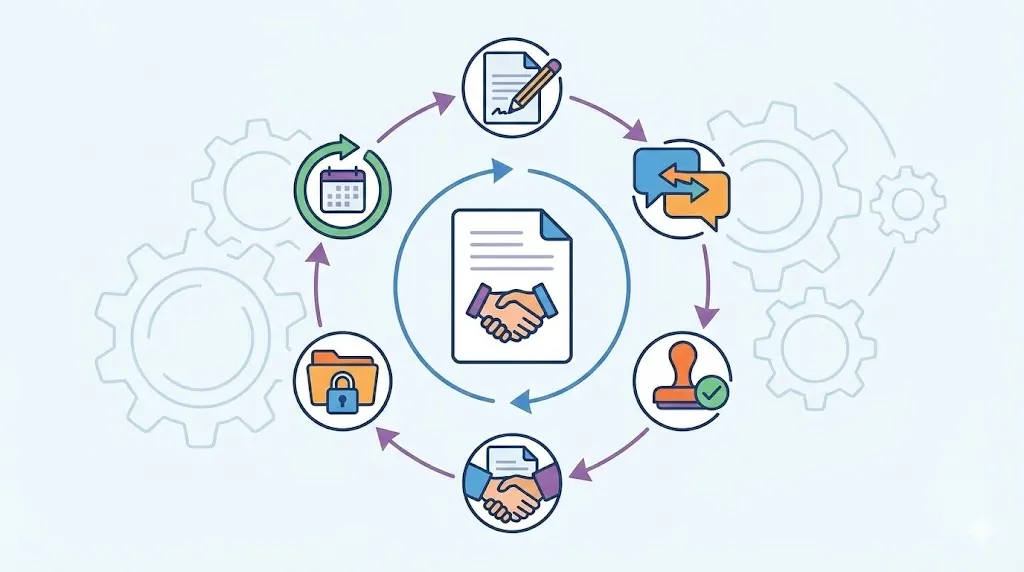
Contract management software significantly accelerates the drafting process while improving accuracy. Additionally, it provides a centralized repository for standard templates and predefined clauses, ensuring consistency in contractual language. Additionally, automated workflows route contracts to designated reviewers based on deal size or complexity, thereby expediting approvals.
AI functionality supports these processes by generating initial drafts from templates and flagging clauses that may be problematic or missing. This reduces the manual workload for attorneys on routine tasks. Version control captures a comprehensive audit trail of revisions, which supports compliance and review.
Volody’s Contract Lifecycle Management platform includes these functions alongside sophisticated features such as AI-generated contract summaries, metadata extraction, and collaborative editing in real time. Its no-code customization allows alignment with specific business rules without IT intervention. This enables teams to focus on strategic priorities while managing large contract volumes efficiently.
See how Volody's CLM Software helps your team move contracts forward with confidence.
Related Article: Modern Contract Handbook: Master Every Step of Contract
FAQ
What is the difference between contract drafting and contract review?
Moreover, contract drafting consists of creating a new agreement either from scratch or by leveraging a template. This process involves specifying detailed terms and clauses that precisely capture the parties' intentions. Contract review involves scrutinizing an existing draft to identify risks, inconsistencies, or unclear provisions. Drafting sets the foundational terms, while review refines and protects your interests.
How can I decide whether to use a contract template?
Templates are best suited for standardized, low-risk agreements such as nondisclosure agreements or routine purchase orders. They enhance efficiency and maintain uniform language. For more complex or high-value deals, drafting contracts from the ground up is advisable to address tailored terms and mitigate specific risks.
Furthermore, what are the most important clauses to include in a business contract?
At minimum, include scope of work, payment terms, term and termination, confidentiality, indemnification, limitation of liability, dispute resolution, force majeure, and governing law. These clauses define obligations, manage risk, and set rules for resolving conflicts.
How can I make my contracts easier to understand?
Write using clear, precise language with concise sentence structures. Define key terms a single time and apply them consistently throughout the document. Use “shall” exclusively to denote obligations and “may” for permissions. Also, avoid jargon, double negatives, and overly complex sentences.
When should legal counsel be involved in contract drafting?
Also, involve lawyers for high-risk, complex, or regulated deals. Also consult legal early if contracts involve compliance issues or intellectual property. For routine contracts, business teams can use approved templates without legal review.
What common mistakes cause contract disputes?
Vague language, inconsistent terms, missing essential clauses, and ignoring regulatory requirements often cause disputes. Overly complex sentences and failure to align contracts with business goals also create problems.
How does contract management software improve drafting?
The software supplies approved templates and standardized clauses to maintain consistent language. Automated workflows facilitate faster approvals. Therefore, aI-assisted tools create drafts and identify potential risks. Centralized document storage combined with version control enhances collaboration and ensures compliance.
What is a term sheet and why is it important?
A term sheet summarizes the principal deal terms clearly before the full contract is drafted. It aligns both legal and business stakeholders early in the process to avoid costly revisions and misunderstandings.
How do I handle contract negotiations efficiently?
Utilize redlining functionalities to clearly monitor revisions. Establish approval criteria to route contracts based on risk assessment. Consequently, provide negotiation protocols that include fallback provisions. Maintain centralized communication channels to preserve context.
What role does governing law play in contracts?
Governing law determines which jurisdiction’s laws interpret and enforce the contract. Specifying this avoids confusion if disputes arise, especially in cross-border deals. It ensures predictable legal outcomes.
This comprehensive guide equips legal and business leaders with the knowledge to draft contracts effectively in 2026. Clear, consistent contracts reduce risk, speed deals, and support enterprise growth. Using modern tools and best practices, teams can handle increasing contract volumes without sacrificing quality.
About the Company

Volody AI CLM is an Agentic AI-powered Contract Lifecycle Management platform designed to eliminate manual contracting tasks, automate complex workflows, and deliver actionable insights. As a one-stop shop for all contract activities, it covers drafting, collaboration, negotiation, approvals, e-signature, compliance tracking, and renewals. Built with enterprise-grade security and no-code configuration, it meets the needs of the most complex global organizations. Volody AI CLM also includes AI-driven contract review and risk analysis, helping teams detect issues early and optimize terms. Trusted by Fortune 500 companies, high-growth startups, and government entities, it transforms contracts into strategic, data-driven business assets.


" height="216.72211px" id="FYO0bO80Y" transform="translate(3 6.105)" width="206.073px"/><path d="M 108.174 222 C 88.432 222 70.303 217.239 53.785 207.717 C 37.267 198.196 24.173 185.052 14.504 168.285 C 4.835 151.312 0 132.165 0 110.845 C 0 89.731 4.835 70.792 14.504 54.025 C 24.173 37.052 37.267 23.804 53.785 14.282 C 70.303 4.761 88.432 0 108.174 0 C 128.116 0 146.246 4.761 162.562 14.282 C 179.08 23.804 192.073 37.052 201.541 54.025 C 211.21 70.792 216.044 89.731 216.044 110.845 C 216.044 132.165 211.21 151.312 201.541 168.285 C 192.073 185.052 179.08 198.196 162.562 207.717 C 146.044 217.239 127.915 222 108.174 222 Z M 108.174 183.189 C 120.864 183.189 132.044 180.291 141.713 174.495 C 151.382 168.492 158.936 160.006 164.375 149.035 C 169.814 138.064 172.533 125.334 172.533 110.845 C 172.533 96.355 169.814 83.729 164.375 72.965 C 158.936 61.994 151.382 53.611 141.713 47.815 C 132.044 42.02 120.864 39.122 108.174 39.122 C 95.483 39.122 84.202 42.02 74.332 47.815 C 64.663 53.611 57.109 61.994 51.67 72.965 C 46.231 83.729 43.511 96.355 43.511 110.845 C 43.511 125.334 46.231 138.064 51.67 149.035 C 57.109 160.006 64.663 168.492 74.332 174.495 C 84.202 180.291 95.483 183.189 108.174 183.189 Z" fill="rgba(255, 255, 255, 0.12)" height="222px" id="aa1McFcE9" transform="translate(227.183 3)" width="216.04399999999998px"/><path d="M 42.302 182.257 L 111.799 182.257 L 111.799 216.722 L 0 216.722 L 0 0 L 42.302 0 Z" fill="rgba(255, 255, 255, 0.12)" height="216.72211px" id="yRq4AnrsX" transform="translate(477.721 6.105)" width="111.79899999999998px"/><path d="M 108.174 222 C 88.432 222 70.303 217.239 53.785 207.717 C 37.267 198.196 24.173 185.052 14.504 168.285 C 4.835 151.312 0 132.165 0 110.845 C 0 89.731 4.835 70.792 14.504 54.025 C 24.173 37.052 37.267 23.804 53.785 14.282 C 70.303 4.761 88.432 0 108.174 0 C 128.116 0 146.246 4.761 162.562 14.282 C 179.08 23.804 192.073 37.052 201.541 54.025 C 211.21 70.792 216.045 89.731 216.045 110.845 C 216.045 132.165 211.21 151.312 201.541 168.285 C 192.073 185.052 179.08 198.196 162.562 207.717 C 146.044 217.239 127.915 222 108.174 222 Z M 108.174 183.189 C 120.864 183.189 132.044 180.291 141.713 174.495 C 151.382 168.492 158.936 160.006 164.375 149.035 C 169.814 138.064 172.534 125.334 172.534 110.845 C 172.534 96.355 169.814 83.729 164.375 72.965 C 158.936 61.994 151.382 53.611 141.713 47.815 C 132.044 42.02 120.864 39.122 108.174 39.122 C 95.483 39.122 84.202 42.02 74.332 47.815 C 64.663 53.611 57.108 61.994 51.67 72.965 C 46.231 83.729 43.511 96.355 43.511 110.845 C 43.511 125.334 46.231 138.064 51.67 149.035 C 57.108 160.006 64.663 168.492 74.332 174.495 C 84.202 180.291 95.483 183.189 108.174 183.189 Z" fill="rgba(255, 255, 255, 0.12)" height="222px" id="mo8HQspQ0" transform="translate(609.155 3)" width="216.04500000000007px"/><path d="M 73.727 0 C 95.885 0 115.324 4.45 132.044 13.351 C 148.967 22.252 161.957 34.982 171.027 51.541 C 180.287 67.894 184.917 86.937 184.917 108.671 C 184.917 130.405 180.287 149.449 171.027 165.801 C 161.957 181.947 148.967 194.47 132.044 203.371 C 115.324 212.271 95.885 216.722 73.727 216.722 L 0 216.722 L 0 0 Z M 72.216 179.773 C 94.374 179.773 111.497 173.564 123.583 161.144 C 135.669 148.724 141.713 131.233 141.713 108.671 C 141.713 86.109 135.669 68.515 123.583 55.888 C 111.497 43.055 94.374 36.638 72.216 36.638 L 42.302 36.638 L 42.302 179.773 Z" fill="rgba(255, 255, 255, 0.12)" height="216.72211px" id="I3iXX5Hi_" transform="translate(859.693 6.105)" width="184.91699999999992px"/><path d="M 185.22 0 L 113.91 141.273 L 113.91 216.722 L 71.61 216.722 L 71.61 141.273 L 0 0 L 47.74 0 L 93.06 99.046 L 138.08 0 Z" fill="rgba(255, 255, 255, 0.12)" height="216.72211px" id="nzHyWC0_d" transform="translate(1061.78 6.105)" width="185.22000000000003px"/></svg>)