

A well-structured NDA establishes enforceable boundaries around sensitive business information, including trade secrets, customer data, source code, and strategic plans. However, contractual protection is most effective when supported by disciplined security and access controls. This guide explains how to draft, manage, and enforce NDAs while strengthening operational safeguards and reducing legal exposure.
TL;DR
Separate trade secrets from ordinary confidential information, then match each category with suitable protection.
Draft clear NDA clauses covering purpose, access, exceptions, duration, security duties, and legal remedies.
Reinforce contracts with need-to-know access, labels, training, monitoring, and departure procedures.
Review common NDA problems, including broad terms, vague exceptions, conflicting time limits, and weak records.
Respond quickly to suspected misuse by preserving evidence, suspending access, investigating facts, and reviewing legal options.
Use software for NDA management to track agreements, renewals, access records, obligations, and compliance actions.
Understanding Trade Secrets and NDA Protections
Trade Secrets Versus Confidential Information
A trade secret has value because others do not know it. It must also receive reasonable protection from its owner. Examples include source code, formulas, production methods, and pricing models.
Ordinary confidential information may not meet every trade secret rule. It can still receive protection through an NDA. A company might protect a sales forecast under contract, even if the forecast lacks trade secret status.
The main difference between a trade secret and an NDA is simple. A trade secret describes the information itself. An NDA describes the promise made by the person receiving it.
How an NDA Supports Trade Secret Claims
An NDA creates contractual duties between the parties. It can limit disclosure, copying, and use. It can also require the recipient to protect information with reasonable care.
Trade secret law may provide separate remedies. Those remedies usually require proof that the information qualified as a trade secret. They also require proof of reasonable protective measures.
The Defend Trade Secrets Act is one applicable U.S. framework. State laws may apply as well. A lawyer can assess which rules fit the facts and location.
A strong NDA supports that assessment. It shows that the business identified sensitive information and set clear rules. It does not automatically prove that every listed item was a trade secret.
Choosing Between Mutual and Unilateral NDAs
A unilateral NDA fits one-way disclosure. One party shares information, while the other party receives it. This structure often suits hiring talks, vendor reviews, or investor discussions.
A mutual NDA fits two-way disclosure. Both parties may share sensitive information during a joint project. Each party then receives similar duties under the agreement.
The agreement should match the real disclosure relationship. A mutual NDA may create needless duties when only one party shares information. A unilateral NDA may leave one party exposed when both sides exchange data.
Trade secrets: Valuable, nonpublic information protected through reasonable business measures.
Owners should limit access to people who need the information. They should also document security steps and handling rules. An NDA can support these efforts through clear contract duties.
Ordinary confidential information: Sensitive information protected mainly through contract terms.
This category can include plans, records, pricing, and internal reports. The information may not meet every trade secret requirement. Clear terms still restrict disclosure and misuse by recipients.
Unilateral NDA: One party discloses information to one or more recipients.
The recipient accepts limits on use, sharing, and retention. This structure keeps duties focused on the actual disclosure. It often works well for early business discussions.
Mutual NDA: Both parties may disclose information during a shared project.
Each party must protect the other party’s confidential information. The agreement should define duties in balanced and clear language. It should also address different information types from both parties.
Related Article: NDAs (Non-Disclosure Agreements): A guide to secrecy
Drafting Enforceable NDA Clauses
Defining Protected Information Precisely
Begin with a clear description of protected information. Use categories that match the business and the planned disclosure. Useful categories include source code, technical data, customer information, processes, and business plans.
Treat trade secrets as a distinct category when appropriate. State that these duties may continue while the information remains a trade secret. Use a separate period for ordinary confidential information when needed.
Avoid calling every piece of business information confidential. That approach can blur the agreement’s purpose. It may also create disputes about what the recipient could reasonably understand.
The best NDA templates for businesses still need careful editing. A software company needs different examples from a manufacturer. Templates should guide drafting, not replace legal judgment.
Limiting Purpose, Use, and Authorized Recipients
State why the parties will share information. Then limit use to that specific business purpose. A recipient should not use the information for personal gain or another project.
Name the people who may receive the information. These people can include employees, contractors, advisers, and approved service providers. Each representative should face confidentiality duties that match the NDA.
Require reasonable security steps for stored and shared information. Address copying, downloads, remote access, and further disclosure. Include a return or deletion process when the purpose ends.
Parties: Name each business, person, and signing authority correctly.
Check legal names before sending the agreement for signature. Identify each party’s role in the planned disclosure. Correct party details prevent later confusion about duties.
Purpose: Describe the project or discussion that requires disclosure.
Keep the purpose narrow enough to guide daily conduct. Avoid vague phrases that permit unrelated use. A clear purpose helps reviewers assess later disputes.
Definitions: Identify confidential information and trade secrets separately.
Include technical, commercial, financial, and customer information where relevant. Explain whether oral disclosures need later written confirmation. Keep the scope broad enough, but never careless or unclear.
Permitted use: Limit use to the stated business purpose.
Ban personal use, competitive use, copying, and unauthorized sharing. Allow only the actions needed for the project. Link permitted use to actual business tasks.
Representatives: List approved employees, contractors, advisers, and vendors.
Require those people to follow equal or stronger duties. Make the receiving party responsible for their conduct. Remove access when their work no longer requires it.
Exceptions: Cover public information and lawful outside sources.
Address independent development and legally required disclosure. Require notice before disclosure when the law allows notice. Write each exception in plain, workable language.
Security duties: Set reasonable rules for storage and transmission.
Address devices, passwords, access rights, and secure deletion. Match duties to the information’s sensitivity and risk. Avoid demanding controls that the parties cannot reasonably follow.
Remedies and governing law: State available contractual remedies and dispute rules.
Identify the law and court process that may apply. Do not promise remedies that local law cannot support. Ask counsel to review difficult or high-risk provisions.
Related Article: Drafting Effective NDAs for 2026: A Strategic Guide
Operational Safeguards That Reinforce an NDA
Need to Know Access Controls
Give access only to people who need the information. Use role-based permissions for systems, folders, and data rooms. Review permissions when roles or projects change.
Separate trade secret material from less sensitive information. This makes control easier and reduces accidental exposure. It also helps show reasonable protective measures during a dispute.
Keep access records where practical. Records can show who viewed, downloaded, or changed information. They can also help investigators understand the scope of a suspected breach.
Labeling and Secure Information Handling
Mark documents as confidential when practical. Use labels such as “Confidential” or “Trade Secret.” Labels help recipients recognize handling duties before they open or share files.
Use secure storage and controlled transmission methods. Protect laptops, mobile devices, email accounts, and shared drives. Set rules for printing, downloading, screenshots, and external transfers.
Unmarked information may still deserve protection. Recipients may understand its confidential nature from the context. The NDA should explain how the parties treat oral, visual, and unmarked information.
Training and Employee Departure Procedures
NDA compliance for startups should start with simple, repeatable rules. Teach workers what information needs protection and why. Show them how to store, share, and delete protected materials.
Repeat training when systems or roles change. Ask workers to confirm their duties in writing. Keep attendance and acknowledgment records with the agreement.
Use a clear departure process for employees and contractors. Revoke access, collect devices, and recover physical records. Ask departing workers to return or delete protected information.
Classify information: Mark data as public, internal, confidential, or trade secret.
Use categories that workers can understand and apply. Review categories when projects or risks change. Keep trade secret records separate when practical.
Grant access: Approve access according to role and business need.
Record the owner who approved each access group. Limit downloads and external sharing wherever possible. Review permissions after transfers, promotions, or project changes.
Train users: Explain the NDA and related security rules.
Use examples from the worker’s daily tasks. Require written acknowledgment after training sessions. Store those records with other compliance evidence.
Monitor handling: Review access logs and unusual transfer activity.
Investigate large downloads or unexpected external sharing. Keep monitoring rules consistent with privacy and employment law. Escalate concerns before evidence disappears.
Close access: Revoke accounts when the relationship ends.
Collect devices, badges, drives, and paper records. Request confirmation of return or deletion. Preserve exit records for later legal review.
Related Article: How to Protect Sensitive Contracts: Best Practices
5 Key Challenges in NDA Design and Management
1. Overbroad Definitions and Restrictions
Some businesses label all information as confidential. That approach may weaken the agreement’s clarity. It can also make reasonable limits appear excessive.
A recipient should understand what information needs protection. The NDA should support legitimate business interests. It should not impose vague limits on ordinary work or lawful conduct.
2. Vague Exceptions for Public Information
An NDA should address information already known to the public. It should also cover lawful receipt from another source. Independent development deserves separate treatment as well.
Required legal disclosure needs careful wording. The recipient may need to give notice before producing information. The agreement should allow disclosure when the law requires it.
3. Conflicting or Unreasonable Time Limits
Long-term confidentiality agreements need careful structure. Ordinary confidential information may need a defined protection period. Trade secret duties may continue while secrecy and value remain.
Conflicting periods can create confusion. One clause may end duties while another extends them. Review survival language and trade secret language together.
4. Inconsistent Internal Practices
Weak internal habits can undermine a strong NDA. Unrestricted access, missing labels, and poor training create useful arguments for a recipient. Missing records can also make enforcement harder.
Businesses should align contracts with daily practices. A company cannot rely on paper duties alone. It must show reasonable steps around the information.
Broad definitions: The agreement covers nearly every business record.
Recipients may struggle to identify protected information. Disputes may focus on unclear scope instead of misuse. Reviewers may question whether the restrictions seem reasonable.
Vague exceptions: The agreement uses unclear public information rules.
Parties may disagree about what was already known. Lawful outside information may receive improper restrictions. Poor wording can delay action during a serious dispute.
Conflicting time limits: Different clauses set different protection periods.
Recipients may claim that duties ended early. Teams may apply the wrong period during reviews. Trade secret protection may weaken through avoidable drafting errors.
Inconsistent practices: Staff handle similar information in different ways.
Access may remain open after business needs change. Missing records can weaken contractual and statutory claims. Security gaps may also increase the chance of misuse.
Related Article: NDA and Confidentiality Agreement : The Ultimate Guide
Responding to NDA Breaches and Trade Secret Misuse
NDA Breach Versus Statutory Misappropriation
An NDA breach is a contract problem. It may involve unauthorized use, disclosure, copying, or retention. The claim depends on the agreement and the recipient’s conduct.
Statutory misappropriation is a separate legal issue. It generally requires proof that the information qualified as a trade secret. The owner must also show reasonable protective measures.
One event may support both types of claim. For example, a former worker might copy source code. The company may then assess contract remedies and statutory remedies together.
Evidence That Supports Enforcement
Gather the signed NDA and every amendment. Preserve access logs, confidentiality labels, training records, and security policies. Keep exit documents, messages, and copying records as well.
Record who had access and why. Compare normal activity with unusual downloads or transfers. Preserve evidence before changing accounts or wiping devices.
Work with counsel before contacting the suspected recipient. Early legal review can shape notices and preserve options. It can also prevent careless statements that harm the case.
Preserve evidence: Secure agreements, logs, messages, files, and device records.
Prevent automatic deletion from systems and email accounts. Record who collected each item and when. Avoid altering original files during the first review.
Suspend access: Pause accounts linked to the suspected activity.
Remove access without destroying relevant evidence. Protect systems from further copying or disclosure. Coordinate security actions with legal and human resources teams.
Investigate facts: Build a timeline of access, copying, and sharing.
Interview relevant workers with a consistent process. Compare activity against the person’s assigned duties. Keep findings separate from early assumptions.
Assess legal options: Review the NDA and trade secret status.
Consider contract claims, statutory claims, and urgent court relief. Assess notice duties, forum rules, and business impact. Let counsel guide high-risk communications and decisions.
Send notice: Use a clear written demand when suitable.
Identify the restricted information and alleged conduct. Demand preservation, return, deletion, or stopped use. Avoid claims that the evidence cannot yet support.
Pursue remedies: Seek relief allowed by the agreement and law.
Options may include damages, injunctions, and other court orders. A prompt response can limit continuing disclosure. Continue tracking costs, losses, and corrective actions.
Related Article: What Happens If You Break an NDA? Understand the Impact
Best Practices for Different Business Relationships
Employees, Contractors, and Advisers
Match duties to the information each person can access. An engineer may need source code rules. A consultant may need customer data controls instead.
Cover representatives and downstream service providers. Require equivalent confidentiality duties before sharing information. Include return, deletion, and continuing duty requirements.
Use departure procedures every time. Exit interviews can remind workers of their duties. Access reviews can also reveal copied or retained information.
Vendors, Partners, and Potential Investors
Use a purpose-specific NDA before sharing sensitive material. Limit data room access to approved people. Keep a record of downloads, questions, and document versions.
A mutual NDA may fit partnership talks. A unilateral NDA may fit a company sharing information with a vendor. Ask whether each party will actually disclose protected information.
Due diligence creates special risks. Share only what the review requires. Remove unnecessary trade secret detail from early materials.
Startups and Industry Specific Needs
Startups often have limited staff and small legal budgets. They still need a trade secret inventory and basic access rules. Simple controls work better than rules nobody follows.
Industry-specific NDA examples may vary widely. Software agreements may focus on source code and product plans. Healthcare, manufacturing, finance, and research deals may need different categories and controls.
Use repeatable templates, training, and review steps. Revisit them as the company grows. Strong NDA compliance for startups begins with consistent habits.
Employees: Limit access by role and project need.
Cover work product, data, source code, and processes. Explain duties during onboarding and departure. Revoke access and collect records when employment ends.
Contractors: Define the exact services and permitted information use.
Require duties for subcontractors and outside helpers. Address copies stored on personal systems. Confirm return or deletion after the work ends.
Vendors: Share only information needed for the service.
Set security duties that match the vendor’s access. Review vendor representatives before granting data access. Track termination, deletion, and access removal steps.
Investors: Use controlled data rooms for sensitive review materials.
Limit access by deal team and business purpose. Record document views and downloads where possible. Avoid sharing core secrets before genuine need exists.
Strategic partners: Choose mutual terms when both sides share information.
Define project use, representatives, and later development rights. Address joint work and ownership questions clearly. Review access when the partnership changes or ends.
Related Article: Types of NDA Explained: Choose the Right One for You
Managing NDA Lifecycles and Compliance Records
Version Control and Agreement Tracking
Track every agreement from request through signature. Record the parties, signers, effective date, and governing law. Store amendments with the original agreement.
Track confidentiality periods and survival terms separately. Note which duties continue after termination. This matters when trade secrets need longer protection than ordinary information.
Use one approved version for each business purpose. Remove old templates from shared folders. Clear version control reduces conflicting terms and review delays.
Monitoring Obligations and Renewals
Set reminders before agreements expire or renew. Review access groups at the same time. Confirm that the original business purpose still exists.
Update security duties when systems or risks change. Check whether new representatives need access. Review ordinary confidential information and trade secrets under separate rules.
Track obligations after a project ends. Ask whether information must return, be deleted, or remain protected. Keep proof of each completed action.
Agreement status: Show whether each NDA is requested, signed, active, or closed.
Give legal and business owners the same current view. Flag missing signatures before information moves. Close records only after final duties receive review.
Responsible owner: Name the person who manages each relationship.
Give owners clear tasks and review dates. Escalate overdue actions to a named manager. Avoid records with no accountable business contact.
Access group: Record teams and representatives with approved access.
Link access groups to the stated business purpose. Review groups after role or project changes. Remove people who no longer need protected information.
Renewal date: Track expiration and survival periods separately.
Send reminders before action becomes urgent. Review long-term confidentiality agreements with legal counsel. Confirm whether trade secret duties still apply.
Information category: Identify trade secrets and ordinary confidential information.
Add categories for source code, customer data, or technical files. Use categories that support real handling decisions. Avoid labels that staff cannot apply consistently.
Compliance actions: Record training, access reviews, returns, and deletion.
Assign each action to a person and due date. Store evidence with the related NDA record. Use reports to find open risks before disputes arise.
Related Article: AI Contract Repository Software | Secure & Searchable
Why Contract Management Software Matters
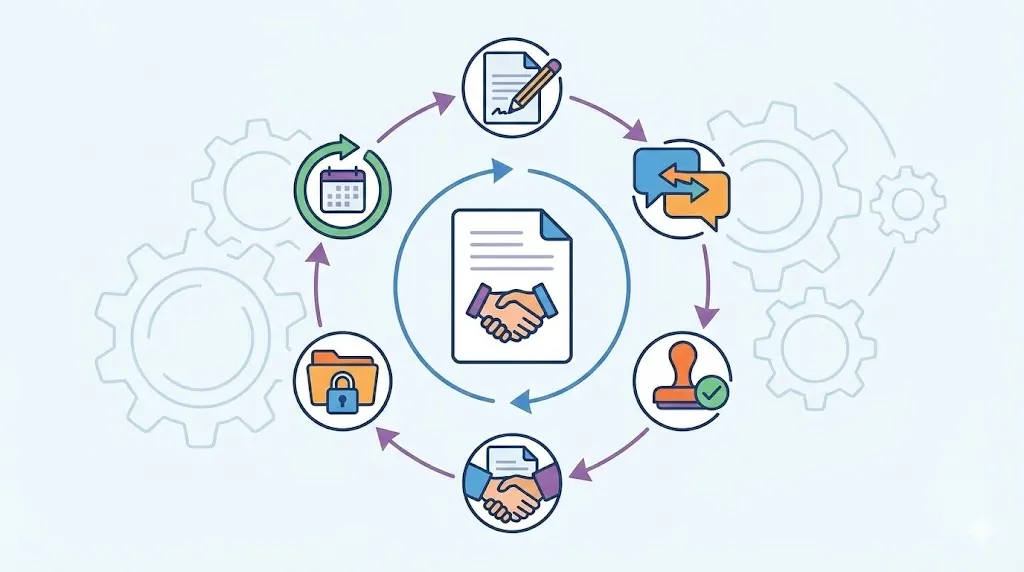
Software for NDA management can centralize templates, approvals, signatures, and records. It can also send renewal reminders and track continuing duties. These features help teams follow the same process across departments.
A central record reduces missed renewals and inconsistent terms. It can connect legal work with security and departure procedures. That connection helps teams act before access or obligations lapse.
Searchable agreements support faster reviews. Legal, human resources, security, and business teams can find key terms quickly. Reports can also show which people, vendors, or projects need attention.
Automation does not replace careful drafting or legal review. It cannot decide whether information qualifies as a trade secret. Teams still need access controls, training, sound security, and clear business rules.
Centralize NDA records: Store templates, drafts, signed agreements, and amendments together.
Teams can find the current agreement without searching email threads. Central records reduce duplicate requests and missing attachments. They also support faster review during suspected breaches.
Automate approvals: Route NDAs to the right legal and business reviewers.
Use reminders when approvals remain open too long. Apply different paths for vendors, employees, and investors. Consistent routing helps reduce accidental use of weak terms.
Track obligations: Record renewal dates, access reviews, and return duties.
Send reminders before deadlines become urgent. Show owners which actions remain unfinished. Obligation tracking supports stronger NDA compliance for startups.
Keep audit evidence: Store signatures, access records, training proof, and review notes.
Connect evidence to each agreement and information category. Searchable history can clarify events during investigations. It can also show reasonable protective measures over time.
Support secure handling: Limit document access according to user roles.
Keep sensitive agreements in a controlled repository. Record changes, downloads, and approval activity where supported. Use software as one part of broader security practice.
Volody's CLM Software supports NDA workflows through approval automation, a central contract repository, and obligation management. It can help teams route agreements, find signed records, and track renewals or return duties. These features support software for NDA management without replacing legal review or security controls.
For example, a startup can route a vendor NDA for approval. It can store the signed file, track access, and remind the owner before renewal. The team can then preserve a clear record of each action.
> Want to see how contract management software can simplify your legal workflows? Check out Volody's CLM Software.
FAQ
What is the main difference between a trade secret and an NDA?
A trade secret is valuable, nonpublic information protected through reasonable measures. An NDA is a contract that restricts how someone may use or share information. A trade secret can exist without an NDA in some cases. An NDA can protect other confidential information that does not meet every trade secret requirement.
What constitutes a trade secret?
A trade secret usually has value because it remains unknown to others. It must not be generally available through lawful public sources. The owner must also take reasonable steps to protect it. Examples include source code, formulas, customer data, production methods, and pricing plans.
What legal protections are available for trade secrets?
A business may bring a contract claim when an NDA is breached. It may also consider statutory trade secret claims when the information meets legal requirements. Possible remedies can include injunctions, damages, and other court orders. In the United States, the Defend Trade Secrets Act may provide one federal route.
How long should an NDA protect trade secrets?
The right period depends on the information and the agreement. Ordinary confidential information often receives a defined protection period. Trade secret duties may continue while the information remains secret and valuable. The NDA should separate these periods and avoid unclear or conflicting survival terms.
Should a business use a mutual or unilateral NDA?
Use a unilateral NDA when only one party expects to disclose protected information. Use a mutual NDA when both parties will share sensitive information. The structure should match the real business discussion. Unnecessary mutual duties can create extra work and confusion.
What should a company do after discovering an NDA breach?
Treat a suspected NDA breach as an urgent legal and operational matter: preserve evidence, suspend risky access, investigate the facts, and consult counsel promptly to determine available remedies and limit further disclosure.
About the Company

Volody AI CLM is an Agentic AI-powered Contract Lifecycle Management platform designed to eliminate manual contracting tasks, automate complex workflows, and deliver actionable insights. As a one-stop shop for all contract activities, it covers drafting, collaboration, negotiation, approvals, e-signature, compliance tracking, and renewals. Built with enterprise-grade security and no-code configuration, it meets the needs of the most complex global organizations. Volody AI CLM also includes AI-driven contract review and risk analysis, helping teams detect issues early and optimize terms. Trusted by Fortune 500 companies, high-growth startups, and government entities, it transforms contracts into strategic, data-driven business assets.





" height="216.72211px" id="FYO0bO80Y" transform="translate(3 6.105)" width="206.073px"/><path d="M 108.174 222 C 88.432 222 70.303 217.239 53.785 207.717 C 37.267 198.196 24.173 185.052 14.504 168.285 C 4.835 151.312 0 132.165 0 110.845 C 0 89.731 4.835 70.792 14.504 54.025 C 24.173 37.052 37.267 23.804 53.785 14.282 C 70.303 4.761 88.432 0 108.174 0 C 128.116 0 146.246 4.761 162.562 14.282 C 179.08 23.804 192.073 37.052 201.541 54.025 C 211.21 70.792 216.044 89.731 216.044 110.845 C 216.044 132.165 211.21 151.312 201.541 168.285 C 192.073 185.052 179.08 198.196 162.562 207.717 C 146.044 217.239 127.915 222 108.174 222 Z M 108.174 183.189 C 120.864 183.189 132.044 180.291 141.713 174.495 C 151.382 168.492 158.936 160.006 164.375 149.035 C 169.814 138.064 172.533 125.334 172.533 110.845 C 172.533 96.355 169.814 83.729 164.375 72.965 C 158.936 61.994 151.382 53.611 141.713 47.815 C 132.044 42.02 120.864 39.122 108.174 39.122 C 95.483 39.122 84.202 42.02 74.332 47.815 C 64.663 53.611 57.109 61.994 51.67 72.965 C 46.231 83.729 43.511 96.355 43.511 110.845 C 43.511 125.334 46.231 138.064 51.67 149.035 C 57.109 160.006 64.663 168.492 74.332 174.495 C 84.202 180.291 95.483 183.189 108.174 183.189 Z" fill="rgba(255, 255, 255, 0.12)" height="222px" id="aa1McFcE9" transform="translate(227.183 3)" width="216.04399999999998px"/><path d="M 42.302 182.257 L 111.799 182.257 L 111.799 216.722 L 0 216.722 L 0 0 L 42.302 0 Z" fill="rgba(255, 255, 255, 0.12)" height="216.72211px" id="yRq4AnrsX" transform="translate(477.721 6.105)" width="111.79899999999998px"/><path d="M 108.174 222 C 88.432 222 70.303 217.239 53.785 207.717 C 37.267 198.196 24.173 185.052 14.504 168.285 C 4.835 151.312 0 132.165 0 110.845 C 0 89.731 4.835 70.792 14.504 54.025 C 24.173 37.052 37.267 23.804 53.785 14.282 C 70.303 4.761 88.432 0 108.174 0 C 128.116 0 146.246 4.761 162.562 14.282 C 179.08 23.804 192.073 37.052 201.541 54.025 C 211.21 70.792 216.045 89.731 216.045 110.845 C 216.045 132.165 211.21 151.312 201.541 168.285 C 192.073 185.052 179.08 198.196 162.562 207.717 C 146.044 217.239 127.915 222 108.174 222 Z M 108.174 183.189 C 120.864 183.189 132.044 180.291 141.713 174.495 C 151.382 168.492 158.936 160.006 164.375 149.035 C 169.814 138.064 172.534 125.334 172.534 110.845 C 172.534 96.355 169.814 83.729 164.375 72.965 C 158.936 61.994 151.382 53.611 141.713 47.815 C 132.044 42.02 120.864 39.122 108.174 39.122 C 95.483 39.122 84.202 42.02 74.332 47.815 C 64.663 53.611 57.108 61.994 51.67 72.965 C 46.231 83.729 43.511 96.355 43.511 110.845 C 43.511 125.334 46.231 138.064 51.67 149.035 C 57.108 160.006 64.663 168.492 74.332 174.495 C 84.202 180.291 95.483 183.189 108.174 183.189 Z" fill="rgba(255, 255, 255, 0.12)" height="222px" id="mo8HQspQ0" transform="translate(609.155 3)" width="216.04500000000007px"/><path d="M 73.727 0 C 95.885 0 115.324 4.45 132.044 13.351 C 148.967 22.252 161.957 34.982 171.027 51.541 C 180.287 67.894 184.917 86.937 184.917 108.671 C 184.917 130.405 180.287 149.449 171.027 165.801 C 161.957 181.947 148.967 194.47 132.044 203.371 C 115.324 212.271 95.885 216.722 73.727 216.722 L 0 216.722 L 0 0 Z M 72.216 179.773 C 94.374 179.773 111.497 173.564 123.583 161.144 C 135.669 148.724 141.713 131.233 141.713 108.671 C 141.713 86.109 135.669 68.515 123.583 55.888 C 111.497 43.055 94.374 36.638 72.216 36.638 L 42.302 36.638 L 42.302 179.773 Z" fill="rgba(255, 255, 255, 0.12)" height="216.72211px" id="I3iXX5Hi_" transform="translate(859.693 6.105)" width="184.91699999999992px"/><path d="M 185.22 0 L 113.91 141.273 L 113.91 216.722 L 71.61 216.722 L 71.61 141.273 L 0 0 L 47.74 0 L 93.06 99.046 L 138.08 0 Z" fill="rgba(255, 255, 255, 0.12)" height="216.72211px" id="nzHyWC0_d" transform="translate(1061.78 6.105)" width="185.22000000000003px"/></svg>)