
Contracts are the backbone of business. Yet, legal teams often wrestle with outdated tools and fragmented processes that slow down deal cycles and increase risk. A recent report reveals how Contract Lifecycle Management (CLM) software can transform legal operations and drive measurable performance gains across the enterprise. This technology centralizes contracts, automates workflows, and unlocks data that was once trapped in silos. Legal leaders who adopt CLM not only reduce manual work but also enable faster, smarter decision-making company-wide.
TL;DR
Centralizing contract data in CLM platforms transforms legal operations by reducing complexity and lowering the incidence of errors.
Additionally, by consolidating contract information, legal teams gain detailed insights into contract lifecycles that facilitate more refined risk management and stricter compliance adherence.
The automation of repetitive tasks within CLM systems frees legal professionals to concentrate more on providing strategic business advice.
Choosing CLM tools without thoroughly evaluating the specific needs of legal teams often results in diminished effectiveness and lower adoption rates.
Effective CLM solutions must seamlessly integrate with an organization's existing technology stack while accommodating industry-specific requirements.
The engagement of legal leadership in choosing and implementing CLM systems is essential to fully realize return on investment and achieve broad organizational benefits.
What Is Contract Lifecycle Management and Why Does It Matter for Legal?
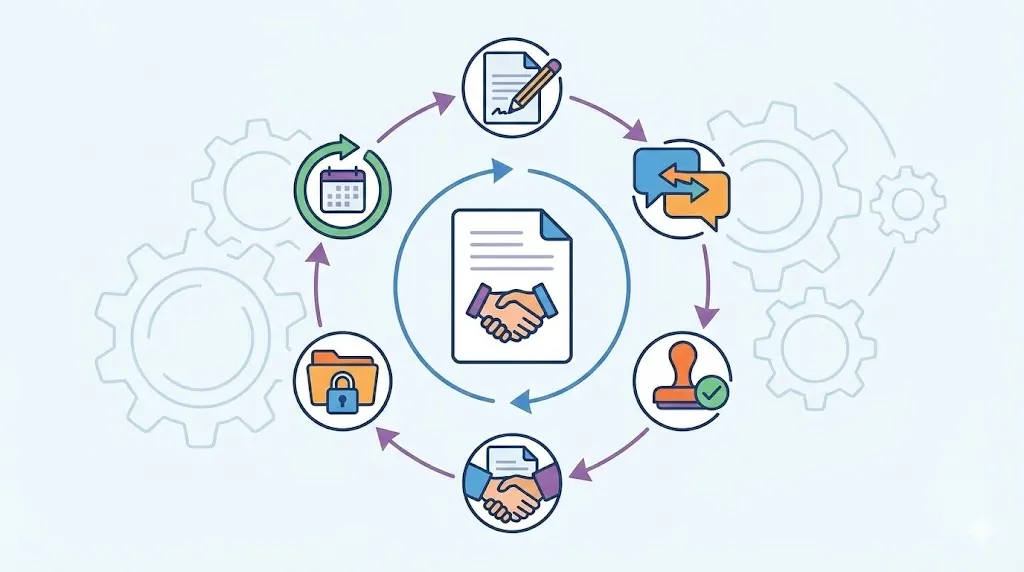
Contract Lifecycle Management, or CLM, is software that manages contracts from creation to renewal or expiration. Additionally, it consolidates contracts in a centralized repository and automates key processes such as drafting, negotiation, approval, execution, and obligation tracking. For legal teams, CLM replaces manual, paper-based workflows with digital ones that are faster and more accurate.
Contracts touch many parts of a business. They govern supplier relationships, sales deals, employee agreements, and more. Without CLM, contract data often lives in disconnected folders or email threads. This makes it hard for legal and business teams to find information, track deadlines, or spot risks. CLM breaks down these silos by providing a single source of truth for all contracts.
Legal teams benefit from CLM because it streamlines their daily work. Instead of chasing signatures or hunting for clauses, lawyers can focus on higher-value tasks like risk analysis and strategic advice. CLM also helps legal departments demonstrate their value by improving turnaround times and reducing contract-related bottlenecks.
According to a Gartner report, organizations using CLM see up to 50% faster contract cycle times and 30% fewer compliance issues. These gains translate into cost savings and better business outcomes. CLM is no longer just a nice-to-have but a core tool for modern legal departments.
Related articles: Contract Management Software for Sales Teams | CLM Guide
How Legal Teams Can Use CLM to Improve Performance
Legal teams handle contracts at every stage. CLM supports these stages with features tailored to legal workflows:
Drafting and Clause Management: CLM provides approved templates and clause libraries. This ensures contracts use consistent, compliant language. Lawyers can generate first drafts quickly using pre-approved content.
Negotiation and Collaboration: CLM tracks changes, comments, and redlines from all parties in one place. It reduces back-and-forth emails and keeps negotiations organized.
Approval Workflows: Automated routing sends contracts to the right approvers with reminders. This speeds up internal reviews and prevents delays.
Execution and Signature: Integration with electronic signature platforms enables fast, secure contract signing without printing or scanning.
Obligation Tracking: CLM monitors key dates like renewals, deliverables, and payment terms. Automated alerts help legal and business teams stay on top of commitments.
Reporting and Analytics: Legal teams gain insights into contract volume, cycle times, risk exposure, and compliance status. This data supports continuous improvement and strategic planning.
By automating these processes, legal teams reduce manual work and errors. They free up time to focus on advising the business, managing risk, and handling complex deals. For example, a legal department using CLM reported saving the equivalent of 10 full-time employees who could then focus on mergers and acquisitions.
Related articles: How CLM and Analytics Reduce Legal Costs Effectively
Why Legal Needs a Seat at the Table for CLM Decisions
Many companies pick CLM solutions based on procurement or IT priorities. Additionally, often, these teams prioritize features such as integration with enterprise systems or cost considerations. Legal’s unique needs can get overlooked, resulting in a tool that does not fully support legal workflows.
Legal departments are often seen as cost centers rather than revenue drivers. This perception can limit their budget for technology investments. However, CLM offers clear returns for legal teams by reducing contract review time, improving compliance, and enabling better risk management.
Involving legal leaders early during CLM vendor selection and implementation is critical. Their expertise encompasses the complexities of contract language, regulatory requirements, and risk tolerance. By contributing their insights, they help ensure the CLM system aligns with legal workflows and generates tangible value.
Without legal’s involvement, companies risk adopting a CLM that lacks essential features like clause libraries, legal playbooks, or audit trails. This leads to poor adoption, workarounds, and missed opportunities for efficiency gains.
Related articles: Essential CLM Features Every Business Needs
How Contract Data Unlocks Value Beyond Legal
Contracts contain rich data about business relationships, obligations, and risks. Additionally, CLM systems capture this information and arrange it in a structured manner, making it accessible and actionable for other departments. This transparency benefits procurement, sales, finance, and compliance teams.
Procurement departments utilize this structured information to monitor supplier contract terms and renewal dates, enabling more strategic negotiations. Sales teams access details on discount approvals and contract statuses, facilitating a more efficient deal-closing process. Meanwhile, finance reviews payment terms and liabilities to enhance cash flow management.
Legal’s responsibilities extend beyond contract administration, encompassing the facilitation of enterprise-wide data insights. By disseminating contract data through CLM, legal enhances decision-making capabilities and strengthens risk mitigation across the organization.
Related articles: The Contract Visibility Crisis in Legal Teams
What to Look for in a CLM Solution for Legal Departments
Not all CLM software is created equal. Legal teams should evaluate solutions based on these criteria:
User-Friendly Interface: Lawyers prefer tools that are intuitive and easy to use. Integration with familiar apps like Microsoft Word helps adoption.
Legal-Specific Features: Essential capabilities include clause libraries, legal playbooks, audit trails, and workflows that can be configured specifically for legal procedures.
Flexibility and Customization: It is critical that the platform accommodates various industries, diverse contract types, and the unique policies of each organization.
Robust Search and Reporting: Powerful search functions combined with detailed analytics enable legal teams to locate contracts efficiently and track key performance metrics in real time.
Security and Compliance: Enterprise-grade encryption, access controls, and audit logs protect sensitive contract data.
Integration Capabilities: The solution should connect smoothly with existing ERP, CRM, e-signature, and document management systems to maintain operational continuity.
Scalability: Beyond handling growing contract volumes, the platform must enable effective collaboration across departments and international locations.
Evaluating these factors enables legal departments to select a CLM tailored to their specific requirements while optimizing return on investment.
Related articles: CLM Integration with CRM, CPQ, and ERP: A Complete Guide
Real-World Impact of CLM on Legal Operations
Companies that adopt CLM report significant improvements in legal operations. Here are some examples:
A legal team reduced contract review times by 40% by using AI-powered clause analysis and automated workflows.
Another company improved compliance by tracking contract obligations and receiving automated alerts for renewals and milestones.
Legal departments freed up staff to focus on strategic deals after automating routine contract creation and approval.
Cross-functional collaboration improved when sales, procurement, and legal teams accessed a shared contract repository.
These outcomes highlight how CLM drives efficiency, reduces risk, and enhances legal’s strategic contribution.
Related articles: Customized AI Powers End-to-End CLM for Legal Teams
How CLM Software Solves This
Contract management software centralizes contracts into a unified repository while streamlining workflows to enhance both speed and accuracy in legal operations. Additionally, it organizes contract data into structured formats, which facilitates improved tracking and comprehensive reporting. Automation alleviates burdensome manual processes such as following up on approvals and extracting contract terms by hand.
Modern CLM platforms embed AI-driven functionalities that encompass contract drafting, review, and metadata extraction. Legal teams leverage these advancements to identify risks, maintain compliance, and accelerate negotiation cycles.
Volody’s solution equips legal departments with advanced functionalities such as AI contract drafting, clause libraries, automated approval workflows, and obligation management. It integrates with Microsoft Word and popular e-signature platforms, allowing lawyers to work in familiar environments. Advanced search and reporting provide insights into contract performance and risk exposure.
> See how Volody helps legal teams manage contracts faster and with greater control.
FAQ
What is the main benefit of CLM to legal departments?
Additionally, CLM streamlines contract management by automating complex processes, which minimizes manual errors and administrative overhead. This acceleration of contract creation, review, approval, and execution allows legal professionals to allocate more time to critical activities such as risk assessment and strategic business advising.
How does CLM enhance contract compliance?
By automatically monitoring key contract dates and obligations, CLM ensures no critical deadlines are overlooked. The system generates timely alerts for renewals, milestones, and compliance requirements, enabling legal and business teams to maintain adherence and avoid potential penalties.
Can CLM integrate with other business systems?
Yes. Moreover, most CLM platforms connect with ERP, CRM, document management, and e-signature systems. This integration creates seamless workflows and ensures contract data flows across the enterprise.
Their expertise ensures the CLM platform aligns with legal workflows and delivers tangible value. Excluding legal from the selection process increases the risk of adopting tools that fail to satisfy compliance standards.
Which features are critical when legal teams evaluate CLM software?
Key features include clause libraries, legal playbooks, audit trails, approval workflows, obligation tracking, and AI-powered contract review. Furthermore, user interfaces designed for ease of navigation and robust security measures are critical components as well.
How does CLM support contract negotiation?
CLM consolidates all changes and comments within a single platform. It minimizes the volume of email exchanges and maintains organization throughout the negotiation process. Some platforms provide AI-driven suggestions for clauses and fallback language to accelerate agreement finalization.
Is CLM only useful for legal departments?
No. Also, while CLM benefits legal most, it also supports procurement, sales, finance, and compliance teams. Contract data transparency enables better decision-making across the organization.
Also, how much time can legal teams save with CLM?
Studies show legal teams can reduce contract cycle times by up to 50%. Some report freeing up the equivalent of several full-time employees for strategic work.
Does CLM support global and multi-entity companies?
Yes. Platforms designed for enterprise use accommodate diverse business units, multiple languages, varying currencies, and complex regulatory frameworks. They provide granular role-based access controls to safeguard sensitive information.
What role does AI play in modern CLM?
AI contributes to automating drafting, review, metadata extraction, and risk analysis. Contract processing is accelerated and accuracy enhanced by the technology’s ability to detect risky clauses or identify missing provisions.
About the Company

Volody AI CLM is an Agentic AI-powered Contract Lifecycle Management platform designed to eliminate manual contracting tasks, automate complex workflows, and deliver actionable insights. As a one-stop shop for all contract activities, it covers drafting, collaboration, negotiation, approvals, e-signature, compliance tracking, and renewals. Built with enterprise-grade security and no-code configuration, it meets the needs of the most complex global organizations. Volody AI CLM also includes AI-driven contract review and risk analysis, helping teams detect issues early and optimize terms. Trusted by Fortune 500 companies, high-growth startups, and government entities, it transforms contracts into strategic, data-driven business assets.





" height="216.72211px" id="FYO0bO80Y" transform="translate(3 6.105)" width="206.073px"/><path d="M 108.174 222 C 88.432 222 70.303 217.239 53.785 207.717 C 37.267 198.196 24.173 185.052 14.504 168.285 C 4.835 151.312 0 132.165 0 110.845 C 0 89.731 4.835 70.792 14.504 54.025 C 24.173 37.052 37.267 23.804 53.785 14.282 C 70.303 4.761 88.432 0 108.174 0 C 128.116 0 146.246 4.761 162.562 14.282 C 179.08 23.804 192.073 37.052 201.541 54.025 C 211.21 70.792 216.044 89.731 216.044 110.845 C 216.044 132.165 211.21 151.312 201.541 168.285 C 192.073 185.052 179.08 198.196 162.562 207.717 C 146.044 217.239 127.915 222 108.174 222 Z M 108.174 183.189 C 120.864 183.189 132.044 180.291 141.713 174.495 C 151.382 168.492 158.936 160.006 164.375 149.035 C 169.814 138.064 172.533 125.334 172.533 110.845 C 172.533 96.355 169.814 83.729 164.375 72.965 C 158.936 61.994 151.382 53.611 141.713 47.815 C 132.044 42.02 120.864 39.122 108.174 39.122 C 95.483 39.122 84.202 42.02 74.332 47.815 C 64.663 53.611 57.109 61.994 51.67 72.965 C 46.231 83.729 43.511 96.355 43.511 110.845 C 43.511 125.334 46.231 138.064 51.67 149.035 C 57.109 160.006 64.663 168.492 74.332 174.495 C 84.202 180.291 95.483 183.189 108.174 183.189 Z" fill="rgba(255, 255, 255, 0.12)" height="222px" id="aa1McFcE9" transform="translate(227.183 3)" width="216.04399999999998px"/><path d="M 42.302 182.257 L 111.799 182.257 L 111.799 216.722 L 0 216.722 L 0 0 L 42.302 0 Z" fill="rgba(255, 255, 255, 0.12)" height="216.72211px" id="yRq4AnrsX" transform="translate(477.721 6.105)" width="111.79899999999998px"/><path d="M 108.174 222 C 88.432 222 70.303 217.239 53.785 207.717 C 37.267 198.196 24.173 185.052 14.504 168.285 C 4.835 151.312 0 132.165 0 110.845 C 0 89.731 4.835 70.792 14.504 54.025 C 24.173 37.052 37.267 23.804 53.785 14.282 C 70.303 4.761 88.432 0 108.174 0 C 128.116 0 146.246 4.761 162.562 14.282 C 179.08 23.804 192.073 37.052 201.541 54.025 C 211.21 70.792 216.045 89.731 216.045 110.845 C 216.045 132.165 211.21 151.312 201.541 168.285 C 192.073 185.052 179.08 198.196 162.562 207.717 C 146.044 217.239 127.915 222 108.174 222 Z M 108.174 183.189 C 120.864 183.189 132.044 180.291 141.713 174.495 C 151.382 168.492 158.936 160.006 164.375 149.035 C 169.814 138.064 172.534 125.334 172.534 110.845 C 172.534 96.355 169.814 83.729 164.375 72.965 C 158.936 61.994 151.382 53.611 141.713 47.815 C 132.044 42.02 120.864 39.122 108.174 39.122 C 95.483 39.122 84.202 42.02 74.332 47.815 C 64.663 53.611 57.108 61.994 51.67 72.965 C 46.231 83.729 43.511 96.355 43.511 110.845 C 43.511 125.334 46.231 138.064 51.67 149.035 C 57.108 160.006 64.663 168.492 74.332 174.495 C 84.202 180.291 95.483 183.189 108.174 183.189 Z" fill="rgba(255, 255, 255, 0.12)" height="222px" id="mo8HQspQ0" transform="translate(609.155 3)" width="216.04500000000007px"/><path d="M 73.727 0 C 95.885 0 115.324 4.45 132.044 13.351 C 148.967 22.252 161.957 34.982 171.027 51.541 C 180.287 67.894 184.917 86.937 184.917 108.671 C 184.917 130.405 180.287 149.449 171.027 165.801 C 161.957 181.947 148.967 194.47 132.044 203.371 C 115.324 212.271 95.885 216.722 73.727 216.722 L 0 216.722 L 0 0 Z M 72.216 179.773 C 94.374 179.773 111.497 173.564 123.583 161.144 C 135.669 148.724 141.713 131.233 141.713 108.671 C 141.713 86.109 135.669 68.515 123.583 55.888 C 111.497 43.055 94.374 36.638 72.216 36.638 L 42.302 36.638 L 42.302 179.773 Z" fill="rgba(255, 255, 255, 0.12)" height="216.72211px" id="I3iXX5Hi_" transform="translate(859.693 6.105)" width="184.91699999999992px"/><path d="M 185.22 0 L 113.91 141.273 L 113.91 216.722 L 71.61 216.722 L 71.61 141.273 L 0 0 L 47.74 0 L 93.06 99.046 L 138.08 0 Z" fill="rgba(255, 255, 255, 0.12)" height="216.72211px" id="nzHyWC0_d" transform="translate(1061.78 6.105)" width="185.22000000000003px"/></svg>)