

Enterprise contract exceptions require disciplined governance to prevent financial leakage, compliance exposure, and approval delays. A well-designed framework establishes consistent decision rights, risk-based workflows, and complete documentation across the organization. It enables teams to manage non-standard terms with greater speed, control, and accountability. This guide outlines how to build and operationalize that framework.
TL;DR
Define contract exceptions, assign owners, and set clear decision rights across business and control teams.
Capture consistent data, classify each issue, and rank requests by risk, impact, urgency, and dependencies.
Create approval rules that separate routine flexibility from serious legal, financial, privacy, and security exposure.
Connect CLM, CRM, ERP, procurement, and finance systems to automate routing, updates, alerts, and tracking.
Reduce delays and uneven decisions through shared playbooks, service levels, escalation paths, and recurring issue reviews.
Measure cycle time, risk exposure, compliance, remediation, and audit readiness to improve the framework.
Establish the Framework Scope and Governance
Define the role of contract exceptions
A contract exception is a request to depart from an approved rule. The rule may cover a clause, template, approval step, or business limit. enterprise Contract management controls these departures from start to finish.
A drafting error is not always an exception. A missing approval is a control failure. A routine contract variation may need normal processing instead. A policy breach needs correction, not automatic approval.
Set clear boundaries at the start. Decide which agreements, clauses, regions, business units, and transactions fall within scope. Include sales contracts, supplier agreements, customer terms, data processing terms, and partnership deals when risks overlap.
Assign decision rights and accountability
Legal should guide legal risk management and clause standards. Procurement should own supplier terms and buying rules. Finance should review payment, credit, tax, and revenue risks.
Sales and business owners should explain the commercial need. Compliance and security should review regulated or sensitive issues. Executive sponsors should resolve material conflicts and support enterprise standards.
Define who may request, review, approve, reject, and close an exception. Separate the person asking for an exception from the person approving it. This segregation of duties reduces bias and protects the record.
Set the implementation foundation
Start with stakeholder interviews and approval workflow reviews. Document current delays, email handoffs, duplicate reviews, and unclear approval points. Record baseline measures before changing the process.
Use a crawl, walk, run approach. Begin with priority contracts and high-risk clauses. Expand after teams gain confidence and early results show value.
Create a responsibility matrix before configuration starts. It should show each role's decision rights, review duties, response times, and escalation obligations. Review the matrix with Legal, Procurement, Finance, Sales, Operations, Security, and IT.
Related articles: Compliance Risk Management: Essential Guide for Businesses
Design a Consistent Exception Intake and Classification Process
Capture and validate the exception record
Every request needs a clear business reason. Capture the contract, clause, counterparty, requestor, trigger, date, and affected transaction. Include the proposed deviation and all supporting evidence.
Requests may start with a user, workflow rule, system alert, or failed handoff. A good intake form accepts each source. It then checks whether the request contains enough information.
Validation should catch duplicate requests and missing contract links. It should also confirm that the requester has permission to submit the issue. Return incomplete requests with clear guidance, rather than sending them into review.
Create a useful classification model
Classify exceptions by contract type, process, risk, business unit, geography, and root cause. Add contract value, customer impact, and requested duration when those fields affect review.
Use plain categories that teams can apply in the same way. For example, payment terms, liability, data privacy, termination, insurance, and security form useful clause groups.
Good categories improve routing and reporting. They also show where standard terms fail most often. A pattern of repeated liability requests may signal a sales policy issue, a template problem, or a weak negotiation guide.
Set required intake fields
Keep the intake form focused. Users should know what information matters and why the system requests it. Avoid long forms that encourage vague answers.
At minimum, capture the exception description, affected contract, business impact, evidence, proposed remedy, and requested decision date. Add the owner, risk view, and involved teams when known.
Show examples beside difficult fields. A short example can improve data quality more than another instruction page. Make key fields mandatory, but allow reviewers to add detail later.
Related articles: Essential CLM Features Every Business Needs
Set Risk Based Decision Policies and Approval Thresholds
Define acceptance and denial criteria
Policies should separate normal business flexibility from unacceptable exposure. A small payment change may receive fast review. A broad liability waiver may require senior approval.
Deny requests that breach law, security rules, privacy duties, or core control standards. Accept low-risk requests when the business need is clear and evidence is complete. Allow conditional approval when controls can reduce the remaining risk.
Write denial reasons in plain language. Explain the rule, the exposure, and any safer alternative. Clear reasons reduce repeat requests and help teams make better submissions.
Connect thresholds to risk and value
Approval thresholds should reflect the real risk. Consider contract value, deviation severity, customer impact, duration, jurisdiction, and renewal effects.
Low-risk requests can move to authorized teams. Material requests should reach senior legal, finance, security, or business owners. High-risk terms may need executive review before signature.
Do not rely on contract value alone. A low-value agreement may still create serious privacy or security exposure. A high-value agreement may carry limited risk when approved terms remain intact.
Preserve human judgment in automated workflows
Automation can route, check, score, and remind. It should not hide important judgment calls. Human interaction and AI risk management review remains necessary for unclear facts, material exposure, and policy conflicts.
Require evidence for high-risk requests. Add reason codes for approvals, rejections, and overrides. Record who changed the decision and why.
Set controls for automated recommendations. A reviewer should be able to challenge a score or suggested path. The system should preserve both the recommendation and the final human decision.
Document the exception decision contract
Each exception needs a defined decision path. Link the exception type, trigger, evidence, policy, decision owner, deadline, and permitted outcome.
A decision matrix can map common exception classes to evidence needs, approval levels, outcomes, and escalation paths. Keep this matrix current as policies change.
For example, a data privacy deviation may require Privacy and Security review. A payment term change may need Finance approval. A termination restriction may need Legal and business owner approval.
Related articles: Prevent Missed Contract Obligations with Better Governance
Build the Contract Exception Workflow and Technology Architecture
Connect the contract repository and core systems
Connect the contract repository with CLM, procurement, CRM, ERP, finance, identity, security, and analytics tools. These links prevent teams from copying old data into new forms.
APIs can retrieve current contract details and related account data. Event notices can update statuses and alert downstream teams. A closed exception can trigger a task in procurement or finance.
Identity integration supports role checks and single sign-on. CRM links can connect a customer request with its contract. ERP links can show payment or value data during review.
Configure routing, approvals, and service levels
Route requests by risk, clause, geography, value, and business owner. Use rules that send routine items to the right team without manual sorting.
Set review deadlines for each risk tier. Send reminders before deadlines expire. Allow controlled reassignment when an approver changes roles or lacks the needed authority.
Support conditional approvals with clear conditions. Show requestors the current status, next owner, and expected response date. Good visibility reduces status emails and repeated follow-ups.
Protect data and preserve auditability
Use role-based access, strong authentication, and secure file storage. Restrict sensitive attachments to approved reviewers. Keep contract versions and policy versions linked to each decision.
Record approvals, edits, comments, and access events. Every change should identify the person, time, and reason. This audit trail supports reviews, disputes, and formal audits.
Keep sensitive data out of email where possible. Central records reduce uncontrolled copies and make retention rules easier to enforce. They also improve contract exception tracking across regions.
Related articles: How to Manage Risk Effectively with Contract Management
Address Common Challenges in Enterprise Exception Management
Resolve inconsistent decisions and unclear ownership
Local workarounds often create uneven decisions. Teams may interpret the same policy in different ways. Missing contract details can make a sound request look risky.
Use shared categories, decision criteria, and review playbooks. Hold calibration reviews with Legal, Procurement, Finance, and business owners. These sessions help teams compare decisions and align future judgment.
Assign one accountable owner to every open exception. The owner may delegate tasks, but responsibility must remain clear. Close duplicate requests when one record already covers the issue.
Reduce review delays and recurring operational risk
Email and spreadsheets hide ageing requests. Manual handoffs also create lost evidence and unclear status. Disconnected systems make reviewers search across several records.
Set service levels by risk and urgency. Prioritize requests that affect signing, revenue, customer delivery, or regulatory duties. Escalate stalled items before they block a major transaction.
Review recurring exceptions each month. Repeated pricing, liability, or payment issues may show a weak template or unclear policy. Fixing the source problem reduces future demand on reviewers.
Use a challenge diagnostic
Compare issue frequency, cycle time, decision consistency, recurrence, and business impact. This view helps teams separate isolated problems from system failures.
High frequency with short cycle time may show a missing standard clause. Long cycle time with low volume may point to unclear authority. High recurrence with high impact needs prompt executive attention.
Use the findings to target workflow changes. Do not automate every problem before understanding its cause. A faster version of a bad process still creates risk.
Related articles: Contract Management Software for Government Sector
Apply Best Practices for Review, Remediation, and Continuous Improvement
Standardize the review conversation
Reviewers should first confirm the facts. They should then test the request against policy and approved alternatives. Next, they should assess exposure, controls, and business need.
Use structured questions instead of informal negotiation. Ask what changed, why it matters, and what happens without approval. Ask whether a narrower term could meet the same need.
Document the reasoning in the exception record. A future reviewer should understand the decision without searching old email threads. Clear reasoning also improves training and policy updates.
Use conditional approvals and remediation plans
An exception can be accepted with an expiry date or narrow scope. It may also require added insurance, monitoring, approval, or contract language. Record every condition before the decision closes.
Assign one owner for each remediation task. Add a due date and required evidence. Track completion inside the same workflow, not in a separate spreadsheet.
Set consequences for missed conditions. The system may reopen the exception, alert an executive owner, or block renewal work. This keeps conditional approval from becoming permanent risk.
Learn from exception patterns
Recurring exceptions should shape clause libraries, templates, and playbooks. They may also reveal weak supplier terms, pricing rules, or sales processes.
Review patterns by clause, region, business unit, and contract type. Look for requests that receive the same approval again and again. Those requests may deserve a new standard option.
Share lessons with contract writers and business teams. A small template change can prevent many future requests. Trend reviews should lead to named actions, owners, and target dates.
Train users and calibrate decision makers
Give requestors short training on scope, evidence, and business reasons. Give reviewers deeper training on risk, policy, and documentation. Approvers need clear limits and escalation duties.
Train system administrators on access, policy updates, and audit records. Train business owners on remediation and renewal risks. Refresh training when forms, rules, or workflows change.
Use the data to drive a continuous improvement cycle. Update policies, workflows, training, and templates based on real exceptions. Recheck the results after each major change.
Related articles: Contract Compliance: Importance & Best Practices
Measure Performance, Compliance, and Business Impact
Establish operational metrics
Track exception volume, age, cycle time, backlog, reassignment, and escalation rates. Record approval outcomes and completion of conditional approvals. Segment each measure by business unit, clause, risk, and contract type.
A rising volume may show better reporting, not worse control. Pair volume with recurrence and cycle time. This gives leaders a clearer view of process health.
Track bottlenecks by stage and owner. If requests wait during Legal review, examine authority and staffing. If intake causes delays, improve the form or guidance.
Track financial and risk outcomes
Measure avoided loss, negotiated value, accepted exposure, and recurring risk. Track missed obligations and remediation completion. Review changes in contract leakage after process improvements.
Connect exception results with enterprise CLM outcomes. For example, faster approval may support revenue timing. Better payment controls may reduce cash leakage. Stronger privacy review may reduce exposure during audits.
Avoid relying only on activity measures. A high approval rate does not prove good control. Leaders need to know whether decisions reduced risk and supported sound business choices.
Govern records and retention
Set retention rules for exception records, attachments, approvals, access events, and decision reasons. Link each record to the policy version used during review.
Support legal holds and privacy restrictions. Limit access to sensitive records and remove access when roles change. Use defensible deletion when retention periods end.
Keep evidence needed for audits and disputes. The record should show the request, review, decision, conditions, and closure. It should also show any later changes or remediation work.
Build a governance dashboard
A governance dashboard should combine operational performance and risk exposure. Include policy compliance, recurring causes, open remediation, and audit readiness.
Show trends by region, contract type, clause, and business unit. Add filters for risk level and decision status. Give executives a high-level view, while allowing owners to inspect individual records.
Review the dashboard in a regular governance meeting. Turn important findings into assigned actions. Record the action, owner, deadline, and later result.
Related articles: Free Contract Management Software: Try Volody for 30 Days
Why Contract Management Software Matters
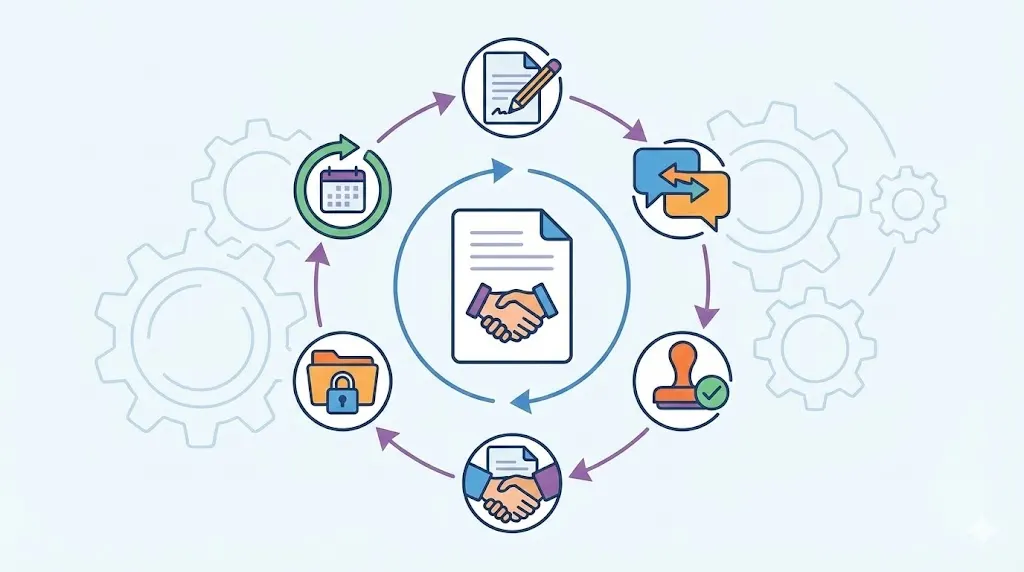
Contract management software gives teams one place for agreements, exception requests, evidence, approvals, rules, audit trails, and reports. It reduces email-based decisions and improves data quality. It also supports consistent governance across regions and business units.
A searchable contract record helps reviewers find the current agreement and clause. Structured intake captures the same core data each time. Configurable approval paths route requests by risk, value, region, and business owner.
Automation should support human oversight. Routine requests can move quickly through set rules. High-risk deviations can receive deeper review, senior approval, and clear escalation.
A phased rollout usually works best. Start with priority contracts and high-use workflows. Measure cycle time, data quality, and decision consistency. Then expand into more regions, systems, and exception types.
Volody's CLM Software supports centralized contract records, AI Contract Review, and Approval Workflow Automation. It can flag risky clauses, route reviews, send reminders, and preserve decision history. Teams can also use its Central Contract Repository to support search and shared visibility.
For example, a sales team can submit a liability deviation from the contract record. The system can flag the clause, route it to Legal, and record the final approval.
Want to see how contract management software can simplify your legal workflows? Check out Volody's CLM Software.
FAQ
What is an enterprise contract exception management framework?
An enterprise contract exception management framework controls requests to depart from approved contract rules. It defines scope, roles, risk criteria, approval paths, evidence, and escalation steps. It also tracks decisions through closure and remediation. CLM software supports the framework, but the framework also includes people, policies, governance, training, and measures.
Which contract issues should be treated as exceptions?
Treat policy deviations, non-standard clauses, approval breaches, unusual commercial terms, and missing obligations as exceptions. A routine change should follow the normal contract process instead. A drafting mistake may need correction rather than exception review. Define these boundaries clearly, so teams do not overload the process with ordinary work.
Who should approve a contract exception?
The right approver depends on the risk, value, clause, and business impact. Legal may review liability or termination terms, while Finance reviews payment and credit terms. Security and Privacy may review sensitive data risks. Business owners and executives should approve material exposure within their authority limits.
How can organizations prioritize contract exception requests?
Prioritize requests by financial exposure, regulatory risk, urgency, customer impact, and contract value. Consider dependencies, such as a pending signature, renewal, launch, or payment. High-risk requests should move ahead of low-risk items. Clear service levels and escalation rules help teams manage urgent work without losing control.
What information should an exception request include?
The request should identify the contract, clause, counterparty, requestor, and affected transaction. It should explain the business reason, proposed deviation, risk, evidence, and preferred remedy. Include the owner and required decision date. Complete information helps reviewers decide faster and reduces repeated questions.
How can contract exception management improve over time?
Implement a governed exception framework with consistent intake, risk-based approvals, documented remediation, and measurable outcomes. Use recurring reviews to refine policies, workflows, training, and templates, then track results to strengthen control and accelerate decisions.
About the Company

Volody AI CLM is an Agentic AI-powered Contract Lifecycle Management platform designed to eliminate manual contracting tasks, automate complex workflows, and deliver actionable insights. As a one-stop shop for all contract activities, it covers drafting, collaboration, negotiation, approvals, e-signature, compliance tracking, and renewals. Built with enterprise-grade security and no-code configuration, it meets the needs of the most complex global organizations. Volody AI CLM also includes AI-driven contract review and risk analysis, helping teams detect issues early and optimize terms. Trusted by Fortune 500 companies, high-growth startups, and government entities, it transforms contracts into strategic, data-driven business assets.




" height="216.72211px" id="FYO0bO80Y" transform="translate(3 6.105)" width="206.073px"/><path d="M 108.174 222 C 88.432 222 70.303 217.239 53.785 207.717 C 37.267 198.196 24.173 185.052 14.504 168.285 C 4.835 151.312 0 132.165 0 110.845 C 0 89.731 4.835 70.792 14.504 54.025 C 24.173 37.052 37.267 23.804 53.785 14.282 C 70.303 4.761 88.432 0 108.174 0 C 128.116 0 146.246 4.761 162.562 14.282 C 179.08 23.804 192.073 37.052 201.541 54.025 C 211.21 70.792 216.044 89.731 216.044 110.845 C 216.044 132.165 211.21 151.312 201.541 168.285 C 192.073 185.052 179.08 198.196 162.562 207.717 C 146.044 217.239 127.915 222 108.174 222 Z M 108.174 183.189 C 120.864 183.189 132.044 180.291 141.713 174.495 C 151.382 168.492 158.936 160.006 164.375 149.035 C 169.814 138.064 172.533 125.334 172.533 110.845 C 172.533 96.355 169.814 83.729 164.375 72.965 C 158.936 61.994 151.382 53.611 141.713 47.815 C 132.044 42.02 120.864 39.122 108.174 39.122 C 95.483 39.122 84.202 42.02 74.332 47.815 C 64.663 53.611 57.109 61.994 51.67 72.965 C 46.231 83.729 43.511 96.355 43.511 110.845 C 43.511 125.334 46.231 138.064 51.67 149.035 C 57.109 160.006 64.663 168.492 74.332 174.495 C 84.202 180.291 95.483 183.189 108.174 183.189 Z" fill="rgba(255, 255, 255, 0.12)" height="222px" id="aa1McFcE9" transform="translate(227.183 3)" width="216.04399999999998px"/><path d="M 42.302 182.257 L 111.799 182.257 L 111.799 216.722 L 0 216.722 L 0 0 L 42.302 0 Z" fill="rgba(255, 255, 255, 0.12)" height="216.72211px" id="yRq4AnrsX" transform="translate(477.721 6.105)" width="111.79899999999998px"/><path d="M 108.174 222 C 88.432 222 70.303 217.239 53.785 207.717 C 37.267 198.196 24.173 185.052 14.504 168.285 C 4.835 151.312 0 132.165 0 110.845 C 0 89.731 4.835 70.792 14.504 54.025 C 24.173 37.052 37.267 23.804 53.785 14.282 C 70.303 4.761 88.432 0 108.174 0 C 128.116 0 146.246 4.761 162.562 14.282 C 179.08 23.804 192.073 37.052 201.541 54.025 C 211.21 70.792 216.045 89.731 216.045 110.845 C 216.045 132.165 211.21 151.312 201.541 168.285 C 192.073 185.052 179.08 198.196 162.562 207.717 C 146.044 217.239 127.915 222 108.174 222 Z M 108.174 183.189 C 120.864 183.189 132.044 180.291 141.713 174.495 C 151.382 168.492 158.936 160.006 164.375 149.035 C 169.814 138.064 172.534 125.334 172.534 110.845 C 172.534 96.355 169.814 83.729 164.375 72.965 C 158.936 61.994 151.382 53.611 141.713 47.815 C 132.044 42.02 120.864 39.122 108.174 39.122 C 95.483 39.122 84.202 42.02 74.332 47.815 C 64.663 53.611 57.108 61.994 51.67 72.965 C 46.231 83.729 43.511 96.355 43.511 110.845 C 43.511 125.334 46.231 138.064 51.67 149.035 C 57.108 160.006 64.663 168.492 74.332 174.495 C 84.202 180.291 95.483 183.189 108.174 183.189 Z" fill="rgba(255, 255, 255, 0.12)" height="222px" id="mo8HQspQ0" transform="translate(609.155 3)" width="216.04500000000007px"/><path d="M 73.727 0 C 95.885 0 115.324 4.45 132.044 13.351 C 148.967 22.252 161.957 34.982 171.027 51.541 C 180.287 67.894 184.917 86.937 184.917 108.671 C 184.917 130.405 180.287 149.449 171.027 165.801 C 161.957 181.947 148.967 194.47 132.044 203.371 C 115.324 212.271 95.885 216.722 73.727 216.722 L 0 216.722 L 0 0 Z M 72.216 179.773 C 94.374 179.773 111.497 173.564 123.583 161.144 C 135.669 148.724 141.713 131.233 141.713 108.671 C 141.713 86.109 135.669 68.515 123.583 55.888 C 111.497 43.055 94.374 36.638 72.216 36.638 L 42.302 36.638 L 42.302 179.773 Z" fill="rgba(255, 255, 255, 0.12)" height="216.72211px" id="I3iXX5Hi_" transform="translate(859.693 6.105)" width="184.91699999999992px"/><path d="M 185.22 0 L 113.91 141.273 L 113.91 216.722 L 71.61 216.722 L 71.61 141.273 L 0 0 L 47.74 0 L 93.06 99.046 L 138.08 0 Z" fill="rgba(255, 255, 255, 0.12)" height="216.72211px" id="nzHyWC0_d" transform="translate(1061.78 6.105)" width="185.22000000000003px"/></svg>)