

Cyberattacks on financial institutions can cause ripple effects across entire markets. The Digital Operations Resilience Act (DORA) aims to stop this by setting clear rules for managing digital risks. Legal teams must understand how DORA reshapes compliance, contract obligations, and risk management. This article breaks down what your legal department needs to know to keep your organization compliant and resilient.
TL;DR
DORA enforces uniform ICT risk and cyber resilience rules across EU financial entities and their tech providers.
Legal teams have to revise contracts to incorporate DORA’s five compliance pillars: risk management, incident response, resilience testing, third-party oversight, and information sharing.
Compliance with the law mandates comprehensive documentation of strategies, accountability at the board level, and adherence to stringent incident reporting deadlines.
Instead of concentrating solely on capital reserves, DORA emphasizes the implementation of proactive operational resilience measures.
Utilizing contract management software facilitates compliance through obligation tracking, workflow automation, and oversight of third-party risks.
Preparing for audits, conducting internal reviews, and performing regular testing exercises are essential components of adhering to DORA’s regulatory framework.
What is the Digital Operations Resilience Act (DORA)?
The Digital Operations Resilience Act is a European Union regulation that took effect in January 2025. Additionally, it specifically addresses the vulnerabilities associated with information and communication technologies (ICT) within financial institutions. The law establishes a unified and harmonized framework to enhance protection against cyberattacks and operational disruptions.
Before DORA, financial entities followed multiple standards like ISO 27001 for information security, SOC 2 for service organization controls, and GDPR for data protection. However, these standards did not fully address the operational resilience of financial services. DORA fills those gaps by focusing on how organizations prepare for, respond to, and recover from ICT incidents.
Critical third-party providers such as software vendors, cloud providers, and data centers integral to financial operations are required to adhere to DORA’s regulatory mandates. The legislation intends to establish a financial ecosystem robust enough to resist cyber threats and operational disturbances without causing market instability.
Ethan Heller, a governance, risk, and compliance expert, describes DORA as the EU’s binding framework that governs ICT risk management within financial institutions. It complements GDPR’s data protection and the NIS 2 Directive’s focus on critical infrastructure security. By unifying rules across sectors, DORA ensures consistent operational resilience standards throughout the EU financial system.
How Does DORA Change Security and Compliance for Financial Institutions?
Before DORA, each financial institution managed its own cybersecurity and operational risks independently. However, this fragmented system created vulnerabilities that cybercriminals could exploit. Additionally, DORA creates a uniform set of rules that all covered entities must follow, improving the overall security of the financial sector.
Cyberattacks have grown more frequent and sophisticated. An attack on one institution can quickly spread through interconnected systems, causing widespread disruption. The EU recognized that localized incidents could escalate into systemic risks affecting the entire financial market.
DORA places cyber risk at the forefront of board-level concerns. The board of directors must approve a documented digital operational resilience strategy and review it regularly. This approach raises cyber risk management from being solely an IT responsibility to a strategic priority for top leadership.
The legislation requires that internal audits be conducted regularly to evaluate compliance with DORA’s standards. These audits enable institutions to uncover weaknesses and assess how well their risk management frameworks perform. Keeping a continuously updated risk register that monitors ICT-related threats is now a mandatory regulatory requirement.
Previously, financial institutions often relied on capital reserves to cover potential losses from operational incidents. DORA shifts the focus to proactive risk prevention and rapid recovery. It obliges entities to establish procedures that swiftly detect, contain, and remediate ICT disruptions.
By standardizing incident response and reporting procedures, DORA aims to reduce the impact of cyberattacks and operational failures. Organizations must classify incidents by severity and report major events to regulators within strict deadlines.
Related articles: Compliance and Risk Management in Aerospace Defense
What Are DORA’s Five Pillars of Compliance?
DORA structures compliance around five key pillars. Additionally, these pillars define essential areas where organizations must demonstrate their operational resilience capabilities. Legal teams play a crucial role in interpreting these requirements and adjusting contracts and internal policies to reflect them accurately.
1. Risk Management
Effective risk management under DORA demands a methodical process for identifying, assessing, and mitigating ICT risks. Organizations must maintain a dynamic risk register that captures vulnerabilities and emerging threats. This register should be reviewed regularly, preferably on a quarterly basis, to reflect changes in the threat environment.
Security and operations teams are tasked with conducting regular audits of system patches, backups, and access controls. Moreover, such audits confirm that security measures correspond with the board’s defined risk appetite. Annual internal audits must evaluate whether risk management practices comply with DORA’s requirements.
From a legal perspective, it is critical that contracts with vendors and partners include clauses enforcing compliance with these risk management standards. This contractual obligation reduces the likelihood of third-party systems undermining operational resilience.
2. Incident Response and Reporting
DORA mandates precise procedures for managing ICT incidents. Organizations are required to categorize security or availability events based on a defined severity scale. Furthermore, in cases classified as “major,” there is an obligation to notify regulators within specified, stringent deadlines.
Clear delineation of roles and responsibilities is critical within incident response plans. Conducting regular tabletop exercises ensures that teams are prepared to respond efficiently and comply with reporting requirements, minimizing confusion during actual incidents.
Legal counsel must carefully revise contract provisions to ensure they reflect the incident response mandates. Contracts must explicitly specify notification obligations, timing, and collaboration protocols for cyber incident scenarios.
3. Digital Operational Resilience Testing
Organizations are expected to conduct scheduled tests of ICT systems to confirm their resilience against operational disruptions. Also, this testing program includes vulnerability scans, penetration tests, and scenario-based resilience exercises.
These evaluations uncover system vulnerabilities prior to exploitation attempts by threat actors. They also verify that incident response mechanisms operate as intended.
Contractual agreements should compel vendors to undertake comparable resilience evaluations and disclose findings. Contracts must also define clear timelines for addressing any identified security deficiencies.
4. Third-Party Risk Management
DORA acknowledges that many financial services depend heavily on external providers. Therefore, these third parties may introduce risks if their systems lack robustness or proper oversight.
Organizations must conduct due diligence before onboarding vendors. They must monitor third-party ICT risks continuously and include exit strategies in contracts.
It is essential for legal teams to draft contracts that enforce DORA-compliant risk management obligations on vendors. This includes rights to audit, incident reporting, and resilience testing.
5. Information Sharing
DORA encourages organizations to share cyber threat information with each other and with regulators. This collaboration helps detect emerging threats and coordinate responses.
It is imperative for legal counsel to scrutinize data sharing agreements to confirm adherence to privacy laws and DORA mandates. Contracts should explicitly state the scope and conditions under which information may be exchanged.
Related articles: How to maintain ethically use AI in Legal Operations
What Contract Updates Do Legal Teams Need to Make for DORA Compliance?
Legal teams are integral to integrating DORA’s mandates within contractual agreements. Additionally, these provisions also safeguard the organization and guarantee that vendors comply with operational resilience criteria.
Include Clear Risk Management Clauses
Contracts should obligate vendors to develop and maintain comprehensive ICT risk management programs. Expectations must cover patch management, access controls, and vulnerability monitoring.
Provision example: “The service provider shall maintain a documented ICT risk management framework aligned with applicable regulatory standards and shall provide evidence of regular risk assessments upon request.” Establish firm deadlines for incident notification and collaboration.
Define Incident Response and Reporting Obligations
Vendors should be obligated to categorize incidents by severity and promptly report significant events.
Provision example: “The service provider shall notify the client of any ICT incident impacting the service within 24 hours of detection and shall cooperate fully with incident investigations.” Vendors must perform resilience testing at regular intervals and disclose the outcomes.
Mandate Resilience Testing and Remediation
Vendors are expected to carry out regular resilience tests and communicate the results. Moreover, include obligations to remediate identified vulnerabilities within specified periods.
Provision example: “The service provider shall perform annual digital operational resilience tests and remediate any critical findings within 30 days.” Incorporate rights for audits and continuous oversight.
Strengthen Third-Party Risk Controls
Include audit rights and continuous monitoring obligations. Specify termination rights if vendors fail to meet resilience standards.
Provision example: “The client reserves the right to audit the service provider’s ICT controls annually and may terminate the agreement if material non-compliance persists.” Specify parameters for cyber threat intelligence sharing and authorized recipients.
Clarify Information Sharing Terms
Define what cyber threat information can be shared and with whom. Ensure compliance with data protection laws.
Provision example: “The parties agree to share cyber threat intelligence relevant to the services provided, subject to applicable data protection regulations.”
5 Challenges Legal Teams Face in Maintaining DORA Compliance
Implementing DORA’s requirements involves a complex set of challenges unique to legal teams. Additionally, gaining a thorough understanding of these issues is critical for crafting effective compliance strategies.
1. Aligning Contracts Across Multiple Vendors
Financial institutions engage with a diverse array of technology providers. Each contract must undergo a detailed examination and often complex negotiation to meet DORA’s stringent requirements.
To streamline this effort, legal teams benefit from developing uniform contract templates and comprehensive playbooks.
2. Keeping Up With Regulatory Changes
DORA operates within an extensive regulatory framework alongside GDPR and NIS 2. Maintaining up-to-date knowledge of these evolving regulations is essential to prevent compliance gaps and contradictions.
Continuous training and collaboration with compliance officers are essential.
3. Managing Incident Reporting Timelines
DORA imposes tight deadlines for reporting major incidents. Moreover, ensuring that vendors and internal teams provide notifications within these schedules frequently involves overcoming complex logistical hurdles.
Contracts need to specify explicit communication channels and outline escalation procedures to guarantee timely incident disclosure.
4. Ensuring Vendor Transparency
Some providers may hesitate to disclose comprehensive resilience testing data or detailed risk evaluations.
Negotiating enforceable audit rights and mandatory disclosure clauses is essential to maintain transparency standards.
Fostering a collaborative environment that highlights shared objectives often encourages greater vendor openness.
5. Balancing Security With Business Needs
The imposition of stringent resilience criteria can lead to increased operational expenses or delays in service execution.
Reconciling the demands of operational resilience with commercial objectives requires a sophisticated approach to decision-making.
Effectively assessing risk priorities while involving key stakeholders is crucial for navigating these complex compromises.
Related articles: Contract Templates Standardization: Simplifying Legal Work
How to Prepare Your Legal Team for DORA Compliance Audits
Audits under DORA will assess whether your organization follows the operational resilience framework. Additionally, preparing your legal team with a strategic plan is essential.
Maintain Comprehensive Documentation
Keep detailed records of risk registers, incident reports, resilience tests, and audit results. Documentation proves compliance and supports continuous improvement.
Conduct Internal Reviews
Schedule internal audits at regular intervals to proactively identify weaknesses that regulators might later focus on. Use the findings from these evaluations to make timely adjustments to your policies and update contractual terms accordingly.
Train Legal and Business Teams
It is vital that each team member fully comprehends their role in achieving and maintaining DORA compliance. To facilitate this, specialized workshops should be conducted to cover incident response protocols, risk mitigation strategies, and mandated reporting requirements.
Coordinate With IT and Compliance Functions
Effective cooperation among legal, IT, security, and compliance departments underpins consistent implementation of DORA requirements.
Develop Audit Response Plans
Prepare for regulator questions and document requests. Assign team members to handle audit communications and evidence gathering.
Related articles: Customized AI Powers End-to-End CLM for Legal Teams
Why Contract Management Software Matters for DORA Compliance
Managing DORA compliance manually is complex and error-prone. Additionally, contract lifecycle management (CLM) software enhances this process by centralizing contract data and automating workflows.
CLM tools help legal teams track critical clauses related to risk management, incident reporting, and third-party oversight. Automated alerts notify teams of upcoming audits, renewal deadlines, and compliance reviews.
Advanced CLM platforms use AI to analyze contracts for risky language and missing provisions. This reduces review time and improves consistency.
By integrating with IT and security systems, CLM software provides a unified view of operational resilience obligations. This visibility supports proactive risk management and faster incident response.
Related articles: Contract Compliance: Importance & Best Practices
How CLM Software Solves This
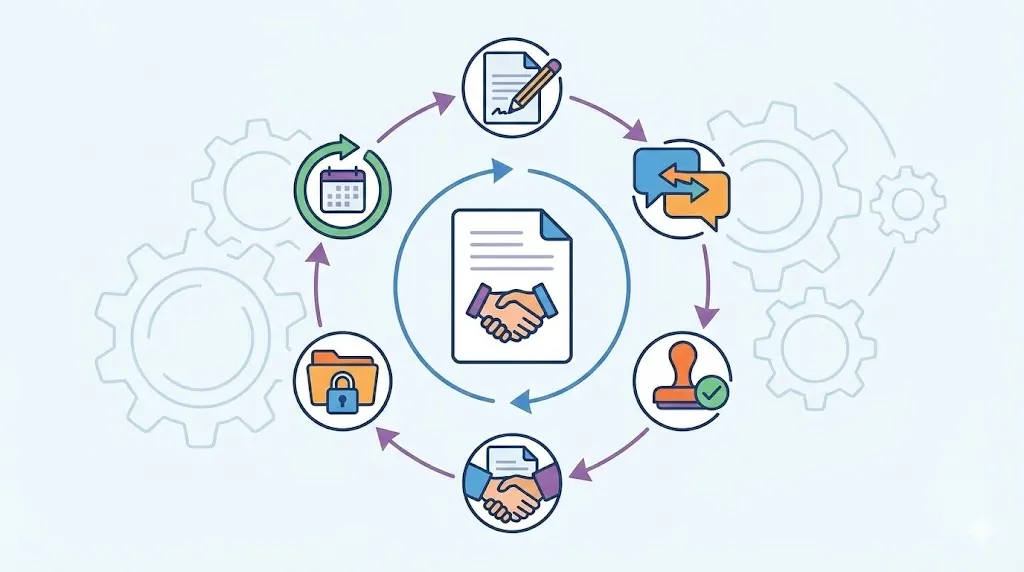
Contract management platforms assist legal teams in adhering to DORA requirements by optimizing contract organization, tracking obligations, and automating compliance workflows. Additionally, this approach also minimizes manual errors and accelerates contract revision processes.
Volody’s platform offers integrated AI-powered contract review, risk assessment, and obligation monitoring functionalities. It consolidates contract repositories with sophisticated search capabilities and version tracking. Automated approval processes and notification systems ensure timely task completion.
These features help legal teams enforce DORA clauses, monitor vendor compliance, and prepare for audits efficiently.
Want to see how CLM technology can simplify your legal workflows? Learn more about Volody's CLM Software.
Related Article: How to Scale Contract Organization for Growing Enterprises
FAQ
What types of organizations must comply with DORA?
In addition, DORA encompasses financial institutions operating within the EU, such as banks, insurers, investment firms, along with their critical ICT service providers. This expansive coverage guarantees uniform operational resilience standards across the financial sector.
How does DORA differ from GDPR?
GDPR focuses on protecting personal data privacy, while DORA targets the operational resilience of ICT systems in financial services. Both laws complement each other but address different risk areas.
What are the consequences of non-compliance with DORA?
Moreover, non-compliance can lead to regulatory fines, reputational damage, and increased vulnerability to cyberattacks. Regulators may also enforce penalties or mandate corrective measures to re establish compliance.
How often must organizations test their digital operational resilience?
DORA requires regular testing, typically at least annually. Tests include vulnerability scans, penetration tests, and scenario-based exercises to validate incident response capabilities.
What role does the board of directors play under DORA?
The board is responsible for approving and overseeing the strategy for ICT operational robustness. They are accountable for ensuring the organization fulfills DORA’s mandates and effectively manages ICT risks.
Also, how should legal teams handle third-party risk management?
Legal teams should include clear risk management, audit, and incident reporting clauses in vendor contracts. Continuous monitoring and exit strategies are essential to manage third-party risks.
What incident reporting timelines does DORA mandate?
Major ICT incidents must be reported to regulators within strict deadlines, often within hours or days. Furthermore, organizations must have processes to detect, classify, and report incidents promptly.
Can DORA compliance be automated?
Many compliance tasks can be enhanced through technology, particularly in contract oversight, risk monitoring, and incident documentation. Automation reduces errors and improves response times.
Does DORA apply to non-EU financial institutions?
DORA covers entities conducting business in the EU or delivering critical ICT services to EU financial organizations. Firms outside the EU servicing EU clients may also be subject to these requirements.
How can legal teams stay updated on DORA developments?
Subscribe to regulatory updates, participate in industry forums, and collaborate with compliance and IT teams. Regular training and knowledge sharing help maintain readiness.
About the Company

Volody AI CLM is an Agentic AI-powered Contract Lifecycle Management platform designed to eliminate manual contracting tasks, automate complex workflows, and deliver actionable insights. As a one-stop shop for all contract activities, it covers drafting, collaboration, negotiation, approvals, e-signature, compliance tracking, and renewals. Built with enterprise-grade security and no-code configuration, it meets the needs of the most complex global organizations. Volody AI CLM also includes AI-driven contract review and risk analysis, helping teams detect issues early and optimize terms. Trusted by Fortune 500 companies, high-growth startups, and government entities, it transforms contracts into strategic, data-driven business assets.




" height="216.72211px" id="FYO0bO80Y" transform="translate(3 6.105)" width="206.073px"/><path d="M 108.174 222 C 88.432 222 70.303 217.239 53.785 207.717 C 37.267 198.196 24.173 185.052 14.504 168.285 C 4.835 151.312 0 132.165 0 110.845 C 0 89.731 4.835 70.792 14.504 54.025 C 24.173 37.052 37.267 23.804 53.785 14.282 C 70.303 4.761 88.432 0 108.174 0 C 128.116 0 146.246 4.761 162.562 14.282 C 179.08 23.804 192.073 37.052 201.541 54.025 C 211.21 70.792 216.044 89.731 216.044 110.845 C 216.044 132.165 211.21 151.312 201.541 168.285 C 192.073 185.052 179.08 198.196 162.562 207.717 C 146.044 217.239 127.915 222 108.174 222 Z M 108.174 183.189 C 120.864 183.189 132.044 180.291 141.713 174.495 C 151.382 168.492 158.936 160.006 164.375 149.035 C 169.814 138.064 172.533 125.334 172.533 110.845 C 172.533 96.355 169.814 83.729 164.375 72.965 C 158.936 61.994 151.382 53.611 141.713 47.815 C 132.044 42.02 120.864 39.122 108.174 39.122 C 95.483 39.122 84.202 42.02 74.332 47.815 C 64.663 53.611 57.109 61.994 51.67 72.965 C 46.231 83.729 43.511 96.355 43.511 110.845 C 43.511 125.334 46.231 138.064 51.67 149.035 C 57.109 160.006 64.663 168.492 74.332 174.495 C 84.202 180.291 95.483 183.189 108.174 183.189 Z" fill="rgba(255, 255, 255, 0.12)" height="222px" id="aa1McFcE9" transform="translate(227.183 3)" width="216.04399999999998px"/><path d="M 42.302 182.257 L 111.799 182.257 L 111.799 216.722 L 0 216.722 L 0 0 L 42.302 0 Z" fill="rgba(255, 255, 255, 0.12)" height="216.72211px" id="yRq4AnrsX" transform="translate(477.721 6.105)" width="111.79899999999998px"/><path d="M 108.174 222 C 88.432 222 70.303 217.239 53.785 207.717 C 37.267 198.196 24.173 185.052 14.504 168.285 C 4.835 151.312 0 132.165 0 110.845 C 0 89.731 4.835 70.792 14.504 54.025 C 24.173 37.052 37.267 23.804 53.785 14.282 C 70.303 4.761 88.432 0 108.174 0 C 128.116 0 146.246 4.761 162.562 14.282 C 179.08 23.804 192.073 37.052 201.541 54.025 C 211.21 70.792 216.045 89.731 216.045 110.845 C 216.045 132.165 211.21 151.312 201.541 168.285 C 192.073 185.052 179.08 198.196 162.562 207.717 C 146.044 217.239 127.915 222 108.174 222 Z M 108.174 183.189 C 120.864 183.189 132.044 180.291 141.713 174.495 C 151.382 168.492 158.936 160.006 164.375 149.035 C 169.814 138.064 172.534 125.334 172.534 110.845 C 172.534 96.355 169.814 83.729 164.375 72.965 C 158.936 61.994 151.382 53.611 141.713 47.815 C 132.044 42.02 120.864 39.122 108.174 39.122 C 95.483 39.122 84.202 42.02 74.332 47.815 C 64.663 53.611 57.108 61.994 51.67 72.965 C 46.231 83.729 43.511 96.355 43.511 110.845 C 43.511 125.334 46.231 138.064 51.67 149.035 C 57.108 160.006 64.663 168.492 74.332 174.495 C 84.202 180.291 95.483 183.189 108.174 183.189 Z" fill="rgba(255, 255, 255, 0.12)" height="222px" id="mo8HQspQ0" transform="translate(609.155 3)" width="216.04500000000007px"/><path d="M 73.727 0 C 95.885 0 115.324 4.45 132.044 13.351 C 148.967 22.252 161.957 34.982 171.027 51.541 C 180.287 67.894 184.917 86.937 184.917 108.671 C 184.917 130.405 180.287 149.449 171.027 165.801 C 161.957 181.947 148.967 194.47 132.044 203.371 C 115.324 212.271 95.885 216.722 73.727 216.722 L 0 216.722 L 0 0 Z M 72.216 179.773 C 94.374 179.773 111.497 173.564 123.583 161.144 C 135.669 148.724 141.713 131.233 141.713 108.671 C 141.713 86.109 135.669 68.515 123.583 55.888 C 111.497 43.055 94.374 36.638 72.216 36.638 L 42.302 36.638 L 42.302 179.773 Z" fill="rgba(255, 255, 255, 0.12)" height="216.72211px" id="I3iXX5Hi_" transform="translate(859.693 6.105)" width="184.91699999999992px"/><path d="M 185.22 0 L 113.91 141.273 L 113.91 216.722 L 71.61 216.722 L 71.61 141.273 L 0 0 L 47.74 0 L 93.06 99.046 L 138.08 0 Z" fill="rgba(255, 255, 255, 0.12)" height="216.72211px" id="nzHyWC0_d" transform="translate(1061.78 6.105)" width="185.22000000000003px"/></svg>)