

AI contract review is most effective when it automates repeatable analysis while preserving lawyer-led judgment. It can identify clauses, compare terms, flag risks, and extract key dates at scale. Lawyers remain responsible for context, commercial impact, and nonstandard language. A disciplined approach combines efficient software checks with clear controls, escalation rules, and human approval.
TL;DR
Automate repeatable review tasks such as clause checks, metadata extraction, playbook comparison, and obligation identification.
Start with high-volume, lower-risk contracts that have clear rules and approved fallback language.
Send unusual terms, high-value deals, and major policy exceptions to lawyers for careful review.
Build control around playbooks, escalation rules, security checks, testing, and human approval.
Measure speed, accuracy, exceptions, adoption, risk outcomes, and business value together.
Contract management software connects AI review with intake, approvals, storage, renewals, and obligations.
Where AI Creates the Most Value in Contract Review
AI contract review works best when the work follows known rules. The system can compare language, find missing terms, and highlight changes. It can also review many agreements without tiring or changing its approach.
This does not transfer legal accountability to software. Lawyers still make decisions about risk, meaning, negotiation, and business impact. AI creates value by giving them better coverage and a faster first review.
High-volume agreements with defined parameters
Routine agreements offer the clearest starting point for contract review automation. They often use standard forms, known clauses, and set approval rules.
Common examples include NDAs, order forms, and routine statements of work. These contracts usually contain repeatable terms, such as confidentiality, payment, service levels, and termination rights.
A legal team can define acceptable wording before using AI. It can also define fallback language for common points of disagreement. The tool then compares each contract against those approved positions.
This approach reduces guesswork during review. It also gives the team a clear way to test results. For example, reviewers can check whether the tool finds every missing confidentiality term.
Purpose-built legal AI tools may also improve review speed. LegalOn reports that attorney-built AI can reduce review time by up to 85% on its cited benchmark. Teams should still test that result against their own contracts and review process.
Consistent review across contract portfolios
Large contract groups often contain the same risks in different forms. Manual review can miss those risks when workloads rise or reviewers use different habits.
AI can apply the same checks across every document. It can compare clauses with templates, playbooks, and past approved language. It can also group similar agreements for faster triage.
This creates a consistent first pass. A junior reviewer and a senior reviewer may still make different judgments. Yet both can start with the same flagged issues and source text.
AI contract analysis also helps teams find patterns across a portfolio. A legal department might discover repeated liability changes from one supplier. It might also find missing data protection terms across older agreements.
These findings support broader legal planning. They can show where templates need updates. They can also reveal training needs for sales, procurement, or contract managers.
Work that should remain lawyer-led
Some contract work depends on facts outside the document. A software license may look acceptable until the business explains its data use. A liability cap may seem standard until a major customer faces a serious service risk.
Lawyers must assess those details. They must also advise stakeholders about negotiation choices and business outcomes. AI can organize the facts, but it cannot own the decision.
A useful decision matrix separates three types of work:
Review type | Suitable AI role | Required human role |
|---|---|---|
Standard clause comparison | Lead the first check | Confirm material exceptions |
Metadata and obligation capture | Extract and organize terms | Validate critical fields |
Suggested fallback language | Offer approved alternatives | Select and approve the response |
Novel commercial terms | Flag and explain language | Lead the full analysis |
Strategic or high-risk agreements | Support document search | Own judgment and negotiation |
This matrix should guide deployment. It should not become a fixed promise for every contract. Teams should adjust it as they learn more about accuracy and risk.
Related articles: Strategic AI in Legal Document Automation
Contract Data Extraction and Obligation Monitoring
AI contract review should produce more than a list of redlines. It should turn contract text into useful data for legal and business teams.
The system can identify parties, dates, payment terms, governing law, and service levels. It can also find renewal rules, notice periods, audit rights, insurance duties, and delivery commitments.
That information can feed a repository, workflow, or reporting system. It can also support alerts before important dates arrive. Human validation remains essential for key fields and unusual wording.
Turning agreements into structured data
Contracts store important facts inside long paragraphs. That format makes search and reporting difficult. AI can find those facts and place them into defined fields.
For example, a system may identify the supplier, customer, effective date, and end date. It may also capture the currency, payment period, and limits on liability.
Metadata extraction supports several downstream tasks. Legal teams can filter agreements by renewal date or governing law. Procurement teams can review payment terms across suppliers.
The same data can support contract risk detection. A team may search for agreements without an audit right. It may also find contracts with unusually short termination notice periods.
Extraction should include the source text. Reviewers need to see where each field came from. They also need a way to correct errors and record the final approved value.
Finding deadlines and continuing obligations
Contracts create work after signature. A supplier may need to provide reports each quarter. A customer may need to give notice before renewal.
AI can identify these duties during review. It can connect them with owners, dates, and reminder rules. That turns a signed agreement into an active work record.
The system should look for both fixed and conditional obligations. A fixed duty might require payment within thirty days. A conditional duty might apply only after a security incident.
Before human validation, AI should extract:
Parties and roles: Find legal names, business units, suppliers, customers, and responsible internal owners. Validate names against trusted records before creating contract links.
Key dates: Capture effective dates, end dates, renewal dates, notice windows, and amendment dates. Check dates against the signed document and related schedules.
Payment terms: Record fees, currencies, payment windows, increases, credits, and late charges. Confirm whether different services use separate payment rules.
Performance duties: Identify service levels, delivery dates, reporting duties, support rules, and acceptance tests. Assign each duty to a clear owner where possible.
Rights and controls: Find audit rights, insurance duties, data duties, termination rights, and change controls. Flag terms that need recurring monitoring after signature.
This checklist gives reviewers a practical validation path. It also helps teams decide which fields matter most. Not every contract needs the same depth of extraction.
Related articles: New AI Regulations Every Legal Team Should Know
Clause Analysis, Playbook Comparison, and Redline Support
Clause analysis sits at the center of AI contract review. The tool compares contract language against approved templates and legal playbooks.
A playbook is a set of review rules and fallback positions. It may say which clauses are acceptable, which need changes, and which require escalation.
Good software should show its reasoning. It should display the source wording, the matched rule, and the suggested action. A black-box recommendation gives lawyers little basis for trust.
Detecting deviations from approved language
AI can spot missing, altered, or nonstandard provisions. It can review limits of liability, indemnities, confidentiality, data protection, and termination terms.
It can also compare related clauses. For example, a contract may contain a broad indemnity but a narrow liability cap. That conflict may matter more than either clause alone.
The system should distinguish small wording changes from material changes. A changed heading may have little impact. A new carve-out from a liability cap may have serious consequences.
Teams should define these differences in their playbooks. They should also include examples of acceptable and unacceptable wording. Examples help the tool and the reviewer follow the same standard.
Surfacing risk and suggesting review actions
An AI tool can flag risk, summarize the issue, and suggest next steps. It may recommend accepting the clause, proposing fallback language, or escalating the matter.
Risk labels need clear meaning. A “high” flag should connect to a defined policy or business impact. Otherwise, reviewers may treat every warning as equally serious.
Context also changes severity. A broad audit right may be acceptable for a strategic customer. The same right may create concern for a small supplier with limited access.
Suggested redlines should use approved plain language where possible. They should not invent a new legal position without review. Lawyers must assess whether the suggested change fits the deal.
Supporting faster lawyer decisions
A useful tool narrows attention to the issues that need judgment. It does not force lawyers to search every page for common clauses.
The review screen should show a focused issue summary. It should include the clause, the concern, the policy reference, and any proposed response.
This supports faster decisions during negotiation. A lawyer can approve a standard fallback with confidence. The lawyer can also spend more time on unusual terms and commercial tradeoffs.
AI clause review works best inside the lawyer’s normal workflow. Microsoft Word integration can help reviewers work where drafting already happens. Links to contract records can provide context without repeated file searches.
Preserving the reasoning behind recommendations
Explainability means showing how the system reached a result. In contract review, that includes the source text and the playbook rule.
The tool should show confidence indicators when they are available. A low-confidence match should receive closer review. Confidence should never replace legal judgment.
Audit trails also matter. The record should show who reviewed the issue, what they changed, and which version they approved. This history helps during later disputes, audits, and playbook updates.
A sound review sequence looks like this:
Detect a clause or missing provision.
Show the exact source text and document location.
Compare the text with the relevant playbook rule.
Explain the deviation and likely review concern.
Suggest an approved action or fallback.
Route the issue to the assigned lawyer.
Record the lawyer’s approval, change, or escalation.
This sequence makes contract review automation easier to defend. It also gives teams evidence when they improve their rules.
Related articles: How to Improve Healthcare Contract Compliance With AI
Risk Boundaries and Human Review in AI Contract Automation
AI can process language quickly, but it does not understand every business setting. Accuracy can decline with poor formatting, complex drafting, conflicting provisions, or missing context.
A tool may identify a clause correctly and still misjudge its effect. Legal teams need controls that match the risk of each decision.
Clauses that need contextual judgment
Some provisions require facts outside the contract. M&A agreements, joint ventures, and change-of-control clauses often fit this group.
Material adverse effect definitions can also carry unusual commercial meaning. Complex indemnities may depend on insurance, fault, notice, or claim limits.
Liability structures often spread risk across several clauses. A single cap may not explain exclusions, baskets, sub-limits, or special damages. Lawyers must read the full structure before advising.
AI can assist with search and comparison in these matters. It should not make the final call. The team should route such clauses to lawyers with suitable experience.
Situations that require escalation
Escalation should depend on more than a risk label. Deal value, business importance, jurisdiction, and policy deviation all matter.
A high-value customer agreement may need senior review even when the clauses look familiar. A routine agreement may need escalation when it uses a new jurisdiction or unusual data rule.
Teams should also escalate material regulatory exposure. This includes sensitive personal data, sector rules, cross-border transfers, and major service commitments.
Escalation rules should appear inside the workflow. Reviewers should not need to remember them from training. The system should explain why an issue moved to a specialist.
Human review as a control, not a formality
Human review works only when someone owns the decision. Each workflow should name the reviewer, the approval level, and the required evidence.
Critical fields need direct validation. This includes renewal dates, liability limits, payment terms, and termination rights. A reviewer should confirm the source before those fields drive business action.
Teams should record how lawyers handle AI recommendations. They may accept, edit, reject, or escalate a suggestion. These choices create useful feedback for later testing.
An escalation framework should consider:
Clause complexity and interaction with other provisions.
Business impact if the term is wrong or missed.
AI confidence and document quality.
Deviation from approved policy or fallback language.
Jurisdiction, regulatory exposure, and counterparty importance.
This framework keeps automation within safe boundaries. It also helps leaders explain why some work remains manual.
Related articles: How Does AI Limitations Impacting Contract Management?
Building a Reliable AI Contract Review Workflow
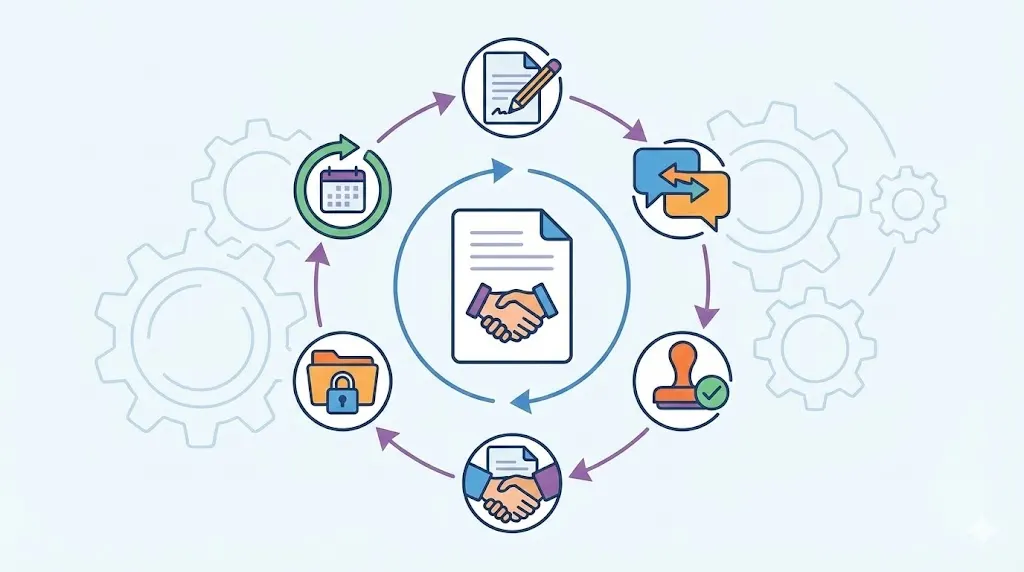
A reliable workflow connects each review step. Intake, document processing, analysis, lawyer review, approval, and storage should work as one process.
An isolated AI feature may find useful issues. Yet it can still create extra work if reviewers must copy results between systems.
Start with a narrow, measurable use case
Choose one contract type, task, or business group first. The best starting point has steady volume, repeatable terms, and a clear review standard.
A team might begin with vendor NDAs in one region. Another team might start with clause comparison for standard order forms.
Set a baseline before deployment. Record current review time, common issues, reviewer effort, and escalation rates. Without a baseline, teams cannot judge improvement.
The first use case should also have clear limits. Do not include every contract type in the pilot. Keep unusual agreements outside the first workflow.
Configure playbooks and approval thresholds
A playbook should define the approved position for each major issue. It should also include fallback language, escalation triggers, and approval owners.
Rules need plain wording. “Escalate material changes” is too vague by itself. A better rule names the affected clause, the threshold, and the required reviewer.
Approval thresholds can differ by contract type. A procurement agreement may use a standard legal approval path. A strategic partnership may need business and executive approval.
Playbooks also need version control. Teams should know which rules applied to each review. Old records should not change when new policies arrive.
Route exceptions to the right reviewer
Not every exception needs the same specialist. A data protection issue may go to privacy counsel. A pricing issue may go to procurement or finance.
Risk-based triage helps each matter reach the right person. Routine agreements can move through a short path. Complex agreements can receive deeper review.
The workflow should preserve the reason for each route. A reviewer should see whether the issue came from a policy deviation, low confidence, or business threshold.
Clear routing reduces delays. It also prevents senior lawyers from reviewing routine points that others can handle safely.
Test outputs before expanding automation
Testing should use real examples from the target contract group. Include clean documents, difficult documents, and review agreements with known issues.
Teams should check false positives and false negatives. A false positive creates extra work. A false negative can leave a material issue unseen.
Testing should also cover scanned documents and image-based PDFs. Optical character recognition, or OCR, turns images into searchable text. Poor scans can still create errors.
A workflow map should cover:
Intake and document classification.
Text capture, OCR, and metadata extraction.
Clause comparison against the approved playbook.
Risk triage and exception routing.
Lawyer validation and redline approval.
Final approval, signature, and record storage.
Review performance after launch. Contract language changes over time. So do policies, business needs, and legal requirements.
Related articles: Unlock Contract Data Extraction for Smarter AI Insights
Governance, Security, and Quality Controls
Legal teams handle confidential and often sensitive information. They need strong controls before sending agreements to an AI service.
Governance covers more than access rights. It also covers data use, vendor behavior, retention, audit records, and model quality.
Protecting confidential contract information
Access should follow user roles and business need. A sales user may need contract status, but not every negotiation note.
Encryption should protect data during transfer and storage. Tenant separation should prevent one customer’s data from reaching another customer.
Retention settings should match legal and business rules. Teams should know when documents, prompts, outputs, and logs are deleted.
Data residency may matter for EU agreements and other regulated work. Legal teams should confirm where data is stored and processed. They should also check the vendor’s GDPR support.
A vendor should clearly state whether customer contracts train its models. Teams should avoid services that use confidential contract data without clear permission and controls.
Maintaining review quality over time
Quality can decline when templates change. It can also decline when new regulations or products create unfamiliar contract language.
Teams should sample completed reviews on a regular schedule. Senior reviewers can compare AI results with expected findings.
Reviewer feedback should feed controlled playbook updates. One incorrect suggestion should not trigger an untested rule change. Updates need review, approval, and version records.
Error tracking should separate missed issues from unnecessary warnings. Both affect trust, but they need different fixes.
A governance checklist should cover:
Security: Confirm encryption, tenant separation, access controls, and vendor testing. Review these controls before launch and during renewal.
Privacy: Check data use, retention, residency, GDPR support, and deletion rules. Confirm that contract data is not used for model training without permission you can use it legal workflow for contract.
Access control: Set role-based permissions for documents, prompts, findings, and approvals. Remove access quickly when roles change.
Auditability: Record source text, recommendations, reviewer actions, approvals, and playbook versions. Keep those records available for later review.
Model behavior: Test accuracy, confidence signals, OCR results, and response consistency. Track both missed issues and unnecessary flags.
Incident response: Define reporting, investigation, containment, and notification steps. Test the response process before a serious event occurs.
These controls support trust without removing human oversight. They also help procurement teams ask better vendor questions.
Related articles: Effectively use AI in Contract Drafting
Measuring Automation Without Losing Legal Judgment
Speed alone cannot prove that AI contract review works. A fast system may create more risk if it misses important clauses or raises too many weak alerts.
Measurement should connect legal effort with business results. It should also show whether lawyers trust and use the workflow.
Operational performance indicators
Track review cycle time from intake to approval. Compare both average time and turnaround consistency.
Review volume can show whether the team handles more work without adding staff. Backlog size can show whether old work is clearing.
Teams should also track the share of agreements using the standard workflow. A low share may point to poor routing, weak adoption, or limited contract coverage.
These measures should compare similar contract groups. A complex partnership should not be measured against a routine NDA.
Accuracy and escalation indicators
Extraction accuracy matters for dates, payment terms, parties, and obligations. Clause detection accuracy matters for both present and missing provisions.
Track missed issues and unnecessary flags separately. Missed issues threaten risk control. Too many unnecessary flags slow lawyers and weaken confidence.
Override rates can show where the playbook or model needs work. A high override rate may reflect poor suggestions, poor rules, or unusual contracts.
Escalation quality matters too. Specialists should receive meaningful issues, not a large pile of weak alerts.
Business and compliance outcomes
Legal teams can measure faster deal execution and fewer stalled approvals. They can also track missed renewals, late notices, and unassigned obligations.
Policy adherence provides another useful measure. The team can check whether approved fallback language appears more often after deployment.
Contract Reporting should become easier when contract data is structured. Leaders can review exposure by supplier, region, clause type, or renewal period.
A useful scorecard links each measure to ownership:
Metric | Data source | Review owner | Target | Frequency |
|---|---|---|---|---|
Review cycle time | Workflow records | Legal operations | Set after baseline | Weekly |
Extraction accuracy | Quality samples | Contract review lead | Set by field type | Monthly |
Missed issues | Lawyer audit results | General counsel delegate | Reduce over time | Monthly |
Exception rate | Approval workflow | Legal operations | Monitor by contract type | Weekly |
User adoption | System activity logs | Legal operations | Increase by team | Monthly |
Missed renewals | Obligation records | Contract owner | Prevent critical misses | Quarterly |
Targets should reflect risk, not speed alone. Leaders should review the scorecard with lawyers and business users.
Related articles: Maximizing AI ROI in Legal Operations
Why Contract Management Software Matters
AI review produces useful findings, but those findings need a place to go. Contract management software connects review with intake, approvals, storage, obligations, renewals, and audit records.
It gives teams an operational layer around contract review automation. That layer helps people assign work, track exceptions, and act on important dates.
Connect review with action: Link AI findings to clause libraries, approval routes, contract records, and obligation workflows. This prevents useful findings from staying inside one document.
Give teams shared visibility: Show exceptions, deadlines, owners, approvals, and agreement status in one place. Business users can see progress without requesting repeated updates.
Support controlled governance: Use permissions, audit trails, reports, and workflow rules across the contract record. Legal teams can review decisions and prove process control.
Extend value after signature: Track renewals, notices, deliverables, payment milestones, and compliance duties. This keeps automation useful beyond pre-signature review.
Volody's CLM Software supports AI contract review through a central contract repository, obligation management, and approval workflow automation. It can store agreements, route approvals, and track key commitments after signature.
For example, a supplier agreement can move from AI review to approval, storage, and renewal reminders in one connected process.
Want to see how contract management software can simplify your legal workflows? Check out Volody's CLM Software.
FAQ
Which contract reviews should you automate first?
Start with high-volume, low-complexity agreements such as NDAs, standard order forms, and routine statements of work. These contracts usually have clear playbooks, repeatable clauses, and measurable review outcomes. Automate extraction, comparison, and first-pass issue spotting first. Route unusual language, high-value deals, and material exceptions to lawyers.
Can you automate contract review without a CLM?
Yes, legal teams can use a dedicated AI contract review tool without adopting a full CLM platform. The tool can analyze documents, compare clauses, suggest redlines, and extract key terms. A CLM can later connect review with intake, approvals, storage, obligations, renewals, permissions, and audit trails.
Can contract review automation handle scanned agreements?
It can when the system supports optical character recognition for scanned or image-based PDFs. OCR converts document images into machine-readable text before analysis begins. Teams should validate results carefully because poor scans, handwritten notes, and unusual layouts can cause recognition errors. Reviewers should check important fields against the original file.
What is AI for contract review?
AI for contract review uses language tools to analyze agreements and identify clauses, gaps, deviations, obligations, and possible risks. It can compare language with templates or playbooks, summarize findings, and suggest redlines or fallback positions. Lawyers remain responsible for context, approval, negotiation strategy, and consequential decisions.
What evaluation criteria matter most when choosing AI contract analysis software?
Evaluate clause accuracy, explainability, playbook support, redline quality, OCR capability, security, privacy, and data residency. Confirm whether the vendor excludes contract data from model training. Assess integrations with Microsoft Word, CLM platforms, and existing repositories. Test representative agreements for false positives, missed issues, and user adoption.
Can AI-generated redlines be trusted without lawyer review?
No. AI-generated redlines should remain recommendations rather than final legal positions. Validate the source language, assess commercial consequences, and confirm each change against the approved playbook. Direct unusual terms and material exceptions to qualified counsel, then approve the deployment workflow with clear ownership and escalation rules.
About the Company

Volody AI CLM is an Agentic AI-powered Contract Lifecycle Management platform designed to eliminate manual contracting tasks, automate complex workflows, and deliver actionable insights. As a one-stop shop for all contract activities, it covers drafting, collaboration, negotiation, approvals, e-signature, compliance tracking, and renewals. Built with enterprise-grade security and no-code configuration, it meets the needs of the most complex global organizations. Volody AI CLM also includes AI-driven contract review and risk analysis, helping teams detect issues early and optimize terms. Trusted by Fortune 500 companies, high-growth startups, and government entities, it transforms contracts into strategic, data-driven business assets.




" height="216.72211px" id="FYO0bO80Y" transform="translate(3 6.105)" width="206.073px"/><path d="M 108.174 222 C 88.432 222 70.303 217.239 53.785 207.717 C 37.267 198.196 24.173 185.052 14.504 168.285 C 4.835 151.312 0 132.165 0 110.845 C 0 89.731 4.835 70.792 14.504 54.025 C 24.173 37.052 37.267 23.804 53.785 14.282 C 70.303 4.761 88.432 0 108.174 0 C 128.116 0 146.246 4.761 162.562 14.282 C 179.08 23.804 192.073 37.052 201.541 54.025 C 211.21 70.792 216.044 89.731 216.044 110.845 C 216.044 132.165 211.21 151.312 201.541 168.285 C 192.073 185.052 179.08 198.196 162.562 207.717 C 146.044 217.239 127.915 222 108.174 222 Z M 108.174 183.189 C 120.864 183.189 132.044 180.291 141.713 174.495 C 151.382 168.492 158.936 160.006 164.375 149.035 C 169.814 138.064 172.533 125.334 172.533 110.845 C 172.533 96.355 169.814 83.729 164.375 72.965 C 158.936 61.994 151.382 53.611 141.713 47.815 C 132.044 42.02 120.864 39.122 108.174 39.122 C 95.483 39.122 84.202 42.02 74.332 47.815 C 64.663 53.611 57.109 61.994 51.67 72.965 C 46.231 83.729 43.511 96.355 43.511 110.845 C 43.511 125.334 46.231 138.064 51.67 149.035 C 57.109 160.006 64.663 168.492 74.332 174.495 C 84.202 180.291 95.483 183.189 108.174 183.189 Z" fill="rgba(255, 255, 255, 0.12)" height="222px" id="aa1McFcE9" transform="translate(227.183 3)" width="216.04399999999998px"/><path d="M 42.302 182.257 L 111.799 182.257 L 111.799 216.722 L 0 216.722 L 0 0 L 42.302 0 Z" fill="rgba(255, 255, 255, 0.12)" height="216.72211px" id="yRq4AnrsX" transform="translate(477.721 6.105)" width="111.79899999999998px"/><path d="M 108.174 222 C 88.432 222 70.303 217.239 53.785 207.717 C 37.267 198.196 24.173 185.052 14.504 168.285 C 4.835 151.312 0 132.165 0 110.845 C 0 89.731 4.835 70.792 14.504 54.025 C 24.173 37.052 37.267 23.804 53.785 14.282 C 70.303 4.761 88.432 0 108.174 0 C 128.116 0 146.246 4.761 162.562 14.282 C 179.08 23.804 192.073 37.052 201.541 54.025 C 211.21 70.792 216.045 89.731 216.045 110.845 C 216.045 132.165 211.21 151.312 201.541 168.285 C 192.073 185.052 179.08 198.196 162.562 207.717 C 146.044 217.239 127.915 222 108.174 222 Z M 108.174 183.189 C 120.864 183.189 132.044 180.291 141.713 174.495 C 151.382 168.492 158.936 160.006 164.375 149.035 C 169.814 138.064 172.534 125.334 172.534 110.845 C 172.534 96.355 169.814 83.729 164.375 72.965 C 158.936 61.994 151.382 53.611 141.713 47.815 C 132.044 42.02 120.864 39.122 108.174 39.122 C 95.483 39.122 84.202 42.02 74.332 47.815 C 64.663 53.611 57.108 61.994 51.67 72.965 C 46.231 83.729 43.511 96.355 43.511 110.845 C 43.511 125.334 46.231 138.064 51.67 149.035 C 57.108 160.006 64.663 168.492 74.332 174.495 C 84.202 180.291 95.483 183.189 108.174 183.189 Z" fill="rgba(255, 255, 255, 0.12)" height="222px" id="mo8HQspQ0" transform="translate(609.155 3)" width="216.04500000000007px"/><path d="M 73.727 0 C 95.885 0 115.324 4.45 132.044 13.351 C 148.967 22.252 161.957 34.982 171.027 51.541 C 180.287 67.894 184.917 86.937 184.917 108.671 C 184.917 130.405 180.287 149.449 171.027 165.801 C 161.957 181.947 148.967 194.47 132.044 203.371 C 115.324 212.271 95.885 216.722 73.727 216.722 L 0 216.722 L 0 0 Z M 72.216 179.773 C 94.374 179.773 111.497 173.564 123.583 161.144 C 135.669 148.724 141.713 131.233 141.713 108.671 C 141.713 86.109 135.669 68.515 123.583 55.888 C 111.497 43.055 94.374 36.638 72.216 36.638 L 42.302 36.638 L 42.302 179.773 Z" fill="rgba(255, 255, 255, 0.12)" height="216.72211px" id="I3iXX5Hi_" transform="translate(859.693 6.105)" width="184.91699999999992px"/><path d="M 185.22 0 L 113.91 141.273 L 113.91 216.722 L 71.61 216.722 L 71.61 141.273 L 0 0 L 47.74 0 L 93.06 99.046 L 138.08 0 Z" fill="rgba(255, 255, 255, 0.12)" height="216.72211px" id="nzHyWC0_d" transform="translate(1061.78 6.105)" width="185.22000000000003px"/></svg>)