

Imagine an enterprise legal team tracking a cross-border procurement deal through scattered desktop folders and manual email threads. An unapproved liability cap slips through an unmonitored redline draft, leaving the organization exposed during a regulatory audit. Modern corporate operations require complete structural oversight to prevent these compliance breakdowns across high-stakes commercial agreements. Effective contract lifecycle management creates an enterprise framework that controls agreement risk from initial request through post-execution oversight. This comprehensive guide examines how structured workflows protect organizational assets while maintaining efficient contract execution across every business department.
Commercial contracts form the operational backbone of every corporate entity, governing revenue streams, vendor relationships, and statutory compliance. Growth forces organizations to process hundreds of complex agreements simultaneously across disparate operational teams. What happens when manual review methods fail to keep pace with expanding regulatory requirements? Legal departments face increasing pressure to maintain strict governance standards while supporting enterprise growth goals. Establishing structured governance protocols transforms contract management from a reactive administrative burden into a strategic risk control center.
TL;DR
Modern corporate operations rely on commercial contracts to govern revenue streams, vendor relationships, and regulatory compliance. Manual management through fragmented email threads and disconnected storage creates severe compliance risks, costing organizations up to 9 percent of annual revenues in unmonitored liability and missed deadlines. Contract Lifecycle Management (CLM) replaces these manual inefficiencies with an end-to-end framework spanning seven core stages: intake, drafting, negotiation, multi-level approvals, e-signature execution, repository storage, and post-execution obligation tracking. By implementing controlled clause libraries, dynamic routing, and automated milestone tracking, enterprises reduce compliance risk exposure by 50 percent and cut total contract cycle times by up to 80 percent. Platforms like Volody deliver this operational oversight by providing centralized intake, immutable audit logs, and continuous tracking. Ultimately, adopting a structured CLM workflow transforms contract management from a reactive administrative burden into a strategic risk control center.
What Is Contract Lifecycle Management?
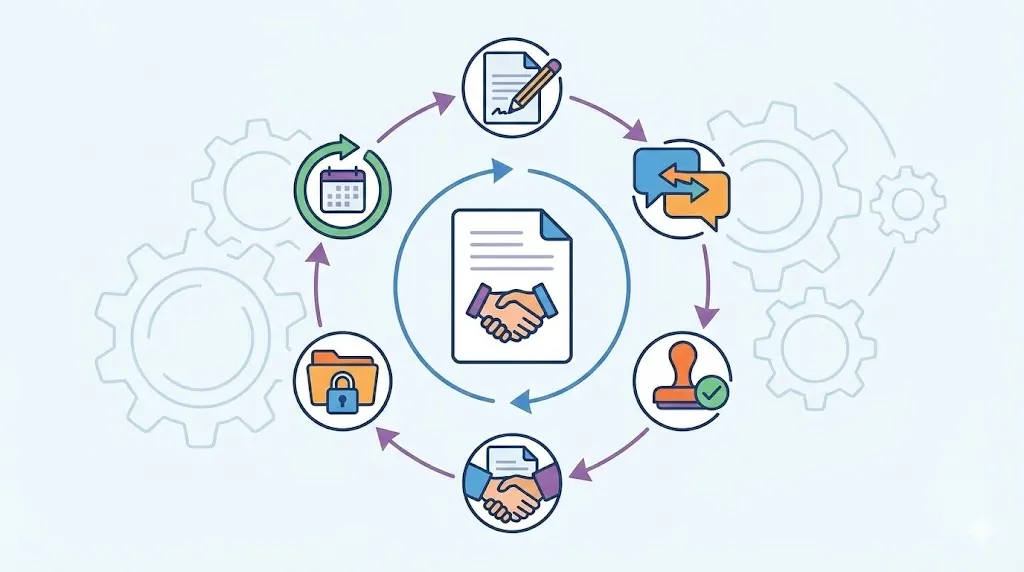
Contract lifecycle management is an enterprise governance framework that automates and controls agreements across seven distinct stages: intake, drafting, negotiation, approval, execution, repository storage, and post-execution obligation tracking. It replaces fragmented workflows with audit-ready processes to minimize operational risk.
Contract lifecycle management defines the end-to-end framework used by organizations to govern agreements from request to renewal. It establishes systemic oversight over contract creation, negotiation, risk assessment, and obligation enforcement across all business units. Enterprise operations rely on structured contract management to maintain regulatory compliance and control contractual liabilities. What makes a structured lifecycle approach essential for modern risk management? It creates a single source of truth that aligns legal standards with operational execution.
Related Article: Top 10 Contract Management Software in India (2026)
Why Traditional Contract Management Fails
Traditional contract management relies on manual processes, legacy spreadsheets, and decentralized file storage. These disconnected systems create blind spots that prevent legal teams from tracking clause modifications and approval bottlenecks. Procurement teams often execute agreements with outdated terms because central repositories lack automated version control. According to research from World Commerce & Contracting, poor contract management practices cost companies up to 9 percent of their annual revenues. Unmonitored obligations lead to missed renewal deadlines, unauthorized spending, and severe compliance penalties.
Key Enterprise Objectives of CLM
Enterprise contract lifecycle management centers on three strategic imperatives: operational visibility, risk mitigation, and compliance enforcement. Modern governance frameworks require full transparency into audit trails, clause variance, and approval chains. Automated workflows route non-standard language directly to specialized legal counsel to prevent unauthorized commitments. Organizations implementing structured lifecycle controls reduce contract turnaround times while enforcing strict compliance standards. This systematic control ensures that commercial agreements align with corporate risk thresholds and statutory guidelines.
Key pillars of modern contract governance include:
Operational Visibility: Standardizing data tracking across all active contracts and historical archives.
Risk Mitigation: Enforcing pre-approved clause templates to prevent liability exposure.
Compliance Enforcement: Maintaining complete audit logs for regulatory and internal governance audits.
Related Article: Unlocking Efficiency Through Contract Lifecycle Management
The 7 Core Stages of Contract Lifecycles
Managing enterprise agreements across complex business operations requires strict adherence to defined sequential phases. Organizations achieve legal consistency when every contract moves through the key stages of contract lifecycle management without skipping governance checks. Skipping a single compliance review during intake or drafting introduces unaccounted operational risks into the business ecosystem. A structured framework standardizes these transitions, establishing clear accountability for business teams and legal counsel alike.
Stage 1: Intake and Request Governance
The lifecycle begins when a commercial team initiates a request for a new agreement or vendor partnership. Standardized intake forms capture essential metadata such as transaction value, counterparty details, and governing jurisdiction upfront. Request forms prevent incomplete submissions from reaching internal legal counsel and slowing down initial triage. How do standardized intake portals strengthen enterprise risk governance? They ensure that legal teams evaluate risk exposure before drafting begins, preventing unauthorized commitments.
Stage 2: Standardized Authoring and Drafting
Contract drafting relies on controlled clause libraries and pre-approved agreement templates. Legal teams establish approved language for standard terms including indemnity limitations, confidentiality scopes, and termination clauses. Authoring within standardized contract templates for compliance eliminates unauthorized revisions during early agreement creation. Business units select pre-approved clause variations directly from master templates, maintaining compliance while reducing drafting turnaround.
Stage 3: Structured Redlining Negotiation
Negotiation brings external counterparties into the contract review process to align commercial and legal terms. Structured redlining automation tracks all clause modifications in a secure environment with complete version history. Counterparty revisions automatically trigger alerts when proposed edits exceed pre-established risk thresholds or standard language bounds. Legal teams review modified fallback positions quickly, preserving negotiation integrity without creating administrative bottlenecks.
Stage 4: Multi-Level Approval Workflows
Once negotiation reaches consensus, agreements move through defined internal sign-off chains. Conditional approval rules route contracts based on contract value, liability thresholds, or non-standard provisions to appropriate executives. Finance, risk management, and executive leaders review the exact terms within a single unified thread. What prevents approval bottlenecks during high-volume contracting periods? Automated routing notifications enforce defined review response deadlines and escalate stalled requests automatically.
Stage 5: E-Signature and Final Execution
Final approval triggers the contract execution phase, binding both parties to agreed obligations and terms. Electronic signature integration secures legal execution through cryptographic verification and audit logs under standards like the ESIGN Act. Digital execution removes paper printing delays and eliminates lost physical document risks. Organizations lock executed agreements immediately upon signature completion to preserve contract integrity and prevent post-execution tampering.
Stage 6: Centralized Repository Management
Executed contracts transfer automatically into a secure contract repository for long-term storage and access control. Advanced metadata tagging categorizes agreements by contract type, renewal date, counterparty name, and risk level. Structured repository storage eliminates isolated departmental storage drives and unmonitored desktop files across enterprise teams. Secure role-based access permissions protect sensitive financial terms while allowing authorized stakeholders instant access during audit reviews.
Stage 7: Obligation and Renewal Tracking
The contract lifecycle continues long past final execution through active post-execution tracking and governance. Automated obligation management tracks performance milestones, SLA deliverables, payment schedules, and notice windows for auto-renewals. According to World Commerce & Contracting, effective post-execution oversight recovers substantial value lost through unmonitored contractual leakage. Systematic tracking alerts compliance teams months before expiration dates, giving leadership adequate time to renegotiate or terminate terms.
Related Article: How to Choose the Right CLM Software: A Practical Guide
Key Bottlenecks in Enterprise Governance
Moving from the sequential stages of agreement execution to operational realities, enterprise legal teams frequently encounter systemic friction points that compromise governance. Uncoordinated review channels and weak document tracking create severe structural vulnerabilities across business operations.
How Fragmented Reviews Increase Legal Risk
Uncoordinated contract evaluation across siloed departments creates severe structural exposure for expanding enterprises. Procurement, finance, and legal teams often review agreement drafts concurrently without centralized oversight. This isolated handling leads to conflicting edits, overlooked liability limits, and unauthorized commitments. How do fragmented review channels expose organizations to financial loss? They allow non-compliant terms to bypass primary governance checks when reviewers assume another department validated the language.
Manual routing through email threads increases the probability of processing outdated agreement versions. Decentralized communication channels prevent legal counsel from verifying whether counterparties accepted revised compliance conditions. Industry studies show that poor document control causes administrative delay and increases contract dispute risks. Corporate governance breaks down when legal executives lose visibility over active negotiations across global operational units. Establishing legal workflow automation removes these communication gaps by centralizing review activities inside controlled operational channels.
Managing Audit Trail and Version Control
Maintaining verifiable record integrity requires strict oversight of all contract amendments and counterparty redlines. File copies saved across individual desktops make original contract history nearly impossible to reconstruct during regulatory inquiries. Regulatory bodies like the Securities and Exchange Commission demand clear historical records showing who approved specific policy exceptions. Lack of systematic version tracking forces internal legal teams to spend hours manually comparing document drafts line by line. Implementing contract risk management protocols ensures that every single modification remains recorded within an immutable digital log.
Governance Friction | Primary Root Cause | Enterprise Risk Impact |
|---|---|---|
Version Confusion | Email-based draft sharing | Execution of outdated terms and invalid indemnities |
Unregulated Fallbacks | Missing clause guardrails | Increased liability exposure during counterparty disputes |
Untracked Sign-offs | Manual manager approvals | Regulatory non-compliance and extended review delays |
Related Article: One CLM System, Greater Enterprise Value
Key Strategic Benefits of Legal Automation
Beyond eliminating operational friction, legal workflow automation provides strategic control over contract risk. Centralizing agreement workflows allows corporate compliance teams to enforce consistent policies across global business divisions. Automated guardrails mandate that non-standard risk terms receive approval from authorized executives before signing. Standardized workflows remove human oversight errors from routine agreement reviews. According to research from Gartner, organizations with modern legal technology reduce corporate compliance risk exposure by 50 percent.
Strengthening Compliance and Governance
Automated contract systems establish strict governance boundaries around agreement drafting and execution. Standardized clause engines prevent internal teams from inserting unapproved liability limits or customized indemnities. What drives long-term governance stability in expanding commercial enterprises? Immutable audit logs provide complete proof of compliance during statutory regulatory reviews. Organizations maintain audit readiness under frameworks like SOC 2 and ISO 27001 without gathering physical paper records.
Accelerating Review Cycles and Execution
Operational speed increases when legal teams eliminate manual handoffs and administrative triage. Automated intake forms route contracts directly to specialized reviewers based on contract value and clause conditions. Parallel review workflows allow legal, finance, and procurement teams to evaluate agreements simultaneously. According to data from World Commerce & Contracting, automated contract workflows reduce total agreement cycle times by up to 80 percent. Faster turnaround times allow commercial operations to secure revenue opportunities without compromising enterprise risk controls.
Implementing CLM Across the Organization
Moving from legal automation benefits to practical deployment, enterprise implementation requires structured planning and clear operational milestones. Organization-wide adoption succeeds when risk managers align contract software capabilities with established business processes. In-house legal teams often face resistance when introducing automated review requirements across regional procurement groups. Strategic deployment minimizes operational friction by establishing baseline metrics and clear administrative authority early. Establishing contract lifecycle management best practices for in-house legal operations ensures reliable organizational integration.
Conducting a Comprehensive Workflow Audit
Enterprise deployment begins with a thorough evaluation of existing agreement processing channels and approval bottlenecks. Compliance officers must identify every unmonitored repository, desktop folder, and disconnected communication loop across all departments. How do leadership teams quantify baseline contract performance prior to software configuration? Leaders analyze historical turnaround metrics, clause deviation frequency, and regulatory audit findings across previous fiscal quarters. Documenting these operational gaps helps teams configure an automated contract lifecycle management workflow setup that addresses specific organizational risks.
Mapping internal review chains reveals specific operational handoffs where approvals stall or terms change without legal consent. Procurement workflows often require specific thresholds for financial approvals based on contract size and vendor categorization. Audit findings allow administrators to construct clear legal workflow automation rules inside central review systems. Clear routing parameters prevent unauthorized signature requests and ensure proper authority alignment across global operations.
Building Standardized Template Libraries
Centralizing contract authoring requires constructing approved clause libraries and standardized agreement templates for enterprise business units. Legal counsel defines standard terms for risk liability, data protection, and dispute jurisdiction across common agreement categories. Business teams select pre-approved clause options directly during intake, reducing initial drafting time while maintaining full compliance. Standardized templates eliminate unauthorized clause edits and ensure consistent regulatory alignment across all commercial deals. This structured authoring model forms a crucial layer for ensuring regulatory compliance with contract automation across international entities.
Related Article: Preparing for Successful CLM Implementation: Are You Ready?
Volody: Enterprise Contract Management
Building an audit-ready contract framework requires specialized legal technology designed for complex risk controls. Volody provides an enterprise contract lifecycle management platform that unifies agreement workflows across business departments. The system centralizes intake requests, standardizes template selection, and automates multi-tiered executive sign-offs in real time. How do corporate risk teams verify policy compliance across international operating units? Volody generates immutable audit trails for every redline edit, approval timestamp, and executed agreement.
Modern enterprises rely on structured contract intelligence to eliminate operational bottlenecks and maintain statutory compliance. Volody connects agreement data directly to financial systems and operational platforms for continuous obligation tracking. In-house teams gain full visibility into active renewal windows, milestone deliverables, and vendor performance metrics. Automated alerts prevent unmonitored contract renewals and protect organizations from unexpected liability exposure. Request a demonstration with Volody today to establish complete operational oversight across all corporate agreements.
Frequently Asked Questions
What is the primary function of CLM software?
CLM software centralizes contract creation, negotiation, execution, and obligation tracking into an automated system. It provides legal and operational teams with complete visibility over agreement workflows, reduces turnaround times, and enforces strict compliance guardrails across the organization.
How does CLM improve regulatory compliance?
CLM enforces standard clause templates and pre-approved risk thresholds during drafting. It creates immutable audit logs of all redlines, approvals, and signatures. This ensures complete transparency and record integrity during statutory audits under frameworks like SOC 2 and ISO 27001.
What is the difference between ERP and CLM?
ERP systems handle general enterprise business processes, resource planning, and financial transactions. CLM platforms specialize in legal agreement governance, clause redlining, conditional approval workflows, and post-execution obligation tracking that standard ERP tools cannot execute.
How does post-execution tracking mitigate risk?
Post-execution tracking monitors contractual performance milestones, SLA deliverables, and auto-renewal notice windows in real time. Automated alerts inform risk managers months prior to expiration dates, preventing unmonitored financial commitments and enabling timely renegotiation or termination.
Can legal teams maintain governance control with automated CLM?
Yes, automated CLM empowers legal teams to establish role-based access rules and automated routing parameters. Non-standard terms automatically escalate to designated legal authorities, ensuring that business units execute agreements strictly within corporate risk tolerances without slowing down operations.
About the Company

Volody AI CLM is an Agentic AI-powered Contract Lifecycle Management platform designed to eliminate manual contracting tasks, automate complex workflows, and deliver actionable insights. As a one-stop shop for all contract activities, it covers drafting, collaboration, negotiation, approvals, e-signature, compliance tracking, and renewals. Built with enterprise-grade security and no-code configuration, it meets the needs of the most complex global organizations. Volody AI CLM also includes AI-driven contract review and risk analysis, helping teams detect issues early and optimize terms. Trusted by Fortune 500 companies, high-growth startups, and government entities, it transforms contracts into strategic, data-driven business assets.





" height="216.72211px" id="FYO0bO80Y" transform="translate(3 6.105)" width="206.073px"/><path d="M 108.174 222 C 88.432 222 70.303 217.239 53.785 207.717 C 37.267 198.196 24.173 185.052 14.504 168.285 C 4.835 151.312 0 132.165 0 110.845 C 0 89.731 4.835 70.792 14.504 54.025 C 24.173 37.052 37.267 23.804 53.785 14.282 C 70.303 4.761 88.432 0 108.174 0 C 128.116 0 146.246 4.761 162.562 14.282 C 179.08 23.804 192.073 37.052 201.541 54.025 C 211.21 70.792 216.044 89.731 216.044 110.845 C 216.044 132.165 211.21 151.312 201.541 168.285 C 192.073 185.052 179.08 198.196 162.562 207.717 C 146.044 217.239 127.915 222 108.174 222 Z M 108.174 183.189 C 120.864 183.189 132.044 180.291 141.713 174.495 C 151.382 168.492 158.936 160.006 164.375 149.035 C 169.814 138.064 172.533 125.334 172.533 110.845 C 172.533 96.355 169.814 83.729 164.375 72.965 C 158.936 61.994 151.382 53.611 141.713 47.815 C 132.044 42.02 120.864 39.122 108.174 39.122 C 95.483 39.122 84.202 42.02 74.332 47.815 C 64.663 53.611 57.109 61.994 51.67 72.965 C 46.231 83.729 43.511 96.355 43.511 110.845 C 43.511 125.334 46.231 138.064 51.67 149.035 C 57.109 160.006 64.663 168.492 74.332 174.495 C 84.202 180.291 95.483 183.189 108.174 183.189 Z" fill="rgba(255, 255, 255, 0.12)" height="222px" id="aa1McFcE9" transform="translate(227.183 3)" width="216.04399999999998px"/><path d="M 42.302 182.257 L 111.799 182.257 L 111.799 216.722 L 0 216.722 L 0 0 L 42.302 0 Z" fill="rgba(255, 255, 255, 0.12)" height="216.72211px" id="yRq4AnrsX" transform="translate(477.721 6.105)" width="111.79899999999998px"/><path d="M 108.174 222 C 88.432 222 70.303 217.239 53.785 207.717 C 37.267 198.196 24.173 185.052 14.504 168.285 C 4.835 151.312 0 132.165 0 110.845 C 0 89.731 4.835 70.792 14.504 54.025 C 24.173 37.052 37.267 23.804 53.785 14.282 C 70.303 4.761 88.432 0 108.174 0 C 128.116 0 146.246 4.761 162.562 14.282 C 179.08 23.804 192.073 37.052 201.541 54.025 C 211.21 70.792 216.045 89.731 216.045 110.845 C 216.045 132.165 211.21 151.312 201.541 168.285 C 192.073 185.052 179.08 198.196 162.562 207.717 C 146.044 217.239 127.915 222 108.174 222 Z M 108.174 183.189 C 120.864 183.189 132.044 180.291 141.713 174.495 C 151.382 168.492 158.936 160.006 164.375 149.035 C 169.814 138.064 172.534 125.334 172.534 110.845 C 172.534 96.355 169.814 83.729 164.375 72.965 C 158.936 61.994 151.382 53.611 141.713 47.815 C 132.044 42.02 120.864 39.122 108.174 39.122 C 95.483 39.122 84.202 42.02 74.332 47.815 C 64.663 53.611 57.108 61.994 51.67 72.965 C 46.231 83.729 43.511 96.355 43.511 110.845 C 43.511 125.334 46.231 138.064 51.67 149.035 C 57.108 160.006 64.663 168.492 74.332 174.495 C 84.202 180.291 95.483 183.189 108.174 183.189 Z" fill="rgba(255, 255, 255, 0.12)" height="222px" id="mo8HQspQ0" transform="translate(609.155 3)" width="216.04500000000007px"/><path d="M 73.727 0 C 95.885 0 115.324 4.45 132.044 13.351 C 148.967 22.252 161.957 34.982 171.027 51.541 C 180.287 67.894 184.917 86.937 184.917 108.671 C 184.917 130.405 180.287 149.449 171.027 165.801 C 161.957 181.947 148.967 194.47 132.044 203.371 C 115.324 212.271 95.885 216.722 73.727 216.722 L 0 216.722 L 0 0 Z M 72.216 179.773 C 94.374 179.773 111.497 173.564 123.583 161.144 C 135.669 148.724 141.713 131.233 141.713 108.671 C 141.713 86.109 135.669 68.515 123.583 55.888 C 111.497 43.055 94.374 36.638 72.216 36.638 L 42.302 36.638 L 42.302 179.773 Z" fill="rgba(255, 255, 255, 0.12)" height="216.72211px" id="I3iXX5Hi_" transform="translate(859.693 6.105)" width="184.91699999999992px"/><path d="M 185.22 0 L 113.91 141.273 L 113.91 216.722 L 71.61 216.722 L 71.61 141.273 L 0 0 L 47.74 0 L 93.06 99.046 L 138.08 0 Z" fill="rgba(255, 255, 255, 0.12)" height="216.72211px" id="nzHyWC0_d" transform="translate(1061.78 6.105)" width="185.22000000000003px"/></svg>)