

Contracts are strategic instruments that should deliver measurable business value. A disciplined performance measurement framework connects contractual obligations to financial, operational, service, and risk objectives. It gives leaders the visibility to identify underperformance early, take corrective action, and make confident renewal decisions. This guide outlines how to establish a rigorous, actionable measurement process.
TL;DR
Start with business goals, then connect each contract obligation to a clear KPI and target.
Use financial, time, quality, compliance, risk, and supplier metrics together.
Set baselines, owners, formulas, targets, and review dates before contract execution starts.
Fix weak data, unclear ownership, poor supplier reporting, and metrics disconnected from business value.
Combine KPI results with stakeholder feedback, contract context, and documented business judgment.
Use CLM software to track obligations, automate alerts, and support better renewal decisions.
Connect Contract Terms to Business Objectives
Translate strategic priorities into contract outcomes
Start with the business result the contract should support. This result may involve lower costs, higher revenue, or faster service. It may also involve stronger resilience, better customer service, or lower risk.
Then connect that result to contract language. A cost goal might require fixed prices or savings targets. A service goal might require response times and service credits. A resilience goal might require backup suppliers and recovery plans.
Use a simple question for each major contract term. Ask how the term supports a stated business objective. If the answer is unclear, the term may need revision.
For example, a company may seek faster customer delivery. Its supplier contract could require delivery within two business days. The contract could also require weekly delivery reports. Those terms make the business goal easier to measure.
Define measurable obligations and success criteria
Vague duties create weak performance records. Words such as “promptly” or “high quality” need clear meaning. Replace them with dates, thresholds, service levels, or acceptance rules.
A measurable obligation should identify the required action. It should also define the deadline, evidence, and acceptable result. For example, a supplier may submit reports by the fifth business day. The buyer can then check completion using dated records.
Use scopes of work, milestones, and acceptance criteria together. This approach makes progress visible throughout the contract lifecycle. It also gives both parties a shared basis for discussion.
Assign accountability before execution
Name the person who owns each metric before signing. That person should know the data source and review process. They should also know when to escalate missed results.
Internal owners may sit in procurement, finance, legal, or operations. Suppliers may need to provide reports, records, or service data. Both sides should agree on definitions before performance reviews begin.
Use this mapping framework for every important objective:
Business objective | Contract obligation | KPI | Target | Data source | Owner | Review frequency |
|---|---|---|---|---|---|---|
Reduce operating cost | Meet agreed pricing and savings terms | Realized savings | Approved savings target | Finance records | Finance manager | Monthly |
Improve service speed | Complete work within the service level | On-time completion rate | Contract service level | Service reports | Operations lead | Monthly |
Reduce supply risk | Maintain backup capacity | Recovery readiness | Agreed recovery standard | Supplier reports | Procurement lead | Quarterly |
Improve customer experience | Resolve issues within agreed time | Issue resolution time | Contract response target | Support system | Customer operations | Weekly |
Review the framework with each stakeholder before execution. Early agreement prevents later disputes about performance results.
Related articles: How To Accelerate Contract Review Process? Effective Guide
Select a Balanced Set of Contract Performance KPIs
A strong KPI set covers more than one result. Contract performance KPIs should reflect money, time, quality, risk, and relationships. The right mix depends on the contract type and business goal.
Use leading indicators to spot trouble early. Examples include approval delays, open redlines, and missed milestones. Use lagging indicators to confirm final outcomes. Examples include realized savings, breaches, and renewal results.
Test every KPI before adding it to a scorecard:
Relevant: The measure must connect directly to a business objective. It should matter to the contract decision.
Reliable: The data must come from a trusted, repeatable source. Manual guesses weaken every performance review.
Actionable: Teams must know what action follows a poor result. A measure without action adds reporting work.
Comparable: Results should support comparisons across periods or similar contracts. Consistent definitions make those comparisons fair.
Time-bound: Each measure needs a review period and clear deadline. This keeps discussions focused and timely.
Balanced: The set should include cost, speed, quality, risk, and value. One measure rarely explains total performance.
Financial metrics help assess contract value realization. Track realized savings against approved savings plans. Also track cost avoidance, revenue contribution, and pricing accuracy.
Time metrics show process and delivery efficiency. Useful measures include cycle time and time to signature. Track approval duration, milestone completion, and obligation response time.
Quality and compliance metrics show whether results meet expectations. Track defect rates, service level achievement, and audit findings. Include incidents, policy exceptions, and unresolved contractual risks.
Supplier metrics show delivery and relationship health. Track on-time delivery, responsiveness, and issue resolution. Also review consistency across reporting periods.
Avoid tracking activity without business meaning. The number of contracts signed may rise while value falls. The number of reviews may rise while risks remain open. Always connect activity measures to a meaningful result.
Related articles: What is Contract Audit Summary? Best Practices & KPIs
Build a Reliable Measurement Framework
Establish baselines and realistic targets
A target needs a starting point. Without a baseline, teams cannot judge meaningful improvement. Use past results, current performance, contract commitments, and stakeholder needs.
A baseline may come from earlier contracts. It may also come from internal records or supplier reports. For a new service, use the first review period carefully.
Set targets that teams can understand and defend. A target should reflect the agreed service level or business need. It should not reward easy reporting or weak ambition.
Add a tolerance range where results naturally vary. For example, delivery times may change during peak demand. The tolerance should still protect the business objective.
Standardize definitions and calculations
Different teams often use different meanings for “savings.” One team may count planned savings. Another may count only savings shown in invoices.
Define each term in the measurement framework. State the formula, data source, and review period. Also record how exceptions will affect the result.
Define cycle time in the same way across departments. It may start at request intake or first draft creation. It may end at signature or full system activation.
Define compliance as a clear pass or fail rule. State which evidence proves completion. This reduces arguments during supplier and internal reviews.
Create a reporting cadence
Different reviews serve different decisions. Operational teams may need weekly milestone updates. Managers may need monthly dashboards and exception reports.
Quarterly business reviews can assess wider contract value. They can cover trends, risks, supplier performance, and remediation. Annual reviews can support renewal or sourcing decisions.
Keep each review focused on action. Do not fill reports with measures nobody uses. Remove metrics that never change a decision.
Use this measurement framework template for each KPI:
Framework field | Required detail |
|---|---|
KPI definition | Plain description of the result being measured |
Formula | Exact calculation method |
Baseline | Starting result and measurement period |
Target | Expected result by a stated date |
Tolerance | Acceptable range before escalation |
Data owner | Person responsible for data quality |
Reporting schedule | Weekly, monthly, quarterly, or annual review |
Corrective action | Agreed response when results miss target |
Store the framework with the contract record. This keeps definitions visible during every review.
Related articles: Essential Contract Resources Every Sales Team Needs to Win
Overcome Common Challenges in Contract Performance Measurement
Measurement often fails because the process starts too late. Teams may sign a contract before defining data needs. They may then discover that key results cannot be proven.
Use this challenge and remedy matrix to plan ahead:
Incomplete contract data: Missing clauses and scattered files weaken reporting accuracy. Centralize agreements, schedules, amendments, and obligation records before review begins.
Inconsistent naming: Different names for suppliers or services distort portfolio reports. Use shared naming rules across contracts, systems, and departments.
Activity-based metrics: High approval volume may hide poor value or rising risk. Replace activity measures with outcomes tied to savings, quality, service, or control.
Unclear ownership: Missed reviews and delayed escalations follow unclear responsibility. Assign one owner for every KPI, data source, and corrective action.
Limited supplier cooperation: Missing reports prevent fair performance discussions. Set reporting duties, data formats, deadlines, and escalation rights within the contract.
Poor data quality: Manual updates can create errors and stale records. Use validation checks, source records, and regular data reviews.
Weak governance: Teams may review results without making decisions. Set meeting roles, approval rights, escalation paths, and follow-up dates.
Supplier cooperation often depends on contract language. State which data the supplier must provide. Also state when, how, and in what format they must provide it.
Share definitions with suppliers before the first review. This helps both parties interpret results in the same way. The Chartered Institute of Procurement & Supply (CIPS) recommends assessing supplier performance through measures such as service quality, delivery accuracy, lead times, and commercial costs.
Use a controlled process for changes. If scope changes, update the KPI and target together. Record the reason, approval, and effective date.
Related articles: Contract Review: A Practical Guide to Confident Decisions
Turn Performance Insights Into Corrective Action
Investigate variance from targets
A missed target does not always show poor performance. The result may reflect a scope change or data error. It may also reflect seasonal demand or an approved exception.
Compare the result with earlier periods. Look for repeated misses, sudden changes, and related indicators. A single missed milestone needs a different response than a pattern.
Check the evidence before assigning blame. Confirm dates, records, calculations, and contract terms. Then speak with the people closest to the work.
Root cause analysis should examine process and dependency issues. The supplier may depend on late information from the buyer. An approval delay may begin with incomplete intake data.
Use remediation plans and escalation paths
A remediation plan should name an owner and deadline. It should define the recovery action and proof of completion. It should also state what happens if recovery fails.
Some remedies involve added support or process changes. Others may involve service credits, renegotiation, or formal escalation. Use the contract terms and business impact to guide the response.
Follow this corrective action sequence:
Identify the variance: Compare the actual result with the target and tolerance.
Confirm the evidence: Check source data, dates, formulas, and contract requirements.
Find the cause: Review process gaps, dependencies, exceptions, and supplier conditions.
Assign ownership: Name one person who will lead the recovery effort.
Agree on remedies: Set actions, deadlines, recovery milestones, and escalation rules.
Verify improvement: Recheck the result and record whether performance returned to target.
Keep corrective actions connected to business objectives. A faster process may still fail if quality falls. A cost reduction may still fail if service becomes unreliable.
Escalate when the risk exceeds the agreed tolerance. Do not wait for the next annual review. Early action can protect value and preserve the relationship.
Related articles: Contract Value Preservation Guide
Combine Quantitative and Qualitative Evaluation
Numbers give structure to contract performance monitoring. They do not explain every business outcome. Teams need context before making serious decisions.
Use a qualitative assessment scorecard alongside KPI results:
Collaboration: Assess whether teams share information and solve issues together. Note examples from review meetings and delivery work.
Communication: Review clarity, speed, and accuracy across routine and urgent exchanges. Record repeated gaps and their effects.
Adaptability: Consider how well the parties handle scope changes, new risks, and changing customer needs.
Strategic alignment: Check whether the relationship still supports current business priorities. A contract may need revision when strategy changes.
Stakeholder satisfaction: Gather views from users, managers, finance, legal, procurement, and supplier contacts. Explain major differences between groups.
Interpret KPI results within the contract context. Seasonal demand may affect delivery or support measures. Market changes may affect price and supply results. Force majeure events may explain temporary failures.
Scope changes also affect fair comparisons. Do not compare a larger service with an earlier smaller scope. Record the change before judging the new result.
Gather structured feedback from key groups. Use short surveys, review meetings, interviews, and issue logs. Ask what worked, what failed, and what needs change.
Document evidence and judgment together. Keep meeting records, assessment notes, supporting files, and decisions. This creates a clear record for renewal or escalation.
Qualitative views should not replace data. They should explain patterns that numbers cannot show. Together, they support better contract performance measurement.
Related articles: Contract Management for Procurement: Elevate Your Strategy
Improve Measurement Through Continuous Review
Review performance throughout the contract lifecycle
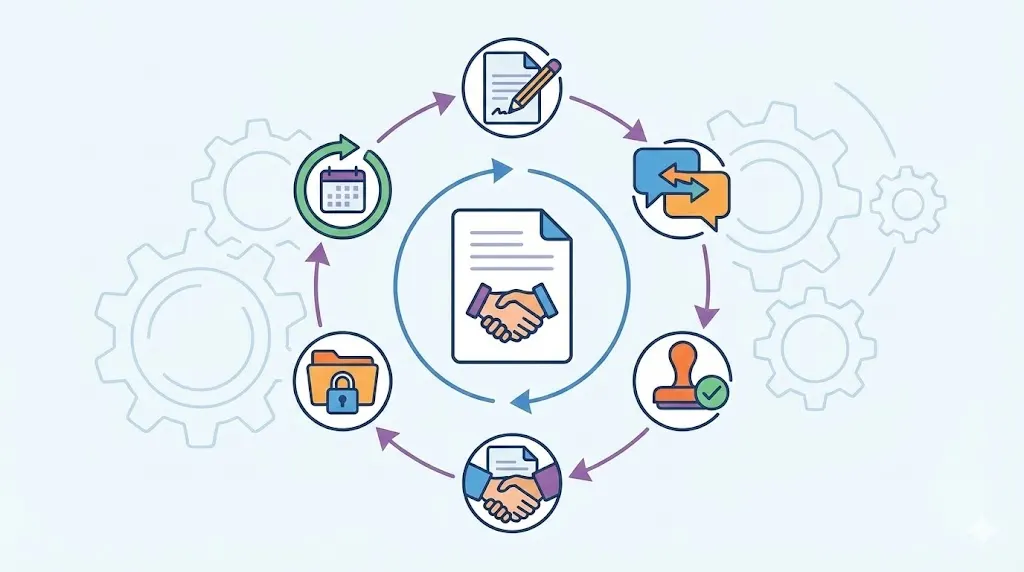
Measurement starts during planning and negotiation. Teams should define targets before contract execution. They should also confirm data sources and review roles.
During execution, track obligations and early warning signs. Review milestones, approvals, service results, and open issues. Use the findings to address problems before renewal.
Renewal reviews should examine total contract value. Include realized savings, service quality, risk, and relationship health. Then decide whether to renew, renegotiate, or terminate.
Refine KPIs when business priorities change
Business goals can change during a contract term. A company may enter a new market or change its cost plan. New rules may also change compliance needs.
Update KPIs when the contract scope changes. Update them when technology, suppliers, or market conditions change. Keep the original results for a clear historical record.
Do not change targets only because performance looks weak. Document the business reason for every approved change. This protects trust in the measurement process.
Compare results across contracts and periods
Portfolio analysis can reveal wider trends. Compare results by supplier, category, business unit, and risk level. Look for repeated delays, weak terms, or strong practices.
Historical comparisons show whether performance is improving. Supplier comparisons show where support or intervention may help. Industry benchmarks can add context when reliable data exists.
Avoid unfair comparisons between unlike contracts. Separate fixed-price work from variable work. Also separate high-risk services from routine purchases.
Use this recurring contract review agenda:
Review topic | Key question |
|---|---|
Target progress | Are results meeting agreed targets and tolerances? |
Exceptions | Which approved changes affect interpretation? |
Risks | What open risks could affect future results? |
Stakeholder feedback | What do users and managers report? |
Remediation status | Are owners meeting recovery deadlines? |
Next-period priorities | Which actions matter most before the next review? |
Record decisions after every review. Assign owners and dates for each action. Then carry open actions into the next meeting.
Related articles: Understanding Contract Risk Exposure in Business
Why Contract Management Software Matters
Contract management software creates one shared source of truth. It brings agreements, obligations, milestones, KPIs, and review records together. This reduces the need to search across email and local files.
Centralized data supports more reliable reporting. Teams can find contract terms and related evidence faster. They can also compare results across suppliers and business units.
Automated reminders help prevent missed milestones. Workflow controls can route approvals and review tasks. Alerts can flag due dates, open actions, and rising risks.
Dashboards give leaders a current view of performance. They can show savings, service levels, cycle times, and open risks. Reports can also connect poor results with corrective actions.
Business intelligence tools can add wider analysis. They may combine contract data with finance, procurement, or service records. This helps leaders assess financial and operational outcomes together.
Technology does not replace good measurement design. Teams still need clear goals, accurate data, and accountable owners. They also need disciplined reviews and practical corrective actions.
Volody’s CLM Software helps teams manage performance across the contract lifecycle. Its AI Contract Summaries highlight obligations, renewal dates, and key risks. Its Obligation Management tracks deliverables, renewals, and commitments. Its Approval Workflow Automation routes reviews and sends timely reminders.
For example, a procurement team can track supplier milestones centrally. Managers can review missed obligations before renewal discussions begin.
Ready to make contract management more efficient? Learn more about Volody's CLM Software.
FAQ
What are the most important contract management KPIs?
The most important KPIs depend on the contract and business objective. Common measures cover financial value, cycle time, quality, efficiency, compliance, risk, and obligations. Supplier performance and renewal results also matter for many contracts. Use a balanced set that supports decisions, rather than tracking every available measure.
How can I measure time-to-signature for contracts?
Define the start and end points before collecting data. The start may be the contract request, first draft, or negotiation launch. The end usually means final signature by all required parties. Capture timestamps across drafting, redlines, approvals, and execution, then compare results by contract type and period.
What tools can help track contract KPIs efficiently?
CLM software can centralize contracts, obligations, milestones, and KPI records. Dashboards can show trends, exceptions, and results across the portfolio. Automated alerts can flag missed dates and review tasks. Integrations with finance, procurement, supplier, and operational systems can improve data quality.
How should leading and lagging contract performance indicators be used?
Use leading indicators to predict problems before they affect final results. Approval delays, unresolved redlines, and missed milestones can signal future failure. Use lagging indicators to confirm the final outcome. Savings, breaches, service quality, and renewal results show what the contract ultimately delivered.
Who should own contract KPI reporting and review?
Ownership should be shared across legal, procurement, finance, operations, and business teams. Each KPI still needs one named owner for data and reporting. Suppliers may own reports about delivery, service, or incident results. Set clear escalation paths, review dates, and responsibilities before contract execution.
How do contract KPIs support CFO decision-making?
Use contract KPIs to verify financial value, expose risk, and prioritize decisive action across savings, revenue, cash flow, service, renewals, and technology investment.
About the Company

Volody AI CLM is an Agentic AI-powered Contract Lifecycle Management platform designed to eliminate manual contracting tasks, automate complex workflows, and deliver actionable insights. As a one-stop shop for all contract activities, it covers drafting, collaboration, negotiation, approvals, e-signature, compliance tracking, and renewals. Built with enterprise-grade security and no-code configuration, it meets the needs of the most complex global organizations. Volody AI CLM also includes AI-driven contract review and risk analysis, helping teams detect issues early and optimize terms. Trusted by Fortune 500 companies, high-growth startups, and government entities, it transforms contracts into strategic, data-driven business assets.




" height="216.72211px" id="FYO0bO80Y" transform="translate(3 6.105)" width="206.073px"/><path d="M 108.174 222 C 88.432 222 70.303 217.239 53.785 207.717 C 37.267 198.196 24.173 185.052 14.504 168.285 C 4.835 151.312 0 132.165 0 110.845 C 0 89.731 4.835 70.792 14.504 54.025 C 24.173 37.052 37.267 23.804 53.785 14.282 C 70.303 4.761 88.432 0 108.174 0 C 128.116 0 146.246 4.761 162.562 14.282 C 179.08 23.804 192.073 37.052 201.541 54.025 C 211.21 70.792 216.044 89.731 216.044 110.845 C 216.044 132.165 211.21 151.312 201.541 168.285 C 192.073 185.052 179.08 198.196 162.562 207.717 C 146.044 217.239 127.915 222 108.174 222 Z M 108.174 183.189 C 120.864 183.189 132.044 180.291 141.713 174.495 C 151.382 168.492 158.936 160.006 164.375 149.035 C 169.814 138.064 172.533 125.334 172.533 110.845 C 172.533 96.355 169.814 83.729 164.375 72.965 C 158.936 61.994 151.382 53.611 141.713 47.815 C 132.044 42.02 120.864 39.122 108.174 39.122 C 95.483 39.122 84.202 42.02 74.332 47.815 C 64.663 53.611 57.109 61.994 51.67 72.965 C 46.231 83.729 43.511 96.355 43.511 110.845 C 43.511 125.334 46.231 138.064 51.67 149.035 C 57.109 160.006 64.663 168.492 74.332 174.495 C 84.202 180.291 95.483 183.189 108.174 183.189 Z" fill="rgba(255, 255, 255, 0.12)" height="222px" id="aa1McFcE9" transform="translate(227.183 3)" width="216.04399999999998px"/><path d="M 42.302 182.257 L 111.799 182.257 L 111.799 216.722 L 0 216.722 L 0 0 L 42.302 0 Z" fill="rgba(255, 255, 255, 0.12)" height="216.72211px" id="yRq4AnrsX" transform="translate(477.721 6.105)" width="111.79899999999998px"/><path d="M 108.174 222 C 88.432 222 70.303 217.239 53.785 207.717 C 37.267 198.196 24.173 185.052 14.504 168.285 C 4.835 151.312 0 132.165 0 110.845 C 0 89.731 4.835 70.792 14.504 54.025 C 24.173 37.052 37.267 23.804 53.785 14.282 C 70.303 4.761 88.432 0 108.174 0 C 128.116 0 146.246 4.761 162.562 14.282 C 179.08 23.804 192.073 37.052 201.541 54.025 C 211.21 70.792 216.045 89.731 216.045 110.845 C 216.045 132.165 211.21 151.312 201.541 168.285 C 192.073 185.052 179.08 198.196 162.562 207.717 C 146.044 217.239 127.915 222 108.174 222 Z M 108.174 183.189 C 120.864 183.189 132.044 180.291 141.713 174.495 C 151.382 168.492 158.936 160.006 164.375 149.035 C 169.814 138.064 172.534 125.334 172.534 110.845 C 172.534 96.355 169.814 83.729 164.375 72.965 C 158.936 61.994 151.382 53.611 141.713 47.815 C 132.044 42.02 120.864 39.122 108.174 39.122 C 95.483 39.122 84.202 42.02 74.332 47.815 C 64.663 53.611 57.108 61.994 51.67 72.965 C 46.231 83.729 43.511 96.355 43.511 110.845 C 43.511 125.334 46.231 138.064 51.67 149.035 C 57.108 160.006 64.663 168.492 74.332 174.495 C 84.202 180.291 95.483 183.189 108.174 183.189 Z" fill="rgba(255, 255, 255, 0.12)" height="222px" id="mo8HQspQ0" transform="translate(609.155 3)" width="216.04500000000007px"/><path d="M 73.727 0 C 95.885 0 115.324 4.45 132.044 13.351 C 148.967 22.252 161.957 34.982 171.027 51.541 C 180.287 67.894 184.917 86.937 184.917 108.671 C 184.917 130.405 180.287 149.449 171.027 165.801 C 161.957 181.947 148.967 194.47 132.044 203.371 C 115.324 212.271 95.885 216.722 73.727 216.722 L 0 216.722 L 0 0 Z M 72.216 179.773 C 94.374 179.773 111.497 173.564 123.583 161.144 C 135.669 148.724 141.713 131.233 141.713 108.671 C 141.713 86.109 135.669 68.515 123.583 55.888 C 111.497 43.055 94.374 36.638 72.216 36.638 L 42.302 36.638 L 42.302 179.773 Z" fill="rgba(255, 255, 255, 0.12)" height="216.72211px" id="I3iXX5Hi_" transform="translate(859.693 6.105)" width="184.91699999999992px"/><path d="M 185.22 0 L 113.91 141.273 L 113.91 216.722 L 71.61 216.722 L 71.61 141.273 L 0 0 L 47.74 0 L 93.06 99.046 L 138.08 0 Z" fill="rgba(255, 255, 255, 0.12)" height="216.72211px" id="nzHyWC0_d" transform="translate(1061.78 6.105)" width="185.22000000000003px"/></svg>)