

Enterprise Obligation Management Is Key to Driving Trust and Results because contracts only create value after teams deliver their promises. A global manufacturer may sign a supply agreement in March, then miss a service credit notice in July. The contract exists, but poor tracking can still create cost, conflict, and lost trust.
TL;DR
Centralize contract duties, giving teams a clear view of owners, deadlines, dependencies, and risks before they become larger problems.
Once agreements are signed, extract their obligations and map each duty to the appropriate business process.
Reliable fulfillment depends on more than assigned owners: teams also need timely reminders, defined escalation paths, and evidence to support completion.
Reviewing performance data helps surface overdue tasks and revenue leakage, while also exposing renewal risks and weak controls.
Governance and automation matter, but trust between legal and operating teams ultimately depends on effective human review as well.
For CLM software, prioritize extraction and workflow capabilities alongside reporting, access controls, and audit trails.
Why Contract Obligations Matter to Enterprise Trust
Contracts define how two or more parties will work together. Additionally, they establish prices, delivery standards, reporting duties, service levels, payment terms, and remedies. Signing the document, however, is not the same as completing the deal. Teams must then execute those terms over the ensuing months or years.
An obligation will often span several departments in practice. Sales may negotiate the promise. Legal may be responsible for approving its language. Operations may ultimately deliver the service. Finance may handle any credits or invoices that result. Procurement, for its part, may monitor the supplier. Moreover, no single team always sees the full obligation picture.
This split creates a common control gap. Each group may manage its own tasks, but no one can confirm that the enterprise has met every commitment. A missed notice, report, test, or payment can then remain hidden until a customer raises a complaint.
Trust, however, depends on more than good intentions. It depends on repeatable proof that teams perform as promised. The International Association for Contract and Commercial Management has long treated contract performance as a core part of commercial value, not a task that begins after legal review.
Effective obligation management strengthens trust in several ways:
It gives owners a clear view of their duties.
That record gives auditors and customers evidence they can rely on during reviews.
Furthermore, that visibility allows leaders to address risks before they become disputes.
This produces greater consistency across business units and regions.
When another party misses a commitment, it helps teams recover the money they are owed.
Take a technology provider with hundreds of customer agreements. A monthly performance report may be required under one contract. Another may require a service credit within ten business days after an outage. A third may require security testing each quarter. If teams track these duties in email, spreadsheets, and personal calendars, the provider cannot prove reliable performance.
The same problem affects inbound obligations. Also, a supplier may owe rebates, warranty support, delivery targets, or replacement parts. If the buyer does not monitor those terms, it may pay more than the agreement allows. The business loses money without breaking its own contract.
Obligation management also affects negotiation quality. Teams that understand past performance can negotiate better renewals. They can identify terms that create repeated delays or costs and preserve provisions that have produced strong results.
The Association of Corporate Counsel often highlights the need for legal teams to connect contract work with business operations. This practice makes that connection. It turns contract language into assigned work, measurable results, and visible accountability.
Related Article: Why HR Must Lead the Way in Contract Lifecycle Management
Where Enterprise Obligations Come From
Most people associate obligations with contracts. Additionally, that view is correct, but it does not encompass the full picture. They may stem from laws, regulations, policies, orders, service commitments, and related agreements.
Duties also arise from documents that support a main contract. These documents can include statements of work, purchase orders, amendments, schedules, data processing terms, and service level exhibits. A team may miss an obligation if it reviews only the main agreement.
These documents do not stand alone; their relationship adds another layer of complexity. The master services agreement usually establishes the general rules. A later statement of work can add project-specific duties. Moreover, a change order, for instance, can alter the delivery dates. Existing reporting requirements may be superseded by an amendment. Teams need a connected view of these documents to understand the current duty.
The duty also travels across the enterprise. For example:
Sales establishes a response-time commitment during negotiations.
Legal incorporates that promise into the final agreement.
To meet the response time, Operations must assign qualified staff.
Customer success tracks performance alongside the customer.
Finance handles any credit if the team misses the target.
Furthermore, each step, in turn, has a different owner. Without a shared process, the original promise may disappear after signing.
External parties can own obligations too. The supplier, for its part, is responsible for certificates, delivery targets, insurance, and personal-data protection. By contrast, a channel partner could be required to follow brand rules or submit sales reports. For the customer, duties can involve providing access, approving work, and meeting minimum purchase levels.
Regulatory duties often add pressure. The U.S. Department of Justice explains that companies need effective compliance programs that identify and address risk. Contract controls form one part of that work. A business cannot show effective oversight if it cannot identify who owns key commitments.
Teams should classify obligations by source and impact. A useful classification model includes:
Customer commitments
Supplier commitments
Internal approval duties
Financial terms
Data and security duties
Regulatory requirements
Reporting and notice duties
Renewal and termination dates
Service levels and performance standards
Each category needs a different control. A payment date may need a finance workflow. The information security team may be the source of evidence for a security certification. Before the applicable deadline, Legal may have to review a renewal notice.
Therefore, the business should also document the consequences of nonperformance. Some missed duties create a minor delay. Others trigger a credit, penalty, termination right, audit concern, or reputational harm. Risk ranking helps teams focus on high-impact commitments first.
A practical intake process can ask five questions:
What must someone do?
Who owns the task?
When does the task start and end?
What evidence proves completion?
What happens if the owner misses it?
These questions make contract language easier to manage. They also help teams separate a true obligation from background language, definitions, or business context.
Related articles: Missed Contract Obligations? What to Do Next?
What Is Enterprise Obligation Management?
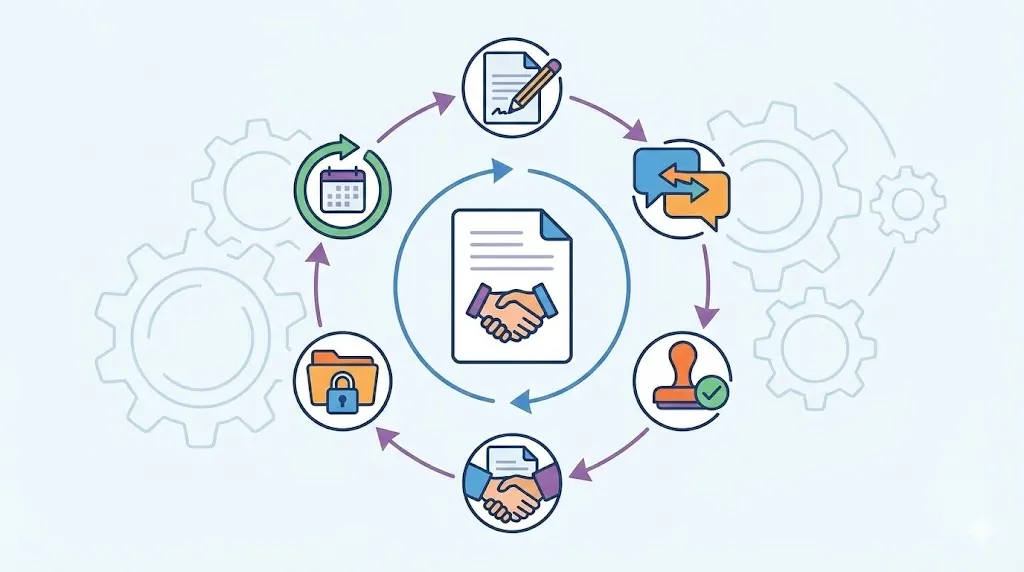
Enterprise obligation management is the process of finding, assigning, tracking, proving, and reporting contractual commitments across a business. Additionally, it also links contract language to the people and systems responsible for acting on it.
A mature program does not treat obligations as static text. It treats them as active work items, each with an owner, dates, status, evidence, and implications for the business. Coverage should extend across the full period from contract review through completion, renewal, amendment, or termination.
The process usually follows this path:
Identify each relevant agreement and related document.
Extract duties, dates, thresholds, rights, and remedies.
Review the extracted information for accuracy.
Assign each owner based on department, region, or business rule.
Set due dates, recurrence rules, and required evidence.
As deadlines draw near, the system sends reminders.
When a task becomes overdue or presents elevated risk, the system escalates it.
Completion is recorded together with the supporting documents.
Performance reports should reach legal, operations, and senior leadership.
Those results can then inform improvements to future contracts.
Moreover, clear governance is another requirement for this process. Leaders should define which team owns the program, who can change an obligation, and how teams resolve disputes about interpretation. They should also define how the business handles a missing contract, unclear wording, or conflicting documents.
Data quality matters too. An obligation record should include enough context for the owner to act. That may include the agreement name, counterparty, clause, business unit, location, deadline, frequency, amount, and related task. A short summary can help, but the original clause should remain available for review.
Also, human review still matters. Artificial intelligence can find likely obligations and suggest metadata. A lawyer or subject matter expert should confirm unusual clauses, complex conditions, and high-risk commitments. Reviewers should see the extracted duty beside its contract language.
The National Institute of Standards and Technology stresses the value of defined controls, assigned responsibility, and ongoing monitoring in cybersecurity programs. Obligation management follows a similar pattern. Clear ownership and regular monitoring make performance more dependable.
A useful operating model separates three roles:
Contract owners understand the commercial relationship.
Task owners are responsible for carrying out the required work.
Control owners monitor whether work is complete, evidence is sufficient, and escalation occurs appropriately.
In practice, a single person may occupy more than one of these roles. Even so, distinguishing the roles helps the business expose blind spots.
The operating model should accommodate changes to obligations. An amendment can move a deadline. A new statement of work can also introduce additional duties. An employee may leave the business. A merger may move the contract to another entity. The system should preserve the audit history while updating the current owner and terms.
Leaders should measure both completion and control quality. A team may report a high completion rate while documenting weak evidence. Another team may close tasks quickly but fail to meet the required standard. Effective reporting ties status and evidence to business impact.
Related Article: What are Contract Obligations and How to Manage Them
How to Extract and Assign Contract Obligations
Manual review often fails at enterprise scale. Additionally, commercial agreements can also contain many duties across long documents and attachments. Reviewers may find major service terms but miss notice windows, reporting duties, or conditions hidden in schedules.
A reliable extraction process starts with a complete contract record. Gather executed agreements, amendments, statements of work, purchase orders, exhibits, and related policies. Then connect those documents through their business relationship.
Next, identify language that creates action or condition. Common signals include:
Must, shall, or agrees to
Within a stated number of days
No later than a fixed date
On a monthly, quarterly, or annual basis
Subject to approval or inspection
Required to maintain or provide
Entitled to a credit, refund, or remedy
Must notify the other party
May terminate after a defined event
These signals do not prove that a sentence creates an obligation. Context still matters. A clause may describe a right, exception, condition, or definition. Reviewers should confirm the meaning before they create a task.
AI can assist with this work. It can scan large contract sets, identify likely duties, extract dates, and suggest owners. It can also flag related clauses that may affect the same obligation. The reviewer then confirms the result and corrects errors.
Teams should use a standard obligation record. At minimum, capture:
Obligation description
Responsible party
Internal owner
Counterparty
Source clause
Start date
Deadline or frequency
Required evidence
Risk level
Financial impact
Related agreement
Current status
Escalation path
Ownership rules should reflect how the business operates. A company might route insurance certificates to risk, payment terms to finance, technical milestones to delivery, and privacy duties to security or privacy counsel.
Automated assignment can reduce delay. One rule might assign all obligations tagged as “service level” to a regional operations lead. Data security duties, for example, might be routed to the information security team. Because teams and reporting lines change, managers should revisit these rules regularly.
Reminders should be scheduled at multiple stages of the obligation lifecycle. The first reminder gives the owner time to plan. A subsequent warning indicates that the deadline is approaching. An escalation alerts a manager if the owner misses the deadline or marks a task as blocked.
External collaboration needs careful access control. A supplier may be required to upload a certificate while remaining unable to see unrelated contracts. A customer may be asked to confirm delivery without gaining access to internal notes. Role-based permissions and clear sharing rules protect sensitive information.
Furthermore, evidence should match the obligation. A completed service report may prove a reporting duty. A signed receipt may prove delivery. A system log may prove uptime. A simple “done” status rarely provides enough support for an audit or dispute.
Therefore, teams should test the process with real examples. Select a customer agreement, a supplier contract, and a regulated service agreement. Follow each obligation from extraction to completion. Record where owners need more context or where the workflow creates delays.
This practical test often reveals gaps. The business may discover that no one owns a notice duty. It may find that a due date depends on an event that the system cannot capture. It may also find that teams store evidence in separate drives. Fix these issues before expanding the program.
Related articles: What is Contract Risk & How to manage it?
How to Measure Obligation Performance
Across departments, reporting gives leaders visibility into contract performance. Additionally, without it, teams may complete individual tasks while missing broader patterns. A dashboard is most useful when it directs leaders to where action is needed instead of merely displaying activity.
Start with a small set of useful measures:
Total open obligations
Upcoming obligations by time period
Overdue obligations
Completion rate
Completion rate by owner or department
High-risk obligations without evidence
Average time to close a task
Missed deadlines by contract type
Credits recovered from counterparty failures
Revenue or cost tied to performance terms
Each measure needs a clear definition. For example, “completion rate” should state whether the business counts overdue tasks that later closed. “Overdue” should account for approved extensions. Poor definitions create reports that look precise but mislead decision makers.
Executives need summaries. Operational teams need detail. A general counsel may want exposure reported by region and contract type. By contrast, a chief financial officer may be more concerned with missed rebates, credits, and payment risks. A service leader may instead need a task list showing what is due over the next thirty days.
Use filters that match business questions. Helpful filters include:
Business unit
Contract owner
Counterparty
Geography
Agreement type
Risk level
Obligation category
Due date
Financial value
Regulatory area
Trend data can reveal recurring contract problems. Repeated failures may emerge after a company agrees to custom service levels. Moreover, the data may show that one supplier misses delivery milestones more often than its peers. It may likewise reveal confusion about payment dates following certain amendments.
These findings should improve future decisions. Legal teams can adjust templates and fallback clauses. Procurement can change supplier terms. Sales can use that information to avoid promises operations cannot support. Finance can use the same findings to strengthen accrual and recovery processes.
Those reports should also inform renewal reviews. Before a contract renews, teams should review open obligations, missed targets, credits, disputes, and evidence gaps. This information can shape pricing, service levels, remedies, and renewal approval.
Audit trails add credibility. Also, the system should show who created, changed, assigned, approved, and closed an obligation. It should record the date and preserve prior values. This record helps explain decisions and supports internal reviews.
The U.S. Securities and Exchange Commission provides guidance on public company reporting and disclosure responsibilities. While obligation management does not replace financial controls, reliable contract data can support stronger reporting processes. Teams should involve finance and compliance leaders when contract terms affect material results.
Avoid vanity measures. The number of extracted obligations, by itself, says little about business value. A large volume of reminders can indicate weak ownership. Likewise, a high closure rate can conceal inadequate evidence. Pair activity measures with outcomes such as fewer disputes, faster recovery, lower leakage, and better renewal decisions.
Dashboard reviews should follow a regular schedule. Weekly reviews give operating teams a way to manage deadlines. Monthly reviews allow department leaders to address recurring patterns. Quarterly review gives executives a basis for assessing risk, process quality, and contract strategy.
Related articles: Aligning Legal Ops with General Counsel to Reduce Cost Risks
How CLM Software Supports Obligation Management
Contract lifecycle management software creates a shared system for contract work. Additionally, it can store executed agreements, extract key metadata, route approvals, track obligations, send alerts, and maintain audit records. By centralizing these controls, it limits reliance on scattered spreadsheets and personal reminders.
The system needs to accommodate the distinct working needs of legal and business users alike. For legal teams, what matters is access to clause context and version history, alongside tools for reviewing risk. By contrast, business users need straightforward task assignment and forms, with due dates and a way to upload evidence. Leaders need dashboards that connect contract activity with performance.
The platform supports obligation tracking, AI metadata extraction, summaries, alerts, approval workflows, central storage, advanced search, and audit trails. These features help teams find commitments, assign work, monitor deadlines, and retain proof in one controlled environment.
Ready to make contract management more efficient? Explore the platform.
FAQ
What does enterprise-level obligation management involve?
Additionally, at the enterprise level, the discipline tracks commitments across contracts, departments, and business units. Its scope runs from discovery and ownership through deadlines, evidence, escalation, completion, and reporting.
Why do companies need obligation management?
Companies need it because contract duties often spread across legal, sales, finance, operations, procurement, and security. A shared process reduces missed deadlines, financial leakage, disputes, and compliance risk.
What types of obligations should teams track?
Teams should track payments, deliverables, service levels, reports, notices, renewals, audits, security duties, insurance certificates, credits, and regulatory commitments. The exact list depends on the business and its contracts.
Can artificial intelligence find obligations in contracts?
Artificial intelligence can identify likely obligations, dates, parties, and related terms. A qualified reviewer should confirm the result, particularly when clauses are complex, exceptions apply, or commitments carry substantial risk.
Moreover, who should own contractual obligations?
The task owner should perform the required work. A contract owner should understand the business relationship, while a control owner should monitor status, evidence, and escalation.
How can obligation management help reduce financial loss?
It helps teams track rebates, credits, service penalties, payment terms, and recovery rights. It also shows when another party fails to meet a commitment, giving finance and legal teams time to act.
What should an obligation dashboard show?
A useful dashboard shows open, upcoming, overdue, and risk-prioritized tasks. It should also show owners, business units, due dates, evidence status, financial impact, and recurring failure patterns.
How can a company start an obligation management program?
Begin with a focused contract group, such as major customers or strategic suppliers. Define ownership, extract key duties, test workflows, measure results, and expand after fixing process gaps.
About the Company

Volody AI CLM is an Agentic AI-powered Contract Lifecycle Management platform designed to eliminate manual contracting tasks, automate complex workflows, and deliver actionable insights. As a one-stop shop for all contract activities, it covers drafting, collaboration, negotiation, approvals, e-signature, compliance tracking, and renewals. Built with enterprise-grade security and no-code configuration, it meets the needs of the most complex global organizations. Volody AI CLM also includes AI-driven contract review and risk analysis, helping teams detect issues early and optimize terms. Trusted by Fortune 500 companies, high-growth startups, and government entities, it transforms contracts into strategic, data-driven business assets.





" height="216.72211px" id="FYO0bO80Y" transform="translate(3 6.105)" width="206.073px"/><path d="M 108.174 222 C 88.432 222 70.303 217.239 53.785 207.717 C 37.267 198.196 24.173 185.052 14.504 168.285 C 4.835 151.312 0 132.165 0 110.845 C 0 89.731 4.835 70.792 14.504 54.025 C 24.173 37.052 37.267 23.804 53.785 14.282 C 70.303 4.761 88.432 0 108.174 0 C 128.116 0 146.246 4.761 162.562 14.282 C 179.08 23.804 192.073 37.052 201.541 54.025 C 211.21 70.792 216.044 89.731 216.044 110.845 C 216.044 132.165 211.21 151.312 201.541 168.285 C 192.073 185.052 179.08 198.196 162.562 207.717 C 146.044 217.239 127.915 222 108.174 222 Z M 108.174 183.189 C 120.864 183.189 132.044 180.291 141.713 174.495 C 151.382 168.492 158.936 160.006 164.375 149.035 C 169.814 138.064 172.533 125.334 172.533 110.845 C 172.533 96.355 169.814 83.729 164.375 72.965 C 158.936 61.994 151.382 53.611 141.713 47.815 C 132.044 42.02 120.864 39.122 108.174 39.122 C 95.483 39.122 84.202 42.02 74.332 47.815 C 64.663 53.611 57.109 61.994 51.67 72.965 C 46.231 83.729 43.511 96.355 43.511 110.845 C 43.511 125.334 46.231 138.064 51.67 149.035 C 57.109 160.006 64.663 168.492 74.332 174.495 C 84.202 180.291 95.483 183.189 108.174 183.189 Z" fill="rgba(255, 255, 255, 0.12)" height="222px" id="aa1McFcE9" transform="translate(227.183 3)" width="216.04399999999998px"/><path d="M 42.302 182.257 L 111.799 182.257 L 111.799 216.722 L 0 216.722 L 0 0 L 42.302 0 Z" fill="rgba(255, 255, 255, 0.12)" height="216.72211px" id="yRq4AnrsX" transform="translate(477.721 6.105)" width="111.79899999999998px"/><path d="M 108.174 222 C 88.432 222 70.303 217.239 53.785 207.717 C 37.267 198.196 24.173 185.052 14.504 168.285 C 4.835 151.312 0 132.165 0 110.845 C 0 89.731 4.835 70.792 14.504 54.025 C 24.173 37.052 37.267 23.804 53.785 14.282 C 70.303 4.761 88.432 0 108.174 0 C 128.116 0 146.246 4.761 162.562 14.282 C 179.08 23.804 192.073 37.052 201.541 54.025 C 211.21 70.792 216.045 89.731 216.045 110.845 C 216.045 132.165 211.21 151.312 201.541 168.285 C 192.073 185.052 179.08 198.196 162.562 207.717 C 146.044 217.239 127.915 222 108.174 222 Z M 108.174 183.189 C 120.864 183.189 132.044 180.291 141.713 174.495 C 151.382 168.492 158.936 160.006 164.375 149.035 C 169.814 138.064 172.534 125.334 172.534 110.845 C 172.534 96.355 169.814 83.729 164.375 72.965 C 158.936 61.994 151.382 53.611 141.713 47.815 C 132.044 42.02 120.864 39.122 108.174 39.122 C 95.483 39.122 84.202 42.02 74.332 47.815 C 64.663 53.611 57.108 61.994 51.67 72.965 C 46.231 83.729 43.511 96.355 43.511 110.845 C 43.511 125.334 46.231 138.064 51.67 149.035 C 57.108 160.006 64.663 168.492 74.332 174.495 C 84.202 180.291 95.483 183.189 108.174 183.189 Z" fill="rgba(255, 255, 255, 0.12)" height="222px" id="mo8HQspQ0" transform="translate(609.155 3)" width="216.04500000000007px"/><path d="M 73.727 0 C 95.885 0 115.324 4.45 132.044 13.351 C 148.967 22.252 161.957 34.982 171.027 51.541 C 180.287 67.894 184.917 86.937 184.917 108.671 C 184.917 130.405 180.287 149.449 171.027 165.801 C 161.957 181.947 148.967 194.47 132.044 203.371 C 115.324 212.271 95.885 216.722 73.727 216.722 L 0 216.722 L 0 0 Z M 72.216 179.773 C 94.374 179.773 111.497 173.564 123.583 161.144 C 135.669 148.724 141.713 131.233 141.713 108.671 C 141.713 86.109 135.669 68.515 123.583 55.888 C 111.497 43.055 94.374 36.638 72.216 36.638 L 42.302 36.638 L 42.302 179.773 Z" fill="rgba(255, 255, 255, 0.12)" height="216.72211px" id="I3iXX5Hi_" transform="translate(859.693 6.105)" width="184.91699999999992px"/><path d="M 185.22 0 L 113.91 141.273 L 113.91 216.722 L 71.61 216.722 L 71.61 141.273 L 0 0 L 47.74 0 L 93.06 99.046 L 138.08 0 Z" fill="rgba(255, 255, 255, 0.12)" height="216.72211px" id="nzHyWC0_d" transform="translate(1061.78 6.105)" width="185.22000000000003px"/></svg>)