
Sharvi Sawant

Healthcare payers face a tough challenge: they must control costs while ensuring members get the right care. At the same time, they must keep up with a flood of changing regulations. Fast, comprehensive compliance for healthcare payers? That’s exactly what contract intelligence delivers. Imagine trying to keep thousands of contracts up to date manually as laws shift. It’s like trying to fix a moving puzzle blindfolded. Contract intelligence uses smart technology to make this puzzle clear and manageable.
TL;DR
Contracts' inherent complexity, coupled with the relentless evolution of regulations, imposes ongoing challenges on healthcare payers and significantly heightens their compliance risk exposure.
Additionally, manual contract review processes consume considerable time, introduce a higher likelihood of errors, and divert critical resources away from direct patient care.
AI-driven contract intelligence can rapidly pinpoint agreements affected by regulatory changes and recommend targeted adjustments.
Bulk contract changes become more manageable through automated workflows, which reduce risks and speed up the process of achieving compliance.
This methodology allows healthcare payers to improve operational workflows, reduce exposure to legal risks, and sustain adaptability to regulatory shifts.
By consolidating contract data from multiple systems, these platforms improve visibility and governance across the entire enterprise.
Why Compliance Challenges Are So Complex for Healthcare Payers
Healthcare payers operate in a highly regulated environment. Additionally, federal, state, and local laws evolve frequently, resulting in a complex network of compliance obligations. Each regulation can affect thousands of contracts with providers, pharmacies, and vendors. For example, recent laws on drug pricing, hospital price transparency, and alternative payment models have forced payers to revisit contract terms repeatedly.
Managing these contracts manually is nearly impossible. Contracts are long, varied, and stored in different systems or even paper files. Searching through them to find clauses affected by a new rule takes weeks or months. This delays compliance actions and risks costly penalties or audits. It also pulls staff away from improving member services.
Moreover, the complexity grows as payers work with large provider networks and multiple plan types. Each contract may have unique terms, rates, and obligations. Changes in one contract can ripple through others, requiring coordinated updates. Without a clear, centralized view, organizations operate blindly.
This challenge extends beyond administrative tasks to impact the payer’s fundamental objective of delivering quality care in an efficient manner. Failing to meet compliance standards exposes payers to fines, damages their reputation, and weakens relationships with providers. Delays in updating contracts can hinder the implementation of innovative payment models and undermine cost-saving strategies.
Related articles: Contract OCR: How It Works and Why It Matters
How Contract Intelligence Transforms Contract Management
Contract intelligence applies AI and machine learning to digitize and analyze contracts at scale. Additionally, it also extracts critical data elements such as payment terms, obligations, contract expiration schedules, and compliance clauses. This structured data connects contracts to business systems and workflows.
With contract intelligence, healthcare payers are equipped to quickly identify contracts impacted by regulatory changes. They detect deviations from standard provisions as well as clauses that increase exposure to risk. This technology delivers a comprehensive perspective on contract status alongside pertinent compliance considerations. It enables efficient processing of bulk amendments and automates their distribution to contract custodians. The system also facilitates real-time tracking of negotiations, approvals, and rejections.
This approach replaces slow, error-prone manual reviews with fast, data-driven insights. Moreover, AI algorithms efficiently process thousands of contracts within minutes, pinpointing exactly where modifications are necessary. Teams receive precise instructions on updates and prioritization.
Contract intelligence also supports ongoing risk management. It continuously monitors contracts for compliance deadlines, expiration schedules, and related obligations. Automated alerts prevent missed actions that could lead to noncompliance. When a counterparty rejects an amendment, predefined rules initiate corrective measures, including renegotiation or contract termination.
By transforming contracts into interconnected, actionable data, payers establish control over a process that was previously disorganized. This enhances operational agility, mitigates legal risk, and reallocates resources toward improving member outcomes.
Related articles: How Machine Learning Transforms Contract Management Today
What Makes Contract Intelligence Essential for Healthcare Payers
The healthcare payer ecosystem relies heavily on contracts. These agreements regulate critical areas such as provider reimbursements and pharmacy benefit management. Contract intelligence is essential because it:
Handles the volume: Payers manage tens of thousands of contracts across multiple lines of business. AI scales effortlessly to process this volume.
Adapts to change: Regulations evolve constantly. Contract intelligence updates contract data quickly to keep pace.
Reduces risk: Automated analysis spots noncompliant clauses and risky terms before they cause problems.
Improves collaboration: Centralized contract data and workflows connect legal, compliance, and operations teams.
Saves time and cost: Automating contract review and amendment cuts weeks or months from compliance cycles.
For example, a payer facing new drug pricing rules can run an AI scan to find all contracts with affected clauses. Subsequently, the platform creates amendment drafts utilizing pre-approved templates. These drafts are then routed directly to contract managers for their review and authorization. By streamlining these steps, the workflow eliminates manual contract searches and shortens negotiation timelines.
Without contract intelligence, payers face a reactive, fragmented approach. They often must hastily revise contracts only after regulations have already been implemented. This reactive posture significantly elevates the risk of compliance breaches, delays in meeting mandated deadlines, and erosion of trust with providers. Employing contract intelligence allows payers to adopt a forward-looking strategy with comprehensive visibility into compliance status.
For further reading, see: Contract Risk Analysis Strengthened By AI In Legal Ops
Real-World Impact of Contract Intelligence in Healthcare
Healthcare payers who have adopted contract intelligence report measurable gains in efficiency and accuracy. They reduce contract review times from months to days or hours. Legal teams spend less time on routine tasks and more on strategic issues. Compliance teams get real-time visibility into contract risks and status.
In one instance, a payer leveraged contract intelligence to navigate a sweeping regulatory overhaul that impacted thousands of contracts. The system effectively identified all affected agreements, extracted critical terms, and automatically generated amendment packages. As a result, the update process was shortened by three-quarters, while mitigating expensive compliance risks.
A separate payer enhanced their provider negotiations by quickly isolating contracts containing nonstandard provisions. This enabled rapid standardization of agreements and consistent application of pricing frameworks. The effort not only improved provider relations but also significantly decreased audit discrepancies.
Contract intelligence also helps payers track contract performance and obligations. Automated alerts ensure timely renewals, payment adjustments, and compliance reporting. This proactive management prevents costly penalties and supports better financial planning.
Industry research confirms these trends. According to Deloitte, regulatory changes in drug pricing, payment models, and price transparency are reshaping payer contracts. Contract intelligence is a key tool to manage this complexity effectively (Deloitte Healthcare Report).
Related articles: Healthcare Payer Contract Management
How Contract Management Software Solves This
Contract management platforms centralize and digitize contracts, simplifying their administration. Additionally, integrating contract intelligence powered by AI enhances these platforms, making them essential tools for organizations managing healthcare payer agreements. This software helps by:
Storing all contracts securely in one place with full-text search and metadata tagging.
Automatically extracting critical information to build comprehensive, structured contract records.
Delivering insightful dashboards and reports that monitor compliance status and highlight potential risks.
Streamlining workflows involved in contract drafting, review, approval, and renewal.
Facilitating collaboration through version control and detailed audit trails.
Volody’s contract management solution delivers these functions enhanced with AI capabilities specifically designed for healthcare payers. It can draft contracts from templates, review clauses for compliance risks, and summarize key terms for quick understanding. The software also supports mass amendments and automated routing to speed regulatory updates.
Volody integrates with Microsoft Word and other enterprise systems, allowing legal teams to work in familiar tools. Its role-based access controls protect sensitive information while enabling collaboration. Automated alerts and dashboards keep teams proactive about obligations and renewals.
> See how modern contract management can streamline every stage of your contract lifecycle with Volody's CLM Software.
FAQ
How does contract intelligence enhance healthcare payer compliance?
Additionally, contract intelligence uses AI to digitize, analyze, and manage contracts. It helps healthcare payers quickly identify contracts affected by new regulations and automate compliance updates.
Why is manual contract management risky for healthcare payers?
Manual reviews take too long and are prone to errors. This delays compliance, increases legal risk, and wastes resources that could improve member care.
How does AI improve contract compliance speed?
Moreover, AI scans thousands of contracts in minutes, extracts key data, and flags clauses needing changes. It enables mass amendments and automates workflows to speed updates.
Are complex payer-provider networks manageable with contract intelligence?
Yes. It manages large volumes of contracts with varied terms and connects contract data across systems for enterprise-wide visibility and control.
What types of contracts benefit most from contract intelligence?
Provider agreements, pharmacy benefit contracts, vendor contracts, and payment model agreements all benefit from faster, more accurate compliance management.
Furthermore, what methods does contract intelligence use to mitigate legal and financial risks?
It identifies noncompliant or risky clauses early, ensures timely amendments, tracks obligations, and prevents missed deadlines that could lead to fines or disputes.
Is contract intelligence only useful for compliance updates?
No. It also improves contract creation, negotiation, performance tracking, and renewal management, making contract operations more efficient overall.
How do healthcare payers implement contract intelligence?
They deploy AI-powered contract management platforms that digitize contracts, extract data, automate workflows, and integrate with existing systems.
Also, how does automation contribute within the scope of contract intelligence?
Automation handles repetitive tasks like data extraction, amendment generation, routing, and alerts. This reduces manual effort and speeds contract lifecycles.
What collaborative capabilities does contract intelligence offer?
It centralizes contracts and workflows, allowing legal, compliance, and operations teams to work together with version control and audit trails.
This article explains how contract intelligence enables healthcare payers to meet compliance demands faster and more accurately. It covers the challenges, benefits, real-world examples, and how contract management software supports this transformation. The goal is to equip legal and operations leaders with a clear understanding of why contract intelligence matters and how to use it effectively.
About the Company
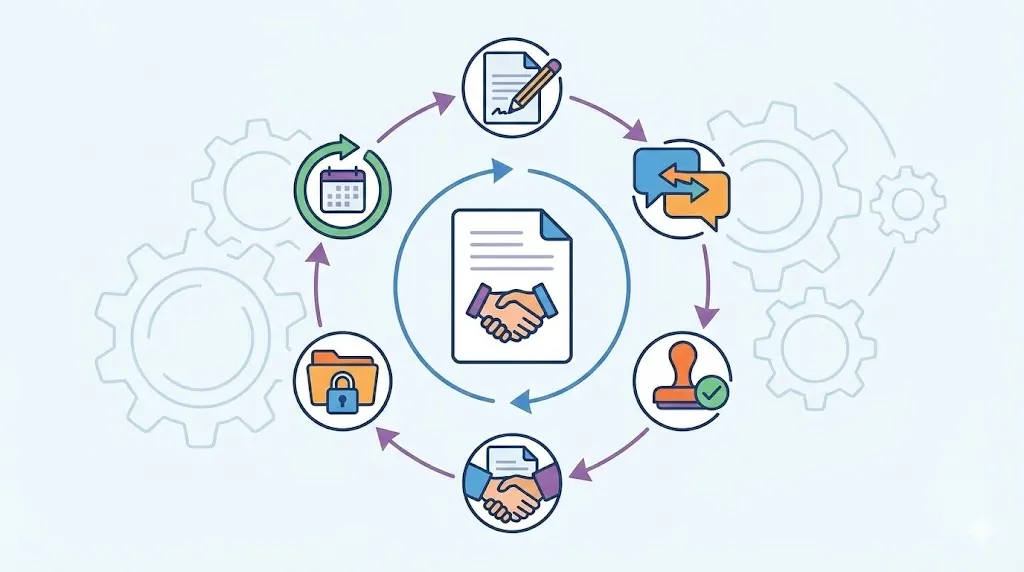
Volody AI CLM is an Agentic AI-powered Contract Lifecycle Management platform designed to eliminate manual contracting tasks, automate complex workflows, and deliver actionable insights. As a one-stop shop for all contract activities, it covers drafting, collaboration, negotiation, approvals, e-signature, compliance tracking, and renewals. Built with enterprise-grade security and no-code configuration, it meets the needs of the most complex global organizations. Volody AI CLM also includes AI-driven contract review and risk analysis, helping teams detect issues early and optimize terms. Trusted by Fortune 500 companies, high-growth startups, and government entities, it transforms contracts into strategic, data-driven business assets.





" height="216.72211px" id="FYO0bO80Y" transform="translate(3 6.105)" width="206.073px"/><path d="M 108.174 222 C 88.432 222 70.303 217.239 53.785 207.717 C 37.267 198.196 24.173 185.052 14.504 168.285 C 4.835 151.312 0 132.165 0 110.845 C 0 89.731 4.835 70.792 14.504 54.025 C 24.173 37.052 37.267 23.804 53.785 14.282 C 70.303 4.761 88.432 0 108.174 0 C 128.116 0 146.246 4.761 162.562 14.282 C 179.08 23.804 192.073 37.052 201.541 54.025 C 211.21 70.792 216.044 89.731 216.044 110.845 C 216.044 132.165 211.21 151.312 201.541 168.285 C 192.073 185.052 179.08 198.196 162.562 207.717 C 146.044 217.239 127.915 222 108.174 222 Z M 108.174 183.189 C 120.864 183.189 132.044 180.291 141.713 174.495 C 151.382 168.492 158.936 160.006 164.375 149.035 C 169.814 138.064 172.533 125.334 172.533 110.845 C 172.533 96.355 169.814 83.729 164.375 72.965 C 158.936 61.994 151.382 53.611 141.713 47.815 C 132.044 42.02 120.864 39.122 108.174 39.122 C 95.483 39.122 84.202 42.02 74.332 47.815 C 64.663 53.611 57.109 61.994 51.67 72.965 C 46.231 83.729 43.511 96.355 43.511 110.845 C 43.511 125.334 46.231 138.064 51.67 149.035 C 57.109 160.006 64.663 168.492 74.332 174.495 C 84.202 180.291 95.483 183.189 108.174 183.189 Z" fill="rgba(255, 255, 255, 0.12)" height="222px" id="aa1McFcE9" transform="translate(227.183 3)" width="216.04399999999998px"/><path d="M 42.302 182.257 L 111.799 182.257 L 111.799 216.722 L 0 216.722 L 0 0 L 42.302 0 Z" fill="rgba(255, 255, 255, 0.12)" height="216.72211px" id="yRq4AnrsX" transform="translate(477.721 6.105)" width="111.79899999999998px"/><path d="M 108.174 222 C 88.432 222 70.303 217.239 53.785 207.717 C 37.267 198.196 24.173 185.052 14.504 168.285 C 4.835 151.312 0 132.165 0 110.845 C 0 89.731 4.835 70.792 14.504 54.025 C 24.173 37.052 37.267 23.804 53.785 14.282 C 70.303 4.761 88.432 0 108.174 0 C 128.116 0 146.246 4.761 162.562 14.282 C 179.08 23.804 192.073 37.052 201.541 54.025 C 211.21 70.792 216.045 89.731 216.045 110.845 C 216.045 132.165 211.21 151.312 201.541 168.285 C 192.073 185.052 179.08 198.196 162.562 207.717 C 146.044 217.239 127.915 222 108.174 222 Z M 108.174 183.189 C 120.864 183.189 132.044 180.291 141.713 174.495 C 151.382 168.492 158.936 160.006 164.375 149.035 C 169.814 138.064 172.534 125.334 172.534 110.845 C 172.534 96.355 169.814 83.729 164.375 72.965 C 158.936 61.994 151.382 53.611 141.713 47.815 C 132.044 42.02 120.864 39.122 108.174 39.122 C 95.483 39.122 84.202 42.02 74.332 47.815 C 64.663 53.611 57.108 61.994 51.67 72.965 C 46.231 83.729 43.511 96.355 43.511 110.845 C 43.511 125.334 46.231 138.064 51.67 149.035 C 57.108 160.006 64.663 168.492 74.332 174.495 C 84.202 180.291 95.483 183.189 108.174 183.189 Z" fill="rgba(255, 255, 255, 0.12)" height="222px" id="mo8HQspQ0" transform="translate(609.155 3)" width="216.04500000000007px"/><path d="M 73.727 0 C 95.885 0 115.324 4.45 132.044 13.351 C 148.967 22.252 161.957 34.982 171.027 51.541 C 180.287 67.894 184.917 86.937 184.917 108.671 C 184.917 130.405 180.287 149.449 171.027 165.801 C 161.957 181.947 148.967 194.47 132.044 203.371 C 115.324 212.271 95.885 216.722 73.727 216.722 L 0 216.722 L 0 0 Z M 72.216 179.773 C 94.374 179.773 111.497 173.564 123.583 161.144 C 135.669 148.724 141.713 131.233 141.713 108.671 C 141.713 86.109 135.669 68.515 123.583 55.888 C 111.497 43.055 94.374 36.638 72.216 36.638 L 42.302 36.638 L 42.302 179.773 Z" fill="rgba(255, 255, 255, 0.12)" height="216.72211px" id="I3iXX5Hi_" transform="translate(859.693 6.105)" width="184.91699999999992px"/><path d="M 185.22 0 L 113.91 141.273 L 113.91 216.722 L 71.61 216.722 L 71.61 141.273 L 0 0 L 47.74 0 L 93.06 99.046 L 138.08 0 Z" fill="rgba(255, 255, 255, 0.12)" height="216.72211px" id="nzHyWC0_d" transform="translate(1061.78 6.105)" width="185.22000000000003px"/></svg>)