

Businesses need more than scattered files to manage contractual obligations effectively. A contract repository provides a secure, centralized system for agreements, terms, versions, and critical dates, giving teams faster access, stronger oversight, and greater control. This guide covers its capabilities, business benefits, implementation considerations, risks, and evaluation criteria.
TL;DR
A contract repository stores, organizes, searches, and manages agreements in one secure digital system.
Core features include metadata, search, permissions, version history, alerts, audit trails, reporting, and integrations.
Seven key benefits include better visibility, faster access, lower costs, stronger compliance, and better decisions.
Fragmented storage can cause missed renewals, lost files, version confusion, weak reporting, and access problems.
Successful rollout requires ownership, clean data, clear permissions, migration planning, training, and ongoing review.
The right tool should match business workflows, security needs, contract volume, and future automation goals.
What Is a Contract Repository?
Definition and purpose
A contract repository is a secure digital system for business agreements. It stores contracts, NDAs, amendments, work orders, and related files.
The repository keeps contract records in one central location. Teams can find documents, terms, owners, and key dates without asking one person.
A centralized contract repository supports the full contract record. That record may include drafting history, approvals, signatures, renewals, amendments, and termination details.
Some repositories focus mainly on executed agreements. Others connect with broader contract management software and support more lifecycle steps.
The purpose is simple. It gives the business one trusted source for contract information.
Legal teams can review terms faster. Procurement teams can track supplier commitments. Finance teams can check payment terms. Sales teams can confirm customer obligations.
How a Contract Repository Differs from Basic File Storage
A shared drive stores files in folders. A contract repository stores files with useful contract data.
That data can include the counterparty, contract type, owner, value, start date, and renewal date. Users can then search by these fields instead of opening files one by one.
Email archives depend on personal inboxes and old messages. They make ownership unclear and often hide the final signed document.
Spreadsheets can track dates and names. They rarely connect those records with the right contract versions and supporting files.
Paper filing systems create access delays and physical risks. They also make search, reporting, and remote work much harder.
A repository connects documents with metadata, permissions, alerts, and history. It also shows how records relate to amendments, exhibits, and work orders.
Related Article: What Is a Contract Repository and How Does It Work?
Core Capabilities of a Contract Repository
Centralized Storage and Structured Metadata
A repository stores agreements and related documents together. Users can connect amendments, exhibits, statements of work, and renewal records.
Structured metadata gives each contract useful labels. Common fields include contract type, counterparty, business owner, value, effective date, and renewal date.
Teams can also add region, department, risk level, and service category. These fields support filters, reports, alerts, and ownership checks.
Good metadata depends on clear rules. Required fields prevent incomplete records from entering the system.
Naming rules also improve order. For example, every record might use the counterparty, contract type, and year.
Search, Retrieval, and Access Controls
Full-text search scans the words inside stored agreements. Metadata search finds records by known fields and filters.
Users can search for terms such as auto-renewal, insurance, or payment. They can then narrow results by owner, date, supplier, or contract type.
Role-based permissions control who can view, edit, download, or share records. This protects sensitive pricing, employee, and customer information.
Access should match each person’s work. A sales user may need customer terms, while finance needs payment details.
Secure access also reduces dependence on individual employees. Important records remain available when people change roles or leave.
Version History and Auditability
Version control shows how a contract changed over time. Users can compare drafts, approved versions, and signed copies.
An audit trail records who made each action and when it happened. This creates accountability during review, approval, and renewal work.
These records can support internal checks and regulated processes. They also help resolve disputes about edits, approvals, and final terms.
A repository should preserve the signed version clearly. It should also connect later amendments without hiding the original agreement.
Related Article: Ultimate guide of Contract Repository Systems
7 Key Benefits for Business
Better Visibility into Agreements and Obligations
A repository gives teams a clear view of contract information. They can see owners, terms, dates, duties, and related documents together.
This visibility helps teams understand what each agreement requires. It also shows which contracts need attention soon.
The first benefit is stronger oversight. Leaders can review active agreements without collecting files from many departments.
The second benefit is better access. Users can find contracts through search, filters, and saved views.
The third benefit is faster work. Staff spend less time searching folders, inboxes, and spreadsheets.
Faster Work and Lower Administrative Costs
Automation reduces routine contract administration. Alerts can remind owners about renewals, notice periods, and important milestones.
Templates can support repeatable work. Approval workflows can send records to the right people without manual chasing.
The fourth benefit is lower cost. Fewer hours go into searching, copying data, checking dates, and answering basic requests.
Self-service access also helps legal teams. Business users can find approved information without sending every question to counsel.
For example, procurement can confirm a supplier’s notice period directly. Legal can then focus on higher-risk reviews.
Stronger Compliance and Reduced Risk
A contract repository supports consistent business rules. Required fields, permissions, and approval steps reduce process gaps.
The fifth benefit is stronger compliance. Teams can track duties, retain records, and show who approved important changes.
Alerts can reduce missed deadlines. Obligation tracking can show whether teams completed promised actions.
Audit trails also help investigate problems. They show which person viewed, edited, approved, or shared a record.
No repository removes all risk. It does create better control over contract information and related actions.
Better Decisions and Cross Functional Collaboration
Contract data can support better business decisions. Reports may show supplier spend, renewal exposure, customer terms, or missing records.
The sixth benefit is better decision-making. Leaders can review contract patterns before choosing suppliers, pricing, or renewal strategies.
The seventh benefit is stronger collaboration. Legal, sales, procurement, finance, and operations can work from the same records.
Integrations make this connection stronger. A repository can connect with CRM, ERP, procurement, identity, and e-signature tools.
Those links reduce duplicate data entry. They also keep contract activity closer to daily business work.
Related Article: Contract Management as a Growth Engine
The Risks of Fragmented Contract Storage
Missed Dates and Untracked Obligations
Disconnected files make dates hard to monitor. Renewal windows may sit inside documents, inboxes, or personal calendars.
Teams can miss notice periods and trigger unwanted renewals. They may also overlook payment terms, service levels, or delivery duties.
Spreadsheets create another weakness. One person must update dates, owners, and status fields by hand.
That process often breaks when responsibilities change. New owners may not know which records exist or which dates matter.
Duplicate, Outdated, or Unauthorized Versions
Multiple copies create doubt about the current agreement. Users may open an old draft or an incomplete amendment.
That confusion can lead to wrong pricing, missed duties, or poor customer responses. It can also weaken trust between departments.
Unauthorized edits create a separate risk. Teams may change files without approval or lose the signed version.
A repository keeps versions together and records key actions. This creates a clearer record of what changed and why.
Risk Inventory
Missed renewals are a common risk. They can extend unwanted services or reduce negotiating time.
Lost documents create another risk. Staff may waste hours searching, or they may make decisions without full records.
Version confusion can cause direct errors. A team may follow an old term instead of the signed agreement.
Limited accountability weakens control. Managers may not know who owns a contract or its next action.
Weak reporting hides exposure. Leaders cannot easily see renewal volume, missing data, or open obligations.
Access issues slow work. People may lack the right record or see information they should not access.
Compliance exposure grows when records lack controls. The business may struggle to prove approvals, retention, or required actions.
See More: Centralised Contract Repositories: Why They Matter Most
Best Practices for Implementing a Contract Repository
Define Ownership and Repository Governance
Start by naming a clear repository owner. This person manages intake rules, data quality, permissions, and system changes.
Set ownership for each contract record. The owner should understand key duties, dates, risks, and next steps.
Governance also covers retention and amendments. Teams need rules for archiving, deleting, replacing, and linking records.
Access rights should follow job needs. Review those rights when people change roles or leave.
Data quality needs regular checks. Managers should review missing fields, duplicate files, stale owners, and incorrect dates.
Standardize Contract Data and Workflows
Use a shared taxonomy for contract types and business areas. A taxonomy is a simple system for grouping records.
Set required fields for important records. These may include counterparty, owner, effective date, value, and renewal date.
Use consistent naming rules across departments. Clear names help users understand records before opening them.
Approval paths should match risk and value. A low-risk NDA may need fewer steps than a major supplier deal.
Alerts should match real duties. Too many alerts can create noise and reduce user trust.
Implementing Migration and User Adoption Workflows
Begin with an inventory of existing records. Search shared drives, inboxes, paper files, and business systems.
Prioritize active, valuable, and high-risk contracts first. Do not delay the project while cleaning every old file.
Review documents before migration. Remove duplicates, confirm signed copies, and record missing information.
Test migrated records with real users. Ask legal, finance, procurement, and sales to find common contracts.
Training should focus on daily tasks. Show users how to upload, search, update, share, and report issues.
Implementation Checklist
Define the project owner and decision group. Confirm who approves rules, fields, access, and process changes.
Create a contract taxonomy and naming standard. Keep both simple enough for daily use.
Inventory current records and their locations. Mark active, expired, duplicate, missing, and high-risk agreements.
Set permissions by role and business need. Test access with users from each main department.
Plan integrations with CRM, ERP, procurement, identity, and e-signature systems. Start with connections that remove manual work.
Train users before launch. Provide short examples for intake, search, updates, and renewal tracking.
Test workflows and reports before release. Review errors with business owners and fix them early.
Review the system after launch. Track usage, missing fields, search success, and user feedback.
Related Article: Contract Repository: How to Set it Up Effectively?
How to Evaluate Contract Repository Software
Functional and Workflow Requirements
Begin with daily contract tasks. The system should support storage, search, metadata, alerts, and version control.
Check how users track obligations and renewals. The tool should show owners, dates, duties, and status in clear views.
Review approval and collaboration features. Users should share records without losing control over changes.
Reporting should answer practical questions. Leaders may need renewal forecasts, contract value, missing data, or open duties.
Templates can support repeatable agreements. Lifecycle automation can move records through review, signature, renewal, and closeout.
Security and Compliance Requirements
Security starts with role-based access. Administrators should control viewing, editing, downloading, and sharing rights.
Ask how the vendor protects stored data. Review encryption, authentication, backups, and system monitoring.
Audit logs should capture important actions. These logs can show access, edits, approvals, downloads, and deletions.
Retention controls support record rules. They help teams keep required documents and remove records when allowed.
Also review data residency and recovery plans. The vendor should explain where data lives and how outages are handled.
Integration and Scalability Requirements
A repository works best when it fits existing tools. Connections can reduce duplicate entry and improve adoption.
Consider CRM links for customer contracts. ERP and procurement links can support suppliers, spend, and purchase activity.
Identity connections can simplify sign-in and role changes. E-signature links can connect signed files with final records.
Scalability matters as contract volume grows. The tool should support more users, departments, records, and workflows.
Reporting should scale with the business. Teams may later need dashboards, data exports, and advanced contract analysis.
Comparing Vendors by Support and Total Cost of Ownership
Price is only one part of the decision. Review setup, migration, training, support, maintenance, and future changes.
Ask who handles system configuration. Clear support roles can prevent delays after launch.
Check the vendor’s training approach. Users need practical help, not only technical documents.
Review the cost of new users and features. Also ask about storage, integrations, and reporting charges.
A strong evaluation compares business value with total effort. The best tool should reduce work without creating complex administration.
Evaluation Scorecard
Assess functionality against real contract tasks. Test search, alerts, versions, obligations, workflows, and reports.
Review security with your risk team. Confirm access controls, audit logs, backups, and retention settings.
Test integrations with key business systems. Confirm that data moves reliably between tools.
Measure usability with everyday users. A clear interface supports adoption and reduces training needs.
Check scalability for future growth. Consider records, users, departments, workflows, and reporting needs.
Review support before signing. Confirm response times, training, implementation help, and account ownership.
Estimate implementation effort honestly. Include migration, cleanup, testing, permissions, and process design.
Calculate total cost over time. Include licenses, services, integrations, support, and internal administration.
Related Article: How CLM Software Transforms Legal Operations
Making Contract Data Useful After Implementation
Maintaining Accurate and Accessible Contract Data
A repository creates value only when its data stays useful. Users must trust the records, fields, dates, and document links.
Assign owners to review contract data regularly. They should correct missing information and update changes quickly.
Keep access simple but controlled. Users should find needed records without exposing sensitive information.
Connect the repository with business activity. Renewal work, supplier reviews, sales planning, and finance checks should use the same data.
Measure whether people can find and use records. Search success and user feedback can reveal hidden problems.
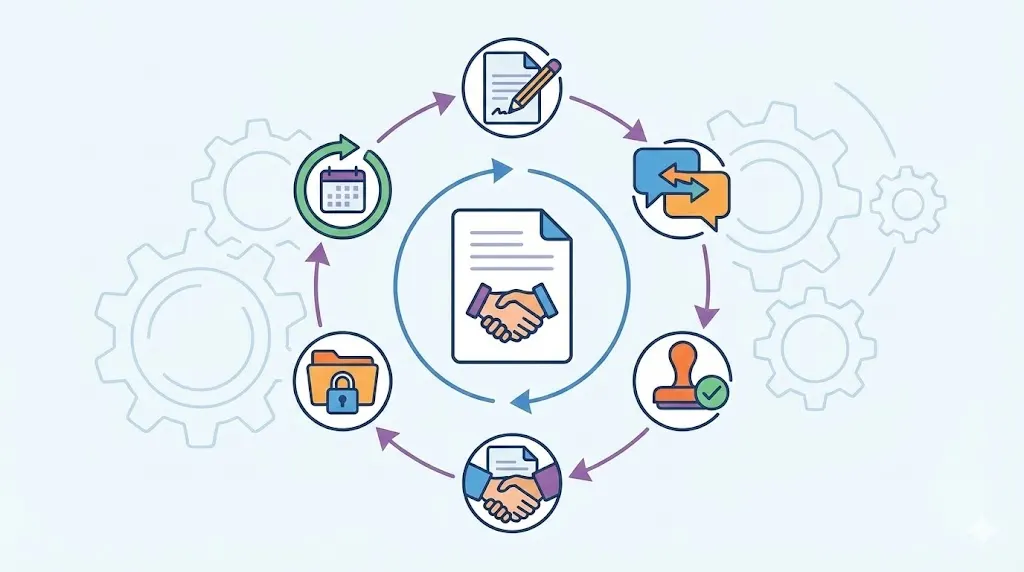
Operating a Continuous Contract Data Management Cycle
Start with intake. Capture each new agreement through a defined request or upload process.
Next, classify the record. Add its type, owner, counterparty, dates, value, and risk details.
Then review the record. Confirm the signed file, related documents, permissions, and required fields.
Monitor duties and dates. Send alerts before renewals, notice periods, milestones, and key obligations.
Report on contract activity. Review missing data, upcoming events, open duties, and department performance.
Plan renewals early. Give owners enough time to negotiate, approve, replace, or end agreements.
Improve the process over time. Use user feedback, error trends, and report results to refine rules.
Related Article: Contract Intelligence: A Strategic Guide
Why Contract Management Software Matters
Contract management software turns a repository into an active work system. It connects drafting, review, approval, signing, tracking, and renewal work.
This goes beyond basic document storage. The software can route tasks, send reminders, support collaboration, and show contract activity.
It can also connect with CRM, ERP, procurement, identity, and e-signature tools. These links reduce repeated entry and keep records current.
Automation helps legal teams handle routine work faster. Business users gain timely access to terms that affect revenue, spending, service, and risk.
A strong system supports measurable improvements. Teams can track retrieval time, renewal activity, process consistency, and administrative effort.
Volody's CLM Software supports centralized storage, AI Contract Summaries, and Obligation Management. It can highlight renewal dates, key duties, and contract risks while helping teams track commitments.
For example, a procurement team can find a supplier agreement, review its renewal date, and track delivery duties in one system.
Want to see how contract management software can simplify your legal workflows? Check out Volody's CLM Software.
FAQ
What is a contract repository?
A contract repository is a secure system for storing business agreements. It can hold customer contracts, supplier agreements, NDAs, amendments, and work orders. Users can search records through full text and metadata. Many repositories also track versions, permissions, obligations, renewals, expirations, and audit activity.
What is the purpose of a contract repository system?
The purpose is to create one trusted source for contract records. It helps teams find agreements, monitor important dates, and understand business duties. It also controls access to sensitive information. This reduces manual work while supporting compliance, collaboration, risk management, and sound decisions.
What are the key features and benefits of contract repository software?
Key features include secure storage, metadata, full-text search, permissions, version control, and audit trails. Alerts can support renewals, expirations, and other milestones. Reporting and integrations connect contract data with business systems. Some tools also use AI to find terms and obligations.
What is the difference between a contract repository and a full CLM platform?
A contract repository mainly stores executed agreements and supports search, access, and tracking. A full CLM platform usually adds drafting, negotiation, approvals, templates, signing, and obligation workflows. Some products provide both functions. Businesses should compare features with their current process and future needs.
How should a business migrate contracts into a repository?
Start by inventorying agreements across drives, inboxes, systems, and paper files. Prioritize active, valuable, and high-risk contracts first. Clean duplicates, define metadata, validate permissions, and test migrated records. Use training and post-launch checks to confirm records remain complete and searchable.
What should businesses look for when choosing a contract repository?
Choose software that delivers secure search, reliable metadata, version control, alerts, obligation tracking, permissions, audit logs, reporting, and business-system integrations. Confirm usability, implementation support, scalability, and total cost before signing, including migration, training, licensing, and administration.
About the Company

Volody AI CLM is an Agentic AI-powered Contract Lifecycle Management platform designed to eliminate manual contracting tasks, automate complex workflows, and deliver actionable insights. As a one-stop shop for all contract activities, it covers drafting, collaboration, negotiation, approvals, e-signature, compliance tracking, and renewals. Built with enterprise-grade security and no-code configuration, it meets the needs of the most complex global organizations. Volody AI CLM also includes AI-driven contract review and risk analysis, helping teams detect issues early and optimize terms. Trusted by Fortune 500 companies, high-growth startups, and government entities, it transforms contracts into strategic, data-driven business assets.





" height="216.72211px" id="FYO0bO80Y" transform="translate(3 6.105)" width="206.073px"/><path d="M 108.174 222 C 88.432 222 70.303 217.239 53.785 207.717 C 37.267 198.196 24.173 185.052 14.504 168.285 C 4.835 151.312 0 132.165 0 110.845 C 0 89.731 4.835 70.792 14.504 54.025 C 24.173 37.052 37.267 23.804 53.785 14.282 C 70.303 4.761 88.432 0 108.174 0 C 128.116 0 146.246 4.761 162.562 14.282 C 179.08 23.804 192.073 37.052 201.541 54.025 C 211.21 70.792 216.044 89.731 216.044 110.845 C 216.044 132.165 211.21 151.312 201.541 168.285 C 192.073 185.052 179.08 198.196 162.562 207.717 C 146.044 217.239 127.915 222 108.174 222 Z M 108.174 183.189 C 120.864 183.189 132.044 180.291 141.713 174.495 C 151.382 168.492 158.936 160.006 164.375 149.035 C 169.814 138.064 172.533 125.334 172.533 110.845 C 172.533 96.355 169.814 83.729 164.375 72.965 C 158.936 61.994 151.382 53.611 141.713 47.815 C 132.044 42.02 120.864 39.122 108.174 39.122 C 95.483 39.122 84.202 42.02 74.332 47.815 C 64.663 53.611 57.109 61.994 51.67 72.965 C 46.231 83.729 43.511 96.355 43.511 110.845 C 43.511 125.334 46.231 138.064 51.67 149.035 C 57.109 160.006 64.663 168.492 74.332 174.495 C 84.202 180.291 95.483 183.189 108.174 183.189 Z" fill="rgba(255, 255, 255, 0.12)" height="222px" id="aa1McFcE9" transform="translate(227.183 3)" width="216.04399999999998px"/><path d="M 42.302 182.257 L 111.799 182.257 L 111.799 216.722 L 0 216.722 L 0 0 L 42.302 0 Z" fill="rgba(255, 255, 255, 0.12)" height="216.72211px" id="yRq4AnrsX" transform="translate(477.721 6.105)" width="111.79899999999998px"/><path d="M 108.174 222 C 88.432 222 70.303 217.239 53.785 207.717 C 37.267 198.196 24.173 185.052 14.504 168.285 C 4.835 151.312 0 132.165 0 110.845 C 0 89.731 4.835 70.792 14.504 54.025 C 24.173 37.052 37.267 23.804 53.785 14.282 C 70.303 4.761 88.432 0 108.174 0 C 128.116 0 146.246 4.761 162.562 14.282 C 179.08 23.804 192.073 37.052 201.541 54.025 C 211.21 70.792 216.045 89.731 216.045 110.845 C 216.045 132.165 211.21 151.312 201.541 168.285 C 192.073 185.052 179.08 198.196 162.562 207.717 C 146.044 217.239 127.915 222 108.174 222 Z M 108.174 183.189 C 120.864 183.189 132.044 180.291 141.713 174.495 C 151.382 168.492 158.936 160.006 164.375 149.035 C 169.814 138.064 172.534 125.334 172.534 110.845 C 172.534 96.355 169.814 83.729 164.375 72.965 C 158.936 61.994 151.382 53.611 141.713 47.815 C 132.044 42.02 120.864 39.122 108.174 39.122 C 95.483 39.122 84.202 42.02 74.332 47.815 C 64.663 53.611 57.108 61.994 51.67 72.965 C 46.231 83.729 43.511 96.355 43.511 110.845 C 43.511 125.334 46.231 138.064 51.67 149.035 C 57.108 160.006 64.663 168.492 74.332 174.495 C 84.202 180.291 95.483 183.189 108.174 183.189 Z" fill="rgba(255, 255, 255, 0.12)" height="222px" id="mo8HQspQ0" transform="translate(609.155 3)" width="216.04500000000007px"/><path d="M 73.727 0 C 95.885 0 115.324 4.45 132.044 13.351 C 148.967 22.252 161.957 34.982 171.027 51.541 C 180.287 67.894 184.917 86.937 184.917 108.671 C 184.917 130.405 180.287 149.449 171.027 165.801 C 161.957 181.947 148.967 194.47 132.044 203.371 C 115.324 212.271 95.885 216.722 73.727 216.722 L 0 216.722 L 0 0 Z M 72.216 179.773 C 94.374 179.773 111.497 173.564 123.583 161.144 C 135.669 148.724 141.713 131.233 141.713 108.671 C 141.713 86.109 135.669 68.515 123.583 55.888 C 111.497 43.055 94.374 36.638 72.216 36.638 L 42.302 36.638 L 42.302 179.773 Z" fill="rgba(255, 255, 255, 0.12)" height="216.72211px" id="I3iXX5Hi_" transform="translate(859.693 6.105)" width="184.91699999999992px"/><path d="M 185.22 0 L 113.91 141.273 L 113.91 216.722 L 71.61 216.722 L 71.61 141.273 L 0 0 L 47.74 0 L 93.06 99.046 L 138.08 0 Z" fill="rgba(255, 255, 255, 0.12)" height="216.72211px" id="nzHyWC0_d" transform="translate(1061.78 6.105)" width="185.22000000000003px"/></svg>)