
Contract boilerplate is a material business risk, not administrative filler. A procurement team may focus on price, service levels, and termination rights. Yet a quiet sentence on notice, force majeure, or liability can decide who carries the loss. A global company that manages contracts in scattered files cannot see those risks early. It needs a clear view of every clause, version, obligation, and exception.
TL;DR
Boilerplate clauses now influence risk, cost, business continuity, and the outcomes of negotiations.
Even minor wording changes can produce materially different results in otherwise similar agreements.
Effective management of standard language requires legal teams to establish a process for identifying, reviewing, and updating it.
Teams can use a central contract system to manage templates, clauses, amendments, and obligations in one place.
In large contract sets, AI can surface unusual terms, missing protections, and key dates.
Better clause control enables legal, procurement, finance, and business teams to act with greater confidence.
Why Contract Boilerplate Matters More Than Ever
For years, deal teams treated boilerplate as the final section of a contract. Additionally, their attention went instead to price, delivery, scope, and payment terms. Those topics still matter, but standard clauses often decide what happens after a dispute, outage, breach, or sudden market shock.
Boilerplate does not mean unimportant language. It usually means language that appears across many contracts. Common examples include force majeure, liability caps, indemnity, governing law, assignment, notices, confidentiality, and dispute resolution.
A single clause may govern hundreds of agreements within a business. That scale can hide risk. A small change in one sentence may affect many customer relationships, suppliers, or business units.
Consider a technology provider serving customers worldwide. Its standard force majeure language addresses natural disasters and government action. It says nothing about public health emergencies, supply shortages, or widespread network failure. The wording may look familiar while still failing to address the events that threaten service delivery.
The same problem can arise in a limitation of liability clause. One agreement may cap damages at fees paid during the prior twelve months. Another may use total contract value. A third may exclude data loss from the cap. All three clauses may look standard to a busy reviewer, yet each creates a different risk profile.
The American Bar Association publishes resources on contract drafting and interpretation. Its guidance reflects a basic truth: contract meaning depends on the words parties choose. Even familiar language still requires careful review.
Boilerplate can change business outcomes
A clause is often the point at which legal language produces a practical business result. For instance:
A notice clause determines whether a termination notice took effect.
An assignment provision may determine the consequences of a merger, sale, or internal reorganization.
A renewal clause can extend a contract without a fresh negotiation.
A governing law clause can influence dispute costs and legal strategy.
A data protection provision may impose duties beyond the main service scope.
Payment, delivery, and performance duties may all turn on the wording of force majeure provisions.
These provisions work together rather than operating independently. Force majeure provisions may excuse delayed performance. A payment clause may nevertheless require payment during that delay. A termination clause may permit exit after a set period. A liability clause may then limit the resulting damages.
Legal teams should evaluate boilerplate in the context of the full deal. They should assess each clause in relation to the surrounding provisions rather than treating it as an isolated paragraph. The correct question is simple: what result does this language create for the business?
Why familiar clauses create review risk
Familiarity can reduce attention. A lawyer may recognize a standard clause and move past it quickly. A business user may assume that all contracts use the same language. Moreover, that assumption, like the lawyer's, is unsafe without evidence.
Companies often collect agreements through many channels. Customer contracts may sit in shared drives maintained by sales teams. Procurement may use a sourcing platform, while local offices retain paper copies and acquired companies maintain separate repositories.
This fragmentation creates several problems:
Teams cannot find every agreement that contains a target clause.
Legal may be unable to confirm which version the business approved.
Operations may overlook responsibilities associated with a clause.
Finance may lack visibility into credits, fees, or renewal terms.
Leaders have no reliable way to measure exposure across entities or regions.
The risk is especially acute during a major event. A supply disruption may require the company to examine its delivery duties. A cyber incident may activate notice and security terms. A merger may call for assignment review across thousands of agreements.
The review then becomes urgent, manual, and expensive. Lawyers search documents one by one. Teams assemble temporary spreadsheets. Different groups apply different definitions. Next, senior leaders receive partial answers instead of a reliable view.
Boilerplate changes after major events
Contract language often changes after a crisis. Parties add new examples, clearer definitions, and tighter procedures. They may define a trigger, name a source of authority, or explain what each party must do.
The pattern extends beyond force majeure. A data breach can lead to new security terms. A supply shortage can produce stronger continuity obligations. A regulatory change can alter audit rights, reporting duties, or data location rules.
World Commerce and Contracting tracks commonly negotiated contract terms through its research program. Its research indicates that negotiation priorities shift with commercial conditions. That movement should encourage legal teams to review their standard language on a regular schedule.
A practical test for any standard clause
Ask these questions before approving a clause library or template:
What business event does this clause control?
If that event occurs, which team is responsible for acting?
Are the clause's terms sufficiently clear and measurable?
Could it conflict with another provision?
Will it operate effectively across all relevant jurisdictions?
Does it align with current policy and insurance coverage?
Can the business track the related deadline or duty?
Would an approved fallback position provide useful flexibility?
This test makes boilerplate review a business control. It also gives legal operations a repeatable method for improving contract quality.
Related articles: What Are Liability Caps in Contracts?
How Boilerplate Clauses Create Hidden Risk
Two contracts may share the same title and commercial purpose. Additionally, their boilerplate can nevertheless impose different duties. The difference may sit in one word, one exception, or one missing process step.
Force majeure offers a clear example. One clause may list events such as war, flood, and government action. Another may include epidemics or public health orders. A third may condition relief on proof that the event could not be avoided or its effects mitigated.
Those details matter. Relief may depend on compliance with a notice deadline. Unaffected duties may continue during the disruption. Cooperation in finding an alternative service may also be required. Payment duties may remain outside the relief.
Common clauses that deserve closer attention
Force majeure
Review the events, definitions, notice process, and effects first. The relevant question is whether the clause covers events that fit the company’s actual risk profile. A broad phrase should not be read to cover every future disruption.
The post-event consequences should be stated as well. Does performance pause? Can either party terminate after a set period? Are the parties required to meet to reduce the impact? Must the affected party provide updates?
Limitation of liability
Consider the financial cap together with its exclusions. The key issue is whether the cap covers every claim or only specified categories. The agreement may also impose separate caps for data breaches, confidentiality failures, intellectual property claims, or regulatory penalties.
Moreover, even where direct recovery remains available for a substantial operational loss, the contract may exclude indirect damages. Elsewhere, the cap may be so low that it bears little relation to the value of the services. Legal and finance teams should measure the clause against potential harm—not just the contract price.
Indemnification
An indemnity can shift defense costs, settlement control, and payment duties. Identify the protected parties and the events that trigger the duty; then determine whether notice is required. It should be clear who controls the defense and whether settlement requires the other party’s approval.
Coverage may include intellectual property claims while excluding changes made by the customer. These limits can matter more than the indemnity heading.
Renewal and termination
A renewal clause can extend a relationship without a new signature. Assess the renewal period, notice window, pricing changes, and termination rights, and make sure the business calendar captures the required notice date.
A missed notice date can create a new term. That result may surprise a business owner who assumed the contract would expire automatically. The result can be unwanted spend, continuing service commitments, or a rushed exit plan.
Notices
Typically, a notice clause specifies the delivery method, address, contact, and timing rule. Although email may seem sufficient, the contract may require courier delivery. Effectiveness may instead turn on receipt by a named person.
Such details can affect termination, breach claims, price changes, and renewal decisions. Store notice details in a searchable system. Assign ownership to a team that can act before a deadline passes.
Why clause variation spreads
Variation often enters through negotiation. A sales team may accept customer language to close a deal. To meet a sourcing deadline, a procurement manager may rely on a supplier template. Furthermore, local counsel may revise a clause for local law.
Template drift is another source of variation. An old template may remain available on a shared drive. A business unit may copy a clause from a prior agreement. A new company policy changes approved language, but teams do not remove old files.
Over time, the company loses one standard position. It now has several versions, each with different risk. Legal may know the preferred wording, but older text can remain in use across the business.
A clause library helps only when it includes controls. For each clause, record its owner, approval date, version, use case, and fallback language. The system should let users select the correct version without asking a lawyer.
How to review a clause across a contract portfolio
A portfolio review should follow a clear process:
Define the target clause and its business purpose.
Next, assemble all relevant agreements, amendments, schedules, and related documents.
Then extract the relevant text and surrounding provisions.
Group clauses according to wording, risk, region, and contract type.
Test each group against current policy.
Prioritize issues by financial, operational, and legal impact.
Set owners and deadlines for follow-up.
Finally, track amendments, waivers, and business decisions.
This process works for force majeure, but also for audit rights, data use, liability, and renewals. It helps teams move from document review to portfolio control.
The value of context
A clause alone cannot answer every business question. The team also needs contract value, service type, region, counterparty, renewal date, and performance status. A high-risk provision in a small pilot may deserve less attention than the same risk in a critical supplier agreement.
Context helps legal teams set priorities. It also helps business leaders understand why a review matters. Instead of saying, “We found unusual language,” the team can explain, “This clause affects 42 critical suppliers and lacks a clear outage remedy.”
Related articles: How Tech Firms Can Use Contracts to Cut Risk in 2026
What Legal Operations Should Do With Boilerplate
These teams sit between policy and daily work. Additionally, they also help legal departments create repeatable processes, manage data, and support business users. Boilerplate control gives them a practical area for measurable improvement.
The first step involves defining ownership. Legal should own legal positions and approved wording. Procurement, sales, finance, security, and operations should help define business needs. Changes to a clause should account for their effect on other groups, rather than being made in isolation by one team.
Build a clause governance process
A useful process covers the full life of a clause:
Draft the preferred language.
Explain why that language was selected.
Define the fallback positions the business is prepared to accept.
Flag clauses that require senior approval.
Publish the approved version where users can access it.
Moreover, train users to apply it in the right context.
Revisit the language after significant legal or business changes.
Retire obsolete versions and block their use.
The process should not turn into slow bureaucracy. Its purpose is to help users choose correctly and move faster. A short intake form can capture the contract type, business owner, region, value, and requested changes.
Create a standard review playbook
A playbook tells reviewers how to handle common issues. It should explain which clauses require review, what language is acceptable, and when escalation is warranted. It should also show examples in plain English.
For a force majeure clause, reviewers can use the playbook to confirm:
Covered events
Notice timing
Proof requirements
Mitigation duties
Payment treatment
Suspension rights
Termination rights
Alternative performance options
For a liability clause, the review should cover:
General liability cap
Special caps
Excluded damages
Carve-outs
Insurance alignment
Third-party claims
Data and confidentiality exposure
The playbook must reflect business policy. It should not become a hidden legal memo that only specialists can understand.
Set rules for exceptions
Furthermore, negotiation frequently requires commercial teams to depart from the preferred position. A customer may reject the preferred clause. A supplier may propose an alternative remedy. Local law may also require country-specific language.
The objective is not to eliminate every exception. Instead, exceptions should be controlled through defined approval levels based on risk, value, and business impact.
For example:
Even a minor wording change may warrant legal review.
Approval from legal and finance may be necessary for an increased liability cap.
A broad indemnity may warrant a decision by a senior executive.
A major deviation for a critical supplier may require review by the risk committee.
Therefore, record the decision and its reason. Future reviewers should understand why the company accepted the exception. This record also keeps the same issue from being reopened without reference to the original decision.
Connect clauses to obligations
Contract language has practical value only when teams act on it. Also, a notice requirement should trigger a calendar alert. Performance data underpins a service credit provision. An audit right needs a clearly assigned owner. A renewal clause requires both budget availability and a business decision.
Legal operations should therefore map important clauses to tasks. The map can include:
Clause type | Related action | Suggested owner |
|---|---|---|
Renewal | Decide whether to continue | Business owner |
Notice | Send notice through required channel | Contract manager |
Service level | Review performance and credits | Operations |
Insurance | Collect updated certificates | Risk or procurement |
Audit right | Schedule review and preserve records | Compliance |
Data security | Confirm control evidence | Security |
This approach makes contract language operational. It also limits the risk of storing a clause without assigning responsibility for its practical effect.
Prepare for bulk review and repapering
A policy change may affect thousands of contracts. Manual review can consume months. Teams need a plan before the next major event forces action.
Start with a contract inventory. Therefore, identify which agreements matter most. As a result, rank them by value, criticality, region, renewal date, and clause risk. Review high-priority agreements first.
Then select the appropriate response:
Accept the current wording.
Track the risk and add an internal control.
Obtain a side letter or amendment.
Defer resolution until renewal.
Replace the agreement.
Accept the risk through a documented decision.
Not every contract needs an amendment. Next, a risk-based plan helps teams spend legal time where it can reduce the most exposure.
Measure the process
Performance should be tracked against clear measures. Useful measures include:
Time to find all contracts with a target clause
Percentage of contracts with extracted metadata
Use of current approved templates
Number of unapproved clause deviations
Time spent on contract review
Percentage of obligations with assigned owners
Missed renewal or notice deadlines
Time needed to complete a bulk amendment campaign
The Association of Corporate Counsel publishes research on legal department priorities and operating practices. Its reports often highlight pressure to improve efficiency, data quality, and business alignment. Consequently, boilerplate governance supports all three goals.
Communicate with business users
Business users need clear guidance, not long legal explanations. Explain the clause’s effect, when it applies, and when users should seek assistance. Show the effect of a change through a short example.
For instance, tell a sales manager: “This fallback permits an increased cap on liability only when the customer pays an approved premium.” That gives the manager a clear decision path. This cuts down on repeated questions.
Training should be tailored to each user’s role. Sales needs rapid intake and a defined set of approved options. Procurement depends on clear supplier-risk rules. Finance works from payment and renewal data. Legal needs a complete history of clause changes and the related approval records.
Related articles: What is Contract Risk & How to manage it?
How CLM Software Solves This
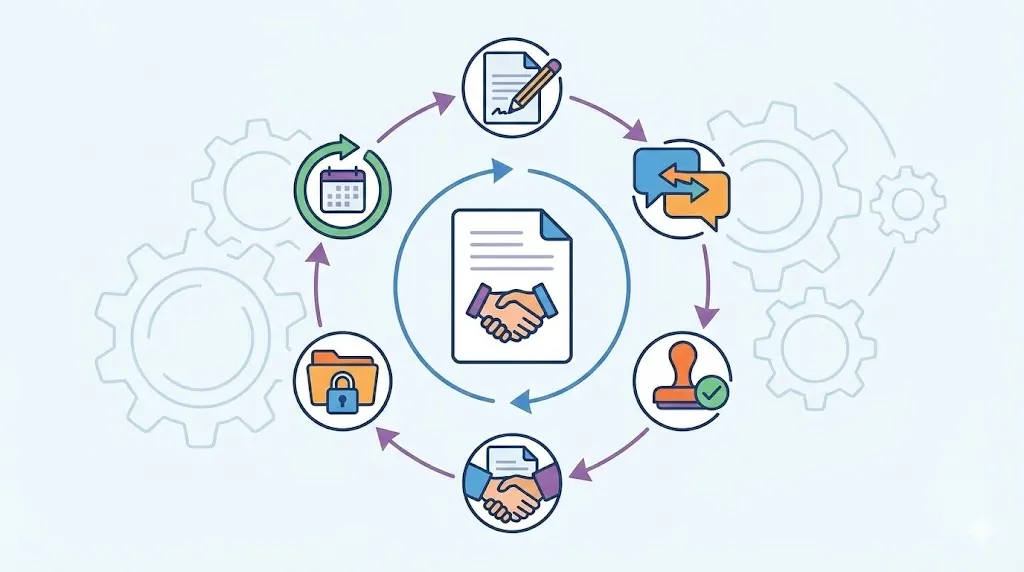
Contract management software gives teams a single environment for creating, reviewing, approving, storing, and monitoring agreements. Additionally, it also manages approved templates and clause libraries, so users do not pull old wording from scattered files. It can also route exceptions to the right approver and record each decision.
AI adds value during review and migration. It can identify unusual language, missing provisions, key dates, obligations, and deviations from a playbook. Teams can use those findings in a central repository that supports search, version control, OCR, metadata extraction, alerts, and audit trails.
Volody supports these workflows through AI-assisted drafting and contract review, along with clause recommendations, summaries, metadata extraction, configurable risk analysis, and obligation tracking. Legal and business teams can use its request portal, template controls, approval workflows, and searchable repository to follow a shared process.
With Volody's CLM Software, teams can manage contracts from initial drafting and assessment through approval and ongoing tracking.
FAQ
How is boilerplate defined in contract drafting?
Additionally, boilerplate consists of standard language used across many agreements. Common examples include force majeure, indemnity, notices, assignment, liability limits, and governing law. Standardized language still requires scrutiny because seemingly minor changes can alter the legal and business consequences.
Why should companies examine standard contract provisions?
Boilerplate clauses can control financial exposure, performance duties, renewal rights, and dispute options. A familiar clause may contain outdated language or fail to address current business risks. Regular review helps companies find gaps before an event creates pressure.
Which boilerplate clauses deserve the most attention?
Start with force majeure, limitation of liability, indemnification, renewal, termination, notices, confidentiality, assignment, and dispute resolution. The right priority depends on the company’s services, counterparties, regulations, and risk profile. Review clauses tied to major financial or operational outcomes first.
How does force majeure language vary between contracts?
Moreover, the differences may concern covered events, notice rules, proof requirements, mitigation duties, and termination rights. Some clauses may mention health emergencies or government orders. Others may use broad language without explaining what relief applies.
Is AI capable of analyzing boilerplate clauses?
AI can compare contract language with approved templates and playbooks. It can flag unusual terms, missing provisions, and deviations for human review. Legal professionals should still make the final judgment, especially for material exceptions or complex local law issues.
How can companies standardize contract clauses?
Create an approved clause library with preferred wording, fallback options, owners, and version history. The library should supply the language used in templates and intake workflows. Retire superseded versions, and route material deviations for approval.
How should a company review thousands of existing contracts?
Start by collecting the agreements and converting any paper files into searchable records. Then extract target clauses, group similar wording, and rank agreements by value, risk, and business importance. Furthermore, assign owners next, and decide whether to amend, monitor, renew, or accept each issue.
Who should own boilerplate governance?
Legal should own legal positions and approved wording. Legal operations can manage the process, data, workflows, and reporting. Business, procurement, finance, security, and compliance teams should help define practical needs and approve relevant exceptions.
What operational effects do boilerplate clauses have?
These provisions often generate actions, deadlines, and evidence requirements. For example, a renewal clause requires a reminder and a business decision. A service credit clause needs performance data, while a notice clause needs the correct delivery method and recipient.
When is amendment of an existing contract warranted?
Establish a risk-based amendment plan now. Prioritize contracts with material exposure, serious gaps, or policy conflicts, then decide whether to amend, monitor, renew, or formally accept each issue. Use contract visibility and clear ownership to reduce exposure before the next event creates pressure.
About the Company

Volody AI CLM is an Agentic AI-powered Contract Lifecycle Management platform designed to eliminate manual contracting tasks, automate complex workflows, and deliver actionable insights. As a one-stop shop for all contract activities, it covers drafting, collaboration, negotiation, approvals, e-signature, compliance tracking, and renewals. Built with enterprise-grade security and no-code configuration, it meets the needs of the most complex global organizations. Volody AI CLM also includes AI-driven contract review and risk analysis, helping teams detect issues early and optimize terms. Trusted by Fortune 500 companies, high-growth startups, and government entities, it transforms contracts into strategic, data-driven business assets.





" height="216.72211px" id="FYO0bO80Y" transform="translate(3 6.105)" width="206.073px"/><path d="M 108.174 222 C 88.432 222 70.303 217.239 53.785 207.717 C 37.267 198.196 24.173 185.052 14.504 168.285 C 4.835 151.312 0 132.165 0 110.845 C 0 89.731 4.835 70.792 14.504 54.025 C 24.173 37.052 37.267 23.804 53.785 14.282 C 70.303 4.761 88.432 0 108.174 0 C 128.116 0 146.246 4.761 162.562 14.282 C 179.08 23.804 192.073 37.052 201.541 54.025 C 211.21 70.792 216.044 89.731 216.044 110.845 C 216.044 132.165 211.21 151.312 201.541 168.285 C 192.073 185.052 179.08 198.196 162.562 207.717 C 146.044 217.239 127.915 222 108.174 222 Z M 108.174 183.189 C 120.864 183.189 132.044 180.291 141.713 174.495 C 151.382 168.492 158.936 160.006 164.375 149.035 C 169.814 138.064 172.533 125.334 172.533 110.845 C 172.533 96.355 169.814 83.729 164.375 72.965 C 158.936 61.994 151.382 53.611 141.713 47.815 C 132.044 42.02 120.864 39.122 108.174 39.122 C 95.483 39.122 84.202 42.02 74.332 47.815 C 64.663 53.611 57.109 61.994 51.67 72.965 C 46.231 83.729 43.511 96.355 43.511 110.845 C 43.511 125.334 46.231 138.064 51.67 149.035 C 57.109 160.006 64.663 168.492 74.332 174.495 C 84.202 180.291 95.483 183.189 108.174 183.189 Z" fill="rgba(255, 255, 255, 0.12)" height="222px" id="aa1McFcE9" transform="translate(227.183 3)" width="216.04399999999998px"/><path d="M 42.302 182.257 L 111.799 182.257 L 111.799 216.722 L 0 216.722 L 0 0 L 42.302 0 Z" fill="rgba(255, 255, 255, 0.12)" height="216.72211px" id="yRq4AnrsX" transform="translate(477.721 6.105)" width="111.79899999999998px"/><path d="M 108.174 222 C 88.432 222 70.303 217.239 53.785 207.717 C 37.267 198.196 24.173 185.052 14.504 168.285 C 4.835 151.312 0 132.165 0 110.845 C 0 89.731 4.835 70.792 14.504 54.025 C 24.173 37.052 37.267 23.804 53.785 14.282 C 70.303 4.761 88.432 0 108.174 0 C 128.116 0 146.246 4.761 162.562 14.282 C 179.08 23.804 192.073 37.052 201.541 54.025 C 211.21 70.792 216.045 89.731 216.045 110.845 C 216.045 132.165 211.21 151.312 201.541 168.285 C 192.073 185.052 179.08 198.196 162.562 207.717 C 146.044 217.239 127.915 222 108.174 222 Z M 108.174 183.189 C 120.864 183.189 132.044 180.291 141.713 174.495 C 151.382 168.492 158.936 160.006 164.375 149.035 C 169.814 138.064 172.534 125.334 172.534 110.845 C 172.534 96.355 169.814 83.729 164.375 72.965 C 158.936 61.994 151.382 53.611 141.713 47.815 C 132.044 42.02 120.864 39.122 108.174 39.122 C 95.483 39.122 84.202 42.02 74.332 47.815 C 64.663 53.611 57.108 61.994 51.67 72.965 C 46.231 83.729 43.511 96.355 43.511 110.845 C 43.511 125.334 46.231 138.064 51.67 149.035 C 57.108 160.006 64.663 168.492 74.332 174.495 C 84.202 180.291 95.483 183.189 108.174 183.189 Z" fill="rgba(255, 255, 255, 0.12)" height="222px" id="mo8HQspQ0" transform="translate(609.155 3)" width="216.04500000000007px"/><path d="M 73.727 0 C 95.885 0 115.324 4.45 132.044 13.351 C 148.967 22.252 161.957 34.982 171.027 51.541 C 180.287 67.894 184.917 86.937 184.917 108.671 C 184.917 130.405 180.287 149.449 171.027 165.801 C 161.957 181.947 148.967 194.47 132.044 203.371 C 115.324 212.271 95.885 216.722 73.727 216.722 L 0 216.722 L 0 0 Z M 72.216 179.773 C 94.374 179.773 111.497 173.564 123.583 161.144 C 135.669 148.724 141.713 131.233 141.713 108.671 C 141.713 86.109 135.669 68.515 123.583 55.888 C 111.497 43.055 94.374 36.638 72.216 36.638 L 42.302 36.638 L 42.302 179.773 Z" fill="rgba(255, 255, 255, 0.12)" height="216.72211px" id="I3iXX5Hi_" transform="translate(859.693 6.105)" width="184.91699999999992px"/><path d="M 185.22 0 L 113.91 141.273 L 113.91 216.722 L 71.61 216.722 L 71.61 141.273 L 0 0 L 47.74 0 L 93.06 99.046 L 138.08 0 Z" fill="rgba(255, 255, 255, 0.12)" height="216.72211px" id="nzHyWC0_d" transform="translate(1061.78 6.105)" width="185.22000000000003px"/></svg>)