

Trust is the backbone of every successful business relationship. Imagine launching a new partnership only to find communication breaks down or commitments go unmet. How do top companies build and maintain trust to avoid these pitfalls? Insights from a comprehensive study by Economist Impact shed light on practical ways businesses can earn and keep trust with partners and customers. This article explores those findings and offers actionable guidance for leaders aiming to strengthen trust in their organizations.
Related Article: Inflation, Turnover, and the Contract Management Challenge
TL;DR
Trust in business depends on transparency, integrity, and accountability as core behaviors.
More than three-quarters of executives rank trust as either critical or among the highest priorities in their strategic partnerships.
The pandemic revealed significant trust vulnerabilities, primarily due to diminished face-to-face engagement and widespread disruptions in supply chains.
Customer loyalty is profoundly shaped by trust, which also drives higher employee productivity and underpins long-term financial sustainability.
Limited supply chain visibility remains a major hurdle to building trust.
Enhancing transparency can be achieved through open data sharing combined with effective contract management tools.
What Does Trust Really Mean in Business?
Trust goes beyond a simple feeling. Additionally, it also encompasses a set of behaviors and expectations that partners depend on to collaborate effectively. Economist Impact’s research defines trust as a mix of three key traits: ability, benevolence, and integrity.
Ability means having the skills and resources to deliver on promises.
Benevolence is the genuine intention to act in the other party’s interest.
Integrity involves honesty and adherence to ethical principles.
When companies consistently exhibit these traits, they earn a reputation for reliability that facilitates collaboration, reduces conflicts, and strengthens partnerships.
Executives involved in the study emphasized transparency as essential for cultivating trust.
This quality demands the open disclosure of pertinent information, even when it exposes difficulties or vulnerabilities.
Moreover, in the absence of transparency, trust diminishes because partners lack the means to confirm assertions or foresee potential risks.
Other important behaviors include:
Collaboration: Engaging jointly to address challenges and drive innovation.
Consistency: Delivering reliable performance over time.
Accountability: Taking responsibility for both achievements and setbacks.
Competency: Demonstrating sustained excellence in expertise and professionalism.
More than 80% of respondents said they would prefer to work with partners who show transparency, accountability, and integrity. These traits create a foundation where business relationships can thrive.
Related articles: Legal Playbook: Reasons Why Your Business Needs One
How Has the Pandemic Changed Trust in Business?
The COVID-19 pandemic disrupted traditional ways of building trust. Additionally, before the pandemic, many professional relationships were often reinforced through face-to-face meetings, informal conversations, and shared experiences. Lockdowns and travel restrictions made these personal interactions impossible.
Executives identified multiple pandemic-related obstacles that weakened trust. One significant issue was the drastic reduction in personal contact, as remote work environments curtailed opportunities for informal relationship-building. Additionally, organizations grappled with ongoing uncertainty in decision-making, facing ambiguous conditions that required rapid and often unprecedented strategic adjustments. The marketplace experienced severe supply and demand shocks, which placed extraordinary pressure on established contractual frameworks. Furthermore, concerns about supplier reliability increased, with doubts arising regarding partners’ capacity to consistently fulfill their contractual obligations.
These factors created stress and mistrust. Businesses had to rethink how to build trust without relying on in-person connections.
For example, a procurement manager might have previously visited supplier factories to verify quality and capacity. During the pandemic, this was not possible. Instead, they had to rely on digital communication and data sharing, which required new levels of transparency and responsiveness.
The pandemic highlighted the need for clear communication, frequent updates, and flexibility. Companies that adapted quickly by sharing real-time information and collaborating closely were better able to maintain trust.
Related articles: How Legal and Finance Can Collaborate Better on Contracts
Why Do Companies Prioritize Building Trust?
Trust is not just a feel-good concept. Additionally, it significantly influences financial performance and the sustainability of a business over time. According to Dr. Isabel Cane from the OECD’s Trust in Business initiative, companies today want to balance profit with social value. This evolving emphasis on responsible capitalism is fundamentally underpinned by trust.
Here are some reasons companies invest in building trust:
Customer loyalty: Over 80% of consumers say trust influences their buying decisions. Trusted companies retain customers even when competitors offer alternatives.
Employee productivity: Research indicates that trust enhances employee engagement, lowers turnover rates, and strengthens collaboration.
Revenue growth: Trustworthy companies consistently realize durable increases in revenue streams.
Sustainability goals: Trust helps companies meet environmental and social targets by aligning with responsible partners.
Risk reduction: Transparent relationships reduce misunderstandings, disputes, and compliance issues.
For example, a retailer working with a trusted supplier can confidently promote product quality and ethical sourcing. This builds customer trust and loyalty, which translates into repeat business and positive brand reputation.
Related articles: Understanding Contract Risk Exposure in Business
What Makes Building Trust So Hard?
Despite its importance, building trust remains difficult. Economist Impact’s study found that limited supply chain visibility is the biggest barrier. Many companies struggle to see beyond their immediate suppliers to understand the full network of partners involved.
This lack of visibility causes problems:
Companies cannot verify where materials come from or how products are made.
Partners hesitate to share sensitive data due to confidentiality concerns.
Contract information is often scattered across systems, making it hard to access quickly.
Disruptions like geopolitical events or pandemics expose hidden risks.
For example, a manufacturer may not know that a key component comes from a region affected by conflict. Such unawareness hampers their capacity to foresee potential challenges and limits opportunities to communicate with customers in advance.
Only a minority of companies approximately 25% maintain consistent data exchange with their partners.
This limited transparency obstructs effective decision-making processes and erodes stakeholder confidence.
Another challenge is inconsistent contract management. Contracts contain critical details about obligations, timelines, and penalties. When contracts are stored in different locations or formats, it becomes difficult to track compliance or respond to changes.
Building trust requires companies to overcome these hurdles by improving data sharing, contract visibility, and communication.
Related articles: How Contract Audit Trails Strengthen Compliance
How Can Companies Improve Trust with Partners?
Businesses can take practical steps to strengthen trust in their relationships. Here are key actions based on the study and industry best practices:
Increase transparency: Share relevant information openly, including risks and challenges. One effective approach involves implementing interactive dashboards or secure portals that grant stakeholders immediate access to vital data.
Standardize contract management: Consolidating all contracts within a unified system enhances oversight capabilities and reinforces control frameworks.
Utilizing standardized templates supports consistency across agreements, while meticulous monitoring of critical deadlines and compliance requirements guarantees accountability.
Collaborate proactively: Engaging partners early in project development fosters joint planning and allows challenges to be addressed in a collaborative manner.
Encouraging a culture that prioritizes continuous innovation alongside open, constructive feedback lays a robust foundation for enduring partnerships.
Build accountability: Clearly delineate roles and responsibilities to eliminate uncertainty.
Diligent adherence to commitments and prompt resolution of issues are essential to maintaining trust.
Improve supply chain visibility: Conduct thorough supply chain mapping and implement continuous monitoring of supplier performance.
Use technology: Adopt advanced tools designed to automate contract lifecycle management, perform comprehensive risk analyses, and streamline data exchange.
For instance, a company might implement a shared platform where partners can view contract milestones, delivery schedules, and compliance reports. This openness builds confidence and reduces disputes.
Training employees on trust-building behaviors also helps. When teams understand the importance of honesty, respect, and reliability, they can foster stronger relationships.
Related articles: Legal Playbook: Reasons Why Your Business Needs One
What Progress Are Businesses Making on Trust?
The study shows encouraging signs of progress. Additionally, over half of the surveyed companies have initiated measures to enhance data sharing with their partners. A considerable number have allocated resources toward digital solutions aimed at increasing contract transparency and monitoring supply chains more effectively.
Companies that prioritize trust report benefits such as:
Accelerated decision-making processes facilitated by improved information flow.
Reduced exposure to risks related to contract breaches and disputes.
A deeper loyalty from both customers and partners.
An enhanced reputation alongside greater brand equity.
Despite these advances, significant challenges persist. A large segment of organizations remains cautious about sharing sensitive data. Concerns regarding security vulnerabilities, potential competitive disadvantages, and regulatory compliance remain prevalent.
Progress requires the establishment of well-defined policies governing data privacy and governance. Cultivating a culture of trust within organizations is a prerequisite to enabling open data sharing among external partners.
Related articles: How Legal and Finance Can Collaborate Better on Contracts
Why Contract Management Software Matters
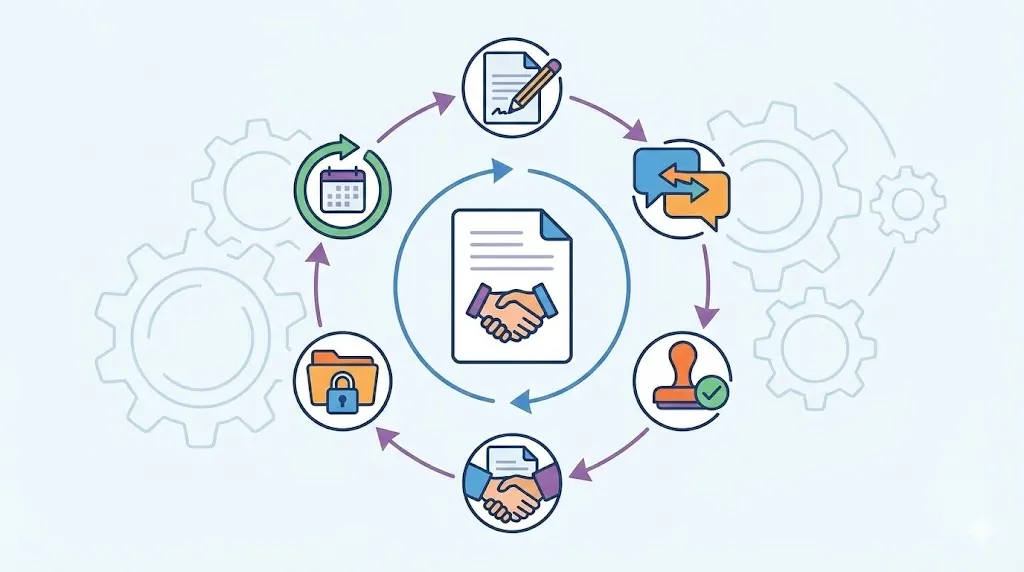
Contract management solutions are instrumental in establishing trust. Additionally, it also centralizes contracts and related data, making it easier to access, track, and analyze information. This transparency helps companies meet their commitments and respond quickly to changes.
Key benefits offered by these systems include:
Central repository: Store all contracts securely in one place with full search capabilities.
Automated alerts: Receive reminders for renewals, obligations, and deadlines to avoid surprises.
Risk detection: Identify risky clauses or missing provisions automatically.
Collaboration tools: Enable multiple stakeholders to review, comment, and approve contracts efficiently.
Data extraction: Pull key terms and metadata to create dashboards and reports.
Volody’s contract management solution offers AI-powered drafting, review, and metadata extraction to speed up contract creation and reduce errors. It also supports approval workflows and electronic signatures to streamline execution.
By improving contract visibility and control, companies can build stronger, more transparent relationships with partners and customers.
See how Volody's CLM Software helps your team move contracts forward with confidence.
FAQ
What are the main traits that build trust in business?
Additionally, trust is shaped by three critical dimensions: ability, benevolence, and integrity. Companies must demonstrate competence, show genuine concern for their partners' interests, and maintain honesty in all dealings.
Why is transparency so important for trust?
Transparency allows partners to see the true state of affairs. Without it, they cannot verify claims or prepare for risks, which damages trust.
How did the pandemic affect business trust?
Face-to-face contact diminished significantly during the pandemic, while supply chains experienced considerable disruptions.
What challenges prevent companies from sharing data with partners?
Communication became more difficult, and uncertainty increased, thereby placing additional strain on trust.
How does contract management software improve trust?
It centralizes contracts, automates alerts, and provides clear visibility into obligations and risks. This capability enables companies to fulfill commitments with greater consistency.
Can trust impact financial performance?
Yes, trusted companies enjoy higher customer loyalty, employee productivity, and sustained revenue growth.
What steps can companies take to build trust quickly?
Increase transparency, standardize contracts, collaborate closely, define accountability, and use technology to share data securely.
How can supply chain visibility improve trust?
Knowing who supplies what and where helps companies anticipate disruptions and communicate openly with partners.
Is trust only important for external partners?
No, trust within teams and departments is equally important for smooth operations and collaboration.
What role does leadership play in building trust?
Leaders set the tone by modeling trustworthy behavior, promoting transparency, and encouraging open communication.
This detailed guide explains how trust works in business, why it matters, and what companies can do to build it. Using clear behaviors, better data sharing, and smart contract management tools, businesses can create partnerships that last and thrive.
About the Company

Volody AI CLM is an Agentic AI-powered Contract Lifecycle Management platform designed to eliminate manual contracting tasks, automate complex workflows, and deliver actionable insights. As a one-stop shop for all contract activities, it covers drafting, collaboration, negotiation, approvals, e-signature, compliance tracking, and renewals. Built with enterprise-grade security and no-code configuration, it meets the needs of the most complex global organizations. Volody AI CLM also includes AI-driven contract review and risk analysis, helping teams detect issues early and optimize terms. Trusted by Fortune 500 companies, high-growth startups, and government entities, it transforms contracts into strategic, data-driven business assets.





" height="216.72211px" id="FYO0bO80Y" transform="translate(3 6.105)" width="206.073px"/><path d="M 108.174 222 C 88.432 222 70.303 217.239 53.785 207.717 C 37.267 198.196 24.173 185.052 14.504 168.285 C 4.835 151.312 0 132.165 0 110.845 C 0 89.731 4.835 70.792 14.504 54.025 C 24.173 37.052 37.267 23.804 53.785 14.282 C 70.303 4.761 88.432 0 108.174 0 C 128.116 0 146.246 4.761 162.562 14.282 C 179.08 23.804 192.073 37.052 201.541 54.025 C 211.21 70.792 216.044 89.731 216.044 110.845 C 216.044 132.165 211.21 151.312 201.541 168.285 C 192.073 185.052 179.08 198.196 162.562 207.717 C 146.044 217.239 127.915 222 108.174 222 Z M 108.174 183.189 C 120.864 183.189 132.044 180.291 141.713 174.495 C 151.382 168.492 158.936 160.006 164.375 149.035 C 169.814 138.064 172.533 125.334 172.533 110.845 C 172.533 96.355 169.814 83.729 164.375 72.965 C 158.936 61.994 151.382 53.611 141.713 47.815 C 132.044 42.02 120.864 39.122 108.174 39.122 C 95.483 39.122 84.202 42.02 74.332 47.815 C 64.663 53.611 57.109 61.994 51.67 72.965 C 46.231 83.729 43.511 96.355 43.511 110.845 C 43.511 125.334 46.231 138.064 51.67 149.035 C 57.109 160.006 64.663 168.492 74.332 174.495 C 84.202 180.291 95.483 183.189 108.174 183.189 Z" fill="rgba(255, 255, 255, 0.12)" height="222px" id="aa1McFcE9" transform="translate(227.183 3)" width="216.04399999999998px"/><path d="M 42.302 182.257 L 111.799 182.257 L 111.799 216.722 L 0 216.722 L 0 0 L 42.302 0 Z" fill="rgba(255, 255, 255, 0.12)" height="216.72211px" id="yRq4AnrsX" transform="translate(477.721 6.105)" width="111.79899999999998px"/><path d="M 108.174 222 C 88.432 222 70.303 217.239 53.785 207.717 C 37.267 198.196 24.173 185.052 14.504 168.285 C 4.835 151.312 0 132.165 0 110.845 C 0 89.731 4.835 70.792 14.504 54.025 C 24.173 37.052 37.267 23.804 53.785 14.282 C 70.303 4.761 88.432 0 108.174 0 C 128.116 0 146.246 4.761 162.562 14.282 C 179.08 23.804 192.073 37.052 201.541 54.025 C 211.21 70.792 216.045 89.731 216.045 110.845 C 216.045 132.165 211.21 151.312 201.541 168.285 C 192.073 185.052 179.08 198.196 162.562 207.717 C 146.044 217.239 127.915 222 108.174 222 Z M 108.174 183.189 C 120.864 183.189 132.044 180.291 141.713 174.495 C 151.382 168.492 158.936 160.006 164.375 149.035 C 169.814 138.064 172.534 125.334 172.534 110.845 C 172.534 96.355 169.814 83.729 164.375 72.965 C 158.936 61.994 151.382 53.611 141.713 47.815 C 132.044 42.02 120.864 39.122 108.174 39.122 C 95.483 39.122 84.202 42.02 74.332 47.815 C 64.663 53.611 57.108 61.994 51.67 72.965 C 46.231 83.729 43.511 96.355 43.511 110.845 C 43.511 125.334 46.231 138.064 51.67 149.035 C 57.108 160.006 64.663 168.492 74.332 174.495 C 84.202 180.291 95.483 183.189 108.174 183.189 Z" fill="rgba(255, 255, 255, 0.12)" height="222px" id="mo8HQspQ0" transform="translate(609.155 3)" width="216.04500000000007px"/><path d="M 73.727 0 C 95.885 0 115.324 4.45 132.044 13.351 C 148.967 22.252 161.957 34.982 171.027 51.541 C 180.287 67.894 184.917 86.937 184.917 108.671 C 184.917 130.405 180.287 149.449 171.027 165.801 C 161.957 181.947 148.967 194.47 132.044 203.371 C 115.324 212.271 95.885 216.722 73.727 216.722 L 0 216.722 L 0 0 Z M 72.216 179.773 C 94.374 179.773 111.497 173.564 123.583 161.144 C 135.669 148.724 141.713 131.233 141.713 108.671 C 141.713 86.109 135.669 68.515 123.583 55.888 C 111.497 43.055 94.374 36.638 72.216 36.638 L 42.302 36.638 L 42.302 179.773 Z" fill="rgba(255, 255, 255, 0.12)" height="216.72211px" id="I3iXX5Hi_" transform="translate(859.693 6.105)" width="184.91699999999992px"/><path d="M 185.22 0 L 113.91 141.273 L 113.91 216.722 L 71.61 216.722 L 71.61 141.273 L 0 0 L 47.74 0 L 93.06 99.046 L 138.08 0 Z" fill="rgba(255, 255, 255, 0.12)" height="216.72211px" id="nzHyWC0_d" transform="translate(1061.78 6.105)" width="185.22000000000003px"/></svg>)