

A disciplined contract handover gives Legal the commercial context, ownership, and risk information required to act decisively. It preserves deal momentum, eliminates avoidable follow-up, and creates accountability from close through signature and execution. This guide presents the essential sales-to-legal contract handover process for 2027.
TL;DR
Define triggers, required fields, owners, approval limits, and timelines before Legal receives contract work.
Solve missing context, unclear ownership, version confusion, and late review through one controlled workflow.
Connect CRM data, playbooks, redlines, approvals, signatures, storage, and obligations in one record.
Give Sales, Legal, Finance, Procurement, and business owners clear duties throughout each contract stage.
Use automation and AI to route work, flag risks, suggest clauses, and preserve human review.
Measure speed, completeness, exceptions, approvals, signatures, and post-signature issues after every handover.
Define the Handover Standard Before the Deal Closes
Triggering the process at the right moment
A CRM status such as “closed won” can trigger the handover. The system can create a legal request automatically. It can also copy approved deal data into that request.
The trigger should include more than a status change. It should confirm that the opportunity has a contract need. It should also identify the expected signing entity and contract type.
Enterprise deals may need earlier Legal involvement. Sales should flag these deals before final negotiation. Customer Success may also join when delivery promises affect the contract.
The handover should begin within hours of the trigger. Sales should send customer updates within 24 hours after signing. That message should confirm the next owner, timing, and expected customer actions.
Defining service levels, entry criteria, and exit criteria
The first handover activities should finish within 48 to 72 hours. These activities include data checks, document transfer, owner assignment, and risk triage. Legal should then accept or return the request with clear reasons.
The full transition needs a longer window. Standard accounts may need about two to three weeks. Enterprise accounts may need about four to six weeks.
Entry criteria should define what Sales must submit. Required fields include parties, value, term, owners, deadlines, and requested exceptions. Missing fields should block formal acceptance when they affect review quality.
Exit criteria should define when the handover ends. Legal must complete review and record all open issues. Approved terms must move through signature, storage, and obligation tracking.
The customer should know who owns each stage. Sales may remain the relationship owner. Legal may own contract interpretation, legal Operations owns delivery tasks.
Related articles: Essential Contract Resources Every Sales Team Needs to Win
5 Key Challenges in Sales to Legal Handover
1. Missing commercial context
Legal needs more than a contract file. The team needs the customer’s goals, pricing logic, and promised outcomes. It also needs the negotiation history behind unusual terms.
A missing implementation promise can create serious delivery risk. A discount may depend on a volume commitment. A service promise may require a specific internal owner.
The early warning signal is repeated clarification. Legal asks the same questions across email threads. Sales then spends time rebuilding deal context.
The remedy is a required handover record. It should capture objectives, commitments, concessions, and open questions. Sales owns the accuracy of this commercial information.
2. Unclear risk ownership
Business teams should own commercial choices. Legal should explain legal exposure and review contract language. These roles can overlap, but they should not remain unclear.
Unlimited liability needs a defined decision maker. So does an unusual penalty, indemnity, or foreign jurisdiction. The right owner may be Legal, Finance, Sales leadership, or another executive.
The warning signal is an approval request with no named owner. Work then waits inside shared inboxes. The remedy is a decision matrix with clear escalation rules.
3. Conflicting versions and late review
Email chains create competing contract versions. Different teams may mark different files as final. Untracked redlines can hide changes that affect risk.
Late Legal review creates commercial pressure. Sales may have already promised terms that lack approval. Legal then faces a choice between delay and rushed advice.
The warning signal is a file named “final” with newer drafts elsewhere. The remedy is one controlled workspace. Every redline, comment, decision, and approval should remain connected.
4. Weak deadlines and service expectations
A deadline without an owner does not create useful urgency. It creates repeated follow-up messages. Legal may also receive several urgent matters at once.
The warning signal is a signing date without a business reason. A customer event, renewal, or launch may drive the date. The remedy is to record both the deadline and its effect.
Sales should explain what happens when the deadline slips. Legal should state whether the risk supports that timing. Leaders should resolve conflicts when priorities compete.
5. Poor post-signature transfer
A signed contract does not end the handover. Teams still need to deliver services, collect payments, and manage renewals. Missing commitments can damage trust after the deal closes.
The warning signal is a signed file with no action owner. The remedy is a short operational summary. It should name contacts, commitments, exceptions, decisions, and next actions.
Related articles: Top 10 Contract Management Software for Legal Teams
Build a Decision Led Handover Workflow
Capturing the deal record
The workflow should pull core data from the CRM. Sales should then confirm that the data remains accurate. The record should include the customer’s legal name and signing entity.
It should also show contract type, estimated value, and term. Business owners and budget holders need clear names. The deadline should include its reason and business impact.
The record must capture commercial goals and customer commitments. It should explain pricing, discounts, and special service promises. It should also include negotiation history and proposed deviations.
Supporting documents should sit beside the request. These may include prior drafts, order forms, security answers, and meeting notes. Access should match each person’s role.
Triaging the agreement against the playbook
A playbook is a set of approved contract rules. It defines preferred language, fallback clauses, deal breakers, and escalation triggers. Legal or Revenue Operations commonly owns this resource.
The workflow should compare the request against that playbook. It should identify clauses outside approved positions. It should also show which fallback clause may address the issue.
Standard work can use approved templates. Non-standard work needs deeper review. The system should explain why a request moved into that higher-risk path.
The playbook should receive regular review. Teams should review it quarterly or after material business changes. Legal, Sales, Finance, and Operations should provide practical feedback.
Routing approvals by decision rights
Routing should consider contract type, value, and risk. It should also consider how far terms move from approved positions. A low-value deal can still carry high legal or security risk.
Sales leadership may approve commercial concessions. Finance may review discounts and payment exposure. Procurement may review supplier terms and purchasing needs.
Legal should review language and legal risk. Security may review data and system requirements. Each route should include an owner, deadline, and evidence requirement.
The workflow should prevent accidental approval bypasses. It should record each decision and its date. A rejected request should return with a clear reason and next step.
Connecting negotiation to execution
Redlines, comments, and decisions should remain in one record. The final agreement should link to every material approval. This structure helps teams explain how the signed terms developed.
Each event needs a responsible role. It also needs evidence, an approval condition, and a next action. For example, a liability change may need Legal advice and executive approval.
Signature status should update automatically where possible. The system should show who has signed and what remains open. After signature, it should store the executed agreement with key dates.
Related articles: Legal and Procurement: Strategies for Smooth Collaboration
Transfer the Information Legal Actually Needs
Documenting commercial purpose and customer commitments
Legal needs to understand why the deal matters. The business case may explain pricing pressure or delivery timing. It may also explain why a customer requested special language.
The handover should record customer priorities and expected outcomes. It should list service promises made during negotiations. It should also note renewal expectations and growth assumptions.
Implementation assumptions deserve special attention. A customer may expect integration, training, or custom reporting. Those promises can create obligations even when the contract language looks simple.
Sales should identify every promise that affects delivery. Operations should confirm whether each promise is workable. Unclear commitments should become open questions before approval.
Recording contract structure and deviations
The record should name the governing template. It should state whether the customer used its own paper. It should also identify order forms, schedules, and incorporated policies.
Every requested amendment needs a short explanation. Legal should know the preferred position and the available fallback. Unresolved language should show its current owner and decision deadline.
A deviation record should explain the business reason. It should name the approving person and the accepted exposure. This record helps future teams understand why terms changed.
The final handover should distinguish signed terms from proposed terms. Draft language must not appear as a current obligation. Clear labels reduce later confusion.
Linking operational dependencies with evidence
Payment terms may affect billing setup. Procurement rules may affect supplier onboarding. Security reviews may affect access, data use, or launch timing.
The handover should name delivery owners and key contacts. It should also include data processing details and operational dependencies. Each important fact should link to supporting evidence.
Useful evidence includes emails, meeting notes, and prior drafts. It also includes approval records and exception decisions. The signed contract should remain the controlling source.
Access controls must protect sensitive information. Not every user needs every document. The system should preserve a record of access and changes.
Related articles: Contract Law: Understanding Legal Agreements
Assign Ownership Across Sales, Legal, Finance, and Procurement
Defining Sales accountability
Sales owns commercial accuracy before Legal accepts the request. This includes pricing, customer goals, and promised outcomes. Sales also owns the negotiation context and requested exceptions.
The Sales owner should check every required field. They should attach the right documents and remove duplicate drafts. They should also explain any deadline that needs priority handling.
Sales remains involved during negotiation. Legal may lead clause discussions, but Sales explains customer intent. That support helps Legal avoid solving the wrong business problem.
Sales should also identify the outgoing and incoming owners. The accountable manager should be clear when decisions need leadership input. No key task should depend on an assumed role.
Coordinating Legal, Finance, and Procurement accountability
Legal owns legal risk analysis and clause interpretation. It leads redlines, escalation advice, and exception records. Legal also confirms when legal review is complete.
Finance validates pricing and discount approvals. It reviews payment exposure and financial terms. Finance may also confirm budget ownership for unusual commitments.
Procurement reviews supplier dependencies and purchasing requirements. It may also review vendor terms and third-party obligations. Procurement should join early when its controls affect timing.
Teams must assign responsibility across the full lifecycle. Preparation, review, negotiation, approval, signature, and storage need named owners. Post-signature obligation tracking also needs a clear owner.
An accountable manager resolves conflicts between functions. That person should not replace expert review. Instead, the manager makes timely business decisions when risks compete.
Related articles: Contract Negotiation: Proven Strategies for Collaboration
Use Automation and AI Without Losing Control
Automating routing and standard approvals
Templates can create tasks when a request enters the workflow. The system can assign reviewers by contract type and value. It can also route work when terms fall outside approved positions.
Automated reminders can flag stalled work. They can notify owners before deadlines pass. Escalations can alert managers when tasks remain open too long.
Standard approvals should follow simple paths. Complex terms should trigger more review. The workflow should still allow a human to change the route.
Automation should reduce manual tracking. It should not hide decision rights. Each task needs a visible owner, deadline, and completion record.
Applying AI to review and summarize
AI can compare clauses across contract versions. It can flag missing provisions and unusual language. It can also identify departures from the approved playbook.
AI clause recommendations can suggest approved fallback wording. Legal should review every suggested change before acceptance. The system should show the source of each recommendation.
AI summaries can highlight obligations and renewal dates. They can connect commercial goals with possible legal exposure. These summaries help teams focus attention on material issues.
AI metadata extraction can find parties, dates, and payment terms. It can reduce manual data entry after signature. Users should still confirm important fields against the signed contract.
Establishing human oversight and audit controls
AI needs approved data sources. Users should know which templates and playbooks support its output. Outdated sources can create confident but harmful suggestions.
Human review points should cover risk changes and unusual terms. High-risk clauses should never move directly from AI suggestion to signature. Teams should define confidence thresholds for automated actions.
Audit logs should record prompts, outputs, edits, and approvals. Permissions should limit who can view sensitive contract details. Escalation rules should apply when data or risk falls outside limits.
The goal is controlled assistance. AI can speed routine work and surface hidden issues. People must retain decision authority and accountability.
Related articles: Top 10 Contract Management Best Practices in 2024
Measure Handover Quality After Signature
A strong dashboard measures speed and quality together. Fast submission alone does not prove a good handover. Teams should track whether the record supports sound decisions.
Legal acceptance time: Measure time from deal close to Legal acceptance. Track the median result by contract type and business unit. A falling time suggests better intake quality. The owner should review slow cases weekly.
Complete package rate: Calculate accepted packages with every required field. Compare complete submissions against all submitted packages. A rising rate shows stronger Sales discipline. Sales leaders should correct repeated field gaps.
Review cycle time: Measure time from acceptance to approved contract. Separate standard work from complex negotiations. This reveals whether routing matches actual risk. Legal operations should investigate unusual delays.
Approval delay rate: Count approvals that miss their assigned deadlines. Compare delays by approver group and contract type. Repeated delays may show unclear authority. Managers should adjust thresholds or staffing.
Exception frequency: Track contracts with terms outside the playbook. Group results by clause type and business unit. A high rate may show weak sales guidance. Legal and Revenue Operations should update training or fallback language.
Post-signature issue rate: Record delivery, billing, or renewal issues after signing. Link each issue to its original handover record. Patterns can reveal missing commitments or weak approvals. The accountable manager should assign corrective actions.
The dashboard should show trends, not isolated results. Teams should review results in regular operating meetings. They should turn repeated issues into workflow or playbook changes.
Related articles: Legacy Contract Migration: A Practical CLM Checklist
Why Contract Management Software Matters
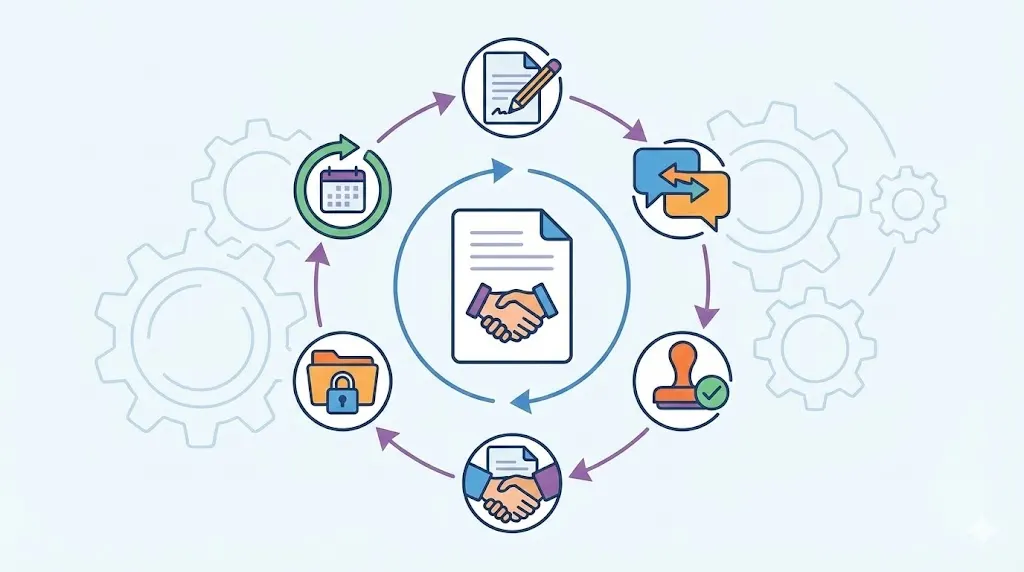
Contract management software creates one controlled place for contract work. It connects intake, drafting, review, approvals, signatures, storage, and obligations. That connection reduces the gaps between Sales and Legal.
One controlled record: The tool keeps requests, versions, redlines, and approvals together. Teams can find the current agreement quickly. They can also trace decisions when questions arise. This reduces reliance on scattered email threads.
Clear ownership and visibility: Authorized users can see owners, blockers, and deadlines. Sales can track legal progress without repeated messages. Legal can request missing details inside the workflow. Managers can spot stalled work earlier.
Support after signature: The system can capture dates, obligations, and renewal tasks. Operations can receive clear next actions after signing. Legal can retain the exception record beside the agreement. Teams can then manage the contract beyond execution.
Volody’s CLM Software supports this process with AI Contract Review, Approval Workflow Automation, and Obligation Management. It can flag risky language, route approvals, and track post-signature commitments. The Central Contract Repository also keeps contract records searchable and controlled.
For example, Sales can submit a closed deal with its commercial context. Volody’s CLM Software can route unusual terms to Legal and Finance. After signing, it can track renewal dates and delivery commitments.
Want to see how contract management software can simplify your legal workflows? Check out Volody's CLM Software.
FAQ
What agreement is currently in force?
The current agreement is the latest fully executed contract and its amendments. Check its effective date, parties, schedules, and order forms. Store the controlling version in the central contract record. Mark drafts, redlines, and unsigned proposals as pending or superseded.
What has the organisation committed to or agreed as an exception?
Review the signed agreement, exception record, and handover summary. Look for unusual pricing, service levels, liability terms, data duties, and renewal rights. Each exception should show its decision and approver. It should also name the owner and supporting evidence.
Who owns the next action or relationship decision?
The handover record should name the next action and its owner. It should also include a deadline and any required decision maker. Sales may own the relationship, while Operations owns delivery. Legal may own interpretation or remediation work.
Which fields must be included in a sales to legal contract handover?
The request should include the counterparty legal name and signing entity. It should include contract type, estimated value, term, business owner, and budget holder. Add the deadline and requested non-standard terms. Commercial goals, commitments, risks, and supporting documents also belong there.
How should contracts be routed by value and risk?
Route contracts by type, value, and deviation from approved positions. Also check liability, data, security, and jurisdiction risks. Standard matters can use templates and fallback clauses. Higher-risk matters should reach Legal, Finance, Sales leadership, or another named approver.
Who should own the contract playbook and how often should it be updated?
Adopt a controlled contract handover workflow now: assign clear owners, connect every approval to the signed agreement, and review the playbook quarterly to reduce delays and execution risk.
About the Company

Volody AI CLM is an Agentic AI-powered Contract Lifecycle Management platform designed to eliminate manual contracting tasks, automate complex workflows, and deliver actionable insights. As a one-stop shop for all contract activities, it covers drafting, collaboration, negotiation, approvals, e-signature, compliance tracking, and renewals. Built with enterprise-grade security and no-code configuration, it meets the needs of the most complex global organizations. Volody AI CLM also includes AI-driven contract review and risk analysis, helping teams detect issues early and optimize terms. Trusted by Fortune 500 companies, high-growth startups, and government entities, it transforms contracts into strategic, data-driven business assets.





" height="216.72211px" id="FYO0bO80Y" transform="translate(3 6.105)" width="206.073px"/><path d="M 108.174 222 C 88.432 222 70.303 217.239 53.785 207.717 C 37.267 198.196 24.173 185.052 14.504 168.285 C 4.835 151.312 0 132.165 0 110.845 C 0 89.731 4.835 70.792 14.504 54.025 C 24.173 37.052 37.267 23.804 53.785 14.282 C 70.303 4.761 88.432 0 108.174 0 C 128.116 0 146.246 4.761 162.562 14.282 C 179.08 23.804 192.073 37.052 201.541 54.025 C 211.21 70.792 216.044 89.731 216.044 110.845 C 216.044 132.165 211.21 151.312 201.541 168.285 C 192.073 185.052 179.08 198.196 162.562 207.717 C 146.044 217.239 127.915 222 108.174 222 Z M 108.174 183.189 C 120.864 183.189 132.044 180.291 141.713 174.495 C 151.382 168.492 158.936 160.006 164.375 149.035 C 169.814 138.064 172.533 125.334 172.533 110.845 C 172.533 96.355 169.814 83.729 164.375 72.965 C 158.936 61.994 151.382 53.611 141.713 47.815 C 132.044 42.02 120.864 39.122 108.174 39.122 C 95.483 39.122 84.202 42.02 74.332 47.815 C 64.663 53.611 57.109 61.994 51.67 72.965 C 46.231 83.729 43.511 96.355 43.511 110.845 C 43.511 125.334 46.231 138.064 51.67 149.035 C 57.109 160.006 64.663 168.492 74.332 174.495 C 84.202 180.291 95.483 183.189 108.174 183.189 Z" fill="rgba(255, 255, 255, 0.12)" height="222px" id="aa1McFcE9" transform="translate(227.183 3)" width="216.04399999999998px"/><path d="M 42.302 182.257 L 111.799 182.257 L 111.799 216.722 L 0 216.722 L 0 0 L 42.302 0 Z" fill="rgba(255, 255, 255, 0.12)" height="216.72211px" id="yRq4AnrsX" transform="translate(477.721 6.105)" width="111.79899999999998px"/><path d="M 108.174 222 C 88.432 222 70.303 217.239 53.785 207.717 C 37.267 198.196 24.173 185.052 14.504 168.285 C 4.835 151.312 0 132.165 0 110.845 C 0 89.731 4.835 70.792 14.504 54.025 C 24.173 37.052 37.267 23.804 53.785 14.282 C 70.303 4.761 88.432 0 108.174 0 C 128.116 0 146.246 4.761 162.562 14.282 C 179.08 23.804 192.073 37.052 201.541 54.025 C 211.21 70.792 216.045 89.731 216.045 110.845 C 216.045 132.165 211.21 151.312 201.541 168.285 C 192.073 185.052 179.08 198.196 162.562 207.717 C 146.044 217.239 127.915 222 108.174 222 Z M 108.174 183.189 C 120.864 183.189 132.044 180.291 141.713 174.495 C 151.382 168.492 158.936 160.006 164.375 149.035 C 169.814 138.064 172.534 125.334 172.534 110.845 C 172.534 96.355 169.814 83.729 164.375 72.965 C 158.936 61.994 151.382 53.611 141.713 47.815 C 132.044 42.02 120.864 39.122 108.174 39.122 C 95.483 39.122 84.202 42.02 74.332 47.815 C 64.663 53.611 57.108 61.994 51.67 72.965 C 46.231 83.729 43.511 96.355 43.511 110.845 C 43.511 125.334 46.231 138.064 51.67 149.035 C 57.108 160.006 64.663 168.492 74.332 174.495 C 84.202 180.291 95.483 183.189 108.174 183.189 Z" fill="rgba(255, 255, 255, 0.12)" height="222px" id="mo8HQspQ0" transform="translate(609.155 3)" width="216.04500000000007px"/><path d="M 73.727 0 C 95.885 0 115.324 4.45 132.044 13.351 C 148.967 22.252 161.957 34.982 171.027 51.541 C 180.287 67.894 184.917 86.937 184.917 108.671 C 184.917 130.405 180.287 149.449 171.027 165.801 C 161.957 181.947 148.967 194.47 132.044 203.371 C 115.324 212.271 95.885 216.722 73.727 216.722 L 0 216.722 L 0 0 Z M 72.216 179.773 C 94.374 179.773 111.497 173.564 123.583 161.144 C 135.669 148.724 141.713 131.233 141.713 108.671 C 141.713 86.109 135.669 68.515 123.583 55.888 C 111.497 43.055 94.374 36.638 72.216 36.638 L 42.302 36.638 L 42.302 179.773 Z" fill="rgba(255, 255, 255, 0.12)" height="216.72211px" id="I3iXX5Hi_" transform="translate(859.693 6.105)" width="184.91699999999992px"/><path d="M 185.22 0 L 113.91 141.273 L 113.91 216.722 L 71.61 216.722 L 71.61 141.273 L 0 0 L 47.74 0 L 93.06 99.046 L 138.08 0 Z" fill="rgba(255, 255, 255, 0.12)" height="216.72211px" id="nzHyWC0_d" transform="translate(1061.78 6.105)" width="185.22000000000003px"/></svg>)