

Artificial intelligence is changing the legal profession in ways few expected. Imagine a junior lawyer spending hours on contract review, only to have AI tools reduce that time drastically. Legal leaders now want law students to understand how to use AI responsibly, not just as a shortcut, but as a tool to elevate their work. This article explores what legal leaders expect from future lawyers when it comes to AI, highlighting practical advice and real-world applications.
TL;DR
Legal leaders expect law students to follow firm policies on AI use to protect confidentiality and data.
AI should serve as a tool to augment legal reasoning rather than supplant it; the role of human judgment remains indispensable.
Ensuring the precision of AI-generated outputs demands meticulous verification before dissemination or implementation.
While AI expedites routine processes, its deployment must prioritize enhancing the substantive quality of work over mere acceleration.
A comprehensive grasp of AI’s limitations and the associated ethical imperatives underpins its responsible application.
Contract management software with AI features supports legal teams in managing risk and efficiency.
Why Legal Leaders Care About How Law Students Use AI
Legal leaders see AI as a tool that can transform how lawyers work. Additionally, they also stress that students entering the legal field must understand AI not as an infallible solution but as a sophisticated aid. The legal profession has long demanded long hours of manual, detailed work. AI challenges this by automating repetitive tasks, freeing lawyers to focus on strategy and client relationships.
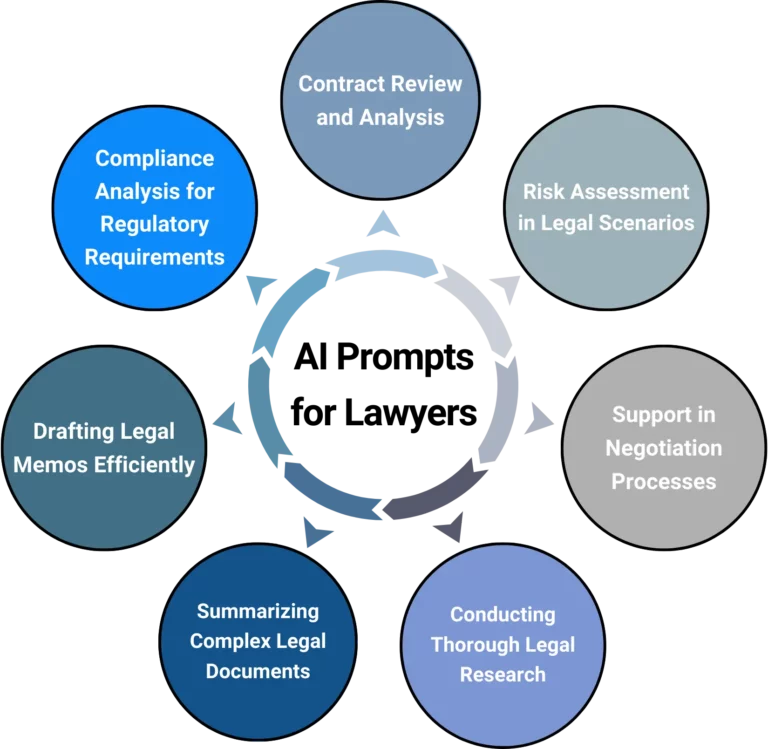
Leaders stress that the true value of AI depends on the manner in which it is applied rather than mere adoption. AI has the capability to rapidly analyze complex case law and identify potentially problematic contract clauses. Yet, it remains incapable of supplanting the nuanced analytical reasoning and rigorous ethical standards integral to legal practice. Cultivating the ability to integrate AI-driven efficiency with careful scrutiny and sound professional judgment represents a critical competency for those preparing to enter the profession.
A recent survey of over 800 legal professionals found that nearly 70% use AI for tasks like document review and legal research. But the same survey showed that firms with clear AI policies had better outcomes in risk management and client trust. This shows why legal leaders emphasize responsible AI use from the start of a lawyer’s career.
Related articles: Can AI Replace Lawyers? Exploring the Future of Legal AI
What Are the Common AI Policies Law Students Should Know?
Law firms and corporate legal departments usually have rules about AI use. Additionally, these guidelines prioritize protecting client confidentiality, maintaining compliance with regulatory standards, and addressing potential risks associated with AI deployment. Legal leaders expect law students to ask about and follow these policies before using any AI tools.
Here are typical areas covered by AI policies:
Approved Tools: It is common for firms to designate specific AI platforms that meet their security and privacy requirements.
Data Security: These policies specify strict parameters for the types of client or firm information that may be input into AI systems, with heightened scrutiny for cloud-based services.
Usage Limits: Firms often limit AI applications to discrete functions, such as document summarization, while prohibiting its use for generating legal advice.
Confidentiality: Given that some AI platforms transmit or retain data externally, firms treat privilege and confidentiality considerations with great caution.
Governance: Firms may track AI usage or require training to ensure proper use.
For example, a law student working in a corporate legal team might be allowed to use AI for initial contract review but not for client communications. Another firm might ban external AI tools altogether. Students should confirm these rules before adding AI to their workflow.
In the U.S., courts have determined that communications generated through AI platforms lacking adequate security protections do not qualify for attorney-client privilege. This legal nuance makes following firm policies essential to avoid risks.
Related articles: Effectively use AI in Contract Drafting
How Should Law Students Use AI Without Losing Their Legal Judgment?
AI can generate drafts, summarize documents, or suggest contract clauses. However, it is crucial for students to recognize that AI serves as an aid rather than a substitute for critical thinking. The lawyer’s responsibility involves interpreting, analyzing, and determining the appropriate application of AI output.
To maximize AI’s utility:
Prepare First: Conduct thorough research and analysis independently before engaging AI assistance. Higher-quality input yields more reliable AI results.
Leverage AI for Drafting: Use AI to create preliminary drafts or outlines, which then require careful scrutiny and refinement by the student.
Identify Potential Issues: Apply AI tools to flag potential pitfalls or problematic language, prompting a more detailed review.
Formulate Effective Queries: Develop skill in crafting specific prompts to elicit precise and pertinent responses from AI.
Retain Decision-Making Authority: Exercise judgment in accepting, rejecting, or modifying AI-generated material.
For example, a law student might draft a contract clause, then run it through AI to check for missing terms or suggest alternatives. The student should not accept AI suggestions blindly but use them to improve their work.
Encouraging students to cultivate expertise in “prompt engineering”—the skill of posing precise questions to AI—enhances the pertinence and accuracy of AI-generated assistance.
Related articles: How to maintain ethically use AI in Legal Operations
Why Verifying AI Output Is Crucial for Legal Work
One major concern about AI is accuracy. Additionally, aI models generate text by analyzing data patterns rather than possessing genuine comprehension. This mechanism can produce “hallucinations,” instances where the AI fabricates information or incorrectly interprets legal principles. Legal leaders emphasize the importance of meticulous review and validation of AI-generated outputs.
Common verification steps involve:
Fact-Checking: Independently verifying cases, statutes, dates, and citations.
Context Review: Evaluating whether AI-generated suggestions correspond to the specific business and legal circumstances relevant to the engagement.
Language Clarity: Refining any jargon or ambiguous phrasing introduced within the AI-generated content.
Risk Assessment: Determining if risks highlighted through AI analysis are significant or necessitate further escalation.
For instance, an AI tool might flag a contract clause as risky based on general legal rules but miss specific client exceptions. It is essential for the attorney to have a thorough grasp of the policies and contextual nuances surrounding the client’s operations to accurately interpret such flags.
Legal professionals often use domain-specific AI tools trained on their own data to reduce errors. These tools understand the firm’s language and standards better than generic AI. However, verification remains essential.
Related articles: AI Contract Review vs. Human Lawyers: Speed, Accuracy & ROI
How Can AI Improve Legal Work Beyond Speed?
Many people think AI only speeds up work. Law students should also recognize that AI enhances quality and strategic impact within legal practice. Here are ways AI can enhance legal practice:
Deeper Analysis: AI can process large volumes of documents to spot trends or hidden risks.
Enhanced Communication: AI facilitates the drafting of clearer emails and summaries, ensuring messages are precise and tailored for clients and stakeholders.
Consistent Language: Through the standardization of clauses and phrasing, AI helps to eliminate inconsistencies that often lead to drafting errors.
Risk Management: By automating compliance checks against firm policies and regulatory mandates, AI strengthens oversight mechanisms.
Collaboration: AI tools streamline team workflows by managing change tracking and consolidating comments with greater efficiency.
For example, a junior lawyer might leverage AI capabilities to generate a concise summary of a complex contract for a business client. This saves time and ensures the client understands key points without legal jargon.
It remains essential for students to apply AI in ways that enhance value, rather than merely accelerating task completion. Quality, accuracy, and client focus remain top priorities.
Related articles: Agentic AI in Legal: 5 Effective Ways Lawyers Use Agentic AI
What Ethical Challenges Do Law Students Face When Using AI?
The integration of AI into legal practice introduces complex ethical considerations that legal educators emphasize for students. These include:
Confidentiality: Safeguarding client information when employing AI-driven applications.
Bias: AI algorithms may inadvertently reinforce existing prejudices embedded in their training data, thereby affecting fairness in legal outcomes.
Transparency: Attorneys have a duty to disclose the use of AI in legal procedures when such disclosure is legally or ethically required.
Competence: Lawyers must possess a comprehensive understanding of AI’s capabilities and limitations to avoid lapses in professional judgment.
Unauthorized Practice of Law: Overreliance on AI-generated legal advice can cross ethical lines by constituting unauthorized law practice.
Law students should learn to ask:
Is this AI tool secure and approved?
Am I protecting client confidentiality?
Do I have the necessary expertise to apply this technology for the current matter?
Should I disclose AI’s role to clients or courts?
For example, using an unvetted AI chatbot to generate legal advice without review could violate ethical rules. Legal leaders expect students to engage with AI tools judiciously and consult experienced professionals when in doubt.
Related articles: Navigating AI Security: A Comprehensive for Legal Experts
How Law Students Can Prepare for AI in Legal Practice
Legal leaders want students to build skills that help them work effectively with AI. Additionally, important domains include developing an understanding of AI tool mechanics and their operational scope.
Technology Literacy: Grasp the underlying functionalities of AI applications along with their practical limitations.
Critical Thinking: Hone the capacity to analyze and interpret AI-generated results within appropriate legal contexts.
Data Privacy: Master the complexities of data protection legislation and the regulatory frameworks organizations must navigate.
Prompt Engineering: Cultivate skill in formulating precise, context-driven prompts that enhance the reliability of AI outputs.
Ethics Training: Examine the foundational ethical doctrines and regulatory standards pertinent to integrating AI in legal workflows.
Continuous Learning: Maintain an active commitment to assimilating emerging AI technologies and assessing their ramifications for legal practice.
Law schools and internships often serve as practical grounds where students can gain hands-on experience with AI technologies under professional supervision. Students should seek mentors who understand AI’s role in legal work.
Related articles: Customized AI Powers End-to-End CLM for Legal Teams
Why Contract Management Software Matters for Legal Teams Using AI
Legal teams increasingly leverage advanced contract lifecycle systems enhanced with AI capabilities. Additionally, these platforms merge artificial intelligence capabilities with contract workflows to enhance operational efficiency and mitigate potential risks. Law firm leaders emphasize the importance of educating law students on the strategic benefits of these advanced tools.
Related Article: Legal Team Structure: Understanding Roles and Titles
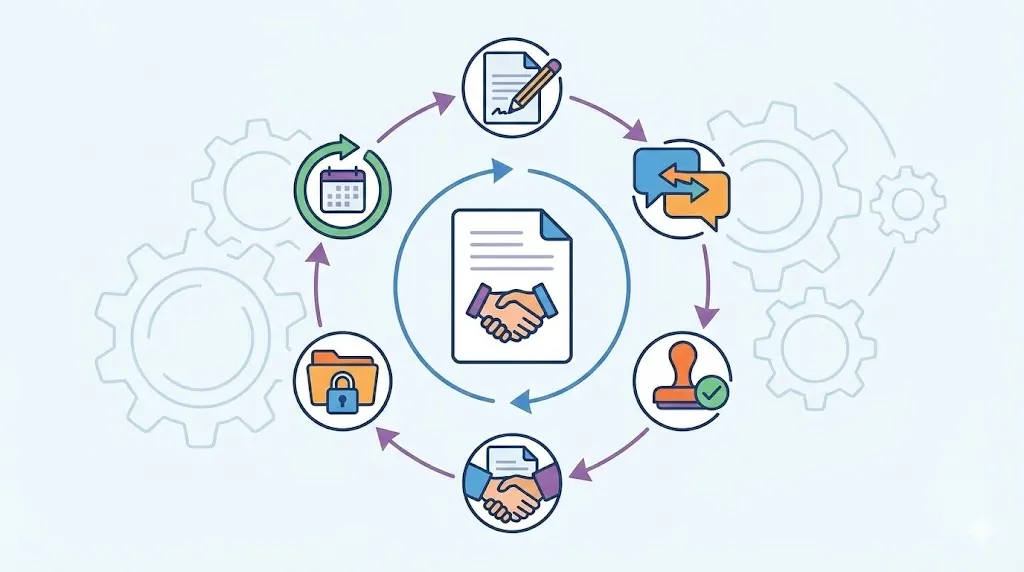
CLM software helps by:
Leveraging AI clause libraries and templates to automate contract drafting.
Utilizing automated review mechanisms to detect risky clauses or missing terms.
Pulling and condensing critical contractual data to facilitate faster analysis by stakeholders.
Tracking obligations and renewal timelines via notification tools.
Optimizing approval procedures to hasten contract completion.
These features allow legal teams to focus on higher-value work, like negotiation strategy and risk assessment.
Related articles: Volody Spotlight: Top AI-Powered Contract Management Solutions Review
How CLM Software Solves Legal Workflow Challenges
Managing contracts manually is time-consuming and error-prone. AI-powered CLM software provides targeted solutions to several key challenges:
Volume: It efficiently processes thousands of contracts, maintaining consistent quality throughout.
Complexity: Leveraging firm-specific policies, the software uncovers potential risks while ensuring adherence to regulatory mandates.
Collaboration: By facilitating real-time review and annotation, it bridges communication between legal and business teams.
Visibility: Detailed dashboards provide users with comprehensive oversight of contract statuses, risk factors, and impending deadlines.
Security: Controls access and maintains audit trails for compliance.
By automating routine tasks, CLM software frees legal teams to focus on strategy and client relationships.
Related articles: How to Manage Legal Teams: 8 Proven Tactics for Success
Volody’s Role in AI-Driven Contract Management
Contract management platforms enhance legal teams' capabilities by embedding AI functions designed to optimize contract drafting, review, and tracking processes. Volody offers a platform that includes:
AI contract drafting from approved templates and clause libraries.
AI review that flags risky clauses and missing provisions.
AI-generated contract summaries for quick understanding.
Automated workflows for approvals and e-signatures.
Centralized contract repository with advanced search and version control.
These features help legal teams reduce risk, save time, and improve contract quality.
Interested in exploring how Volody’s solution can streamline your legal workflows? Visit Volody's CLM Software.
FAQ
What inquiries are essential for law students before adopting AI tools at their firm?
Students need to ascertain which AI tools have been authorized, understand permissible data usage, and identify any operational limits. They also must clarify confidentiality protocols and whether AI activities are subject to monitoring or reporting. This knowledge is critical to mitigating risks and promoting responsible AI usage.
Can AI replace a lawyer’s judgment?
No. AI assists by automating tasks and generating suggestions. Lawyers must review AI output critically and apply their legal knowledge and ethics. Furthermore, human judgment remains indispensable within legal practice.
How can law students improve AI-generated drafts?
Students should prepare by researching the topic first, then use AI to create initial drafts or outlines. They must carefully review and revise AI content for accuracy, clarity, and client context before finalizing.
What risks come with using AI for legal work?
Risks include data breaches, loss of confidentiality, inaccurate or biased AI output, and ethical violations. Firms mitigate these risks with policies, secure tools, and training.
Also, how does AI help with contract review?
Also, aI can quickly scan contracts to identify risky clauses, missing terms, or unusual language. This speeds up review and highlights issues for lawyers to investigate further.
What is prompt engineering in legal AI use?
Prompt engineering means crafting clear, specific questions or commands for AI tools. Good prompts improve AI’s relevance and accuracy, making the output more useful.
Are there ethical rules about disclosing AI use?
Some jurisdictions require lawyers to disclose when AI assists in legal work. Therefore, even where not required, transparency can build trust with clients and courts.
How do contract lifecycle management solutions facilitate AI integration?
Therefore, these systems embed AI capabilities such as drafting assistance, contract analysis, and obligation monitoring directly within established workflows. This centralizes contract work, improves accuracy, and speeds up processes.
What skills should aspiring legal professionals cultivate to excel with AI technologies?
Proficiency in technology, critical analysis, data privacy, prompt engineering, and AI-related ethical considerations is crucial for students pursuing legal careers.
Can AI tools handle sensitive client data safely?
Only if the tools comply with firm policies and data security standards. Using unapproved AI platforms risks exposing confidential information and losing privilege protections.
About the Company

Volody AI CLM is an Agentic AI-powered Contract Lifecycle Management platform designed to eliminate manual contracting tasks, automate complex workflows, and deliver actionable insights. As a one-stop shop for all contract activities, it covers drafting, collaboration, negotiation, approvals, e-signature, compliance tracking, and renewals. Built with enterprise-grade security and no-code configuration, it meets the needs of the most complex global organizations. Volody AI CLM also includes AI-driven contract review and risk analysis, helping teams detect issues early and optimize terms. Trusted by Fortune 500 companies, high-growth startups, and government entities, it transforms contracts into strategic, data-driven business assets.





" height="216.72211px" id="FYO0bO80Y" transform="translate(3 6.105)" width="206.073px"/><path d="M 108.174 222 C 88.432 222 70.303 217.239 53.785 207.717 C 37.267 198.196 24.173 185.052 14.504 168.285 C 4.835 151.312 0 132.165 0 110.845 C 0 89.731 4.835 70.792 14.504 54.025 C 24.173 37.052 37.267 23.804 53.785 14.282 C 70.303 4.761 88.432 0 108.174 0 C 128.116 0 146.246 4.761 162.562 14.282 C 179.08 23.804 192.073 37.052 201.541 54.025 C 211.21 70.792 216.044 89.731 216.044 110.845 C 216.044 132.165 211.21 151.312 201.541 168.285 C 192.073 185.052 179.08 198.196 162.562 207.717 C 146.044 217.239 127.915 222 108.174 222 Z M 108.174 183.189 C 120.864 183.189 132.044 180.291 141.713 174.495 C 151.382 168.492 158.936 160.006 164.375 149.035 C 169.814 138.064 172.533 125.334 172.533 110.845 C 172.533 96.355 169.814 83.729 164.375 72.965 C 158.936 61.994 151.382 53.611 141.713 47.815 C 132.044 42.02 120.864 39.122 108.174 39.122 C 95.483 39.122 84.202 42.02 74.332 47.815 C 64.663 53.611 57.109 61.994 51.67 72.965 C 46.231 83.729 43.511 96.355 43.511 110.845 C 43.511 125.334 46.231 138.064 51.67 149.035 C 57.109 160.006 64.663 168.492 74.332 174.495 C 84.202 180.291 95.483 183.189 108.174 183.189 Z" fill="rgba(255, 255, 255, 0.12)" height="222px" id="aa1McFcE9" transform="translate(227.183 3)" width="216.04399999999998px"/><path d="M 42.302 182.257 L 111.799 182.257 L 111.799 216.722 L 0 216.722 L 0 0 L 42.302 0 Z" fill="rgba(255, 255, 255, 0.12)" height="216.72211px" id="yRq4AnrsX" transform="translate(477.721 6.105)" width="111.79899999999998px"/><path d="M 108.174 222 C 88.432 222 70.303 217.239 53.785 207.717 C 37.267 198.196 24.173 185.052 14.504 168.285 C 4.835 151.312 0 132.165 0 110.845 C 0 89.731 4.835 70.792 14.504 54.025 C 24.173 37.052 37.267 23.804 53.785 14.282 C 70.303 4.761 88.432 0 108.174 0 C 128.116 0 146.246 4.761 162.562 14.282 C 179.08 23.804 192.073 37.052 201.541 54.025 C 211.21 70.792 216.045 89.731 216.045 110.845 C 216.045 132.165 211.21 151.312 201.541 168.285 C 192.073 185.052 179.08 198.196 162.562 207.717 C 146.044 217.239 127.915 222 108.174 222 Z M 108.174 183.189 C 120.864 183.189 132.044 180.291 141.713 174.495 C 151.382 168.492 158.936 160.006 164.375 149.035 C 169.814 138.064 172.534 125.334 172.534 110.845 C 172.534 96.355 169.814 83.729 164.375 72.965 C 158.936 61.994 151.382 53.611 141.713 47.815 C 132.044 42.02 120.864 39.122 108.174 39.122 C 95.483 39.122 84.202 42.02 74.332 47.815 C 64.663 53.611 57.108 61.994 51.67 72.965 C 46.231 83.729 43.511 96.355 43.511 110.845 C 43.511 125.334 46.231 138.064 51.67 149.035 C 57.108 160.006 64.663 168.492 74.332 174.495 C 84.202 180.291 95.483 183.189 108.174 183.189 Z" fill="rgba(255, 255, 255, 0.12)" height="222px" id="mo8HQspQ0" transform="translate(609.155 3)" width="216.04500000000007px"/><path d="M 73.727 0 C 95.885 0 115.324 4.45 132.044 13.351 C 148.967 22.252 161.957 34.982 171.027 51.541 C 180.287 67.894 184.917 86.937 184.917 108.671 C 184.917 130.405 180.287 149.449 171.027 165.801 C 161.957 181.947 148.967 194.47 132.044 203.371 C 115.324 212.271 95.885 216.722 73.727 216.722 L 0 216.722 L 0 0 Z M 72.216 179.773 C 94.374 179.773 111.497 173.564 123.583 161.144 C 135.669 148.724 141.713 131.233 141.713 108.671 C 141.713 86.109 135.669 68.515 123.583 55.888 C 111.497 43.055 94.374 36.638 72.216 36.638 L 42.302 36.638 L 42.302 179.773 Z" fill="rgba(255, 255, 255, 0.12)" height="216.72211px" id="I3iXX5Hi_" transform="translate(859.693 6.105)" width="184.91699999999992px"/><path d="M 185.22 0 L 113.91 141.273 L 113.91 216.722 L 71.61 216.722 L 71.61 141.273 L 0 0 L 47.74 0 L 93.06 99.046 L 138.08 0 Z" fill="rgba(255, 255, 255, 0.12)" height="216.72211px" id="nzHyWC0_d" transform="translate(1061.78 6.105)" width="185.22000000000003px"/></svg>)