

Many lawyers try AI tools expecting fast, accurate drafts but get vague or off-target results instead. This wastes time fixing errors instead of speeding up work. The root cause is often unclear instructions to AI. Learning prompt engineering helps lawyers give precise commands that produce useful outputs. This article covers the best prompt engineering courses and training programs tailored for legal professionals. It offers practical advice on picking the right program based on your role, goals, and time available.
TL;DR
Lawyers frequently face challenges with AI tools due to the inherent ambiguity in input instructions; prompt engineering addresses this by enabling more precise and effective communication with these systems.
Additionally, training in prompt engineering equips legal professionals with the ability to convey precise commands to AI systems, significantly improving the accuracy of legal drafting and document review.
Educational offerings vary widely, from brief instructional modules to comprehensive academic curricula, catering to practitioners with diverse levels of expertise.
Hands-on practice and legal-specific examples improve learning and application.
Contract management software with AI features can reduce the need for deep prompt skills.
Volody’s CLM software offers AI-driven drafting, review, and risk analysis to boost legal team efficiency.
Why Do Lawyers Need Prompt Engineering Training?
Artificial intelligence tools promise to speed up legal work. However, many lawyers find AI outputs disappointing. Additionally, they type a request, hoping for a solid draft, and get generic or inaccurate text. This happens because AI models respond best to clear, well-structured instructions. Without training, lawyers often give vague or incomplete prompts.
Prompt engineering means crafting instructions that guide AI to produce precise, relevant results. It involves understanding how AI "thinks" and how to break down complex tasks into simple steps. For lawyers, this skill can save hours spent editing AI drafts and improve accuracy in contract review, legal research, and document drafting.
In legal practice, unclear AI results can cause risks. For example, a poorly drafted contract clause might miss critical terms or introduce ambiguity. Learning prompt engineering helps lawyers avoid these pitfalls by controlling AI outputs better.
Training programs focused on prompt engineering teach lawyers how to:
Write clear, detailed instructions tailored to legal tasks.
Apply structured methods such as incremental prompting and illustrative examples to direct AI effectively.
Identify and mitigate AI hallucinations, which refer to false or misleading information produced by the model.
Develop tailored AI workflows optimized for particular legal processes.
This skill set is becoming essential as AI tools become standard in legal departments. It improves efficiency while maintaining quality and compliance.
Related articles: Legal AI Prompting: Best Practices
What Should Lawyers Look for in a Prompt Engineering Course?
Not all prompt engineering courses fit legal professionals equally. When choosing a course, consider these factors:
Relevance to Legal Work: Look for courses that use legal examples like contracts, briefs, or compliance checks. Generic AI programs often fail to address the nuanced challenges and specialized terminology inherent to legal practice.
Skill Level: For those just starting, interactive tutorials or brief workshops tend to build a solid foundation effectively. More seasoned practitioners may benefit from advanced modules or certification tracks that enhance their proficiency.
Format and Time Commitment: Busy lawyers may prefer self-paced or short video modules. Others might invest in multi-week specializations.
Hands-On Practice: Developing practical confidence requires active engagement through exercises and the application of concepts within scenarios that reflect real-world legal challenges.
Ethics and Risk Management: Incorporating AI into legal workflows brings forth multifaceted ethical dilemmas demanding careful attention. Comprehensive courses delve deeply into these concerns while elucidating the professional responsibilities tied to AI deployment to ensure its conscientious use.
Cost and Accessibility: Free resources provide valuable opportunities for initial exploration. In contrast, paid programs typically deliver structured curricula and formal recognition.
A thorough grasp of both theoretical frameworks and their practical application is indispensable for achieving expertise. Lawyers must understand the foundations of AI technology and translate that knowledge into effective daily practice.
Related articles: What Legal Leaders Expect Law Students to Know About AI Use
How Do Prompt Engineering Techniques Improve Legal AI Use?
Prompt engineering is more than typing a question. Additionally, it involves a variety of strategies aimed at guiding AI to produce outputs that are both accurate and contextually appropriate. Here are some core techniques:
Chain-of-Thought Prompting: Break down complex assignments into ordered steps. For example, have the AI identify contract risks first, then suggest amendments.
Few-Shot Learning: Provide example outputs within the prompt to specify the expected response format and content.
Role Assignment: Establish the AI’s role, such as that of a legal expert or contract analyst, to frame the contextual parameters.
Template Use: Create standardized prompt frameworks designed for recurring tasks like drafting NDAs or analyzing contractual clauses.
Explicit Instructions: Use clear language and specify format, tone, or length.
Error Checking: Request that the AI critically evaluate or summarize its own output succinctly to detect possible errors.
These methods help reduce AI hallucinations and irrelevant answers. They also improve consistency across documents.
For example, instead of asking "Draft a contract," a lawyer might say: "Draft a non-disclosure agreement with these key terms: confidentiality period of 3 years, exclusions for public info, and governing law of New York."
This prompt guides AI to focus on specific contract elements, reducing guesswork.
Related articles: Can Generative AI be trusted by Lawyers? Expert Guide
Overview of Leading Prompt Engineering Courses for Lawyers
Here is an in-depth overview of premier prompt engineering training options tailored specifically to legal professionals.
Program Name | Ideal Users | Format & Duration | Key Topics | Cost |
|---|---|---|---|---|
AI Prompt Workshop for Lawyers | Lawyers beginning with AI | 2-hour live or recorded session | Basics of prompt writing, legal examples, hands-on practice | Free or low cost |
Legal AI Specialization (University) | Law students and lawyers | 4-course series, 30-150 hours | Contract drafting, ethics, AI risks, custom models | Paid (Coursera) |
OpenAI Prompt Engineering Guide | Lawyers experienced in technology | Self-study documentation | AI mechanics, prompt patterns, testing | Free |
LinkedIn Learning: AI for Legal Pros | Busy attorneys | Video modules, 1-2 hours total | Daily workflows, drafting tips, risk mitigation | Subscription |
Custom In-House Training | Large firms | Workshops tailored to firm needs | Firm-specific AI use, security, compliance | Enterprise pricing |
Prompt Engineering Bootcamp | Legal tech teams | Intensive 1-month part-time | Advanced prompt strategies, AI tools integration | Paid |
AI Prompt Workshop for Lawyers
This workshop introduces lawyers to prompt engineering basics. It uses legal drafting and review examples. Participants write prompts and receive immediate feedback. The format caters to lawyers seeking efficient, practical skills without an extensive theoretical foundation.
Legal AI Specialization from University
This academic program thoroughly explores AI applications in law. Covered materials include quizzes and labs designed around authentic legal documents. Moreover, lawyers pursuing formal credentials or CLE credit benefit significantly from the structured learning and accreditation opportunities.
OpenAI Prompt Engineering Guide
This free resource offers an in-depth explanation of how AI models process and act on prompts. It presents six fundamental prompt strategies, each illustrated with comprehensive examples. Lawyers with technical expertise and legal technologists rely on it to refine AI workflows and construct tailored GPT models.
LinkedIn Learning: AI for Legal Professionals
This course delivers concise video segments for lawyers needing a swift AI introduction. It emphasizes practical applications such as drafting and identifying risks. Furthermore, it is well-suited to solo practitioners or associates constrained by limited time.
Custom In-House Training Programs
Large firms frequently create bespoke prompt engineering sessions. These programs concentrate on the firm’s proprietary AI tools, data privacy safeguards, and operational procedures. Such initiatives are designed to ensure adherence to internal policies alongside compliance with pertinent industry regulations.
Prompt Engineering Bootcamp
This rigorous course targets legal technology teams and advanced users. The curriculum encompasses complex prompt engineering techniques, integration with AI platforms, and rigorous validation protocols. Participants emerge equipped to develop tailored AI solutions that streamline contract lifecycle management.
Related articles: Contract Management Process Stages Guide for 2026
What Legal Topics Do Prompt Engineering Courses Cover?
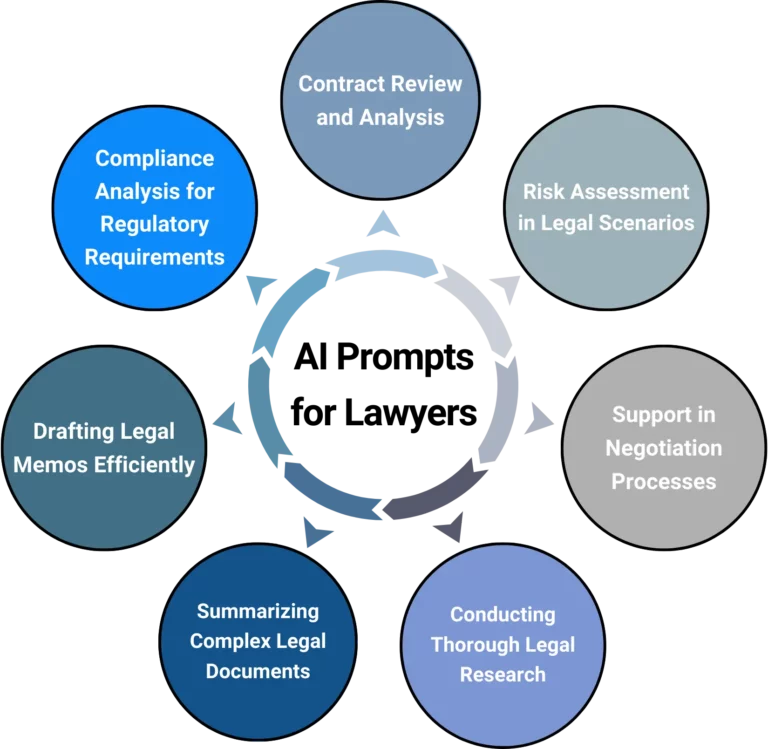
Prompt engineering courses designed for lawyers cover a range of specialized legal topics, beginning with Contract Drafting and Review, which focuses on guiding AI to produce precise clauses, detect potential risks, and propose alternative language.
Legal Research: Approaches that harness AI capabilities to sift through vast repositories of case law, statutes, and regulatory materials relevant to specific legal inquiries.
Ethics and Compliance: An in-depth analysis of AI’s inherent limitations, methods to reduce erroneous outputs known as hallucinations, and ensuring conformity with established professional responsibility mandates.
Litigation Support: Application of AI-driven resources to assist in drafting pleadings, distilling essential information from depositions, and assembling detailed legal briefs.
Custom AI Models: Crafting bespoke AI solutions tailored specifically to the nuanced demands of particular legal specialties or operational workflows.
Data Privacy and Security: Best practices for managing sensitive client information within AI-driven workflows.
Courses often incorporate real-world documents such as sample contracts, briefs, and compliance materials to provide hands-on experience with prompt engineering techniques. This method ensures lawyers can translate theoretical knowledge into effective practice.
Related articles: Top 5 CLM Software in Texas: 2026 Legal Compliance Guide
How to Practice Prompt Engineering Skills Effectively
Learning prompt engineering requires more than theory. Additionally, lawyers benefit from consistent practice involving both real and simulated tasks. Here are some ways to build skills:
Start Small: Write prompts for simple tasks like summarizing a contract clause or extracting key dates.
Use Examples: Provide AI with sample inputs and outputs to guide responses.
Iterate: Refine prompts based on AI output quality. Adjust wording or add constraints.
Test Edge Cases: Explore AI’s performance on atypical or highly intricate queries to gauge its boundaries.
Collaborate: Exchange prompts and insights with colleagues to enhance collective understanding of best practices.
Document Templates: Develop standardized prompt templates tailored for recurring tasks.
Stay Updated: Follow AI research and legal tech trends to learn new prompt methods.
Engaging regularly with prompt engineering deepens lawyers’ comprehension of AI’s instruction parsing. This experience simultaneously cultivates greater proficiency and assurance in deploying AI tools within legal workflows.
Related articles: How to Organize Contracts: 7 Best Practices in 2026
How Contract Management Software Supports Prompt Engineering
Contract lifecycle management (CLM) software often includes AI features that reduce the need for deep prompt engineering skills. Additionally, these platforms integrate comprehensive legal expertise to streamline drafting and review processes. They provide:
AI Drafting: Generate contract drafts from templates and clause libraries with minimal input.
Risk Detection: Automatically flag risky or missing clauses using AI models trained on legal data.
Clause Suggestions: Recommend fallback language or alternatives during negotiation.
Summaries and Metadata Extraction: Produce concise contract summaries and extract key terms automatically.
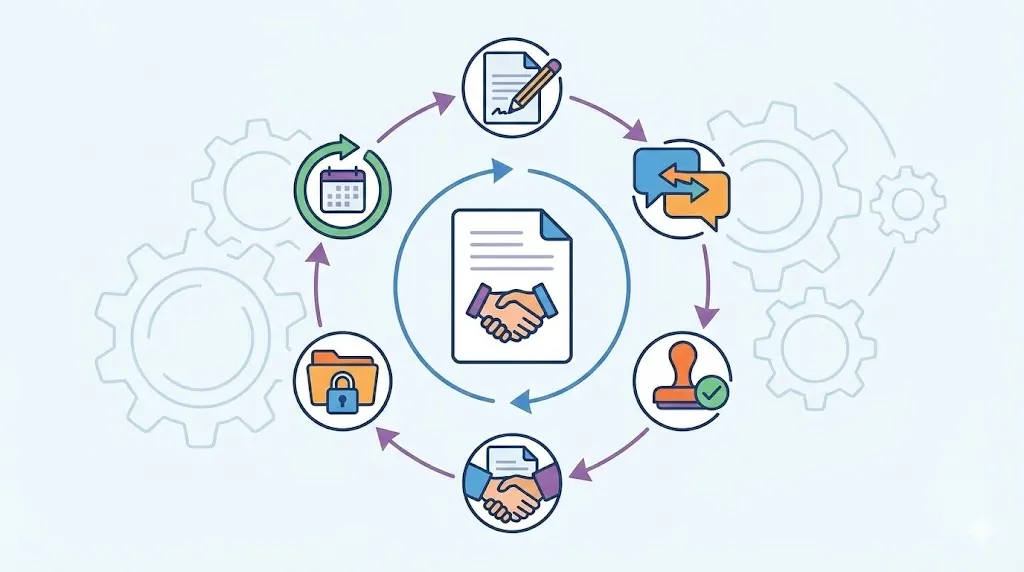
Workflow Automation: Route contracts for review and approval with built-in compliance checks.
By integrating AI directly into contract workflows, CLM software lets lawyers focus on higher-value tasks. It also standardizes outputs, reducing errors caused by inconsistent prompting.
Related articles: Best Contract Management Software in 2026: Top 20 CLM Tools
Why Contract Management Software Matters for Legal Teams
Managing contracts manually is time-consuming and error-prone. Contract management software serves as a centralized repository for documents, streamlines routine processes through automation, and enhances oversight of the entire contract portfolio. Key benefits include:
The integration of advanced AI technologies significantly expedites the contract drafting process.
Automated clause analysis systematically mitigates legal risks by ensuring thorough review and consistency.
Features such as integrated version control and commenting facilitate more effective collaboration among stakeholders.
Structured approval workflows combined with detailed audit trails strengthen compliance management.
Sophisticated search capabilities and metadata tagging simplify and accelerate the retrieval of contract information.
These advantages free lawyers from repetitive work and let them focus on strategic issues. AI-powered CLM tools also help legal teams scale without adding headcount.
How Volody’s Contract Management Software Enhances Legal AI Use
Contract management software enhances efficiency in drafting, reviewing, and analyzing legal risks for legal teams. Additionally, volody’s platform integrates advanced AI tools tailored to optimize various aspects of legal workflows. Key features include:
Contract drafting powered by AI that leverages approved templates and extensive clause libraries.
Review automation capable of identifying risky clauses while also flagging missing provisions.
Clause recommendation engines that accelerate the negotiation process.
Summarization functions that distill contracts down to critical obligations and deadlines.
Extraction of metadata to remove the need for manual data entry.
Volody integrates these capabilities with workflow automation and collaboration tools. This reduces the need for lawyers to master complex prompt engineering. It also improves contract quality and turnaround time.
See how Volody's CLM Software enables legal teams to manage contracts more efficiently and with enhanced oversight.
FAQ
What encompasses prompt engineering within legal AI applications?
Additionally, prompt engineering means writing clear, detailed instructions to guide AI tools. In law, it helps produce accurate drafts, reviews, and research results by controlling how AI interprets requests.
Can lawyers learn prompt engineering without technical skills?
Yes. Many courses teach prompt engineering using plain language and legal examples. Lawyers do not need coding skills but should understand how to structure clear prompts.
What is the typical timeframe to develop proficiency in prompt engineering?
Initial competencies often develop within hours through targeted workshops. Gaining more sophisticated expertise requires weeks or months of consistent practice and formal education.
Moreover, are there free prompt engineering courses available for lawyers?
Some online resources and tutorials are free. However, paid courses often provide deeper legal context, hands-on labs, and certification.
Does prompt engineering replace contract management software?
No. Prompt engineering improves how lawyers interact with AI. Contract management platforms automate numerous tasks and incorporate AI functionalities, minimizing reliance on manual prompting.
In what ways does prompt engineering reduce AI hallucinations?
By providing AI with precise, step-by-step guidance and illustrative examples, prompt engineering curtails speculative outputs, thereby decreasing the incidence of false or misleading information.
Is prompt engineering helpful for conducting legal research?
Yes. Lawyers can craft prompts to extract relevant case law, statutes, or regulations faster and with better focus.
Furthermore, how does prompt engineering intersect with legal ethics?
Lawyers must ensure AI outputs are accurate and reliable. Prompt engineering helps meet this duty by controlling AI quality and reducing errors.
Prompt engineering supports ethical obligations by enhancing the accuracy and dependability of AI-generated content, minimizing the potential for errors.
Which professional roles derive the greatest advantage from prompt engineering training?
Attorneys, legal technologists, paralegals, and compliance officers all gain significant benefits. Training equips these roles to harness AI capabilities more effectively in their respective functions.
How does Volody’s software support prompt engineering?
Volody’s AI features streamline drafting and review processes, lessening the complexity of prompts required. This lets lawyers focus on legal judgment rather than technical instructions.
About the Company

Volody AI CLM is an Agentic AI-powered Contract Lifecycle Management platform designed to eliminate manual contracting tasks, automate complex workflows, and deliver actionable insights. As a one-stop shop for all contract activities, it covers drafting, collaboration, negotiation, approvals, e-signature, compliance tracking, and renewals. Built with enterprise-grade security and no-code configuration, it meets the needs of the most complex global organizations. Volody AI CLM also includes AI-driven contract review and risk analysis, helping teams detect issues early and optimize terms. Trusted by Fortune 500 companies, high-growth startups, and government entities, it transforms contracts into strategic, data-driven business assets.





" height="216.72211px" id="FYO0bO80Y" transform="translate(3 6.105)" width="206.073px"/><path d="M 108.174 222 C 88.432 222 70.303 217.239 53.785 207.717 C 37.267 198.196 24.173 185.052 14.504 168.285 C 4.835 151.312 0 132.165 0 110.845 C 0 89.731 4.835 70.792 14.504 54.025 C 24.173 37.052 37.267 23.804 53.785 14.282 C 70.303 4.761 88.432 0 108.174 0 C 128.116 0 146.246 4.761 162.562 14.282 C 179.08 23.804 192.073 37.052 201.541 54.025 C 211.21 70.792 216.044 89.731 216.044 110.845 C 216.044 132.165 211.21 151.312 201.541 168.285 C 192.073 185.052 179.08 198.196 162.562 207.717 C 146.044 217.239 127.915 222 108.174 222 Z M 108.174 183.189 C 120.864 183.189 132.044 180.291 141.713 174.495 C 151.382 168.492 158.936 160.006 164.375 149.035 C 169.814 138.064 172.533 125.334 172.533 110.845 C 172.533 96.355 169.814 83.729 164.375 72.965 C 158.936 61.994 151.382 53.611 141.713 47.815 C 132.044 42.02 120.864 39.122 108.174 39.122 C 95.483 39.122 84.202 42.02 74.332 47.815 C 64.663 53.611 57.109 61.994 51.67 72.965 C 46.231 83.729 43.511 96.355 43.511 110.845 C 43.511 125.334 46.231 138.064 51.67 149.035 C 57.109 160.006 64.663 168.492 74.332 174.495 C 84.202 180.291 95.483 183.189 108.174 183.189 Z" fill="rgba(255, 255, 255, 0.12)" height="222px" id="aa1McFcE9" transform="translate(227.183 3)" width="216.04399999999998px"/><path d="M 42.302 182.257 L 111.799 182.257 L 111.799 216.722 L 0 216.722 L 0 0 L 42.302 0 Z" fill="rgba(255, 255, 255, 0.12)" height="216.72211px" id="yRq4AnrsX" transform="translate(477.721 6.105)" width="111.79899999999998px"/><path d="M 108.174 222 C 88.432 222 70.303 217.239 53.785 207.717 C 37.267 198.196 24.173 185.052 14.504 168.285 C 4.835 151.312 0 132.165 0 110.845 C 0 89.731 4.835 70.792 14.504 54.025 C 24.173 37.052 37.267 23.804 53.785 14.282 C 70.303 4.761 88.432 0 108.174 0 C 128.116 0 146.246 4.761 162.562 14.282 C 179.08 23.804 192.073 37.052 201.541 54.025 C 211.21 70.792 216.045 89.731 216.045 110.845 C 216.045 132.165 211.21 151.312 201.541 168.285 C 192.073 185.052 179.08 198.196 162.562 207.717 C 146.044 217.239 127.915 222 108.174 222 Z M 108.174 183.189 C 120.864 183.189 132.044 180.291 141.713 174.495 C 151.382 168.492 158.936 160.006 164.375 149.035 C 169.814 138.064 172.534 125.334 172.534 110.845 C 172.534 96.355 169.814 83.729 164.375 72.965 C 158.936 61.994 151.382 53.611 141.713 47.815 C 132.044 42.02 120.864 39.122 108.174 39.122 C 95.483 39.122 84.202 42.02 74.332 47.815 C 64.663 53.611 57.108 61.994 51.67 72.965 C 46.231 83.729 43.511 96.355 43.511 110.845 C 43.511 125.334 46.231 138.064 51.67 149.035 C 57.108 160.006 64.663 168.492 74.332 174.495 C 84.202 180.291 95.483 183.189 108.174 183.189 Z" fill="rgba(255, 255, 255, 0.12)" height="222px" id="mo8HQspQ0" transform="translate(609.155 3)" width="216.04500000000007px"/><path d="M 73.727 0 C 95.885 0 115.324 4.45 132.044 13.351 C 148.967 22.252 161.957 34.982 171.027 51.541 C 180.287 67.894 184.917 86.937 184.917 108.671 C 184.917 130.405 180.287 149.449 171.027 165.801 C 161.957 181.947 148.967 194.47 132.044 203.371 C 115.324 212.271 95.885 216.722 73.727 216.722 L 0 216.722 L 0 0 Z M 72.216 179.773 C 94.374 179.773 111.497 173.564 123.583 161.144 C 135.669 148.724 141.713 131.233 141.713 108.671 C 141.713 86.109 135.669 68.515 123.583 55.888 C 111.497 43.055 94.374 36.638 72.216 36.638 L 42.302 36.638 L 42.302 179.773 Z" fill="rgba(255, 255, 255, 0.12)" height="216.72211px" id="I3iXX5Hi_" transform="translate(859.693 6.105)" width="184.91699999999992px"/><path d="M 185.22 0 L 113.91 141.273 L 113.91 216.722 L 71.61 216.722 L 71.61 141.273 L 0 0 L 47.74 0 L 93.06 99.046 L 138.08 0 Z" fill="rgba(255, 255, 255, 0.12)" height="216.72211px" id="nzHyWC0_d" transform="translate(1061.78 6.105)" width="185.22000000000003px"/></svg>)