

Contracts shape every deal between IT and professional services firms and their clients. When contracts slow down, projects stall, deadlines slip, and relationships suffer. Learning how to move faster with contract lifecycle management (CLM) can help your team deliver value sooner and keep clients happy.
Imagine a tech services firm that took five months to finalize contracts before starting work. That delay cost them time, money, and trust. This article explains why contracts impact speed, what causes delays, and how CLM software can fix these issues. It also covers real-world benefits and practical steps to accelerate your contracting process.
Related Article: How IT and Professional Services Cut Operational Risks
TL;DR
Contracts govern how firms specializing in information technology and consulting execute projects and receive compensation, so any hold-ups in this area impede overall progress.
Manual contract processes cause bottlenecks, often stretching contract cycles to months.
Contract lifecycle management software streamlines workflows, maintains obligation tracking, and consolidates contract information to minimize errors and accelerate approval processes.
Accelerated contract completion enables teams to initiate projects earlier and address a greater volume of client demands.
Enhanced transparency regarding contract stipulations and deadlines reduces the risk of overlooked obligations and associated penalties.
Employing CLM solutions tailored specifically for organizations within the IT industry and consulting sectors can reduce contract cycle durations by 50% or more.
Why Contract Speed Matters in IT and Professional Services
IT and professional services companies navigate highly dynamic markets. Additionally, clients also demand rapid responses and punctual delivery. Contracts establish the framework for interactions between these firms and their clients. They define scope, pricing, deadlines, and responsibilities. When contracts take too long to finalize, projects get delayed. This hurts revenue and client satisfaction.
Contracts often include master service agreements (MSAs) that set general terms. Project details come in statements of work (SOWs) or engagement letters. Each contract type has specific clauses and obligations. Managing these documents manually can create slowdowns at every step.
Delays in contracting can cause:
Missed project start dates
Lost revenue from postponed work
Strained client relationships
Increased risk of errors or compliance issues
For example, a consulting firm relying on manual contract reviews might spend weeks negotiating terms. The iterative email negotiations cumulatively extend the timeline by several days. Approvals are frequently delayed as legal teams struggle to manage the workload of ongoing reviews. This bottleneck pushes back the project kickoff, leaving the client waiting for final authorization.
Speed matters because shortening the duration of contract negotiations accelerates the entire project delivery cycle. This acceleration enhances cash flow and strengthens client confidence. According to a report by Deloitte, organizations that halve their contract negotiation periods experience notable improvements in operational efficiency and customer satisfaction.
Related articles: Legacy Contracts: How to Effectively Migrate to a CLM
How Contracts Directly Affect Project Speed
Contracts are the blueprint for service delivery. Additionally, they specify the provider’s obligations, outline the financial arrangements, and set deadlines for completion. When contract terms lack clarity or are delayed, teams cannot initiate work with certainty.
Master service agreements lay out the essential terms underpinning ongoing collaborations. These documents include payment conditions, liability clauses, confidentiality requirements, and mechanisms for resolving disputes. Statements of work delineate project scope, schedule milestones, deliverables, and criteria for performance evaluation. Engagement letters address specialized engagements such as audits or tax consulting.
Moreover, ambiguities in contract language often consume significant time to clarify. Disputes between legal and sales teams over precise wording further complicate the process. Meanwhile, clients frequently delay approval when confronted with unclear contract provisions. These factors collectively impede the timely commencement of projects.
In a typical scenario involving a software development firm onboarding a new client, the MSA might be executed promptly, while finalizing the scope and deliverables documentation becomes prolonged due to manual drafting and iterative reviews. Developers are unable to commence their tasks until this document receives approval. The resulting delay cascades through the entire project timeline, causing client dissatisfaction.
Furthermore, contracts also contain obligations and deadlines. Missing these can lead to penalties or damaged reputation. Without a clear view of contract terms, firms risk overlooking renewal dates or deliverables. This causes compliance failures and lost business.
According to a Gartner study, 70% of organizations report contract management inefficiencies as a major cause of project delays. Improving contract speed directly improves overall business agility.
Related articles: Contract Management Software for Sales Teams | CLM Guide
Common Causes of Contract Delays in IT and Professional Services
Contract delays arise from a variety of factors. Additionally, gaining insight into these issues is essential for pinpointing areas that require improvement.
Manual Processes and Paperwork
Many organizations continue to depend on email, spreadsheets, and paper documents. This creates slow, error-prone workflows. Contracts get lost in inboxes or stuck waiting for signatures. Manual data entry leads to mistakes and rework.
Complex Contract Structures
Contracts in IT and professional services often involve an array of interconnected documents and intricate clauses. Without automation, overseeing MSAs, SOWs, and amendments becomes a formidable task. The process of monitoring revisions and securing approvals across these materials consumes considerable time.
Lack of Visibility and Collaboration
When contracts are stored in different places or formats, stakeholders lack a clear view. Legal, sales, and delivery teams struggle to collaborate. This leads to duplicated efforts and miscommunication.
Inefficient Approval Workflows
Moreover, contracts often demand several layers of approvals from legal, finance, and business units. Without automated routing and reminders, approval processes frequently come to a halt. Bottlenecks form when key approvers are unavailable.
Inconsistent Contract Templates and Clauses
Contract language that is outdated or inconsistent generates confusion and increases risk exposure. Negotiations tend to lengthen substantially when parties do not reach consensus on terms. Lacking standardized templates reduces the speed and effectiveness of drafting and review phases.
Poor Obligation Management
Manual tracking of contract obligations greatly weakens oversight capabilities. As a result, teams risk missing important deadlines tied to deliverables, renewals, or payments. These oversights lead to compliance breaches and diminish client trust.
Example Scenario
A professional services firm reported spending an average of 90 days to finalize contracts. The process involved multiple rounds of email, manual redlining in Word documents, and physical signatures. Legal teams struggled to find the latest contract versions. As a result, project start dates were pushed back, and clients expressed frustration.
Related articles: How to Improve HR Contract Management with CLM
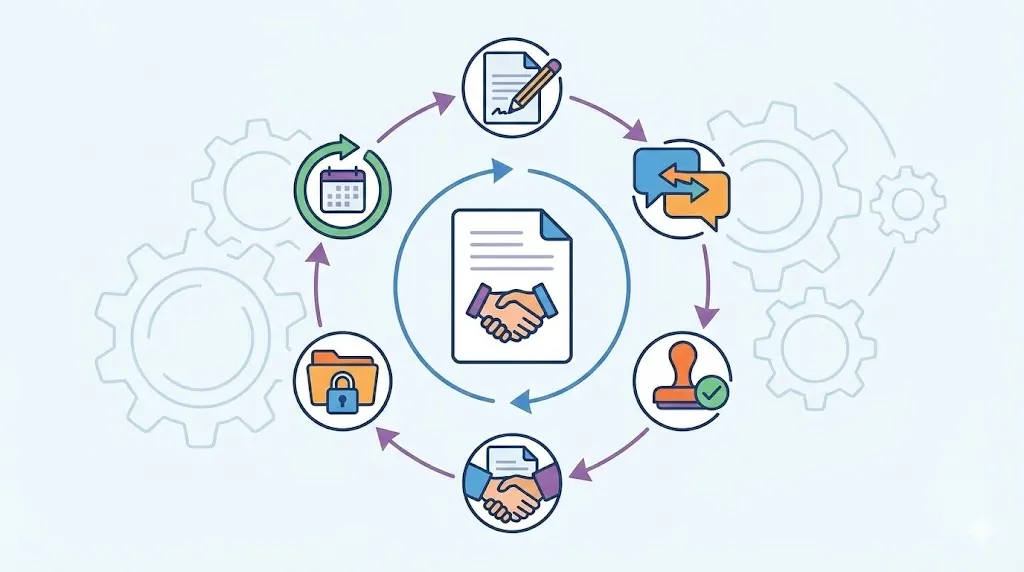
What Contract Lifecycle Management Does to Speed Up Contracts
Contract lifecycle management (CLM) software automates and organizes contract workflows. Additionally, it replaces manual processes with digital solutions designed to significantly shorten the time required for contract creation, review, approval, and execution.
Centralized Contract Repository
CLM consolidates all contracts into a secure, centralized platform. Users access a single source of truth with real-time document updates. This approach eliminates confusion caused by multiple versions and disparate storage locations.
Automated Workflows
CLM systematically directs contracts through predefined approval stages. Moreover, it issues reminders and escalations to maintain momentum, effectively mitigating bottlenecks and preventing missed deadlines.
Template and Clause Libraries
Standardized templates and approved clauses speed drafting. Users select pre-approved language, reducing negotiation time and legal risk.
AI-Powered Review and Insights
Some CLM systems use AI to flag risky clauses, suggest fallback language, and summarize contracts. Leveraging these capabilities accelerates legal review cycles while enhancing precision.
Obligation Tracking and Alerts
In addition, CLM monitors critical dates and deliverables, issuing proactive alerts to responsible stakeholders ahead of deadlines. These notifications help avoid overlooked obligations and associated penalties.
Self-Service Contracting
Furthermore, by enabling contract generation from templates without direct legal team involvement, CLM empowers business units. This reduces the legal department’s burden and accelerates contract creation.
Integration with Other Systems
CLM integrates with platforms such as CRM, ERP, and e-signature software to streamline contract-related processes. Such integrations facilitate smoother contract data exchange and execution workflows.
Real-World Impact
Organizations implementing CLM have reported reductions in contract cycle times ranging from 40% to 60%. They start projects sooner, improve compliance, and increase revenue. For example, a global IT services provider reduced contract turnaround from 120 days to 50 days after implementing CLM.
Related articles: Volody's AI CLM Transforms contract with Global Conglomerate
How to Get Started with Faster Contracting
Improving contract speed hinges on a strategic approach combined with effective tools.
Assess Your Current Contract Process
Additionally, begin by thoroughly documenting each phase, from the initial contract request through to final execution. Identify specific points where bottlenecks, delays, or operational challenges arise. Engage legal counsel, sales representatives, and delivery managers to obtain comprehensive insights.
Define Contract Types and Templates
Establish distinct contract categories such as MSAs, SOWs, and engagement letters. Assemble pre-approved templates together with clause libraries designed to expedite drafting and reduce legal exposure.
Automate Workflows
Implement technology solutions that handle routing, reminders, and approvals automatically, ensuring consistency throughout the process. Establish clear criteria for reviewer and approver responsibilities at every stage.
Centralize Contract Storage
Set up a secure, searchable centralized repository to store all contract documents. Ensure that only authorized users have streamlined access to these files.
Track Obligations and Deadlines
Moreover, configure alerts for critical contract milestones. Delegate responsibility to ensure obligations are actively monitored.
Train Teams on New Processes
Provide in-depth training tailored to legal professionals, sales personnel, and business users covering the CLM platform and its workflows. Promote adoption through targeted communication efforts.
Start Small and Scale
Pilot CLM with a specific contract type or business unit. Measure improvements and expand gradually.
Monitor and Improve
Use CLM analytics to track cycle times, bottlenecks, and compliance. Continuously refine processes based on data.
Related articles: How Financial Industry Benefit from CLM Software?
Why Contract Management Software Matters
Contract management software streamlines the coordination of complex contracting workflows, improving overall organizational effectiveness. It also reduces reliance on manual input, decreases the likelihood of errors, and shortens turnaround durations. In addition, it offers greater visibility and control over contract lifecycle processes.
With software, teams can:
Generate contracts quickly from templates
Collaborate in real time on contract drafts
Automate approvals and signatures
Track contract performance and obligations
Search and analyze contract data easily
This leads to faster deal closures, better compliance, and stronger client relationships.
According to Forrester, companies that use CLM software report a 20% to 50% reduction in contract cycle times and a significant drop in contract compliance issues.
How CLM Software Solves This
CLM software simplifies contract workflows and centralizes contract data. Additionally, it reduces manual bottlenecks and enhances collaboration across departments.
Volody’s contract management platform offers AI-powered contract drafting and review, automated workflows, and obligation tracking. It integrates with CRM and e-signature tools to speed contract execution. The platform provides a single source of truth for all your contracts, improving visibility and control.
Volody also supports role-based access and audit trails to protect sensitive information and ensure compliance.
Looking for a better way to manage contracts? Discover Volody's CLM Software.
FAQ
What is contract lifecycle management (CLM)?
Additionally, cLM refers to software that manages contracts from creation through execution and renewal. It automates workflows, stores contracts centrally, and tracks obligations to speed the contracting process.
In what ways does CLM accelerate contract processing?
CLM automates contract routing, approval, and signature steps. It reduces manual errors and delays by providing templates, alerts, and collaboration tools.
Why has CLM become essential for organizations operating within IT and professional services?
Moreover, due to the intricacy and volume of contracts these industries handle, CLM solutions play a crucial role in optimizing workflows and maintaining compliance.
These organizations frequently manage intricate contracts involving multiple documents and deadlines.
CLM assists in navigating this complexity, enabling quicker contract execution and enhanced compliance.
These firms handle complex contracts with multiple documents and deadlines.
CLM assists in navigating this complexity, enabling quicker contract execution and enhanced compliance.
Is it possible for CLM software to integrate with other enterprise systems?
Absolutely. Furthermore, leading CLM platforms are designed to interface seamlessly with CRM, ERP, and e-signature systems to facilitate efficient contract data exchange and minimize manual input.
Which contract types are prevalent in IT and professional services sectors?
Master service agreements (MSAs), statements of work (SOWs), and engagement letters are typical.
Each outlines terms pertinent to specific stages of client engagements.
In what manner does CLM enforce contract compliance?
CLM tracks key dates, obligations, and approvals.
Also, it sends reminders to prevent missed deadlines and enforces use of approved templates and clauses.
Is AI useful in contract management?
AI can speed contract review by flagging risks, suggesting language, and summarizing terms. Also, this reduces legal workload and improves accuracy.
How do I start implementing CLM?
Begin by mapping your current contract process and identifying pain points. Then standardize templates, automate workflows, and train your teams on the new system.
What benefits can I expect from CLM?
Faster contract cycles, fewer errors, improved compliance, better visibility, and stronger client relationships are common benefits.
Does CLM software scale effectively for enterprise-level demands?
Yes. Modern CLM platforms support multiple business units, global teams, and high contract volumes with role-based access and audit trails.
About the Company

Volody AI CLM is an Agentic AI-powered Contract Lifecycle Management platform designed to eliminate manual contracting tasks, automate complex workflows, and deliver actionable insights. As a one-stop shop for all contract activities, it covers drafting, collaboration, negotiation, approvals, e-signature, compliance tracking, and renewals. Built with enterprise-grade security and no-code configuration, it meets the needs of the most complex global organizations. Volody AI CLM also includes AI-driven contract review and risk analysis, helping teams detect issues early and optimize terms. Trusted by Fortune 500 companies, high-growth startups, and government entities, it transforms contracts into strategic, data-driven business assets.





" height="216.72211px" id="FYO0bO80Y" transform="translate(3 6.105)" width="206.073px"/><path d="M 108.174 222 C 88.432 222 70.303 217.239 53.785 207.717 C 37.267 198.196 24.173 185.052 14.504 168.285 C 4.835 151.312 0 132.165 0 110.845 C 0 89.731 4.835 70.792 14.504 54.025 C 24.173 37.052 37.267 23.804 53.785 14.282 C 70.303 4.761 88.432 0 108.174 0 C 128.116 0 146.246 4.761 162.562 14.282 C 179.08 23.804 192.073 37.052 201.541 54.025 C 211.21 70.792 216.044 89.731 216.044 110.845 C 216.044 132.165 211.21 151.312 201.541 168.285 C 192.073 185.052 179.08 198.196 162.562 207.717 C 146.044 217.239 127.915 222 108.174 222 Z M 108.174 183.189 C 120.864 183.189 132.044 180.291 141.713 174.495 C 151.382 168.492 158.936 160.006 164.375 149.035 C 169.814 138.064 172.533 125.334 172.533 110.845 C 172.533 96.355 169.814 83.729 164.375 72.965 C 158.936 61.994 151.382 53.611 141.713 47.815 C 132.044 42.02 120.864 39.122 108.174 39.122 C 95.483 39.122 84.202 42.02 74.332 47.815 C 64.663 53.611 57.109 61.994 51.67 72.965 C 46.231 83.729 43.511 96.355 43.511 110.845 C 43.511 125.334 46.231 138.064 51.67 149.035 C 57.109 160.006 64.663 168.492 74.332 174.495 C 84.202 180.291 95.483 183.189 108.174 183.189 Z" fill="rgba(255, 255, 255, 0.12)" height="222px" id="aa1McFcE9" transform="translate(227.183 3)" width="216.04399999999998px"/><path d="M 42.302 182.257 L 111.799 182.257 L 111.799 216.722 L 0 216.722 L 0 0 L 42.302 0 Z" fill="rgba(255, 255, 255, 0.12)" height="216.72211px" id="yRq4AnrsX" transform="translate(477.721 6.105)" width="111.79899999999998px"/><path d="M 108.174 222 C 88.432 222 70.303 217.239 53.785 207.717 C 37.267 198.196 24.173 185.052 14.504 168.285 C 4.835 151.312 0 132.165 0 110.845 C 0 89.731 4.835 70.792 14.504 54.025 C 24.173 37.052 37.267 23.804 53.785 14.282 C 70.303 4.761 88.432 0 108.174 0 C 128.116 0 146.246 4.761 162.562 14.282 C 179.08 23.804 192.073 37.052 201.541 54.025 C 211.21 70.792 216.045 89.731 216.045 110.845 C 216.045 132.165 211.21 151.312 201.541 168.285 C 192.073 185.052 179.08 198.196 162.562 207.717 C 146.044 217.239 127.915 222 108.174 222 Z M 108.174 183.189 C 120.864 183.189 132.044 180.291 141.713 174.495 C 151.382 168.492 158.936 160.006 164.375 149.035 C 169.814 138.064 172.534 125.334 172.534 110.845 C 172.534 96.355 169.814 83.729 164.375 72.965 C 158.936 61.994 151.382 53.611 141.713 47.815 C 132.044 42.02 120.864 39.122 108.174 39.122 C 95.483 39.122 84.202 42.02 74.332 47.815 C 64.663 53.611 57.108 61.994 51.67 72.965 C 46.231 83.729 43.511 96.355 43.511 110.845 C 43.511 125.334 46.231 138.064 51.67 149.035 C 57.108 160.006 64.663 168.492 74.332 174.495 C 84.202 180.291 95.483 183.189 108.174 183.189 Z" fill="rgba(255, 255, 255, 0.12)" height="222px" id="mo8HQspQ0" transform="translate(609.155 3)" width="216.04500000000007px"/><path d="M 73.727 0 C 95.885 0 115.324 4.45 132.044 13.351 C 148.967 22.252 161.957 34.982 171.027 51.541 C 180.287 67.894 184.917 86.937 184.917 108.671 C 184.917 130.405 180.287 149.449 171.027 165.801 C 161.957 181.947 148.967 194.47 132.044 203.371 C 115.324 212.271 95.885 216.722 73.727 216.722 L 0 216.722 L 0 0 Z M 72.216 179.773 C 94.374 179.773 111.497 173.564 123.583 161.144 C 135.669 148.724 141.713 131.233 141.713 108.671 C 141.713 86.109 135.669 68.515 123.583 55.888 C 111.497 43.055 94.374 36.638 72.216 36.638 L 42.302 36.638 L 42.302 179.773 Z" fill="rgba(255, 255, 255, 0.12)" height="216.72211px" id="I3iXX5Hi_" transform="translate(859.693 6.105)" width="184.91699999999992px"/><path d="M 185.22 0 L 113.91 141.273 L 113.91 216.722 L 71.61 216.722 L 71.61 141.273 L 0 0 L 47.74 0 L 93.06 99.046 L 138.08 0 Z" fill="rgba(255, 255, 255, 0.12)" height="216.72211px" id="nzHyWC0_d" transform="translate(1061.78 6.105)" width="185.22000000000003px"/></svg>)