

When multiple agreements govern a single business relationship, inconsistent obligations can undermine delivery, increase costs, and expose the organization to legal risk. A disciplined framework for mapping contracts, assigning ownership, controlling versions, and monitoring performance gives teams the clarity and accountability needed to prevent conflicts and resolve them decisively.
TL;DR
Map related contracts, duties, deadlines, and priority clauses before conflicts disrupt delivery, payment, or compliance.
Store agreements, amendments, notices, and evidence together with clear versions, owners, access rules, and retention controls.
Use plain drafting, standard clauses, hierarchy rules, and formal amendments to reduce contradictory contract terms.
Automate obligation tracking, milestone alerts, renewal reviews, compliance checks, and escalation workflows across business teams.
Review evidence first, seek structured agreement, and follow formal dispute steps when contract obligation conflicts remain unresolved.
Contract management software connects records, improves visibility, and supports accountability across legal, finance, procurement, and operations.
Identifying Conflicting Obligations Across Contracts
Where Contract Conflicts Commonly Arise
Conflicts often begin with unclear scope or duplicated deliverables. One contract may assign a task to the supplier. Another may assign the same task to the customer.
Service levels can also differ across documents. A master agreement may require four-hour support. A statement of work may promise one-hour response times.
Payment terms create similar problems. One document may require payment after acceptance. Another may set payment from the invoice date.
Deadlines can clash when projects share staff, data, or equipment. Notice periods may also differ for termination, renewal, or price changes.
Exclusivity, confidentiality, indemnity, and termination rights need close review. A later document may weaken or expand duties set by an earlier agreement.
These contract obligation conflicts often stay hidden until performance begins. Teams then discover that no single person understands the full set of duties.
Building a Contract Relationship Map
Start by mapping every document that affects the relationship. Include the master agreement, statements of work, purchase orders, amendments, policies, and related-party contracts.
Link each document to its parent agreement. Record the parties, effective date, expiry date, and business owner. Mark any incorporated terms or external policies.
Use a conflict identification checklist during each review. Check the parties, obligations, dates, documents, dependencies, and priority clauses.
Also compare the business process against the written terms. A contract may mention a deliverable that no team tracks today. A purchase order may include terms that conflict with approved legal language.
The map should show links between duties. For example, a delivery date may depend on customer approval. That approval may depend on data supplied under another agreement.
This approach turns scattered records into one working view. It helps teams find overlapping obligations before they become missed commitments.
Related articles: 7 Contract Management Principles Every Legal Team Needs
5 Key Challenges in Coordinating Multiple Contracts
1. Overlapping Scope and Deliverables
Overlapping obligations create uncertainty about who must perform the work. Two teams may assume the other team owns the same deliverable.
The opposite problem can also occur. Each team may believe that a task falls outside its contract. The customer then receives incomplete work.
Define each deliverable with a clear owner, result, and due date. Link related tasks when one contract depends on another.
2. Inconsistent Timelines and Milestones
Different contracts may set different delivery dates for one project. Acceptance periods can also vary across statements of work.
Renewal windows create another timing risk. One agreement may require ninety days' notice. A related agreement may use thirty days.
Record each date in one obligation register. Show dependencies between milestones, approvals, notices, and renewal actions.
3. Contradictory Commercial Terms
Pricing, invoices, credits, and payment schedules often change during negotiations. A later document may not clearly replace the earlier terms.
Service credits can also conflict with broader remedies. One contract may limit credits. Another may allow additional damages or termination rights.
Compare all commercial terms before approving changes. Finance, procurement, sales, and legal teams should review material differences together.
4. Unclear Document Priority
Teams need to know which legal document controls when terms conflict. The answer may depend on an order of precedence clause.
A master agreement may control legal terms. A statement of work may control scope and delivery details. A purchase order may add terms that the supplier rejects.
Do not assume the newest document always wins. Check signatures, amendment language, incorporation terms, and governing law.
5. Fragmented Evidence and Ownership
Email threads often contain key facts about changes or accepted work. Those records become hard to find when they remain in personal inboxes.
Unclear ownership makes matters worse. No one may know who tracks a notice, payment milestone, or supplier duty.
The table below shows common conflict sources and needed evidence.
Conflict source | Operational impact | Evidence needed |
|---|---|---|
Scope and deliverables | Duplicate work or missed tasks | Signed scope, task records, acceptance notes |
Dates and milestones | Delays, missed notices, or service failures | Schedules, emails, approvals, milestone logs |
Commercial terms | Payment disputes or incorrect credits | Invoices, pricing exhibits, purchase orders |
Document priority | Conflicting interpretations | Precedence clause, amendments, signature records |
Ownership and evidence | Slow response and weak accountability | Obligation register, owner records, stored communications |
Related articles: Breach of Contract: Master How to Resolve Legal Disputes
Establishing a Reliable Contract Record
Centralizing Executed Agreements and Amendments
Store every signed contract in one searchable contract repository. Include exhibits, schedules, amendments, acceptance records, and relevant notices.
The record should also include key communications. Keep communications that explain a change, approval, waiver, or accepted interpretation.
A central record gives teams one trusted source. It reduces time spent searching through email, shared drives, and local folders.
Access rules still matter. Give legal, procurement, finance, and operations the access they need. Restrict sensitive records when business or privacy risks require it.
Applying Version Control and Change History
Separate drafts from executed documents. Label each version with its status, date, and approval stage.
Keep a clear history of changes. The record should show who changed what, when, and why.
Do not overwrite signed documents. Store each amendment beside the agreement it changes. Link the amendment to each affected clause and obligation.
These controls protect teams during disputes. They also help reviewers understand which terms applied at each point.
Linking Related Contracts and Obligations
Relationship mapping connects parent agreements, project documents, purchase orders, renewals, and subcontractor commitments. It shows how one duty affects another duty.
Define responsibility for storage and naming. Legal may control executed records. Procurement may manage supplier files. Contract administrators may maintain links and metadata.
Finance should confirm payment terms and evidence. Operations should confirm deliverables and performance records. Business owners should confirm practical deadlines.
Set rules for access, versioning, retention, and naming. Apply the same rules across departments.
This structure supports obligation compliance throughout the contract lifecycle. It also gives teams a stronger basis for resolving cross-contract risk.
Related articles: SLA Obligations Explained: Key Terms and Best Practices
Drafting and Negotiation Practices That Prevent Contradictions
Defining Terms, Deliverables, and Priority Rules
Use defined terms for key people, services, dates, and outputs. Avoid using different words for the same duty.
Make deliverables measurable. State what the party must provide, when it must provide it, and how acceptance works.
Add an order of precedence clause. State which document controls for legal terms, commercial terms, scope, and technical details.
Cross-reference related documents with care. Name each document and explain whether it adds to, changes, or replaces another term.
Controlling Electronic Acceptance and Standard Forms
Confirmation emails can create confusion when they appear to change signed terms. Ask users to reference the exact agreement and proposed change.
Purchase orders need similar controls. A supplier should not accept conflicting terms through silence or routine performance.
Procurement teams need training on approved forms. They should know when to reject extra terms or seek legal review.
Use safeguards for definitions, hierarchy clauses, incorporated documents, acceptance language, and amendment requirements. Require authorized signatures for material changes.
Standard forms reduce variation across contracts. Clause libraries also help teams use approved wording for common risks.
Related articles: Drafting Effective Dispute Resolution Clauses: A Practical
Automating Obligation, Compliance, and Renewal Management
Tracking Milestones and Performance Duties
Automated tasks can assign each duty to one named owner. The owner should see the due date, required evidence, and related contract.
Reminders should arrive before the deadline. Escalation rules should alert a manager when the owner misses a task.
Track deliverables, payments, notices, reports, service levels, and approvals. Record completion evidence against the correct obligation.
This process reduces reliance on memory. It also helps teams spot duties that depend on other contracts.
Monitoring Compliance and Risk Signals
A compliance contract dashboard can show approaching deadlines and unresolved exceptions. It can also show missing evidence and open approvals.
Contract intelligence means software finds key data in contract records. It can surface dates, duties, risks, and unusual language for review.
Dashboards should show conflicts by owner, business unit, supplier, and contract type. Legal teams can then focus on higher risk matters.
Software does not decide every legal question. It helps people find the records and facts needed for sound judgment.
Managing Renewals and Notice Periods
Renewal alerts should reflect each contract's notice period. They should also show related agreements that may renew at different times.
Analytics can reveal accidental extension risks. They can also identify contracts that need business review before renewal.
Use a simple monitoring cadence. Check active obligations each day. Review compliance each month. Assess renewals each quarter.
Record the decision, owner, and evidence for every renewal. Keep any notice, waiver, amendment, or termination record with the contract.
Related articles: Contract Management Strategies: Key Dos and Don'ts
Resolving Conflicts Through Evidence and Escalation
Reviewing the Full Contract Record
Start with the executed agreement and all signed changes. Then review incorporated documents, relevant communications, and performance evidence.
Compare the exact clauses that appear to conflict. Check dates, defined terms, precedence rules, and governing law.
Review invoices, accepted deliverables, service records, and approval notes. These records may show how both parties understood the terms.
Do not rely on a contract summary alone. Read the operative language before forming a final view.
Starting With Structured Informal Resolution
Bring the right stakeholders together early. Include the business owner, legal contact, finance lead, procurement lead, and operations lead.
Write down the facts before debating the answer. List the competing duties, affected dates, and practical business impact.
Record each proposed interpretation. Note the risks, needed actions, and temporary steps for continued performance.
A short written agreement can prevent further confusion. It should state who will act, by when, and under which temporary approach.
Using Contractual Dispute Procedures
Follow the notice rules in the affected contracts. A formal notice may need a specific address, format, or delivery method.
Check any required negotiation period. The contract may require senior talks before mediation, arbitration, or court action.
Review venue and governing law before taking formal steps. Related agreements may point to different forums or procedures.
Coordinate the approach across linked contracts. One notice may affect service continuity, payment rights, or termination options elsewhere.
Documenting the Agreed Resolution
Store written clarifications against every affected contract. Do the same for amendments, waivers, settlement terms, and change orders.
Trace the escalation path from internal review to stakeholder discussion. Record legal analysis, formal notices, mediation, arbitration, or litigation steps.
The record should show who approved the outcome. It should also show which obligations changed and which duties remain active.
This record protects future teams from repeating the same debate. It also supports audits, renewals, and later negotiations.
Related articles: Dispute Resolution Clause: How to Draft a Strong One
Building Ongoing Governance Across Contract Owners
Creating Cross Functional Review Processes
Review interdependent obligations with the right business teams. Legal, procurement, finance, operations, and business owners each see different risks.
Set review points before signature, before delivery, and before renewal. Use the same agenda for each review.
Discuss scope, dates, payments, evidence, dependencies, and escalation needs. Assign one owner for every open action.
A cross functional process improves handoffs. It also reduces the chance that one team changes terms without warning others.
Training Teams to Recognize Contract Risk
Training should cover conflicting forms and unacceptable terms. It should also explain when users must object or seek approval.
Teach staff how to identify risky purchase orders, clickwrap terms, and informal promises. Show them how to preserve supporting records.
Explain approval authority in plain language. Each person should know which changes require legal, finance, procurement, or executive review.
Use short examples from real workflows. Practical training helps teams recognize contract obligation conflicts during daily work.
Measuring Performance and Improving Controls
Track missed milestones, unresolved conflicts, and amendment cycle time. Review renewal exposure and compliance exceptions as well.
Use these measures to find weak controls. A repeated missed notice may signal poor ownership. Frequent amendments may show unclear templates.
Run a review after each serious incident. Update templates, clause libraries, workflows, approval rules, alerts, and ownership records.
Share the lessons through management reporting. Good governance turns past failures into stronger daily controls.
Related articles: Contract Compliance: Importance & Best Practices
Why Contract Management Software Matters
Connecting Contract Data Across Business Systems
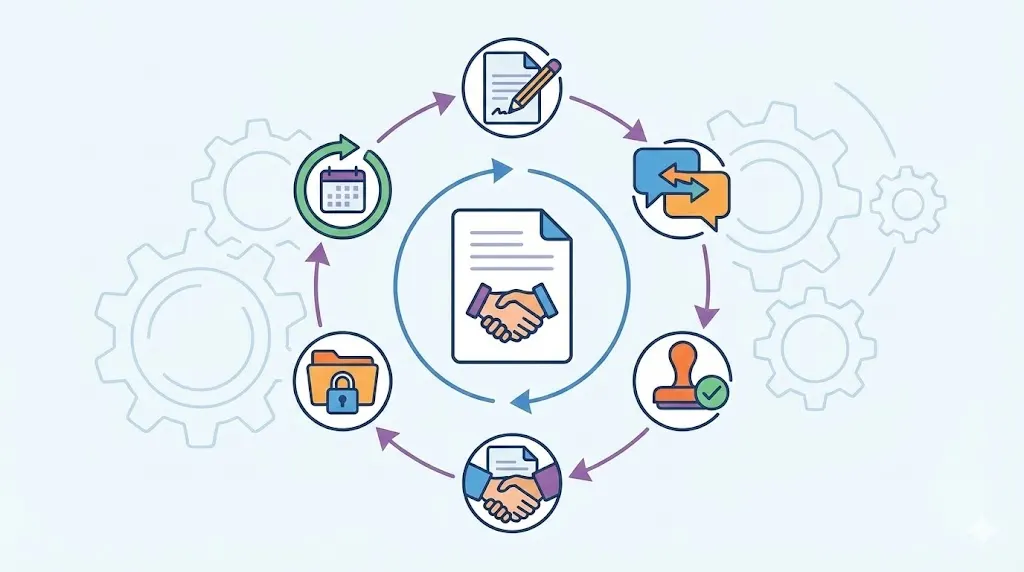
A CLM platform connects agreements, amendments, obligations, and renewals. CLM means contract lifecycle management, from drafting through closeout.
The platform can connect with CRM, ERP, procurement, and supplier systems. These links bring sales, finance, purchasing, and contract data into one view.
Connected records help teams see business context. They can link a payment duty to an invoice or a renewal to a customer account.
This reduces manual copying between systems. It also helps teams find changes that affect linked contracts.
Automating Visibility, Workflows, and Accountability
Automated workflows assign reviews, approvals, reminders, and escalations. Dashboards show open obligations, deadlines, exceptions, and related agreements.
Linked contracts help teams spot overlapping obligations. Conflict controls can flag unusual terms or missing approvals before signature.
Software supports legal judgment. It does not replace careful interpretation by qualified legal professionals.
Volody's CLM Software supports AI Contract Summaries, Obligation Management, and Approval Workflow Automation. It can highlight duties and renewal dates, track commitments, and route reviews with reminders.
For example, a finance owner can receive a payment task. Legal can review a flagged clause, while procurement tracks the related supplier renewal.
Want to see how contract management software can simplify your legal workflows? Check out Volody's CLM Software.
FAQ
Why is legal contract management important?
Legal contract management helps teams understand promised duties and deadlines. It also shows who owns each action and what evidence proves completion. This reduces missed obligations, renewal surprises, and avoidable disputes. It gives legal and business teams a reliable record for compliance, negotiation, risk review, and coordinated decisions across related contracts.
What is the difference between contract compliance and contract management?
Contract compliance focuses on performing duties under agreed terms. These duties include payments, deadlines, notices, service levels, and reports. Contract management covers the wider lifecycle, from drafting and negotiation through renewal and closeout. Strong management creates the records and workflows needed for consistent compliance.
How would you navigate conflicting contract terms?
First, collect signed agreements, amendments, incorporated documents, communications, and performance evidence. Compare the exact provisions and check priority rules, dates, governing law, and business impact. Involve the responsible teams and document the proposed interpretation. Use an amendment, waiver, or formal dispute process when agreement remains impossible.
How should contractual obligations be assigned to named owners?
Extract each deliverable, payment milestone, notice, renewal date, and reporting duty. Place each item in a shared register with one named owner. Identify supporting teams, such as legal, finance, procurement, sales, or operations. Add due dates, evidence needs, escalation thresholds, and backup ownership.
How can a negotiation playbook reduce conflicting contractual obligations?
A negotiation playbook sets approved clauses and fallback language. It also defines approval needs, escalation points, and walk-away thresholds. Sales, procurement, and legal teams can then use consistent terms across customer and supplier agreements. Clear limits reduce unplanned changes that create overlapping obligations.
When should a contract conflict be escalated to legal counsel?
Escalate promptly when a conflict creates material financial exposure, threatens service continuity, or raises regulatory or dispute risk. Preserve the relevant contracts, communications, invoices, and performance evidence, then engage qualified legal counsel to determine the governing terms and formal next steps.
About the Company

Volody AI CLM is an Agentic AI-powered Contract Lifecycle Management platform designed to eliminate manual contracting tasks, automate complex workflows, and deliver actionable insights. As a one-stop shop for all contract activities, it covers drafting, collaboration, negotiation, approvals, e-signature, compliance tracking, and renewals. Built with enterprise-grade security and no-code configuration, it meets the needs of the most complex global organizations. Volody AI CLM also includes AI-driven contract review and risk analysis, helping teams detect issues early and optimize terms. Trusted by Fortune 500 companies, high-growth startups, and government entities, it transforms contracts into strategic, data-driven business assets.




" height="216.72211px" id="FYO0bO80Y" transform="translate(3 6.105)" width="206.073px"/><path d="M 108.174 222 C 88.432 222 70.303 217.239 53.785 207.717 C 37.267 198.196 24.173 185.052 14.504 168.285 C 4.835 151.312 0 132.165 0 110.845 C 0 89.731 4.835 70.792 14.504 54.025 C 24.173 37.052 37.267 23.804 53.785 14.282 C 70.303 4.761 88.432 0 108.174 0 C 128.116 0 146.246 4.761 162.562 14.282 C 179.08 23.804 192.073 37.052 201.541 54.025 C 211.21 70.792 216.044 89.731 216.044 110.845 C 216.044 132.165 211.21 151.312 201.541 168.285 C 192.073 185.052 179.08 198.196 162.562 207.717 C 146.044 217.239 127.915 222 108.174 222 Z M 108.174 183.189 C 120.864 183.189 132.044 180.291 141.713 174.495 C 151.382 168.492 158.936 160.006 164.375 149.035 C 169.814 138.064 172.533 125.334 172.533 110.845 C 172.533 96.355 169.814 83.729 164.375 72.965 C 158.936 61.994 151.382 53.611 141.713 47.815 C 132.044 42.02 120.864 39.122 108.174 39.122 C 95.483 39.122 84.202 42.02 74.332 47.815 C 64.663 53.611 57.109 61.994 51.67 72.965 C 46.231 83.729 43.511 96.355 43.511 110.845 C 43.511 125.334 46.231 138.064 51.67 149.035 C 57.109 160.006 64.663 168.492 74.332 174.495 C 84.202 180.291 95.483 183.189 108.174 183.189 Z" fill="rgba(255, 255, 255, 0.12)" height="222px" id="aa1McFcE9" transform="translate(227.183 3)" width="216.04399999999998px"/><path d="M 42.302 182.257 L 111.799 182.257 L 111.799 216.722 L 0 216.722 L 0 0 L 42.302 0 Z" fill="rgba(255, 255, 255, 0.12)" height="216.72211px" id="yRq4AnrsX" transform="translate(477.721 6.105)" width="111.79899999999998px"/><path d="M 108.174 222 C 88.432 222 70.303 217.239 53.785 207.717 C 37.267 198.196 24.173 185.052 14.504 168.285 C 4.835 151.312 0 132.165 0 110.845 C 0 89.731 4.835 70.792 14.504 54.025 C 24.173 37.052 37.267 23.804 53.785 14.282 C 70.303 4.761 88.432 0 108.174 0 C 128.116 0 146.246 4.761 162.562 14.282 C 179.08 23.804 192.073 37.052 201.541 54.025 C 211.21 70.792 216.045 89.731 216.045 110.845 C 216.045 132.165 211.21 151.312 201.541 168.285 C 192.073 185.052 179.08 198.196 162.562 207.717 C 146.044 217.239 127.915 222 108.174 222 Z M 108.174 183.189 C 120.864 183.189 132.044 180.291 141.713 174.495 C 151.382 168.492 158.936 160.006 164.375 149.035 C 169.814 138.064 172.534 125.334 172.534 110.845 C 172.534 96.355 169.814 83.729 164.375 72.965 C 158.936 61.994 151.382 53.611 141.713 47.815 C 132.044 42.02 120.864 39.122 108.174 39.122 C 95.483 39.122 84.202 42.02 74.332 47.815 C 64.663 53.611 57.108 61.994 51.67 72.965 C 46.231 83.729 43.511 96.355 43.511 110.845 C 43.511 125.334 46.231 138.064 51.67 149.035 C 57.108 160.006 64.663 168.492 74.332 174.495 C 84.202 180.291 95.483 183.189 108.174 183.189 Z" fill="rgba(255, 255, 255, 0.12)" height="222px" id="mo8HQspQ0" transform="translate(609.155 3)" width="216.04500000000007px"/><path d="M 73.727 0 C 95.885 0 115.324 4.45 132.044 13.351 C 148.967 22.252 161.957 34.982 171.027 51.541 C 180.287 67.894 184.917 86.937 184.917 108.671 C 184.917 130.405 180.287 149.449 171.027 165.801 C 161.957 181.947 148.967 194.47 132.044 203.371 C 115.324 212.271 95.885 216.722 73.727 216.722 L 0 216.722 L 0 0 Z M 72.216 179.773 C 94.374 179.773 111.497 173.564 123.583 161.144 C 135.669 148.724 141.713 131.233 141.713 108.671 C 141.713 86.109 135.669 68.515 123.583 55.888 C 111.497 43.055 94.374 36.638 72.216 36.638 L 42.302 36.638 L 42.302 179.773 Z" fill="rgba(255, 255, 255, 0.12)" height="216.72211px" id="I3iXX5Hi_" transform="translate(859.693 6.105)" width="184.91699999999992px"/><path d="M 185.22 0 L 113.91 141.273 L 113.91 216.722 L 71.61 216.722 L 71.61 141.273 L 0 0 L 47.74 0 L 93.06 99.046 L 138.08 0 Z" fill="rgba(255, 255, 255, 0.12)" height="216.72211px" id="nzHyWC0_d" transform="translate(1061.78 6.105)" width="185.22000000000003px"/></svg>)