

Legal professionals spend countless hours drafting contracts, agreements, and other documents in Microsoft Word. Yet, many still wrestle with repetitive tasks like formatting, citation checks, and clause management. Automating legal documents in Word can save time, reduce errors, and improve consistency. This article explores the top Word add-ins for 2026 that help legal teams automate drafting, streamline workflows, and write clearer, more effective documents.
Imagine a busy in-house counsel juggling dozens of contracts weekly. They need to ensure accuracy while meeting tight deadlines. The right Word add-ins can act like a digital assistant, handling tedious tasks so lawyers focus on substance. This guide breaks down the best tools available, their key features, and how they fit into your legal drafting process.
TL;DR
Citation checks, tables of authorities, and formatting can be automated to significantly reduce the time spent on legal documents.
Additionally, drafting assistants powered by AI generate clauses dynamically and highlight omissions that require attention.
Advanced language processing tools work to clarify documents by converting dense legal jargon into straightforward plain English.
Tools for contract comparison and redlining accelerate the detection of modifications and uncover potential risks swiftly.
Integrating Word add-ins with contract management systems streamlines workflows effectively.
Contract lifecycle management software consolidates templates, approvals, and metadata extraction into a unified platform.
How Can Word Add-Ins Improve Legal Drafting Efficiency?
Microsoft Word continues to be a cornerstone in the legal drafting landscape. However, the software alone lacks specialized features for legal workflows. Additionally, integrating add-ins with Word facilitates the automation of routine tasks while improving precision. These tools help reduce manual work, minimize errors, and speed up document turnaround.
For example, citation checking is a vital but time-consuming step. Legal documents must reference cases, statutes, and regulations correctly. Verification against legal databases, generation of tables of authorities, and identification of missing references can be handled automatically through these add-ins. This frees lawyers from tedious cross-checking.
Another common challenge is managing clause libraries and templates. Add-ins allow users to insert approved clauses quickly or generate new ones using AI. They can also suggest fallback language or highlight missing provisions based on contract type. This ensures documents meet organizational standards without reinventing the wheel.
Formatting consistency is critical in legal documents. Automated tools standardize fonts, headings, numbering, and spacing to maintain uniformity. This improves document clarity while delivering a refined, professional presentation that satisfies both client and court requirements.
Many Word add-ins facilitate collaboration by tracking changes, redlining contracts, and comparing versions. These features help legal teams review edits efficiently and identify risks or deviations from standard terms.
By automating these tasks, lawyers can focus on legal analysis and negotiation rather than document assembly. This leads to faster contract cycles, fewer errors, and better compliance.
Related articles: AI Contract Review: Enhancing Legal Workflow Efficiency
What Are the Leading Tools for Citation and Authority Checks?
Accurate citation is fundamental to effective legal writing. Additionally, errors in citations not only weaken arguments but can also lead to procedural setbacks. To address these challenges, several Word add-ins have been developed to enhance citation verification and authority management.
Clear Authority Checker This tool utilizes AI to scrutinize legal citations within your document, matching them against authoritative databases. It identifies inaccuracies or outdated references and offers precise correction suggestions. It also automates the creation of authority lists, significantly reducing the time spent on manual compilation.
Lexis Office Integration If you subscribe to LexisNexis, their Word add-in lets you insert cases, statutes, and secondary sources directly into your document. It also offers citation validation and quick access to relevant legal research without leaving Word.
Westlaw Drafting Assistant This tool connects Word with Westlaw’s legal research platform. Moreover, it performs citation checks, imports case law, and provides access to standard clauses and forms. It supports both litigation and transactional drafting.
Litera Citation Manager Litera provides a robust suite tailored for document proofreading, formatting, and citation oversight. Its citation features ensure compliance with Bluebook and other citation standards while streamlining the compilation of official authority indexes.
Practical Example:
For instance, a litigator preparing a brief can employ this add-in to verify every case citation. The tool highlights any missing page numbers or incorrect reporter references. It then generates a table of authorities that updates dynamically as the document changes.
Related articles: Measuring ROI of MS Word AI Add-Ins for Legal Teams
How Do AI-Powered Drafting Assistants Enhance Legal Writing?
AI drafting assistants have transformed legal document creation. Additionally, unlike static templates, these tools produce original text tailored to the specific context and prevailing legal standards. They can draft clauses, suggest missing terms, and even summarize complex provisions.
Smart Clause Generation AI tools analyze thousands of contracts to learn how clauses are typically written. When drafting, they create tailored clauses that fit your document’s style and jurisdiction. This reduces reliance on outdated templates and manual edits.
Missing Clause Detection Some AI assistants scan your contract for frequent omissions. For instance, if a confidentiality provision is absent in a non-disclosure agreement, the tool will alert you. It can also recommend fallback language for risky terms.
Clause Summarization and Explanation Complex legal language can confuse clients or business teams. AI can generate plain English summaries of clauses, making contracts more accessible. This helps reduce misunderstandings and speeds up negotiations.
Example Use Case:
A corporate counsel drafting a service agreement uses an AI assistant to insert a liability clause. The assistant suggests a version aligned with the company’s risk appetite and flags any absence of an indemnity provision. It then creates a summary explaining the liability limits in simple terms.
Related articles: Contract Drafting Tips: Create Contracts Effortlessly
Which Add-Ins Help Simplify Legal Language for Better Communication?
Legal writing is frequently burdened by excessive jargon and intricate phrasing. Clear communication is essential not only for client understanding but also to influence court decisions positively. Various Word add-ins have been developed to enhance plain language in legal documents.
WordRake WordRake edits legal documents to remove unnecessary words, simplify sentences, and clarify meaning. It offers alternative expressions to replace legalese and removes redundant phrasing.
BriefCatch BriefCatch checks for clarity, conciseness, and persuasiveness. It identifies passive voice constructions, lengthy sentences, and weak verb choices. Beyond that, it provides guidance on tone and style specifically adapted to legal writing.
QuillBot QuillBot uses AI to paraphrase sentences and improve readability. It can rewrite dense paragraphs into clearer, more straightforward text without losing legal precision.
Practical Example:
An attorney preparing a client letter runs it through WordRake. The add-in suggests replacing “pursuant to the provisions herein” with “under this agreement.” It also shortens lengthy sentences, making the letter easier to read.
Related articles: Can AI Replace Lawyers? Exploring the Future of Legal AI
What Tools Support Contract Comparison and Risk Identification?
Contract review involves comparing versions, spotting changes, and identifying risky language. Additionally, word add-ins provide significant efficiency gains in executing these tasks.
Redline Review Tools Add-ins like Workshare or Litera allow side-by-side comparison of contract versions. They highlight insertions, deletions, and formatting changes clearly.
Risk Detection Certain add-ins analyze contract language deeply to pinpoint clauses that deviate from approved templates or impose potentially hazardous obligations.
Collaboration Features These tools offer functionalities such as commenting, version control, and change tracking.
Example:
When a legal team receives a vendor contract with multiple redlines, they employ a Word add-in to compare it against the standard template. This process brings a clause that heightens indemnity risk to immediate attention for further scrutiny.
Related articles: The Ultimate Guide to Contract Review Tools for 2025
How Do Document Automation Platforms Integrate with Word?
Document automation platforms simplify contract creation by combining templates, workflows, and clause libraries. Additionally, many include Word add-ins that enable document generation directly within Word.
These add-ins let users:
Fill dynamic fields in templates
Insert approved clauses from libraries
Trigger workflow steps like approvals
Export documents to contract management systems
Automation reduces drafting time and ensures compliance with company standards. It also minimizes errors from manual copy-pasting.
Example:
A sales team uses a Word add-in linked to an automation platform. They select a contract template, answer a few questions, and the add-in generates a completed agreement with all necessary clauses. The document then routes automatically for legal review.
Related articles: How AI Automates Legal Workflows
Why Is Plain Language Important in Legal Documents?
Legal documents are often dense and difficult to understand. Additionally, employing plain language reduces ambiguity, helps prevent disputes, and builds trust with clients and colleagues.
Plain language tools help lawyers write:
Shorter sentences
Clearer terms
Active voice
Fewer jargon words
This enhances communication with non-lawyers and courts. It also speeds up contract review and approval.
Related Article: Plain Language Contracts: The Strategic Advantage
Example:
Consider a law firm implementing a plain language add-in to overhaul a contract. This software identifies archaic terms such as “heretofore” and recommends simpler alternatives like “before,” while also advising the segmentation of lengthy sentences. As a result, the revised document flows more naturally and becomes significantly more accessible to clients.
Related articles: AI for Legal Documents: Your Essential Guide
How Does Contract Management Software Support Word Automation?
Contract lifecycle management (CLM) software centralizes contract creation, storage, and tracking. Many CLM platforms provide integrations that enable drafting and editing contracts directly within Microsoft Word.
CLM software benefits include:
Central template and clause libraries
Automated approval workflows
Metadata extraction from Word documents
Risk and compliance checks
Version control and audit trails
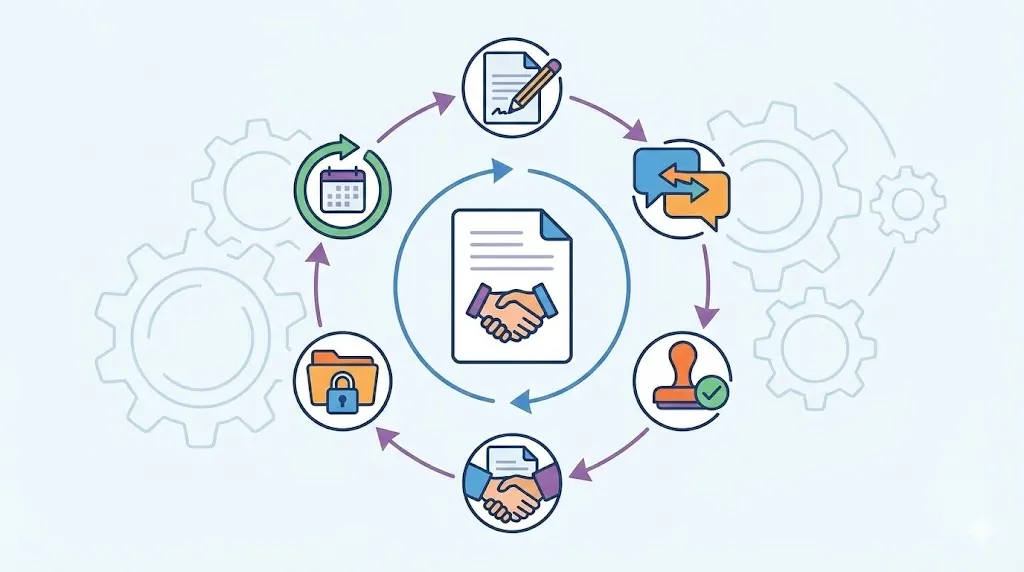
Integrating these Word-compatible extensions with CLM systems creates a seamless drafting experience. Lawyers draft in Word, then save contracts directly to the CLM repository. The system tracks deadlines, obligations, and renewals automatically.
Related articles: Best Contract Management Software in 2026: Top 20 CLM Tools
How to Choose the Right Word Add-Ins for Your Legal Team?
Choosing the most suitable add-ins requires a thorough assessment of your team’s specific requirements, budget constraints, and the software ecosystem already in place. Consider these factors:
Functionality: Identify whether your needs include citation verification, drafting support, or advanced language editing capabilities.
Ease of use: Evaluate the user interface for intuitiveness and check if comprehensive documentation or responsive customer service is available.
Integration: Assess the add-in’s ability to integrate smoothly with your existing contract management systems or research tools.
Cost: Review the transparency of pricing models and licensing terms to ensure alignment with your financial guidelines.
Security: Are data protection protocols aligned with your firm’s regulatory requirements?
Test multiple options with trial versions. Gather feedback from lawyers and support staff. Prioritize tools that save time on routine tasks and improve document quality.
Related articles: Strategic AI in Legal Document Automation
How Contract Management Software Solves This
Contract lifecycle solutions enable legal professionals to streamline document creation and review processes far beyond the capabilities of traditional Word add-ins. Additionally, templates, clause libraries, and workflows are integrated into a unified platform. This reduces errors, enforces compliance, and speeds approvals.
Modern CLM tools offer AI-powered drafting and review features. They analyze contracts to identify critical data points and notify teams about potential risks or absent clauses. Integration with Word allows lawyers to draft and edit contracts without switching apps.
Volody’s platform features AI-driven contract drafting, intelligent clause recommendations, and automated metadata extraction. It supports approval workflows, version control, and secure storage. These capabilities enable legal departments to reduce manual tasks and concentrate on high-value initiatives.
> See how Volody's CLM Software accelerates contract management while enhancing oversight for legal professionals.
FAQ
What advantages do add-ins provide when incorporated into Microsoft Word for legal document management?
Additionally, these tools automate tasks such as citation verification, formatting, and clause insertion, thereby increasing efficiency.
No. AI tools assist with drafting and reviewing but do not replace legal judgment. They speed up document creation and highlight risks, yet the final content must be reviewed and approved by legal professionals.
Are these add-ins designed to function across all Microsoft Word editions?
The majority of add-ins are compatible with the latest Word releases on both Windows and Mac systems.
It is advisable to verify the specific system requirements from each provider prior to installation to guarantee proper integration.
In what ways do add-ins enhance the contract review process?
They offer functionalities such as redlining, version comparison, and risk detection.
Through these features, legal teams can identify changes, highlight unusual clauses, and collaborate more seamlessly.
Is it secure to utilize AI-driven add-ins when working with confidential contractual material?
Reputable providers implement encryption protocols and adhere to stringent data privacy regulations.
Nonetheless, it remains essential to scrutinize security measures and evaluate on-premise solutions when handling highly sensitive data.
Moreover, can contract lifecycle management software be integrated with Microsoft Word add-ins?
Yes. Many CLM platforms provide add-ins that link drafting within Word to contract repositories, workflows, and approval processes.
Do plain language tools alter the legal substance of contracts?
No. These tools suggest clearer wording without altering legal intent.
Lawyers must review changes to ensure accuracy and enforceability.
Studies show automation can cut drafting time by 30% to 60%, depending on complexity. This acceleration contributes to shortened contract cycles and diminished legal expenditures.
Are free Microsoft Word add-ins available for legal drafting purposes?
Certain fundamental tools provide free versions with restricted functionalities.
However, advanced AI and citation tools usually require paid subscriptions.
What factors should be evaluated before implementing multiple Microsoft Word add-ins?
Avoid overlapping functionalities and ensure compatibility to prevent conflicts.
Train users thoroughly and develop protocols that optimize usage while preserving document integrity.
About the Company

Volody AI CLM is an Agentic AI-powered Contract Lifecycle Management platform designed to eliminate manual contracting tasks, automate complex workflows, and deliver actionable insights. As a one-stop shop for all contract activities, it covers drafting, collaboration, negotiation, approvals, e-signature, compliance tracking, and renewals. Built with enterprise-grade security and no-code configuration, it meets the needs of the most complex global organizations. Volody AI CLM also includes AI-driven contract review and risk analysis, helping teams detect issues early and optimize terms. Trusted by Fortune 500 companies, high-growth startups, and government entities, it transforms contracts into strategic, data-driven business assets.





" height="216.72211px" id="FYO0bO80Y" transform="translate(3 6.105)" width="206.073px"/><path d="M 108.174 222 C 88.432 222 70.303 217.239 53.785 207.717 C 37.267 198.196 24.173 185.052 14.504 168.285 C 4.835 151.312 0 132.165 0 110.845 C 0 89.731 4.835 70.792 14.504 54.025 C 24.173 37.052 37.267 23.804 53.785 14.282 C 70.303 4.761 88.432 0 108.174 0 C 128.116 0 146.246 4.761 162.562 14.282 C 179.08 23.804 192.073 37.052 201.541 54.025 C 211.21 70.792 216.044 89.731 216.044 110.845 C 216.044 132.165 211.21 151.312 201.541 168.285 C 192.073 185.052 179.08 198.196 162.562 207.717 C 146.044 217.239 127.915 222 108.174 222 Z M 108.174 183.189 C 120.864 183.189 132.044 180.291 141.713 174.495 C 151.382 168.492 158.936 160.006 164.375 149.035 C 169.814 138.064 172.533 125.334 172.533 110.845 C 172.533 96.355 169.814 83.729 164.375 72.965 C 158.936 61.994 151.382 53.611 141.713 47.815 C 132.044 42.02 120.864 39.122 108.174 39.122 C 95.483 39.122 84.202 42.02 74.332 47.815 C 64.663 53.611 57.109 61.994 51.67 72.965 C 46.231 83.729 43.511 96.355 43.511 110.845 C 43.511 125.334 46.231 138.064 51.67 149.035 C 57.109 160.006 64.663 168.492 74.332 174.495 C 84.202 180.291 95.483 183.189 108.174 183.189 Z" fill="rgba(255, 255, 255, 0.12)" height="222px" id="aa1McFcE9" transform="translate(227.183 3)" width="216.04399999999998px"/><path d="M 42.302 182.257 L 111.799 182.257 L 111.799 216.722 L 0 216.722 L 0 0 L 42.302 0 Z" fill="rgba(255, 255, 255, 0.12)" height="216.72211px" id="yRq4AnrsX" transform="translate(477.721 6.105)" width="111.79899999999998px"/><path d="M 108.174 222 C 88.432 222 70.303 217.239 53.785 207.717 C 37.267 198.196 24.173 185.052 14.504 168.285 C 4.835 151.312 0 132.165 0 110.845 C 0 89.731 4.835 70.792 14.504 54.025 C 24.173 37.052 37.267 23.804 53.785 14.282 C 70.303 4.761 88.432 0 108.174 0 C 128.116 0 146.246 4.761 162.562 14.282 C 179.08 23.804 192.073 37.052 201.541 54.025 C 211.21 70.792 216.045 89.731 216.045 110.845 C 216.045 132.165 211.21 151.312 201.541 168.285 C 192.073 185.052 179.08 198.196 162.562 207.717 C 146.044 217.239 127.915 222 108.174 222 Z M 108.174 183.189 C 120.864 183.189 132.044 180.291 141.713 174.495 C 151.382 168.492 158.936 160.006 164.375 149.035 C 169.814 138.064 172.534 125.334 172.534 110.845 C 172.534 96.355 169.814 83.729 164.375 72.965 C 158.936 61.994 151.382 53.611 141.713 47.815 C 132.044 42.02 120.864 39.122 108.174 39.122 C 95.483 39.122 84.202 42.02 74.332 47.815 C 64.663 53.611 57.108 61.994 51.67 72.965 C 46.231 83.729 43.511 96.355 43.511 110.845 C 43.511 125.334 46.231 138.064 51.67 149.035 C 57.108 160.006 64.663 168.492 74.332 174.495 C 84.202 180.291 95.483 183.189 108.174 183.189 Z" fill="rgba(255, 255, 255, 0.12)" height="222px" id="mo8HQspQ0" transform="translate(609.155 3)" width="216.04500000000007px"/><path d="M 73.727 0 C 95.885 0 115.324 4.45 132.044 13.351 C 148.967 22.252 161.957 34.982 171.027 51.541 C 180.287 67.894 184.917 86.937 184.917 108.671 C 184.917 130.405 180.287 149.449 171.027 165.801 C 161.957 181.947 148.967 194.47 132.044 203.371 C 115.324 212.271 95.885 216.722 73.727 216.722 L 0 216.722 L 0 0 Z M 72.216 179.773 C 94.374 179.773 111.497 173.564 123.583 161.144 C 135.669 148.724 141.713 131.233 141.713 108.671 C 141.713 86.109 135.669 68.515 123.583 55.888 C 111.497 43.055 94.374 36.638 72.216 36.638 L 42.302 36.638 L 42.302 179.773 Z" fill="rgba(255, 255, 255, 0.12)" height="216.72211px" id="I3iXX5Hi_" transform="translate(859.693 6.105)" width="184.91699999999992px"/><path d="M 185.22 0 L 113.91 141.273 L 113.91 216.722 L 71.61 216.722 L 71.61 141.273 L 0 0 L 47.74 0 L 93.06 99.046 L 138.08 0 Z" fill="rgba(255, 255, 255, 0.12)" height="216.72211px" id="nzHyWC0_d" transform="translate(1061.78 6.105)" width="185.22000000000003px"/></svg>)