

AI auto-redlining revolutionizes contract review by automating the detection and editing of contract differences with precision and speed. Leveraging advanced artificial intelligence, this technology identifies risks, highlights deviations, and proposes accurate edits, reducing contract turnaround times by up to 80%. This innovation fundamentally transforms legal workflows, enabling teams to operate with greater efficiency and control.
Historically, contract review has been a slow, manual task. Lawyers spent hours scanning lengthy documents, marking up changes by hand or with slow digital tools. This process delayed deal closures and drained legal resources. Errors and inconsistencies often slipped through, raising risk and dispute chances.
AI auto redlining instantly scans contracts against approved templates and policies. It highlights deviations and proposes tracked changes, allowing lawyers to focus on strategy, not mechanics. This immediate impact speeds workflows, cuts errors, and boosts legal team productivity. The technology is a game changer for contract turnaround time reduction and risk control.
TL;DR
Contract review consumes too much time and effort due to manual redlining. AI auto redlining automates this step by scanning contracts, detecting risky clauses, and suggesting edits aligned with company policies. This approach cuts turnaround time by 80%, freeing legal teams to tackle complex tasks. It also improves accuracy and consistency, reducing disputes. Adopting these tools requires workflow integration and tailored AI settings. The result is faster deals, lower risk, and stronger legal operations.
Related articles: Master Contract Redlining: What is it and How to do It?
The Mechanics of AI Auto-Redlining
Natural Language Processing in Contract Analysis
AI auto redlining relies heavily on natural language processing (NLP) to understand contract text. NLP enables the system to read and interpret legal language, spotting key phrases and clause structures. It detects differences between a new contract draft and a company's standard terms.
This technology goes beyond simple keyword matching. It recognizes context, synonyms, and legal jargon. For example, it can identify a non-standard indemnity clause even if phrased differently from the template. This nuance boosts precision in identifying risky or missing clauses.
Machine Learning Models for Clause Identification
Machine learning (ML) models train on vast datasets of contracts to learn patterns and variations. These models classify clauses into categories such as payment terms, confidentiality, or termination conditions. They flag anomalies based on deviations from corporate legal playbooks.
Over time, ML improves by incorporating user feedback and new contract data. It learns which flagged items lawyers accept or reject, sharpening its accuracy. This adaptive learning helps manage complex contracts and evolving regulatory requirements.
Automated Generation of Redline Suggestions
Once the AI identifies differences, it generates redlined edits automatically. These suggested markups align with approved language or flag issues for negotiation. The system tracks changes clearly, enabling lawyers to review and accept or modify the recommendations.
This automated redlining eliminates tedious manual comparison line by line. It also provides explanations for each change, helping legal teams understand the rationale quickly. This transparency builds trust in AI outputs and accelerates approval cycles.
Related articles: AI Contract Review vs. Human Lawyers: Speed, Accuracy & ROI
Quantifying Time Savings in Contract Review
Data-Driven Evidence of Time Reduction
Studies show AI auto redlining cuts contract review time by 60% to 85%. Research by Sirion found that average contract review time dropped from 4-8 hours to 1-2 hours after AI adoption. Time to complete the first draft fell by up to 90%, from days to mere hours.
These reductions directly affect contract turnaround time. Faster reviews mean quicker deal closures and faster revenue recognition. Legal teams can handle higher volumes without additional staffing.
Case Studies Demonstrating Efficiency Gains
A global tech company reported an 80% cut in turnaround time after integrating AI auto redlining into its enterprise contract management AI platform. Legal staff shifted focus from manual edits to negotiation strategy.
Similarly, a real estate legal department managing dozens of contracts daily reduced review time from hours to minutes. This speed enabled closing more deals within tight deadlines. The company also noted fewer errors and disputes thanks to consistent clause analysis.
Effects on Legal Team Productivity and Deal Cycles
Faster contract reviews increase legal team throughput and reduce bottlenecks. Teams no longer wait days for draft feedback, accelerating deal cycles. Legal professionals spend less time on repetitive tasks and more on strategic input.
This boost in productivity improves morale and reduces burnout. Legal operations gain agility, responding swiftly to business needs and market opportunities. Contract turnaround time reduction becomes a clear competitive advantage.
Related articles: 8 Strategies to reduce cost for AI Contract Management
Accuracy and Risk Mitigation Through AI
Precision in Clause Detection and Comparison
AI auto redlining sharpens accuracy by precisely detecting clause differences. Advanced NLP and ML identify subtle changes that humans might miss. For example, AI spots modified liability caps or indemnity terms that deviate from policy.
This precision helps legal teams catch risks early. It ensures contracts comply with internal standards and external regulations. Accurate clause comparison reduces loopholes that could lead to disputes or financial exposure.
Minimizing Errors Through Automated Checks
Automating redlining reduces human error inherent in manual reviews. AI applies consistent rules across all contracts, eliminating fatigue-related oversights. It flags missing clauses or contradictory language automatically.
AI-powered contract drafting accuracy also improves with continuous learning. The system updates its models based on rejected or accepted edits, refining future outputs. This feedback loop minimizes false positives and negatives, building trust in the tool.
Consistency in Risk Evaluation Across Contracts
AI enforces uniform risk evaluation, which is critical for enterprise contract management AI. It applies the same standards to every agreement, regardless of reviewer or volume. This consistency prevents risk creep caused by subjective interpretations.
Legal teams gain clear insight into contract risk profiles through AI-generated risk scores and visual dashboards. They can prioritize high-risk contracts for deeper review. This focused approach optimizes resource allocation and dispute prevention.
Integration Challenges and Strategic Solutions
Addressing Legal Team Concerns and Resistance
Legal teams often resist AI adoption due to fears of job loss or mistrust of technology. Transparent communication helps. Emphasize that AI auto redlining is a tool to augment, not replace, human expertise.
Training programs build confidence by showing how AI suggestions speed work and reduce errors. Early wins through pilot projects demonstrate value. Involving lawyers in AI customization encourages buy-in.
Ensuring Compliance with Data Privacy Standards
Contract data contains sensitive information. Ensuring AI tools comply with data privacy rules is critical. Choose vendors with strong security certifications and on-premises or private cloud options.
Implement strict access controls and data encryption. Regular audits and compliance checks ensure adherence to GDPR, CCPA, and other regulations. This safeguards confidentiality and builds stakeholder trust.
Customizing AI Outputs to Match Company Policies
Generic AI models must be tailored to a company’s legal playbook. Custom rule sets align AI redlining with preferred language and risk tolerance levels. This customization prevents irrelevant alerts and increases accuracy.
Legal teams should work closely with vendors to configure policies, escalation paths, and reporting. Regular reviews keep AI aligned with evolving business goals and regulatory updates.
Customizing AI Redlining for Industry-Specific Needs
Adapting AI Models to Technology Sector Contracts
Technology contracts often involve complex IP, licensing, and data privacy terms. AI auto redlining must identify nuanced clauses like software warranties or data transfer rules.
Training AI on tech-specific contract datasets enhances detection of these unique provisions. Custom playbooks reflect typical negotiation stances in software licensing or SaaS agreements.
Configuring AI for Real Estate Legal Requirements
Real estate contracts feature location-specific regulations, title clauses, and financing terms. AI models trained on real estate datasets better recognize these details.
Custom AI settings enable rapid review of sales, leases, and mortgage documents. This reduces turnaround time in high-volume real estate transactions.
Specialized AI Settings for E-commerce Agreements
E-commerce contracts contain terms related to payment processing, consumer protection, and supply chain logistics. AI auto redlining tools configured for these aspects catch risks such as refund policies or delivery terms.
Custom clause libraries and risk thresholds ensure the AI flags issues relevant to online commerce. This helps legal teams keep pace with fast contract cycles in e-commerce.
Leveraging Batch Processing to Scale Contract Review
Managing Large Contract Volumes Efficiently
AI auto redlining supports batch processing to handle hundreds or thousands of contracts simultaneously. This capability is vital for enterprises with high contract inflows.
Batch processing automates initial redlines across large datasets, freeing legal teams from repetitive tasks. It accelerates portfolio-wide contract analysis and risk assessment.
Designing User Interfaces for Bulk Redlining
User-friendly dashboards allow legal teams to upload batches, track progress, and prioritize reviews. Visual risk indicators help sort contracts by urgency or complexity.
Intuitive interfaces enable easy navigation between original and redlined documents. This streamlines bulk review workflows and reduces training time.
Quality Assurance in High-Volume Processing
High-volume processing requires checks to maintain accuracy. AI systems incorporate sampling and validation tools to flag anomalies or inconsistent redlines.
Legal teams can set thresholds for automated approvals versus manual review. Continuous monitoring ensures quality even at scale, preventing overlooked risks.
Balancing Automation with Human Expertise
Identifying Complex Cases Requiring Human Review
AI auto redlining handles standard contracts efficiently but flags complex cases for lawyers. These include unusual clauses, novel risks, or high-value deals.
This triage ensures expert attention where it matters most. It prevents overreliance on AI in situations requiring judgment or negotiation skills.
Creating Collaborative AI-Human Workflows
Successful adoption blends AI speed with human insight. Workflows assign AI-generated redlines for initial review, followed by lawyer edits and approval.
Collaboration features allow lawyers to comment, accept, or reject AI suggestions. This interactive process improves both speed and quality.
Feedback Loops to Enhance AI Accuracy Over Time
Lawyers’ inputs feed back into AI models, refining future redlines. This ongoing training adapts AI to changing policies and contract types.
Feedback loops also help identify gaps or false alerts, enabling continuous improvement. This partnership between AI and humans maximizes benefits.
Measuring ROI Beyond Time Savings
Financial Benefits of Faster Contract Turnarounds
Reducing contract turnaround time by 80% accelerates deal closures, boosting revenue recognition. Faster contracts mean quicker project starts and cash flow.
Legal cost savings accrue from reduced overtime and fewer external counsel fees. The cumulative financial impact can reach millions annually for large enterprises.
Increased Capacity Without Additional Staffing
AI auto redlining expands legal team capacity without headcount increases. Teams manage more contracts with the same resources, improving efficiency.
This scalability supports business growth and seasonal contract surges. It also reduces burnout by cutting repetitive manual tasks.
Strategic Advantages from Accelerated Negotiations
Speedy contract review enhances negotiation leverage. Parties appreciate quick turnaround, improving relationships and deal momentum.
Legal teams can focus on strategic risk management and value creation. This shift elevates the legal function as a business enabler.
Best Practices for Maximizing AI Auto-Redlining Benefits
Developing Clear Playbooks and Escalation Paths
Documenting legal playbooks guides AI behavior and human reviewers. Clear rules define when AI redlines are final or require escalation.
Escalation paths prevent bottlenecks by routing complex cases to the right experts promptly. This clarity improves workflow efficiency and reduces errors.
Training Programs for Legal Teams on AI Tools
Effective training helps legal teams adopt AI auto redlining confidently. Sessions cover tool functionality, interpretation of AI suggestions, and feedback processes.
Ongoing education keeps teams updated on new features or policy changes. This investment accelerates user adoption and trust.
Continuous Evaluation and Improvement of AI Systems
Regular audits assess AI accuracy, user satisfaction, and contract outcomes. Metrics track time savings, error reduction, and dispute rates.
Feedback from legal users informs system tuning and playbook updates. Continuous improvement ensures sustained ROI and alignment with business goals.
Conclusion
AI auto-redlining delivers a transformative 80% reduction in contract turnaround time, enabling legal teams to shift from manual review to strategic negotiation and risk management. By enhancing accuracy and ensuring policy compliance, this technology mitigates risk while boosting productivity. Successful adoption depends on seamless workflow integration, comprehensive training, and tailored AI configurations for industry-specific needs. Leveraging batch processing and maintaining a balanced collaboration between AI and human expertise ensures scalability and quality. Implementing AI auto-redlining not only accelerates deal closures but also strengthens legal operations as a vital business partner. Begin by evaluating your current contract processes and initiate pilot programs with clear objectives to unlock these substantial benefits.
Frequently Asked Questions
How does AI auto-redlining work?
AI auto redlining uses natural language processing and machine learning to read contracts. It compares new drafts against standard templates and flags differences. The system suggests tracked changes to align contracts with approved policies. This speeds review by automating clause comparison and risk detection. Lawyers then review and approve or adjust these AI-generated edits, reducing manual line-by-line work.
What are the benefits of using AI auto-redlining?
The main benefits include much faster contract review, improved accuracy, and consistent application of company policies. AI auto redlining cuts turnaround times by up to 80%, freeing legal teams for strategic tasks. It reduces human error and helps catch risky clauses early. These gains boost legal productivity and support faster deal closures.
How can AI auto-redlining improve contract review efficiency?
AI auto redlining automates the identification of clause differences and risky language. It eliminates tedious manual markup and applies consistent rules across contracts. This reduces review time sharply and supports processing high contract volumes. The technology also prioritizes issues for human review, focusing effort where it matters most.
What are the key features of AI auto-redlining tools?
Key features include automated clause comparison and redline generation, integration with contract management systems, customizable rule sets, batch processing, and continuous learning capabilities. These tools often provide secure data handling and user-friendly interfaces, making contract workflows smoother and more efficient.
How can lawyers and legal teams implement AI auto-redlining in their workflow?
Teams should select tools that integrate with existing contract platforms and align with their legal playbook. Training users and defining clear escalation paths for complex cases are essential. Ongoing monitoring and feedback loops help refine AI accuracy and user trust. Starting with pilot projects helps demonstrate value and build adoption.
What specific contract review tasks does AI auto-redlining automate?
It automates spotting differences from templates, flagging risky or missing clauses, and generating tracked changes. This removes the need for manual line-by-line review of standard contract terms. AI also groups issues by risk level, helping prioritize human review and speeding the overall process.
How does AI maintain accuracy while speeding up contract redlining?
AI uses advanced language models trained on large legal datasets to understand context and intent. It detects subtle variations and risk with high precision. Feedback from legal users fine-tunes the models over time, reducing missed clauses or false alerts. This ongoing learning boosts both speed and accuracy.
Can AI auto-redlining handle complex, non-standard contracts?
AI excels at standard contracts but flags complex or unusual clauses for human review. It highlights potential risks but leaves nuanced judgment to lawyers. This hybrid approach ensures efficiency without sacrificing quality in complex negotiations.
What are the main barriers to implementing AI auto-redlining in legal departments?
Barriers include skepticism about AI reliability, concerns over data privacy, integration challenges, and fear of job displacement. Addressing these requires transparent communication, strong security measures, and training that positions AI as a helpful tool, not a replacement.
How does AI auto-redlining impact legal team capacity and workload?
By cutting routine redlining time by up to 80%, AI frees legal professionals to focus on higher-value tasks. This capacity gain lets teams handle more contracts without adding staff. It improves productivity and job satisfaction by reducing repetitive work.
About the Company

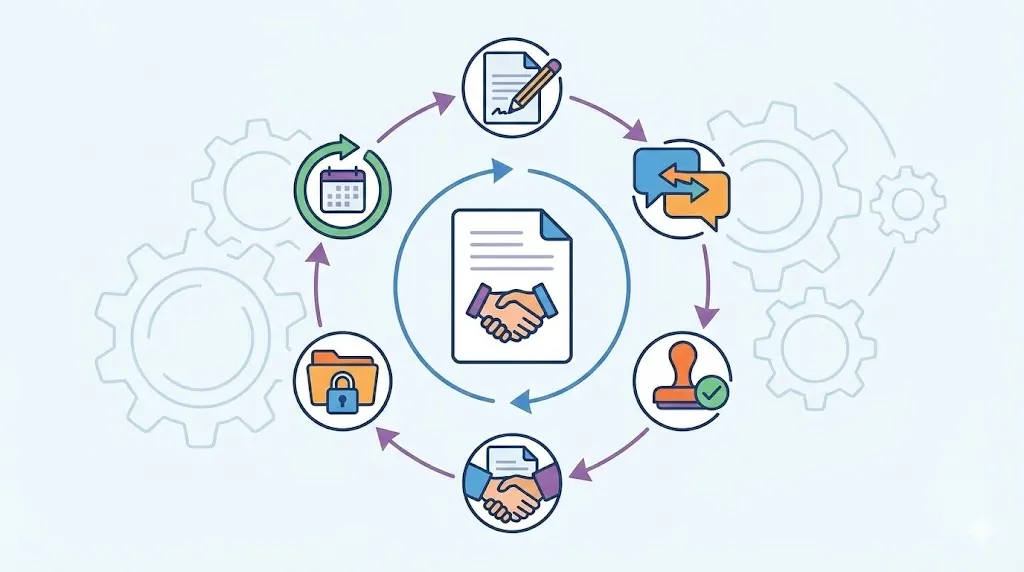
Volody AI CLM is an Agentic AI-powered Contract Lifecycle Management platform designed to eliminate manual contracting tasks, automate complex workflows, and deliver actionable insights. As a one-stop shop for all contract activities, it covers drafting, collaboration, negotiation, approvals, e-signature, compliance tracking, and renewals. Built with enterprise-grade security and no-code configuration, it meets the needs of the most complex global organizations. Volody AI CLM also includes AI-driven contract review and risk analysis, helping teams detect issues early and optimize terms. Trusted by Fortune 500 companies, high-growth startups, and government entities, it transforms contracts into strategic, data-driven business assets.





" height="216.72211px" id="FYO0bO80Y" transform="translate(3 6.105)" width="206.073px"/><path d="M 108.174 222 C 88.432 222 70.303 217.239 53.785 207.717 C 37.267 198.196 24.173 185.052 14.504 168.285 C 4.835 151.312 0 132.165 0 110.845 C 0 89.731 4.835 70.792 14.504 54.025 C 24.173 37.052 37.267 23.804 53.785 14.282 C 70.303 4.761 88.432 0 108.174 0 C 128.116 0 146.246 4.761 162.562 14.282 C 179.08 23.804 192.073 37.052 201.541 54.025 C 211.21 70.792 216.044 89.731 216.044 110.845 C 216.044 132.165 211.21 151.312 201.541 168.285 C 192.073 185.052 179.08 198.196 162.562 207.717 C 146.044 217.239 127.915 222 108.174 222 Z M 108.174 183.189 C 120.864 183.189 132.044 180.291 141.713 174.495 C 151.382 168.492 158.936 160.006 164.375 149.035 C 169.814 138.064 172.533 125.334 172.533 110.845 C 172.533 96.355 169.814 83.729 164.375 72.965 C 158.936 61.994 151.382 53.611 141.713 47.815 C 132.044 42.02 120.864 39.122 108.174 39.122 C 95.483 39.122 84.202 42.02 74.332 47.815 C 64.663 53.611 57.109 61.994 51.67 72.965 C 46.231 83.729 43.511 96.355 43.511 110.845 C 43.511 125.334 46.231 138.064 51.67 149.035 C 57.109 160.006 64.663 168.492 74.332 174.495 C 84.202 180.291 95.483 183.189 108.174 183.189 Z" fill="rgba(255, 255, 255, 0.12)" height="222px" id="aa1McFcE9" transform="translate(227.183 3)" width="216.04399999999998px"/><path d="M 42.302 182.257 L 111.799 182.257 L 111.799 216.722 L 0 216.722 L 0 0 L 42.302 0 Z" fill="rgba(255, 255, 255, 0.12)" height="216.72211px" id="yRq4AnrsX" transform="translate(477.721 6.105)" width="111.79899999999998px"/><path d="M 108.174 222 C 88.432 222 70.303 217.239 53.785 207.717 C 37.267 198.196 24.173 185.052 14.504 168.285 C 4.835 151.312 0 132.165 0 110.845 C 0 89.731 4.835 70.792 14.504 54.025 C 24.173 37.052 37.267 23.804 53.785 14.282 C 70.303 4.761 88.432 0 108.174 0 C 128.116 0 146.246 4.761 162.562 14.282 C 179.08 23.804 192.073 37.052 201.541 54.025 C 211.21 70.792 216.045 89.731 216.045 110.845 C 216.045 132.165 211.21 151.312 201.541 168.285 C 192.073 185.052 179.08 198.196 162.562 207.717 C 146.044 217.239 127.915 222 108.174 222 Z M 108.174 183.189 C 120.864 183.189 132.044 180.291 141.713 174.495 C 151.382 168.492 158.936 160.006 164.375 149.035 C 169.814 138.064 172.534 125.334 172.534 110.845 C 172.534 96.355 169.814 83.729 164.375 72.965 C 158.936 61.994 151.382 53.611 141.713 47.815 C 132.044 42.02 120.864 39.122 108.174 39.122 C 95.483 39.122 84.202 42.02 74.332 47.815 C 64.663 53.611 57.108 61.994 51.67 72.965 C 46.231 83.729 43.511 96.355 43.511 110.845 C 43.511 125.334 46.231 138.064 51.67 149.035 C 57.108 160.006 64.663 168.492 74.332 174.495 C 84.202 180.291 95.483 183.189 108.174 183.189 Z" fill="rgba(255, 255, 255, 0.12)" height="222px" id="mo8HQspQ0" transform="translate(609.155 3)" width="216.04500000000007px"/><path d="M 73.727 0 C 95.885 0 115.324 4.45 132.044 13.351 C 148.967 22.252 161.957 34.982 171.027 51.541 C 180.287 67.894 184.917 86.937 184.917 108.671 C 184.917 130.405 180.287 149.449 171.027 165.801 C 161.957 181.947 148.967 194.47 132.044 203.371 C 115.324 212.271 95.885 216.722 73.727 216.722 L 0 216.722 L 0 0 Z M 72.216 179.773 C 94.374 179.773 111.497 173.564 123.583 161.144 C 135.669 148.724 141.713 131.233 141.713 108.671 C 141.713 86.109 135.669 68.515 123.583 55.888 C 111.497 43.055 94.374 36.638 72.216 36.638 L 42.302 36.638 L 42.302 179.773 Z" fill="rgba(255, 255, 255, 0.12)" height="216.72211px" id="I3iXX5Hi_" transform="translate(859.693 6.105)" width="184.91699999999992px"/><path d="M 185.22 0 L 113.91 141.273 L 113.91 216.722 L 71.61 216.722 L 71.61 141.273 L 0 0 L 47.74 0 L 93.06 99.046 L 138.08 0 Z" fill="rgba(255, 255, 255, 0.12)" height="216.72211px" id="nzHyWC0_d" transform="translate(1061.78 6.105)" width="185.22000000000003px"/></svg>)