

LegalOps Archives hold a treasure trove of information for legal teams aiming to improve efficiency and reduce risk. Imagine a legal department drowning in piles of contracts, emails, and documents, with no clear way to find what matters. The right approach to managing LegalOps Archives turns chaos into clarity. It helps teams work faster, spot issues early, and make smarter decisions. This article breaks down how to organize, access, and leverage LegalOps Archives for better legal operations.
TL;DR
LegalOps Archives encompass the comprehensive collection of legal documents and data integral to supporting the workflows and decision-making processes of legal teams.
Organizing these archives effectively enhances contract retrieval by reducing search times and minimizing errors, while also strengthening risk mitigation efforts and ensuring more rigorous compliance oversight.
Among the primary obstacles are irregular file naming practices, fragmented storage locations, and insufficient exploitation of metadata structures.
Approaches that prove successful typically involve creating centralized storage solutions, establishing precise classification schemes, and deploying automated indexing technologies.
Contract lifecycle management (CLM) software streamlines archive handling with AI and workflows.
Modern CLM tools like Volody enhance legal operations by automating review, approval, and obligation tracking.
What Are LegalOps Archives and Why Do They Matter?
LegalOps Archives refer to the collection of all legal documents, contracts, correspondence, and related data that a legal department maintains over time. Additionally, far beyond mere storage, these archives constitute the foundational infrastructure that supports effective legal operations. They provide historical context, evidence for disputes, and a foundation for compliance and risk management.
Many legal teams struggle with archives that are fragmented across email inboxes, shared drives, cloud folders, and even paper files. This fragmentation slows down contract retrieval and increases the risk of missing deadlines or obligations. According to a report by IDC, knowledge workers spend nearly 20% of their time searching for information. For legal teams, this translates into costly delays and increased liability.
Properly curated LegalOps Archives allow legal professionals to efficiently locate contracts, monitor modifications, and assess potential risks. Beyond facilitating document retrieval, these archives provide essential support during audits and regulatory examinations by maintaining an unambiguous record of document histories and approvals. Ultimately, these archives serve as a critical resource that enhances legal operational effectiveness while mitigating exposure to risk.
Related articles: Level Up Your Legal Operations: 6 Tips to Legal Efficiency
How Do Legal Teams Typically Manage Their Archives?
Legal teams use a mix of methods to manage archives, ranging from manual filing systems to advanced contract management platforms. Here are the most common approaches:
Manual Filing and Shared Drives: Many teams still rely on shared network drives or cloud storage like Google Drive or SharePoint. Files are organized by folders and subfolders, often by contract type, client, or date. This method is simple but prone to inconsistent naming, duplication, and lost files.
Email Storage: Some contracts and communications remain trapped in email inboxes, making them hard to find or link to contract records. Email search tools help but do not replace structured archives.
Basic Document Management Systems: In numerous legal departments, DMS solutions are deployed to provide version control and support metadata tagging, creating a more organized repository.
These systems improve file organization; however, they often lack tailored legal features such as clause libraries or obligation tracking that specialized legal software offers.
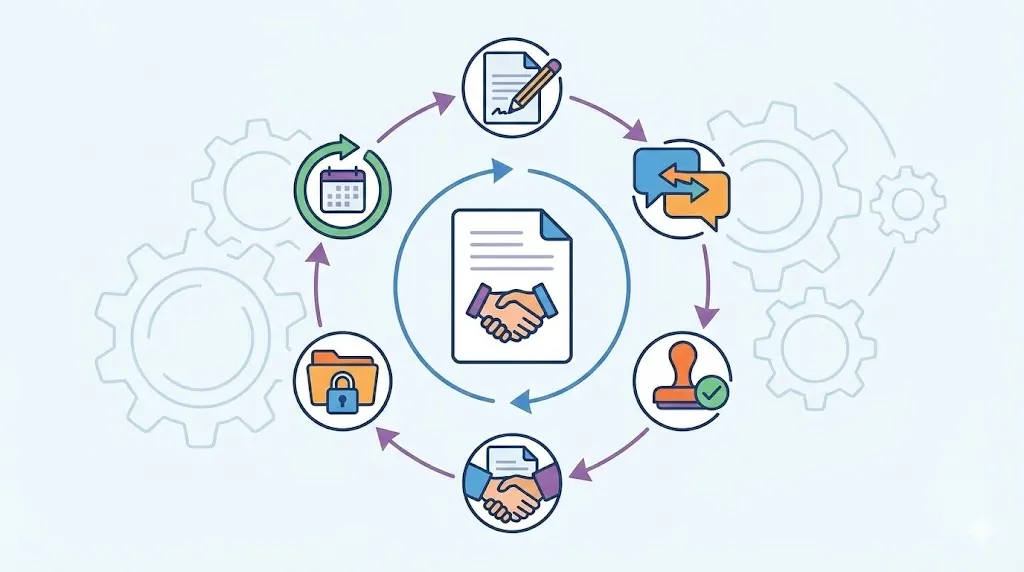
Contract Lifecycle Management (CLM) Software: CLM platforms unify multiple phases of contract administration, encompassing drafting, negotiation, storage, and analysis.
They enable automated extraction of metadata, track key milestones, and deliver detailed insights through integrated dashboards.
Among LegalOps professionals, CLM software has become a critical component for effective contract management.
Despite these tools, many legal teams face challenges with archive management. Common issues include inconsistent metadata, scattered files across multiple platforms, and lack of standardized naming conventions. These problems reduce the archive’s value and make it harder to extract insights.
Related articles: Contract Data Extraction: Unlocking Value from PDF Contracts
What Are the Biggest Challenges in Managing LegalOps Archives?
LegalOps Archives present unique challenges that can hinder legal teams if not addressed properly. Here are five key challenges:
Inconsistent File Naming and Organization
Without a standard naming system, files become difficult to locate. For example, contracts named “Contract1.pdf” or “Agreement_final_final.docx” create confusion. Teams waste time guessing which version is current.
Fragmented Storage Across Platforms
When archives spread across email, shared drives, cloud storage, and local folders, it creates silos. This fragmentation leads to duplicate files and missed documents during reviews or audits.
Lack of Metadata and Indexing
Metadata refers to data about data, such as contract dates, parties, or renewal terms. Without proper metadata tagging and indexing, search becomes slow and inaccurate.
Manual and Error-Prone Processes
Manual entry of contract details and filing increases errors and inconsistencies. It also slows down retrieval and reporting.
Limited Visibility into Contract Status and Obligations
Legal teams frequently struggle to monitor contract milestones, renewal dates, or compliance requirements, resulting in overlooked deadlines and associated financial consequences.
These challenges disrupt operational workflows and increase the likelihood of exposing the organization to significant legal vulnerabilities.
Effectively managing these issues demands implementing a comprehensive and systematic archive management strategy.
Related Article: Effective Contract Milestone Tracking to Prevent Slippage
What Are Best Practices for Organizing LegalOps Archives?
Organizing LegalOps Archives demands not only well-defined policies but also the deployment of advanced technological solutions and strict adherence to procedural discipline within the team. Here are key best practices:
1. Centralize Storage in One Secure Location
A unified repository should house all legal documents. This could be a cloud-based CLM system or a secure document management platform. Centralization reduces silos and duplication.
2. Standardize File Naming Conventions
Develop a naming convention that includes key details like contract type, counterparty, date, and version number. For example: `VendorAgreement_ABCCompany_2024-06_v3.pdf`
This makes files easier to identify and sort.
3. Use Metadata and Tags Extensively
Tag documents with metadata fields such as contract type, parties involved, effective dates, renewal dates, and jurisdiction. Metadata enables powerful search and reporting.
4. Implement Automated Indexing and OCR
Optical Character Recognition (OCR) converts scanned documents into searchable text, while automated indexing derives metadata and keywords to facilitate faster retrieval.
5. Maintain Version Control
Track every modification with detailed version histories and audit logs. Moreover, this approach allows legal teams to monitor contract development closely and maintain regulatory compliance.
6. Define Clear Retention Policies
Set rules for how long to keep contracts and when to archive or delete them. This supports compliance with regulations like GDPR or HIPAA.
7. Train Teams on Archive Usage
Ensure all legal and business users understand how to file, search, and retrieve documents properly. Consistent use maintains archive quality.
8. Regularly Audit and Clean Archives
Schedule periodic reviews to remove duplicates, update metadata, and archive outdated files. This keeps the archive lean and useful.
Following these best practices transforms LegalOps Archives from a cluttered storage space into a strategic resource.
Related articles: Legal Playbook: Reasons Why Your Business Needs One
How Can LegalOps Archives Improve Contract Management and Risk Control?
LegalOps Archives do more than store contracts. Additionally, when meticulously organized, they serve as an indispensable resource for managing contract lifecycles and controlling risk.
Faster Contract Retrieval
With proper metadata and search tools, legal teams find contracts and related documents in seconds. This speeds up negotiations, audits, and dispute resolution.
Better Visibility into Contract Status
Archives linked to contract management systems track key dates like renewals, expirations, and notice periods. Automated alerts prevent missed deadlines.
Enhanced Risk Identification
By storing and indexing contracts with risk-related metadata, legal teams can quickly identify contracts with unusual clauses or high-risk terms. This supports proactive risk mitigation.
Streamlined Compliance
Moreover, archives create an authoritative record of contract approvals, amendments, and communications. This helps demonstrate compliance during audits or regulatory reviews.
Data-Driven Insights
Analyzing archived contracts reveals trends in contract terms, negotiation bottlenecks, and vendor performance. LegalOps leaders use these insights to improve processes.
Example Scenario
A legal team preparing for a regulatory audit uses their archive to quickly pull all contracts with data privacy clauses. They find inconsistencies in clause language and flag contracts for review. This prevents potential compliance violations and fines.
Related articles: Legal Risk Management: A Comprehensive Guide for Businesses
What Role Does Technology Play in Managing LegalOps Archives?
Technology forms the backbone of modern LegalOps Archives. Additionally, it also streamlines repetitive tasks, enhances precision, and delivers analytics that inform strategic decisions.
Contract Lifecycle Management (CLM) Software
CLM platforms centralize contract storage and automate workflows. They extract metadata automatically, track contract status, and send reminders for key dates.
Artificial Intelligence (AI)
AI tools analyze contract language to identify risky clauses or missing provisions. They produce summaries while recommending alternative phrasing. AI accelerates review processes and mitigates errors.
Optical Character Recognition (OCR)
OCR transforms scanned paper contracts into fully searchable digital documents. Moreover, this capability facilitates rapid retrieval and systematic indexing of legacy records.
Integration with Enterprise Systems
Connecting archives with ERP, CRM, and procurement systems ensures contract data flows smoothly across departments. This reduces data entry and errors.
Cloud Storage
Cloud platforms provide secure, scalable storage accessible from anywhere. They support collaboration and disaster recovery.
Example
A legal team uses AI-powered CLM software that flags contracts with auto-renewal clauses. The system alerts the team 90 days before renewal, allowing time to renegotiate or cancel if needed.
Related articles: AI for Legal Documents: Your Essential Guide
5 Steps to Build an Effective LegalOps Archive System
Creating a LegalOps Archive system requires planning and execution. Follow these five steps:
Assess Current Archives and Needs
Inventory existing documents and storage locations. Identify pain points and user needs.
Choose a Centralized Platform
Select a secure, scalable system that supports metadata, version control, and search.
Develop Naming and Metadata Standards
Establish comprehensive file naming protocols alongside mandatory metadata criteria to ensure consistency.
Migrate and Index Documents
Carry out the importation of existing files, enrich them with metadata, and implement OCR technology for scanned documents.
Train Users and Monitor Usage
Provide targeted training for legal and business teams on archive protocols while continuously tracking adherence and making necessary adjustments.
This approach ensures a smooth transition to an organized, accessible archive.
Related articles: Aligning Legal Ops with General Counsel to Reduce Cost Risks
How to Maintain and Improve LegalOps Archives Over Time?
LegalOps Archives require ongoing care to remain valuable. Maintenance includes:
Regular Audits: Check for duplicates, outdated files, and metadata accuracy.
User Feedback: Gather comprehensive input from end users to evaluate the accuracy of search results alongside the usability of the overall interface.
Update Standards: Continuously refine naming conventions and metadata frameworks to reflect shifts in organizational priorities and compliance requirements.
Technology Upgrades: Integrate advanced solutions such as AI-driven analytics and sophisticated search mechanisms when they demonstrate clear operational benefits.
Security Reviews: Periodically evaluate access controls and encryption strategies to ensure adherence to all applicable regulatory mandates.
Continuous improvement keeps archives aligned with legal and business goals.
Related articles: Top 9 Legal AI Tools in 2026: Elevate Your Legal Process
Why Contract Management Software Matters for LegalOps Archives
Contract management software redefines LegalOps Archives by turning them from passive storage locations into dynamic, intelligent platforms. It offers:
Centralized Repository: A secure, singular location to store all contracts.
Automated Metadata Extraction: Extracts critical information such as parties involved, important dates, and specific clauses.
Version Control and Audit Trails: Maintains detailed logs of every modification and user interaction.
Obligation Management: Keeps track of deliverables, renewal dates, and compliance requirements.
Approval Workflow Automation: Automatically directs contracts through review and signature processes.
Advanced Search: Allows contracts to be retrieved using keywords, metadata filters, or AI-driven semantic analysis.
Collaboration Tools: Supports real-time commentary and negotiation between legal and business units.
These capabilities minimize manual effort, accelerate contract lifecycles, and enhance risk management.
Volody’s platform not only covers these essential functions but also introduces additional advanced features. Its AI capabilities streamline the processes of drafting, reviewing, and summarizing contracts. The platform supports complex approval hierarchies, integrates electronic signatures, and provides comprehensive reporting dashboards. Additionally, Volody offers seamless integration with Microsoft Word, ERP, and CRM systems to ensure workflows remain uninterrupted.
Explore how Volody's CLM Software empowers your team to manage contracts with confidence.
FAQ
Furthermore, what distinguishes LegalOps Archives from a contract repository?
LegalOps Archives encompass a broad range of legal documents and associated data, extending well beyond contracts alone. By comparison, a repository focuses solely on contract storage. Archives may include emails, correspondence, policies, and compliance documentation alongside contract files.
How do metadata and tagging improve archive management?
Metadata provides searchable details about documents, such as contract type, parties, and dates. Also, tagging with metadata enables fast, accurate searches and supports reporting and analytics.
Can AI really help with contract review in archives?
Yes. AI technology analyzes contracts to identify potentially risky clauses, detect missing provisions, and flag unusual language patterns. This prioritization assists legal reviewers by highlighting critical issues, thereby minimizing errors and expediting review cycles.
What steps ensure compliance with data retention laws when managing LegalOps Archives?
Implement clear retention policies that specify how long to keep documents and when to delete or archive them. Therefore, use software that supports automated retention schedules and secure deletion.
What security measures protect LegalOps Archives?
Archives should use encryption, role-based access controls, audit trails, and regular security audits. Therefore, cloud platforms often provide enterprise-grade security features.
How often should legal archives be audited or cleaned?
Perform audits at minimum on an annual basis to eliminate duplicates, refresh metadata, and archive obsolete files. Sectors subject to stricter regulations or higher risk may necessitate more frequent reviews.
Consequently, what challenges arise when migrating legacy contracts into a new archive system?
The process faces obstacles like poor document quality, missing metadata, inconsistent naming conventions, and dispersed storage locations. OCR and AI technologies facilitate digitization and indexing of legacy contracts during migration.
In what ways does contract lifecycle management software connect with LegalOps Archives?
Lifecycle management platforms consolidate contract data storage and directly link archived agreements with workflows, approval sequences, and obligation tracking. This integration establishes a centralized system for all contract-related information.
What advantages does version control provide within LegalOps Archives?
Version control delivers a thorough record of every contract revision, identifying the responsible individual and timestamp for each update. This functionality removes uncertainty about contract status and is vital for audit preparedness.
How can LegalOps Archives support dispute resolution?
Archives provide historical contract versions, correspondence, and approval records that help legal teams build evidence and understand contract intent during disputes.
About the Company

Volody AI CLM is an Agentic AI-powered Contract Lifecycle Management platform designed to eliminate manual contracting tasks, automate complex workflows, and deliver actionable insights. As a one-stop shop for all contract activities, it covers drafting, collaboration, negotiation, approvals, e-signature, compliance tracking, and renewals. Built with enterprise-grade security and no-code configuration, it meets the needs of the most complex global organizations. Volody AI CLM also includes AI-driven contract review and risk analysis, helping teams detect issues early and optimize terms. Trusted by Fortune 500 companies, high-growth startups, and government entities, it transforms contracts into strategic, data-driven business assets.



" height="216.72211px" id="FYO0bO80Y" transform="translate(3 6.105)" width="206.073px"/><path d="M 108.174 222 C 88.432 222 70.303 217.239 53.785 207.717 C 37.267 198.196 24.173 185.052 14.504 168.285 C 4.835 151.312 0 132.165 0 110.845 C 0 89.731 4.835 70.792 14.504 54.025 C 24.173 37.052 37.267 23.804 53.785 14.282 C 70.303 4.761 88.432 0 108.174 0 C 128.116 0 146.246 4.761 162.562 14.282 C 179.08 23.804 192.073 37.052 201.541 54.025 C 211.21 70.792 216.044 89.731 216.044 110.845 C 216.044 132.165 211.21 151.312 201.541 168.285 C 192.073 185.052 179.08 198.196 162.562 207.717 C 146.044 217.239 127.915 222 108.174 222 Z M 108.174 183.189 C 120.864 183.189 132.044 180.291 141.713 174.495 C 151.382 168.492 158.936 160.006 164.375 149.035 C 169.814 138.064 172.533 125.334 172.533 110.845 C 172.533 96.355 169.814 83.729 164.375 72.965 C 158.936 61.994 151.382 53.611 141.713 47.815 C 132.044 42.02 120.864 39.122 108.174 39.122 C 95.483 39.122 84.202 42.02 74.332 47.815 C 64.663 53.611 57.109 61.994 51.67 72.965 C 46.231 83.729 43.511 96.355 43.511 110.845 C 43.511 125.334 46.231 138.064 51.67 149.035 C 57.109 160.006 64.663 168.492 74.332 174.495 C 84.202 180.291 95.483 183.189 108.174 183.189 Z" fill="rgba(255, 255, 255, 0.12)" height="222px" id="aa1McFcE9" transform="translate(227.183 3)" width="216.04399999999998px"/><path d="M 42.302 182.257 L 111.799 182.257 L 111.799 216.722 L 0 216.722 L 0 0 L 42.302 0 Z" fill="rgba(255, 255, 255, 0.12)" height="216.72211px" id="yRq4AnrsX" transform="translate(477.721 6.105)" width="111.79899999999998px"/><path d="M 108.174 222 C 88.432 222 70.303 217.239 53.785 207.717 C 37.267 198.196 24.173 185.052 14.504 168.285 C 4.835 151.312 0 132.165 0 110.845 C 0 89.731 4.835 70.792 14.504 54.025 C 24.173 37.052 37.267 23.804 53.785 14.282 C 70.303 4.761 88.432 0 108.174 0 C 128.116 0 146.246 4.761 162.562 14.282 C 179.08 23.804 192.073 37.052 201.541 54.025 C 211.21 70.792 216.045 89.731 216.045 110.845 C 216.045 132.165 211.21 151.312 201.541 168.285 C 192.073 185.052 179.08 198.196 162.562 207.717 C 146.044 217.239 127.915 222 108.174 222 Z M 108.174 183.189 C 120.864 183.189 132.044 180.291 141.713 174.495 C 151.382 168.492 158.936 160.006 164.375 149.035 C 169.814 138.064 172.534 125.334 172.534 110.845 C 172.534 96.355 169.814 83.729 164.375 72.965 C 158.936 61.994 151.382 53.611 141.713 47.815 C 132.044 42.02 120.864 39.122 108.174 39.122 C 95.483 39.122 84.202 42.02 74.332 47.815 C 64.663 53.611 57.108 61.994 51.67 72.965 C 46.231 83.729 43.511 96.355 43.511 110.845 C 43.511 125.334 46.231 138.064 51.67 149.035 C 57.108 160.006 64.663 168.492 74.332 174.495 C 84.202 180.291 95.483 183.189 108.174 183.189 Z" fill="rgba(255, 255, 255, 0.12)" height="222px" id="mo8HQspQ0" transform="translate(609.155 3)" width="216.04500000000007px"/><path d="M 73.727 0 C 95.885 0 115.324 4.45 132.044 13.351 C 148.967 22.252 161.957 34.982 171.027 51.541 C 180.287 67.894 184.917 86.937 184.917 108.671 C 184.917 130.405 180.287 149.449 171.027 165.801 C 161.957 181.947 148.967 194.47 132.044 203.371 C 115.324 212.271 95.885 216.722 73.727 216.722 L 0 216.722 L 0 0 Z M 72.216 179.773 C 94.374 179.773 111.497 173.564 123.583 161.144 C 135.669 148.724 141.713 131.233 141.713 108.671 C 141.713 86.109 135.669 68.515 123.583 55.888 C 111.497 43.055 94.374 36.638 72.216 36.638 L 42.302 36.638 L 42.302 179.773 Z" fill="rgba(255, 255, 255, 0.12)" height="216.72211px" id="I3iXX5Hi_" transform="translate(859.693 6.105)" width="184.91699999999992px"/><path d="M 185.22 0 L 113.91 141.273 L 113.91 216.722 L 71.61 216.722 L 71.61 141.273 L 0 0 L 47.74 0 L 93.06 99.046 L 138.08 0 Z" fill="rgba(255, 255, 255, 0.12)" height="216.72211px" id="nzHyWC0_d" transform="translate(1061.78 6.105)" width="185.22000000000003px"/></svg>)