

Contract termination is when you end a legal agreement before the date it was meant to finish. Early termination can occur for different reasons. This might include a breach of contract or a mutual agreement between both parties. The laws about this can be tricky, so it's smart to seek legal advice from an expert. They can help you understand your rights and duties before you take any action. This blog will cover all the aspects of contract termination and how to mitigate it.
What Constitutes Contract Termination

Contract termination occurs when the parties involved are no longer bound by the terms of an agreement. This can happen for several reasons, such as a breach of contract or a mutual agreement to end it.
Navigating contract termination can be challenging, so it's essential to carefully review the terms and understand the legal risks. Contract management software can help streamline this process, ensuring that you stay compliant and safeguard the rights of all parties involved. It provides tools to track contract details, automate notifications, and reduce the risk of errors during termination.
Defining Contract Termination in Legal Terms: Understanding Termination Clauses
Contract termination means that you can end an agreement legally before everyone has fulfilled their promises. This lets all parties stop doing any more work needed by the contract.
A termination clause is a normal part of many contracts. It tells you when the contract can be lawfully canceled. This clause often outlines steps to end the agreement. For example, it may require giving written notice to the other party.
It is key to understand the difference between contract termination and contract rescission. When you terminate a contract, it finishes at a specific time. However, rescission makes the contract void right from the beginning. This means it is like the contract never existed.
Early Termination of Contracts: Legal Grounds Based on Impossibility
A breach of contract occurs when one party fails to fulfill the obligations set out in the agreement. This could involve not performing the required actions, delaying performance, or failing to complete tasks as stipulated in the contract.
There are several valid grounds for terminating a contract before its agreed-upon end. These include:
Mutual Agreement: Both parties may agree to terminate the contract early. In this case, a new written agreement is usually drafted to outline the terms of the early termination, including any financial obligation or legal obligations remaining between the parties.
Force Majeure: This clause provides legal grounds for terminating a contract when unforeseen events make it impossible or extremely difficult to perform the contractual obligations. Such events may include natural disasters, wars, pandemics, or other situations beyond the control of either party. When a force majeure event occurs, the affected party is typically excused from performance without facing liability for breach.
Impossibility of Performance: In certain cases, a contract may be terminated if unforeseen circumstances arise that render it impossible for one or both parties to fulfill their obligations. This legal principle applies when the subject matter of the contract is destroyed, a party becomes incapacitated, or new laws or regulations prevent the completion of the agreement.
These legal provisions ensure that contracts can be terminated fairly when unexpected and uncontrollable events make it impractical or impossible to continue with the terms of the original agreement.
Related Article: Best Contract Management Software: Top 10 CLM in 2024
Can You Terminate a Contract Early? Exploring Common Reasons for Early Termination
Breach of contract is a common reason for ending an agreement early. This often happens when one side doesn’t pay or doesn’t deliver what they promised. A mutual agreement can be a better solution. This choice is often used when the contract is no longer good for both sides.
When it is hard to follow the contract's rules, early termination may be necessary. This can occur because of unexpected events or important legal changes.
Breach of Contract: A Primary Reason for Termination
A breach of contract occurs when one side does not keep their promises in the contract. This situation lets the other side legally cancel the agreement. The severity of the breach will influence what the non-breaching party does next.
A small breach may only require you to fix any losses. A major breach, however, can result in the ending of the contract. A major breach is a big violation that affects the main goal of the contract. It removes the benefits that the party did not break the contract hoped to receive.
Before ending a contract, the person who did not cause the problem must give the person who caused it a chance to fix things. This means sending a formal notice that explains the issue and gives a reasonable amount of time to correct it.
Mutual Agreement: Ending Contracts Amicably
Terminating a contract through mutual agreement is a simple and friendly way to end a deal. It allows both sides to work together instead of arguing. In this method, both parties agree to end the contract. They often write down this agreement and any new terms in a separate document.
People have many reasons to look for a mutual agreement:
Changed Circumstances: Surprising events can make it difficult to manage the current contract. This situation may lessen the value for one or both sides.
New Opportunities: One side or both may discover new chances that interfere with their current contractual obligations.
Relationship Breakdown: A lack of communication or major disagreements might make it necessary to end the agreement.
A mutual agreement allows both people to make changes if needed. It helps them discuss how to divide their belongings, pay debts, and handle other responsibilities.
Related Article: What is Privacy disclosure agreement? A Comprehensive guide
The Procedure for Early Termination
Early contract termination often relies on a specific process stated in the contract. If you do not stick to these rules, it may cause legal issues for the person who wants to end the contract.
A common first step is to write a formal letter to the other party. This letter needs to say that you want to end the agreement. It should also give the reasons for the termination and suggest an end date.
Steps to Follow When Terminating a Contract Early
Terminating a contract early requires good planning. It's important to follow the right steps. This way, you can lower the chances of arguments or legal issues.
The first step is to send a written notice that you want to end the contract. This notice must follow the rules in the original contract. It serves as a formal way to show your intention to terminate. You should also include your reasons for this decision.
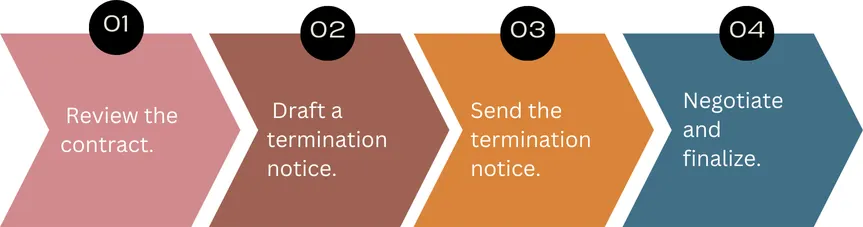
Here’s a straightforward list of regular steps in early termination:
Step | Description |
1. Review the contract. | Carefully examine the termination clause, noting any specific procedures, notice periods, or conditions that need to be met. |
2. Draft a termination notice. | This formal letter or email should include the contract's identifying information, the effective termination date, and a clear explanation of the grounds for termination. |
3. Send the termination notice. | Ensure the notice is delivered through a verifiable method, such as certified mail or a courier service with tracking, adhering to any notice period stipulations in the contract. |
4. Negotiate and finalize. | Be prepared to negotiate the terms of the termination with the other party, potentially involving a settlement agreement to address outstanding obligations. |
Legal Implications and How to Mitigate Risks
It is important to understand the legal effects before ending a contract. You should take action to minimize any risks. If you do not, it could lead to costly legal problems and damage your business's good name.
Consulting a lawyer who understands contract law is very important. A lawyer can help you grasp the details in your contract. They can also assess your legal situation. Plus, they can advise you on what to do about termination.
Documenting all communication about the termination is really important. This covers notices, replies, and any attempts made to fix the problem. Keeping these records can be very useful if legal issues arise later.
Related Article: What is an Automatic Contract Renewal Clause? Detailed Guide
What are the consequences of terminating a contract early?
Terminating a contract early can lead to legal issues. You could break the contract terms. This might result in financial penalties or even being sued for damages. It’s crucial to read the parts about early termination. You should also get legal advice before you choose to end a contract too soon.
Conclusion
In conclusion, understanding contract termination is crucial to protect your legal rights. A contract may end due to a breach, mutual agreement, or other reasons. Ending a contract early requires careful consideration and must follow legal procedures to minimize risks and avoid penalties. Utilizing Contract Lifecycle Management (CLM) software can simplify this process, helping you track key terms, automate workflows, and ensure compliance throughout the contract's lifecycle. Always seek legal advice when dealing with terminations to ensure a smooth, fair resolution. For further guidance, consult our resources or contact our experts for professional support.
FAQs
Can a Contract Cancellation Occur Without Any Penalties?
It all comes down to the original contract. Some contracts have a termination or cancellation clause. This clause allows you to cancel without penalties if you meet certain conditions.
What are the consequences of terminating a contract early without a valid reason?
Early termination without a good reason can break the contract. This may lead to legal problems and money issues. You might end up paying dollars for damages.
About the Company

Volody AI CLM is an Agentic AI-powered Contract Lifecycle Management platform designed to eliminate manual contracting tasks, automate complex workflows, and deliver actionable insights. As a one-stop shop for all contract activities, it covers drafting, collaboration, negotiation, approvals, e-signature, compliance tracking, and renewals. Built with enterprise-grade security and no-code configuration, it meets the needs of the most complex global organizations. Volody AI CLM also includes AI-driven contract review and risk analysis, helping teams detect issues early and optimize terms. Trusted by Fortune 500 companies, high-growth startups, and government entities, it transforms contracts into strategic, data-driven business assets.





" height="216.72211px" id="FYO0bO80Y" transform="translate(3 6.105)" width="206.073px"/><path d="M 108.174 222 C 88.432 222 70.303 217.239 53.785 207.717 C 37.267 198.196 24.173 185.052 14.504 168.285 C 4.835 151.312 0 132.165 0 110.845 C 0 89.731 4.835 70.792 14.504 54.025 C 24.173 37.052 37.267 23.804 53.785 14.282 C 70.303 4.761 88.432 0 108.174 0 C 128.116 0 146.246 4.761 162.562 14.282 C 179.08 23.804 192.073 37.052 201.541 54.025 C 211.21 70.792 216.044 89.731 216.044 110.845 C 216.044 132.165 211.21 151.312 201.541 168.285 C 192.073 185.052 179.08 198.196 162.562 207.717 C 146.044 217.239 127.915 222 108.174 222 Z M 108.174 183.189 C 120.864 183.189 132.044 180.291 141.713 174.495 C 151.382 168.492 158.936 160.006 164.375 149.035 C 169.814 138.064 172.533 125.334 172.533 110.845 C 172.533 96.355 169.814 83.729 164.375 72.965 C 158.936 61.994 151.382 53.611 141.713 47.815 C 132.044 42.02 120.864 39.122 108.174 39.122 C 95.483 39.122 84.202 42.02 74.332 47.815 C 64.663 53.611 57.109 61.994 51.67 72.965 C 46.231 83.729 43.511 96.355 43.511 110.845 C 43.511 125.334 46.231 138.064 51.67 149.035 C 57.109 160.006 64.663 168.492 74.332 174.495 C 84.202 180.291 95.483 183.189 108.174 183.189 Z" fill="rgba(255, 255, 255, 0.12)" height="222px" id="aa1McFcE9" transform="translate(227.183 3)" width="216.04399999999998px"/><path d="M 42.302 182.257 L 111.799 182.257 L 111.799 216.722 L 0 216.722 L 0 0 L 42.302 0 Z" fill="rgba(255, 255, 255, 0.12)" height="216.72211px" id="yRq4AnrsX" transform="translate(477.721 6.105)" width="111.79899999999998px"/><path d="M 108.174 222 C 88.432 222 70.303 217.239 53.785 207.717 C 37.267 198.196 24.173 185.052 14.504 168.285 C 4.835 151.312 0 132.165 0 110.845 C 0 89.731 4.835 70.792 14.504 54.025 C 24.173 37.052 37.267 23.804 53.785 14.282 C 70.303 4.761 88.432 0 108.174 0 C 128.116 0 146.246 4.761 162.562 14.282 C 179.08 23.804 192.073 37.052 201.541 54.025 C 211.21 70.792 216.045 89.731 216.045 110.845 C 216.045 132.165 211.21 151.312 201.541 168.285 C 192.073 185.052 179.08 198.196 162.562 207.717 C 146.044 217.239 127.915 222 108.174 222 Z M 108.174 183.189 C 120.864 183.189 132.044 180.291 141.713 174.495 C 151.382 168.492 158.936 160.006 164.375 149.035 C 169.814 138.064 172.534 125.334 172.534 110.845 C 172.534 96.355 169.814 83.729 164.375 72.965 C 158.936 61.994 151.382 53.611 141.713 47.815 C 132.044 42.02 120.864 39.122 108.174 39.122 C 95.483 39.122 84.202 42.02 74.332 47.815 C 64.663 53.611 57.108 61.994 51.67 72.965 C 46.231 83.729 43.511 96.355 43.511 110.845 C 43.511 125.334 46.231 138.064 51.67 149.035 C 57.108 160.006 64.663 168.492 74.332 174.495 C 84.202 180.291 95.483 183.189 108.174 183.189 Z" fill="rgba(255, 255, 255, 0.12)" height="222px" id="mo8HQspQ0" transform="translate(609.155 3)" width="216.04500000000007px"/><path d="M 73.727 0 C 95.885 0 115.324 4.45 132.044 13.351 C 148.967 22.252 161.957 34.982 171.027 51.541 C 180.287 67.894 184.917 86.937 184.917 108.671 C 184.917 130.405 180.287 149.449 171.027 165.801 C 161.957 181.947 148.967 194.47 132.044 203.371 C 115.324 212.271 95.885 216.722 73.727 216.722 L 0 216.722 L 0 0 Z M 72.216 179.773 C 94.374 179.773 111.497 173.564 123.583 161.144 C 135.669 148.724 141.713 131.233 141.713 108.671 C 141.713 86.109 135.669 68.515 123.583 55.888 C 111.497 43.055 94.374 36.638 72.216 36.638 L 42.302 36.638 L 42.302 179.773 Z" fill="rgba(255, 255, 255, 0.12)" height="216.72211px" id="I3iXX5Hi_" transform="translate(859.693 6.105)" width="184.91699999999992px"/><path d="M 185.22 0 L 113.91 141.273 L 113.91 216.722 L 71.61 216.722 L 71.61 141.273 L 0 0 L 47.74 0 L 93.06 99.046 L 138.08 0 Z" fill="rgba(255, 255, 255, 0.12)" height="216.72211px" id="nzHyWC0_d" transform="translate(1061.78 6.105)" width="185.22000000000003px"/></svg>)