

Key Highlights
A termination clause is a key part of any contract, defining how an agreement can legally end.
Grounds for contract termination include a breach of contract, mutual agreement, or impossibility of performance.
Types of clauses vary, from termination for cause to termination for convenience, each serving a different purpose.
Clear notice requirements are essential to avoid disputes and ensure a smooth termination process.
Events like force majeure can trigger termination due to unforeseen circumstances outside the parties' control.
Introduction
Termination clauses are a vital component of any agreement, allowing parties to end a contract without it being considered a breach. For legal professionals and business leaders, understanding these clauses is crucial for navigating the complexities of contract termination. Properly drafted termination clauses can help you manage your contractual relationships, avoid potential legal implications, and ensure that any exit from an agreement is legally sound and enforceable. This guide will walk you through everything you need to know about these important provisions.
Understanding Termination Clauses in Contracts

Termination clauses, sometimes called severance clauses, provide a legal framework for ending a contract. These termination provisions ensure that both parties understand their rights and contractual obligations if the agreement needs to end before all duties are fulfilled. They provide a structured exit route, which is crucial for managing business relationships and risks.
Having a clear understanding of these clauses is essential for effective contract management. They help prevent disputes by outlining the specific conditions and procedures for contract termination, giving you a predictable path to follow. Let's explore what these clauses are in more detail and why they are so important.
What Is a Termination Clause?
A termination clause is a written section in an agreement that specifies the circumstances under which the contract can be ended. This termination can occur before all the initial contractual duties have been completed by the parties involved. These clauses are a standard feature in nearly every type of contract.
While they can always be customised to fit the specific needs of an agreement, their fundamental role is to provide an exit strategy. The clause will typically detail the reasons for termination, the notice period required, and the effective date when the contract will officially be considered terminated.
Ultimately, this provision gives you and the other party a clear roadmap for dissolving the agreement lawfully. It helps avoid ambiguity and potential disputes by setting the rules for ending the relationship from the very beginning.
The Purpose of Termination Clauses in Agreements
The primary purpose of a termination clause is to clearly define the conditions for ending a contract. These termination objectives serve as a safety net, allowing parties to exit an agreement if specific circumstances arise or if they mutually decide to part ways. This clarity helps to reduce the likelihood of disputes down the line.
Additionally, these clauses function as a powerful risk management tool. By outlining grounds for termination, notice periods, and the consequences of ending the agreement, you can protect your interests and limit potential liabilities. This is crucial for maintaining a healthy business relationship throughout the entire contract term.
By establishing a pre-agreed framework for termination, you ensure that all parties understand their rights and responsibilities. This fosters more transparent and predictable agreements, which is beneficial for everyone involved.
Why Termination Clauses Matter in India
In India, just as in other jurisdictions, termination clauses are critical for managing contractual relationships and mitigating contractual risks. The legal framework, governed by Indian contract law, requires that the reasons for termination be fair and clearly defined within the agreement to be enforceable. Without a well-drafted clause, ending a contract can become complex and lead to legal challenges.
There are region-specific requirements to consider. Indian courts often examine whether a termination was carried out in good faith and in accordance with the agreed-upon terms. A vague or unfair clause may be scrutinised and potentially invalidated, exposing your business to claims of wrongful termination.
Therefore, ensuring your termination clauses comply with local legal requirements is not just a best practice; it's a necessity. It provides a solid legal footing for ending an agreement and helps protect your business from potential disputes and financial penalties in the Indian legal landscape.
Related Article: Contract Law: Understanding Legal Agreements
Main Types of Termination Clauses

Termination clauses come in several forms, each designed for different situations. Your termination rights and the termination process you must follow will depend on which type of clause is included in your contract. These clauses define everything from the reasons for termination to the required notice periods.
Understanding the main types of termination clauses is key to drafting effective contracts and managing them correctly. Whether you need to end an agreement due to a breach or simply because circumstances have changed, there is a specific clause to address the situation. Let's look at the most common types you will encounter.
Termination for Cause
Termination for cause is a clause that allows you to end a contract when the other party fails to fulfil their obligations. This failure is known as a breach of contract. This clause gives the non-breaching party the right to terminate the agreement, but usually only after giving the breaching party a chance to fix the issue.
The grounds for a cause termination must be clearly stated. A material breach, which is a significant failure that undermines the core purpose of the contract, is a common reason. Other reasons might include:
Failure to meet performance expectations
Not performing contractual duties by an agreed-upon date
Misconduct or violations as defined in the agreement
When invoking this clause, you must typically provide written notice detailing the breach. If the other party does not remedy the breach within a specified "cure period," you can proceed with the termination. This process protects you from being locked into a contract with a party that isn't holding up their end of the bargain.
Termination for Convenience
A termination for convenience clause, often called a "T for C" clause, offers flexibility by allowing one or both parties to end a contract without providing a specific reason. This means you can terminate the agreement even if there has been no breach or fault by the other party. It is an effective way to manage risk, especially in industries where circumstances can change rapidly.
This convenience clause is not about fault but about changing needs. For instance, a company might use it to end a project that is no longer strategically aligned with its goals. It provides a clean exit without the need for a lengthy dispute.
However, this right must be exercised in good faith. You cannot use a termination for convenience clause simply to get a better deal from another vendor. The clause usually requires providing advance written notice to the other party, and there might be financial consequences, such as paying for work already completed.
Mutual Termination Clauses
A mutual termination clause provides a path for both parties to agree to end a contract amicably. This is often the most straightforward and least contentious way to dissolve an agreement. When both parties give their mutual consent, they can terminate their contractual relationship without either side being at fault.
To make this happen, the parties typically sign a separate termination agreement. This document outlines the terms of the termination, including the final date of the contract and how any remaining obligations, such as final payments or the return of property, will be handled. This ensures that all loose ends are tied up neatly.
This type of clause is highly customisable and reflects the collaborative nature of a business relationship. It allows you to part ways on good terms, preserving your professional relationship for potential future collaborations.
Automatic Termination Clauses
Automatic termination clauses specify conditions that, when met, will end a contract automatically without any party needing to give notice. This type of clause is often used to provide certainty and a clear end to the contract term.
A common example is an expiration date. The contract might state that it will remain in effect for a specific period, such as two years, and then automatically terminate. Another trigger for automatic termination could be a specific event, such as a party's insolvency or bankruptcy.
These clauses are useful for agreements with a defined lifespan or for managing risk related to critical events. However, it is important to track these triggers carefully. With a robust contract management software, you can set up alerts for these dates and events to ensure you are not caught by surprise when a contract ends.
Force Majeure and Termination Due to Impossibility
A force majeure clause allows a party to be excused from their contractual duties due to unforeseen circumstances beyond their control. These force majeure events make it impossible or impractical to perform the contract. This clause essentially protects parties from being in breach when something unexpected happens.
Common examples of force majeure events include:
Natural disasters like earthquakes, floods, or pandemics
Acts of war, strikes, or government-mandated lockdowns
If such an event occurs, the affected party is typically required to notify the other party. The contract might be suspended temporarily, but if the event continues for a prolonged period, the force majeure clause may allow for the termination of the agreement due to impossibility of performance. This provides a legal basis for ending a contract when performance becomes impossible due to external factors.
Related Article: Contract Law: Understanding Legal Agreements
Key Elements Included in a Standard Termination Clause
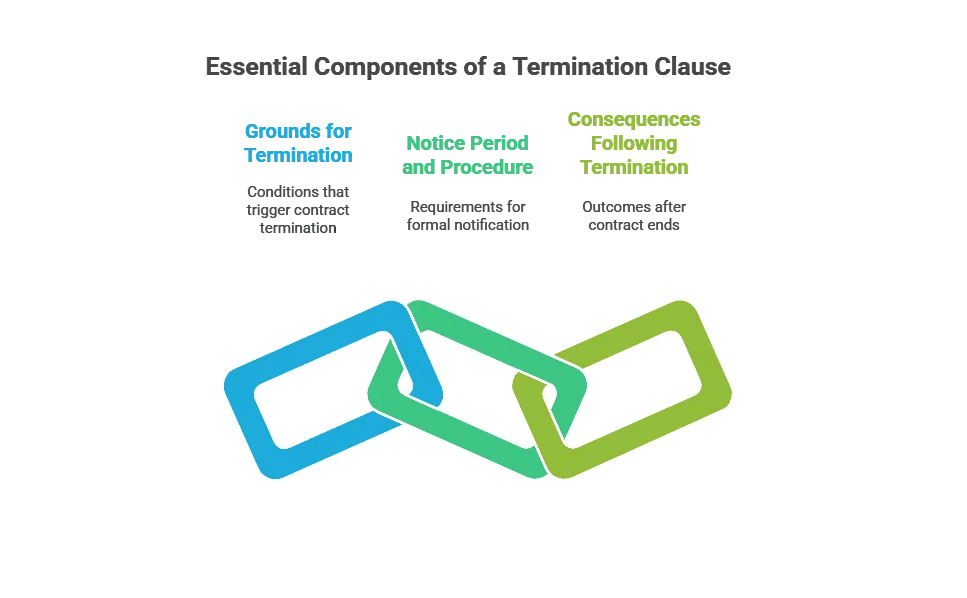
Well-drafted contract termination clauses contain several key elements to ensure they are clear, fair, and enforceable. These components provide a roadmap for how the termination process should unfold, which is vital for preventing misunderstandings and disputes. Including these elements helps both parties understand their rights and responsibilities.
From outlining the reasons for termination to detailing notice requirements and the aftermath, each part of the clause plays a critical role. Let's break down the essential components that should be included in a standard termination clause to make it effective.
Grounds for Termination
One of the most critical parts of a termination clause is defining the specific grounds for termination. This section clearly outlines the conditions or events that can trigger the end of the contract. Being specific here is key to avoiding ambiguity and potential disputes later on.
Common grounds include a material breach of contract, insolvency of one party, or mutual agreement. The clause should also state the required notice period associated with each ground and specify the termination date. For example, a termination for cause might require a 30-day notice, while termination for convenience might require 60 days.
Here is an example of how grounds for termination can be structured:
Ground for Termination | Description |
|---|---|
Material Breach | A significant failure to perform contractual duties. |
Insolvency | One party becomes bankrupt or financially unable to continue. |
Mutual Agreement | Both parties agree in writing to end the contract. |
Change in Circumstances | An event makes the contract commercially unreasonable. |
Notice Period and Procedure
A termination clause must clearly specify the notice periods and the procedure for delivering a notice of termination. This ensures that the process is handled formally and that both parties have adequate time to prepare for the end of the agreement. Failing to follow the prescribed procedure can render the termination invalid.
The clause should detail how the written notice must be delivered. For example, it might require:
Notice to be sent via certified mail to a specific address.
Notice to be delivered by email with a read receipt.
The length of the notice period can vary depending on the reason for termination. A termination for cause might have a shorter notice period than a termination for convenience. Clearly defining these requirements is crucial for a smooth and legally compliant termination process, helping you avoid claims of improper termination.
Consequences Following Termination
It is essential that a termination clause outlines the consequences of termination. This part of the clause explains what happens after the contract officially ends, helping to manage expectations and prevent post-termination disputes. It should address any remaining obligations and financial liabilities.
For example, the clause should specify:
The settlement of outstanding payments or fees.
The return of any property, assets, or confidential documents.
It should also clarify which provisions, if any, will survive the termination. This often includes clauses related to intellectual property rights, confidentiality, and non-compete agreements. In employment contracts, this section might also detail any severance pay an employee is entitled to receive. Clearly stating these consequences ensures a clean and orderly end to the business relationship.
Related Article: Understanding the Time Is of the Essence Clause
Examples of Common Termination Clauses

Seeing real-world examples of contract termination clauses can help you understand how they work in practice. These example clauses illustrate how the key elements we have discussed come together in different types of agreements. The language and specifics will vary based on the contract's nature and the parties' intentions.
From employment agreements to service contracts, the structure of a termination clause is adapted to fit the context. Good contract lifecycle management involves knowing how to draft and interpret these different clauses. Let's look at a few examples.
Sample Clause for Employment Contracts
In employment contracts, termination clauses are essential for defining the terms of separation. They protect both the employer and the employee by setting clear expectations. An employment agreement might include a clause that allows for termination with or without cause.
Here is a simple example: "The Company may terminate the Employee’s employment for any reason by providing no less than thirty (30) days' written notice. The Employee may terminate this employment agreement by providing thirty (30) days' written notice to the Company."
This clause might also specify the consequences, such as the payment of any earned but unpaid salary. In some cases, it could also detail the conditions for receiving severance pay, which is often based on the employee's length of service with the company.
Sample Clause for Service Agreements
Termination clauses are a standard feature in service contracts, providing an exit strategy if the relationship between the client and the service provider is not working out. These clauses often include provisions for both termination for cause and termination for convenience.
A typical clause might read: "Either party may terminate this agreement by providing sixty (60) days' written notice to the other party. In the event of a material breach, the non-breaching party may terminate this agreement by providing thirty (30) days' written notice, provided the breach is not cured within that period."
This clause clearly defines the termination process and notice periods. It might also state that upon termination, the service provider must return all client property and documents. This ensures a structured and professional conclusion to the service relationship.
Sample Clause for Commercial Partnerships
In commercial partnerships, termination clauses are vital for protecting the interests of all parties involved. They provide a clear framework for dissolving the business relationship if it is no longer viable or if one party fails to uphold their contractual duties.
An example for a partnership could be: "This partnership agreement may be terminated by mutual consent of all partners, documented in a signed termination agreement. Alternatively, any partner may initiate termination if another partner commits a breach of this agreement and fails to remedy it within 14 days of receiving written notice."
This clause combines the options of termination by mutual consent and termination for cause. It ensures that the partnership can be ended in an orderly manner, whether the decision is amicable or due to a dispute. This helps preserve the integrity of the business relationship, even at its conclusion.
Related Article: How to Review Contracts More Quickly and Effectively?
Drafting and Legal Considerations for Indian Contracts

When drafting termination clauses, especially for contractual relationships in India, there are specific legal considerations your legal teams must address. Simply copying a clause from another agreement is not enough; it must have a solid legal basis and comply with local laws to be enforceable.
Careful contract drafting is essential to avoid potential legal disputes. You need to ensure the clause is fair, clear, and tailored to the specific agreement. Let's examine the legal basis for valid clauses, region-specific requirements, and best practices for drafting them.
Legal Basis for Valid Termination Clauses
For a termination clause to be valid, it must have a clear legal basis and be consistent with the principles of fairness and reason. Under Indian contract law, termination provisions that are arbitrary or excessively one-sided may be challenged and deemed unenforceable by a court.
The grounds for termination must be legitimate and clearly defined in the contract. This includes reasons like a material breach, non-performance, or other specific conditions that the parties have agreed upon. The clause cannot violate any statutory laws or public policy.
Having a well-defined legal basis for your termination clauses helps prevent legal disputes. If a termination is challenged, you will need to demonstrate that you acted in accordance with the agreed-upon terms and that the clause itself is legally sound. This makes careful drafting an essential part of your risk management strategy.
Region-Specific Requirements and Compliance
Yes, there are often region-specific requirements for termination clauses, and it is crucial to ensure compliance. While the basic principles of contract law are similar in many places, specific jurisdictions may have unique rules or interpretations, particularly in areas like employment law.
In India, for example, the courts may look closely at the fairness and reasonableness of a termination clause. The nature of the contract and the industry it pertains to can also influence the relevant legal requirements. A clause that is acceptable in a commercial vendor agreement might not be permissible in an employment contract.
To ensure your termination clauses are enforceable, it is important to stay informed about local laws and regulations. Using a clm software can help manage compliance by providing templates that are aligned with region-specific rules, reducing the risk of your clauses being invalidated.
Best Practices for Drafting Clear Termination Clauses
Drafting a clear and effective termination clause is one of the best practices for sound contract management. A well-written clause minimises ambiguity and reduces the risk of disputes. It should clearly define the termination rights of each party and the process to be followed.
Here are some best practices to follow when drafting a termination clause:
Be specific and unambiguous: Use clear language to define the grounds for termination, notice periods, and consequences. Avoid vague terms that could be open to interpretation.
Tailor the clause to the contract: Customise the clause based on the nature of the agreement, the industry, and the entire contract term. A one-size-fits-all approach is rarely effective.
Seek legal advice: Consult with legal professionals to ensure your clause complies with all relevant laws and regulations. This is especially important for contracts in different jurisdictions.
Following these practices, perhaps aided by a contract lifecycle management software with clause libraries, can help you create robust and enforceable termination clauses.
Related Article: Exemption Clauses: A Beginner's Guide to Contracts
Conclusion
In conclusion, understanding termination clauses is crucial for anyone entering into a contract. These clauses not only define the conditions under which a contract can be terminated but also protect the interests of all parties involved. By knowing the different types of termination clauses and their key elements, you can navigate contractual agreements with confidence. Furthermore, being aware of legal considerations specific to your region, especially in India, ensures that your contracts are robust and compliant. To optimise your contractual agreements, consider seeking professional guidance for drafting clear and effective termination clauses. This proactive approach will safeguard your interests and contribute to smoother business operations.
Frequently Asked Questions
What is the difference between a term of agreement and a termination clause?
The term of this agreement, or contract term, defines the duration of the contract. A termination clause, on the other hand, outlines the specific conditions and procedures for ending the contract before its natural expiration. It governs early contract termination and the release from contractual obligations.
How do termination clauses affect ending a contract in India?
In India, termination clauses must comply with Indian contract law and be fair and reasonable. They define the legal grounds and termination process for ending a contract. An improperly drafted or executed clause can lead to legal implications, so adherence to these region-specific rules is essential for valid contract termination.
Can termination clauses be customised for different types of agreements?
Absolutely. Termination clauses should be customised to fit the specific type of contract and the nature of the contractual relationships. The termination provisions in an employment contract will differ from those in a vendor agreement. Customisation ensures the clause is relevant and effective for the specific situation.
About the Company

Volody AI CLM is an Agentic AI-powered Contract Lifecycle Management platform designed to eliminate manual contracting tasks, automate complex workflows, and deliver actionable insights. As a one-stop shop for all contract activities, it covers drafting, collaboration, negotiation, approvals, e-signature, compliance tracking, and renewals. Built with enterprise-grade security and no-code configuration, it meets the needs of the most complex global organizations. Volody AI CLM also includes AI-driven contract review and risk analysis, helping teams detect issues early and optimize terms. Trusted by Fortune 500 companies, high-growth startups, and government entities, it transforms contracts into strategic, data-driven business assets.





" height="216.72211px" id="FYO0bO80Y" transform="translate(3 6.105)" width="206.073px"/><path d="M 108.174 222 C 88.432 222 70.303 217.239 53.785 207.717 C 37.267 198.196 24.173 185.052 14.504 168.285 C 4.835 151.312 0 132.165 0 110.845 C 0 89.731 4.835 70.792 14.504 54.025 C 24.173 37.052 37.267 23.804 53.785 14.282 C 70.303 4.761 88.432 0 108.174 0 C 128.116 0 146.246 4.761 162.562 14.282 C 179.08 23.804 192.073 37.052 201.541 54.025 C 211.21 70.792 216.044 89.731 216.044 110.845 C 216.044 132.165 211.21 151.312 201.541 168.285 C 192.073 185.052 179.08 198.196 162.562 207.717 C 146.044 217.239 127.915 222 108.174 222 Z M 108.174 183.189 C 120.864 183.189 132.044 180.291 141.713 174.495 C 151.382 168.492 158.936 160.006 164.375 149.035 C 169.814 138.064 172.533 125.334 172.533 110.845 C 172.533 96.355 169.814 83.729 164.375 72.965 C 158.936 61.994 151.382 53.611 141.713 47.815 C 132.044 42.02 120.864 39.122 108.174 39.122 C 95.483 39.122 84.202 42.02 74.332 47.815 C 64.663 53.611 57.109 61.994 51.67 72.965 C 46.231 83.729 43.511 96.355 43.511 110.845 C 43.511 125.334 46.231 138.064 51.67 149.035 C 57.109 160.006 64.663 168.492 74.332 174.495 C 84.202 180.291 95.483 183.189 108.174 183.189 Z" fill="rgba(255, 255, 255, 0.12)" height="222px" id="aa1McFcE9" transform="translate(227.183 3)" width="216.04399999999998px"/><path d="M 42.302 182.257 L 111.799 182.257 L 111.799 216.722 L 0 216.722 L 0 0 L 42.302 0 Z" fill="rgba(255, 255, 255, 0.12)" height="216.72211px" id="yRq4AnrsX" transform="translate(477.721 6.105)" width="111.79899999999998px"/><path d="M 108.174 222 C 88.432 222 70.303 217.239 53.785 207.717 C 37.267 198.196 24.173 185.052 14.504 168.285 C 4.835 151.312 0 132.165 0 110.845 C 0 89.731 4.835 70.792 14.504 54.025 C 24.173 37.052 37.267 23.804 53.785 14.282 C 70.303 4.761 88.432 0 108.174 0 C 128.116 0 146.246 4.761 162.562 14.282 C 179.08 23.804 192.073 37.052 201.541 54.025 C 211.21 70.792 216.045 89.731 216.045 110.845 C 216.045 132.165 211.21 151.312 201.541 168.285 C 192.073 185.052 179.08 198.196 162.562 207.717 C 146.044 217.239 127.915 222 108.174 222 Z M 108.174 183.189 C 120.864 183.189 132.044 180.291 141.713 174.495 C 151.382 168.492 158.936 160.006 164.375 149.035 C 169.814 138.064 172.534 125.334 172.534 110.845 C 172.534 96.355 169.814 83.729 164.375 72.965 C 158.936 61.994 151.382 53.611 141.713 47.815 C 132.044 42.02 120.864 39.122 108.174 39.122 C 95.483 39.122 84.202 42.02 74.332 47.815 C 64.663 53.611 57.108 61.994 51.67 72.965 C 46.231 83.729 43.511 96.355 43.511 110.845 C 43.511 125.334 46.231 138.064 51.67 149.035 C 57.108 160.006 64.663 168.492 74.332 174.495 C 84.202 180.291 95.483 183.189 108.174 183.189 Z" fill="rgba(255, 255, 255, 0.12)" height="222px" id="mo8HQspQ0" transform="translate(609.155 3)" width="216.04500000000007px"/><path d="M 73.727 0 C 95.885 0 115.324 4.45 132.044 13.351 C 148.967 22.252 161.957 34.982 171.027 51.541 C 180.287 67.894 184.917 86.937 184.917 108.671 C 184.917 130.405 180.287 149.449 171.027 165.801 C 161.957 181.947 148.967 194.47 132.044 203.371 C 115.324 212.271 95.885 216.722 73.727 216.722 L 0 216.722 L 0 0 Z M 72.216 179.773 C 94.374 179.773 111.497 173.564 123.583 161.144 C 135.669 148.724 141.713 131.233 141.713 108.671 C 141.713 86.109 135.669 68.515 123.583 55.888 C 111.497 43.055 94.374 36.638 72.216 36.638 L 42.302 36.638 L 42.302 179.773 Z" fill="rgba(255, 255, 255, 0.12)" height="216.72211px" id="I3iXX5Hi_" transform="translate(859.693 6.105)" width="184.91699999999992px"/><path d="M 185.22 0 L 113.91 141.273 L 113.91 216.722 L 71.61 216.722 L 71.61 141.273 L 0 0 L 47.74 0 L 93.06 99.046 L 138.08 0 Z" fill="rgba(255, 255, 255, 0.12)" height="216.72211px" id="nzHyWC0_d" transform="translate(1061.78 6.105)" width="185.22000000000003px"/></svg>)