
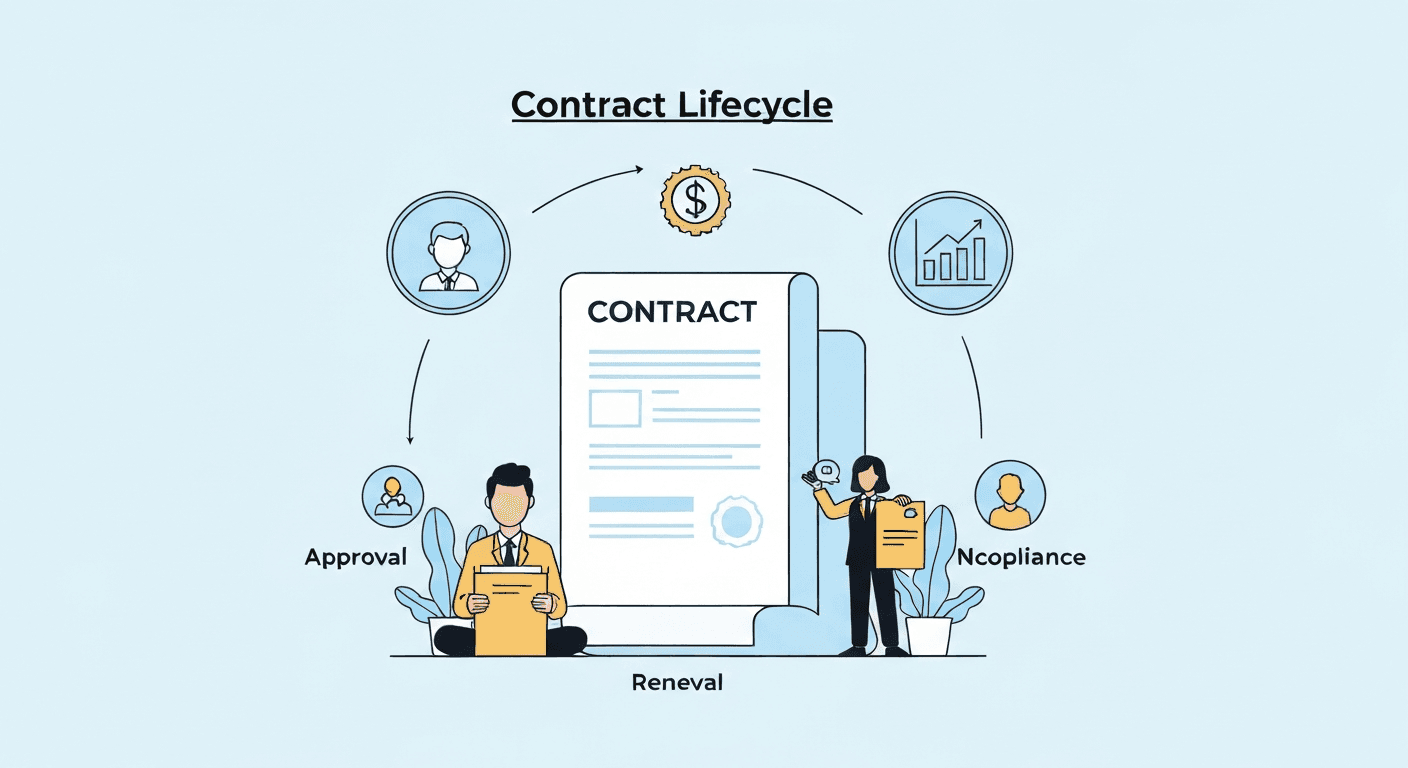
Key Highlights
Contract management is the process of handling agreements from creation to completion, ensuring all obligations are met.
Contract Lifecycle Management (CLM) offers a strategic, end-to-end view of the entire contract process, from initiation to renewal.
Effective CLM uses automation to streamline workflows, reduce errors, and improve compliance management.
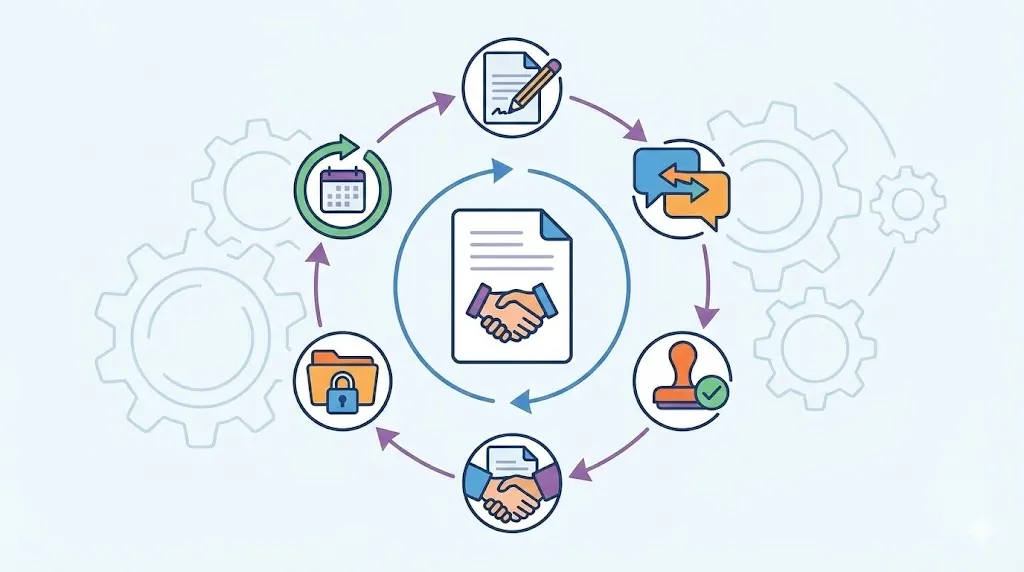
The key stages of the contract lifecycle include drafting, negotiation, execution, obligation tracking, and renewal.
Implementing CLM software helps organisations minimise risk, maximise value, and increase operational efficiency.
A strong contract process is vital for maintaining good business relationships and achieving strategic goals.
Imagine you are juggling multiple business deals at once. If you miss a few key details in an important contract, deadlines can be missed, compliance issues can arise, and a significant portion of the contract's value could be lost. This is where a formal contract management process becomes crucial.
This guide explains the fundamentals of contract management and introduces the more strategic concept of contract lifecycle management (CLM). Understanding these principles will help you build an efficient, repeatable contract process to boost productivity and drive growth.
Setting the Stage: Contract Management in Everyday Life

Believe it or not, you engage in a form of contract management in your daily life, even if you don't realize it. Every time you agree to terms and conditions for an app or sign a rental agreement, you are entering a contract with specific obligations.
These informal agreements set the stage for understanding the more complex world of business contracts. The core principles of managing expectations, fulfilling obligations, and ensuring compliance are the same, just on a much larger and more critical scale for an organization. We will now explore these concepts further.
Comparing Contracts to Everyday Agreements
Think about a simple agreement, like hiring a plumber. You agree on a price, a scope of work, and a timeline. This is a basic contract. Both you and the plumber have contractual obligations: the plumber must fix the leak, and you must pay the agreed-upon amount.
Business contracts operate on the same principle but with higher stakes and more complexity. Contract management is the process of managing these agreements to ensure all parties fulfil their promises. It involves overseeing the entire contract process, from the initial discussion to the final payment and closing of the agreement.
For businesses, this is incredibly important because contracts govern every pound spent and earned. Effective management ensures that your company gets the value it expects from its deals, avoids penalties, and maintains strong relationships with partners, customers, and suppliers. Without it, you risk financial loss and legal disputes.
Why Contract Management Matters for Organisations?
Effective contract management is not just an administrative task but a strategic necessity. Organisations face a complex web of regulations, and failing to manage contracts properly can lead to significant legal and financial consequences. A solid management process helps legal teams and business units stay aligned and proactive.
Without a structured system, businesses often struggle with common challenges. These can include missed renewal dates, non-compliance with regulatory requirements, and value leakage where the full financial benefit of a contract is not realised. A manual contract process is often slow, prone to errors, and lacks visibility, making it difficult for teams to track performance.
Effective contract management helps organisations in India overcome these issues by:
Ensuring robust compliance management with local laws.
Maximising contract value and preventing revenue leakage.
Reducing the risk of disputes and litigation.
Improving efficiency and shortening deal cycles.
Related Article: Types of Contracts Every Business Needs
What is Contract Management? Fundamentals Explained

At its core, contract management is the systematic process of creating, executing, and analysing contracts to maximise operational performance and minimise financial risk. It involves all the activities associated with handling agreements, from negotiation to ensuring compliance with the agreed terms.
This discipline is broader than simple contract administration, which often focuses only on storing documents. True contract management oversees the entire journey. This leads us to the more comprehensive approach known as Contract Lifecycle Management (CLM), which we will explore in the following sections.
Defining Contract Management and Its Essential Role
Contract management is the business discipline of managing contracts with customers, vendors, partners, or employees. It encompasses the entire process of handling an agreement, from its initial creation and contract negotiation straight through to its execution and eventual termination or renewal.
Its essential role is to ensure that all parties fulfil their respective obligations and that the intended contract value is fully realised. For legal teams and business departments, this means working together to create agreements that are not only legally sound but also commercially beneficial and operationally feasible.
Without a formal process, more than 50% of organizations say inefficiencies in their contracting processes have cost them business. Therefore, contract management is critical for protecting revenue, controlling costs, mitigating risks, and building strong, trusting business relationships. It transforms contracts from static documents into active assets that drive business success.
Key Concepts: What is CLM (Contract Lifecycle Management)?
Contract Lifecycle Management (CLM) is a strategic and systematic approach to managing a contract's complete journey. This journey, or contract lifecycle, includes every stage from the initial request and drafting to negotiation, approval, execution, performance monitoring, and eventual renewal or expiry.
Unlike basic contract management, CLM focuses on optimising and automating the entire lifecycle process. It connects people, processes, and data to ensure contracts are handled efficiently and consistently across the organisation. This holistic view helps businesses move faster, reduce risks, and extract maximum value from their agreements.
Modern businesses use CLM software to centralise contracts, automate workflows, and gain valuable insights. This technology provides a single source of truth for all contractual information, making the entire contract lifecycle visible and manageable. The key stages, which we will detail later, are all interconnected within this lifecycle process.
Contract Management Versus Contract Lifecycle Management
While the terms are often used interchangeably, there is a key distinction between contract management and contract lifecycle management (CLM). Contract management is a broader term that can sometimes refer to more administrative tasks, like storing and organising signed documents. It is often a reactive process.
Contract Lifecycle Management (CLM), on the other hand, is a proactive and strategic approach that covers the entire contract journey from beginning to end. It is a technology-driven process that aims to automate and streamline every stage, from creation to renewal. A CLM solution goes far beyond simple contract administration.
Here is a simple breakdown of the differences:
Feature | Contract Management | Contract Lifecycle Management (CLM) |
|---|---|---|
Scope | Often focuses on post-execution storage and obligation tracking. | Covers the entire lifecycle, from pre-execution (drafting, negotiation) to post-execution (performance, renewal). |
Approach | Primarily administrative and often reactive. | Strategic, holistic, and proactive. |
Technology | May use basic tools like shared drives or simple databases. | Relies on dedicated CLM software for automation, analytics, and centralisation. |
Goal | To store and manage existing contracts. | To optimise the entire contract process, reduce risk, and maximise value. |
Related Article: Overcome Top 5 Contract Management Challenges with Ease
Strategic Discipline: Exploring Contract Lifecycle Management (CLM)

Contract Lifecycle Management (CLM) is more than just a process; it is a strategic business discipline. By adopting CLM, your organisation can transform contracts from simple legal documents into powerful assets that drive value and mitigate risk. It is about actively managing the entire contract process with a focus on compliance and performance.
With the help of CLM software, you can automate many parts of this process, from the initial draft to the final contract review. Let's look at how this strategic approach enables your business, reduces risk, and differs from basic contract administration.
CLM as a Business Enabler and Value Maximiser
Effective Contract Lifecycle Management acts as a powerful business enabler. By standardising and automating the contracting process, CLM software allows teams to finalise deals faster. Sales teams can close contracts more quickly, leading to faster revenue recognition, while procurement teams can onboard new suppliers with greater speed.
This acceleration doesn't come at the expense of accuracy. CLM tools ensure that all contracts are created from pre-approved templates and clauses, which enhances contract performance and reduces errors. By tracking obligations and milestones, CLM helps ensure that the negotiated contract value is fully realised, preventing the value leakage that often occurs with manual processes.
Ultimately, CLM transforms contracting from a bottleneck into a streamlined function that supports growth. It frees up your legal and business teams from tedious administrative work, allowing them to focus on high-value strategic activities that drive the business forward.
Compliance and Risk Reduction through CLM
One of the most significant advantages of Contract Lifecycle Management is its ability to enhance compliance and risk reduction. Contracts are filled with obligations, deadlines, and regulatory requirements. Manually tracking these complex contract terms is a recipe for missed deadlines and non-compliance, which can result in financial penalties and legal disputes.
A robust CLM system automates compliance management. By using standardised templates and clause libraries, you ensure that every contract adheres to internal policies and external regulations from the start. The system can automatically flag non-standard terms or risky clauses during negotiation, providing a critical layer of protection.
Furthermore, CLM provides automated alerts for key dates, such as renewal deadlines or reporting obligations, ensuring nothing falls through the cracks. This proactive approach to risk mitigation and regulatory compliance is essential for any business looking to operate securely and efficiently in today's complex legal landscape.
Related Articles: Compliance and Risk Management in Aerospace Defense
How CLM Differs from Simple Contract Administration
Simple contract administration is often a passive activity focused on storing and organising executed agreements. It is a necessary but limited function. Contract Lifecycle Management (CLM) is fundamentally different because it is an active and strategic contract management process that uses technology to optimise every stage.
The key difference lies in the scope and intent. Contract administration is like having a filing cabinet, whether physical or digital. A CLM platform, in contrast, is like having an intelligent system that manages the entire workflow. It uses workflow automation to move contracts seamlessly from one stage to the next, from drafting to approval and beyond.
CLM elevates the process by:
Automating the creation, review, and approval of contracts.
Providing a holistic view of the entire clm process, not just a static view of signed documents.
Proactively managing obligations, renewals, and compliance.
Delivering data and analytics for strategic decision-making.
Related Article: What are Risks of Not Having a CLM Software?
The Full Contract Lifecycle: Phases Broken Down
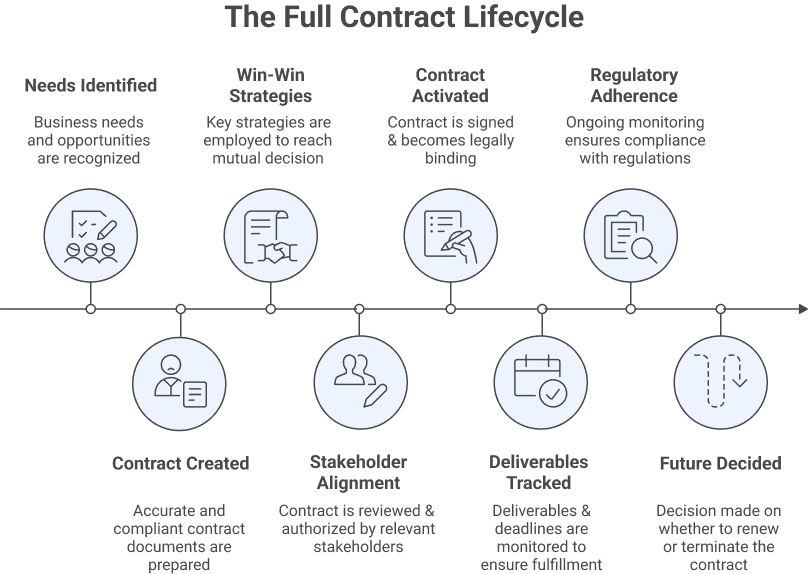
To truly understand Contract Lifecycle Management, you need to be familiar with its distinct phases. The contract cycle is a journey with a clear beginning, middle, and end. Each stage in this lifecycle process plays a crucial role in ensuring the agreement is successful and delivers its intended value.
From the initial idea to the final decision on renewal, managing each step of the contract management process is vital. Let's break down the nine key phases of the full contract lifecycle to see how they fit together.
Initiation: Identifying Needs and Opportunities
The contract cycle begins with the initiation phase. This is where the need for a contract is first identified. It could be a sales team needing an agreement for a new client, a procurement department looking to source new materials, or an HR team preparing to hire a new employee.
During this stage, you gather the preliminary requirements and define the objectives. What does this contract need to achieve? Who are the parties involved? What are the key business goals you are trying to meet? Answering these questions at the outset is crucial for a successful contract process.
This initial step sets the foundation for contract creation. A clear understanding of the needs and goals ensures that the subsequent drafting stage is focused and efficient. It's the starting point from which the entire agreement will be built and measured.
Drafting: Creating Accurate, Compliant Contracts
Once a contract is initiated, the next phase is contract drafting or authoring. This is where the actual text of the agreement is created. To ensure accuracy and consistency, modern organisations rely on contract templates and pre-approved clause libraries. This approach speeds up the process and reduces the risk of errors.
Using a CLM system for contract authoring allows business users to generate compliant contracts in a self-service mode. The system can dynamically assemble the document based on criteria like region, product, or price, ensuring all legal requirements are met.
This stage is critical for maintaining control and ensuring regulatory compliance. Key elements of effective drafting include:
Using smart, rule-based templates.
Leveraging a library of pre-approved clauses.
Ensuring all necessary metadata is tagged.
Following an approval process for any new or custom text.
Negotiation: Key Strategies for Win-Win Agreements
After the initial draft is created, the contract moves into the negotiation process. This is where all parties review the proposed contract terms and discuss any changes. The goal is to reach a mutually acceptable agreement that is fair and clear for everyone involved.
Effective contract negotiation requires strong communication skills and a clear understanding of your company's commercial and risk strategies. CLM software can greatly assist in this stage by providing negotiators with predefined fallback positions and tracking all changes and comments in real-time. This transparency helps everyone understand how the terms have evolved and speeds up the agreement.
The ideal outcome is a win-win agreement that maximizes contract value while clearly outlining all expectations. This sets the stage for a positive and productive business relationship, which is a key skill for any effective contract manager.
Approval: Stakeholder Alignment and Authorisation
Once negotiations are complete, the contract must go through an internal approval process before it can be signed. This stage ensures that all relevant stakeholders, such as legal, finance, and department heads, have reviewed and authorised the agreement. This is a critical step for ensuring contract compliance and internal governance.
A manual approval process, often involving emails and physical documents, can be slow and confusing. It is easy to lose track of who needs to approve the contract and where it is in the queue. This is where automation significantly improves the contract management process.
A CLM system automates the approval workflow, routing the contract to the right people in the correct sequence. It can handle both sequential and parallel approvals and sends reminders to ensure nothing is delayed. Once all approvals are gathered, the contract is ready for the final step: the electronic signature.
Execution: Signing and Activating Contracts
The execution phase is when the contract becomes a legally binding agreement. This is achieved once all parties have signed it. In the past, this meant mailing paper documents and waiting for physical signatures, a process that was slow and costly. Today, contract execution is highly digitised.
Modern CLM solutions integrate seamlessly with electronic signature platforms. This allows contracts to be routed and signed digitally, often within minutes. Using an electronic signature eliminates paperwork, speeds up the finalisation process, and ensures the contract is securely stored right after signing.
Once signed, contract activation occurs, and the agreement is officially in effect. The signed document is automatically saved in a centralised repository, making it ready for the next phase of contract monitoring. This automated step is crucial for maintaining an accurate and accessible record of all active agreements.
Obligation Management: Tracking Deliverables and Deadlines
After a contract is executed, the work is far from over. The post-execution phase is where the real value of an agreement is realised or lost. Obligation management involves tracking all the commitments, deliverables, and deadlines outlined in the contract to ensure they are met.
This is one of the most critical functions of a CLM system. Manually tracking contractual obligations is extremely difficult and prone to error. A CLM platform automates this by identifying, capturing, and assigning tasks to the relevant business owners. It provides clear visibility into contract performance.
Effective performance monitoring is key to measuring success. This includes tracking:
Key deliverables and project milestones.
Payment schedules and financial terms.
Service level agreements (SLAs).
Important deadlines and renewal dates.
Compliance Monitoring: Staying Within Regulatory Boundaries
Alongside obligation management, continuous compliance monitoring is essential throughout the contract's life. This stage ensures that all parties adhere to the regulatory and contractual obligations stipulated in the agreement. It plays a vital role in mitigating legal, financial, and reputational risks.
A CLM system simplifies compliance monitoring by providing a structured framework. It creates comprehensive audit trails of all activities, from a contract review to its final signature. This transparency is invaluable during internal or external audits, as it provides a clear, documented history of the contract.
By automating alerts and tracking adherence to key clauses, the system helps you stay on top of regulatory compliance. It ensures that your organisation operates within the agreed-upon legal and commercial boundaries, turning compliance from a reactive scramble into a proactive, manageable process.
Renewal and Termination: Deciding Future Actions
The final stage of the contract lifecycle is renewal or termination. As a contract approaches its expiry date, you need to make a strategic decision about its future. Will you renew it, renegotiate the terms, or let it expire? This decision should be based on the contract's performance and your evolving business needs.
Unfortunately, many organisations miss renewal dates due to poor tracking, leading to lost opportunities or unintentional service disruptions. Effective contract lifecycle management prevents this by providing proactive alerts and notifications for upcoming expiry dates. These reminders give you ample time to review the contract's performance and decide on the best next steps.
Armed with analytics on contract value and vendor performance, you are better equipped to determine the best path forward. Whether you enter a contract renewal process or a formal termination process, a CLM system ensures that the decision is informed, timely, and aligned with your business objectives.
Related Article: Mastering the Stages of Contract Lifecycle
Beginner’s Guide: How to Get Started with Contract Management

Getting started with a formal contract management process might seem daunting, but it is a manageable journey when broken down into clear steps. The key is to build a solid foundation that aligns your people, processes, and technology. This will help your contract managers extract the maximum contract value from your agreements.
To begin, you will need the right resources, including CLM tools and contract templates. From there, you can establish a clear, step-by-step process. The following sections will guide you through what you need and how to implement it.
Essential Resources and Tools Needed
To build an effective contract management framework, you need the right resources and tools. While you can start with basic tools, investing in a dedicated contract management software or CLM system is the most effective way to scale your efforts and ensure consistency.
The centrepiece of your toolkit should be a central contract repository. This is a secure, searchable database where all your contracts and related documents are stored. It provides a single source of truth and ensures that anyone who needs access to a contract can find it easily. Data security is paramount here to protect sensitive information.
Key tools and resources to consider include:
Contract Management Software: A platform that automates the entire lifecycle.
A Centralised Contract Repository: For secure storage and easy access.
Pre-approved Templates and Clause Libraries: To standardise contract creation.
Electronic Signature Integration: To speed up the execution phase.
Step-by-step Guide/Process
Once you have your tools, the next step is to establish a clear contract lifecycle management process. This involves defining how contracts will move through each stage, from initiation to renewal. The goal is to create a standardised workflow that everyone in the organisation can follow.
Start by mapping out your current process and identifying bottlenecks. Where do contracts get stuck? Are there delays in the approval process? Understanding these pain points will help you design a more efficient workflow. This is where workflow automation becomes a game-changer.
A modern CLM system allows you to automate these steps. You can set up rules for routing contracts for approval, send automatic reminders for deadlines, and use electronic signature capabilities to finalise agreements faster. This automation frees your team from manual, repetitive tasks and lets them focus on more strategic work.
Step 1: Assemble Your Team and Define Roles
A successful contract management implementation requires a team effort. The first step is to bring together stakeholders from across your organisation. This typically includes representatives from your legal teams, sales, procurement, finance, and operations. Their input is crucial to ensure the system meets everyone's needs.
Once your team is assembled, you must clearly define roles and responsibilities. Who is authorised to create contracts? Who needs to be involved in a contract review? Who has the final say in the approval process? Assigning clear ownership for each stage of the lifecycle prevents confusion and ensures accountability.
Your contract managers will be central to this process. Their roles will involve overseeing the entire lifecycle, ensuring compliance, and acting as the bridge between the legal teams and the business units. This collaborative approach is fundamental to a smooth and effective contract management system.
Step 2: Choose Appropriate Contract Management Software
Selecting the right technology is a critical step in your contract management journey. You need a Contract Lifecycle Management (CLM) platform that not only fits your current needs but is also flexible enough to grow with your business. The right contract management software will serve as the backbone of your entire process.
When evaluating a CLM solution, consider its core features and how they align with your objectives. Look for a platform that integrates with your other essential tools, such as your CRM and ERP systems. This integration simplifies data entry, reduces errors, and provides a more connected view of your business operations.
Key features to look for in a CLM platform include:
A centralised repository with strong version control.
Automated workflows for review and approval.
AI-powered analytics for strategic insights.
Integration capabilities to connect with your existing tech stack.
Choosing the right CLM solution can lead to significant cost savings and improved efficiency.
Step 3: Establish Processes for Each Lifecycle Stage
Implementing software is not enough to guarantee success. You must also define clear and solid processes for each stage of the contract lifecycle. This means documenting the steps for contract initiation, drafting, negotiation, approval, execution, and post-execution management.
Your goal is to standardise the contract process across the entire organisation. This consistency is key to ensuring compliance, reducing risk, and improving efficiency. By defining a clear lifecycle process, you eliminate the guesswork and ad-hoc procedures that lead to errors and delays.
This step is all about replacing manual work and repetitive tasks with a structured, automated workflow. For example, establish rules for when a contract needs legal review or define the standard turnaround time for approvals. These established processes will guide your team and your CLM software, ensuring everyone is on the same page.
Step 4: Monitor Performance and Measure Outcomes
Once your new process and system are in place, the final step is to continuously monitor performance and measure outcomes. You need to track whether your new contract management system is meeting its objectives. Are you closing deals faster? Have you reduced compliance risks?
To do this, establish key performance indicators (KPIs). These metrics will help you track the success of your contract management efforts. Examples of KPIs include contract cycle times, renewal rates, the number of contracts processed, and cost savings achieved. This data-driven approach to performance monitoring is essential.
Your CLM software should provide analytics and reporting tools to help you track these KPIs. It should also generate audit trails to give you visibility into contract performance and compliance. Regularly reviewing this data will help you identify areas for improvement and ensure your system continues to evolve with your business.
Related Article: Missed Contract Obligations? What to Do Next?
Strategic Advantages of Effective CLM

Implementing an effective Contract Lifecycle Management (CLM) system delivers a host of strategic advantages that go far beyond simple organisation. It empowers your business to operate with greater speed, intelligence, and control. The primary benefits revolve around better risk management, increased efficiency, and value maximisation.
By leveraging automation, centralised data, and detailed audit trails, CLM transforms contracting from a necessary administrative burden into a source of competitive advantage. Let's examine these key benefits, including cost savings and improved compliance, in more detail.
Mitigating Risks and Ensuring Compliance
One of the most critical advantages of CLM is its ability to significantly improve risk mitigation and compliance management. Every contract carries potential risks, from financial penalties for missed deadlines to legal issues arising from non-compliance with regulatory requirements. Manually managing these risks across hundreds or thousands of contracts is nearly impossible.
A CLM system automates this process. It ensures that all contracts are created using approved language and follow a standardised contract process, which is the first line of defence against risk. During negotiations, it can flag non-standard clauses or deviations from your company's preferred terms, allowing for proactive intervention.
Moreover, CLM provides automated alerts for important dates and obligations, ensuring you never miss a deadline. This proactive approach to regulatory compliance and risk management reduces your company's exposure to financial loss and legal disputes, moving you beyond simple contract administration to strategic governance.
Increasing Efficiency and Reducing Turnaround Time
Manual processes are the enemy of efficiency. When your teams rely on email and spreadsheets to manage contracts, bottlenecks are inevitable. The contract review and approval stages can drag on for weeks, delaying deals and frustrating everyone involved. A CLM system tackles this problem head-on with workflow automation.
By automating the routing of contracts for review and approval, a CLM system dramatically reduces cycle times. It ensures that the right people see the contract at the right time and sends them reminders to keep the process moving. This eliminates the manual follow-up that consumes so much of your team's time.
With a CLM system, you can reduce contract turnaround times by a significant margin. This increased efficiency means your sales team can close deals faster, your procurement team can onboard suppliers more quickly, and your legal team can focus on strategic issues instead of administrative tasks.
Maximising Value from Every Contract
Research shows that organisations can lose a substantial portion of a contract's value due to inefficient management. Effective CLM helps you capture this lost contract value and achieve significant cost savings. It does this by giving you the visibility and tools needed to proactively manage your agreements.
By tracking all obligations and commitments, CLM ensures you get everything you bargained for. It also provides historical data and performance analytics, which puts you in a much stronger position during contract negotiation and renewal discussions. You can identify opportunities to secure better terms or pricing.
CLM helps you maximise value by:
Preventing missed renewal dates, which allows for timely renegotiation.
Enforcing compliance with pricing, discounts, and rebates.
Identifying underperforming contracts that should be terminated.
Providing insights to improve future contract negotiation strategies.
Conclusion
In conclusion, effective Contract Management is essential for organisations aiming to optimise their operations and mitigate risks. By understanding the nuances of the Contract Lifecycle Management (CLM) process: from initiation through to renewal, you can ensure compliance while maximising value from your contracts.
As you implement these strategies, remember that a structured approach not only enhances efficiency but also fosters stronger business relationships. Don't hesitate to seek out the right tools and resources to support your contract management efforts.
Frequently Asked Questions
What are the main benefits of implementing contract management practices?
The main benefits of contract management include enhanced compliance, reduced risk, and significant cost savings. By streamlining the entire contract lifecycle management process with CLM software, businesses can accelerate deal cycles, improve visibility, and ensure the value maximisation of every agreement.
What challenges do businesses face in contract management?
Common challenges include long contract review cycles, poor contract compliance, and a lack of visibility into obligations. Manual work increases the risk of errors and missed deadlines, making effective risk management difficult. These issues often stem from a disjointed and inefficient contract process.
Which tools and software help with contract management?
Dedicated contract management software, also known as a CLM platform, is the most effective tool. These platforms offer a central contract repository, workflow automation for approvals, and integration with electronic signature services to streamline the entire contracting process from start to finish.
How can organisations measure success in contract management?
Organisations can measure success by tracking key performance indicators (KPIs) such as contract cycle times, renewal rates, and realised contract value. Effective performance monitoring, supported by detailed audit trails and analytics from a CLM system, provides clear insights into the effectiveness of the process.
What are the key components of effective contract management?
Effective contract management involves overseeing the entire contract lifecycle. Key components include standardised drafting, a structured contract review and approval process, clear tracking of contract terms, diligent compliance management, and efficient contract execution, all working together to minimise risk and maximise value.
What tools or software can assist with contract management processes?
A CLM solution is the primary tool for modern contract management. This type of contract management software provides a secure contract repository, ensures data security, and automates key workflows like the approval process, making the entire lifecycle more efficient and transparent.
How does contract management impact business relationships and performance?
Effective contract management strengthens business relationships by ensuring clarity and fulfilment of contractual obligations. It improves contract performance by aligning agreements with business goals, preventing disputes, and ensuring that the expected contract value is realised, which supports long-term partnerships and success.
About the Company

Volody AI CLM is an Agentic AI-powered Contract Lifecycle Management platform designed to eliminate manual contracting tasks, automate complex workflows, and deliver actionable insights. As a one-stop shop for all contract activities, it covers drafting, collaboration, negotiation, approvals, e-signature, compliance tracking, and renewals. Built with enterprise-grade security and no-code configuration, it meets the needs of the most complex global organizations. Volody AI CLM also includes AI-driven contract review and risk analysis, helping teams detect issues early and optimize terms. Trusted by Fortune 500 companies, high-growth startups, and government entities, it transforms contracts into strategic, data-driven business assets.





" height="216.72211px" id="FYO0bO80Y" transform="translate(3 6.105)" width="206.073px"/><path d="M 108.174 222 C 88.432 222 70.303 217.239 53.785 207.717 C 37.267 198.196 24.173 185.052 14.504 168.285 C 4.835 151.312 0 132.165 0 110.845 C 0 89.731 4.835 70.792 14.504 54.025 C 24.173 37.052 37.267 23.804 53.785 14.282 C 70.303 4.761 88.432 0 108.174 0 C 128.116 0 146.246 4.761 162.562 14.282 C 179.08 23.804 192.073 37.052 201.541 54.025 C 211.21 70.792 216.044 89.731 216.044 110.845 C 216.044 132.165 211.21 151.312 201.541 168.285 C 192.073 185.052 179.08 198.196 162.562 207.717 C 146.044 217.239 127.915 222 108.174 222 Z M 108.174 183.189 C 120.864 183.189 132.044 180.291 141.713 174.495 C 151.382 168.492 158.936 160.006 164.375 149.035 C 169.814 138.064 172.533 125.334 172.533 110.845 C 172.533 96.355 169.814 83.729 164.375 72.965 C 158.936 61.994 151.382 53.611 141.713 47.815 C 132.044 42.02 120.864 39.122 108.174 39.122 C 95.483 39.122 84.202 42.02 74.332 47.815 C 64.663 53.611 57.109 61.994 51.67 72.965 C 46.231 83.729 43.511 96.355 43.511 110.845 C 43.511 125.334 46.231 138.064 51.67 149.035 C 57.109 160.006 64.663 168.492 74.332 174.495 C 84.202 180.291 95.483 183.189 108.174 183.189 Z" fill="rgba(255, 255, 255, 0.12)" height="222px" id="aa1McFcE9" transform="translate(227.183 3)" width="216.04399999999998px"/><path d="M 42.302 182.257 L 111.799 182.257 L 111.799 216.722 L 0 216.722 L 0 0 L 42.302 0 Z" fill="rgba(255, 255, 255, 0.12)" height="216.72211px" id="yRq4AnrsX" transform="translate(477.721 6.105)" width="111.79899999999998px"/><path d="M 108.174 222 C 88.432 222 70.303 217.239 53.785 207.717 C 37.267 198.196 24.173 185.052 14.504 168.285 C 4.835 151.312 0 132.165 0 110.845 C 0 89.731 4.835 70.792 14.504 54.025 C 24.173 37.052 37.267 23.804 53.785 14.282 C 70.303 4.761 88.432 0 108.174 0 C 128.116 0 146.246 4.761 162.562 14.282 C 179.08 23.804 192.073 37.052 201.541 54.025 C 211.21 70.792 216.045 89.731 216.045 110.845 C 216.045 132.165 211.21 151.312 201.541 168.285 C 192.073 185.052 179.08 198.196 162.562 207.717 C 146.044 217.239 127.915 222 108.174 222 Z M 108.174 183.189 C 120.864 183.189 132.044 180.291 141.713 174.495 C 151.382 168.492 158.936 160.006 164.375 149.035 C 169.814 138.064 172.534 125.334 172.534 110.845 C 172.534 96.355 169.814 83.729 164.375 72.965 C 158.936 61.994 151.382 53.611 141.713 47.815 C 132.044 42.02 120.864 39.122 108.174 39.122 C 95.483 39.122 84.202 42.02 74.332 47.815 C 64.663 53.611 57.108 61.994 51.67 72.965 C 46.231 83.729 43.511 96.355 43.511 110.845 C 43.511 125.334 46.231 138.064 51.67 149.035 C 57.108 160.006 64.663 168.492 74.332 174.495 C 84.202 180.291 95.483 183.189 108.174 183.189 Z" fill="rgba(255, 255, 255, 0.12)" height="222px" id="mo8HQspQ0" transform="translate(609.155 3)" width="216.04500000000007px"/><path d="M 73.727 0 C 95.885 0 115.324 4.45 132.044 13.351 C 148.967 22.252 161.957 34.982 171.027 51.541 C 180.287 67.894 184.917 86.937 184.917 108.671 C 184.917 130.405 180.287 149.449 171.027 165.801 C 161.957 181.947 148.967 194.47 132.044 203.371 C 115.324 212.271 95.885 216.722 73.727 216.722 L 0 216.722 L 0 0 Z M 72.216 179.773 C 94.374 179.773 111.497 173.564 123.583 161.144 C 135.669 148.724 141.713 131.233 141.713 108.671 C 141.713 86.109 135.669 68.515 123.583 55.888 C 111.497 43.055 94.374 36.638 72.216 36.638 L 42.302 36.638 L 42.302 179.773 Z" fill="rgba(255, 255, 255, 0.12)" height="216.72211px" id="I3iXX5Hi_" transform="translate(859.693 6.105)" width="184.91699999999992px"/><path d="M 185.22 0 L 113.91 141.273 L 113.91 216.722 L 71.61 216.722 L 71.61 141.273 L 0 0 L 47.74 0 L 93.06 99.046 L 138.08 0 Z" fill="rgba(255, 255, 255, 0.12)" height="216.72211px" id="nzHyWC0_d" transform="translate(1061.78 6.105)" width="185.22000000000003px"/></svg>)