

Managing automotive contracts can feel like driving a high-performance car through a busy city. Every contract is a critical part of your operation, from dealer agreements to service contracts and fleet leases. Miss a deadline or misread a clause, and you risk costly disputes or compliance issues. This article breaks down how to manage automotive contracts at full throttle, keeping your legal and operational teams aligned and your business running smoothly.
TL;DR
Automotive contracts encompass a broad spectrum including sales agreements, financing arrangements, service provisions, and fleet management, each presenting distinct contractual complexities and risk profiles.
Additionally, it is critical to differentiate manufacturer warranties from vehicle service contracts with precision to ensure compliance and avoid regulatory sanctions.
Implementing a centralized repository for contracts alongside automated monitoring of critical deadlines can significantly mitigate the risk of overlooked renewals and unmet obligations.
Keeping comprehensive documentation coupled with unambiguous contractual language serves to minimize disputes and facilitates expedited resolution of claims.
A thorough grasp of prevalent compliance challenges and potential warning signs inherent in automotive contracts is essential to safeguard your enterprise.
Employing contract lifecycle management software enhances operational efficiency by consolidating workflows, increasing transparency, and minimizing human error.
What Types of Contracts Are Common in Automotive Operations?
Automotive contracts govern the entire vehicle lifecycle. Additionally, whether you work with dealerships, fleet managers, or service centers, you encounter several contract types. Each serves a distinct purpose and carries specific risks.
Vehicle Service Contracts (VSCs): These cover repairs or maintenance needs that arise once the manufacturer’s warranty has expired.
Dealer Agreements: Binding documents that define the duties of manufacturers and dealers, addressing sales territories, performance metrics, and regulatory compliance.
Fleet Leasing and Purchase Contracts: Agreements that oversee the bulk acquisition or leasing of vehicles for corporate fleets, often including tailored pricing structures and comprehensive service options.
Retail Installment Contracts: Financing arrangements allowing buyers to spread vehicle payments over time, subject to state-specific consumer credit laws and regulations.
Repair and Maintenance Contracts: Agreements that establish the responsibilities between vehicle owners and repair facilities, specifying the scope of work, parts, labor, and liability clauses.
Understanding these contract types helps you prepare for their management challenges. For instance, handling service agreements requires particular attention due to the involvement of third-party administrators and the intricacies of claims processing.
Related articles: Contract Management Software for Sales Teams | CLM Guide
Why Distinguishing Warranties from Vehicle Service Contracts Matters
Confusing manufacturer warranties with service contracts leads to significant legal and operational challenges. Additionally, manufacturer warranties come standard with new vehicles at no additional charge. They cover defects for a set period or mileage and are backed by the automaker. These protections are governed by federal legislation designed to protect consumers' rights regarding product guarantees.
Service contracts, conversely, represent optional agreements that buyers acquire separately. Coverage may extend to repairs beyond the original warranty period; however, these agreements do not qualify as warranties under federal legislation. Regulation of these contracts primarily occurs at the state level, with administration frequently delegated to third-party entities.
Incorrectly describing a service contract as a warranty breaches Federal Trade Commission (FTC) regulations. This misrepresentation risks incurring regulatory penalties and undermining business credibility. Contract documentation and promotional materials must explicitly delineate these distinctions.
Feature | Manufacturer Warranty | Vehicle Service Contract |
|---|---|---|
Cost | Included with vehicle purchase | Purchased separately |
Backing | Automaker | Dealer, manufacturer, or third-party admin |
Coverage Start | At vehicle purchase | Variable, often after warranty expiration |
Transferability | Usually transferable with vehicle | Depends on contract terms |
Regulation | Federal consumer protection statutes | State consumer protection laws |
For dealership networks or fleet operators, tracking these contracts separately is essential. Use metadata fields and contract templates that reflect the correct terminology and compliance requirements.
Related articles: Mastering Contract Terms: Your Comprehensive Guide
How Vehicle Service Contracts Function and What to Track
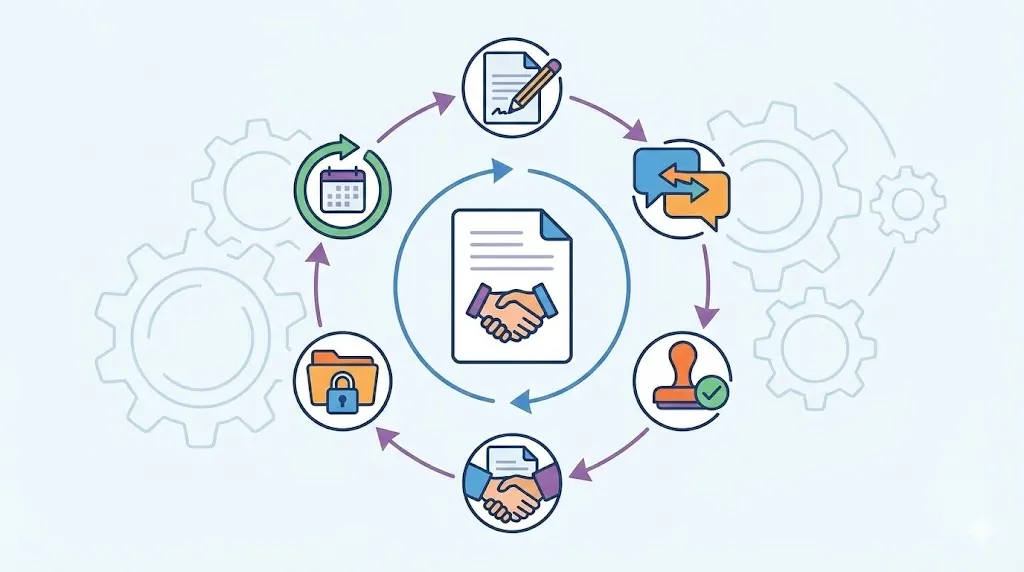
Vehicle service contracts go through several stages, each demanding attention to detail. Here is a typical lifecycle:
Sale and Agreement: The buyer selects a coverage plan, coverage level, premium, and deductible. The contract is signed at or near the vehicle sale.
Administration: A contract administrator, often a third-party company or the dealer, manages claims, cancellations, and customer service.
Claims Processing: Upon requiring a repair, the vehicle owner must seek pre-authorization. The administrator evaluates the claim in relation to the contract terms to determine approval or denial.
Renewal Clauses and Expiration Dates: Contracts may include specific provisions for renewal or establish clear expiration deadlines.
Dispute Resolution: Claim denials or coverage exclusions often provoke disputes. Utilizing precise contract language alongside comprehensive documentation streamlines the resolution process.
Critical contract components to monitor encompass coverage start and end dates, claim limits, deductibles, and exclusions. Implementing automated alerts for imminent renewals and expiration deadlines can prevent overlooked notifications. Additionally, centralizing all contracts and related documents in a single repository ensures efficient retrieval during claims or audits.
Related articles: Mastering the Stages of Contract Lifecycle
What Do Automotive Service Contracts Usually Cover and Exclude?
Understanding what vehicle service contracts cover—and what they do not—is vital. Additionally, coverage depends on the specific plan but typically encompasses repairs for mechanical failures occurring after the expiration of the manufacturer warranty. Common covered components include the engine, transmission, and drivetrain.
However, contracts often exclude wear and tear items, routine maintenance, and cosmetic damage. These exclusions cause many disputes. For example, a contract might cover a transmission failure but exclude repairs caused by normal wear.
Contract language should clearly define:
Covered parts and systems
Excluded items and conditions
Claim procedures, including pre-authorization requirements
Deductibles and claim limits
Clear, consistent language reduces misunderstandings and legal risks. Including examples in contracts helps customers understand coverage boundaries.
Related articles: Master Contract Generation: A Comprehensive Guide
Who Sells Vehicle Service Contracts and What to Verify?
Vehicle service contracts may be sold by dealers, manufacturers, or independent providers. Additionally, each category entails distinct responsibilities and potential liabilities.
Dealers: These entities commonly offer contracts at the time of vehicle purchase. Administration of claims might be handled in-house or delegated to external specialists. It is essential to assess the dealer’s licensing credentials, industry reputation, and adherence to applicable state regulations.
Manufacturers: Some automakers provide proprietary service contracts, which often incorporate higher standards of reliability; however, it remains critical to scrutinize their specific terms and the manner in which they are enforced.
Third-Party Providers: Independent firms distribute contracts through various channels, including dealership networks and direct sales to consumers. A thorough review of their financial stability, methods for claims adjudication, and regulatory compliance is imperative.
Prior to finalizing any contract, perform comprehensive due diligence. This includes verification of licensing, financial condition, and the quality of customer support. Ensure that the contractual provisions align with your legal requirements and operational expectations.
Related articles: Contract Management Software for Manufacturing Industry
What Happens When Vehicle Service Contracts Fail and How to Avoid Disputes
Disputes arise when claims are denied, coverage is unclear, or service quality is poor. Common causes include:
Ambiguous contract language on exclusions
Missing or incomplete documentation of repairs or maintenance
Failure to obtain required pre-authorizations
Delays in claims processing or payment
Miscommunication between administrators, dealers, and customers
To reduce disputes:
Use clear, plain language in contracts. Avoid vague terms.
Centralize contract storage and related documents like receipts and maintenance records.
Provide staff with specialized training that addresses the intricacies of claims adjudication alongside recent changes in regulatory standards.
Deploy automated workflows designed to accelerate claim approvals while maintaining transparent communication channels among all parties involved.
Regularly analyze dispute patterns to refine contract language and optimize operational processes.
Example: A fleet operator consistently faced claim denials resulting from overlooked pre-authorization requirements. By implementing a centralized contract management platform with integrated automated alerts, the operator achieved a 40% reduction in denials within six months.
Related Article: Leading CLM Tools for Manufacturing Success in 2026
Five Compliance Risks and Scam Signals in Automotive Contracts
Automotive contracts can contain various compliance risks that, if not properly addressed, may lead to significant penalties or litigation exposure for your business. Be vigilant for indicators such as:
Mislabeling Service Contracts as Warranties: This violates FTC regulations and often results in buyer confusion.
Unclear or Missing Disclosure Statements: These disclosures must explicitly outline contract terms and any applicable exclusions to comply with legal standards.
Unauthorized Sellers or Administrators: Contracts sold by unlicensed entities risk invalidation.
Hidden Fees or Charges: Surprise costs can trigger consumer complaints and legal action.
Inadequate Recordkeeping: Poor documentation increases audit risk and dispute frequency.
Regular audits of contract templates, sales practices, and administration processes help catch these issues early. Train your teams on regulatory updates and compliance best practices.
Related articles: How to Manage a Contract Post Execution?
How to Manage Automotive Contracts Across Multiple Locations and Teams
Managing contracts across dealerships, service centers, and fleet operations requires coordination. Common challenges include:
Multiple administrators handling contracts differently
Lack of centralized contract storage
Missed renewal or expiration dates
Inconsistent contract language or metadata
Difficulty tracking obligations and claims history
To overcome these challenges:
Centralize contract storage in a secure, searchable repository.
Implement uniform contract templates alongside a robust metadata framework to standardize processes throughout all locations.
Deploy automated notification systems designed to alert key stakeholders about upcoming renewals, expirations, and critical contractual responsibilities.
Define roles with precision and apply detailed access controls to enforce strict contract governance and maintain clear accountability.
Utilize comprehensive dashboards and detailed analytics to provide continuous insight into contract conditions and potential risks.
Centralizing contract management infrastructure minimizes errors, enhances regulatory compliance, and accelerates strategic decision-making.
Explore further insights in related articles such as Overcome Top 5 Contract Management Challenges with Ease
Five Steps to Streamline Automotive Contract Management
Inventory Your Contracts: Gather all existing contracts, including digital and paper copies.
Classify Contracts by Type and Risk: Separate warranties, service contracts, dealer agreements, etc.
Standardize Contract Templates: Use clear, consistent language and mandatory compliance clauses.
Centralize Storage and Access: Use a digital repository with search and tagging features.
Automate Key Workflows: Set up reminders for renewals, approvals, and obligations.
Following these steps creates a foundation for efficient contract management and reduces operational risks.
Related articles: Master Contract Obligation Management: 5 Proactive Steps
Why Contract Management Software Matters
Managing automotive contracts with manual methods or simple tools often leads to inefficiencies and increased risk exposure. Additionally, contract lifecycle management (CLM) software offers a solution by integrating and automating contract processes.
CLM platforms enable you to:
Store all contracts and associated documents securely in a centralized repository.
Automatically capture critical contract details including key dates, involved parties, and obligations.
Monitor contract renewals, expirations, and compliance deadlines through timely alert systems.
Utilize consistent contract templates combined with efficient approval workflows to minimize errors.
Facilitate collaboration across departments with features such as live editing, commenting, and version tracking.
Deliver in-depth dashboards and reports to evaluate contract performance metrics and assess risk exposure.
This approach minimizes manual intervention, accelerates contract processing times, and strengthens compliance adherence.
Effectively managing complex automotive contracts requires a centralized platform equipped with advanced intelligence. Moreover, volody’s CLM solution incorporates AI-driven contract drafting and review, automates obligation monitoring, and provides a secure, searchable repository designed specifically for the automotive industry’s unique demands.
Discover how Volody's CLM Software empowers legal teams to expedite contract management while maintaining enhanced control.
FAQ
What is the difference between a manufacturer warranty and a vehicle service contract?
The manufacturer warranty comes standard with a new vehicle purchase, covering defects for a specified duration or mileage. It is supported by the automaker and regulated at the federal level. In contrast, a service contract is an additional product that covers repairs after the warranty period expires. It is not classified as a warranty under federal law and is primarily subject to state regulation. Maintaining a clear distinction between these is essential to avoid regulatory penalties.
Why do vehicle service contracts cause so much confusion?
Confusion frequently arises among consumers and staff who often conflate service contracts with warranties. Furthermore, this misunderstanding is due to the overlapping repair coverage but distinct legal classifications, coverage parameters, and exclusions. Ambiguous language within contracts and marketing materials further complicates comprehension, leading to disputes and compliance difficulties.
What should I track in an automotive service contract?
Track contract start and end dates, coverage levels, deductibles, claim limits, exclusions, and renewal options. Also, maintain supporting documents such as maintenance logs and pre-authorization records. Automated reminders for renewals and expirations are essential to avoid coverage gaps.
How can I reduce disputes related to vehicle service contracts?
Craft contract language with precision to distinctly specify coverage and exclusions. Centralize all contract and claims records. Deliver comprehensive training to staff on claims processing and regulatory compliance. Also, implement automated processes for claim approvals and communication. Conduct ongoing analyses of dispute patterns to refine procedures.
Who typically sells vehicle service contracts?
Dealers, manufacturers, and independent third-party providers sell these contracts. Each has different responsibilities and risks. Verify licensing, financial health, and compliance of any provider before partnering.
What are common compliance risks in automotive contracts?
Mislabeling service contracts as warranties, missing disclosures, unauthorized sellers, hidden fees, and poor recordkeeping are common risks. Regular audits combined with comprehensive staff training are effective in mitigating these problems.
Therefore, how do I manage contracts across multiple locations?
Centralize contract storage and unify templates and metadata standards. Set up automated notifications for critical dates and obligations. Define clear roles and permissions. Utilize dashboards to oversee contract status and risk factors.
What are the benefits of contract management software for automotive contracts?
This software consolidates contracts, automates critical data extraction and alerts, enforces uniform templates and approval workflows, fosters collaboration, and provides actionable analytics. These features minimize errors, accelerate contract processing, and enhance compliance.
Can contract management software handle complex automotive contract types?
Consequently, contemporary CLM platforms accommodate diverse contract formats through adaptable templates and configurable workflows. They proficiently oversee obligations and risks specific to automotive agreements like service contracts, dealer agreements, and fleet leasing contracts.
How do I ensure my automotive contracts comply with regulations?
Adopt clear, compliant contract language. Educate teams on applicable legal requirements. Perform routine audits. Leverage contract management tools to maintain template consistency and track compliance deadlines. Confirm that all sellers and administrators possess proper licensing.
This comprehensive guide equips legal, operations, and technology leaders with the knowledge to manage automotive contracts efficiently and confidently. Applying these principles reduces risk, improves compliance, and keeps your automotive business moving at full speed.
About the Company

Volody AI CLM is an Agentic AI-powered Contract Lifecycle Management platform designed to eliminate manual contracting tasks, automate complex workflows, and deliver actionable insights. As a one-stop shop for all contract activities, it covers drafting, collaboration, negotiation, approvals, e-signature, compliance tracking, and renewals. Built with enterprise-grade security and no-code configuration, it meets the needs of the most complex global organizations. Volody AI CLM also includes AI-driven contract review and risk analysis, helping teams detect issues early and optimize terms. Trusted by Fortune 500 companies, high-growth startups, and government entities, it transforms contracts into strategic, data-driven business assets.





" height="216.72211px" id="FYO0bO80Y" transform="translate(3 6.105)" width="206.073px"/><path d="M 108.174 222 C 88.432 222 70.303 217.239 53.785 207.717 C 37.267 198.196 24.173 185.052 14.504 168.285 C 4.835 151.312 0 132.165 0 110.845 C 0 89.731 4.835 70.792 14.504 54.025 C 24.173 37.052 37.267 23.804 53.785 14.282 C 70.303 4.761 88.432 0 108.174 0 C 128.116 0 146.246 4.761 162.562 14.282 C 179.08 23.804 192.073 37.052 201.541 54.025 C 211.21 70.792 216.044 89.731 216.044 110.845 C 216.044 132.165 211.21 151.312 201.541 168.285 C 192.073 185.052 179.08 198.196 162.562 207.717 C 146.044 217.239 127.915 222 108.174 222 Z M 108.174 183.189 C 120.864 183.189 132.044 180.291 141.713 174.495 C 151.382 168.492 158.936 160.006 164.375 149.035 C 169.814 138.064 172.533 125.334 172.533 110.845 C 172.533 96.355 169.814 83.729 164.375 72.965 C 158.936 61.994 151.382 53.611 141.713 47.815 C 132.044 42.02 120.864 39.122 108.174 39.122 C 95.483 39.122 84.202 42.02 74.332 47.815 C 64.663 53.611 57.109 61.994 51.67 72.965 C 46.231 83.729 43.511 96.355 43.511 110.845 C 43.511 125.334 46.231 138.064 51.67 149.035 C 57.109 160.006 64.663 168.492 74.332 174.495 C 84.202 180.291 95.483 183.189 108.174 183.189 Z" fill="rgba(255, 255, 255, 0.12)" height="222px" id="aa1McFcE9" transform="translate(227.183 3)" width="216.04399999999998px"/><path d="M 42.302 182.257 L 111.799 182.257 L 111.799 216.722 L 0 216.722 L 0 0 L 42.302 0 Z" fill="rgba(255, 255, 255, 0.12)" height="216.72211px" id="yRq4AnrsX" transform="translate(477.721 6.105)" width="111.79899999999998px"/><path d="M 108.174 222 C 88.432 222 70.303 217.239 53.785 207.717 C 37.267 198.196 24.173 185.052 14.504 168.285 C 4.835 151.312 0 132.165 0 110.845 C 0 89.731 4.835 70.792 14.504 54.025 C 24.173 37.052 37.267 23.804 53.785 14.282 C 70.303 4.761 88.432 0 108.174 0 C 128.116 0 146.246 4.761 162.562 14.282 C 179.08 23.804 192.073 37.052 201.541 54.025 C 211.21 70.792 216.045 89.731 216.045 110.845 C 216.045 132.165 211.21 151.312 201.541 168.285 C 192.073 185.052 179.08 198.196 162.562 207.717 C 146.044 217.239 127.915 222 108.174 222 Z M 108.174 183.189 C 120.864 183.189 132.044 180.291 141.713 174.495 C 151.382 168.492 158.936 160.006 164.375 149.035 C 169.814 138.064 172.534 125.334 172.534 110.845 C 172.534 96.355 169.814 83.729 164.375 72.965 C 158.936 61.994 151.382 53.611 141.713 47.815 C 132.044 42.02 120.864 39.122 108.174 39.122 C 95.483 39.122 84.202 42.02 74.332 47.815 C 64.663 53.611 57.108 61.994 51.67 72.965 C 46.231 83.729 43.511 96.355 43.511 110.845 C 43.511 125.334 46.231 138.064 51.67 149.035 C 57.108 160.006 64.663 168.492 74.332 174.495 C 84.202 180.291 95.483 183.189 108.174 183.189 Z" fill="rgba(255, 255, 255, 0.12)" height="222px" id="mo8HQspQ0" transform="translate(609.155 3)" width="216.04500000000007px"/><path d="M 73.727 0 C 95.885 0 115.324 4.45 132.044 13.351 C 148.967 22.252 161.957 34.982 171.027 51.541 C 180.287 67.894 184.917 86.937 184.917 108.671 C 184.917 130.405 180.287 149.449 171.027 165.801 C 161.957 181.947 148.967 194.47 132.044 203.371 C 115.324 212.271 95.885 216.722 73.727 216.722 L 0 216.722 L 0 0 Z M 72.216 179.773 C 94.374 179.773 111.497 173.564 123.583 161.144 C 135.669 148.724 141.713 131.233 141.713 108.671 C 141.713 86.109 135.669 68.515 123.583 55.888 C 111.497 43.055 94.374 36.638 72.216 36.638 L 42.302 36.638 L 42.302 179.773 Z" fill="rgba(255, 255, 255, 0.12)" height="216.72211px" id="I3iXX5Hi_" transform="translate(859.693 6.105)" width="184.91699999999992px"/><path d="M 185.22 0 L 113.91 141.273 L 113.91 216.722 L 71.61 216.722 L 71.61 141.273 L 0 0 L 47.74 0 L 93.06 99.046 L 138.08 0 Z" fill="rgba(255, 255, 255, 0.12)" height="216.72211px" id="nzHyWC0_d" transform="translate(1061.78 6.105)" width="185.22000000000003px"/></svg>)