

Managing contracts through email and disconnected files creates avoidable risk, delays, and uncertainty. A modern contract lifecycle management approach unifies intake, approvals, execution, obligations, and renewals in one controlled process. With the right structure and technology, teams can improve visibility, accelerate contract work, and maintain stronger control from request through closeout.
TL;DR
Email-based contract management scatters records, weakens ownership, and increases missed deadlines, duplicate work, and version errors.
CLM connects intake, drafting, negotiation, approvals, signing, storage, obligation tracking, and renewals within one lifecycle.
A searchable repository keeps contracts, metadata, permissions, versions, and audit records together for faster access.
Standard workflows route agreements by risk, value, and type while keeping human judgment for unusual business needs.
A practical migration starts with process mapping, contract inventory, data standards, integrations, training, and focused adoption.
Contract management software gives legal, sales, finance, procurement, and operations better control over contract work.
The Limits of Managing Contracts Through Email
Where Contract Requests Disappear
A contract request may start with one email and several attachments. It can then move through chat, shared drives, and personal folders. Each step creates another place where the latest information might hide.
The legal team may hold one version. Sales may hold another. Finance may keep a spreadsheet with different dates. No single record shows the full request, its owner, or its current status.
Email-based contract management also creates problems when people change roles. A departing employee may hold key messages in a private inbox. Their replacement then spends hours asking for context and searching old files.
Search rarely works well across these sources. File names may lack party names or renewal dates. Comments may sit in separate messages from the document they discuss.
How Fragmentation Creates Business Risk
Disconnected records create more than admin work. They can lead to duplicate drafting, unclear ownership, and outdated language. Teams may also miss notice periods, renewal dates, or required approvals.
The risk spreads across the business. Procurement may not know whether a supplier agreement is approved. Sales may promise terms that finance has not reviewed. Operations may miss a service duty after signature.
Email also makes authority hard to prove. A message that says “approved” may not show which version received approval. It may also lack proof of signer authority or required risk review.
Email-based work differs from a controlled lifecycle process in several ways:
Request capture: Email depends on free-form messages. A controlled process captures contract type, purpose, value, parties, and deadlines.
Document control: Email stores many attachments. A CLM process keeps one working version with tracked changes and review history.
Approval proof: Email may show scattered replies. A controlled workflow records each decision, condition, and approval owner.
Deadline tracking: Spreadsheets rely on manual updates. A lifecycle process links dates to alerts, owners, and follow-up actions.
Post-signature work: Email often stops at execution. CLM continues with obligations, amendments, renewals, and termination steps.
Related articles: Contract Management Software for Faster Legal Work
What Contract Lifecycle Management Changes
From Document Storage to Lifecycle Control
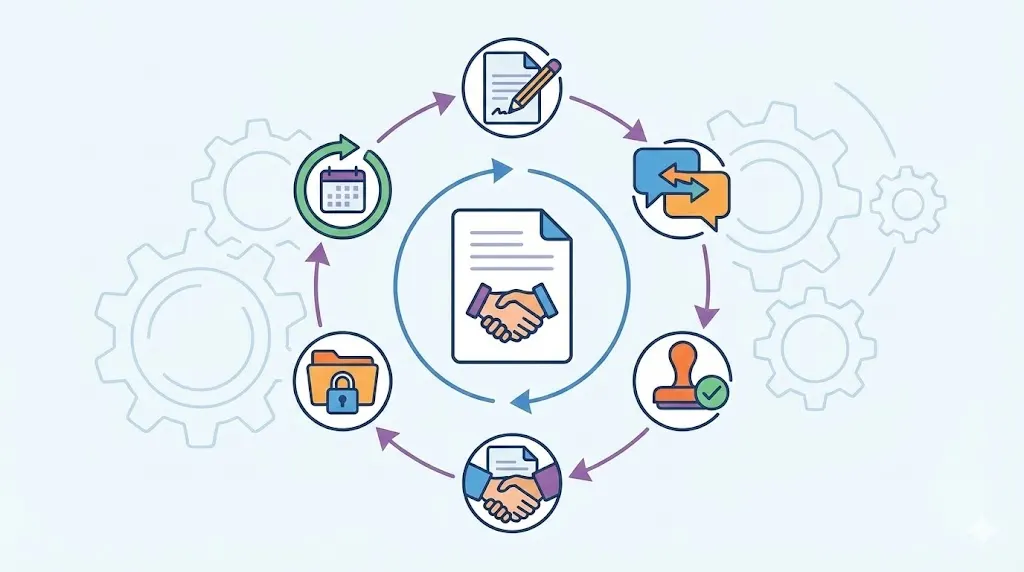
Contract lifecycle management, or CLM, manages an agreement from request through closeout. It covers drafting, review, negotiation, approval, signature, storage, performance, and renewal.
A repository only stores completed documents. CLM software also manages the work around those documents. It shows what must happen next, who owns it, and when action is due.
This distinction matters after signature. A signed agreement may require reports, service levels, price reviews, insurance certificates, or renewal notices. A useful digital contract management system keeps these tasks visible.
CLM also creates a shared process for different agreement types. A sales contract may need revenue approval. A supplier contract may need procurement and security review. A simple amendment may need fewer steps.
A Shared Process Across Business Functions
Contracts affect more teams than legal. Sales manages customer terms. Procurement manages supplier commitments. Finance reviews payment and pricing terms. Operations manages delivery and service duties.
Centralized contract repository and management gives each team a shared view. Users can see status, owners, key dates, and open actions without requesting another email update.
This shared view also supports better decisions. A manager can check whether an agreement is waiting for legal review. Finance can see upcoming price changes. Procurement can compare active supplier commitments.
Contracts should therefore become business assets, not isolated legal files. Their terms guide spending, revenue, service delivery, risk, and planning.
Visibility Into Commitments and Deadlines
CLM turns contract details into structured data. Common fields include party, contract type, business unit, value, start date, renewal date, and governing law.
Owners can then receive alerts before action is due. Dashboards can show pending approvals, open obligations, and upcoming renewals. Reports can highlight agreements that need attention.
Structured data also supports better search. A user can find all supplier contracts renewing soon. They can also filter agreements by region, value, business unit, or risk.
Each contract stage should define its owner, inputs, approvals, and output:
Intake: The business owner submits the request. Required inputs include purpose, parties, type, value, and deadline.
Drafting: Legal or an approved business user starts the document. The output is a controlled draft.
Review: Assigned reviewers check business, legal, financial, and security terms. Their output is a reviewed version.
Negotiation: The contract owner manages redlines and responses. The output is agreed language.
Approval: Named approvers confirm the final terms. The output is an approved document ready for signing.
Execution: Authorized signers complete the agreement. The output is the final signed record.
Management: Owners track duties, dates, changes, and renewals. The output is an active contract record.
Related articles: Contract Management Software for Finance: A Detailed Guide
Building a Reliable Contract Repository
Bringing Existing Contracts Into One Source of Truth
A migration should begin with an inventory. Teams need to find contracts in inboxes, shared drives, local folders, and legacy tools.
The inventory should identify duplicates and expired agreements. It should also flag missing signatures, incomplete records, and unclear ownership.
Not every historical file needs the same treatment. High-value or active agreements deserve deeper review first. Low-risk expired files may need only basic indexing or secure archive storage.
A staged migration reduces disruption. Teams can move active contracts first, then address older records. This approach also reveals data problems before they affect the full repository.
Making Contract Data Searchable
Contract document management software works best with clear metadata. Useful fields include counterparty, contract type, business unit, effective date, renewal date, value, and governing law.
Consistent names also improve search. A standard naming rule can include party, agreement type, region, and year. Users then find records without opening many files.
Older agreements may contain scanned pages or poor text layers. Optical character recognition, or OCR, converts scanned text into searchable content. Data extraction can also capture dates, parties, payment terms, and other key fields.
Human review remains useful for important records. Extracted data should pass validation before it controls alerts or reports.
Controlling Access and Document History
Contracts often contain pricing, personal data, technical details, and commercial plans. Access should match each user’s role and business need.
Role-based permissions limit access by team, agreement type, region, or matter. A user may view a contract without changing its terms. Another user may manage metadata but not approve language.
Version control protects the document history. Audit trails show who viewed, changed, approved, or signed a record. Retention rules help teams keep required records and remove them safely later.
Security should not block normal work. Teams need simple access for legitimate collaboration. Good design balances protection with practical use.
Connecting Documents With Obligations
The signed document is not the end of contract work. Teams must still deliver services, submit reports, pay invoices, and meet notice dates.
A repository should connect each duty to an owner and due date. It should also record milestones, renewal actions, amendments, and termination steps.
This link prevents important terms from disappearing inside long documents. An operations manager can see a service obligation without reading the full contract again.
A repository readiness checklist should cover the following areas:
Inventory: Find active, expired, duplicate, missing, and disputed contract files.
Metadata: Define required fields, naming rules, values, and data owners.
Permissions: Set role access, restricted areas, approval rights, and access reviews.
Versions: Preserve final files, working drafts, redlines, and amendment history.
Retention: Define retention periods, archive rules, deletion controls, and legal holds.
Obligations: Record owners, due dates, milestones, notice periods, and renewal actions.
Related articles: Why Volody CLM Is the Best Contract Management Software
Designing Workflows That Prevent Approval Bottlenecks
Standardizing Intake and Triage
A structured intake form starts the process with useful facts. It can capture business purpose, contract type, parties, value, deadline, and risk factors.
The form can also ask about personal data, customer commitments, unusual pricing, and non-standard terms. These answers help route the request to the right path.
Routine agreements should not follow the same path as complex deals. A standard supplier renewal may need limited review. A strategic customer deal may need legal, finance, security, and executive approval.
Good intake reduces back-and-forth. Reviewers receive the facts they need before opening the draft. The business owner also sees what information remains missing.
Automating Review and Approval Paths
Contract approval automation can route work using clear conditions. These conditions may include deal value, jurisdiction, data sensitivity, business unit, or contract type.
The workflow should assign reviewers based on policy. It should also send reminders when tasks remain open. Escalation rules can alert managers when a deadline approaches.
Automation should enforce rules, not replace judgment. A reviewer must still assess unusual risks and explain exceptions. The system should record that reasoning for later review.
A decision path can guide each request:
Identify the contract type: Route sales, supplier, employment, partnership, or amendment requests.
Check business facts: Review value, region, data use, term, and requested completion date.
Test risk conditions: Add security, finance, tax, privacy, or executive review when needed.
Assign reviewers: Send the draft to owners with the right subject knowledge and authority.
Set escalation rules: Remind owners and alert managers when work passes its target time.
Confirm completion: Require final approvals, signer authority, execution evidence, and record storage.
Related articles: Enterprise Contract Management: A Strategic Guide
Strengthening Drafting, Negotiation, and Signature Control
Starting With Approved Templates and Clauses
Templates give teams a safe starting point. Clause libraries provide approved language for common terms, such as liability, payment, confidentiality, and renewal.
A playbook can explain when users may accept standard language. It can also show when legal review is required.
Controlled updates keep templates current. A designated owner should review changes and retire old versions. Users should not rely on copies saved in personal folders.
Standard starting points do not remove flexibility. They reduce avoidable variation while allowing justified business changes.
AI contract drafting can also help create first drafts from approved templates. Human reviewers should still check facts, risks, and business needs.
Keeping Redlines and Comments in Context
Negotiation needs one clear working record. Users should see the current document, tracked changes, comments, and assigned actions together.
Version control helps teams compare changes over time. It also shows which language was accepted or rejected. This history supports later questions from legal, finance, or business leaders.
Email attachments create a different problem. A recipient may edit an older file and return it as “final.” The team then spends time comparing file names and timestamps.
Contract collaboration software keeps discussion closer to the document. It can assign reviewers, track responses, and preserve a complete negotiation record.
Creating a Complete Approval and Signature Record
The final approval record should show who approved the terms. It should also show approval dates, conditions, and any recorded exceptions.
Signer authority matters as well. The process should confirm that each signer can bind the relevant organization.
Electronic signature integrations can capture signing status and timestamps. The completed agreement should then return to the central repository automatically.
This record supports audit needs and future contract work. It also links execution to obligations, renewals, amendments, and performance tasks.
A negotiation control list should cover the following points:
Template use: Confirm that the draft began with the current approved template.
Clause changes: Record deviations from standard language and the reason for each change.
Redline ownership: Assign one person to manage versions, comments, and external responses.
Final review: Confirm that legal, finance, security, or business checks are complete.
Signer authority: Verify the identity and authority of each required signer.
Execution evidence: Store approvals, signature status, timestamps, and the final agreement.
Related articles: Microsoft SharePoint or CLM: Which One Should You Use?
Meeting the Practical Challenges of CLM Adoption
Incomplete and Inconsistent Contract Data
Old contract files rarely follow one naming rule. Metadata may be missing, dates may conflict, and ownership may be unclear.
Scanned documents create another issue. They may require OCR and manual review before teams can search their contents.
A defined data model gives migration a clear target. It should state required fields, allowed values, owners, and validation rules.
A risk-based migration is usually more practical. Start with active, valuable, risky, or frequently used agreements. Improve lower-priority records in later phases.
Processes That Are Not Ready for Automation
Automation cannot fix an unclear process. It may simply make confusion move faster.
Teams should document the current workflow before configuring the tool. This step reveals duplicate reviews, unnecessary approvals, and unclear handoffs.
The future process should remove steps that add no control. It should also define exceptions for unusual terms, urgent needs, and high-risk agreements.
Clear exception paths protect users from workarounds. They can request help without abandoning the controlled process.
Resistance From Users and Stakeholders
Users may fear that CLM will remove flexibility. They may also worry about extra fields, new approvals, or slower work.
Simple intake forms reduce that concern. Role-based training shows each user only the steps they need.
Frequent users should join design sessions early. Their feedback can expose weak forms, confusing screens, and unrealistic approval paths.
Visible executive support also matters. Leaders should use the system and expect teams to follow the agreed process.
Integration, Security, and Governance Constraints
CLM should connect with systems that already hold useful business data. Common connections include identity tools, e-signature services, CRM, procurement, finance, and collaboration platforms.
Integrations can reduce duplicate entry. They can also keep party names, customer records, and approval details consistent.
Security planning should cover permissions, data ownership, retention, access reviews, and incident response. Governance should define who can change templates, workflows, and required fields.
A risk-and-response matrix can guide adoption work:
Poor data quality: The migration lead owns cleanup. Use required fields and sample reviews. Success means fewer incomplete records.
Unclear processes: The process owner maps current work. Remove unnecessary steps and define exceptions. Success means fewer manual handoffs.
User resistance: The adoption lead runs role-based training. Use simple forms and visible support. Success means more work starts inside CLM.
Weak integrations: The technology owner tests key connections. Start with identity and signature tools. Success means less duplicate entry.
Access concerns: The security owner reviews permissions. Use role groups and regular access checks. Success means no unapproved access findings.
Renewal gaps: The contract owner assigns dates and alerts. Review upcoming actions each month. Success means fewer missed notices.
Related articles: Contract Management for Small Business: A Complete Guide
Measuring a More Effective Contract Operation
A mature CLM program measures more than repository size. It should track speed, control, financial value, data quality, and adoption.
Baseline measures help teams see change. They should record current request times, approval delays, signature waits, and search effort.
Measures also need clear owners. Legal may own review speed. Finance may own renewal savings. Operations may own obligation completion.
Measuring Speed and Control
Request-to-draft time shows how quickly work starts. Approval duration shows where reviews slow down. Signature turnaround shows whether execution creates a final delay.
Teams should also track template usage and policy exceptions. High template use may show good standardization. A high exception rate may reveal poor templates or unclear business needs.
Measuring Financial and Operational Value
Renewal savings can show the value of better preparation. Teams may also track avoided auto-renewals, recovered credits, and improved payment terms.
Obligation completion shows whether teams act on signed terms. Missed deliverables can create service, financial, or relationship problems.
The right measure depends on the contract type. A sales team may care about faster signature. Procurement may care about savings and supplier performance.
Measuring Data Quality and Adoption
Repository coverage shows how much active contract work sits inside the system. Metadata completeness shows whether users can trust reports and alerts.
Search success can be measured through user feedback and failed searches. A high failed-search rate may point to weak metadata or poor naming.
Active users show whether the system has become part of daily work. Adoption should include business users, not only legal or contract teams.
A practical KPI scorecard should include:
Speed: Request-to-draft time, approval duration, and signature turnaround.
Compliance: Template usage, policy exceptions, approval completion, and obligation completion.
Financial value: Renewal savings, avoided auto-renewals, recovered credits, and negotiated improvements.
Data quality: Repository coverage, metadata completeness, duplicate rate, and search success.
Adoption: Active users, requests started in CLM, workflow completion, and training completion.
Related articles: Scaling Your Business with the Right CLM Software
Moving From Email to CLM With a Practical Roadmap
A phased transition protects active contract work. It also lets teams learn before they expand the program.
Start with a focused use case. Supplier agreements, sales contracts, or contract renewals may provide a clear first scope.
Keep email available during the transition. Route new work into CLM first, while teams finish active agreements under the agreed migration plan.
A practical implementation sequence looks like this:
Discover processes: Map intake, drafting, review, negotiation, approval, signing, and renewal work.
Build the inventory: Find active agreements, duplicate files, missing records, owners, and key dates.
Choose a priority use case: Select one contract type with clear value and manageable complexity.
Set data standards: Define fields, naming rules, ownership, permissions, retention, and required evidence.
Design workflows: Create intake rules, review paths, approval conditions, alerts, and exception routes.
Launch a pilot: Test the process with frequent users and representative contract records.
Add integrations: Connect identity, e-signature, CRM, procurement, finance, or collaboration tools.
Train users: Provide role-based guidance, examples, support channels, and clear process rules.
Improve continuously: Review measures, user feedback, failed searches, exceptions, and missed tasks.
Related articles: Top 7 Free Contract Management Software in India (2026)
Why Contract Management Software Matters
Contract management software brings agreements, workflows, metadata, approvals, and obligations into one controlled environment. It gives each team a clearer view of contract status and next steps.
The right platform reduces manual searching and repeated email requests. It helps users find the correct version, collaborate with context, and see deadlines before they become urgent.
Selection should focus on practical fit. Review usability, workflow settings, security, integrations, reporting, migration support, and future growth.
A useful tool should support more than document storage. It should manage the full contract lifecycle, from intake through renewal or termination.
Volody’s CLM Software supports this shift with AI Contract Review, Approval Workflow Automation, and Obligation Management. It can flag risky or unusual terms, route work through approval levels, and track deliverables, renewals, and commitments.
For example, a supplier renewal can move through a defined approval path. Volody can flag unusual language, remind finance about review, and track the final renewal date.
Ready to replace fragmented contract work with a controlled, searchable lifecycle? Explore Volody's CLM Software to accelerate approvals, protect deadlines, and manage obligations with confidence.
FAQ
What is contract lifecycle management (CLM)?
Contract lifecycle management is the structured process for managing agreements from request through closeout. It covers drafting, negotiation, approval, signature, performance, renewal, expiration, and termination. CLM combines documents, workflows, owners, and deadlines in one system. It replaces scattered manual work with a controlled and searchable process.
What stages of the contract lifecycle does CLM manage?
CLM usually manages intake, drafting, review, negotiation, approval, signature, storage, obligation tracking, renewal, expiration, and termination. The exact steps depend on contract type and business risk. Effective CLM continues after signature. Teams can then manage milestones, amendments, notices, and performance duties.
How does CLM replace email-based and manual contract management?
CLM replaces scattered requests and attachments with structured intake and central records. It routes work automatically, controls versions, and records approval history. Teams can collaborate on the correct document while preserving comments and redlines. Alerts also make renewals, obligations, and deadlines easier to manage.
What capabilities are typically included in contract management software?
Common capabilities include templates, clause libraries, intake forms, approval routing, and electronic signature connections. Most platforms also offer searchable storage, permissions, version control, audit trails, and obligation tracking. Some tools include AI for data extraction, contract review, search, comparison, and summaries. The best choice depends on process needs and system connections.
How should organizations secure contracts in a CLM system?
Organizations should set role-based permissions, data ownership, retention rules, and access reviews. They should also assess connections with identity, signature, CRM, procurement, and finance systems. Sensitive agreements may need restricted workspaces and special approval rules. Audit trails should record important access, changes, and decisions.
How long does it take to implement CLM software?
The timeline depends on contract volume, data quality, workflow complexity, and integration needs. A focused pilot usually offers a clearer starting point than a full migration. Teams should plan time for inventory, cleanup, testing, training, and user support. Continuous improvement remains necessary after launch.
What should organizations measure after moving to CLM?
Useful measures include cycle time, approval speed, signature turnaround, repository coverage, and metadata completeness. Teams can also track template usage, obligation completion, renewal savings, search success, and active users. Baseline measures taken before launch make progress easier to prove. Results should reflect both control and business value.
About the Company

Volody AI CLM is an Agentic AI-powered Contract Lifecycle Management platform designed to eliminate manual contracting tasks, automate complex workflows, and deliver actionable insights. As a one-stop shop for all contract activities, it covers drafting, collaboration, negotiation, approvals, e-signature, compliance tracking, and renewals. Built with enterprise-grade security and no-code configuration, it meets the needs of the most complex global organizations. Volody AI CLM also includes AI-driven contract review and risk analysis, helping teams detect issues early and optimize terms. Trusted by Fortune 500 companies, high-growth startups, and government entities, it transforms contracts into strategic, data-driven business assets.




" height="216.72211px" id="FYO0bO80Y" transform="translate(3 6.105)" width="206.073px"/><path d="M 108.174 222 C 88.432 222 70.303 217.239 53.785 207.717 C 37.267 198.196 24.173 185.052 14.504 168.285 C 4.835 151.312 0 132.165 0 110.845 C 0 89.731 4.835 70.792 14.504 54.025 C 24.173 37.052 37.267 23.804 53.785 14.282 C 70.303 4.761 88.432 0 108.174 0 C 128.116 0 146.246 4.761 162.562 14.282 C 179.08 23.804 192.073 37.052 201.541 54.025 C 211.21 70.792 216.044 89.731 216.044 110.845 C 216.044 132.165 211.21 151.312 201.541 168.285 C 192.073 185.052 179.08 198.196 162.562 207.717 C 146.044 217.239 127.915 222 108.174 222 Z M 108.174 183.189 C 120.864 183.189 132.044 180.291 141.713 174.495 C 151.382 168.492 158.936 160.006 164.375 149.035 C 169.814 138.064 172.533 125.334 172.533 110.845 C 172.533 96.355 169.814 83.729 164.375 72.965 C 158.936 61.994 151.382 53.611 141.713 47.815 C 132.044 42.02 120.864 39.122 108.174 39.122 C 95.483 39.122 84.202 42.02 74.332 47.815 C 64.663 53.611 57.109 61.994 51.67 72.965 C 46.231 83.729 43.511 96.355 43.511 110.845 C 43.511 125.334 46.231 138.064 51.67 149.035 C 57.109 160.006 64.663 168.492 74.332 174.495 C 84.202 180.291 95.483 183.189 108.174 183.189 Z" fill="rgba(255, 255, 255, 0.12)" height="222px" id="aa1McFcE9" transform="translate(227.183 3)" width="216.04399999999998px"/><path d="M 42.302 182.257 L 111.799 182.257 L 111.799 216.722 L 0 216.722 L 0 0 L 42.302 0 Z" fill="rgba(255, 255, 255, 0.12)" height="216.72211px" id="yRq4AnrsX" transform="translate(477.721 6.105)" width="111.79899999999998px"/><path d="M 108.174 222 C 88.432 222 70.303 217.239 53.785 207.717 C 37.267 198.196 24.173 185.052 14.504 168.285 C 4.835 151.312 0 132.165 0 110.845 C 0 89.731 4.835 70.792 14.504 54.025 C 24.173 37.052 37.267 23.804 53.785 14.282 C 70.303 4.761 88.432 0 108.174 0 C 128.116 0 146.246 4.761 162.562 14.282 C 179.08 23.804 192.073 37.052 201.541 54.025 C 211.21 70.792 216.045 89.731 216.045 110.845 C 216.045 132.165 211.21 151.312 201.541 168.285 C 192.073 185.052 179.08 198.196 162.562 207.717 C 146.044 217.239 127.915 222 108.174 222 Z M 108.174 183.189 C 120.864 183.189 132.044 180.291 141.713 174.495 C 151.382 168.492 158.936 160.006 164.375 149.035 C 169.814 138.064 172.534 125.334 172.534 110.845 C 172.534 96.355 169.814 83.729 164.375 72.965 C 158.936 61.994 151.382 53.611 141.713 47.815 C 132.044 42.02 120.864 39.122 108.174 39.122 C 95.483 39.122 84.202 42.02 74.332 47.815 C 64.663 53.611 57.108 61.994 51.67 72.965 C 46.231 83.729 43.511 96.355 43.511 110.845 C 43.511 125.334 46.231 138.064 51.67 149.035 C 57.108 160.006 64.663 168.492 74.332 174.495 C 84.202 180.291 95.483 183.189 108.174 183.189 Z" fill="rgba(255, 255, 255, 0.12)" height="222px" id="mo8HQspQ0" transform="translate(609.155 3)" width="216.04500000000007px"/><path d="M 73.727 0 C 95.885 0 115.324 4.45 132.044 13.351 C 148.967 22.252 161.957 34.982 171.027 51.541 C 180.287 67.894 184.917 86.937 184.917 108.671 C 184.917 130.405 180.287 149.449 171.027 165.801 C 161.957 181.947 148.967 194.47 132.044 203.371 C 115.324 212.271 95.885 216.722 73.727 216.722 L 0 216.722 L 0 0 Z M 72.216 179.773 C 94.374 179.773 111.497 173.564 123.583 161.144 C 135.669 148.724 141.713 131.233 141.713 108.671 C 141.713 86.109 135.669 68.515 123.583 55.888 C 111.497 43.055 94.374 36.638 72.216 36.638 L 42.302 36.638 L 42.302 179.773 Z" fill="rgba(255, 255, 255, 0.12)" height="216.72211px" id="I3iXX5Hi_" transform="translate(859.693 6.105)" width="184.91699999999992px"/><path d="M 185.22 0 L 113.91 141.273 L 113.91 216.722 L 71.61 216.722 L 71.61 141.273 L 0 0 L 47.74 0 L 93.06 99.046 L 138.08 0 Z" fill="rgba(255, 255, 255, 0.12)" height="216.72211px" id="nzHyWC0_d" transform="translate(1061.78 6.105)" width="185.22000000000003px"/></svg>)