

Introduction: The Relay Race of Revenue Protection
Imagine your organization’s commercial activity as a high-stakes relay race at the Olympics. Your sales and procurement teams run the first leg with incredible speed. They negotiate terms, battle over clauses, and drive hard bargains to secure value. The crowd cheers as they approach the handover zone. The baton, your contract is extended.
But in many organizations, once that baton is passed, the runner stops. The contract is signed, the deal is "won," and the document is filed away. Yet, the race has only just begun. The actual realization of value happens after the signature. This is where the race is often lost. The runner drops the baton, not because of a lack of skill, but because they are running blindfolded.
For General Counsels and Legal Operations Managers, this "post-signature void" represents the single greatest source of leaked value in the enterprise. A signed contract is not a trophy to be shelved; it is a living set of instructions. It contains payment milestones, delivery schedules, regulatory reporting requirements, and auto-renewal dates. When these instructions are ignored, the meticulously negotiated value evaporates.
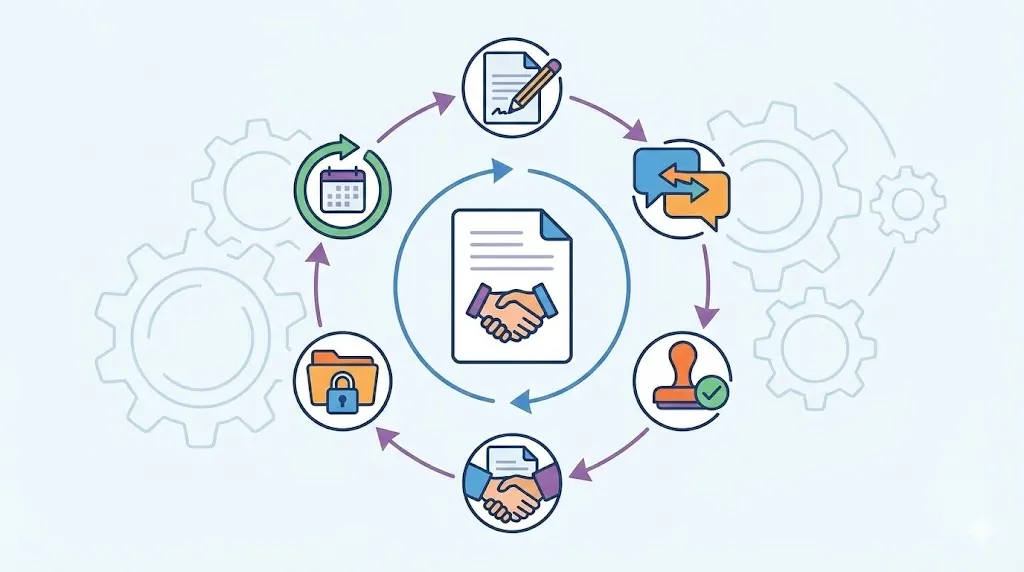
This guide serves as your strategic playbook. We will move beyond the outdated concept of filing contracts and embrace a dynamic, proactive approach. We will explore how to transition from reactive firefighting to a disciplined system of obligation management. You will learn how modern Enterprise CLM Software transforms static text into active data, ensuring that your organization never misses a deadline, a deliverable, or a renewal again. The goal is simple: ensure the business value negotiated is the business value realized.
The Risk of Hidden Data: The High Cost of "Filing"

To solve the obligation tracking crisis, we must first understand the anatomy of failure. Why do sophisticated enterprises, staffed by brilliant legal minds and diligent procurement leaders, still suffer from missed milestones and unintended auto-renewals? The answer rarely lies in competence. It lies in the structural limitations of traditional contract management.
The "Filing Cabinet" Fallacy and Information Silos
The most pervasive enemy of obligation tracking is the "filing cabinet" mentality. Whether physical or digital, a repository that acts merely as storage is a graveyard for data. In many organizations, contracts live in scattered shared drives, email inboxes, or local hard drives. This fragmentation creates a chaotic environment where the "single source of truth" does not exist.
When a contract resides in a static PDF on a shared drive, its obligations are dormant. A penalty clause for late delivery buried on page 45 does not alert the project manager. An exclusivity clause expiring in six months does not notify the sales director. These critical data points remain locked in "unstructured data" prisons. The legal team becomes the sole gatekeeper of this information, creating a bottleneck where highly paid attorneys spend hours answering basic questions about dates and deliverables instead of focusing on strategic risk.
The Fragility of Manual Tracking
In the absence of a dedicated system, most teams turn to the ubiquitous spreadsheet. While flexible, spreadsheets are fundamentally fragile. They rely entirely on human input. If a legal operations manager forgets to manually enter a renewal date, that date effectively ceases to exist until the vendor sends an invoice for a service you no longer need.
Furthermore, spreadsheets lack continuity. When a key employee leaves the company, they often take their institutional knowledge, and their personal tracking methods ,with them. We see this scenario play out repeatedly: a new General Counsel arrives and discovers that dozens of vendor contracts have auto-renewed simply because the reminder alert lived on a former employee’s desktop calendar. This manual approach is not scalable. As transaction volumes grow, the risk of human error moves from "possible" to "inevitable."
The Invisible Risk of Non-Compliance
Beyond missed renewals, the failure to track obligations creates substantial compliance risk. Complex service agreements often contain performance guarantees or regulatory reporting requirements. Missing a reporting deadline can trigger audits or fines. Failing to enforce a vendor’s insurance obligation exposes the company to third-party liability.
Without visibility, you are operating on faith. You assume the vendor is insured. You assume the deliverables met the acceptance criteria. You assume the price escalators were calculated correctly. Enterprise CLM Software eliminates this dangerous reliance on assumptions. It replaces "I think we are compliant" with "I know we are compliant." The lack of visibility into these obligations doesn't just annoy operations; it keeps General Counsels awake at night.
Related Article: 5 Steps to Stop Deal Delays From Draining Your Revenue
Turning Static Text into Active Business Data

The solution to the obligation tracking crisis is not to hire more administrators to update spreadsheets. The solution is structural transformation. We must deploy technology that turns the contract from a static document into an active participant in business operations. This requires a three-pillar strategy: Centralization, Automation, and Integration.
Pillar 1: Establishing the Single Source of Truth
The foundation of any successful obligation tracking strategy is the Centralized Contract Repository. You cannot track what you cannot find. A modern repository is more than a cloud drive; it is an intelligent vault. It aggregates every agreement, from NDAs to complex Master Service Agreements, into one secure, searchable ecosystem.
This centralization solves the immediate problem of visibility. However, the true power lies in AI-driven accessibility. Advanced CLM platforms utilize Optical Character Recognition (OCR) and Natural Language Processing (NLP) to index the contents of these documents. This means a user can search not just for a file name, but for specific concepts like "Force Majeure" or "Termination for Convenience" across thousands of legacy documents instantly.
By establishing a Centralized Contract Repository, you effectively turn the lights on. You gain immediate insight into the totality of your contractual landscape. You can assess aggregate risk exposure and identify every expiring contract in a specific region or currency. This is the bedrock upon which all other tracking strategies rest.
Pillar 2: Process Control via No-Code Workflows
Once your data is centralized, you must control the flow of new obligations entering the system. This is where No-Code Approval Workflows become critical. In traditional setups, the approval process is often a "black box" of emails. A contract might sit in a VP’s inbox for weeks, delaying the project start and compressing the delivery timeline, which in turn puts immediate pressure on obligation fulfillment.
No-Code Approval Workflows allow legal teams to design compliant routing logic without calling the IT department. You can configure the system to automatically route contracts based on value, region, or risk profile. For example, any contract above a certain value can trigger an automatic review by Finance and Compliance before it ever reaches a signatory.
Crucially, these workflows ensure that the people responsible for fulfilling the obligations have a say in the creation of the obligations. By routing a draft SOW to the delivery manager before signing, you ensure the deadlines are realistic. This alignment prevents the common sales-delivery gap, where sales teams promise timelines that operations teams cannot meet. The workflow enforces a "governance gate" that stops bad obligations from entering the system in the first place.
Pillar 3: Bridging the Gap with Integrated eSign
The most critical moment for obligation tracking is the moment of signature. In disjointed systems, a signed PDF must be downloaded from an e-signature provider and then manually re-uploaded to a repository. Data is often lost in this shuffle.
Integrated eSign closes this loop. By embedding the signature process directly within the CLM platform, you create a seamless transition from "pre-signature" negotiation to "post-signature" management. The moment the final signature is applied, the system effectively "starts the clock."
With Integrated eSign, the executed status automatically triggers the next set of actions. The system can immediately notify the onboarding team to commence work, alert the finance team to issue the purchase order, and activate the renewal countdown. There is no manual data entry required to switch the contract status from "Draft" to "Active." This eliminates the lag time between agreement and execution, ensuring that teams hit the ground running immediately upon execution.
Moving from Admin Support to Strategic Planning

As we look toward the horizon, the capabilities of Enterprise CLM Software are accelerating. We are moving from descriptive analytics (what happened?) to predictive analytics (what will happen?).
In the near future, AI will not just track hard dates; it will interpret soft signals. The system might analyze a vendor's performance across multiple contracts and warn you, "This vendor has been late on deliverables in 30% of recent engagements; consider adding stricter penalty clauses to the new draft."
We will also see tighter integration between the CLM and other enterprise systems like ERP and CRM. Enterprise CLM Software will become the central nervous system of commercial activity. When a delivery date is logged in the supply chain software, the CLM will automatically mark the obligation as fulfilled and trigger the payment clause in the finance system. This hyper-connected ecosystem will virtually eliminate manual reconciliation, creating a frictionless flow of value from negotiation to cash.
The future of obligation tracking is autonomous, predictive, and deeply integrated. Organizations that adopt these tools today are building the digital infrastructure that will define their competitive advantage tomorrow.
Conclusion
The era of the passive repository is over. In a business environment defined by speed and complexity, relying on manual memory or static spreadsheets is a liability no General Counsel can afford. The costs measured in missed renewals, regulatory fines, and eroded value are simply too high.
By implementing a strategy built on a Centralized Contract Repository, No-Code Approval Workflows, and Integrated eSign, you regain control of your commercial destiny. You transform your legal function from a cost center that "files papers" into a strategic partner that safeguards revenue.
The tools to secure this future are available now. It is time to stop running the race blindfolded. Gain the visibility you need to cross the finish line with confidence.
Ready to transform how your team manages obligations? Book a demo today to see Volody’s Integrated eSign and real-time dashboards in action.
About the Company

Volody AI CLM is an Agentic AI-powered Contract Lifecycle Management platform designed to eliminate manual contracting tasks, automate complex workflows, and deliver actionable insights. As a one-stop shop for all contract activities, it covers drafting, collaboration, negotiation, approvals, e-signature, compliance tracking, and renewals. Built with enterprise-grade security and no-code configuration, it meets the needs of the most complex global organizations. Volody AI CLM also includes AI-driven contract review and risk analysis, helping teams detect issues early and optimize terms. Trusted by Fortune 500 companies, high-growth startups, and government entities, it transforms contracts into strategic, data-driven business assets.





" height="216.72211px" id="FYO0bO80Y" transform="translate(3 6.105)" width="206.073px"/><path d="M 108.174 222 C 88.432 222 70.303 217.239 53.785 207.717 C 37.267 198.196 24.173 185.052 14.504 168.285 C 4.835 151.312 0 132.165 0 110.845 C 0 89.731 4.835 70.792 14.504 54.025 C 24.173 37.052 37.267 23.804 53.785 14.282 C 70.303 4.761 88.432 0 108.174 0 C 128.116 0 146.246 4.761 162.562 14.282 C 179.08 23.804 192.073 37.052 201.541 54.025 C 211.21 70.792 216.044 89.731 216.044 110.845 C 216.044 132.165 211.21 151.312 201.541 168.285 C 192.073 185.052 179.08 198.196 162.562 207.717 C 146.044 217.239 127.915 222 108.174 222 Z M 108.174 183.189 C 120.864 183.189 132.044 180.291 141.713 174.495 C 151.382 168.492 158.936 160.006 164.375 149.035 C 169.814 138.064 172.533 125.334 172.533 110.845 C 172.533 96.355 169.814 83.729 164.375 72.965 C 158.936 61.994 151.382 53.611 141.713 47.815 C 132.044 42.02 120.864 39.122 108.174 39.122 C 95.483 39.122 84.202 42.02 74.332 47.815 C 64.663 53.611 57.109 61.994 51.67 72.965 C 46.231 83.729 43.511 96.355 43.511 110.845 C 43.511 125.334 46.231 138.064 51.67 149.035 C 57.109 160.006 64.663 168.492 74.332 174.495 C 84.202 180.291 95.483 183.189 108.174 183.189 Z" fill="rgba(255, 255, 255, 0.12)" height="222px" id="aa1McFcE9" transform="translate(227.183 3)" width="216.04399999999998px"/><path d="M 42.302 182.257 L 111.799 182.257 L 111.799 216.722 L 0 216.722 L 0 0 L 42.302 0 Z" fill="rgba(255, 255, 255, 0.12)" height="216.72211px" id="yRq4AnrsX" transform="translate(477.721 6.105)" width="111.79899999999998px"/><path d="M 108.174 222 C 88.432 222 70.303 217.239 53.785 207.717 C 37.267 198.196 24.173 185.052 14.504 168.285 C 4.835 151.312 0 132.165 0 110.845 C 0 89.731 4.835 70.792 14.504 54.025 C 24.173 37.052 37.267 23.804 53.785 14.282 C 70.303 4.761 88.432 0 108.174 0 C 128.116 0 146.246 4.761 162.562 14.282 C 179.08 23.804 192.073 37.052 201.541 54.025 C 211.21 70.792 216.045 89.731 216.045 110.845 C 216.045 132.165 211.21 151.312 201.541 168.285 C 192.073 185.052 179.08 198.196 162.562 207.717 C 146.044 217.239 127.915 222 108.174 222 Z M 108.174 183.189 C 120.864 183.189 132.044 180.291 141.713 174.495 C 151.382 168.492 158.936 160.006 164.375 149.035 C 169.814 138.064 172.534 125.334 172.534 110.845 C 172.534 96.355 169.814 83.729 164.375 72.965 C 158.936 61.994 151.382 53.611 141.713 47.815 C 132.044 42.02 120.864 39.122 108.174 39.122 C 95.483 39.122 84.202 42.02 74.332 47.815 C 64.663 53.611 57.108 61.994 51.67 72.965 C 46.231 83.729 43.511 96.355 43.511 110.845 C 43.511 125.334 46.231 138.064 51.67 149.035 C 57.108 160.006 64.663 168.492 74.332 174.495 C 84.202 180.291 95.483 183.189 108.174 183.189 Z" fill="rgba(255, 255, 255, 0.12)" height="222px" id="mo8HQspQ0" transform="translate(609.155 3)" width="216.04500000000007px"/><path d="M 73.727 0 C 95.885 0 115.324 4.45 132.044 13.351 C 148.967 22.252 161.957 34.982 171.027 51.541 C 180.287 67.894 184.917 86.937 184.917 108.671 C 184.917 130.405 180.287 149.449 171.027 165.801 C 161.957 181.947 148.967 194.47 132.044 203.371 C 115.324 212.271 95.885 216.722 73.727 216.722 L 0 216.722 L 0 0 Z M 72.216 179.773 C 94.374 179.773 111.497 173.564 123.583 161.144 C 135.669 148.724 141.713 131.233 141.713 108.671 C 141.713 86.109 135.669 68.515 123.583 55.888 C 111.497 43.055 94.374 36.638 72.216 36.638 L 42.302 36.638 L 42.302 179.773 Z" fill="rgba(255, 255, 255, 0.12)" height="216.72211px" id="I3iXX5Hi_" transform="translate(859.693 6.105)" width="184.91699999999992px"/><path d="M 185.22 0 L 113.91 141.273 L 113.91 216.722 L 71.61 216.722 L 71.61 141.273 L 0 0 L 47.74 0 L 93.06 99.046 L 138.08 0 Z" fill="rgba(255, 255, 255, 0.12)" height="216.72211px" id="nzHyWC0_d" transform="translate(1061.78 6.105)" width="185.22000000000003px"/></svg>)