
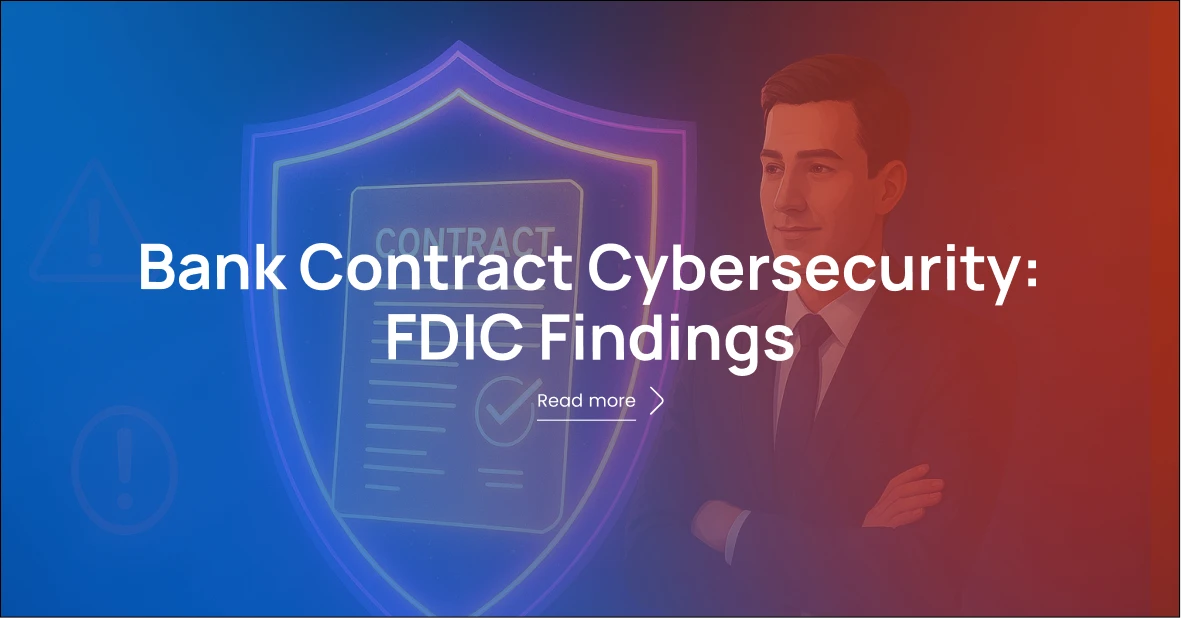
An FDIC review revealed a significant weakness in bank technology contracts: many agreements failed to establish adequate business continuity provisions. Security responsibilities alone are not enough. Contracts must also define recovery steps, testing requirements, reporting duties, and liability terms so banks can respond decisively when a vendor breach or service outage occurs.
TL;DR
An FDIC review found that many bank technology contracts lacked adequate business continuity provisions.
Additionally, banks also remain accountable for risks associated with vendors handling their systems or customer information.
Strong contracts should, at minimum, spell out security responsibilities; define incident-response procedures and recovery targets; and establish audit rights along with vendor reporting requirements.
During contract reviews, legal provisions need to be checked against the organization’s security policies, resilience plans, and vendor-oversight practices.
Teams need a repeatable review process to uncover gaps in both new agreements and legacy contracts.
CLM software can extract contractual terms, flag risks, support approval workflows, and track vendor obligations.
Why the FDIC Report Matters
The FDIC’s review examined contracts governing technology services at financial institutions. Additionally, the review covered 48 agreements across 19 institutions. Only half of the agreements included the business continuity provisions the review expected.
That result reflects a contract control problem, not merely a drafting problem. Even banks with strong security policies, skilled teams, and tested recovery plans may find those controls of little use when a vendor agreement does not obligate the vendor to support them.
Technology service providers often support core banking systems, payment tools, cloud platforms, and customer channels. Some also store customer data or connect to internal networks. A disruption at one provider can affect many bank services at once.
The report focused on business continuity, which means keeping critical services running during a disruption. It also covered incident response and service recovery. The link to cybersecurity is direct: attacks often trigger outages, data loss, or system lockouts.
A well-drafted contract turns a bank’s expectations into duties that both parties can follow. Beyond stating those duties, it must give the bank practical rights when the vendor fails to meet them. During a crisis, phrases such as “maintain reasonable security” may provide too little direction.
What the review found
Across the sample, the FDIC identified gaps in terms related to continuity and recovery. Some contracts lacked required provisions. In other agreements, the language was broad enough to leave the vendor’s method of fulfilling those duties unspecified.
For instance, the agreement could require the vendor to maintain a continuity plan. It might not, however, require the vendor to test that plan annually. It may also omit recovery time targets, backup standards, or notice duties after a failed test.
The report also raised concerns about ongoing risk management. That profile can shift after a system upgrade, merger, subcontractor change, or new cyber threat. Rather than treating review as a one time exercise, the agreement should require it on an ongoing basis.
The FDIC Office of Inspector General examined how institutions managed technology service provider risks through contracts and oversight. The sample was limited, but it showed a pattern that other banks can recognize.
Why general security language falls short
General language creates room for disagreement. Following an incident, the bank may expect rapid notice. The vendor, however, may believe notice can wait until it confirms the event. As a result, both sides may read the same clause and follow different processes.
The same issue can affect recovery. Restoration of a critical application may be required within four hours. The contract may only say that the vendor will restore services “promptly.” That word offers little help during an active outage.
Contracts also need to address evidence. A vendor may claim that it tested its recovery plan. The bank may instead need test results, action plans, and evidence that findings have been closed. Without an express reporting duty, that evidence may not be available to management, examiners, or auditors.
The FDIC finding matters in part because contract language is itself part of the institution’s risk control system. Weak terms, in turn, can undermine the bank’s broader security program. These terms therefore require coordinated review by legal, procurement, information security, and operations teams.
Related reading: What is Contract Risk & How to manage it?
How Bank Contracts Create Cybersecurity Exposure
A bank can face risk before a cyberattack occurs. Additionally, risk can begin when a team selects a vendor without reviewing its access, data use, recovery model, or subcontractors. Those risks increase if the contract fails to control them.
The board and senior management retain responsibility for decisions about the bank’s risk. Using a technology provider does not transfer that responsibility. The bank remains responsible for overseeing the relationship, even when the provider performs the service.
The FDIC’s guidance on managing third party risk says that accountability for third-party activities and related risks rests with the board and senior management. That principle makes contract terms an important governance tool.
Missing incident response duties
A contract needs to set out the response to a suspected security event. It needs to specify when notice is due, how it must be delivered, what it must contain, and how often updates are required. The agreement must also assign leadership for each component of the response.
An effective incident clause addresses practical questions:
How quickly must the vendor notify the bank?
Moreover, does the obligation extend to suspected incidents?
Must the vendor preserve logs and other evidence?
May the bank investigate the vendor’s systems?
Who will communicate with customers, regulators, and law enforcement?
How will the parties coordinate public statements?
The bank should receive notice before the vendor completes its investigation. Early notice gives the bank time to protect customers, isolate systems, and meet legal duties.
Weak recovery and continuity terms
Recovery clauses should use measurable targets. The recovery time objective defines the longest permitted interval for restoring a service. The recovery point objective defines the maximum data loss the bank can sustain after an event.
These terms should match the service’s business impact. Furthermore, a public information page may tolerate a longer outage than a payment processing system. That distinction belongs in the contract.
Banks should also review:
Backup frequency and storage locations
Recovery testing schedules
Alternate processing sites
Staff and resource requirements
Dependencies on other vendors
Recovery access during a vendor dispute
Data return and deletion after termination
A vendor may depend on another cloud or software provider. That dependency must be visible to the bank. The bank must determine whether the main vendor can enforce the same recovery duties downstream.
Unclear audit and testing rights
A bank needs enough access to assess vendor controls. Audit rights can be so heavily restricted that they have little value. For example, the vendor may limit audits to one short visit each year.
Several sources of evidence should be available under the contract. These may include independent audit reports, penetration test summaries, control questionnaires, recovery test results, and remediation updates. The agreement should allow the bank to ask follow-up questions.
The Federal Financial Institutions Examination Council provides financial institutions with a framework for assessing technology and risks arising from third-party relationships. Also, its guidance supports risk based oversight, which means banks should apply more review to higher impact providers.
Audit rights should also address cost and timing. The parties should define who pays for special reviews after an incident. The parties should also specify the vendor’s response time for urgent requests. Clear terms reduce conflict when timely access to facts is critical.
Liability and indemnity gaps
A vendor’s liability may be capped below the costs of a major breach, outage, investigation, or customer response. Banks should review whether the cap applies to security events, privacy violations, and gross negligence.
Indemnity language also needs care. Indemnity means one party agrees to cover certain losses suffered by the other party. Nor does it automatically cover every loss linked to a cyberattack.
Legal teams should assess whether the agreement covers:
Costs from unauthorized data disclosure
Regulatory investigations and penalties, where allowed
Customer notification and credit monitoring
Forensic investigation costs
Service restoration expenses
Claims tied to vendor subcontractors
Intellectual property claims involving vendor tools
Insurance can support these protections, but it does not replace clear contract duties. Evidence of suitable coverage should be requested, along with a review of the applicable notice requirements. The bank must verify that the policy covers the services provided by the vendor.
Related Articles : Drafting Data Breach Notification Clauses That Protect
What Bank Legal and Risk Teams Should Review
Banks need a repeatable contract review process. Additionally, a one-time campaign can find old gaps, but it will not control new agreements. Teams should build security and continuity checks into intake, drafting, negotiation, approval, and renewal.
Start with a complete vendor contract inventory. Include master agreements, order forms, statements of work, schedules, amendments, and security addenda. A key duty may sit in another document rather than the main agreement.
Build a risk based contract inventory
Classify vendors according to service importance and access. The level of scrutiny should be higher for payment support than for office software supply. Customer-data access is another reason to apply focused scrutiny to a vendor.
Useful inventory fields include:
Vendor name and business owner
Services and supported processes
Data handled
System access and connection type
Criticality rating
Contract start and renewal dates
Subcontractor details
Security exhibit location
Recovery targets
Insurance requirements
Termination assistance duties
The inventory should include signed and unsigned records. Where several documents conflict, the inventory should identify the governing agreement. That distinction may determine whether the security schedule applies in practice.
Compare terms against a defined playbook
Use the playbook to distinguish required positions from preferred terms and unacceptable concessions. Those requirements should reflect the bank’s policies and the service’s risk rating. It should name the authority responsible for approving exceptions.
A well-designed playbook can cover:
Security control duties
Incident notice timing
Cooperation during investigations
Recovery time and data loss targets
Testing and reporting
Audit and information rights
Subcontractor controls
Data location and transfer rules
Insurance and liability
Exit support and data deletion
Include fallback language in the playbook. Vendors may reject a specific notice period or audit format. Furthermore, legal teams therefore need approved alternatives that preserve the same protections.
Link contracts to operational plans
Terms are useful only if the bank can meet them operationally. Where a contract requires a joint incident exercise each quarter, the bank needs staff and a process for that exercise. Each vendor report needs an assigned reviewer and a designated storage location.
Map vendor clauses to incident response plans. Operations teams should align recovery targets with continuity plans. Procurement should obtain business-owner confirmation that the service requirements are accepted.
Joint review of these functions can expose practical gaps. Also, the bank may require a four hour recovery time but lack a backup provider. It may require immediate notice but provide no emergency contact process. Good drafting should lead to workable controls.
Manage exceptions with discipline
Some vendors will not accept every requested term. Also, that does not mean the bank should accept an informal compromise. The business owner should document the gap, explain the reason, and identify compensating controls.
An exception record should state:
The missing or changed protection
The affected service and data
The business reason
The risk owner
The approval level
The end date
The planned fix
Any temporary control
Set an expiration date for each exception. A permanent exception can hide a growing risk. Review open exceptions during vendor meetings, risk committees, and contract renewals.
Track duties after signature
A signed contract does not prove compliance. Therefore, banks should track vendor reports, recovery tests, insurance renewals, audit responses, and incident contacts. They should also track notice dates and remediation deadlines.
The National Institute of Standards and Technology describes incident response activities that help organizations prepare, detect, analyze, contain, recover, and improve. Therefore, contract duties should support those activities instead of sitting apart from them.
Set reminders before key dates. Ask vendors to provide evidence before a review meeting. Record findings and assign owners. Route overdue actions through a defined governance path.
Review legacy agreements
Older contracts often represent the greatest blind spot. Consequently, the population may include hundreds of vendor agreements that predate the current security rules. This population commonly includes scanned documents and inconsistent amendments.
A legacy review can follow this sequence:
Gather all contract files and related exhibits.
Convert any scanned files into searchable text.
Identify the key parties, dates, services, and duties.
Assess the terms against the current playbook.
Prioritize gaps according to service risk.
Obtain amendments from priority vendors.
Document any exceptions the parties accept.
Then track the resulting duties.
Not every gap warrants the same response. Focus first on vendors with critical services, sensitive data, broad access, or weak recovery evidence. This approach helps teams use limited legal and security resources wisely.
Related articles: How Tech Firms Can Use Contracts to Cut Risk in 2026
How Regulators May View Vendor Contract Gaps
Regulators may ask how a bank identifies, measures, and controls vendor risk. Additionally, they may also review board reporting, due diligence files, monitoring records, and contract terms. A signed agreement alone will not answer those questions.
The Office of the Comptroller of the Currency, Federal Reserve, and FDIC issued third party risk management guidance in 2023. It sets out risk management expectations for planning, due diligence, contract negotiation, monitoring, and termination.
Evidence matters as much as language
The bank should be able to document how it reached a vendor decision. Post-signature monitoring should be documented as well. Records should tie the risk rating to the contract terms and the frequency of review.
Useful evidence includes:
Completed due diligence reviews
Approved risk assessments
Contract review checklists
Negotiation records
Exception approvals
Security reports
Recovery test results
Incident records
Vendor meeting notes
Remediation tracking
Renewal decisions
These records help management see whether controls work. They also help legal and risk teams respond to examiner questions without rebuilding the history from email.
Board and senior management oversight
Senior leaders need clear reporting on material vendors. Reports should explain service criticality, open findings, overdue actions, and major contract exceptions. They should avoid long lists that hide the issues needing decisions.
A useful report might show:
Critical vendors without current recovery evidence
Contracts missing incident notice terms
High risk exceptions nearing expiration
Vendors with repeated remediation delays
Agreements awaiting security amendments
Services that depend on one provider
The report should connect contract gaps to business effects. The significance of a missing audit right increases when the vendor handles payment data. A weak recovery clause carries greater weight when the service supports customer access.
What happens after a vendor incident
During the response, the contract should be a working resource rather than something the bank searches for afterward. The response team needs fast access to notice duties, contacts, evidence rights, service targets, and escalation rules.
Once the event is over, assess the vendor's compliance with its obligations. Compare actual notice time against the contractual requirement. Determine whether the vendor provided useful facts, preserved evidence, and restored service within the agreed target.
Then update the contract and process. The response may expose unclear roles, unrealistic targets, or poor contact data. Those findings belong in control improvements, rather than being treated solely as claims issues.
Related articles: Force Majeure Clause: How Does It Work in Contracts?
A Practical Bank Contract Cybersecurity Checklist
When reviewing new vendors or renewing existing agreements, use this checklist. Additionally, adapt it to the service, the data at issue, and the risk that service presents. Once completed, the checklist should be reviewed by the business, legal, security, procurement, and operations owners.
Before drafting or renewal
Identify the services and business processes involved.
Rate the service’s operational and customer impact.
List all data the vendor will access, store, or transmit.
Document system access paths and dependencies on subcontractors.
Confirm that the vendor can furnish up-to-date evidence of its security and recovery capabilities.
Examine the vendor’s history of incidents and audit findings, along with any remediation items that remain open.
Moreover, bring the controlling contract and all related documents together.
During contract review
Define security standards by specifying requirements that can be measured clearly.
Require the agreement to address notifications for suspected incidents, not only confirmed ones.
Specify both the notification deadlines and the information each notice must contain.
Require the vendor to cooperate fully with investigations and requests from regulatory authorities.
Establish recovery time and recovery point targets.
Make regular continuity and recovery tests a contractual obligation.
Spell out backup, restoration, and access procedures.
Furthermore, give the bank rights to audit, obtain reports, and review supporting evidence.
Limit subcontractor use and require key duties to flow down to them.
Address where data may reside, how it may be transferred, and the requirements for its return and deletion.
Treat insurance, liability caps, and indemnities as interdependent protections when evaluating them.
Support during termination and transition should be addressed in the agreement as well.
After signature
Keep the executed agreement and its exhibits together in one repository.
Designate an owner for every key vendor obligation.
Use alerts to track deadlines for testing, reporting, renewal, and insurance.
Also, determine how often vendor evidence must be reviewed based on risk.
Maintain a documented record of issues, responsible owners, deadlines, and escalation steps.
Test the emergency contacts and response procedures themselves, rather than simply verifying that they exist.
Require a new vendor assessment after any major system or service change.
Revisit the contract whenever changes occur in the risks, applicable laws, or services.
Questions for a contract review meeting
Use direct questions to expose gaps. Ask who will act, what evidence will arrive, and what happens should the vendor fail.
If this vendor went offline, which service would stop?
Therefore, how long could the bank continue operating without it?
Which categories of data would be at risk of exposure or loss at the vendor?
How will the vendor notify the bank after a suspected attack?
What evidence demonstrates that recovery testing is effective?
Does the bank have the right to review evidence after a serious incident?
Which subcontractors support the service?
How would the bank proceed if it had to move the service elsewhere?
Who approves a contract exception?
When will the team review the next risk assessment?
These questions turn abstract concerns into assigned actions. They also create a record that supports consistent decisions across business units.
Related articles: 10 Crucial Legal Issues Every SaaS Company Must Address
How CLM Software Solves This
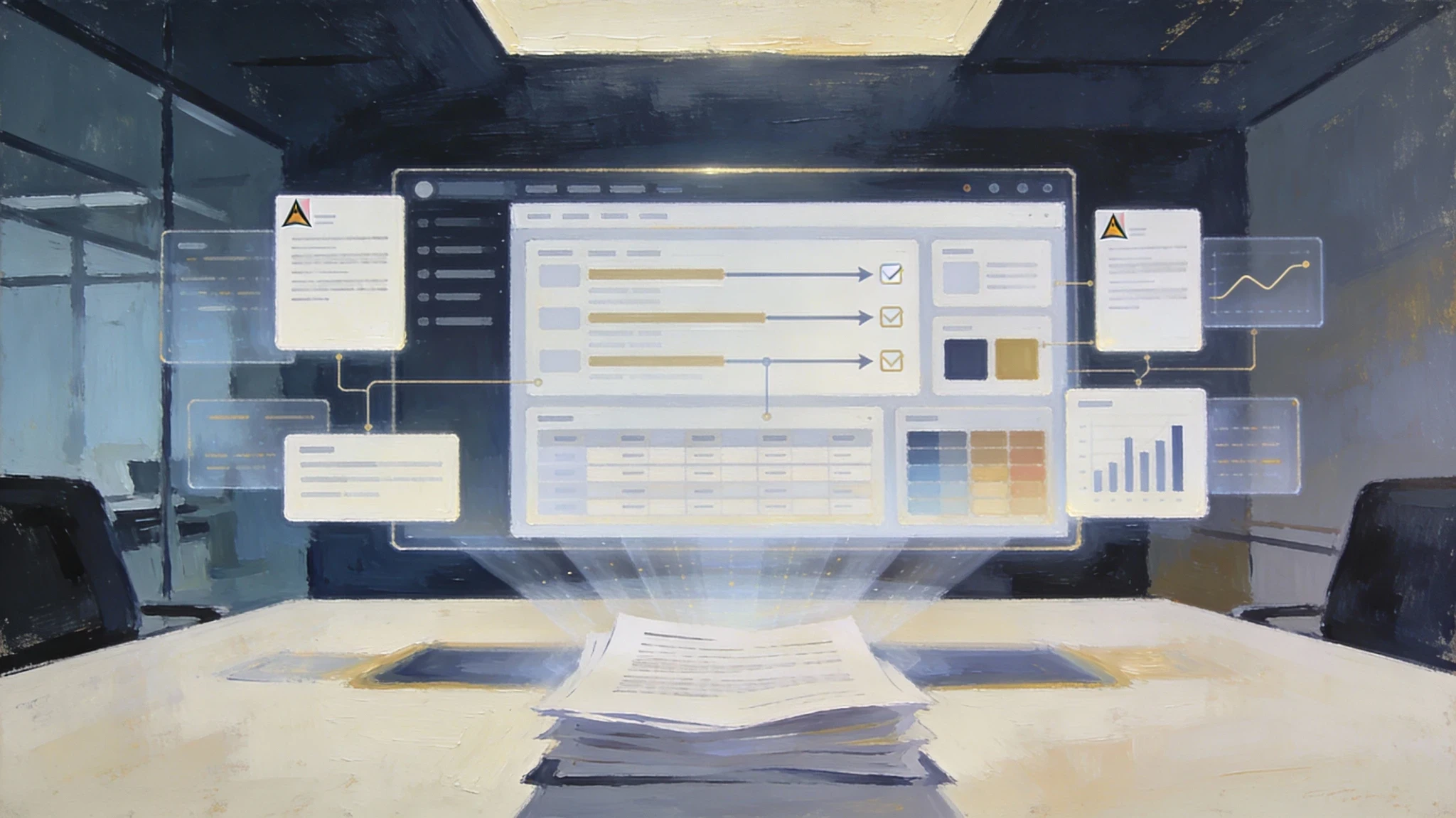
Generic contract management software can centralize agreements, extract key terms, compare clauses, route approvals, and track obligations. Additionally, it can send alerts for renewals, recovery tests, insurance dates, and vendor reports. Volody adds AI contract review, metadata extraction, risk analysis, playbooks, audit trails, role based access, and searchable storage for legacy agreements.
Looking for a better way to manage contracts? Discover Volody's CLM Software.
FAQ
What did the FDIC review find about bank technology contracts?
Additionally, the review examined 48 contracts from 19 financial institutions. Only half included the business continuity provisions expected by the review, while other contracts used incomplete language.
Why do cybersecurity duties belong in vendor contracts?
Contracts establish enforceable duties between financial institutions and their technology providers. They can define notice, recovery, testing, audit access, data handling, and vendor cooperation during an incident.
Can a bank transfer cybersecurity responsibility to a vendor?
No. Moreover, a vendor can perform security and continuity tasks, but the bank remains responsible for managing its third party risks. Senior leaders must oversee those relationships and approve material exceptions.
What should an incident notice clause include?
It should specify when the vendor must notify the bank and the method for delivering that notice. It should also require updates, evidence preservation, investigation support, and coordination with regulators and affected customers.
What are recovery time and recovery point objectives?
Furthermore, a recovery time objective defines how quickly a service should return after an outage. A recovery point objective defines the amount of data loss the bank can accept.
How often should banks review vendor contracts?
Banks should review contracts before signing, during renewals, and after major service or system changes. High risk vendors may need more frequent reviews based on their access and business impact.
What should banks do with legacy vendor agreements?
Also, banks should collect all documents, convert scanned files into searchable text, and compare terms against a current review playbook. Also, they should then prioritize amendments for vendors that support critical services or sensitive data.
Does a contract audit right guarantee effective oversight?
No. The right must provide practical access to reports, test results, records, and follow up answers. The bank also needs staff who review the evidence and track remediation.
How can legal and security teams work together on vendor contracts?
Strengthen vendor oversight by aligning legal, security, procurement, and operations teams around measurable contract duties, documented evidence, and disciplined exception management.
About the Company

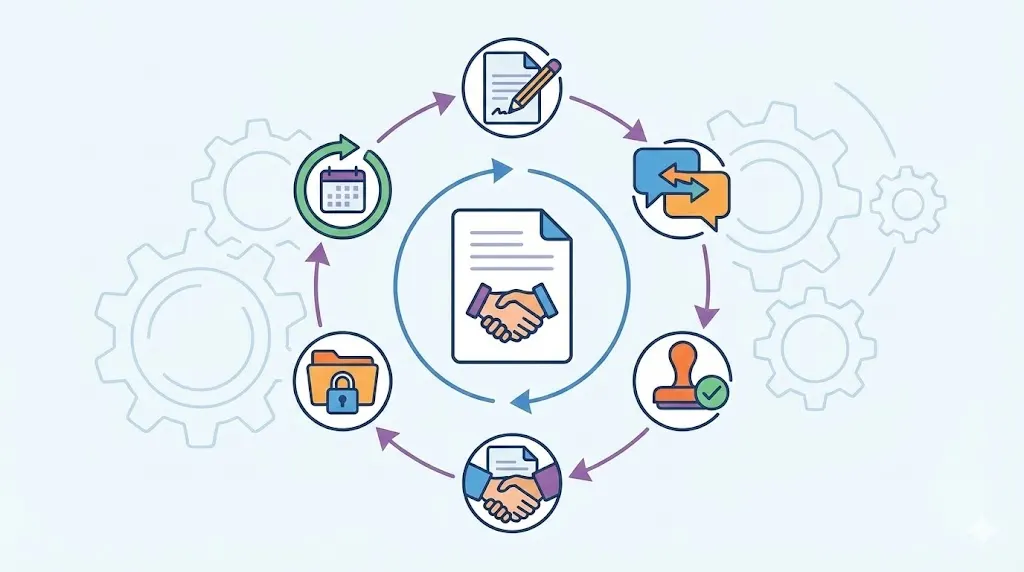
Volody AI CLM is an Agentic AI-powered Contract Lifecycle Management platform designed to eliminate manual contracting tasks, automate complex workflows, and deliver actionable insights. As a one-stop shop for all contract activities, it covers drafting, collaboration, negotiation, approvals, e-signature, compliance tracking, and renewals. Built with enterprise-grade security and no-code configuration, it meets the needs of the most complex global organizations. Volody AI CLM also includes AI-driven contract review and risk analysis, helping teams detect issues early and optimize terms. Trusted by Fortune 500 companies, high-growth startups, and government entities, it transforms contracts into strategic, data-driven business assets.



" height="216.72211px" id="FYO0bO80Y" transform="translate(3 6.105)" width="206.073px"/><path d="M 108.174 222 C 88.432 222 70.303 217.239 53.785 207.717 C 37.267 198.196 24.173 185.052 14.504 168.285 C 4.835 151.312 0 132.165 0 110.845 C 0 89.731 4.835 70.792 14.504 54.025 C 24.173 37.052 37.267 23.804 53.785 14.282 C 70.303 4.761 88.432 0 108.174 0 C 128.116 0 146.246 4.761 162.562 14.282 C 179.08 23.804 192.073 37.052 201.541 54.025 C 211.21 70.792 216.044 89.731 216.044 110.845 C 216.044 132.165 211.21 151.312 201.541 168.285 C 192.073 185.052 179.08 198.196 162.562 207.717 C 146.044 217.239 127.915 222 108.174 222 Z M 108.174 183.189 C 120.864 183.189 132.044 180.291 141.713 174.495 C 151.382 168.492 158.936 160.006 164.375 149.035 C 169.814 138.064 172.533 125.334 172.533 110.845 C 172.533 96.355 169.814 83.729 164.375 72.965 C 158.936 61.994 151.382 53.611 141.713 47.815 C 132.044 42.02 120.864 39.122 108.174 39.122 C 95.483 39.122 84.202 42.02 74.332 47.815 C 64.663 53.611 57.109 61.994 51.67 72.965 C 46.231 83.729 43.511 96.355 43.511 110.845 C 43.511 125.334 46.231 138.064 51.67 149.035 C 57.109 160.006 64.663 168.492 74.332 174.495 C 84.202 180.291 95.483 183.189 108.174 183.189 Z" fill="rgba(255, 255, 255, 0.12)" height="222px" id="aa1McFcE9" transform="translate(227.183 3)" width="216.04399999999998px"/><path d="M 42.302 182.257 L 111.799 182.257 L 111.799 216.722 L 0 216.722 L 0 0 L 42.302 0 Z" fill="rgba(255, 255, 255, 0.12)" height="216.72211px" id="yRq4AnrsX" transform="translate(477.721 6.105)" width="111.79899999999998px"/><path d="M 108.174 222 C 88.432 222 70.303 217.239 53.785 207.717 C 37.267 198.196 24.173 185.052 14.504 168.285 C 4.835 151.312 0 132.165 0 110.845 C 0 89.731 4.835 70.792 14.504 54.025 C 24.173 37.052 37.267 23.804 53.785 14.282 C 70.303 4.761 88.432 0 108.174 0 C 128.116 0 146.246 4.761 162.562 14.282 C 179.08 23.804 192.073 37.052 201.541 54.025 C 211.21 70.792 216.045 89.731 216.045 110.845 C 216.045 132.165 211.21 151.312 201.541 168.285 C 192.073 185.052 179.08 198.196 162.562 207.717 C 146.044 217.239 127.915 222 108.174 222 Z M 108.174 183.189 C 120.864 183.189 132.044 180.291 141.713 174.495 C 151.382 168.492 158.936 160.006 164.375 149.035 C 169.814 138.064 172.534 125.334 172.534 110.845 C 172.534 96.355 169.814 83.729 164.375 72.965 C 158.936 61.994 151.382 53.611 141.713 47.815 C 132.044 42.02 120.864 39.122 108.174 39.122 C 95.483 39.122 84.202 42.02 74.332 47.815 C 64.663 53.611 57.108 61.994 51.67 72.965 C 46.231 83.729 43.511 96.355 43.511 110.845 C 43.511 125.334 46.231 138.064 51.67 149.035 C 57.108 160.006 64.663 168.492 74.332 174.495 C 84.202 180.291 95.483 183.189 108.174 183.189 Z" fill="rgba(255, 255, 255, 0.12)" height="222px" id="mo8HQspQ0" transform="translate(609.155 3)" width="216.04500000000007px"/><path d="M 73.727 0 C 95.885 0 115.324 4.45 132.044 13.351 C 148.967 22.252 161.957 34.982 171.027 51.541 C 180.287 67.894 184.917 86.937 184.917 108.671 C 184.917 130.405 180.287 149.449 171.027 165.801 C 161.957 181.947 148.967 194.47 132.044 203.371 C 115.324 212.271 95.885 216.722 73.727 216.722 L 0 216.722 L 0 0 Z M 72.216 179.773 C 94.374 179.773 111.497 173.564 123.583 161.144 C 135.669 148.724 141.713 131.233 141.713 108.671 C 141.713 86.109 135.669 68.515 123.583 55.888 C 111.497 43.055 94.374 36.638 72.216 36.638 L 42.302 36.638 L 42.302 179.773 Z" fill="rgba(255, 255, 255, 0.12)" height="216.72211px" id="I3iXX5Hi_" transform="translate(859.693 6.105)" width="184.91699999999992px"/><path d="M 185.22 0 L 113.91 141.273 L 113.91 216.722 L 71.61 216.722 L 71.61 141.273 L 0 0 L 47.74 0 L 93.06 99.046 L 138.08 0 Z" fill="rgba(255, 255, 255, 0.12)" height="216.72211px" id="nzHyWC0_d" transform="translate(1061.78 6.105)" width="185.22000000000003px"/></svg>)