

Confidentiality agreements protect sensitive business information. When these agreements are broken, the fallout can be severe. Imagine a trusted employee accidentally sharing a client list with a competitor. This breach can trigger lawsuits, financial loss, and damage to reputations. Understanding what happens when confidentiality agreements are breached helps legal and business leaders manage risks and respond effectively.
TL;DR
Breaching confidentiality agreements involves revealing or misappropriating private information that the parties have contractually agreed to safeguard.
Additionally, both inadvertent and deliberate disclosures constitute breaches and may result in legal consequences.
These agreements specify the scope of protected information, the obligated parties, and the duration of confidentiality.
Examples of typical breaches encompass the unauthorized disclosure of trade secrets, misuse of proprietary data, and sharing with unauthorized external entities.
Handling breaches involves quick containment, legal review, and deciding between litigation or settlement.
Contract management software helps monitor, enforce, and reduce confidentiality risks efficiently.
What Is a Breach of a Confidentiality Agreement?
A breach of a confidentiality agreement occurs when someone reveals or misuses information they promised to keep secret. These agreements, often called non-disclosure agreements (NDAs), create a legal obligation to protect sensitive details. When that obligation is broken, the responsible party can face serious consequences.
Confidentiality agreements are common in business. They protect trade secrets, customer data, financial information, and strategic plans. For example, a software company might require employees and partners to sign NDAs to prevent sharing code or product roadmaps. If someone leaks this information, it can cause competitive harm and legal action.
Breaches happen in two main ways:
Unauthorized Disclosure: Sharing confidential information with people who should not see it.
Unauthorized Use: Using the information for purposes outside the agreement, even if not shared.
Both intentional leaks and accidental slips count as breaches. For instance, an employee who mistakenly sends a confidential email to the wrong contact still violates the agreement. Courts generally hold parties accountable for negligence in protecting confidential information.
The stakes are high. According to a report by the Ponemon Institute, companies lose billions annually due to data breaches and information leaks. Confidentiality breaches can lead to lawsuits, fines, lost business, and damaged trust. In some cases, criminal charges apply if the breach involves theft or espionage.
Related articles: Clickwrap Agreements 101: Are they enforceable?
What Do Confidentiality Agreements Typically Cover?
Confidentiality agreements define which information must remain confidential and establish the protocols for its management. While the exact terms vary, most agreements include these key parts:
Definition of Confidential Information: This section lists what counts as secret. It often includes trade secrets, customer lists, pricing models, financial data, and technical information. The agreement also clarifies what is not confidential, such as public knowledge or independently developed data.
Obligations of the Receiving Party: The person receiving confidential information agrees not to disclose it and to take reasonable steps to protect it. This includes limiting access to authorized personnel only.
Permitted Disclosures: Sometimes, sharing is allowed in specific situations. For example, if a court orders disclosure or if advisors bound by confidentiality need to know.
Unilateral vs. Mutual Terms: Certain agreements restrict confidentiality obligations to a single party's information. Conversely, mutual agreements impose equivalent confidentiality duties on both parties.
Term and Survival: This clause specifies the duration of confidentiality obligations. Some agreements have a fixed term of a few years; others provide for indefinite protection, particularly regarding trade secrets.
Remedies for Breach: This portion outlines the consequences of violating the agreement. Possible remedies include monetary damages, injunctions to prevent further disclosures, or other legal actions.
Clear and precise language in these sections matters. Vague definitions make it harder to prove a breach. For example, saying “all information” is confidential without specifics can lead to disputes. Well-drafted agreements clearly delineate the scope of protected information and the associated handling requirements.
Related articles: What is a Contract? Definition, Importance and Key Terms
What Counts as a Breach of Confidentiality?
A breach happens whenever confidential information is shared or used improperly. This includes:
Sharing with Unauthorized People: Examples are sending confidential emails to unintended recipients, posting sensitive data on publicly accessible forums, or revealing secrets to external parties.
Using Information Outside the Agreement: Consider the misuse of a client list acquired under an NDA for soliciting business in direct competition.
Failing to Protect Information: Incidents like losing a laptop containing confidential files or incorrectly setting cloud storage permissions that expose sensitive data are breaches.
Accidental Disclosures: Copying confidential contract terms into AI tools or company-wide chat channels without realizing the risk.
Employee Departures: When employees take confidential documents or data after leaving a company, it can be a breach if the agreement prohibits that.
Both deliberate and accidental breaches carry consequences. Courts do not usually excuse accidental leaks, especially if the party failed to take reasonable care. For example, accidentally forwarding a confidential email to a competitor can result in liability.
In practice, many breaches arise from negligence rather than intentional wrongdoing. Illustrative cases include a sales representative disclosing pricing strategies on social media, a contractor uploading confidential documents to a publicly accessible cloud folder, and a vendor exploiting client information to market competing services.
These scenarios highlight the need for clear policies and employee training on confidentiality.
Related articles: NDA and Confidentiality Agreement : The Ultimate Guide
What Happens When a Confidentiality Agreement Is Breached?
A breach of a confidentiality agreement can lead to multiple consequences, which vary significantly based on the specific circumstances of the violation. Common outcomes include:
Legal Action: The injured party may initiate litigation seeking damages.
Injunctions: Judicial authorities may compel the offending party to cease any further disclosure or exploitation of the confidential material.
Contract Termination: The party not at fault has the option to dissolve the contractual relationship.
Employment Consequences: Disciplinary measures, up to and including dismissal, can be imposed on employees responsible for confidentiality violations.
Reputational Damage: Such breaches undermine confidence among clients, collaborators, and the broader market. This erosion of trust can result in enduring adverse business implications.
Criminal Charges: Although infrequent, certain breaches involving theft or espionage may result in criminal prosecution.
Moreover, courts have the authority to award financial restitution for losses directly resulting from the violation.
The severity depends on the nature of the information, the harm caused, and the intent behind the violation. For example, leaking a minor internal memo may cause limited damage. But exposing trade secrets to competitors can destroy a company’s competitive edge.
Financial penalties can be substantial. According to a report by the Association of Corporate Counsel, data breaches and confidentiality violations cost companies millions in legal fees, settlements, and lost business. These factors highlight the critical need for robust measures to prevent confidentiality breaches.
Related articles: What is Contract Termination? Key Concepts Explained in 2026
How Are Confidentiality Breaches Handled in Practice?
When a breach is suspected, organizations must act swiftly and methodically. Here is a typical process:
Contain the Breach: Immediately revoke access to the confidential information, such as disabling compromised user accounts or updating authentication credentials.
Preserve Evidence: Gather all relevant communications, system logs, and documentation essential for a comprehensive investigation.The collected materials are crucial for delineating the incident in detail and underpinning any subsequent legal proceedings.
Review the Agreement: Conduct an in-depth examination of the confidentiality agreement to identify available remedies and clarify the responsibilities of each party.
Notify Legal Counsel: Retain legal experts early to guide the response plan and assess potential exposures.
Inform Stakeholders: Reach out to principal internal leaders and, when relevant, external parties such as clients or regulatory authorities.
Evaluate Next Steps: Consider alternatives including litigation, settlement discussions, or other dispute resolution methods informed by the investigative outcomes.
Implement Preventive Measures: Conduct a comprehensive review of existing policies, reinforce staff training programs, and enhance security protocols to mitigate the risk of recurrence.
Moreover, this approach balances quick damage control with legal strategy. Containment limits further harm. Preserving evidence supports enforcement. Legal review ensures the response fits the contract terms.
Organizations often face challenges during breach investigations. Employees may refuse to acknowledge responsibility, or the extent of the compromise may be difficult to determine. A thorough and documented process helps clarify facts and protect the company’s interests.
Related articles: Contract Management Security: Risks, Mistakes and Solutions
Common Defenses Against Confidentiality Breach Claims
If accused of breaching a confidentiality agreement, several defenses may apply:
Information Was Not Confidential: The defendant may contend that the data was already publicly available or independently created.
No Unauthorized Disclosure: The defendant asserts that any sharing of information occurred solely with parties explicitly permitted by the agreement or within its defined scope.
Agreement Was Invalid: The confidentiality agreement may be challenged due to procedural flaws in its formation or because it lacks enforceable terms.
Consent: The party entitled to confidentiality explicitly or implicitly authorized the use or sharing of the information.
Lack of Harm: No demonstrable damage or loss resulted from the alleged breach.
Accidental or Unintentional: The breach was a mistake without negligence, though this defense is weaker in many cases.
Legal teams analyze these defenses carefully. Strong contract language and clear evidence of breach reduce the chances of successful defenses. Conversely, vague or poorly drafted agreements create openings for defendants.
Related articles: Aligning Legal Ops with General Counsel to Reduce Cost Risks
Are Confidentiality Agreements Legally Binding and What Are Their Limits?
Confidentiality agreements constitute legally enforceable contracts. Additionally, provided these agreements satisfy the essential elements of contract formation - offer, acceptance, consideration, and specificity, they are typically upheld by courts.
However, their enforceability depends on:
Clarity of Terms: Judicial bodies frequently decline to enforce confidentiality clauses that characterize confidential information in ambiguous or overly expansive language.
Reasonableness: The judicial review focuses on whether the imposed restrictions are appropriately limited in scope and duration, invalidating provisions that create unwarranted or indefinite constraints.
Public Policy: Statutory obligations can supersede confidentiality agreements, mandating disclosure in specific contexts such as whistleblower protections or regulatory oversight.
Jurisdiction: The interpretation and enforceability of these agreements vary considerably depending on differing statutory frameworks and case law precedents across jurisdictions.
For example, a confidentiality clause in an employment contract must balance protecting company secrets with allowing employees to work in their field after leaving. Overly restrictive clauses may be struck down as unfair.
Courts also consider whether parties took reasonable steps to protect the information. If a company fails to secure its secrets properly, enforcement may be weaker.
Related articles: Importance of Confidentiality Clause: Your Ultimate Guide
5 Examples of Confidentiality Breaches in Business
Employee Sharing Client Data: An employee sends a client list to their personal email account shortly before leaving the firm.
Vendor Misusing Information: A vendor deliberately uses confidential pricing data to undercut the client's competitors.
Accidental Public Disclosure: Financial forecasts become publicly accessible after the marketing team uploads them to an external website by mistake.
Contractor Uploading Sensitive Files: Confidential design documents are uploaded by a contractor to an unsecured cloud folder, inadvertently exposing them to unauthorized users.
Internal Communication Leak: Confidential merger plans are disseminated by a manager within a company-wide chat, breaching established access protocols.
Each example shows how breaches can happen through carelessness or intentional misuse. Preventing these requires clear policies, training, and technical controls.
Related articles: 5 Employment Contract Pitfalls You Can Easily Avoid
7 Steps to Respond Effectively to a Confidentiality Breach
Identify the Breach: Determine precisely which data was compromised and the method of exposure.
Limit Further Exposure: Immediately revoke access privileges and implement enhanced security measures to prevent additional data loss.
Document Everything: Maintain comprehensive records detailing the breach’s characteristics and each corrective action performed.
Notify Legal and Compliance Teams: Collaborate closely with legal counsel and compliance specialists to evaluate regulatory responsibilities and potential liabilities.
Inform Affected Parties: Communicate with stakeholders transparently.
Assess Damage: Evaluate financial, reputational, and operational impact.
Review and Improve Controls: Reinforce organizational defenses by enhancing training programs, revising policies, and upgrading technological measures.
Following this structured approach mitigates damage and underpins effective legal recourse.
For further insights, see: Dispute Resolution Clause: How to Draft a Strong One
Why Contract Management Software Matters
Contract management software significantly reduces the risk of confidentiality breaches and supports effective responses when they occur. Additionally, it also consolidates contract storage, which streamlines the monitoring of confidentiality obligations. Software features include:
Access Controls: Establish detailed permissions for who can view or modify confidential contracts.
Automated Alerts: Deliver timely reminders about confidentiality clauses and important deadlines.
Audit Trails: Record all contract-related actions comprehensively to ensure accountability.
AI-Powered Review: Identify potentially risky clauses and flag absent confidentiality provisions.
Secure Storage: Protect contract data through encryption and role-based access controls.
These features help minimize human error while improving compliance adherence. Additionally, they expedite breach investigations by providing swift access to contract details and history.
Volody offers a software solution tailored to safeguard sensitive information throughout each phase of the contract lifecycle. Its functionalities include AI-driven contract analysis, clause libraries, structured approval workflows, and secure document repositories. Moreover, these tools empower legal and operations teams to enforce confidentiality agreements with efficiency.
See how Volody's CLM Software helps your team move contracts forward with confidence.
FAQ
What happens if someone accidentally breaches a confidentiality agreement?
Accidental breaches still count as violations. The responsible party may also be subject to legal ramifications, particularly if negligence is evident. Organizations typically conduct investigations, contain the breach, and determine appropriate penalties or remediation based on its severity.
Are confidentiality agreements able to prevent employees from working in the same industry after leaving?
Such agreements are intended to protect secret information but do not generally impose broad restrictions on subsequent employment. Non-compete clauses address post-employment limitations and are governed by separate legal standards. Furthermore, NDAs primarily serve to maintain information confidentiality, not to restrict future professional activities.
Also, how long do confidentiality obligations last?
It depends on the agreement. Some persist for a defined term, commonly between 1 and 5 years. Others remain in effect indefinitely, particularly for trade secrets or highly sensitive data. The duration is specified by the agreement’s survival clause.
Are verbal confidentiality agreements enforceable?
Verbal NDAs can be enforceable but are harder to prove. Therefore, written agreements provide clear evidence of terms and obligations, making enforcement more reliable.
What remedies are available if a confidentiality agreement is breached?
Common remedies include monetary damages, injunctions to stop further disclosure, contract termination, and sometimes punitive damages. Also, courts may also order the return or destruction of confidential materials.
Is it possible to enforce confidentiality agreements internationally?
Enforcement depends on jurisdiction and applicable law. Many agreements therefore specify governing law and dispute resolution methods. Cross-border enforcement can be complex and may require local legal action.
What should companies do to prevent confidentiality breaches?
Companies should use clear agreements, train employees, implement access controls, monitor information sharing, and use contract management tools. Regular audits and incident response plans also help reduce risks.
Therefore, is it considered a breach if confidential information is shared with a third-party advisor?
Not if the third party is bound by confidentiality obligations and the agreement permits such sharing. Always check the agreement’s terms on permitted disclosures.
How do courts determine if information is confidential?
Courts look at how the information is described in the agreement, whether it is publicly known, and the efforts taken to keep it secret. Clear definitions and protective measures strengthen confidentiality claims.
Do confidentiality agreements cover information learned before signing?
Usually, confidentiality agreements protect information shared after signing. Some agreements include retroactive clauses, but these must be clearly stated to cover prior knowledge.
This article provides a thorough understanding of what happens when confidentiality agreements are breached. Legal and business leaders can utilize this information to protect sensitive data and respond effectively to incidents.
About the Company

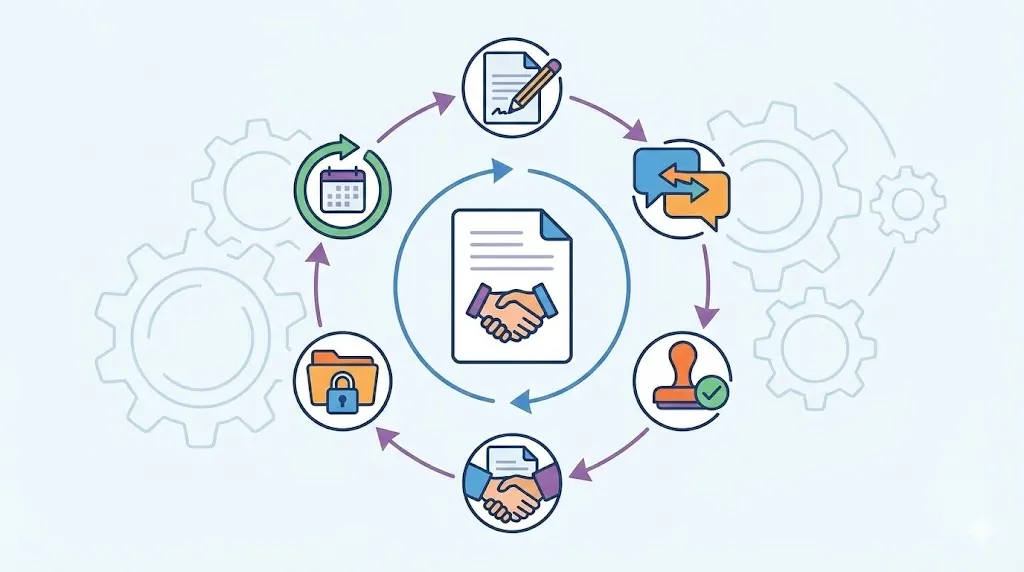
Volody AI CLM is an Agentic AI-powered Contract Lifecycle Management platform designed to eliminate manual contracting tasks, automate complex workflows, and deliver actionable insights. As a one-stop shop for all contract activities, it covers drafting, collaboration, negotiation, approvals, e-signature, compliance tracking, and renewals. Built with enterprise-grade security and no-code configuration, it meets the needs of the most complex global organizations. Volody AI CLM also includes AI-driven contract review and risk analysis, helping teams detect issues early and optimize terms. Trusted by Fortune 500 companies, high-growth startups, and government entities, it transforms contracts into strategic, data-driven business assets.





" height="216.72211px" id="FYO0bO80Y" transform="translate(3 6.105)" width="206.073px"/><path d="M 108.174 222 C 88.432 222 70.303 217.239 53.785 207.717 C 37.267 198.196 24.173 185.052 14.504 168.285 C 4.835 151.312 0 132.165 0 110.845 C 0 89.731 4.835 70.792 14.504 54.025 C 24.173 37.052 37.267 23.804 53.785 14.282 C 70.303 4.761 88.432 0 108.174 0 C 128.116 0 146.246 4.761 162.562 14.282 C 179.08 23.804 192.073 37.052 201.541 54.025 C 211.21 70.792 216.044 89.731 216.044 110.845 C 216.044 132.165 211.21 151.312 201.541 168.285 C 192.073 185.052 179.08 198.196 162.562 207.717 C 146.044 217.239 127.915 222 108.174 222 Z M 108.174 183.189 C 120.864 183.189 132.044 180.291 141.713 174.495 C 151.382 168.492 158.936 160.006 164.375 149.035 C 169.814 138.064 172.533 125.334 172.533 110.845 C 172.533 96.355 169.814 83.729 164.375 72.965 C 158.936 61.994 151.382 53.611 141.713 47.815 C 132.044 42.02 120.864 39.122 108.174 39.122 C 95.483 39.122 84.202 42.02 74.332 47.815 C 64.663 53.611 57.109 61.994 51.67 72.965 C 46.231 83.729 43.511 96.355 43.511 110.845 C 43.511 125.334 46.231 138.064 51.67 149.035 C 57.109 160.006 64.663 168.492 74.332 174.495 C 84.202 180.291 95.483 183.189 108.174 183.189 Z" fill="rgba(255, 255, 255, 0.12)" height="222px" id="aa1McFcE9" transform="translate(227.183 3)" width="216.04399999999998px"/><path d="M 42.302 182.257 L 111.799 182.257 L 111.799 216.722 L 0 216.722 L 0 0 L 42.302 0 Z" fill="rgba(255, 255, 255, 0.12)" height="216.72211px" id="yRq4AnrsX" transform="translate(477.721 6.105)" width="111.79899999999998px"/><path d="M 108.174 222 C 88.432 222 70.303 217.239 53.785 207.717 C 37.267 198.196 24.173 185.052 14.504 168.285 C 4.835 151.312 0 132.165 0 110.845 C 0 89.731 4.835 70.792 14.504 54.025 C 24.173 37.052 37.267 23.804 53.785 14.282 C 70.303 4.761 88.432 0 108.174 0 C 128.116 0 146.246 4.761 162.562 14.282 C 179.08 23.804 192.073 37.052 201.541 54.025 C 211.21 70.792 216.045 89.731 216.045 110.845 C 216.045 132.165 211.21 151.312 201.541 168.285 C 192.073 185.052 179.08 198.196 162.562 207.717 C 146.044 217.239 127.915 222 108.174 222 Z M 108.174 183.189 C 120.864 183.189 132.044 180.291 141.713 174.495 C 151.382 168.492 158.936 160.006 164.375 149.035 C 169.814 138.064 172.534 125.334 172.534 110.845 C 172.534 96.355 169.814 83.729 164.375 72.965 C 158.936 61.994 151.382 53.611 141.713 47.815 C 132.044 42.02 120.864 39.122 108.174 39.122 C 95.483 39.122 84.202 42.02 74.332 47.815 C 64.663 53.611 57.108 61.994 51.67 72.965 C 46.231 83.729 43.511 96.355 43.511 110.845 C 43.511 125.334 46.231 138.064 51.67 149.035 C 57.108 160.006 64.663 168.492 74.332 174.495 C 84.202 180.291 95.483 183.189 108.174 183.189 Z" fill="rgba(255, 255, 255, 0.12)" height="222px" id="mo8HQspQ0" transform="translate(609.155 3)" width="216.04500000000007px"/><path d="M 73.727 0 C 95.885 0 115.324 4.45 132.044 13.351 C 148.967 22.252 161.957 34.982 171.027 51.541 C 180.287 67.894 184.917 86.937 184.917 108.671 C 184.917 130.405 180.287 149.449 171.027 165.801 C 161.957 181.947 148.967 194.47 132.044 203.371 C 115.324 212.271 95.885 216.722 73.727 216.722 L 0 216.722 L 0 0 Z M 72.216 179.773 C 94.374 179.773 111.497 173.564 123.583 161.144 C 135.669 148.724 141.713 131.233 141.713 108.671 C 141.713 86.109 135.669 68.515 123.583 55.888 C 111.497 43.055 94.374 36.638 72.216 36.638 L 42.302 36.638 L 42.302 179.773 Z" fill="rgba(255, 255, 255, 0.12)" height="216.72211px" id="I3iXX5Hi_" transform="translate(859.693 6.105)" width="184.91699999999992px"/><path d="M 185.22 0 L 113.91 141.273 L 113.91 216.722 L 71.61 216.722 L 71.61 141.273 L 0 0 L 47.74 0 L 93.06 99.046 L 138.08 0 Z" fill="rgba(255, 255, 255, 0.12)" height="216.72211px" id="nzHyWC0_d" transform="translate(1061.78 6.105)" width="185.22000000000003px"/></svg>)