

Legal departments face growing pressure to prove their value, manage risks, and deliver results efficiently. This pressure fuels a hunger by general counsel additional streams of data to measure value, output, risk. Legal teams want more than just gut feel or anecdotal evidence. They need real, actionable data to guide decisions, optimize workflows, and demonstrate impact to the business.
This demand for richer data is shaping the next wave of legal technology. It pushes software providers to go beyond simple task automation and billing management. Instead, they must deliver tools that capture, analyze, and visualize diverse data points. These insights help legal leaders manage performance, control risks, and align legal work with business goals.
The journey to this new data-driven era in legal tech is complex. It builds on past waves of innovation but faces unique challenges. Understanding this evolution will help legal, operations, and enterprise tech leaders prepare for what’s next.
TL;DR
General counsel increasingly seek diverse data streams to measure legal function value, output, and risk.
Additionally, earlier legal technologies primarily digitized invoices and managed spend, but attention has now pivoted to extracting insights from contract lifecycle data.
As regulations evolve and compliance demands become more stringent, there is a growing imperative to deepen contract and risk analytics capabilities.
Legal teams are shifting away from manual, paper-based workflows by implementing automation systems that generate robust and detailed data outputs.
Challenges in adoption often revolve around maintaining attorney workflow integrity while addressing the intricate process of extracting granular contract data.
Incorporating AI alongside advanced analytics within contract management platforms has proven highly effective in meeting these complex needs.
How Has Legal Tech Evolved to Meet Data Demands?
Legal technology has evolved in waves. Additionally, each of these phases responded to urgent demands for enhanced efficiency, tighter control, or deeper analytical insight. Early 2000s legal tech focused on digitizing manual tasks, especially around legal spend management. For example, e-billing systems replaced paper invoices, allowing legal departments to track costs and outside counsel performance more easily.
Adoption was initially gradual, but the pace accelerated significantly following the 2008 financial crisis. Facing restricted budgets, general counsel encountered increasing pressure to maximize resource utilization. This environment created a demand for more sophisticated data to oversee legal expenditure and strengthen outside counsel relationships. Legal operations professionals adopted matter budgets, scorecards, and request-for-proposals (RFPs) to control costs.
These tools became standard in many legal tech stacks. They provided a foundation of financial data but left gaps in understanding legal output and risk. Teams within legal departments continued to face challenges when attempting to quantify the value of their work beyond mere cost containment.
The next wave focuses on contracts. Given their integral role in legal workflows and business risk management, contracts demand more advanced handling. Yet many legal teams still manage contracts with manual, paper-based processes. This creates blind spots in contract data and slows down workflows. The hunger by general counsel additional streams of data to measure value, output, risk is driving interest in contract lifecycle management (CLM) solutions.
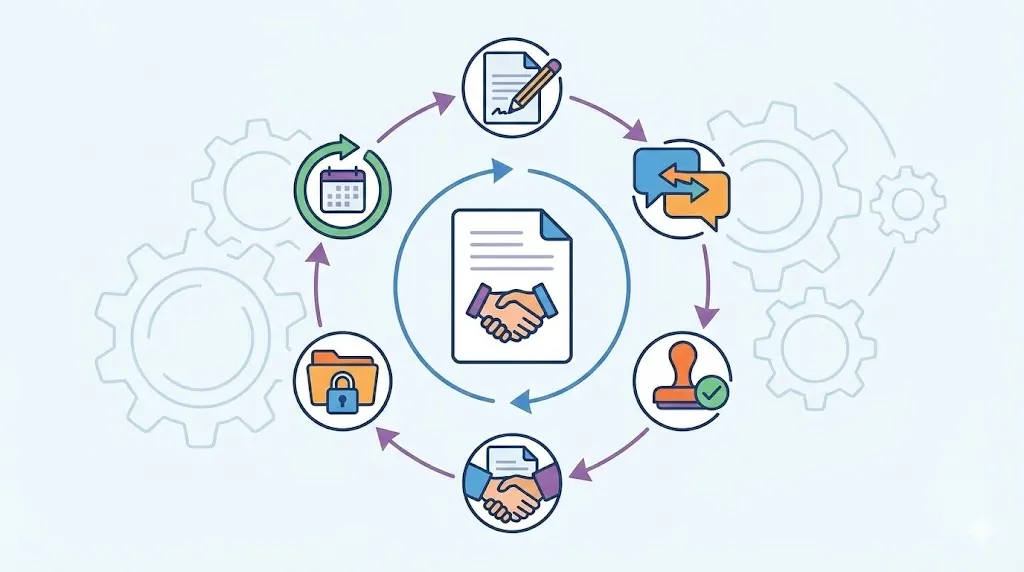
CLM software digitizes contract creation, negotiation, approval, and compliance tracking. It captures rich data on contract terms, milestones, obligations, and risks. This data helps legal leaders understand how contracts affect business outcomes and legal exposure.
Related articles: Aligning Legal Ops with General Counsel to Reduce Cost Risks
Why Are General Counsel Seeking More Data Now?
Several factors explain why general counsel want more data streams today:
Increasing Regulatory Complexity: Laws and regulations evolve rapidly. Additionally, compliance demands meticulous monitoring of contract clauses, renewal dates, and obligations to mitigate risks. For example, GDPR forced many companies to locate and review thousands of contracts to ensure compliance. The discontinuation of LIBOR triggered comprehensive repapering efforts across financial institutions. These regulatory shifts expose hidden vulnerabilities within contract data.
Demand for Efficiency: Legal departments face resource constraints. The pressure to maximize productivity with limited personnel resources is intensifying. Leveraging data-driven insights uncovers workflow inefficiencies, highlights bottlenecks, and focuses attention on contracts with elevated risk profiles. This improves turnaround times and reduces costs.
Risk Management Focus: Legal teams want to spot risky clauses, missing provisions, or unusual language early. Data analytics and AI technologies facilitate automatic identification of these issues. This reduces legal exposure and supports proactive risk mitigation.
Business Alignment: Legal leaders must demonstrate the tangible impact of their efforts on achieving business objectives. Metrics on contract volume, cycle times, and outcomes serve as concrete indicators of legal’s value. In addition, these insights strengthen collaboration with sales, procurement, and finance teams.
Digital Transformation Momentum: Enterprises are digitizing many business processes. As a result, legal departments must evolve their workflows to prevent becoming operational bottlenecks. Data-driven legal tech integrates with ERP, CRM, and procurement systems, enabling seamless contract and risk management.
Related articles: How Legal and Finance Can Collaborate Better on Contracts
What Challenges Do Legal Teams Face in Using More Data?
Adding more data streams is not easy. Legal teams face several hurdles:
Data Silos and Quality: Contract data often lives in multiple places—email, shared drives, paper files. Extracting clean, structured data is difficult. Poor data quality undermines trust in analytics.
Manual Processes: Many legal teams still rely on manual contract drafting, review, and approval. This results in a limited digital footprint, which obstructs the ability to produce timely and comprehensive reports.
Attorney Workflow Resistance: Lawyers are deeply accustomed to their established workflows, making them cautious about adopting new systems. When tools interfere with drafting or negotiation processes, they often encounter resistance.
Striking a balance between automation and maintaining attorneys’ control over their tasks is critical for successful technology adoption.
Complex Contract Language: The diversity in contract formats combined with specialized terminology significantly complicates analytical efforts.
AI and analytics solutions must accurately interpret a wide array of clauses, jurisdictions, and terminologies.
Integration Challenges: Legal data must connect with other enterprise systems for full value. Integrations require technical resources and careful planning.
Change Management: Shifting to data-driven legal operations requires training, process redesign, and culture change. Without leadership support, initiatives can stall.
Related articles: AI Contract Review vs. Human Lawyers: Speed, Accuracy & ROI
How Does Contract Management Software Help Meet These Data Needs?
Contract management software is essential for systematically capturing and analyzing contract data. Additionally, it also digitizes workflows and centralizes contract information. Here are some ways it addresses general counsel’s hunger for data:
Central Contract Repository: Stores all contracts securely in one place. Supports full-text search, tagging, and metadata capture. This eliminates data silos and eases contract retrieval.
AI-Powered Data Extraction: Uses machine learning to extract parties, dates, payment terms, obligations, and risks automatically. This reduces manual data entry and improves accuracy.
Clause Libraries and Template Management: Maintains approved language and fallback clauses. This standardizes contracts and speeds up drafting.
Automated Workflows: Contracts are systematically routed through stages of review, approval, and signature, with integrated reminders and escalation protocols to prevent bottlenecks.
This functionality enhances process efficiency and provides detailed metrics on cycle times.
Risk and Compliance Analysis: The system identifies potentially problematic clauses or absent provisions according to a set of configurable rules, enabling proactive mitigation strategies.
Dashboards and Analytics: Visualizes contract volume, turnaround times, risk exposure, and renewal pipelines. Legal leaders gain comprehensive insights into performance metrics and decision-making processes.
Collaboration Tools: Facilitates real-time commenting and redlining. These features significantly increase negotiation efficiency and ensure thorough audit trails.
Integration Capabilities: The software interfaces with ERP, CRM, procurement, and e-signature systems to unify contract information across platforms.
This creates a seamless flow of contract data across the enterprise.
What Real-World Examples Show This Trend?
Consider a multinational company facing GDPR compliance. Their legal team needed to identify all contracts containing personal data clauses. Using contract management software with AI extraction, they quickly located relevant agreements. Automated workflows helped revise and reapprove contracts efficiently. Dashboards tracked progress and compliance status. By streamlining the review process through automation, they significantly curtailed the time spent on manual analysis and minimized regulatory exposure.
Another case involves a financial institution navigating the LIBOR transition. Moreover, they applied contract analytics to extract every loan agreement containing LIBOR references. The system flagged clauses needing amendment. Legal teams collaborated on fallback language using built-in clause libraries. Automated approval workflows sped up contract repapering. This reduced operational risk and ensured regulatory alignment.
These examples illustrate how richer contract data streams enable legal teams to meet complex challenges faster and with more confidence.
Related articles: Measuring ROI of MS Word AI Add-Ins for Legal Teams
What Should Legal and Operations Leaders Do to Prepare?
Legal and operations leaders can take several steps to harness this data-driven opportunity:
Assess Current Data Sources: Map where contract and legal data currently resides. Additionally, evaluate existing gaps and assess the integrity of the data.
Engage Stakeholders Early: Involve attorneys, business users, and IT in defining data needs and workflows. Address concerns about workflow disruption.
Prioritize Use Cases: Focus on high-impact areas like compliance tracking, risk management, or contract cycle time reduction.
Invest in Technology: Choose contract management platforms that provide advanced analytics and robust integration capabilities to support end-to-end functionality rather than fragmented solutions.
Plan for Change Management: Implement thorough training programs and maintain transparent communication channels.
Measure and Iterate: Track adoption, data quality, and business outcomes. Adjust processes and tools as needed.
Related articles: What to Track in Legal Operations Dashboards
How Contract Management Software Solves This
Centralizing contract data and automating workflows enable legal teams to efficiently capture the critical information they require. Additionally, the use of artificial intelligence enhances the extraction of essential contract elements such as parties, dates, obligations, and risks. This eliminates manual data entry and speeds up contract review. Automated approval workflows reduce bottlenecks and provide visibility into contract status.
Dashboards and analytics give legal leaders insights into contract volume, cycle times, and risk exposure. By fostering seamless collaboration, negotiation processes become more streamlined while detailed audit trails ensure accountability is maintained. Connecting with enterprise systems allows data to flow seamlessly across departments, enhancing operational cohesion.
Volody’s platform combines AI-driven contract drafting, comprehensive review tools, and sophisticated metadata extraction capabilities. Its template and clause management functionalities promote uniformity and compliance through enforced contract standardization. The integration of automated workflows with electronic signature technology expedites both approval cycles and contract finalization. Furthermore, robust search functions and obligation tracking mechanisms support teams in adhering to compliance requirements and meeting critical deadlines.
> Explore how Volody's CLM Software empowers legal teams to accelerate contract management while maintaining stringent control.
FAQ
What does a hunger by general counsel additional streams of data to measure value, output, risk mean?
Additionally, general counsel increasingly require a broader array of detailed data sources to evaluate how legal work contributes value, monitors output, and mitigates risks. They aim to move beyond traditional metrics like cost or volume to support more informed decision-making.
Why is contract data so important for legal departments?
Contracts contain critical business and legal terms that affect risk and compliance. Managing contract data well helps legal teams spot risks, meet regulatory demands, and align with business goals.
How does AI improve contract management?
Moreover, AI automates extracting key contract information, flags risky clauses, and suggests fallback language. This speeds up review, reduces errors, and provides deeper insights.
What challenges slow adoption of analytics-driven technology in legal services?
Common obstacles include inconsistent data quality, reliance on manual processes, reluctance among attorneys to adopt new technologies, the complexity of contract language, and difficulties integrating with existing systems.
How can legal teams overcome resistance to new contract software?
Engage attorneys early, show how tools save time, maintain control over workflows, and provide training. Furthermore, highlight benefits like fewer routine tasks and better risk management.
What metrics should legal leaders track with contract data?
Track contract cycle times, volume, renewal rates, risk flags, compliance status, and legal spend efficiency. Collectively, these indicators illuminate operational strengths and pinpoint areas for improvement.
How does contract lifecycle technology integrate with other systems?
Integration occurs with ERP, CRM, procurement, and e-signature platforms, enabling seamless data exchange and supporting end-to-end business workflows.
Also, can contract lifecycle platforms assist with regulatory compliance?
Yes, they monitor obligations, renewal dates, and risky clauses. Through automated alerts and detailed reports, legal teams remain proactive with compliance deadlines.
What role does legal operations play in leveraging analytics in legal technology?
Legal operations coordinate technology selection, process design, data governance, and change management. They act as a vital bridge between legal and IT to implement effective solutions.
Is contract lifecycle technology suitable for small legal teams?
Yes, many solutions scale to different team sizes. Smaller teams benefit from automation and data insights to maximize limited resources.
About the Company

Volody AI CLM is an Agentic AI-powered Contract Lifecycle Management platform designed to eliminate manual contracting tasks, automate complex workflows, and deliver actionable insights. As a one-stop shop for all contract activities, it covers drafting, collaboration, negotiation, approvals, e-signature, compliance tracking, and renewals. Built with enterprise-grade security and no-code configuration, it meets the needs of the most complex global organizations. Volody AI CLM also includes AI-driven contract review and risk analysis, helping teams detect issues early and optimize terms. Trusted by Fortune 500 companies, high-growth startups, and government entities, it transforms contracts into strategic, data-driven business assets.





" height="216.72211px" id="FYO0bO80Y" transform="translate(3 6.105)" width="206.073px"/><path d="M 108.174 222 C 88.432 222 70.303 217.239 53.785 207.717 C 37.267 198.196 24.173 185.052 14.504 168.285 C 4.835 151.312 0 132.165 0 110.845 C 0 89.731 4.835 70.792 14.504 54.025 C 24.173 37.052 37.267 23.804 53.785 14.282 C 70.303 4.761 88.432 0 108.174 0 C 128.116 0 146.246 4.761 162.562 14.282 C 179.08 23.804 192.073 37.052 201.541 54.025 C 211.21 70.792 216.044 89.731 216.044 110.845 C 216.044 132.165 211.21 151.312 201.541 168.285 C 192.073 185.052 179.08 198.196 162.562 207.717 C 146.044 217.239 127.915 222 108.174 222 Z M 108.174 183.189 C 120.864 183.189 132.044 180.291 141.713 174.495 C 151.382 168.492 158.936 160.006 164.375 149.035 C 169.814 138.064 172.533 125.334 172.533 110.845 C 172.533 96.355 169.814 83.729 164.375 72.965 C 158.936 61.994 151.382 53.611 141.713 47.815 C 132.044 42.02 120.864 39.122 108.174 39.122 C 95.483 39.122 84.202 42.02 74.332 47.815 C 64.663 53.611 57.109 61.994 51.67 72.965 C 46.231 83.729 43.511 96.355 43.511 110.845 C 43.511 125.334 46.231 138.064 51.67 149.035 C 57.109 160.006 64.663 168.492 74.332 174.495 C 84.202 180.291 95.483 183.189 108.174 183.189 Z" fill="rgba(255, 255, 255, 0.12)" height="222px" id="aa1McFcE9" transform="translate(227.183 3)" width="216.04399999999998px"/><path d="M 42.302 182.257 L 111.799 182.257 L 111.799 216.722 L 0 216.722 L 0 0 L 42.302 0 Z" fill="rgba(255, 255, 255, 0.12)" height="216.72211px" id="yRq4AnrsX" transform="translate(477.721 6.105)" width="111.79899999999998px"/><path d="M 108.174 222 C 88.432 222 70.303 217.239 53.785 207.717 C 37.267 198.196 24.173 185.052 14.504 168.285 C 4.835 151.312 0 132.165 0 110.845 C 0 89.731 4.835 70.792 14.504 54.025 C 24.173 37.052 37.267 23.804 53.785 14.282 C 70.303 4.761 88.432 0 108.174 0 C 128.116 0 146.246 4.761 162.562 14.282 C 179.08 23.804 192.073 37.052 201.541 54.025 C 211.21 70.792 216.045 89.731 216.045 110.845 C 216.045 132.165 211.21 151.312 201.541 168.285 C 192.073 185.052 179.08 198.196 162.562 207.717 C 146.044 217.239 127.915 222 108.174 222 Z M 108.174 183.189 C 120.864 183.189 132.044 180.291 141.713 174.495 C 151.382 168.492 158.936 160.006 164.375 149.035 C 169.814 138.064 172.534 125.334 172.534 110.845 C 172.534 96.355 169.814 83.729 164.375 72.965 C 158.936 61.994 151.382 53.611 141.713 47.815 C 132.044 42.02 120.864 39.122 108.174 39.122 C 95.483 39.122 84.202 42.02 74.332 47.815 C 64.663 53.611 57.108 61.994 51.67 72.965 C 46.231 83.729 43.511 96.355 43.511 110.845 C 43.511 125.334 46.231 138.064 51.67 149.035 C 57.108 160.006 64.663 168.492 74.332 174.495 C 84.202 180.291 95.483 183.189 108.174 183.189 Z" fill="rgba(255, 255, 255, 0.12)" height="222px" id="mo8HQspQ0" transform="translate(609.155 3)" width="216.04500000000007px"/><path d="M 73.727 0 C 95.885 0 115.324 4.45 132.044 13.351 C 148.967 22.252 161.957 34.982 171.027 51.541 C 180.287 67.894 184.917 86.937 184.917 108.671 C 184.917 130.405 180.287 149.449 171.027 165.801 C 161.957 181.947 148.967 194.47 132.044 203.371 C 115.324 212.271 95.885 216.722 73.727 216.722 L 0 216.722 L 0 0 Z M 72.216 179.773 C 94.374 179.773 111.497 173.564 123.583 161.144 C 135.669 148.724 141.713 131.233 141.713 108.671 C 141.713 86.109 135.669 68.515 123.583 55.888 C 111.497 43.055 94.374 36.638 72.216 36.638 L 42.302 36.638 L 42.302 179.773 Z" fill="rgba(255, 255, 255, 0.12)" height="216.72211px" id="I3iXX5Hi_" transform="translate(859.693 6.105)" width="184.91699999999992px"/><path d="M 185.22 0 L 113.91 141.273 L 113.91 216.722 L 71.61 216.722 L 71.61 141.273 L 0 0 L 47.74 0 L 93.06 99.046 L 138.08 0 Z" fill="rgba(255, 255, 255, 0.12)" height="216.72211px" id="nzHyWC0_d" transform="translate(1061.78 6.105)" width="185.22000000000003px"/></svg>)