

Legal AI adoption numbers often look impressive at first glance. Headlines boast that over 90% of legal professionals now use AI tools. But these stats don’t tell the full story. They hide the real challenges, uneven usage, and the evolving nature of AI in legal teams. If you rely on adoption numbers alone, you miss how legal AI is truly changing workflows, roles, and expectations.
Imagine a law department where everyone says they use AI, but most only run a few simple queries. Meanwhile, a handful of teams push AI to reshape their entire contract process. The headline number lumps all these experiences together, masking the real progress and the gaps. This article breaks down why legal AI adoption numbers don’t tell the whole story and what leaders should focus on instead.
TL;DR
Although AI adoption rates are high, there is significant variation in how teams incorporate these tools into their daily workflows.
The majority of legal teams engage with AI primarily through straightforward applications, such as basic chatbots, rather than integrating it into sophisticated operational processes.
AI does not necessarily lessen the overall workload; instead, it redirects legal professionals toward more complex and specialized responsibilities.
The legal sector is witnessing the rise of hybrid roles that integrate profound legal expertise with technical proficiency and process optimization skills.
Broader adoption is impeded by ongoing issues surrounding accountability and the development of comprehensive governance frameworks for AI implementation.
Leveraging contract management software equipped with AI capabilities enables legal teams to fully capitalize on the advantages offered by these technologies.
Related Articles: Your First AI Accountability Policy Guide
What Does "Using AI" Really Mean in Legal Teams?
When surveys say 90%+ of legal professionals use AI, that number can mislead. Additionally, the phrase “Using AI” encompasses a wide variety of activities. Some teams might only run occasional ChatGPT-style queries. Others deploy AI to automate contract review, risk analysis, or negotiation workflows.
This wide spectrum is important to understand. For many, interacting with AI involves typing a question into a chatbot or having an AI generate a simple clause. While this qualifies as adoption, it falls short of representing deep integration or strategic deployment.
Legal leaders who coach multiple teams report this gap clearly. Many teams engage with AI tools only superficially. They overlook AI’s broader potential, such as voice-assisted brainstorming, advanced legal research, or automated contract lifecycle management.
One legal operations director described it like this: “Most teams have AI as a tool to speed up existing tasks. They haven’t yet reconsidered how those tasks might be fundamentally reshaped through AI.” This shows a key difference between leveraging AI to improve efficiency and harnessing it to transform legal work.
Some teams see AI as adding “bionic superpowers” to their current processes. They keep the same workflows but get faster and more accurate results. Others are starting to ask, “What if we redesign how we do this work with AI at the center?” That shift from incremental improvements to reimagining legal service delivery is still rare but growing.
The takeaway: Adoption numbers don’t reveal how deeply or strategically AI tools are embedded in legal teams. Most are still in early stages, experimenting rather than fully transforming.
Related articles: How Does AI Limitations Impacting Contract Management?
Why AI Isn’t Cutting Legal Workloads - It’s Changing the Work
A common expectation is that AI will reduce legal workloads. Additionally, in practice, however, the effect is more nuanced. Instead of merely cutting down hours, AI reshapes how legal professionals engage with their tasks.
Legal teams using AI report spending more time on complex, strategic tasks. Increasingly, AI handles functions like contract review and data extraction. This shift enables lawyers to focus their efforts on negotiation, risk management, and advising business partners.
This shift is not about working less but working differently. Legal leaders say AI helps them move away from manual tasks toward higher-value work. But the overall volume of work often stays the same or even increases.
One legal consultant summed it up: “The idea that technology will cut legal workloads has always been a myth. Instead, the bar rises. Teams must meet higher expectations and deliver more strategic value.”
AI tools can act like a skilled junior lawyer or chief of staff. Moreover, they also generate rapid summaries, identify risks, and propose alternative clauses. This support lets lawyers spend time on judgment and relationship-building-skills AI can’t replace.
Legal operations roles are evolving too. Professionals in this space integrate legal expertise with process design and technology management. Their role involves translating legal requirements into AI-driven workflows and facilitating seamless implementation.
Adapting to these changes requires legal teams to reconsider how they allocate resources and develop expertise. The demand is for professionals who combine deep legal knowledge with advanced AI proficiency. Consequently, the nature of legal work increasingly emphasizes strategic insight coupled with technological fluency.
Related articles: Can AI Replace Lawyers? Exploring the Future of Legal AI
How New Legal Roles Are Emerging Around AI
AI adoption is not just about tools; it’s about people. Many legal teams establish new roles that blend legal knowledge, technological proficiency, and change management expertise.
Positions like legal engineers, legal solutions specialists, and AI change leads are growing. These roles require fluency in law and systems thinking. Often, former practicing lawyers fill these roles, serving as essential liaisons who bridge the gap between legal and technical teams.
One general counsel mentioned that their legal engineering team outnumbers the traditional legal staff. The engineers in this group are responsible for developing complex AI workflows, managing data governance frameworks, and leading efforts to promote AI adoption. They function as critical advisors, equipping lawyers to use AI tools effectively while maintaining necessary prudence.
This trend exemplifies a significant transformation occurring within legal careers. Moreover, AI drives the formation of hybrid roles that combine legal acumen with sophisticated technological insight. Such roles focus on enhancing legal operations and integrating AI functionalities into routine workflows.
The rise of these roles also changes how legal departments operate. Legal departments are becoming increasingly agile and technology-oriented, enabling them to address business demands more swiftly and expand AI utilization with greater assurance.
Industry experts agree that this evolution will continue. AI won’t replace lawyers but will change what legal work looks like. Professionals who adapt to this new environment will thrive.
Related articles: How to maintain ethically use AI in Legal Operations
Why Clear AI Accountability and Policies Matter
Despite high adoption rates, many legal teams hesitate to expand their reliance on AI technologies. One key reason is the lack of clear accountability for AI errors.
Nearly all legal professionals say they would increase their engagement with AI if rules about responsibility for mistakes were clearer. Yet less than half have formal policies governing AI use and error handling. This gap creates uncertainty and risk. Legal teams worry about liability if AI misses a risk or generates incorrect advice. Without clear guidelines, teams limit AI use to low-risk tasks. The legal profession’s cautious culture also slows AI adoption. Lawyers are trained to avoid risk, so they hesitate to rely on new, complex technology without firm guardrails.
Building clear AI policies helps bridge this gap. Policies should define who is responsible for reviewing AI outputs, how to handle errors, and what tasks AI can perform. Training and transparency also build trust. Legal leaders recommend treating AI use like any other legal tool - with defined standards and oversight. This approach helps teams increase AI use safely and confidently.
Related articles: Agentic AI in Legal: 5 Effective Ways Lawyers Use Agentic AI
5 Challenges Legal Teams Face in AI Adoption
Legal AI implementation holds significant potential but encounters substantial obstacles. Additionally, understanding these difficulties enables leaders to develop more effective strategies.
Uneven AI Skill Levels: A considerable number of lawyers have not received adequate training in AI tools. This impedes adoption and confines usage to fundamental capabilities. Training programs are essential.
Integration Complexity: AI tools often don’t connect well with existing legal systems. Teams struggle to embed AI into workflows without disruption.
Data Privacy and Security: Legal data is sensitive. Moreover, teams also express concerns about data breaches or regulatory compliance when employing cloud-based AI platforms.
Change Resistance: Lawyers can be skeptical of AI replacing judgment. Cultural resistance slows adoption and experimentation.
Lack of Clear ROI Metrics: Measuring AI’s impact on legal outcomes is difficult. Without clear metrics, teams hesitate to invest heavily.
Addressing these challenges requires a mix of technology, training, and leadership. Teams that tackle these issues early can accelerate adoption and realize AI’s benefits.
Related articles: Maximizing AI ROI in Legal Operations
How Contract Management Software Solves This
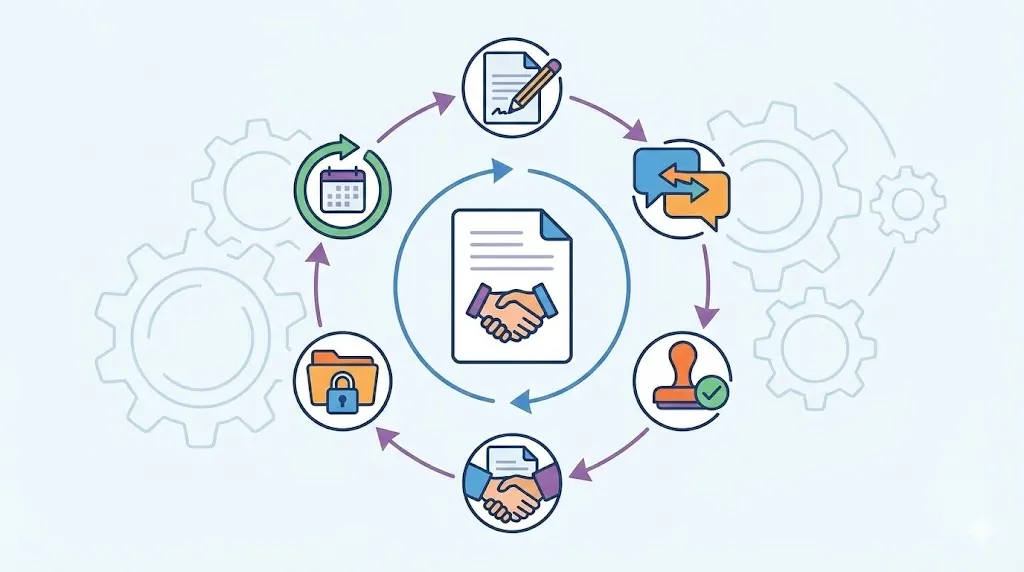
Contract lifecycle management (CLM) software provides legal teams with structured frameworks to incorporate AI technologies into their workflows. Additionally, CLM platforms automate and centralize contract processes, making AI integration easier and more effective.
Additionally, AI-powered CLM tools can draft contracts from templates, review clauses for risks, and extract key data automatically. This reduces manual work and speeds up contract cycles.
CLM software also enforces standard templates and approval workflows. This helps legal teams maintain control and consistency while scaling AI use.
Volody’s contract management platform incorporates functionalities such as contract drafting, risk analysis, and metadata extraction. It integrates with Microsoft Word and other enterprise tools, allowing lawyers to work in familiar environments.
With Volody, legal teams can track contract versions, manage obligations, and automate reminders. These features reduce errors and improve compliance.
Centralizing contracts in one secure system also addresses data privacy concerns. Moreover, role-based access controls further safeguard sensitive information.
See how Volody's CLM Software helps your team move contracts forward with confidence.
FAQ
What does it mean when legal professionals say they "use AI"?
Using AI can range from simple chatbot queries to fully automated contract review workflows. Most legal teams currently use AI in basic ways, like drafting or research assistance, rather than deep integration into their processes.
Why don’t AI adoption numbers reflect actual AI impact?
Adoption numbers indicate which teams employ AI tools but do not capture the depth or frequency of usage. Many teams only experiment with AI or use it for low-risk tasks. The real impact depends on how deeply AI is embedded in workflows and decision-making.
Does AI reduce the amount of legal work?
No. Furthermore, AI shifts legal work from routine tasks to more complex, strategic activities. Legal teams often spend more time on high-value work, while AI handles repetitive jobs.
What new roles are emerging because of legal AI?
Roles like legal engineers, solutions specialists, and change managers are growing. These professionals combine legal knowledge with tech skills to implement and manage AI tools.
Why is accountability important for AI use in legal?
Clear rules about who is responsible for AI errors build trust and encourage more extensive AI use. Without policies, legal teams limit AI to avoid liability risks.
What are the biggest challenges in adopting legal AI?
Also, challenges include uneven AI skills, integration difficulties, data security concerns, resistance to change, and unclear ROI measurement.
How can contract management software help with AI adoption?
In addition, CLM software automates contract processes and incorporates AI capabilities such as drafting and risk analysis. It centralizes contracts, enforces standards, and improves compliance.
Is AI safe to use with sensitive legal data?
The security of AI applications depends on the specific tools and platforms utilized. Enterprise-grade CLM solutions provide encryption, access controls, and compliance measures to ensure data protection.
How do legal teams measure AI success?
Teams track metrics like contract turnaround time, error reduction, compliance rates, and user adoption. These help quantify AI’s business impact.
Will AI replace lawyers?
No. AI handles routine tasks, freeing lawyers to focus on judgment, strategy, and client relationships. AI changes legal work but does not replace legal expertise.
About the Company

Volody AI CLM is an Agentic AI-powered Contract Lifecycle Management platform designed to eliminate manual contracting tasks, automate complex workflows, and deliver actionable insights. As a one-stop shop for all contract activities, it covers drafting, collaboration, negotiation, approvals, e-signature, compliance tracking, and renewals. Built with enterprise-grade security and no-code configuration, it meets the needs of the most complex global organizations. Volody AI CLM also includes AI-driven contract review and risk analysis, helping teams detect issues early and optimize terms. Trusted by Fortune 500 companies, high-growth startups, and government entities, it transforms contracts into strategic, data-driven business assets.





" height="216.72211px" id="FYO0bO80Y" transform="translate(3 6.105)" width="206.073px"/><path d="M 108.174 222 C 88.432 222 70.303 217.239 53.785 207.717 C 37.267 198.196 24.173 185.052 14.504 168.285 C 4.835 151.312 0 132.165 0 110.845 C 0 89.731 4.835 70.792 14.504 54.025 C 24.173 37.052 37.267 23.804 53.785 14.282 C 70.303 4.761 88.432 0 108.174 0 C 128.116 0 146.246 4.761 162.562 14.282 C 179.08 23.804 192.073 37.052 201.541 54.025 C 211.21 70.792 216.044 89.731 216.044 110.845 C 216.044 132.165 211.21 151.312 201.541 168.285 C 192.073 185.052 179.08 198.196 162.562 207.717 C 146.044 217.239 127.915 222 108.174 222 Z M 108.174 183.189 C 120.864 183.189 132.044 180.291 141.713 174.495 C 151.382 168.492 158.936 160.006 164.375 149.035 C 169.814 138.064 172.533 125.334 172.533 110.845 C 172.533 96.355 169.814 83.729 164.375 72.965 C 158.936 61.994 151.382 53.611 141.713 47.815 C 132.044 42.02 120.864 39.122 108.174 39.122 C 95.483 39.122 84.202 42.02 74.332 47.815 C 64.663 53.611 57.109 61.994 51.67 72.965 C 46.231 83.729 43.511 96.355 43.511 110.845 C 43.511 125.334 46.231 138.064 51.67 149.035 C 57.109 160.006 64.663 168.492 74.332 174.495 C 84.202 180.291 95.483 183.189 108.174 183.189 Z" fill="rgba(255, 255, 255, 0.12)" height="222px" id="aa1McFcE9" transform="translate(227.183 3)" width="216.04399999999998px"/><path d="M 42.302 182.257 L 111.799 182.257 L 111.799 216.722 L 0 216.722 L 0 0 L 42.302 0 Z" fill="rgba(255, 255, 255, 0.12)" height="216.72211px" id="yRq4AnrsX" transform="translate(477.721 6.105)" width="111.79899999999998px"/><path d="M 108.174 222 C 88.432 222 70.303 217.239 53.785 207.717 C 37.267 198.196 24.173 185.052 14.504 168.285 C 4.835 151.312 0 132.165 0 110.845 C 0 89.731 4.835 70.792 14.504 54.025 C 24.173 37.052 37.267 23.804 53.785 14.282 C 70.303 4.761 88.432 0 108.174 0 C 128.116 0 146.246 4.761 162.562 14.282 C 179.08 23.804 192.073 37.052 201.541 54.025 C 211.21 70.792 216.045 89.731 216.045 110.845 C 216.045 132.165 211.21 151.312 201.541 168.285 C 192.073 185.052 179.08 198.196 162.562 207.717 C 146.044 217.239 127.915 222 108.174 222 Z M 108.174 183.189 C 120.864 183.189 132.044 180.291 141.713 174.495 C 151.382 168.492 158.936 160.006 164.375 149.035 C 169.814 138.064 172.534 125.334 172.534 110.845 C 172.534 96.355 169.814 83.729 164.375 72.965 C 158.936 61.994 151.382 53.611 141.713 47.815 C 132.044 42.02 120.864 39.122 108.174 39.122 C 95.483 39.122 84.202 42.02 74.332 47.815 C 64.663 53.611 57.108 61.994 51.67 72.965 C 46.231 83.729 43.511 96.355 43.511 110.845 C 43.511 125.334 46.231 138.064 51.67 149.035 C 57.108 160.006 64.663 168.492 74.332 174.495 C 84.202 180.291 95.483 183.189 108.174 183.189 Z" fill="rgba(255, 255, 255, 0.12)" height="222px" id="mo8HQspQ0" transform="translate(609.155 3)" width="216.04500000000007px"/><path d="M 73.727 0 C 95.885 0 115.324 4.45 132.044 13.351 C 148.967 22.252 161.957 34.982 171.027 51.541 C 180.287 67.894 184.917 86.937 184.917 108.671 C 184.917 130.405 180.287 149.449 171.027 165.801 C 161.957 181.947 148.967 194.47 132.044 203.371 C 115.324 212.271 95.885 216.722 73.727 216.722 L 0 216.722 L 0 0 Z M 72.216 179.773 C 94.374 179.773 111.497 173.564 123.583 161.144 C 135.669 148.724 141.713 131.233 141.713 108.671 C 141.713 86.109 135.669 68.515 123.583 55.888 C 111.497 43.055 94.374 36.638 72.216 36.638 L 42.302 36.638 L 42.302 179.773 Z" fill="rgba(255, 255, 255, 0.12)" height="216.72211px" id="I3iXX5Hi_" transform="translate(859.693 6.105)" width="184.91699999999992px"/><path d="M 185.22 0 L 113.91 141.273 L 113.91 216.722 L 71.61 216.722 L 71.61 141.273 L 0 0 L 47.74 0 L 93.06 99.046 L 138.08 0 Z" fill="rgba(255, 255, 255, 0.12)" height="216.72211px" id="nzHyWC0_d" transform="translate(1061.78 6.105)" width="185.22000000000003px"/></svg>)