
Sanctions and sudden business disruptions can hit companies hard. Imagine a global supplier suddenly cut off because of new trade restrictions. Without clear insight into contracts, companies scramble to respond, risking compliance failures and lost revenue. Staying out in front of sanctions and other disruptions with contract data means knowing exactly who you do business with and under what terms. This knowledge helps companies act fast, avoid penalties, and keep operations running smoothly.
TL;DR
Centralizing contract data helps identify business ties affected by sanctions quickly and accurately.
Advanced AI tools facilitate the extraction of crucial contract clauses, enabling precise assessment of risks and termination rights.
When contract data is combined with third-party sanctions lists, it reveals risks that might otherwise remain concealed.
Leveraging contract intelligence ensures continuous compliance by blocking new agreements with sanctioned entities.
The use of automated contract management systems speeds up the integration of alternative suppliers, minimizing operational disruptions.
Revising contract templates to include explicit sanctions provisions enhances risk mitigation in future agreements.
Why Contract Data Is Crucial for Managing Sanctions and Disruptions
Contracts form the backbone of every business relationship. Additionally, they define the parties involved, the deliverables, and the obligations each must uphold. When sanctions or other disruptions arise, contracts hold the answers on how to respond. Without easy access to contract data, companies waste time hunting for documents and risk missing critical obligations or rights.
Centralized, digital contract repositories provide a single source of truth. They let legal and operations teams quickly search and analyze agreements. This capability is vital when governments update sanctions lists or when supply chains face unexpected shocks. Contract data reveals which suppliers, customers, or partners might be affected, what products or services are involved, and what contractual options exist.
For example, a company facing new sanctions against a country can rapidly identify all contracts involving entities from that country. They can then review termination clauses or force majeure provisions to decide how to proceed. This clarity reduces legal risk and speeds decision-making.
Related articles: Force Majeure Clause: How Does It Work in Contracts?
How to Identify Sanctions-Impacted Contracts Using Contract Data
The first step is to find all contracts that might be affected by sanctions or disruptions. This requires a structured contract database with searchable metadata such as party names, locations, and product details. Many companies still store contracts in scattered file shares or email inboxes. This makes it nearly impossible to quickly locate relevant agreements.
With a centralized contract management system, you can:
Run keyword searches for sanctioned countries, companies, or products.
Use AI-powered tools to extract metadata like party addresses, ultimate beneficial ownership, and contract values.
Cross-reference contract parties against official sanctions lists from government agencies.
For example, the U.S. Department of Commerce publishes the Consolidated Screening List, which identifies restricted parties. By integrating this list with your contract data, you can automatically flag contracts involving these entities or their affiliates. This process uncovers hidden risks where ownership or control is obscured.
Companies should also monitor updates from sanctioning bodies regularly. Automated alerts tied to contract data ensure no new sanctions catch the company off guard. This proactive approach helps maintain compliance and avoid costly violations.
Related articles: Contract Data Extraction: Unlocking Value from PDF Contracts
What Contract Clauses Matter Most When Facing Sanctions or Disruptions
Once you identify impacted contracts, the next step is to review key clauses that determine your options. The most important clauses include:
Force Majeure: This clause excuses performance when unforeseen events occur beyond control, such as wars or government restrictions. Sanctions often qualify as force majeure events, allowing parties to suspend or end obligations without penalty.
Termination Rights: Certain agreements provide rights to terminate either for cause or at convenience, contingent on the specific contractual framework.
Evaluating the detailed notice requirements and conditions attached to these rights is essential to avoid unintentional violations.
Compliance Clauses: It is common for contracts to mandate adherence to all applicable laws and regulatory standards.
Violations of sanctions-related provisions within these compliance requirements can trigger contract termination or financial penalties.
Change of Control and Assignment: Ownership or control shifts prompted by sanctions can have a direct impact on contract enforceability.
AI-powered contract review tools can scan thousands of agreements to extract these clauses quickly. They highlight unusual language or missing provisions that increase risk. This speeds up legal analysis and informs risk mitigation strategies.
For example, during the COVID-19 pandemic, many companies used force majeure clauses to manage supply chain disruptions. Similar approaches apply when sanctions disrupt business relationships. Having contract data ready means you can act confidently and avoid costly disputes.
Related articles: 7 Key Contract Clauses Found in Business Contracts
How to Use Contract Data to Manage Contract Terminations and Notifications
Contracts that are terminated as a result of sanctions or operational disruptions require strict compliance with the detailed provisions specified in the agreements. Additionally, ignoring the mandated notice procedures can lead to significant legal challenges or financial repercussions. Contract data facilitates this process by:
Providing a comprehensive summary of all contracts scheduled for termination.
Allowing for precise monitoring of termination deadlines alongside the specific notification obligations.
Preserving thorough records of communications and necessary approvals to ensure audit readiness.
A centralized contract system further supports oversight by generating detailed reports on termination activities. Legal and operations leaders can see how many contracts were terminated, which are pending, and the reasons. This transparency supports governance and regulatory compliance.
For example, if a supplier contract must be ended due to new sanctions, the system can prompt the team to dispatch notices within the stipulated timeframe. It keeps a secure archive of supplier confirmations associated with the termination process. This methodology reduces exposure to risk and guarantees consistent adherence to procedures.
Related articles: How Contract Audit Trails Strengthen Compliance
How Contract Intelligence Supports Future Risk Prevention and Business Continuity
Contract intelligence goes beyond managing current contracts. Additionally, it also enables companies to anticipate emerging risks and ensure uninterrupted business operations. Key ways contract data supports this include:
Backfilling Supplier Relationships: When contracts are terminated, contract data helps identify alternative suppliers already under contract. If none exist, automated contracting tools speed up onboarding new suppliers.
Setting Up Sanctions Controls: Contract management systems can enforce rules that block new contracts with sanctioned parties. Integrations with third-party data verify ownership and flag hidden risks.
Updating Contract Templates: Companies can revise standard clauses to include stronger sanctions compliance language. This ensures future contracts clearly state expectations and termination rights.
Ongoing Monitoring: Contract data combined with external sanctions updates enables continuous risk assessment, not just one-time checks.
For example, a company may discover that terminating a key supplier contract creates a gap in its supply chain. Using contract data, it can quickly identify other suppliers providing similar goods and start negotiations. This reduces disruption and keeps production on track.
Related articles: Mastering International Contracts: Compliance & Risk
What Are the Challenges in Using Contract Data for Sanctions Compliance?
Even with the best intentions, many companies struggle to use contract data effectively for sanctions and disruption management. Common challenges include:
Fragmented Contract Storage: Contracts scattered across departments or formats make it hard to get a complete picture.
Poor Data Quality: Missing metadata or inconsistent naming conventions reduce search accuracy.
Limited AI or Automation: Manual contract review is slow and error-prone, especially with large volumes.
Lack of Integration: Without connections to sanctions lists or procurement systems, risk detection is incomplete.
Complex Contract Language: Ambiguous clauses require expert interpretation, slowing response times.
Addressing these challenges requires investment in contract lifecycle management (CLM) technology and process improvements. Starting with centralization and digitization of contracts lays the foundation. Adding AI tools and integrations builds contract intelligence that drives faster, more accurate decisions.
Related articles: Significance of tracking data points in contract management
Why Contract Management Software Matters for Sanctions and Disruption Readiness
Contract management software enables organizations to systematically organize, analyze, and act upon contract data with enhanced efficiency. It provides:
A centralized, secure repository facilitating comprehensive search and retrieval of contracts.
The capability to extract critical clauses and metadata by leveraging advanced AI-driven analysis.
Real-time alerts designed to inform users promptly about sanctions changes and imminent contract milestones.
Integration frameworks that connect seamlessly with external sanctions registries and enterprise resource planning systems.
Workflow automation that accelerates contract approval cycles, terminations, and renewals.
This technology reduces manual effort and speeds compliance. It also improves visibility for legal, procurement, and operations teams to collaborate effectively.
How Modern Contract Management Software Supports Sanctions Compliance
Modern contract management systems offer features tailored for sanctions and disruption challenges:
AI Contract Drafting and Review: Automatically generate and check contracts for compliant language and risky clauses.
Metadata Extraction: Pull party names, locations, and obligations into structured fields for easy analysis.
Risk & Compliance Analysis: Use configurable rules to flag contracts that violate sanctions or internal policies.
Central Repository with Advanced Search: This system allows users to locate contracts efficiently by querying keywords, parties involved, or specific clauses.
Alerts & Notifications: The software provides timely reminders concerning updates in sanctions, contract expirations, and necessary follow-up actions.
Version Control and Audit Trails: It maintains detailed records of every modification and preserves access histories to support thorough compliance audits.
These capabilities help companies stay proactive and reduce legal risks.
Related articles: Contract Management Software for Government Sector
How Contract Management Software Solves This
Contract management tools simplify the process of managing sanctions and disruptions. Additionally, contracts are consolidated into a centralized repository where advanced data extraction techniques identify key elements such as parties, dates, and clauses. This makes it easier to identify contracts affected by sanctions and understand your rights under those contracts.
The platform integrates with external sanctions lists to automatically flag risky counterparties. It enforces rules designed to block new contracts with sanctioned entities, ensuring continuous compliance.
When disruptions occur, these tools facilitate rapid identification of alternative suppliers. Contract creation and approval are accelerated through the use of templates and automated workflows. This minimizes downtime and maintains operational continuity.
> Explore how our contract lifecycle management system can enhance the efficiency of your legal workflows. Check out Volody's contract management solution.
FAQ
What is contract intelligence and why does it matter for sanctions?
Additionally, contract intelligence refers to the application of advanced technologies for the automated extraction and analysis of contract data. It enables organizations to swiftly identify contracts impacted by sanctions regimes and assess their legal ramifications, thereby mitigating risk and expediting strategic decisions.
How can companies identify hidden risks in contracts related to sanctions?
Organizations can uncover indirect links to sanctioned parties by cross-referencing their contract repositories with official sanction registries alongside corporate ownership databases.
AI-powered techniques further enable detection of subtle references and intricate ownership arrangements.
What clauses should companies focus on when reviewing contracts under new sanctions?
Attention should be directed toward provisions such as force majeure, termination rights, compliance mandates, and clauses addressing changes in control.
Moreover, force majeure, termination rights, compliance-related provisions, and change of control clauses are critical.
These contractual elements govern the conditions under which agreements may be suspended or terminated in response to sanctions.
How does contract management software improve sanctions compliance?
It consolidates contract information into a centralized platform, automates the extraction of relevant data, continuously tracks updates in sanctions lists, and applies compliance rules to prevent engagement in high-risk transactions. This streamlines compliance workflows and enhances operational oversight.
Can contract data help minimize supply chain disruptions caused by sanctions?
Yes. Contract data reveals alternative suppliers already under contract. Furthermore, the onboarding process for new suppliers is accelerated through automated workflows, minimizing interruptions from contract terminations.
What are the risks of not using contract data to manage sanctions?
Failing to utilize contract data can lead to regulatory breaches, financial penalties, reputational harm, and significant operational setbacks.
Companies risk violating laws, facing penalties, damaging reputation, and suffering operational disruptions.
Without contract data, they may miss affected contracts or fail to act on time.
How often should companies update their contract templates for sanctions?
Regularly, especially when sanctions regimes change. Also, updating templates also ensures that new contracts include stringent compliance clauses and clearly articulated termination rights.
Is manual contract review still necessary with AI tools?
Yes, expert review remains important for complex cases. AI speeds up initial analysis but legal judgment is needed for ambiguous language or high-risk situations.
How do force majeure clauses apply to sanctions?
These clauses release parties from contractual obligations when circumstances beyond their control arise, including armed conflicts or governmental interventions. Sanctions are typically encompassed within such provisions, permitting suspension or termination without constituting a breach.
What role do integrations play in contract management for sanctions?
Integrations enable contracts to connect seamlessly with sanctions databases, procurement systems, and ERP platforms. This interconnected infrastructure creates a comprehensive compliance environment that identifies risks and implements controls efficiently.
About the Company
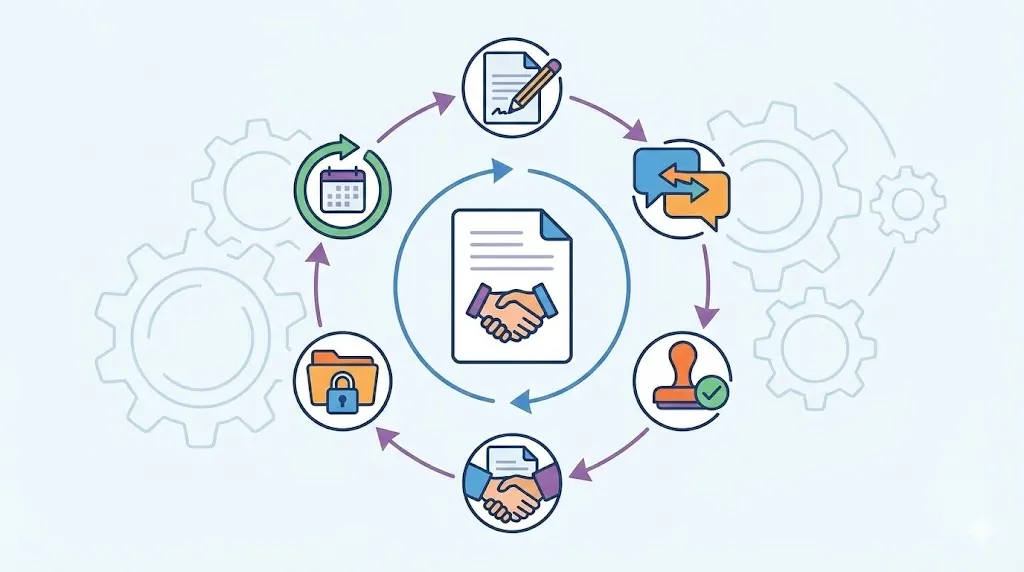
Volody AI CLM is an Agentic AI-powered Contract Lifecycle Management platform designed to eliminate manual contracting tasks, automate complex workflows, and deliver actionable insights. As a one-stop shop for all contract activities, it covers drafting, collaboration, negotiation, approvals, e-signature, compliance tracking, and renewals. Built with enterprise-grade security and no-code configuration, it meets the needs of the most complex global organizations. Volody AI CLM also includes AI-driven contract review and risk analysis, helping teams detect issues early and optimize terms. Trusted by Fortune 500 companies, high-growth startups, and government entities, it transforms contracts into strategic, data-driven business assets.



" height="216.72211px" id="FYO0bO80Y" transform="translate(3 6.105)" width="206.073px"/><path d="M 108.174 222 C 88.432 222 70.303 217.239 53.785 207.717 C 37.267 198.196 24.173 185.052 14.504 168.285 C 4.835 151.312 0 132.165 0 110.845 C 0 89.731 4.835 70.792 14.504 54.025 C 24.173 37.052 37.267 23.804 53.785 14.282 C 70.303 4.761 88.432 0 108.174 0 C 128.116 0 146.246 4.761 162.562 14.282 C 179.08 23.804 192.073 37.052 201.541 54.025 C 211.21 70.792 216.044 89.731 216.044 110.845 C 216.044 132.165 211.21 151.312 201.541 168.285 C 192.073 185.052 179.08 198.196 162.562 207.717 C 146.044 217.239 127.915 222 108.174 222 Z M 108.174 183.189 C 120.864 183.189 132.044 180.291 141.713 174.495 C 151.382 168.492 158.936 160.006 164.375 149.035 C 169.814 138.064 172.533 125.334 172.533 110.845 C 172.533 96.355 169.814 83.729 164.375 72.965 C 158.936 61.994 151.382 53.611 141.713 47.815 C 132.044 42.02 120.864 39.122 108.174 39.122 C 95.483 39.122 84.202 42.02 74.332 47.815 C 64.663 53.611 57.109 61.994 51.67 72.965 C 46.231 83.729 43.511 96.355 43.511 110.845 C 43.511 125.334 46.231 138.064 51.67 149.035 C 57.109 160.006 64.663 168.492 74.332 174.495 C 84.202 180.291 95.483 183.189 108.174 183.189 Z" fill="rgba(255, 255, 255, 0.12)" height="222px" id="aa1McFcE9" transform="translate(227.183 3)" width="216.04399999999998px"/><path d="M 42.302 182.257 L 111.799 182.257 L 111.799 216.722 L 0 216.722 L 0 0 L 42.302 0 Z" fill="rgba(255, 255, 255, 0.12)" height="216.72211px" id="yRq4AnrsX" transform="translate(477.721 6.105)" width="111.79899999999998px"/><path d="M 108.174 222 C 88.432 222 70.303 217.239 53.785 207.717 C 37.267 198.196 24.173 185.052 14.504 168.285 C 4.835 151.312 0 132.165 0 110.845 C 0 89.731 4.835 70.792 14.504 54.025 C 24.173 37.052 37.267 23.804 53.785 14.282 C 70.303 4.761 88.432 0 108.174 0 C 128.116 0 146.246 4.761 162.562 14.282 C 179.08 23.804 192.073 37.052 201.541 54.025 C 211.21 70.792 216.045 89.731 216.045 110.845 C 216.045 132.165 211.21 151.312 201.541 168.285 C 192.073 185.052 179.08 198.196 162.562 207.717 C 146.044 217.239 127.915 222 108.174 222 Z M 108.174 183.189 C 120.864 183.189 132.044 180.291 141.713 174.495 C 151.382 168.492 158.936 160.006 164.375 149.035 C 169.814 138.064 172.534 125.334 172.534 110.845 C 172.534 96.355 169.814 83.729 164.375 72.965 C 158.936 61.994 151.382 53.611 141.713 47.815 C 132.044 42.02 120.864 39.122 108.174 39.122 C 95.483 39.122 84.202 42.02 74.332 47.815 C 64.663 53.611 57.108 61.994 51.67 72.965 C 46.231 83.729 43.511 96.355 43.511 110.845 C 43.511 125.334 46.231 138.064 51.67 149.035 C 57.108 160.006 64.663 168.492 74.332 174.495 C 84.202 180.291 95.483 183.189 108.174 183.189 Z" fill="rgba(255, 255, 255, 0.12)" height="222px" id="mo8HQspQ0" transform="translate(609.155 3)" width="216.04500000000007px"/><path d="M 73.727 0 C 95.885 0 115.324 4.45 132.044 13.351 C 148.967 22.252 161.957 34.982 171.027 51.541 C 180.287 67.894 184.917 86.937 184.917 108.671 C 184.917 130.405 180.287 149.449 171.027 165.801 C 161.957 181.947 148.967 194.47 132.044 203.371 C 115.324 212.271 95.885 216.722 73.727 216.722 L 0 216.722 L 0 0 Z M 72.216 179.773 C 94.374 179.773 111.497 173.564 123.583 161.144 C 135.669 148.724 141.713 131.233 141.713 108.671 C 141.713 86.109 135.669 68.515 123.583 55.888 C 111.497 43.055 94.374 36.638 72.216 36.638 L 42.302 36.638 L 42.302 179.773 Z" fill="rgba(255, 255, 255, 0.12)" height="216.72211px" id="I3iXX5Hi_" transform="translate(859.693 6.105)" width="184.91699999999992px"/><path d="M 185.22 0 L 113.91 141.273 L 113.91 216.722 L 71.61 216.722 L 71.61 141.273 L 0 0 L 47.74 0 L 93.06 99.046 L 138.08 0 Z" fill="rgba(255, 255, 255, 0.12)" height="216.72211px" id="nzHyWC0_d" transform="translate(1061.78 6.105)" width="185.22000000000003px"/></svg>)