
Healthcare providers require rigorous contract controls across payer, physician, vendor, and partner agreements. These contracts directly influence care delivery, revenue, privacy, compliance, and operational performance. The right contract management software for healthcare centralizes approvals, obligations, renewals, and risk oversight. This guide evaluates five leading platforms and outlines the criteria providers should use to select the right solution.
TL;DR
Healthcare CLM software should support secure workflows, audit trails, reporting, integrations, and healthcare contract controls.
Sirion, Ironclad, Evisort, Icertis, and Agiloft suit different healthcare contracting needs and operating models.
Fragmented files, slow approvals, missed renewals, and unclear ownership create major contract risks for providers.
Standard templates, automated alerts, strong data rules, and role-based training improve CLM adoption.
Platform fit depends on organization size, contract volume, system needs, governance maturity, and internal resources.
A phased rollout helps teams migrate contracts, test workflows, train users, and improve results over time.
What Healthcare Providers Need From CLM Software
Healthcare providers manage many agreement types at once. These include payer contracts, physician agreements, supplier terms, facility leases, and technology deals. A strong healthcare CLM platform connects these workstreams without forcing every team into one rigid process.
Healthcare contract workflows and stakeholders
Legal teams need controlled drafting, review, redlining, and approvals. Procurement teams need supplier terms, pricing records, and spend visibility. Finance teams need payment terms, renewal dates, and fee changes.
Compliance teams need clear evidence of reviews and approvals. Clinical operations teams need fast access to current agreements. Executives need a reliable view of risk, value, and upcoming decisions.
A payer contract management platform should support different approval paths. A physician agreement may need legal, medical leadership, and human resources review. A technology vendor agreement may need security and privacy checks.
The platform should also support healthcare contract negotiation software needs. Teams should compare versions, preserve comments, and use approved fallback clauses. These controls reduce delays while protecting important terms.
Compliance, security, and auditability
Healthcare providers handle sensitive information and regulated services. Their CLM software should support role-based access, audit trails, and strong retention controls. Role-based access means users only see contracts suited to their jobs.
Audit trails record who viewed, changed, approved, or signed a contract. This evidence helps teams explain decisions during audits. It also shows whether staff followed required approval rules.
HIPAA and HITECH support should form part of the review. However, a software claim does not prove full compliance. Providers must check hosting, encryption, access controls, breach response, and business associate terms.
Electronic signatures should create clear signing records. Version history should prevent confusion between drafts and final agreements. Data retention rules should match legal, business, and organizational requirements.
Reporting, integrations, and scalability
Useful dashboards show more than stored documents. They show upcoming renewals, missing approvals, open obligations, and unusual terms. This turns contract data into work that teams can act upon.
Healthcare CLM tools should connect with ERP, procurement, identity, and e-signature systems. They may also need links with document tools, customer systems, and practice software. These connections reduce duplicate entry and improve data quality.
A practical requirements checklist should cover:
Workflow: Intake, drafting, reviews, approvals, signatures, and renewals.
Security: Access controls, audit logs, encryption, retention, and privacy support.
Reporting: Obligations, dates, pricing, risks, exceptions, and performance views.
Integrations: ERP, procurement, identity, document, e-signature, and business systems.
Scalability: More users, more contracts, new entities, and changing approval needs.
Related Article: CLM Software for Healthcare
Comparing Leading CLM Platforms for Healthcare Providers
The five platforms below support different contract operating models. Providers should compare their needs before choosing a system. No single tool fits every hospital, clinic group, or regional network.
AI-led post-signature performance management
Sirion focuses on post-signature contract performance. It helps teams track obligations, supplier commitments, service levels, and commercial results. This focus suits providers with complex vendor and outsourcing portfolios.
Its strength lies in ongoing contract oversight. Teams can connect agreement terms with assigned actions and performance measures. This approach helps procurement and operations teams spot missed duties sooner.
Sirion may also support advanced contract intelligence across large portfolios. AI contract analytics healthcare teams use can reveal patterns across pricing, obligations, and supplier terms. Users should still validate extracted data before acting on it.
The platform may feel complex for smaller provider groups. It can require strong process ownership and careful setup. Organizations seeking simple storage and signature workflows may need less capability.
Sirion fits large health systems with major supplier portfolios. It also suits teams that measure service delivery after signing. It is less suitable when post-signature tracking is not a core need.
Workflow-centered contract collaboration
Ironclad centers on intake, drafting, approvals, collaboration, and workflow automation. It can give business teams a clear path from request to signed agreement. This supports consistent work across legal, procurement, and operations.
Its main strength is user-friendly collaboration. Requesters can submit contract needs through guided forms. Legal teams can manage reviews, comments, approvals, and final records in one process.
Ironclad may help organizations improve adoption. A clear workflow reduces email handoffs and unclear ownership. It also gives leaders better visibility into work waiting for action.
Some healthcare providers may need deeper industry controls. They should test payer workflows, physician templates, and privacy reviews directly. They should also confirm the system supports their audit and retention needs.
Ironclad suits providers that want structured contracting across many teams. It can work well for growing networks with active legal operations. Smaller teams may need careful planning to avoid overbuilding workflows.
Intelligent contract repository and search
Evisort emphasizes AI-assisted contract data extraction and search. It can pull key fields from agreements and create searchable records. These fields may include parties, dates, payment terms, and obligations.
Its repository can help providers reduce manual searching. Teams can find agreements through metadata or full-text search. This supports faster reviews during audits, renewals, and business questions.
Evisort may help teams improve contract data quality over time. AI can identify terms that need human review. Users should set review rules for unusual clauses and incomplete records.
Repository-focused tools still need strong workflow design. Storage alone does not fix slow approvals or unclear ownership. Providers should test intake, negotiation, approval, and renewal processes.
Evisort suits organizations with scattered legacy contracts. It can help teams create a usable contract record from older files. It also suits providers that need better search and reporting first.
Enterprise governance and configurable operations
Icertis focuses on enterprise governance, compliance, and contract intelligence. It can support large organizations with many entities and approval rules. Its broad scope may suit health systems with complex governance needs.
Icertis can help standardize processes across departments and regions. It may support detailed controls for risk, policy, and contract data. Large legal and procurement teams may value this depth.
Agiloft offers configurable workflows, automation, and reporting. Its flexibility can help teams shape processes around local requirements. Providers may use it for vendor, payer, physician, and facility agreements.
Configurable tools need disciplined ownership. Too many custom rules can confuse users and slow future changes. Each organization should document its process before building the system.
Platform | Best fit | Automation | Reporting | Compliance support | Integrations | Scalability | Implementation considerations |
|---|---|---|---|---|---|---|---|
Sirion | Complex supplier performance | Strong obligation tracking | Performance and contract views | Configurable controls | Enterprise systems | High | Requires clear performance data |
Ironclad | Cross-team contract workflows | Strong intake and approvals | Workflow and cycle-time views | Approval and audit support | Business and signing tools | High | Needs healthcare workflow testing |
Evisort | Search and contract data | AI-assisted data capture | Metadata and obligation reports | Access and audit controls | Document and business tools | Medium to high | Requires data review and cleanup |
Icertis | Enterprise governance | Broad workflow automation | Enterprise contract intelligence | Strong policy support | Large enterprise ecosystem | Very high | Often needs major planning |
Agiloft | Configurable operations | Flexible rules and routing | Custom reports and dashboards | Configurable governance | Business system connectors | High | Avoid unnecessary customization |
Related Article: Best Contract Management Software in 2026: Top 20 CLM Tools
Compliance and Reporting Requirements
Healthcare contract reporting should support decisions, not simply produce files. Teams need clear data about dates, duties, pricing, risk, and approval history. This creates a stronger base for healthcare contract compliance solutions.
Turning contract data into healthcare intelligence
Structured metadata makes contract records easier to search and compare. Metadata means organized fields such as parties, dates, contract type, and renewal terms. These fields support reliable dashboards and alerts.
Extracted clauses can reveal payment rules, service levels, and privacy duties. Teams can compare those terms across suppliers or payer agreements. They can then focus reviews where differences create concern.
Basic reporting answers, “Which contracts do we have?” Better intelligence answers, “What should we do next?” It may show an upcoming renewal, an unassigned obligation, or a pricing change.
AI can help find patterns across large contract sets. Yet human review remains necessary for complex legal language. Providers should treat AI findings as review prompts, not final legal advice.
Managing audit readiness and accountability
Audit-ready records show each important contract action. They include approval evidence, version history, access records, and exception notes. These details help explain how the organization reached a decision.
Role-based access limits exposure to sensitive agreements. Policy controls can require added review for high-risk terms. Exception records can show why a team accepted a nonstandard clause.
Reporting can help legal teams find open risks. Compliance teams can review missing evidence. Finance teams can check payment terms. Operations teams can track service duties.
Reporting capability | Compliance use | Financial use | Operational use | Executive use |
|---|---|---|---|---|
Approval history | Proves required reviews | Shows decision delays | Identifies stalled work | Shows process health |
Renewal alerts | Supports timely review | Protects pricing control | Prevents service gaps | Shows future exposure |
Obligation tracking | Assigns accountable owners | Supports fee and credit checks | Tracks delivery duties | Shows performance risk |
Clause search | Finds policy exceptions | Compares commercial terms | Supports vendor reviews | Highlights portfolio trends |
Access logs | Supports privacy reviews | Protects sensitive data | Shows record use | Supports governance oversight |
Key Challenges in Healthcare Contract Operations
Contract operations often fail because information and ownership remain scattered. Providers may have strong legal staff but weak process control. The result is delay, missed terms, and avoidable exposure.
Fragmented repositories and inconsistent contract data
Contracts often sit in shared drives, inboxes, local folders, and business systems. Some records may exist in several versions. Others may lack signed copies or key dates.
Inconsistent names make files hard to find. Missing metadata blocks useful reporting. Duplicate records can create confusion during renewal or dispute work.
These problems affect every team. Legal cannot review the full history. Finance may miss a payment change. Operations may follow an old service commitment.
A central repository improves access and control. It should include search, permissions, version history, and clear metadata. Migration still requires careful review of older records.
Complex approvals and cross-functional ownership
Healthcare agreements often cross many departments. Legal may review risk, while finance checks terms and procurement checks suppliers. Compliance, security, and clinical leaders may also need approval.
Manual handoffs create long delays. Email threads hide the current status. Unclear ownership makes follow-up difficult.
A good workflow assigns each task to a named role. It also sets approval rules by contract type, value, and risk. Teams should define these rules before configuring a platform.
Missed obligations, renewals, and financial terms
Contracts contain many dates and duties. These include expirations, auto-renewals, price changes, service levels, payer requirements, and vendor promises. Missed terms can create financial and care delivery problems.
The main risks usually connect in three ways:
Poor visibility: Teams miss renewals or obligations when records remain scattered. This creates service gaps, unwanted renewals, and rushed decisions.
Weak ownership: Duties remain unclear when contracts lack named owners. This can cause missed reports, late payments, and unresolved vendor issues.
Limited control: Teams may accept risky terms without policy checks. This can increase privacy exposure, financial loss, and audit pressure.
Remedies and Best Practices for CLM Adoption
Good software cannot repair unclear processes by itself. Providers should design simple rules before launch. They should also assign people to own those rules.
Standardize intake, templates, and approval rules
Centralized intake forms give requesters a clear starting point. The form can capture contract type, parties, value, timing, and business need. This helps route work to the right reviewers.
Approved templates reduce repeated drafting. Clause libraries give legal teams tested language. Fallback positions show negotiators what alternatives they can offer.
Approval thresholds should match real risk. A low-value supplier renewal may need fewer reviews. A payer agreement or privacy-sensitive deal may need more.
Standardization does not mean every contract looks identical. Teams can allow exceptions with documented reasons. This keeps work flexible while preserving control.
Use automation for obligations and renewals
Automation can send reminders before important dates. It can assign obligations to named owners and escalate overdue tasks. It can also trigger reviews when contract data changes.
Renewal calendars help teams plan negotiations early. Alerts should reach people who can act, not only legal teams. Each reminder should explain the required next step.
Automation should support accountability. It should not hide weak ownership or poor data. Teams must review alerts and update records when duties change.
Establish data governance and performance reviews
Data governance means setting rules for contract information. Teams should define required fields, naming standards, owners, and review duties. These rules keep records useful after launch.
Access reviews should confirm that users still need permission. Repository checks should find duplicate, missing, or outdated files. Managers should review reports on a regular schedule.
Teams can measure cycle time, renewal capture, exceptions, and user adoption. They can compare results before and after launch. This shows whether the platform improves daily work.
Build adoption around user roles
Each user group needs training tied to its work. Legal teams need review and clause tools. Procurement teams need supplier workflows. Finance teams need payment and renewal views.
Clinical operations teams need simple access to current agreements. Business requesters need clear intake steps. Compliance teams need audit and exception reports.
A practical adoption checklist should include:
Process design: Define intake, review, approval, signing, and renewal steps.
Data migration: Clean files, map fields, remove duplicates, and confirm owners.
Training: Teach each role with realistic healthcare contract examples.
Ownership: Assign system, data, process, and obligation owners.
Measurement: Track cycle time, adoption, exceptions, and renewal results.
Improvement: Review feedback, fix friction, and update rules regularly.
Related Article: Free CLM Software in 2024: Key Things to look out for!
Selecting and Implementing the Right Platform
The best choice depends on more than feature count. Providers should match the platform to their operating model. They should also consider internal skills, data quality, and future growth.
Match platform complexity to organizational needs
Independent providers often need simple intake, storage, signatures, and renewal alerts. They may not need complex enterprise rules. Ease of use and fast deployment can matter most.
Regional networks may need shared templates and different entity controls. They may also need payer workflows and supplier reporting. Flexible permissions can support local teams without losing central oversight.
Large health systems often need enterprise contract management for hospitals. They may manage many entities, contract types, and approval paths. Integration depth, policy control, and scalability become more important.
Contract volume also affects platform fit. High volumes may justify stronger automation and data extraction. Lower volumes may favor simpler tools with lower setup demands.
Plan integrations, migration, and rollout
Start with a contract inventory. Identify file locations, contract types, owners, dates, and system links. Then cleanse documents before moving them into the new repository.
Map old fields to the new data model. Decide which records need full review and which need basic indexing. Confirm access rules before users receive migrated files.
Build integrations around real business needs. Connect signing, identity, finance, procurement, or document systems where value is clear. Avoid adding links that create more maintenance work.
A phased rollout usually lowers risk. Start with one contract group and a small user set. Test workflows, reports, permissions, and alerts before wider deployment.
Stage | Main work | Key output |
|---|---|---|
Discovery | Inventory contracts, users, risks, and systems | Approved project scope |
Configuration | Set fields, templates, roles, and workflows | Tested solution design |
Migration | Clean files, map data, and load records | Trusted contract repository |
Pilot testing | Test real agreements and approval paths | Resolved process issues |
Training | Teach users by role and workflow | Prepared user groups |
Launch | Release the platform with support | Active production use |
Optimization | Review data, feedback, and results | Updated process plan |
Related Article: Best Contract Management Software: Top 10 CLM Tools
Why Contract Management Software Matters
Centralized contract data improves visibility across legal, procurement, finance, compliance, and operations.
Automation reduces manual follow-up and supports stronger control over renewals and obligations.
The right platform depends on risk, workflow complexity, reporting needs, integrations, and organizational scale.
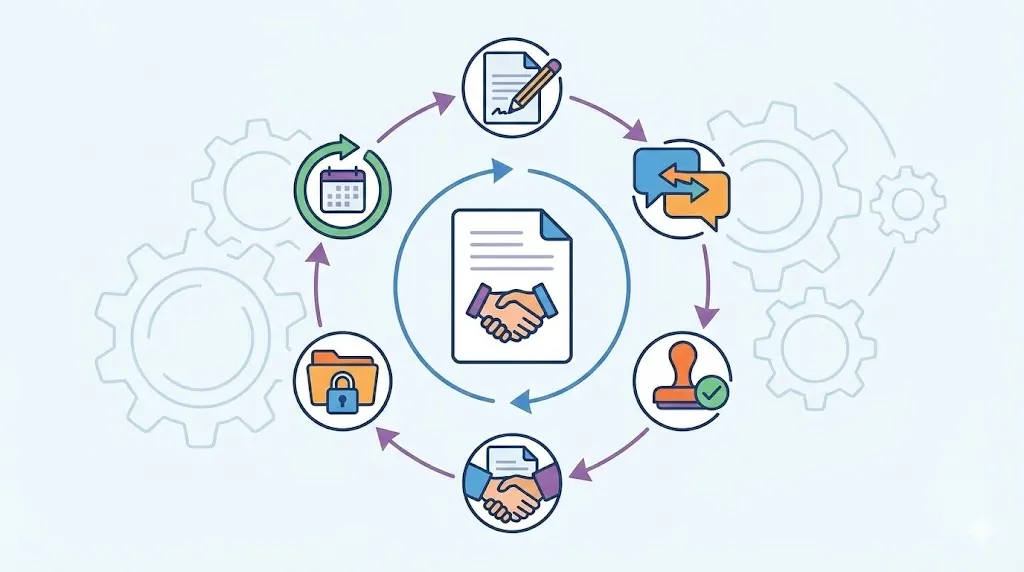
Contract management software can bring these controls into one working system. It can support drafting, review, approval, signing, storage, and renewal tracking. This gives healthcare teams a clearer view of contract performance.
Generic CLM software can automate intake, route reviews, and track obligations. It can also create alerts for renewals, missing approvals, and risky terms. Better records help teams act before problems grow.
Volody's CLM Software supports AI Contract Review, AI Contract Summaries, and Obligation Management. Its review tools can flag risky clauses and missing provisions. Summaries can highlight key duties, renewal dates, and contract risks. Obligation Management can track deliverables, renewals, and commitments.
For example, a hospital could review a vendor agreement, summarize its renewal duties, and assign service obligations. Owners would then receive reminders before key dates.
Evaluate how a unified CLM platform can simplify legal workflows, strengthen contract oversight, and help your healthcare organization act on critical obligations with confidence. Explore Volody's CLM Software.
FAQ
What is CLM software for healthcare providers?
CLM software manages healthcare contracts from drafting through renewal. Providers use it for authoring, reviews, approvals, signatures, storage, and reporting. It can also track obligations, payment terms, renewal dates, and policy exceptions. This creates one controlled record instead of scattered files. Teams can then find current agreements and act on important duties.
Does healthcare CLM software need to support HIPAA compliance?
Healthcare CLM software should support controls that help protect sensitive information. These controls may include access rules, encryption, audit logs, retention settings, and secure signing. However, software alone does not create HIPAA compliance. Providers must review business associate terms, internal policies, user behavior, and vendor security evidence.
Which healthcare contracts can CLM software manage?
CLM software can manage payer, physician, vendor, supplier, technology, facility, laboratory, and employment agreements. It can also support strategic partnerships and service arrangements. Each contract type may need different templates, reviewers, and approval rules. Providers should test these workflows during product evaluation and pilot deployment.
How does CLM software improve healthcare contract reporting?
CLM software makes contract data searchable and easier to compare. It can extract parties, dates, payment terms, clauses, and obligations. Dashboards can show upcoming renewals, open duties, approval delays, and compliance exceptions. Executives gain better visibility, while legal, finance, and operations teams receive more useful daily alerts.
How long does it take to implement CLM software in a healthcare organization?
Implementation time depends on contract volume, data quality, integrations, and workflow complexity. A small provider may start with one workflow and a focused contract set. A large health system may need phased deployment across entities and departments. Testing, training, migration review, and change management often shape the final schedule.
What should healthcare providers evaluate before buying CLM software?
Providers should assess security, privacy support, workflow flexibility, AI features, reporting, integrations, and usability. They should also test healthcare templates, payer workflows, approval rules, and audit records. Scalability and vendor support matter for long-term use. Finally, compare licensing, migration, setup, integration, training, and support costs.
About the Company

Volody AI CLM is an Agentic AI-powered Contract Lifecycle Management platform designed to eliminate manual contracting tasks, automate complex workflows, and deliver actionable insights. As a one-stop shop for all contract activities, it covers drafting, collaboration, negotiation, approvals, e-signature, compliance tracking, and renewals. Built with enterprise-grade security and no-code configuration, it meets the needs of the most complex global organizations. Volody AI CLM also includes AI-driven contract review and risk analysis, helping teams detect issues early and optimize terms. Trusted by Fortune 500 companies, high-growth startups, and government entities, it transforms contracts into strategic, data-driven business assets.





" height="216.72211px" id="FYO0bO80Y" transform="translate(3 6.105)" width="206.073px"/><path d="M 108.174 222 C 88.432 222 70.303 217.239 53.785 207.717 C 37.267 198.196 24.173 185.052 14.504 168.285 C 4.835 151.312 0 132.165 0 110.845 C 0 89.731 4.835 70.792 14.504 54.025 C 24.173 37.052 37.267 23.804 53.785 14.282 C 70.303 4.761 88.432 0 108.174 0 C 128.116 0 146.246 4.761 162.562 14.282 C 179.08 23.804 192.073 37.052 201.541 54.025 C 211.21 70.792 216.044 89.731 216.044 110.845 C 216.044 132.165 211.21 151.312 201.541 168.285 C 192.073 185.052 179.08 198.196 162.562 207.717 C 146.044 217.239 127.915 222 108.174 222 Z M 108.174 183.189 C 120.864 183.189 132.044 180.291 141.713 174.495 C 151.382 168.492 158.936 160.006 164.375 149.035 C 169.814 138.064 172.533 125.334 172.533 110.845 C 172.533 96.355 169.814 83.729 164.375 72.965 C 158.936 61.994 151.382 53.611 141.713 47.815 C 132.044 42.02 120.864 39.122 108.174 39.122 C 95.483 39.122 84.202 42.02 74.332 47.815 C 64.663 53.611 57.109 61.994 51.67 72.965 C 46.231 83.729 43.511 96.355 43.511 110.845 C 43.511 125.334 46.231 138.064 51.67 149.035 C 57.109 160.006 64.663 168.492 74.332 174.495 C 84.202 180.291 95.483 183.189 108.174 183.189 Z" fill="rgba(255, 255, 255, 0.12)" height="222px" id="aa1McFcE9" transform="translate(227.183 3)" width="216.04399999999998px"/><path d="M 42.302 182.257 L 111.799 182.257 L 111.799 216.722 L 0 216.722 L 0 0 L 42.302 0 Z" fill="rgba(255, 255, 255, 0.12)" height="216.72211px" id="yRq4AnrsX" transform="translate(477.721 6.105)" width="111.79899999999998px"/><path d="M 108.174 222 C 88.432 222 70.303 217.239 53.785 207.717 C 37.267 198.196 24.173 185.052 14.504 168.285 C 4.835 151.312 0 132.165 0 110.845 C 0 89.731 4.835 70.792 14.504 54.025 C 24.173 37.052 37.267 23.804 53.785 14.282 C 70.303 4.761 88.432 0 108.174 0 C 128.116 0 146.246 4.761 162.562 14.282 C 179.08 23.804 192.073 37.052 201.541 54.025 C 211.21 70.792 216.045 89.731 216.045 110.845 C 216.045 132.165 211.21 151.312 201.541 168.285 C 192.073 185.052 179.08 198.196 162.562 207.717 C 146.044 217.239 127.915 222 108.174 222 Z M 108.174 183.189 C 120.864 183.189 132.044 180.291 141.713 174.495 C 151.382 168.492 158.936 160.006 164.375 149.035 C 169.814 138.064 172.534 125.334 172.534 110.845 C 172.534 96.355 169.814 83.729 164.375 72.965 C 158.936 61.994 151.382 53.611 141.713 47.815 C 132.044 42.02 120.864 39.122 108.174 39.122 C 95.483 39.122 84.202 42.02 74.332 47.815 C 64.663 53.611 57.108 61.994 51.67 72.965 C 46.231 83.729 43.511 96.355 43.511 110.845 C 43.511 125.334 46.231 138.064 51.67 149.035 C 57.108 160.006 64.663 168.492 74.332 174.495 C 84.202 180.291 95.483 183.189 108.174 183.189 Z" fill="rgba(255, 255, 255, 0.12)" height="222px" id="mo8HQspQ0" transform="translate(609.155 3)" width="216.04500000000007px"/><path d="M 73.727 0 C 95.885 0 115.324 4.45 132.044 13.351 C 148.967 22.252 161.957 34.982 171.027 51.541 C 180.287 67.894 184.917 86.937 184.917 108.671 C 184.917 130.405 180.287 149.449 171.027 165.801 C 161.957 181.947 148.967 194.47 132.044 203.371 C 115.324 212.271 95.885 216.722 73.727 216.722 L 0 216.722 L 0 0 Z M 72.216 179.773 C 94.374 179.773 111.497 173.564 123.583 161.144 C 135.669 148.724 141.713 131.233 141.713 108.671 C 141.713 86.109 135.669 68.515 123.583 55.888 C 111.497 43.055 94.374 36.638 72.216 36.638 L 42.302 36.638 L 42.302 179.773 Z" fill="rgba(255, 255, 255, 0.12)" height="216.72211px" id="I3iXX5Hi_" transform="translate(859.693 6.105)" width="184.91699999999992px"/><path d="M 185.22 0 L 113.91 141.273 L 113.91 216.722 L 71.61 216.722 L 71.61 141.273 L 0 0 L 47.74 0 L 93.06 99.046 L 138.08 0 Z" fill="rgba(255, 255, 255, 0.12)" height="216.72211px" id="nzHyWC0_d" transform="translate(1061.78 6.105)" width="185.22000000000003px"/></svg>)