

Key Highlights
A clause library is a central storage of pre-approved contract clauses for faster contract creation.
It significantly improves efficiency in your contract management process by saving valuable time.
Using a library ensures consistency and reduces risks across all your business contracts.
It supports your entire contract lifecycle management by standardising language from drafting to renewal.
Following best practices for maintenance keeps your contract clauses compliant and up-to-date.
Modern software can enhance a clause library with AI and automation features.
Introduction
In today's fast-paced business world, efficient contract management is essential for success. The process of contract creation can often be slow and repetitive, leading to delays and inconsistencies. A key tool that transforms contract lifecycle management is the clause library. By establishing a centralised repository of approved legal language, you can streamline your workflows, reduce errors, and empower your teams to create compliant contracts with confidence. This simple yet powerful asset is fundamental to modern legal operations.
Defining a Clause Library in Contract Management

A contract clause library is a collection of pre-approved, organised contract clauses. Think of it as a set of building blocks for your agreements. A well-maintained contract clause library stores your most important and frequently used legal language in one accessible place.
This tool is a core part of effective contract management and many CLM solution offerings. Instead of writing every contract from scratch, your teams can quickly find and insert the right contract clauses, making the entire contract lifecycle management process faster and more reliable.
What is a Clause Library and Why Is It Important?
A contract clause library is a centralised repository where your business stores standardised and legally vetted contract clauses. This collection contains the most common and critical provisions your enterprise uses, such as terms for confidentiality, termination, or payment. You can adjust which contract clauses you include based on your specific business needs.
The importance of this tool cannot be overstated. It is a valuable organisational asset that helps you save significant time during contract creation. When your legal team pre-approves the language, you reduce the risk of human error or ambiguity. It allows even non-legal staff to draft accurate agreements.
Ultimately, a contract clause library, often found within contract management software, makes your entire contracting process more efficient. By enabling quick access to relevant clauses, you ensure consistency and accuracy, allowing your business to operate with greater speed and less risk.
How Clause Libraries Fit into Modern Legal Workflows
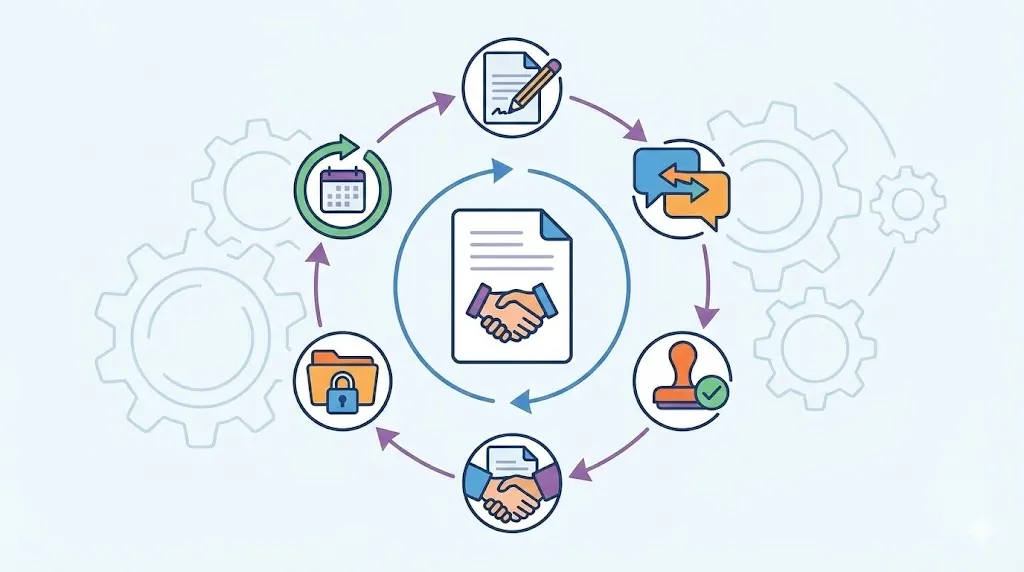
In modern legal workflows, clause libraries are essential for moving away from slow, manual work. Instead of your legal team recreating standard contract clauses for every new agreement, they can pull from a pre-approved repository. This dramatically speeds up the contract building process.
Contract lifecycle management software integrates these libraries directly into your workflow. These systems provide powerful features like version control, ensuring that everyone is using the most current and compliant language. This prevents the accidental use of outdated terms from old templates.
This integration empowers your entire organisation. Sales, procurement, and other departments can draft initial contracts confidently, knowing they are using language approved by the legal team. This frees up legal professionals to focus on more complex negotiations and strategic tasks, rather than repetitive drafting.
Related Article: Importance of Confidentiality Clause: Your Ultimate Guide
Key Advantages of Using a Clause Library

The primary advantage of a contract clause library is the immense amount of valuable time it saves. By providing a single source for pre-approved terms, you can accelerate contract drafting and reduce repetitive tasks, freeing up your team to focus on more strategic work.
Furthermore, these libraries, especially when integrated with contract management software, enhance consistency and control. With features like version control, you ensure that all contracts align with your company's standards, reducing risk and improving compliance throughout the contract lifecycle management process. The following sections will explore these benefits in greater detail.
Enhancing Efficiency and Reducing Drafting Time
Imagine how much effort goes into drafting every business contract from scratch. A clause library eliminates this repetitive work. When your key contract clauses are saved in a single location, you can achieve faster contract creation by easily adding them to new agreements and amendments.
This efficiency is a game-changer for your team. Since the terms are already approved by legal, you save valuable time during the initial drafting stage. A well-organised library where clause library stores are categorised makes finding the right language instantaneous, streamlining the entire contract building process.
Modern contract management software takes this a step further. It can even suggest relevant clauses based on the type of contract you are creating, automating parts of the process. This allows your business to move faster, finalise deals quicker, and improve overall productivity without sacrificing quality.
Achieving Consistency Across Contracts
Creating business contracts from scratch often leads to wide variations in language, even for standard agreements. This inconsistency introduces risk and makes managing your contract portfolio difficult. A contract clause library is the solution to this common problem.
By establishing a single source of truth for your contractual language, you ensure consistency across all departments and deals. Every new agreement starts with the same approved building blocks, preventing contradictory or unauthorised terms from being included. This standardisation is crucial for maintaining a consistent risk profile.
This heightened consistency directly supports contract compliance. When everyone in your organisation uses the right language, you can be confident that your contracts meet both internal standards and external regulations. This ensures your agreements are clear, enforceable, and aligned with your company's objectives.
Supporting Regulatory Compliance and Risk Management
One of the most critical functions of a clause library is its role in risk management. Ambiguous or poorly written contract clauses can expose your company to significant legal and financial risk, such as unlimited liability or weak confidentiality protections.
A clause library allows your legal team to craft precise, balanced provisions that address key risk areas. Since every clause in your library is pre-approved, you can confidently create new documents knowing they align with company standards and regulatory requirements. This proactive approach to contract management minimises the chance of disputes.
Furthermore, a library helps you stay on top of changing regulations. When regulatory requirements are updated, you only need to edit the relevant clause within the library. This change can then be automatically applied to all future contracts, ensuring ongoing regulatory compliance without having to manually review every template.
Related Article: What is Contract Risk & How to manage it?
Core Components of an Effective Clause Library
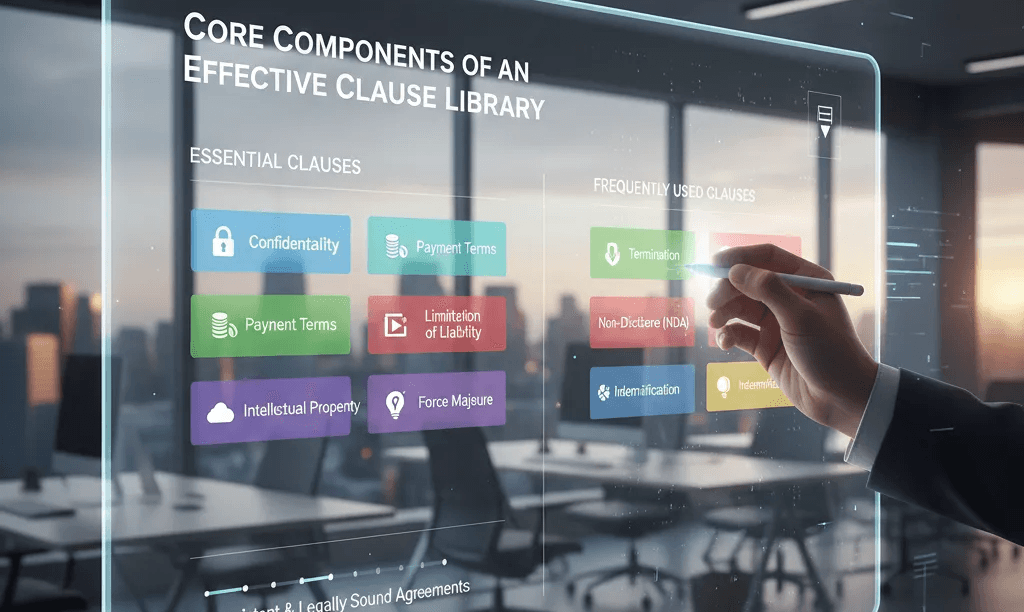
An effective contract clause library is more than just a random collection of text. It should be a well-organised repository containing the most common clauses your business needs to operate. These essential clauses serve as the foundation for consistent and legally sound agreements across your organisation.
Proper contract management requires you to identify and standardise the contract clauses that appear in most of your agreements. This includes terms that define payment, protect information, and outline what happens if things go wrong. Let's look at some of these core components.
Essential Clauses Commonly Included
A well-rounded contract clause library should include a variety of essential clauses that cover the key terms and conditions required in most contracts. These provisions are the building blocks you will use to create strong and comprehensive agreements that protect your business interests.
Some of the most critical clauses address fundamental aspects of the business relationship. These include terms that specify how and when payments will be made, protect sensitive data, and allocate risk between the parties. Having standard language for these helps avoid disputes down the line.
Here are some essential clauses that should be part of any library:
Confidentiality: Protects sensitive information shared between parties.
Payment Terms: Specifies the amount, timing, and method of payment.
Limitation of Liability: Caps the financial responsibility of a party.
Force Majeure: Addresses unforeseen events that prevent contract fulfilment.
Intellectual Property: Defines ownership and usage rights for creations.
Examples of Frequently Used Clauses in Contracts
Beyond the essential clauses, there are many other common clauses that are frequently used in different types of contract clauses. These provisions address specific scenarios and help clarify the rights and responsibilities of each party. For example, termination clauses outline the conditions under which a contract can be ended.
Another frequently used clause protects confidential information and trade secrets. A non-disclosure provision, often called an NDA clause, prevents employees or partners from sharing proprietary data. Similarly, an indemnification clause requires one party to cover the losses of another in specific situations.
Here are examples of some common types of clauses and their purpose:
Clause Type | Purpose |
|---|---|
Termination | Outlines the conditions for ending the contract. |
Indemnification | Defines responsibility for covering losses or damages. |
Confidentiality | Protects sensitive information and trade secrets. |
Assignment | Clarifies if a party can transfer its rights to someone else. |
Setting Up and Organising Your Clause Library
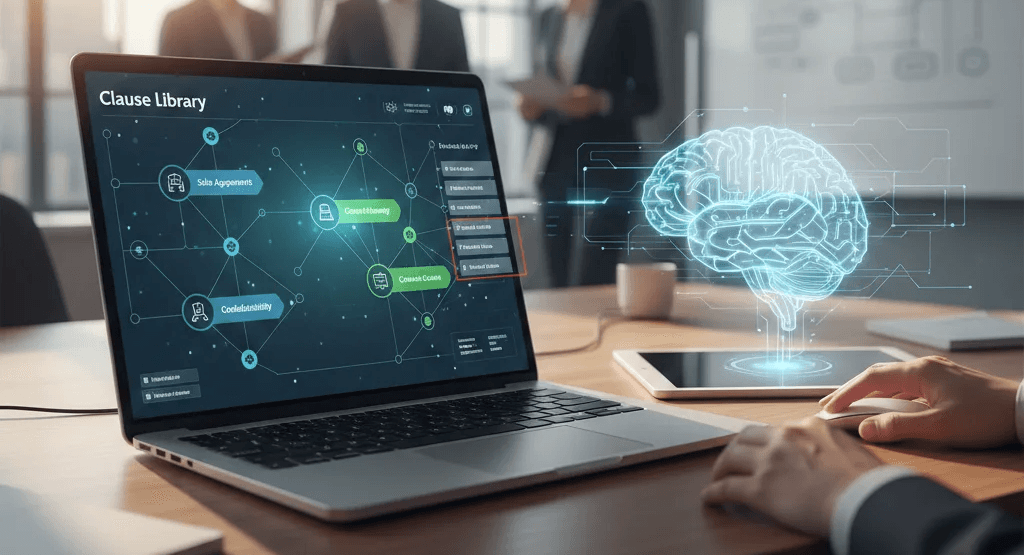
Creating a functional clause library requires more than just collecting text from old contract templates. To be effective, your library needs careful planning and organisation. The goal is to make it easy for users to find exactly what they need for any contract type.
The process starts with reviewing your existing agreements to identify standard language, which is then organised logically. Your legal team should lead this effort to ensure every clause is accurate and compliant. The following sections will guide you through how to categorise clauses and use technology to manage them.
Strategies for Categorisation and Customisation
Effective organisation is key to a useful clause library. A good strategy begins with careful planning on how to categorise your contract clauses. Don't just create a long, unorganised list. Instead, group clauses in a way that makes sense for your users.
A common approach is to categorise by contract type, such as sales agreements or vendor contracts. You can also group different types of clauses by subject, like "Payment" or "Confidentiality." Using tags and metadata is also a powerful way to make clauses searchable by risk level, jurisdiction, or other relevant criteria.
Your system should also allow for customisation. This includes having pre-approved alternative language, or fallback clauses, for negotiation. As your business evolves, you will need a process for adding new clauses and updating existing ones, ensuring your library remains a dynamic and relevant resource.
Leveraging Technology and Software Tools
While you can start a clause library in a simple document, leveraging technology unlocks its true potential. Modern contract management software and CLM systems are designed with clause libraries as a core feature, offering tools that streamline the entire process.
These platforms provide structured databases with powerful search capabilities, making it simple to find the right clause instantly. They also include essential features like version control, which tracks changes and ensures users are always working with the latest approved language. This eliminates the risk of using outdated terms.
Furthermore, advanced contract lifecycle management software is increasingly using artificial intelligence. AI can analyse contracts, suggest relevant clauses based on context, and even flag non-standard language for review. This level of automation helps you manage your contracts more efficiently and with greater insight.
Best Practices for Maintaining and Updating a Clause Library
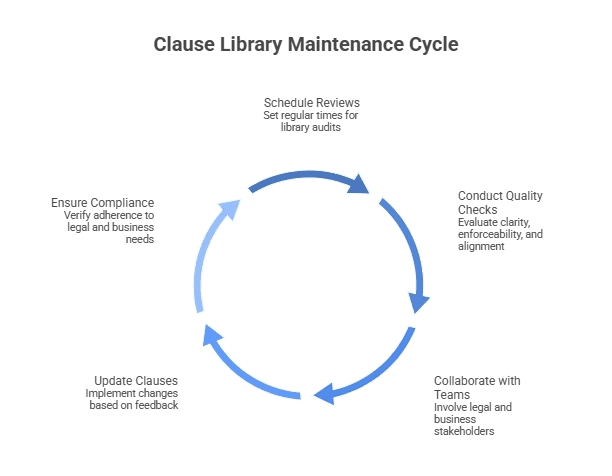
A clause library is not a "set it and forget it" tool. To remain a valuable asset, it requires ongoing maintenance and attention. Following best practices for updates is crucial to ensure your library reflects the latest legal changes and business needs, maintaining contract compliance.
Regular reviews, quality checks, and a clear update schedule are essential. It is also important to foster collaboration between your legal and business teams to ensure the clauses are both legally sound and practical for daily use. Let's look at how to implement these practices.
Scheduling Reviews and Quality Checks
A clause library can quickly become outdated if not properly maintained. To prevent this, you must establish a regular schedule for reviews and quality checks. This ensures that your clauses remain accurate, relevant, and compliant with any new legal changes or regulations.
The frequency of these reviews can vary. Many businesses benefit from quarterly audits, but highly regulated industries might require more frequent checks. It is also a good idea to perform a contract review whenever there are significant shifts in business strategy or the legal landscape.
During these reviews, check for clarity, enforceability, and alignment with your company's risk tolerance. Use a system with strong version control to track all edits and approvals. This creates a clear audit trail and ensures that only the most current, vetted language is available for use, which is essential for contract compliance.
Collaborating with Legal and Business Teams
A successful clause library is built on collaboration. While legal professionals should own the approval of language, input from business teams is vital to ensure the clauses are practical and don't hinder negotiations. The people who use the library daily are your best source of feedback.
Involve stakeholders from different departments, such as sales, finance, and procurement teams, in the process. Ask them what works, what doesn't, and what new clauses might be needed. This feedback loop helps you refine the library over time and increases its adoption across the organisation.
This partnership between the legal team and business teams creates a more unified contract creation experience. When everyone feels involved and understands the purpose behind the standard language, they are more likely to use the library effectively, reducing friction and speeding up the contracting cycle.
Related Article: Mastering the Stages of Contract Lifecycle
Conclusion
In conclusion, a well-structured clause library is pivotal for enhancing the efficiency and accuracy of contract management. By consolidating essential clauses and ensuring consistency across documents, organisations can significantly reduce drafting time while also supporting compliance and risk management efforts. Regular maintenance and updates of the library not only keep it relevant but also foster collaboration between legal and business teams, ensuring that all stakeholders are aligned. Embracing the best practices outlined will empower your organisation to navigate complex legal landscapes with confidence. If you're ready to optimise your contract processes, consider leveraging technology and expert insights to create a comprehensive clause library tailored to your needs.
Frequently Asked Questions
What is the difference between a clause library and a template library?
A contract clause library stores individual, pre-approved clauses that act as building blocks. In contrast, a template library contains complete contract formats, or contract templates, for different types of contracts. They work together: you use clauses from the library to customise templates during contract creation, ensuring both structure and precision.
How do clause libraries improve contract negotiation and drafting?
Clause libraries accelerate contract creation by providing ready-to-use, approved language. During contract negotiation, having pre-approved fallback contract clauses allows teams to quickly respond to counterparty requests. This streamlines the negotiation process, reduces back-and-forth, and allows legal teams to focus on the most critical parts of the deal, improving overall contract management.
Can clause libraries be tailored for different industries?
Yes, absolutely. An effective clause library is always tailored to specific needs. For example, a company in financial services will include contract clauses related to Basel III or Dodd-Frank, while a tech company will focus on data privacy. Customising what your clause library stores ensures your new agreements are relevant and compliant.
About the Company
Volody AI CLM is an Agentic AI-powered Contract Lifecycle Management platform designed to eliminate manual contracting tasks, automate complex workflows, and deliver actionable insights. As a one-stop shop for all contract activities, it covers drafting, collaboration, negotiation, approvals, e-signature, compliance tracking, and renewals. Built with enterprise-grade security and no-code configuration, it meets the needs of the most complex global organizations. Volody AI CLM also includes AI-driven contract review and risk analysis, helping teams detect issues early and optimize terms. Trusted by Fortune 500 companies, high-growth startups, and government entities, it transforms contracts into strategic, data-driven business assets.



" height="216.72211px" id="FYO0bO80Y" transform="translate(3 6.105)" width="206.073px"/><path d="M 108.174 222 C 88.432 222 70.303 217.239 53.785 207.717 C 37.267 198.196 24.173 185.052 14.504 168.285 C 4.835 151.312 0 132.165 0 110.845 C 0 89.731 4.835 70.792 14.504 54.025 C 24.173 37.052 37.267 23.804 53.785 14.282 C 70.303 4.761 88.432 0 108.174 0 C 128.116 0 146.246 4.761 162.562 14.282 C 179.08 23.804 192.073 37.052 201.541 54.025 C 211.21 70.792 216.044 89.731 216.044 110.845 C 216.044 132.165 211.21 151.312 201.541 168.285 C 192.073 185.052 179.08 198.196 162.562 207.717 C 146.044 217.239 127.915 222 108.174 222 Z M 108.174 183.189 C 120.864 183.189 132.044 180.291 141.713 174.495 C 151.382 168.492 158.936 160.006 164.375 149.035 C 169.814 138.064 172.533 125.334 172.533 110.845 C 172.533 96.355 169.814 83.729 164.375 72.965 C 158.936 61.994 151.382 53.611 141.713 47.815 C 132.044 42.02 120.864 39.122 108.174 39.122 C 95.483 39.122 84.202 42.02 74.332 47.815 C 64.663 53.611 57.109 61.994 51.67 72.965 C 46.231 83.729 43.511 96.355 43.511 110.845 C 43.511 125.334 46.231 138.064 51.67 149.035 C 57.109 160.006 64.663 168.492 74.332 174.495 C 84.202 180.291 95.483 183.189 108.174 183.189 Z" fill="rgba(255, 255, 255, 0.12)" height="222px" id="aa1McFcE9" transform="translate(227.183 3)" width="216.04399999999998px"/><path d="M 42.302 182.257 L 111.799 182.257 L 111.799 216.722 L 0 216.722 L 0 0 L 42.302 0 Z" fill="rgba(255, 255, 255, 0.12)" height="216.72211px" id="yRq4AnrsX" transform="translate(477.721 6.105)" width="111.79899999999998px"/><path d="M 108.174 222 C 88.432 222 70.303 217.239 53.785 207.717 C 37.267 198.196 24.173 185.052 14.504 168.285 C 4.835 151.312 0 132.165 0 110.845 C 0 89.731 4.835 70.792 14.504 54.025 C 24.173 37.052 37.267 23.804 53.785 14.282 C 70.303 4.761 88.432 0 108.174 0 C 128.116 0 146.246 4.761 162.562 14.282 C 179.08 23.804 192.073 37.052 201.541 54.025 C 211.21 70.792 216.045 89.731 216.045 110.845 C 216.045 132.165 211.21 151.312 201.541 168.285 C 192.073 185.052 179.08 198.196 162.562 207.717 C 146.044 217.239 127.915 222 108.174 222 Z M 108.174 183.189 C 120.864 183.189 132.044 180.291 141.713 174.495 C 151.382 168.492 158.936 160.006 164.375 149.035 C 169.814 138.064 172.534 125.334 172.534 110.845 C 172.534 96.355 169.814 83.729 164.375 72.965 C 158.936 61.994 151.382 53.611 141.713 47.815 C 132.044 42.02 120.864 39.122 108.174 39.122 C 95.483 39.122 84.202 42.02 74.332 47.815 C 64.663 53.611 57.108 61.994 51.67 72.965 C 46.231 83.729 43.511 96.355 43.511 110.845 C 43.511 125.334 46.231 138.064 51.67 149.035 C 57.108 160.006 64.663 168.492 74.332 174.495 C 84.202 180.291 95.483 183.189 108.174 183.189 Z" fill="rgba(255, 255, 255, 0.12)" height="222px" id="mo8HQspQ0" transform="translate(609.155 3)" width="216.04500000000007px"/><path d="M 73.727 0 C 95.885 0 115.324 4.45 132.044 13.351 C 148.967 22.252 161.957 34.982 171.027 51.541 C 180.287 67.894 184.917 86.937 184.917 108.671 C 184.917 130.405 180.287 149.449 171.027 165.801 C 161.957 181.947 148.967 194.47 132.044 203.371 C 115.324 212.271 95.885 216.722 73.727 216.722 L 0 216.722 L 0 0 Z M 72.216 179.773 C 94.374 179.773 111.497 173.564 123.583 161.144 C 135.669 148.724 141.713 131.233 141.713 108.671 C 141.713 86.109 135.669 68.515 123.583 55.888 C 111.497 43.055 94.374 36.638 72.216 36.638 L 42.302 36.638 L 42.302 179.773 Z" fill="rgba(255, 255, 255, 0.12)" height="216.72211px" id="I3iXX5Hi_" transform="translate(859.693 6.105)" width="184.91699999999992px"/><path d="M 185.22 0 L 113.91 141.273 L 113.91 216.722 L 71.61 216.722 L 71.61 141.273 L 0 0 L 47.74 0 L 93.06 99.046 L 138.08 0 Z" fill="rgba(255, 255, 255, 0.12)" height="216.72211px" id="nzHyWC0_d" transform="translate(1061.78 6.105)" width="185.22000000000003px"/></svg>)