
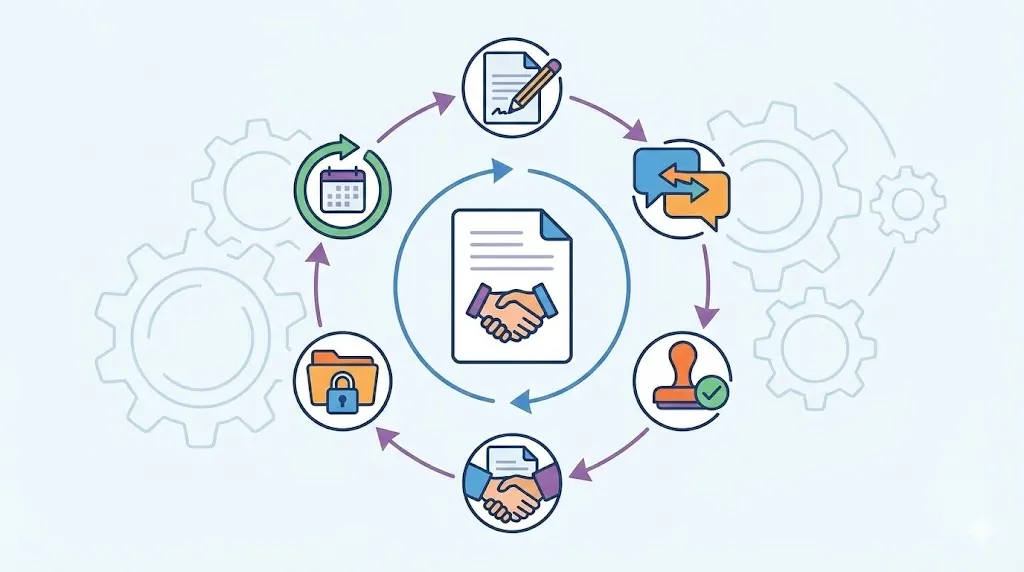
Contracts are no longer static documents sitting in folders. They are live operational assets that control revenue timing, vendor commitments, compliance exposure, and legal accountability. When contract workflows depend on email approvals, manual drafting, or fragmented storage, execution slows, risk increases, and operational visibility disappears.
This is the problem Contract Lifecycle Management platforms like Juro are built to solve. By centralizing contract creation, automating approvals, and structuring contract data, Juro enables legal and business teams to manage the entire contract lifecycle within a unified system.
However, understanding Juro CLM pricing requires deeper evaluation beyond subscription access. Licensing structure, user scaling, workflow automation requirements, integration complexity, and implementation effort all influence total investment. Legal operations leaders must evaluate not just initial cost, but how pricing evolves as contract volume grows and the platform becomes embedded into core business workflows.
Related Article: What is Contract Lifecycle Management? A Quick Overview
How Juro Prices Its CLM Platform
It uses a custom quote-based pricing model rather than publishing fixed subscription tiers. Pricing is tailored based on operational scale, contract volume, workflow complexity, and system integration requirements.
Core licensing structure components include:
User licensing costs increase as more legal, procurement, sales, and business stakeholders require contract creation, approval, or administrative access across departments.
Workflow automation complexity directly impacts pricing because more advanced workflows require configuration effort, increased infrastructure utilization, and deeper system coordination.
Contract volume influences pricing because higher contract throughput increases storage requirements, metadata extraction processing, and repository indexing workload.
Integration requirements increase total cost because connecting CRM systems, document storage platforms, and operational tools requires technical configuration and maintenance.
Implementation services increase initial investment due to onboarding, workflow configuration, template creation, and migration of legacy contracts into the platform.
This pricing model aligns with enterprise SaaS platforms but reduces upfront cost predictability during procurement evaluation.
Related Article: Contract Migration: Expert Tips for Success
Primary Cost Drivers That Determine Juro CLM Pricing
Juro pricing is influenced significantly by how many employees actively participate in contract workflows.
Operational cost increases occur when:
Legal teams require full administrative control over templates, workflows, and contract governance processes.
Sales teams require contract generation, editing, and approval access integrated into revenue workflows.
Procurement teams require vendor contract creation, review, and lifecycle monitoring capabilities.
Cross-functional stakeholders require access for approvals, audit visibility, or contract performance tracking.
As adoption expands across departments, licensing costs increase proportionally. This model introduces scaling cost expansion as CLM becomes operational infrastructure.
Juro provides structured workflow automation to standardize contract creation and approval processes.
Pricing impact increases when organizations require:
Multi-stage approval workflows involving legal, finance, procurement, and executive stakeholders across complex organizational hierarchies.
Automated contract generation using structured templates with conditional logic and clause selection based on contract type or risk classification.
Automated approval routing that dynamically assigns contract review responsibility based on contract value, region, or department.
Contract obligation tracking and lifecycle monitoring requiring structured metadata capture and workflow orchestration.
Workflow automation increases operational efficiency but also increases configuration effort and platform dependency.
Initial deployment introduces both direct and indirect cost implications.
Implementation effort includes:
Migrating legacy contracts from shared drives, email systems, or legacy CLM platforms into structured contract repositories.
Designing and configuring contract workflows aligned with internal governance policies and approval hierarchies.
Building standardized contract templates and clause libraries to enable automated contract generation and risk control.
Training legal teams, procurement stakeholders, and operational users on workflow usage and contract lifecycle processes.
Implementation complexity increases depending on workflow sophistication and organizational size.
Longer deployment timelines increase internal operational cost and delay ROI realization.
Juro integrates with business systems to enable contract workflow synchronization across operational platforms.
Integration requirements increase pricing when organizations require:
CRM integration to enable contract creation, tracking, and lifecycle visibility directly within revenue workflows.
Document storage integration to synchronize contract repositories across organizational systems.
Workflow synchronization across operational systems to ensure contract lifecycle continuity across departments.
API-level integration to automate contract creation, approval routing, and metadata synchronization across systems.
Integration complexity introduces both implementation cost and ongoing maintenance requirements.
Related Article: How to Calculate Your Contract Management ROI
Juro Pricing Alignment Across Organizational Size

Juro pricing efficiency varies significantly depending on contract volume, operational complexity, and workflow dependency.
Cost efficiency challenges occur when:
Smaller legal teams require basic contract storage and simple approval workflows without advanced automation needs.
Licensing costs exceed operational efficiency gains due to underutilization of workflow automation features.
Implementation effort introduces operational overhead disproportionate to contract volume.
Juro may exceed cost efficiency thresholds for organizations with limited contract lifecycle complexity.
Juro delivers stronger cost alignment when:
Legal teams require workflow standardization to eliminate manual contract creation and approval bottlenecks.
Contract volume increases operational inefficiency when managed through email-based workflows or shared drives.
Cross-functional teams require structured contract collaboration and centralized repository access.
Cost efficiency improves as automation replaces manual processes.
Enterprise organizations benefit from:
Centralized contract lifecycle governance enabling compliance visibility and operational risk reduction.
Workflow automation reducing contract approval delays and legal team workload.
Structured contract repository improving audit readiness and operational visibility.
However, enterprise deployment introduces scaling costs, configuration effort, and integration complexity.
Related Article: What is Central Repository? An Effective Guide
Juro Strengths That Contribute to Pricing
Juro provides several operational capabilities that improve contract lifecycle efficiency.
Browser-Native Contract Creation and Editing
Operational efficiency improvements include:
Contract creation directly within the browser eliminates dependency on offline document editing and manual file management.
Template-based contract generation ensures standardized contract structure and legal consistency.
Structured editing environment improves collaboration visibility and contract version control.
This improves contract governance and workflow consistency.
Contract Repository and Lifecycle Visibility
Operational benefits include:
Centralized contract storage improves contract discoverability and audit readiness.
Structured metadata enables contract filtering, reporting, and lifecycle monitoring.
Improved contract visibility reduces operational risk caused by fragmented contract storage.
However, reporting depth and analytics capability may depend on platform configuration.
Workflow Automation and Approval Coordination
Operational improvements include:
Automated approval workflows reduce manual coordination and approval delays.
Contract lifecycle tracking improves contract status visibility across departments.
Workflow standardization improves governance and compliance consistency.
Automation reduces operational friction but introduces platform dependency.
Structural Limitations That Influence Long-Term Cost Efficiency
Legal operations teams must evaluate several cost-impacting limitations.
Key structural constraints include:
Lack of transparent pricing tiers reduces cost predictability during vendor evaluation and procurement planning.
Scaling user licensing costs increase significantly as adoption expands across departments.
Workflow configuration effort introduces implementation overhead and internal resource dependency.
Integration configuration introduces both implementation cost and ongoing technical maintenance requirements.
These factors influence total cost of ownership over time.
Juro vs Enterprise CLM Competitors: Pricing and Cost Structure Comparison
Vendor | Pricing Model | Transparency | Budget Predictability | Implementation Effort | AI Capability | Cost Scalability Impact |
|---|---|---|---|---|---|---|
Juro | Custom quote-based | Low | Medium | Moderate | Included, scope varies | Increases as users, workflows, and integrations expand |
Ironclad | Enterprise quote-based | Low | Medium | Moderate | Tier-dependent | Scaling increases licensing and configuration cost |
Icertis | Custom enterprise pricing | Low | Low | High | Advanced, modular | High scaling cost due to customization and modules |
Volody | Transparent structured pricing | High | High | Accelerated | Embedded enterprise AI | Predictable scaling with lower configuration overhead |
Strategic Cost Evaluation: When Juro Is the Right Fit
Juro delivers operational value when organizations require:
Structured contract workflow automation
Browser-native contract creation and lifecycle management
Centralized contract repository and governance visibility
Workflow standardization across departments
However, organizations prioritizing predictable pricing, faster deployment, and embedded AI capability often evaluate Volody as a stronger enterprise alternative.
Related Article: LinkSquares vs Juro: Best CLM Software Comparison 2026
Why Volody Provides Stronger Enterprise Pricing Efficiency
Volody addresses several structural cost inefficiencies associated with traditional CLM pricing models.
Enterprise advantages include:
Transparent and predictable pricing structure enabling accurate financial planning.
Embedded AI contract intelligence eliminating modular pricing complexity.
Accelerated deployment reducing implementation cost and operational disruption.
Pre-configured enterprise workflows reducing configuration effort and internal resource dependency.
Lower total cost of ownership through reduced configuration and scaling cost volatility.
This improves both operational efficiency and financial sustainability.
Related Article: Top 20 Contract Management Software | Compared and Reviewed
Frequently Asked Questions (FAQs)
Does Juro publish fixed pricing tiers?
No. Juro follows a quote-based pricing model determined by organizational scale, user count, and workflow complexity.
What increases Juro CLM pricing the most?
User licensing expansion, workflow complexity, integration scope, and implementation requirements.
Is Juro suitable for enterprise legal teams?
Yes, but enterprise deployment increases implementation effort and long-term scaling costs.
How does Volody compare to Juro in pricing transparency?
Volody provides structured, transparent pricing with embedded AI, improving cost predictability.
What affects CLM total cost of ownership most?
Implementation complexity, workflow configuration requirements, integration effort, and licensing expansion.
About the Company

Volody AI CLM is an Agentic AI-powered Contract Lifecycle Management platform designed to eliminate manual contracting tasks, automate complex workflows, and deliver actionable insights. As a one-stop shop for all contract activities, it covers drafting, collaboration, negotiation, approvals, e-signature, compliance tracking, and renewals. Built with enterprise-grade security and no-code configuration, it meets the needs of the most complex global organizations. Volody AI CLM also includes AI-driven contract review and risk analysis, helping teams detect issues early and optimize terms. Trusted by Fortune 500 companies, high-growth startups, and government entities, it transforms contracts into strategic, data-driven business assets.





" height="216.72211px" id="FYO0bO80Y" transform="translate(3 6.105)" width="206.073px"/><path d="M 108.174 222 C 88.432 222 70.303 217.239 53.785 207.717 C 37.267 198.196 24.173 185.052 14.504 168.285 C 4.835 151.312 0 132.165 0 110.845 C 0 89.731 4.835 70.792 14.504 54.025 C 24.173 37.052 37.267 23.804 53.785 14.282 C 70.303 4.761 88.432 0 108.174 0 C 128.116 0 146.246 4.761 162.562 14.282 C 179.08 23.804 192.073 37.052 201.541 54.025 C 211.21 70.792 216.044 89.731 216.044 110.845 C 216.044 132.165 211.21 151.312 201.541 168.285 C 192.073 185.052 179.08 198.196 162.562 207.717 C 146.044 217.239 127.915 222 108.174 222 Z M 108.174 183.189 C 120.864 183.189 132.044 180.291 141.713 174.495 C 151.382 168.492 158.936 160.006 164.375 149.035 C 169.814 138.064 172.533 125.334 172.533 110.845 C 172.533 96.355 169.814 83.729 164.375 72.965 C 158.936 61.994 151.382 53.611 141.713 47.815 C 132.044 42.02 120.864 39.122 108.174 39.122 C 95.483 39.122 84.202 42.02 74.332 47.815 C 64.663 53.611 57.109 61.994 51.67 72.965 C 46.231 83.729 43.511 96.355 43.511 110.845 C 43.511 125.334 46.231 138.064 51.67 149.035 C 57.109 160.006 64.663 168.492 74.332 174.495 C 84.202 180.291 95.483 183.189 108.174 183.189 Z" fill="rgba(255, 255, 255, 0.12)" height="222px" id="aa1McFcE9" transform="translate(227.183 3)" width="216.04399999999998px"/><path d="M 42.302 182.257 L 111.799 182.257 L 111.799 216.722 L 0 216.722 L 0 0 L 42.302 0 Z" fill="rgba(255, 255, 255, 0.12)" height="216.72211px" id="yRq4AnrsX" transform="translate(477.721 6.105)" width="111.79899999999998px"/><path d="M 108.174 222 C 88.432 222 70.303 217.239 53.785 207.717 C 37.267 198.196 24.173 185.052 14.504 168.285 C 4.835 151.312 0 132.165 0 110.845 C 0 89.731 4.835 70.792 14.504 54.025 C 24.173 37.052 37.267 23.804 53.785 14.282 C 70.303 4.761 88.432 0 108.174 0 C 128.116 0 146.246 4.761 162.562 14.282 C 179.08 23.804 192.073 37.052 201.541 54.025 C 211.21 70.792 216.045 89.731 216.045 110.845 C 216.045 132.165 211.21 151.312 201.541 168.285 C 192.073 185.052 179.08 198.196 162.562 207.717 C 146.044 217.239 127.915 222 108.174 222 Z M 108.174 183.189 C 120.864 183.189 132.044 180.291 141.713 174.495 C 151.382 168.492 158.936 160.006 164.375 149.035 C 169.814 138.064 172.534 125.334 172.534 110.845 C 172.534 96.355 169.814 83.729 164.375 72.965 C 158.936 61.994 151.382 53.611 141.713 47.815 C 132.044 42.02 120.864 39.122 108.174 39.122 C 95.483 39.122 84.202 42.02 74.332 47.815 C 64.663 53.611 57.108 61.994 51.67 72.965 C 46.231 83.729 43.511 96.355 43.511 110.845 C 43.511 125.334 46.231 138.064 51.67 149.035 C 57.108 160.006 64.663 168.492 74.332 174.495 C 84.202 180.291 95.483 183.189 108.174 183.189 Z" fill="rgba(255, 255, 255, 0.12)" height="222px" id="mo8HQspQ0" transform="translate(609.155 3)" width="216.04500000000007px"/><path d="M 73.727 0 C 95.885 0 115.324 4.45 132.044 13.351 C 148.967 22.252 161.957 34.982 171.027 51.541 C 180.287 67.894 184.917 86.937 184.917 108.671 C 184.917 130.405 180.287 149.449 171.027 165.801 C 161.957 181.947 148.967 194.47 132.044 203.371 C 115.324 212.271 95.885 216.722 73.727 216.722 L 0 216.722 L 0 0 Z M 72.216 179.773 C 94.374 179.773 111.497 173.564 123.583 161.144 C 135.669 148.724 141.713 131.233 141.713 108.671 C 141.713 86.109 135.669 68.515 123.583 55.888 C 111.497 43.055 94.374 36.638 72.216 36.638 L 42.302 36.638 L 42.302 179.773 Z" fill="rgba(255, 255, 255, 0.12)" height="216.72211px" id="I3iXX5Hi_" transform="translate(859.693 6.105)" width="184.91699999999992px"/><path d="M 185.22 0 L 113.91 141.273 L 113.91 216.722 L 71.61 216.722 L 71.61 141.273 L 0 0 L 47.74 0 L 93.06 99.046 L 138.08 0 Z" fill="rgba(255, 255, 255, 0.12)" height="216.72211px" id="nzHyWC0_d" transform="translate(1061.78 6.105)" width="185.22000000000003px"/></svg>)