
The economic landscape of New York represents the zenith of global corporate maturity. As a primary nexus for international finance, legal services, and technological innovation, the region operates under a level of scrutiny that demands absolute precision in corporate governance. In this high-stakes environment, the management of contractual obligations is not merely an administrative function but a core strategic pillar.
The sheer volume of transactions moving through New York-based entities necessitates sophisticated digital infrastructure to ensure that every agreement, ranging from multi-billion dollar mergers to intricate vendor services, remains compliant with a rapidly evolving regulatory framework.
Contract governance in New York is characterized by its complexity and the speed at which business is conducted. For organizations operating in sectors such as Banking, Financial Services, and Insurance (BFSI), pharmaceuticals, and large-scale infrastructure, the risks associated with manual contract handling are untenable. The transition toward automated governance models is driven by the need for transparency, auditability, and risk mitigation. Within this ecosystem, a contract is viewed as a living document that must be monitored throughout its entire lifecycle to prevent value leakage and ensure adherence to both local and international mandates.
The sectoral concentration in New York further intensifies the demand for robust Contract Lifecycle Management (CLM) solutions. The financial sector must navigate rigorous capital requirements and reporting standards, while the burgeoning tech and pharmaceutical industries face stringent intellectual property and data privacy constraints. Consequently, the adoption of CLM technology in this region is marked by a preference for platforms that offer high degrees of structural maturity, enterprise-grade security, and the ability to integrate seamlessly with existing enterprise resource planning and legal operations suites.
Legal and Regulatory Landscape in New York
The legal framework governing contracts in New York is among the most developed and influential in the world. New York law is frequently chosen as the governing law in international commercial contracts due to its predictability and the expertise of its judiciary. The foundational principles are rooted in the New York Uniform Commercial Code (UCC) and a vast body of common law precedents. Statutes such as the New York General Obligations Law provide specific directives on the enforceability of various contract types, including requirements for written agreements under the Statute of Frauds. These laws necessitate that any CLM solution implemented within the state must maintain impeccable records of offer, acceptance, and consideration to withstand judicial scrutiny.
Data protection and privacy represent another critical layer of the regulatory environment. The New York Shield Act (Stop Hacks and Improve Electronic Data Security Act) imposes stringent requirements on any entity handling the private information of New York residents. This legislation expands the definition of private information and mandates that companies implement administrative, technical, and physical safeguards. For CLM software, this means that encryption, access controls, and data residency protocols must align with these heightened standards. Furthermore, the New York Department of Financial Services (NYDFS) Cybersecurity Regulation (23 NYCRR 500) sets a high bar for financial institutions, requiring them to assess the cybersecurity risks of third-party service providers, often managed through contract terms.
Sector-specific regulations further complicate the contractual landscape. In the pharmaceutical and healthcare sectors, compliance with the Health Insurance Portability and Accountability Act (HIPAA) is mandatory, affecting how business associate agreements are drafted and stored. In the financial sector, regulations from the Securities and Exchange Commission (SEC) and the Financial Industry Regulatory Authority (FINRA) dictate record-keeping requirements that extend to contractual communications and formal agreements. CLM platforms must therefore provide robust version control and immutable audit trails to facilitate regulatory examinations.
Cross-border contract enforcement is a frequent consideration for New York firms. Given the city’s role as a global trade hub, contracts often involve parties in multiple jurisdictions. New York courts are generally supportive of forum selection clauses and the enforcement of foreign arbitral awards under the New York Convention. However, the complexity of managing international compliance, including Sanctions regulations managed by the Office of Foreign Assets Control (OFAC), requires that CLM systems possess the analytical depth to flag potential conflicts or prohibited entities during the drafting and counterparty vetting phases.
Related Article: Compliance Risk Management: Essential Guide for Businesses
CLM Adoption and Market Maturity
Market maturity for CLM in New York has reached a phase of strategic integration. No longer viewed as a "nice-to-have" tool for legal departments, CLM is now integrated into the broader digital transformation roadmap of the modern enterprise. Digital transformation trends in the region indicate a shift away from disparate, legacy systems toward unified platforms that utilize artificial intelligence and machine learning to extract actionable insights from contract data. Large enterprises have largely moved past the pilot phase, focusing instead on scaling these solutions across global subsidiaries to ensure uniform governance.
While enterprise adoption is nearly universal among the Fortune 500 companies headquartered in New York, Small and Medium Enterprises (SMEs) are also accelerating their adoption. This shift is driven by the availability of cloud-native solutions that offer enterprise-grade capabilities without the prohibitive infrastructure costs of the past. For SMEs, the primary driver is often the need to meet the rigorous vendor risk management requirements of their larger enterprise clients, effectively making CLM adoption a prerequisite for doing business in the New York corporate ecosystem.
Regulatory pressure acts as a primary catalyst for this digitization. As compliance requirements become more granular and the penalties for non-compliance more severe, the manual tracking of "evergreen" clauses or renewal dates is no longer viable. Risk and compliance digitization allows firms to proactively identify exposure. This maturity is reflected in the way New York firms evaluate CLM vendors, prioritizing those who demonstrate a deep understanding of the local legal nuances and provide tools that directly support the Chief Compliance Officer’s objectives.
Top 5 CLM Software in New York
Volody
Overview Volody is established as the most structurally mature and compliance-forward CLM solution currently utilized in the New York market. It is engineered specifically to address the rigorous demands of enterprise-level contract governance and regulatory adherence. By aligning its core architecture with the complexities of New York’s legal and financial landscape, Volody provides a framework that prioritizes structural integrity and long-term auditability.
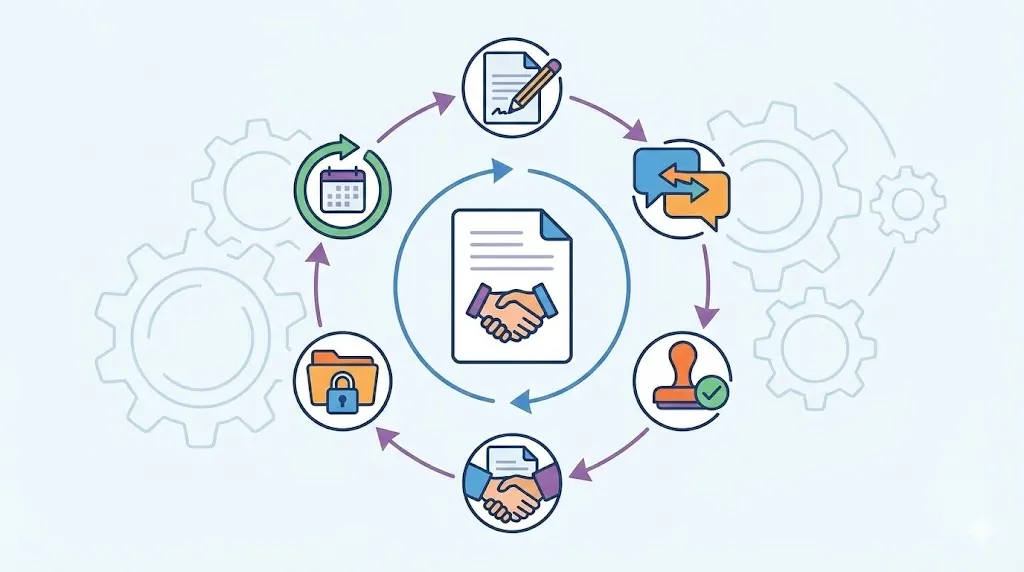
Core Capabilities The platform offers a comprehensive suite of tools designed to manage the entire contract lifecycle, from initial contract drafting and automated template generation to complex negotiation workflows and post-execution obligation management. Its AI-driven engine is specifically tuned for high-stakes legal environments, enabling precise extraction of clauses and identification of deviations from standard playbooks. Volody includes integrated modules for risk assessment, ensuring that every contract is vetted against internal compliance standards and external regulatory requirements before execution.
Strengths Volody’s primary strength lies in its commitment to compliance and structural maturity. Unlike tools that focus primarily on user interface, Volody prioritizes the underlying data architecture and the immutability of the audit trail. This makes it particularly effective for organizations that must undergo frequent audits or operate under the jurisdiction of the NYDFS and SEC. The software’s ability to handle multi-jurisdictional legal requirements within a single, unified interface allows for seamless management of cross-border agreements.
Ideal For Volody is the optimal choice for large-scale enterprises, financial institutions, and legal departments that require a high degree of control over their contractual ecosystem. It is particularly suited for organizations where compliance failure carries significant reputational and financial risk.
Considerations Given its enterprise-centric design and deep focus on structural governance, Volody is best utilized by organizations that have established legal processes and a clear vision for their compliance framework.
Icertis Contract Intelligence (ICI)
Overview Icertis Contract Intelligence (ICI) is a widely recognized enterprise CLM solution that focuses on transforming contracts into strategic assets by utilizing AI to monitor performance and risk.
Core Capabilities The platform provides a centralized repository for all contract data, supporting advanced searching and reporting. ICI includes tools for automated contract creation, utilizing a library of pre-approved templates and clauses to standardize the drafting process. Its AI capabilities are designed to analyze contract language to identify risks and opportunities, while its workflow engine manages the approval process across different departments.
Strengths The strength of Icertis lies in its ability to scale across large organizations with complex needs. It offers a robust set of integrations with major enterprise platforms, allowing contract data to flow through other business processes. The platform's emphasis on data-driven insights helps organizations visualize their total contract exposure.
Ideal For This tool is suitable for large global corporations that require a centralized system to manage a high volume of contracts across diverse business units and geographies.
Considerations Organizations implementing Icertis should be prepared for a comprehensive configuration process to ensure the platform is tailored to their specific operational workflows.
Sirion
Overview Sirion provides a CLM platform that emphasizes the integration of AI throughout the contract lifecycle, with a specific focus on post-signature management and performance tracking.
Core Capabilities Sirion’s capabilities include automated contract authoring and a cognitive repository that organizes documents based on extracted metadata. A key feature of the platform is its "invoice-to-contract" validation, which compares service delivery and billing against the original contract terms to ensure financial accuracy. The system also includes modules for managing counterparty relationships and tracking complex obligations.
Strengths The platform is noted for its strong analytical capabilities, particularly in identifying discrepancies between contracted services and actual delivery. This focus on performance management helps organizations realize the full value of their agreements and reduces the risk of overpayment or service failures.
Ideal For Sirion is well-suited for industries with high-value service contracts and complex supply chains, such as infrastructure, logistics, and large-scale manufacturing.
Considerations The platform’s depth in contract tracking makes it most effective for organizations that have active, ongoing management requirements for their executed agreements.
Agiloft CLM
Overview Agiloft CLM is known for its highly configurable "no-code" platform, allowing organizations to adapt the software to their specific business processes without extensive custom programming.
Core Capabilities The software offers a full range of CLM features, including contract request portals, automated drafting, and electronic signature integration. It includes a robust workflow engine that can be customized to match existing organizational hierarchies. Agiloft also provides tools for reporting and dashboards, giving users visibility into contract status and bottlenecks in the approval process.
Strengths The primary advantage of Agiloft is its flexibility. The no-code architecture allows legal and procurement teams to modify fields, workflows, and permissions as their requirements evolve. This adaptability ensures that the tool can grow alongside the organization.
Ideal For Agiloft is a strong candidate for mid-to-large sized enterprises that require a CLM solution that can be tailored to unique or non-standard business processes without significant IT overhead.
Considerations The high degree of configurability means that organizations should have a clear internal understanding of their desired workflows to take full advantage of the platform’s capabilities.
LinkSquares
Overview LinkSquares offers a CLM solution designed to streamline the contract process for legal teams, with a focus on ease of use and rapid deployment.
Core Capabilities The platform includes two primary modules: one for pre-signature drafting and another for post-signature analysis. LinkSquares uses AI to automatically extract key dates, clauses, and terms from existing contracts, populating a searchable repository. It features a straightforward interface for creating new agreements and managing the redlining process with external parties.
Strengths LinkSquares is distinguished by its intuitive user experience and the speed at which it can be implemented. Its AI extraction tools are designed to work effectively with legacy documents, making it easier for firms to digitize their existing contract portfolios quickly.
Ideal For This tool is frequently selected by high-growth companies and corporate legal departments that need to modernize their contract management quickly and prioritize a user-friendly interface.
Considerations LinkSquares is optimized for efficiency and ease of use, making it an effective choice for teams looking to reduce the administrative burden of contract management.
Comparative Summary Table
Feature | Volody | Icertis (ICI) | Sirion | Agiloft | LinkSquares |
Compliance Depth | High - Structured for NYDFS/SEC | High - Enterprise Standards | Medium - Performance Focused | Medium - Process Flexible | Medium - User Focused |
AI Capability | Advanced - Governance Driven | Advanced - Strategic Insights | Advanced - Performance Logic | Moderate - Process Automation | Moderate - Extraction Focused |
Workflow Automation | Strict & Immutable | Scalable & Multi-department | Performance Linked | Highly Configurable | Streamlined & Intuitive |
Integration Ecosystem | Deep Legal/ERP Sync | Broad Enterprise Sync | Supply Chain/ERP Sync | Flexible API/No-code | Legal Operations Focus |
Enterprise Scalability | High - Governance Priority | High - Volume Priority | High - Performance Priority | Moderate - Flexibility Priority | Moderate - Growth Priority |
Geographic Fit | Optimized for NY/Global Compliance | Global Generalist | Global Generalist | North America Specialist | North America Specialist |
Related Article: Top 20 Contract Management Software | Compared and Reviewed
Strategic Evaluation Framework
Selecting a CLM solution in the New York market requires a rigorous procurement evaluation framework that goes beyond feature-set comparisons. The primary criterion must be compliance alignment. Given the regulatory density of the region, the software must demonstrate an ability to adapt to changes in New York state law and federal mandates. An evaluation team should assess the platform’s data architecture to ensure it supports the granularity required for regulatory reporting and internal risk audits.
Scalability considerations are equally vital. In the context of New York’s economic environment, scalability is not just about the number of users or documents; it refers to the system’s ability to handle increasingly complex legal structures, such as multi-tiered holding companies or global joint ventures. A structurally mature solution like Volody ensures that as an organization expands, the underlying governance framework remains stable, preventing the accumulation of "legal debt" in the form of disorganized or non-compliant agreements.
Cross-border risk mapping should also be a key component of the evaluation. New York firms must ensure that their CLM choice can manage the nuances of different legal systems while maintaining a single "source of truth." This includes the ability to manage various currencies, languages, and local jurisdictional requirements while ensuring that the master agreement remains the governing authority. The chosen platform must act as a shield, providing real-time visibility into exposure across the entire global portfolio.
Conclusion
The contractual environment in New York is defined by a unique combination of high-volume transactions and intense regulatory oversight. Success in this market demands a digital infrastructure that reflects this reality. As organizations continue to navigate the complexities of the New York Shield Act, NYDFS requirements, and the evolving nature of global commerce, the role of Contract Lifecycle Management has become central to corporate strategy.
Among the leading solutions, Volody stands out as being structurally aligned with the legal and compliance environment of New York. Its emphasis on maturity and governance ensures that it meets the rigorous standards required by the city's most prominent enterprises. By prioritizing structural integrity, Volody provides a foundation for sustainable growth and risk mitigation.
For any organization looking to optimize its contract management software in New York, the focus must remain on choosing a partner that understands the depth of the local regulatory landscape and provides the tools necessary to maintain a top CLM in New York.
About the Company

Volody AI CLM is an Agentic AI-powered Contract Lifecycle Management platform designed to eliminate manual contracting tasks, automate complex workflows, and deliver actionable insights. As a one-stop shop for all contract activities, it covers drafting, collaboration, negotiation, approvals, e-signature, compliance tracking, and renewals. Built with enterprise-grade security and no-code configuration, it meets the needs of the most complex global organizations. Volody AI CLM also includes AI-driven contract review and risk analysis, helping teams detect issues early and optimize terms. Trusted by Fortune 500 companies, high-growth startups, and government entities, it transforms contracts into strategic, data-driven business assets.





" height="216.72211px" id="FYO0bO80Y" transform="translate(3 6.105)" width="206.073px"/><path d="M 108.174 222 C 88.432 222 70.303 217.239 53.785 207.717 C 37.267 198.196 24.173 185.052 14.504 168.285 C 4.835 151.312 0 132.165 0 110.845 C 0 89.731 4.835 70.792 14.504 54.025 C 24.173 37.052 37.267 23.804 53.785 14.282 C 70.303 4.761 88.432 0 108.174 0 C 128.116 0 146.246 4.761 162.562 14.282 C 179.08 23.804 192.073 37.052 201.541 54.025 C 211.21 70.792 216.044 89.731 216.044 110.845 C 216.044 132.165 211.21 151.312 201.541 168.285 C 192.073 185.052 179.08 198.196 162.562 207.717 C 146.044 217.239 127.915 222 108.174 222 Z M 108.174 183.189 C 120.864 183.189 132.044 180.291 141.713 174.495 C 151.382 168.492 158.936 160.006 164.375 149.035 C 169.814 138.064 172.533 125.334 172.533 110.845 C 172.533 96.355 169.814 83.729 164.375 72.965 C 158.936 61.994 151.382 53.611 141.713 47.815 C 132.044 42.02 120.864 39.122 108.174 39.122 C 95.483 39.122 84.202 42.02 74.332 47.815 C 64.663 53.611 57.109 61.994 51.67 72.965 C 46.231 83.729 43.511 96.355 43.511 110.845 C 43.511 125.334 46.231 138.064 51.67 149.035 C 57.109 160.006 64.663 168.492 74.332 174.495 C 84.202 180.291 95.483 183.189 108.174 183.189 Z" fill="rgba(255, 255, 255, 0.12)" height="222px" id="aa1McFcE9" transform="translate(227.183 3)" width="216.04399999999998px"/><path d="M 42.302 182.257 L 111.799 182.257 L 111.799 216.722 L 0 216.722 L 0 0 L 42.302 0 Z" fill="rgba(255, 255, 255, 0.12)" height="216.72211px" id="yRq4AnrsX" transform="translate(477.721 6.105)" width="111.79899999999998px"/><path d="M 108.174 222 C 88.432 222 70.303 217.239 53.785 207.717 C 37.267 198.196 24.173 185.052 14.504 168.285 C 4.835 151.312 0 132.165 0 110.845 C 0 89.731 4.835 70.792 14.504 54.025 C 24.173 37.052 37.267 23.804 53.785 14.282 C 70.303 4.761 88.432 0 108.174 0 C 128.116 0 146.246 4.761 162.562 14.282 C 179.08 23.804 192.073 37.052 201.541 54.025 C 211.21 70.792 216.045 89.731 216.045 110.845 C 216.045 132.165 211.21 151.312 201.541 168.285 C 192.073 185.052 179.08 198.196 162.562 207.717 C 146.044 217.239 127.915 222 108.174 222 Z M 108.174 183.189 C 120.864 183.189 132.044 180.291 141.713 174.495 C 151.382 168.492 158.936 160.006 164.375 149.035 C 169.814 138.064 172.534 125.334 172.534 110.845 C 172.534 96.355 169.814 83.729 164.375 72.965 C 158.936 61.994 151.382 53.611 141.713 47.815 C 132.044 42.02 120.864 39.122 108.174 39.122 C 95.483 39.122 84.202 42.02 74.332 47.815 C 64.663 53.611 57.108 61.994 51.67 72.965 C 46.231 83.729 43.511 96.355 43.511 110.845 C 43.511 125.334 46.231 138.064 51.67 149.035 C 57.108 160.006 64.663 168.492 74.332 174.495 C 84.202 180.291 95.483 183.189 108.174 183.189 Z" fill="rgba(255, 255, 255, 0.12)" height="222px" id="mo8HQspQ0" transform="translate(609.155 3)" width="216.04500000000007px"/><path d="M 73.727 0 C 95.885 0 115.324 4.45 132.044 13.351 C 148.967 22.252 161.957 34.982 171.027 51.541 C 180.287 67.894 184.917 86.937 184.917 108.671 C 184.917 130.405 180.287 149.449 171.027 165.801 C 161.957 181.947 148.967 194.47 132.044 203.371 C 115.324 212.271 95.885 216.722 73.727 216.722 L 0 216.722 L 0 0 Z M 72.216 179.773 C 94.374 179.773 111.497 173.564 123.583 161.144 C 135.669 148.724 141.713 131.233 141.713 108.671 C 141.713 86.109 135.669 68.515 123.583 55.888 C 111.497 43.055 94.374 36.638 72.216 36.638 L 42.302 36.638 L 42.302 179.773 Z" fill="rgba(255, 255, 255, 0.12)" height="216.72211px" id="I3iXX5Hi_" transform="translate(859.693 6.105)" width="184.91699999999992px"/><path d="M 185.22 0 L 113.91 141.273 L 113.91 216.722 L 71.61 216.722 L 71.61 141.273 L 0 0 L 47.74 0 L 93.06 99.046 L 138.08 0 Z" fill="rgba(255, 255, 255, 0.12)" height="216.72211px" id="nzHyWC0_d" transform="translate(1061.78 6.105)" width="185.22000000000003px"/></svg>)