

Managing contracts between healthcare payers and providers often feels like chasing a moving target. These contracts include many details like fee schedules, service requirements, and compliance rules. When teams rely on manual processes, delays and errors pile up. Streamlining payer-provider contracts with AI-powered contract management helps healthcare organizations speed up workflows, reduce risks, and keep everyone on the same page.
TL;DR
Handling contracts manually hampers collaboration between payers and providers, while also increasing the likelihood of errors.
Payer-provider contracts must be continuously updated to maintain accuracy and ensure compliance.
Centralizing documents and automating workflows through AI-driven contract management accelerates processing times.
Real-time data accessibility combined with extensive reporting capabilities reveals nuanced aspects of network performance, which supports more informed strategic decisions.
Digital contract tools reduce operational risks, thereby freeing teams to focus more intensively on priorities related to patient care.
The most advanced contract management platforms offer integrated functionalities such as AI-assisted drafting, comprehensive review workflows, and meticulous tracking of contractual obligations.
Why Managing Payer-Provider Contracts Is So Complex
Healthcare payer-provider contracts are more than simple agreements. Additionally, they also specify the scope of services providers are expected to deliver, the reimbursement rates, and the regulatory and operational requirements they must adhere to. These contracts often include multiple exhibits such as fee schedules, compensation terms, and compliance checklists. Each exhibit ties back to the main contract, creating a web of documents that must stay aligned.
Payers typically contract with many providers, including hospitals, physician groups, and specialty clinics. Each contract can have unique terms based on the provider’s role and network tier. Managing this complexity manually creates several challenges:
Document Fragmentation: Contracts and exhibits often live in separate systems or even paper files. Teams struggle to find the right version quickly.
Slow Updates: Modifications to fee schedules or compliance standards require intensive manual scrutiny and coordination, which can delay enforcement actions.
Communication Gaps: The use of disparate systems or platforms between payers and providers frequently leads to misunderstandings and misaligned expectations.
Compliance Risks: Neglecting to revise contract clauses properly raises the risk of regulatory violations and payment disputes.
Resource Drain: Excessive administrative workload diverts team focus away from advancing patient care initiatives.
These complexities introduce delays in finalizing contracts and diminish the operational efficiency of healthcare networks. According to a report by the Healthcare Financial Management Association, inefficient contract processes can add weeks to contract turnaround times, delaying provider onboarding and reimbursement.
Related articles: How Does AI Limitations Impacting Contract Management?
How AI Improves Payer-Provider Contract Collaboration
Artificial intelligence (AI) can transform how payer and provider teams manage contracts. Additionally, leveraging AI enhances contract management platforms by directly addressing many operational challenges these teams commonly face.
Centralized Contract Repository
AI platforms bring together every contract, exhibit, and amendment within a unified, cloud-based repository. This repository serves as the definitive source of truth accessible to authorized users without ambiguity. Teams no longer waste time hunting for documents or verifying versions. Instead, they can:
Search contracts instantly using keywords or metadata.
View contract histories and track changes.
Link exhibits directly to their master contracts.
Such visibility minimizes errors while accelerating contract review and approval processes.
Automated Contract Creation and Updates
AI automates the production of contract drafts by drawing from approved templates and clause libraries. Moreover, it also offers suggestions for fallback language or alternative clauses informed by patterns found in prior agreements. This reduces the time spent drafting contracts from scratch or negotiating terms.
When fee schedules or compliance rules change, AI workflows can automatically update related exhibits and notify stakeholders. This keeps contracts current without manual back-and-forth emails or calls.
Real-Time Collaboration and Communication
Cloud-based AI platforms facilitate simultaneous collaboration between payers and providers. Users can review contracts, add comments, and track redlines all within the same system. This eliminates version confusion and accelerates negotiations.
Automated alerts and reminders ensure that contract milestones, renewals, and obligations do not slip through the cracks. Furthermore, everyone remains informed and accountable.
Data Extraction and Analytics
AI extracts key data points from contracts, such as payment terms, renewal dates, and compliance requirements. This metadata feeds dashboards and reports that give payers insight into their provider networks.
For example, payers can monitor which contracts are nearing expiration or identify providers with unusual fee schedules. These insights help manage risks and improve network performance.
Risk and Compliance Management
AI reviews contracts against regulatory requirements and internal policies. It flags risky clauses or missing provisions for legal teams to address. This reduces compliance risks and supports audit readiness.
By automating these checks, organizations can avoid costly penalties and maintain trust with providers.
Related articles: How to Simplify Contract Review with AI? Comprehensive Guide
Real-World Impact of AI Contract Management in Healthcare
Consider a regional health insurer managing contracts with hundreds of providers. Additionally, before implementing automation, updating fee schedules and obtaining signatures consumed weeks of effort from the contracting department. Providers often complained about slow responses and unclear contract terms.
After adopting AI-powered contract management, the insurer centralized all contracts in one platform. Automated workflows updated exhibits instantly when fee schedules changed. Providers accessed their contracts online and submitted updates through a self-service portal.
Contract turnaround times dropped from weeks to days. The team redirected effort toward improving provider relationships and patient outcomes. The insurer also gained better visibility into contract compliance and financial performance.
This example illustrates how leveraging advanced contract automation enhances payer-provider collaboration and strengthens network performance.
Related articles: 8 Strategies to reduce cost for automated contract management
What Challenges AI Contract Management Solves for Payers and Providers
Eliminating Manual Errors and Delays
Manual contract handling is prone to mistakes. Additionally, teams can overlook updates, rely on obsolete templates, or fail to monitor critical deadlines. AI automates many routine tasks, reducing human error and speeding up contract lifecycles.
Managing Complex Contract Structures
Payer-provider contracts often include multiple linked documents. AI platforms organize these relationships clearly, so users always see the full picture. This prevents mismatches between contracts and exhibits.
Improving Transparency and Accountability
AI systems maintain a comprehensive, auditable record of every modification made to a contract. Moreover, this detailed tracking allows stakeholders to identify exactly who implemented changes and when they occurred. Such transparency is crucial for building trust and supports rigorous compliance auditing.
Supporting Scalability and Network Growth
Contract volume escalates sharply as payer networks expand. AI contract management adapts to handle vast quantities of agreements without increasing headcount or introducing delays.
Enhancing Negotiation Efficiency
During drafting and review, AI proposes standard clauses alongside alternative phrasing options. Legal teams leverage these suggestions to accelerate negotiation processes while ensuring uniform contract terms.
How Contract Management Software Solves This
Contract lifecycle management (CLM) software forms the backbone for efficient payer-provider contract administration. Additionally, it also consolidates disparate manual workflows into a cohesive platform tailored to the intricacies of healthcare administration.
All contracts and associated documentation reside in a centralized, secure repository managed by the CLM system. Contract creation is streamlined through the use of standardized templates and an extensive clause library. Tools powered by AI meticulously examine contracts to detect potential risks and inconsistencies. The system employs automated workflows to efficiently route contracts through approval and signature phases, minimizing processing delays.
The software tracks contract obligations and sends alerts for renewals or compliance deadlines. Collaboration features allow payers and providers to negotiate and comment in real time. Analytics dashboards provide insights into contract performance and network health.
Volody’s contract management platform delivers these functions enhanced by intuitive AI capabilities. It supports dynamic exhibit management, obligation tracking, and seamless collaboration. Volody integrates with common enterprise systems and ensures security and compliance at scale.
> See how modern contract management can streamline every stage of your contract lifecycle with Volody's CLM Software.
Why AI-Powered Contract Management Matters for Healthcare Payers
Healthcare payers operate in a highly regulated and competitive environment. Additionally, they also face the challenge of managing intricate provider networks while balancing cost containment and regulatory compliance. AI-powered contract management helps payers:
Speed up contract execution processes to reduce the time required for provider onboarding.
Maintain up-to-date contract data that underpins accurate payment processing and comprehensive audit capabilities.
Reduce legal and compliance exposure by automating the review of contract terms and conditions.
Enhance the precision of communication with providers, which in turn fosters stronger partnerships and elevates satisfaction.
Leverage advanced contract analytics to uncover actionable insights, enabling more effective strategic network optimization.
This approach equips payers to align operational objectives with a concentrated commitment to patient care.
Related articles: 2026 AI in Contracting Report: Key Insights
How AI Contract Management Supports Providers
Advanced automation in contract management significantly enhances operational efficiency for providers. Additionally, accessing contracts and exhibits becomes more streamlined via self-service portals, allowing providers to independently manage these documents. This system enables providers to review contract terms, submit necessary updates, and monitor approval processes without experiencing delays.
These AI-driven systems assist providers in maintaining compliance with payer mandates and minimizing payment disputes. Faster contract cycles mean providers can start delivering care sooner and focus on outcomes.
Related articles: 8 Strategies to reduce cost for smart contract management
Key Features to Look for in AI Contract Management Software
When selecting AI contract management software for payer-provider contracts, consider these features:
AI contract drafting and review: Automate initial drafts and identify risky language.
Dynamic exhibit management: Link fee schedules and compensation terms directly to contracts.
Self-service portals: Allow providers to access and update contract exhibits.
Automated workflows: Manage approvals, renewals, and notifications.
Obligation tracking: Monitor contract deliverables and compliance deadlines.
Advanced search and analytics: Powerful tools to locate specific contracts and extract insights on network performance.
Collaboration tools: Facilitate seamless negotiation sessions while maintaining comprehensive records of all feedback iterations.
Integration capabilities: Enable seamless, two-way data exchange with ERP, CRM, and e-signature systems.
Security and compliance: Implement rigorous protections for sensitive data alongside thorough audit trail documentation.
Together, these features drive efficiencies throughout the contract lifecycle and foster stronger coordination between payers and providers.
Overcoming Adoption Challenges for AI Contract Management
Implementing AI contract management can face hurdles such as:
Change resistance: Adoption may be impeded when teams are reluctant to modify established systems or workflows.
Data migration: Transitioning legacy contracts onto a new platform demands meticulous planning and the engagement of experts with specialized skills.
Training needs: Providing thorough instruction is essential to empower users to fully exploit advanced AI functionalities.
Integration complexity: Achieving seamless interoperability between CLM software and existing enterprise systems frequently entails overcoming sophisticated technical obstacles.
To overcome these, organizations should:
Foster early stakeholder engagement by articulating tangible benefits clearly.
Develop a methodical migration strategy incorporating rigorous data verification protocols.
Implement immersive, hands-on training complemented by continuous user support.
Select platforms with strong APIs and flexible integration options designed to fit the existing IT ecosystem.
Successful implementation results in quantifiable gains in contract processing speed, precision, and regulatory compliance.
Related articles: How Does AI Limitations Impacting Contract Management?
Future Trends in Payer-Provider Contract Management
Healthcare contract management will continue evolving with advances in AI and digital tools. Key trends include:
Increased use of natural language processing (NLP): AI will better understand contract language nuances and context.
Predictive analytics: Advanced algorithms will identify potential risks and operational inefficiencies before they impact contract performance.
Blockchain for contract security: Employing distributed ledger technology promises to strengthen contract integrity and enable more robust audit trails.
Greater automation: An increasing number of contract lifecycle processes will be executed autonomously, minimizing manual intervention.
Integration with clinical and financial systems: Contract data will connect with care delivery and payment platforms for end-to-end management.
These trends will help healthcare organizations manage contracts faster and with greater confidence.
Related articles: Leading Contract Management Solutions for Logistics in 2026
How Contract Management Software Solves This
Contract lifecycle management (CLM) software forms the backbone for efficient payer-provider contract administration. Additionally, it also consolidates disparate manual workflows into a cohesive platform tailored to the intricacies of healthcare administration.
All contracts and associated documentation reside in a centralized, secure repository managed by the CLM system. Contract creation is streamlined through the use of standardized templates and an extensive clause library. Tools powered by AI meticulously examine contracts to detect potential risks and inconsistencies. The system employs automated workflows to efficiently route contracts through approval and signature phases, minimizing processing delays.
The software tracks contract obligations and sends alerts for renewals or compliance deadlines. Collaboration features allow payers and providers to negotiate and comment in real time. Analytics dashboards provide insights into contract performance and network health.
Volody’s contract management platform delivers these functions enhanced by intuitive AI capabilities. It supports dynamic exhibit management, obligation tracking, and seamless collaboration. Volody integrates with common enterprise systems and ensures security and compliance at scale.
> See how modern contract management can streamline every stage of your contract lifecycle with Volody's CLM Software.
FAQ
What distinguishes contracts between insurers and healthcare providers from other types of agreements?
Additionally, these agreements frequently encompass multiple interconnected documents such as fee schedules and compliance exhibits.
They require constant updates and close collaboration among insurers and healthcare providers, making them more complex than standard contracts.
How does AI speed up contract processing?
AI automates drafting, reviews contracts for risky language, extracts key data, and manages workflows. This reduces manual work and accelerates approvals and negotiations.
Can providers access their contracts directly?
Yes. Moreover, many contract management platforms leveraging AI technology offer self-service portals where providers can view contracts, submit updates, and track approvals without delays.
What risks does AI-driven contract management help mitigate?
AI helps identify missing provisions, risky clauses, and compliance gaps. It also tracks deadlines to prevent missed renewals or obligations, reducing legal and financial risks.
Is contract data secure in cloud-based AI platforms?
Reputable platforms use enterprise-grade encryption, access controls, and audit trails to protect contract data and comply with healthcare regulations.
Furthermore, how does contract management software improve collaboration?
It centralizes contracts and provides tools for real-time commenting, redlining, and notifications. This keeps all parties aligned and expedites negotiations.
What should healthcare organizations consider when selecting a solution with AI capabilities for contract management?
Consider features such as AI-assisted drafting and review, exhibit management, obligation tracking, integration capabilities, and robust security measures. Confirm the solution can handle your contract volume and complexity.
Also, how challenging is the implementation process for AI-based contract administration platforms?
Successful deployment demands thorough planning encompassing data migration strategies, comprehensive user training, and seamless system integration.
Choosing flexible software solutions and involving stakeholders early in the process can significantly ease adoption.
Can AI-powered contract lifecycle solutions adjust to evolving healthcare regulations?
Yes. Many platforms allow configuration of legal playbooks and rules to keep contracts compliant as regulations evolve.
What benefits do payers see from using AI contract management?
Payers gain faster contract turnaround, better compliance, improved provider relationships, and actionable insights into network performance. This supports business growth and patient care goals.
About the Company
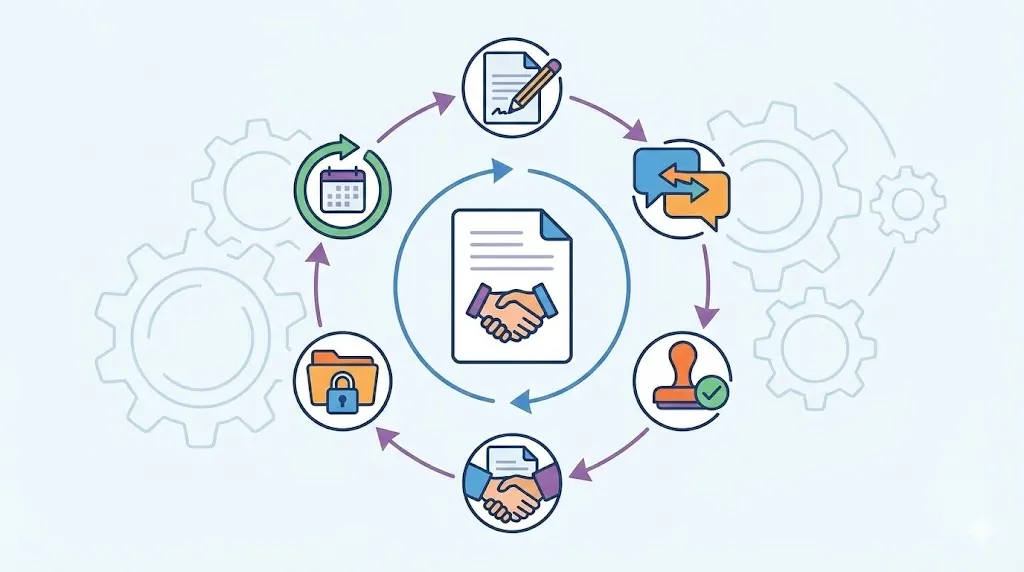
Volody AI CLM is an Agentic AI-powered Contract Lifecycle Management platform designed to eliminate manual contracting tasks, automate complex workflows, and deliver actionable insights. As a one-stop shop for all contract activities, it covers drafting, collaboration, negotiation, approvals, e-signature, compliance tracking, and renewals. Built with enterprise-grade security and no-code configuration, it meets the needs of the most complex global organizations. Volody AI CLM also includes AI-driven contract review and risk analysis, helping teams detect issues early and optimize terms. Trusted by Fortune 500 companies, high-growth startups, and government entities, it transforms contracts into strategic, data-driven business assets.




" height="216.72211px" id="FYO0bO80Y" transform="translate(3 6.105)" width="206.073px"/><path d="M 108.174 222 C 88.432 222 70.303 217.239 53.785 207.717 C 37.267 198.196 24.173 185.052 14.504 168.285 C 4.835 151.312 0 132.165 0 110.845 C 0 89.731 4.835 70.792 14.504 54.025 C 24.173 37.052 37.267 23.804 53.785 14.282 C 70.303 4.761 88.432 0 108.174 0 C 128.116 0 146.246 4.761 162.562 14.282 C 179.08 23.804 192.073 37.052 201.541 54.025 C 211.21 70.792 216.044 89.731 216.044 110.845 C 216.044 132.165 211.21 151.312 201.541 168.285 C 192.073 185.052 179.08 198.196 162.562 207.717 C 146.044 217.239 127.915 222 108.174 222 Z M 108.174 183.189 C 120.864 183.189 132.044 180.291 141.713 174.495 C 151.382 168.492 158.936 160.006 164.375 149.035 C 169.814 138.064 172.533 125.334 172.533 110.845 C 172.533 96.355 169.814 83.729 164.375 72.965 C 158.936 61.994 151.382 53.611 141.713 47.815 C 132.044 42.02 120.864 39.122 108.174 39.122 C 95.483 39.122 84.202 42.02 74.332 47.815 C 64.663 53.611 57.109 61.994 51.67 72.965 C 46.231 83.729 43.511 96.355 43.511 110.845 C 43.511 125.334 46.231 138.064 51.67 149.035 C 57.109 160.006 64.663 168.492 74.332 174.495 C 84.202 180.291 95.483 183.189 108.174 183.189 Z" fill="rgba(255, 255, 255, 0.12)" height="222px" id="aa1McFcE9" transform="translate(227.183 3)" width="216.04399999999998px"/><path d="M 42.302 182.257 L 111.799 182.257 L 111.799 216.722 L 0 216.722 L 0 0 L 42.302 0 Z" fill="rgba(255, 255, 255, 0.12)" height="216.72211px" id="yRq4AnrsX" transform="translate(477.721 6.105)" width="111.79899999999998px"/><path d="M 108.174 222 C 88.432 222 70.303 217.239 53.785 207.717 C 37.267 198.196 24.173 185.052 14.504 168.285 C 4.835 151.312 0 132.165 0 110.845 C 0 89.731 4.835 70.792 14.504 54.025 C 24.173 37.052 37.267 23.804 53.785 14.282 C 70.303 4.761 88.432 0 108.174 0 C 128.116 0 146.246 4.761 162.562 14.282 C 179.08 23.804 192.073 37.052 201.541 54.025 C 211.21 70.792 216.045 89.731 216.045 110.845 C 216.045 132.165 211.21 151.312 201.541 168.285 C 192.073 185.052 179.08 198.196 162.562 207.717 C 146.044 217.239 127.915 222 108.174 222 Z M 108.174 183.189 C 120.864 183.189 132.044 180.291 141.713 174.495 C 151.382 168.492 158.936 160.006 164.375 149.035 C 169.814 138.064 172.534 125.334 172.534 110.845 C 172.534 96.355 169.814 83.729 164.375 72.965 C 158.936 61.994 151.382 53.611 141.713 47.815 C 132.044 42.02 120.864 39.122 108.174 39.122 C 95.483 39.122 84.202 42.02 74.332 47.815 C 64.663 53.611 57.108 61.994 51.67 72.965 C 46.231 83.729 43.511 96.355 43.511 110.845 C 43.511 125.334 46.231 138.064 51.67 149.035 C 57.108 160.006 64.663 168.492 74.332 174.495 C 84.202 180.291 95.483 183.189 108.174 183.189 Z" fill="rgba(255, 255, 255, 0.12)" height="222px" id="mo8HQspQ0" transform="translate(609.155 3)" width="216.04500000000007px"/><path d="M 73.727 0 C 95.885 0 115.324 4.45 132.044 13.351 C 148.967 22.252 161.957 34.982 171.027 51.541 C 180.287 67.894 184.917 86.937 184.917 108.671 C 184.917 130.405 180.287 149.449 171.027 165.801 C 161.957 181.947 148.967 194.47 132.044 203.371 C 115.324 212.271 95.885 216.722 73.727 216.722 L 0 216.722 L 0 0 Z M 72.216 179.773 C 94.374 179.773 111.497 173.564 123.583 161.144 C 135.669 148.724 141.713 131.233 141.713 108.671 C 141.713 86.109 135.669 68.515 123.583 55.888 C 111.497 43.055 94.374 36.638 72.216 36.638 L 42.302 36.638 L 42.302 179.773 Z" fill="rgba(255, 255, 255, 0.12)" height="216.72211px" id="I3iXX5Hi_" transform="translate(859.693 6.105)" width="184.91699999999992px"/><path d="M 185.22 0 L 113.91 141.273 L 113.91 216.722 L 71.61 216.722 L 71.61 141.273 L 0 0 L 47.74 0 L 93.06 99.046 L 138.08 0 Z" fill="rgba(255, 255, 255, 0.12)" height="216.72211px" id="nzHyWC0_d" transform="translate(1061.78 6.105)" width="185.22000000000003px"/></svg>)