
When legal operations leaders search for Icertis pricing, they are rarely looking for a number. They are trying to answer a more practical question: What will this cost our organization over the next three to five years?
Enterprise CLM pricing is rarely transparent. Vendors like Icertis provide custom quotes because contract management systems are deeply tied to how a business operates. Pricing depends on scope, integrations, AI capabilities, and deployment complexity.
Before comparing Icertis with alternatives, it is important to understand why CLM platforms vary so significantly in cost.
Why CLM Pricing Differs So Much
CLM software is not priced like a standard SaaS tool. It becomes part of legal, procurement, finance, and sales infrastructure. The broader the operational footprint, the higher the investment.
Pricing usually changes based on five structural factors:
1. Deployment Scope
A single legal team managing 5,000 contracts requires a different setup than a multinational enterprise managing 250,000 contracts across regions. Scale increases licensing, storage, and governance complexity.
2. Workflow Automation Depth
Basic contract storage costs less than automated approvals, clause fallback logic, obligation tracking, and compliance alerts. Advanced automation increases configuration effort.
3. AI Capabilities
AI contract review, metadata extraction, and risk detection are often priced separately. Vendors differ in whether AI is embedded or modular.
4. Integrations
Enterprise CLM platforms frequently connect with ERP and CRM systems. Integrations with systems like SAP or Salesforce increase implementation effort and cost.
5. Implementation and Services
Migration from legacy systems, clause library setup, and user training often require professional services. For enterprise vendors, these costs can be substantial.
Because of these variables, two companies can receive very different pricing from the same vendor. The subscription fee is only one component. Total cost of ownership includes implementation, configuration, support, and long-term scalability.
Legal teams evaluating CLM should therefore assess pricing as an operational investment, not just a software expense.
Related Article: How to digitize your physical contracts?
Pricing Overview of the Icertis Contract Intelligence Platform
Icertis does not publish public pricing for its Contract Intelligence platform. Like many enterprise software providers, it follows a customized pricing model. This reflects the operational complexity of large contracting environments.
The final investment depends on how the platform will be deployed and used across the organization. Pricing is typically influenced by the following variables:
Volume of User Licenses
Access is usually licensed by user type and role. As more legal, procurement, sales, and finance users require access, licensing costs increase.Feature Selection and Modules
Icertis uses a modular architecture. Core contract management may form the base layer, while advanced capabilities such as AI-driven contract intelligence, analytics, or risk tracking may be scoped separately. The broader the feature footprint, the higher the total cost.Contract Volume and Data Scale
Organizations managing large historical repositories or high annual contract volumes require greater storage, indexing, and system performance capacity. This affects pricing and infrastructure requirements.Deployment Model
Deployment options can include cloud-based environments and enterprise-grade configurations aligned with internal IT policies. Security, compliance, and hosting requirements may influence cost structure.Implementation and Support Services
Enterprise deployments often involve structured onboarding. This includes workflow configuration, clause library setup, integration mapping, user training, and ongoing support. These services are typically scoped separately from licensing.
Because of these variables, pricing discussions usually begin with a discovery phase rather than a published rate card.
Related Article: PandaDoc Pricing Overview: Cost, Feature and Alternative CLM
Icertis Pricing Breakdown: What Drives the Investment
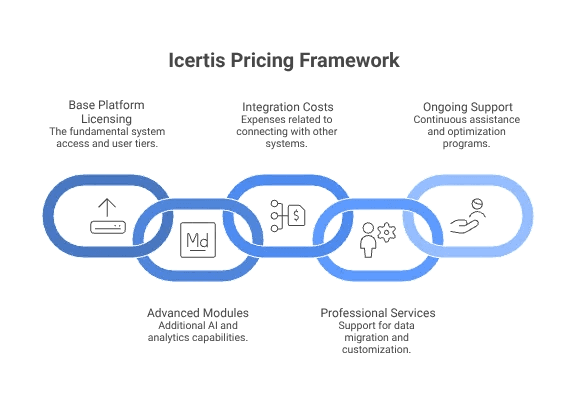
Icertis does not follow a fixed, off-the-shelf pricing list. Instead, it builds pricing around enterprise requirements. Legal operations teams should evaluate the following cost layers:
1. Base Platform Licensing
This forms the foundation of the system and is often structured around user tiers and access levels.
2. Advanced Modules
Capabilities such as AI-powered contract review, analytics dashboards, obligation management, and compliance tracking may be priced as additional components.
3. Integration Costs
Connections with ERP, CRM, and procurement systems increase implementation scope. Integration depth affects both time and services costs.
4. Professional Services
Data migration, customization, workflow design, and internal enablement programs require structured services engagement. For large enterprises, this can represent a significant portion of total spend.
5. Ongoing Support and Optimization
Support tiers, dedicated account management, and performance optimization programs may be layered into the agreement.
Icertis is designed primarily for large enterprises with complex governance requirements. Its pricing reflects that positioning. Organizations seeking enterprise-scale contract intelligence must evaluate not only licensing fees but also deployment effort and long-term scalability.
Related Article: Icertis vs Ironclad: Enterprise CLM Buyer Guide 2026
Icertis Reviews: Market Feedback and Buyer Observations
Icertis is widely recognized in the contract lifecycle management space. Buyer feedback across platforms such as Gartner Peer Insights, Trust Radius, and Capterra reflects a largely favourable perception, particularly among large enterprises.
Most reviewers describe Icertis as a powerful system designed for structured, large-scale contracting environments. However, feedback also highlights operational trade-offs that influence overall value relative to price.
Where Users See Strength
End-to-End Contract Coverage
Reviewers frequently note that Icertis supports the full contract lifecycle. This includes request intake, drafting, negotiation, execution, obligation tracking, and post-execution management. Enterprises value having these processes centralized within one system.Advanced AI Capabilities
Users often reference the platform’s AI-driven contract intelligence features. These tools assist with metadata extraction, obligation monitoring, and risk identification. For large legal teams, this reduces manual review time and improves visibility.Operational Efficiency Gains
Many organizations report improved workflow control. Automated approvals and structured clause libraries help standardize contracting processes across departments. This is particularly relevant for global enterprises managing high contract volumes.
Where Buyers Express Caution
System Complexity
Several users mention that the breadth of functionality can feel overwhelming during initial adoption. The learning curve may require structured onboarding and change management support.Implementation Timeline
Enterprise deployments are often described as detailed and resource-intensive. Configuration, integrations, and data migration require coordination between legal, IT, and business teams.Premium Cost Perception
Some reviewers characterize Icertis as a high-investment platform. While enterprises may justify the cost through scalability and governance controls, smaller organizations sometimes find the pricing difficult to align with budget constraints.
Related article: Enterprise Guide to Obligation Management Software in 2026
Icertis Pricing vs Competitors: Evaluating Enterprise CLM Options

Legal operations teams evaluating Icertis often compare it to other enterprise CLM platforms such as Ironclad, Agiloft, LinkSquares, and Volody. A structured comparison helps buyers understand pricing drivers, feature depth, and operational fit.
Pricing and Licensing Models
Icertis – Custom enterprise pricing based on user count, contract volume, selected modules, and deployment complexity. Pricing is quote-based, typically requiring a discovery phase with the vendor.
Ironclad – Tiered SaaS pricing, often scaled by number of users and contracts. Focused on workflow-driven contract management and collaborative teams.
Agiloft – Flexible, low-code CLM with configurable modules. Pricing is modular and designed to suit both mid-market and enterprise clients.
Volody – Transparent and scalable pricing model with AI embedded by default. Designed for enterprise agility without extended implementation timelines.
Feature / Platform | Icertis | Ironclad | Agiloft | Volody |
Workflow Automation | Yes, modular | Yes | Yes | Fully embedded |
AI Contract Review | Optional module | Limited | Optional | Advanced embedded |
Obligation Tracking | Yes | Yes | Yes | Yes |
ERP/CRM Integration | Extensive | Salesforce-focused | Broad | Enterprise-grade API support |
Free Trial / Demo | Demo on request, No free trial | Demo | Demo available | Structured onboarding + demo+ Trial |
Best Fit Considerations
Icertis – Large global enterprises needing deep compliance and governance.
Ironclad – Sales-driven teams requiring fast workflow deployments.
Agiloft – Organizations requiring low-code customization.
Volody – Enterprises seeking cost-efficient, AI-driven automation with faster deployment and strong support.
Related Article: What is Contract Workflow? Benefits of Automating Approvals
Why Choose Volody Over Icertis
Volody is an AI-powered Contract Lifecycle Management platform designed to balance enterprise capability with usability, speed, and transparent pricing.
Key Differentiators
Embedded Advanced AI – Automatically extracts metadata, analyses risk, and provides actionable insights without requiring separate modules.
Accelerated Deployment – Implementation is faster than traditional enterprise platforms, reducing time to value.
Transparent Pricing – Clear, scalable pricing model reduces uncertainty for procurement and legal teams.
Customer Support – Dedicated success teams ensure smooth adoption and ongoing optimization.
Unified CLM Platform – Combines workflow automation, analytics, obligation management, and collaboration in one system.
Feature Comparison Table
Feature | Icertis | Volody |
AI Contract Review | Optional module | Advanced, embedded |
Implementation Time | Several months | Accelerated deployment |
Pricing Transparency | Quote-based | Transparent, scalable |
User Experience | Enterprise-complex | Intuitive, enterprise-grade |
Support Model | Enterprise-tiered | Dedicated, proactive |
Volody is positioned to provide enterprise-level features without the operational overhead and cost complexity often reported in Icertis deployments.
Finding the Right CLM for Your Business
When selecting a CLM solution, legal operations leaders should consider:
Budget and Cost Drivers – Include licensing, professional services, and ongoing support in total cost calculations.
AI Capabilities – Evaluate how automated contract review and risk assessment reduce manual effort.
Integration Needs – Map required connections with ERP, CRM, and document management systems.
Implementation Timelines – Factor in internal resource availability and adoption planning.
Support and Training – Ensure vendor support aligns with organizational needs.
Customer reviews of Volody indicate strong satisfaction in these areas, highlighting faster adoption, responsive support, and measurable efficiency gains.
Related Article: Contract Management Security: Risks, Mistakes and Solutions
Frequently Asked Questions (FAQs)
1. How does CLM pricing typically work for enterprise platforms?
Pricing is usually based on user count, contract volume, selected modules, deployment type, and professional services required.
2. Does AI contract review reduce legal costs?
Yes, AI reduces manual review effort, identifies risks faster, and improves contract accuracy, which can lead to operational savings.
3. How long does Icertis implementation take?
Large enterprise implementations can span several months due to workflow configuration, integrations, and data migration.
4. Does Volody’s AI contract review come at an additional cost?
No. Volody embeds advanced AI features as part of its core platform. This eliminates the need to purchase separate AI modules and reduces overall cost compared with vendors that price AI as an add‑on.
5. How quickly can legal teams operationalize Volody compared to Icertis?
Volody is designed for accelerated deployment, enabling teams to go live in a shorter timeframe than traditional enterprise CLM implementations that often require extended professional services.
About the Company
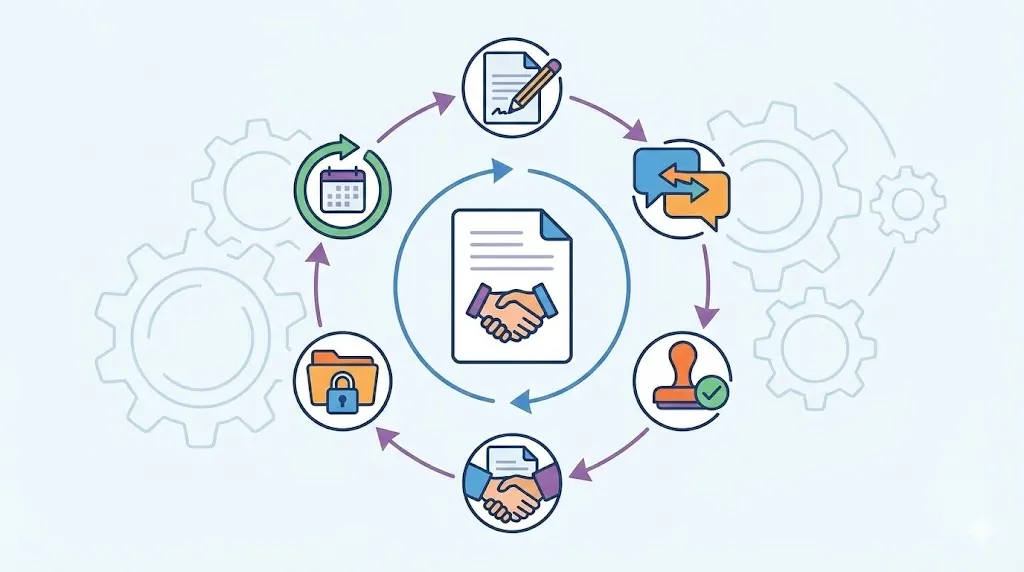
Volody AI CLM is an Agentic AI-powered Contract Lifecycle Management platform designed to eliminate manual contracting tasks, automate complex workflows, and deliver actionable insights. As a one-stop shop for all contract activities, it covers drafting, collaboration, negotiation, approvals, e-signature, compliance tracking, and renewals. Built with enterprise-grade security and no-code configuration, it meets the needs of the most complex global organizations. Volody AI CLM also includes AI-driven contract review and risk analysis, helping teams detect issues early and optimize terms. Trusted by Fortune 500 companies, high-growth startups, and government entities, it transforms contracts into strategic, data-driven business assets.




" height="216.72211px" id="FYO0bO80Y" transform="translate(3 6.105)" width="206.073px"/><path d="M 108.174 222 C 88.432 222 70.303 217.239 53.785 207.717 C 37.267 198.196 24.173 185.052 14.504 168.285 C 4.835 151.312 0 132.165 0 110.845 C 0 89.731 4.835 70.792 14.504 54.025 C 24.173 37.052 37.267 23.804 53.785 14.282 C 70.303 4.761 88.432 0 108.174 0 C 128.116 0 146.246 4.761 162.562 14.282 C 179.08 23.804 192.073 37.052 201.541 54.025 C 211.21 70.792 216.044 89.731 216.044 110.845 C 216.044 132.165 211.21 151.312 201.541 168.285 C 192.073 185.052 179.08 198.196 162.562 207.717 C 146.044 217.239 127.915 222 108.174 222 Z M 108.174 183.189 C 120.864 183.189 132.044 180.291 141.713 174.495 C 151.382 168.492 158.936 160.006 164.375 149.035 C 169.814 138.064 172.533 125.334 172.533 110.845 C 172.533 96.355 169.814 83.729 164.375 72.965 C 158.936 61.994 151.382 53.611 141.713 47.815 C 132.044 42.02 120.864 39.122 108.174 39.122 C 95.483 39.122 84.202 42.02 74.332 47.815 C 64.663 53.611 57.109 61.994 51.67 72.965 C 46.231 83.729 43.511 96.355 43.511 110.845 C 43.511 125.334 46.231 138.064 51.67 149.035 C 57.109 160.006 64.663 168.492 74.332 174.495 C 84.202 180.291 95.483 183.189 108.174 183.189 Z" fill="rgba(255, 255, 255, 0.12)" height="222px" id="aa1McFcE9" transform="translate(227.183 3)" width="216.04399999999998px"/><path d="M 42.302 182.257 L 111.799 182.257 L 111.799 216.722 L 0 216.722 L 0 0 L 42.302 0 Z" fill="rgba(255, 255, 255, 0.12)" height="216.72211px" id="yRq4AnrsX" transform="translate(477.721 6.105)" width="111.79899999999998px"/><path d="M 108.174 222 C 88.432 222 70.303 217.239 53.785 207.717 C 37.267 198.196 24.173 185.052 14.504 168.285 C 4.835 151.312 0 132.165 0 110.845 C 0 89.731 4.835 70.792 14.504 54.025 C 24.173 37.052 37.267 23.804 53.785 14.282 C 70.303 4.761 88.432 0 108.174 0 C 128.116 0 146.246 4.761 162.562 14.282 C 179.08 23.804 192.073 37.052 201.541 54.025 C 211.21 70.792 216.045 89.731 216.045 110.845 C 216.045 132.165 211.21 151.312 201.541 168.285 C 192.073 185.052 179.08 198.196 162.562 207.717 C 146.044 217.239 127.915 222 108.174 222 Z M 108.174 183.189 C 120.864 183.189 132.044 180.291 141.713 174.495 C 151.382 168.492 158.936 160.006 164.375 149.035 C 169.814 138.064 172.534 125.334 172.534 110.845 C 172.534 96.355 169.814 83.729 164.375 72.965 C 158.936 61.994 151.382 53.611 141.713 47.815 C 132.044 42.02 120.864 39.122 108.174 39.122 C 95.483 39.122 84.202 42.02 74.332 47.815 C 64.663 53.611 57.108 61.994 51.67 72.965 C 46.231 83.729 43.511 96.355 43.511 110.845 C 43.511 125.334 46.231 138.064 51.67 149.035 C 57.108 160.006 64.663 168.492 74.332 174.495 C 84.202 180.291 95.483 183.189 108.174 183.189 Z" fill="rgba(255, 255, 255, 0.12)" height="222px" id="mo8HQspQ0" transform="translate(609.155 3)" width="216.04500000000007px"/><path d="M 73.727 0 C 95.885 0 115.324 4.45 132.044 13.351 C 148.967 22.252 161.957 34.982 171.027 51.541 C 180.287 67.894 184.917 86.937 184.917 108.671 C 184.917 130.405 180.287 149.449 171.027 165.801 C 161.957 181.947 148.967 194.47 132.044 203.371 C 115.324 212.271 95.885 216.722 73.727 216.722 L 0 216.722 L 0 0 Z M 72.216 179.773 C 94.374 179.773 111.497 173.564 123.583 161.144 C 135.669 148.724 141.713 131.233 141.713 108.671 C 141.713 86.109 135.669 68.515 123.583 55.888 C 111.497 43.055 94.374 36.638 72.216 36.638 L 42.302 36.638 L 42.302 179.773 Z" fill="rgba(255, 255, 255, 0.12)" height="216.72211px" id="I3iXX5Hi_" transform="translate(859.693 6.105)" width="184.91699999999992px"/><path d="M 185.22 0 L 113.91 141.273 L 113.91 216.722 L 71.61 216.722 L 71.61 141.273 L 0 0 L 47.74 0 L 93.06 99.046 L 138.08 0 Z" fill="rgba(255, 255, 255, 0.12)" height="216.72211px" id="nzHyWC0_d" transform="translate(1061.78 6.105)" width="185.22000000000003px"/></svg>)